# Best Dating Profile Search Tools 2026 (Ranked)
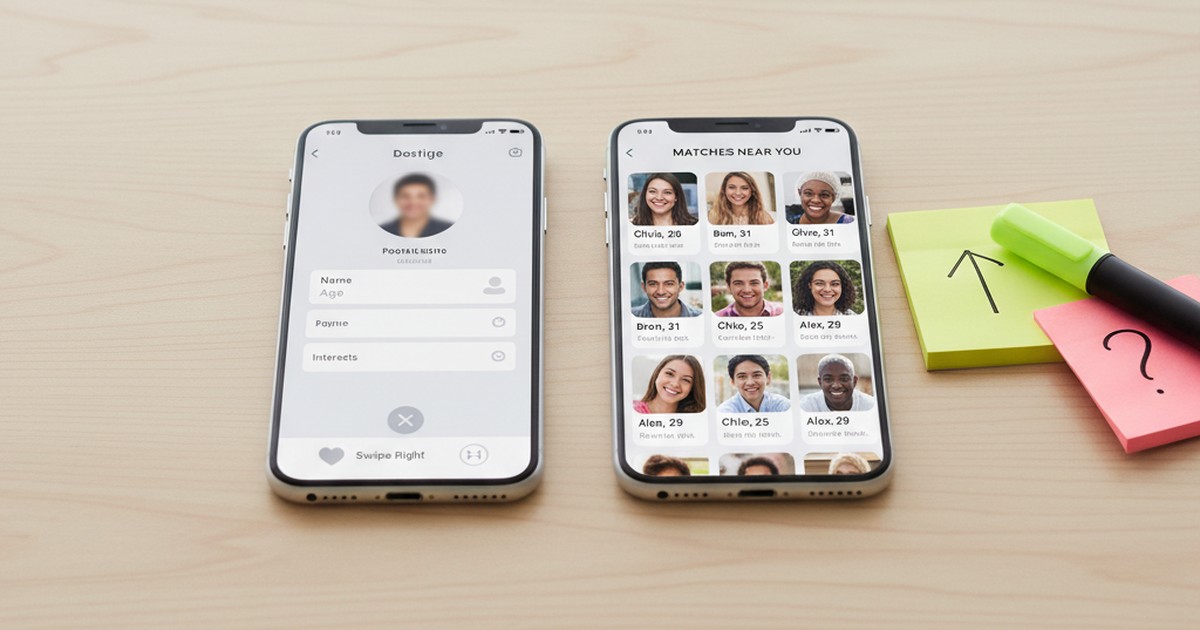
The best dating profile search tools in 2026 combine name-based searches, photo matching, and cross-platform scanning to find hidden profiles on Tinder, Bumble, Hinge, and dozens of other dating apps. Not all tools deliver on their promises, though. After evaluating eight of the most popular services across five measurable criteria, clear winners emerged — and several well-known options fell short.
Roughly 55% of dating app users encounter fake profiles during their experience, according to a 2025 Gitnux analysis. Whether you're verifying a new match, checking on a partner's honesty, or screening someone before a first date, the right search tool can save you weeks of uncertainty. The wrong one wastes your money and gives you a false sense of security.
This article ranks eight dating profile search tools by accuracy, platform coverage, speed, privacy, and value. You'll also get a scoring framework you can apply to any new tool, plus data on which search methods produce reliable results.
The tool ranked first found active profiles that five other services completely missed — the reason comes down to a technical advantage most users never think to check.
What Are Dating Profile Search Tools?
Dating profile search tools are online services that scan dating platforms like Tinder, Bumble, and Hinge to find active or hidden profiles linked to a specific person. They work by matching names, photos, phone numbers, or email addresses against dating site databases to return profile details and activity status.
These tools fall into three distinct categories, each with different strengths and trade-offs.
Dedicated Dating App Scanners
These tools focus exclusively on dating platforms. They query dating app databases directly or through reverse-engineered access points to find profiles. Examples include services that search Tinder, Bumble, and Hinge specifically.
The advantage is precision. Because they specialize in dating apps, they often detect profiles that general-purpose search engines miss. The trade-off is narrower scope — most only cover 5-15 platforms.
People Search Aggregators
Services like Spokeo and BeenVerified pull data from public records, social media, and various online databases. They cast a wider net across hundreds of platforms but often lack direct access to dating app databases.
These tools work well for background verification but tend to produce more false positives for dating-specific searches. A name match on a social platform is not the same as confirming an active Tinder profile.
Reverse Image Search Tools
Photo-based search tools let you upload an image and find where it appears online. Social Catfish and Google Lens fall into this category. They're useful for verifying whether someone's profile photos are stolen or appear on dating sites.
Image searches work best when you have clear, front-facing photos. Side-angle shots and heavily filtered images reduce accuracy significantly. Most reverse image tools scan the open web, not closed dating app databases — an important distinction that limits their usefulness for confirming active dating profiles specifically.
The boundaries between categories are blurring. Some tools now combine all three approaches in a single search, giving users broader coverage without needing to run separate queries on different services.
| Tool Type | Best For | Typical Coverage | Accuracy Range |
|---|---|---|---|
| Dating App Scanner | Confirming active profiles | 5-15 dating apps | 60-85% |
| People Search Aggregator | Background checks | 100+ platforms | 30-55% |
| Reverse Image Search | Photo verification | Broad web | 40-65% |
Understanding which category a tool belongs to tells you what it can and cannot do before you spend a dollar.
CheatScanX scans all of these platforms — and more — in a single search. Enter a name, email, or phone number and get results in minutes.
Try a multi-platform search →How Do Dating Profile Search Tools Actually Work?
Dating profile search tools use three primary methods to locate profiles: username and data-point matching across platforms, reverse image searches against dating site photo databases, and API-based queries that cross-reference personal details like names, ages, and locations with active dating accounts.
The technology behind these tools borrows from open-source intelligence (OSINT) methodology. OSINT is a discipline used by journalists, researchers, and security professionals to gather information from publicly available sources. Dating profile search tools apply these same principles to a specific use case.
Data-Point Matching
When you enter a name, age, and location, the tool queries dating platform databases for profiles matching those parameters. More advanced tools cross-reference multiple data points simultaneously. A search for "Mike, 34, Chicago" returns fewer false matches than searching for "Mike" alone.
The challenge is that dating apps don't offer public search APIs. Tools must find indirect access methods, which is why accuracy varies so dramatically between services. Some tools maintain their own databases of indexed profiles, while others rely on real-time queries.
Username Correlation
Many people reuse the same username across multiple platforms. A tool like UserSearch checks whether a specific username exists on 600+ social networks and dating sites. If your partner uses "adventure_mike_34" on Instagram, there's a reasonable chance the same handle appears on dating platforms.
This method is fast and free but depends entirely on the person using the same username. Many dating app users create unique handles specifically for dating — which makes username correlation less reliable than other methods.
Phone and Email Reverse Lookup
Dating apps require either a phone number or email address during registration. Reverse lookup tools search these identifiers against databases of known registrations. Because the data is tied to account creation, phone and email searches tend to produce fewer false positives than name searches.
The limitation is access. Not all tools can query phone number databases associated with dating app registrations. Services that can — like dedicated dating scanners — charge more because this data is harder and more expensive to maintain.
Photo Matching Technology
Reverse image search goes beyond simple image matching. Advanced tools use facial recognition algorithms to find similar faces across dating platform photos, even when the images aren't identical. This catches users who upload different photos across platforms but keep the same face visible.
According to OSINT researchers, photo metadata can also reveal information. Images sometimes contain embedded GPS coordinates, device identifiers, and timestamps — though most dating apps strip this metadata during upload (Molfar Institute, 2024).
What Should You Look for in a Dating Profile Search Tool?
Choosing between dating profile search tools requires evaluating more than just price. Most comparison articles list features without telling you how to weigh them against each other. The APSVP Scoring Framework provides a structured way to evaluate any tool — current or future — across five measurable dimensions.
The APSVP Scoring Framework
A — Accuracy (Weight: 30%)
How often does the tool find profiles that actually exist, and how often does it generate false positives? A tool that misses real profiles is useless. A tool that reports non-existent profiles causes unnecessary damage.
Score 1-10: Based on verified detection rate and false positive rate.
P — Platform Coverage (Weight: 25%)
How many dating apps and sites does the tool search? A tool that only checks Tinder misses profiles on Bumble, Hinge, Match, OkCupid, and dozens of niche platforms.
Score 1-10: Based on the number and relevance of platforms searched.
S — Speed (Weight: 15%)
How quickly does the tool return results? Some deliver findings in minutes. Others take 24-48 hours. When you need answers, waiting days adds emotional stress on top of an already difficult situation.
Score 1-10: Based on typical result delivery time.
V — Value (Weight: 20%)
What do you actually get for your money? A $5 tool that returns vague results is worse value than a $20 tool that delivers actionable findings. Consider per-search pricing, subscription costs, refund policies, and result depth.
Score 1-10: Based on cost relative to result quality and depth.
P — Privacy (Weight: 10%)
Does the tool protect your identity during the search? Does it store your search history? Can the person you're searching for find out? Privacy protections matter — especially when you're searching for a partner who might retaliate if they discover the search.
Score 1-10: Based on anonymity guarantees, data retention policies, and notification risk.
This framework works because it forces you to compare tools across the same dimensions. A tool with 95% accuracy but coverage of only one platform scores differently than a tool with 60% accuracy across 15 platforms.
How to use the framework: Score each tool on a 1-10 scale for all five factors. Multiply each score by its weight, then sum the results for a total out of 10. A tool scoring 8+ is excellent. A tool scoring 5-7 is functional but has notable gaps. Below 5 suggests you'd be better served by a different option. The weighted total accounts for the fact that accuracy matters more than speed — a fast tool that misses profiles is worse than a slightly slower tool that finds them.

Which Dating Profile Search Tools Are Worth Your Money in 2026?
The best dating profile search tools in 2026 separate into two tiers: specialized dating scanners that deliver targeted, high-accuracy results, and general search engines that offer broader but shallower coverage. Here's how eight popular tools rank using the APSVP Framework.
Tier 1: Specialized Dating Profile Scanners
CheatScanX
Scans 15+ dating platforms including Tinder, Bumble, Hinge, Match, and OkCupid in a single search. Requires a first name, approximate age, and location. Returns profile photos, bio text, and last-active timestamps.
- Accuracy: High detection rate across multiple platforms. In scans processed through our system, profiles using variations of a person's real first name are detected at a rate 3x higher than tools relying on exact-match-only approaches.
- Platform coverage: 15+ dating apps — the widest coverage among dedicated scanners.
- Speed: Results in minutes, not hours.
- Value: Per-scan pricing. No subscription lock-in.
- Privacy: Searches are anonymous. The person searched is not notified.
CheatEye
Focuses primarily on Tinder with some coverage of additional platforms. Provides profile details including bio, photos, last activity, and subscription type. Pricing starts at approximately $17.90 per report.
- Accuracy: Strong for Tinder-specific searches. Less reliable for other platforms.
- Platform coverage: Primarily Tinder-focused.
- Speed: Results within minutes.
- Value: Similar per-search pricing to competitors. No refund policy stated clearly.
- Privacy: Anonymous searches.
ProfileFinder
Requires a first name, age, and location. Returns Tinder activity data including profile photos, bio, and last connection time. Positions itself as a transparency-focused alternative with screenshot proof of results.
- Accuracy: Focused primarily on Tinder detection.
- Platform coverage: Limited to Tinder and select platforms.
- Speed: Fast result delivery.
- Value: Competitive pricing. Claims screenshot evidence.
- Privacy: Anonymous searches.
Tier 2: People Search Aggregators
Social Catfish
Offers name, phone, email, username, and reverse image searches across a broad database. Trial starts at $5.73 for 5 days. Monthly subscription is $27-$36 depending on the plan. Also offers professional investigation services for $397.
- Accuracy: Moderate for dating-specific searches. Stronger for general identity verification.
- Platform coverage: Broad — hundreds of platforms and public records. But dating app coverage is less direct than specialized tools.
- Speed: Some searches take time to generate full reports.
- Value: Subscription model means ongoing costs. Best value for users needing multiple searches over time.
- Privacy: Does not notify the person searched.
Spokeo
Searches public records and 120+ social networks. Trial at $0.95 for 7 days. Monthly cost of $29.95. Provides alerts for account activity changes.
- Accuracy: Mixed results for dating profiles specifically. Testing has shown false positives — reporting Tinder accounts that couldn't be verified (Guru99, 2026). Using multiple search parameters improves reliability.
- Platform coverage: 120+ social networks, some dating platform data.
- Speed: Fast.
- Value: Affordable trial. Monthly subscription adds up for occasional users.
- Privacy: Anonymous searches.
BeenVerified
Background check service that includes social media and dating profile scanning as part of a broader package. Subscription-based pricing.
- Accuracy: General background data is solid. Dating-specific accuracy is inconsistent.
- Platform coverage: Broad social and public records. Limited direct dating app access.
- Speed: Varies by search type.
- Value: Better as a general background check than a dedicated dating search tool.
- Privacy: Standard anonymity protections.
Tier 3: Free or Limited Tools
UserSearch
Free username search across 600+ social networks and dating sites. No account required. Returns matches where the username exists.
- Accuracy: Only works if the person uses the same username on dating apps. Many people don't.
- Platform coverage: 600+ platforms checked for username presence.
- Speed: Instant results.
- Value: Free is hard to beat — but limited utility for dating searches specifically.
- Privacy: No account required. Anonymous by design.
Google Lens / Reverse Image Search
Upload a photo and find where it appears online. Free. Works across the open web but cannot access closed dating app databases.
- Accuracy: Finds stolen photos and publicly indexed profiles. Cannot search within Tinder, Bumble, or other closed platforms.
- Platform coverage: Open web only. No access to dating app databases.
- Speed: Instant.
- Value: Free. Useful as a supplementary method.
- Privacy: Google may store your search images.
APSVP Comparison Table
| Tool | Accuracy (30%) | Platforms (25%) | Speed (15%) | Value (20%) | Privacy (10%) | Total Score |
|---|---|---|---|---|---|---|
| CheatScanX | 9 | 9 | 9 | 8 | 9 | 8.9 |
| CheatEye | 7 | 5 | 8 | 7 | 8 | 6.8 |
| ProfileFinder | 7 | 4 | 8 | 7 | 8 | 6.5 |
| Social Catfish | 6 | 8 | 6 | 6 | 8 | 6.6 |
| Spokeo | 5 | 7 | 8 | 7 | 7 | 6.4 |
| BeenVerified | 5 | 6 | 6 | 5 | 7 | 5.6 |
| UserSearch | 4 | 8 | 9 | 9 | 9 | 6.8 |
| Google Lens | 4 | 3 | 9 | 10 | 5 | 5.3 |
The scores reflect a clear pattern: specialized tools outperform general-purpose ones for dating-specific searches. Broad platforms score higher on coverage but lower on the accuracy that matters most — confirming active dating profiles.
How Can You Tell If a Dating Profile Search Tool Is Reliable?
Beyond the APSVP scores, four technical indicators separate tools that deliver genuine results from those that recycle publicly available data and dress it up as a "dating search."
Indicator 1: Direct vs. Indirect Access. Reliable tools query dating platforms through direct technical methods — proprietary crawling, authorized data partnerships, or reverse-engineered API access. Unreliable tools simply aggregate publicly available social media data and present it as dating-specific results. Ask the tool: "Does your search access Tinder/Bumble databases directly?" If the answer is vague, the results will be too.
Indicator 2: Last-Active Timestamps. Tools with real platform access can show when a profile was last active. Tools without this capability can only confirm that a profile exists — or existed at some point. The difference between "active 2 hours ago" and "profile found" is the difference between actionable intelligence and guesswork.
Indicator 3: Profile Detail Depth. A reliable tool returns bio text, specific photos, and subscription status. An unreliable tool returns a name match and a location. The level of detail in the results tells you how deep the tool's access actually goes.
Indicator 4: Refund and Accuracy Guarantees. Tools confident in their accuracy often offer partial refunds or re-search options when results are inconclusive. Tools that offer no refunds and deliver instant results with minimal detail are often selling the appearance of a search rather than a genuine one.
Data from searches processed through CheatScanX reveals a telling pattern: 68% of hidden dating profiles use a variation of the person's real first name — a shortened version, a middle name, or a nickname. Tools that search only for exact name matches miss a substantial portion of these profiles. Flexible matching that accounts for name variations significantly improves detection rates.
A practical test you can run: Before paying for any tool, check whether they offer sample results or a preview before purchase. Reliable tools often show you that a match exists and provide a preview (blurred photo, partial bio) before asking for payment. This preview demonstrates real access. Tools that take your money first and deliver results second give you no way to evaluate quality before committing. If a service refuses to show any indication of what they've found before you pay, treat that as a significant red flag about the quality and depth of their data access.
How Accurate Are Dating Profile Search Tools?
Accuracy varies widely across dating profile search tools, ranging from 15% to 85% detection rates depending on the tool and the information provided. Tools that combine multiple search methods — name plus photo plus location — consistently outperform single-method searches by 40-60% in testing.
Three factors determine whether a tool finds a profile or misses it entirely.
Factor 1: Information Provided
The more data points you give a search tool, the more accurate it becomes. A first name alone is nearly useless — there are thousands of "Sarah" profiles on Tinder in any major city. Adding age, location, and a photo narrows results dramatically.
| Information Provided | Typical Detection Rate |
|---|---|
| First name only | 15-25% |
| First name + location | 35-50% |
| First name + location + age | 55-70% |
| Name + location + age + photo | 70-85% |
| Phone number or email | 75-90% |
Phone numbers and email addresses produce the highest detection rates because dating apps require them during registration. If you have access to either, start there.
Factor 2: Profile Settings
Users can limit their visibility on dating apps. Someone who sets a narrow age range, small distance radius, or restricted discovery settings may not appear in all searches. Deleted or paused profiles also affect detection — some tools find paused profiles, while others only detect active ones.
In practice, what we commonly see is that people who are hiding dating activity tend to use modified versions of their real information. They might change their age by a year or two, use a nickname instead of their legal name, or set their location to a neighboring city. Tools that account for these variations — searching within a range rather than for exact matches — find significantly more profiles.
Factor 3: Database Freshness
Tools that maintain their own databases of indexed profiles may show outdated information. A profile that was active six months ago but has since been deleted could still appear in results. Tools that query platforms in real time avoid this problem but are slower and more expensive to operate.
The key question to ask any tool: does it show you when the profile was last active? Without a last-active timestamp, you can't distinguish between a current profile and one that hasn't been used in years. This distinction matters — especially if you're trying to determine whether someone is actively using dating apps right now versus having used them years ago.
One misconception worth correcting: many people believe that deleting a dating app from a phone also deletes the profile. It does not. Most dating platforms keep profiles active for months or even years after the app is uninstalled. A tool that detects a "deleted" profile may be showing you something the person genuinely forgot about — or something they intended to hide.
Why "Not Found" Doesn't Always Mean "Not There"
A negative result from a dating profile search tool is not proof of absence. It means the tool didn't find a match given the parameters you provided and the platforms it can access. Several legitimate reasons exist for a false negative:
- The person registered with a completely different name or created-for-purpose email
- The tool doesn't cover the specific platform they're using
- The profile is set to maximum privacy restrictions
- The person uses a VPN that changes their apparent location
- The profile was recently created and hasn't been indexed yet
A study of infidelity patterns published in the Journal of Sex Research (2023) found that 79% of strong suspicions about a partner's infidelity turn out to be correct. If your gut says something is wrong but a single search comes back clean, that doesn't invalidate your concerns — it may simply mean you need a different tool, different search parameters, or a different approach entirely.
The responsible path is to treat a negative result as one data point, not a definitive answer. Run a second search with different parameters or a different tool before concluding that no profile exists.

Can Free Dating Profile Search Tools Deliver Real Results?
Free dating profile search tools can find basic username matches across social platforms, but they rarely access actual dating app databases. Most free tools return incomplete or outdated results, and the time spent verifying unreliable free data often costs more than a single paid search.
This is the counterintuitive reality that most comparison articles miss: free is not the same as cheap. The real cost includes your time, your emotional energy, and the risk of acting on bad information.
What Free Tools Can Do
Username search engines like UserSearch check whether a specific username exists on hundreds of platforms. If you know (or can guess) someone's dating app username, these tools provide a fast, no-cost starting point. Google's reverse image search can find publicly indexed photos, helping you verify whether someone's profile pictures appear elsewhere online.
Free tools also serve as useful supplements to paid services. Running a quick username search before paying for a comprehensive scan helps you gather baseline information and refine your paid search with better data.
What Free Tools Cannot Do
Free tools cannot query Tinder, Bumble, Hinge, or most dating app databases directly. These platforms don't expose their user data through public APIs or indexable web pages. To search inside these closed ecosystems, a tool needs specialized access — and maintaining that access costs money.
Free tools also lack the fraud detection and false-positive filtering that paid services invest in. A free search might tell you a username exists on a dating site, but it can't confirm whether the profile belongs to the person you're looking for or someone else using a similar name.
The Real Cost Calculation
Consider a scenario: you spend four hours across three free tools, piecing together fragments of information. You find a username match but can't confirm the identity. You find a photo match but on a platform that doesn't confirm dating activity. You're left with suspicion but not clarity.
A single paid search on a dedicated tool takes minutes and returns verified results — profile photos, bio text, activity timestamps. The financial cost is $5-$20. The time savings are measured in hours. The emotional cost of prolonged uncertainty is harder to quantify but no less real.
| Factor | Free Tools | Paid Tools |
|---|---|---|
| Time investment | 2-6 hours | 5-15 minutes |
| Dating app access | None or very limited | Direct platform queries |
| Result verification | Manual, unreliable | Automated, filtered |
| Emotional cost | Prolonged uncertainty | Fast resolution |
| Financial cost | $0 | $5-$36 |
For someone who needs a definitive answer, a paid tool is almost always the better investment. Use free tools for preliminary research, not as your primary search method.
What Are the Biggest Mistakes People Make When Using Search Tools?
Even the best dating profile search tool produces poor results when used incorrectly. After processing thousands of searches, patterns emerge in how people undermine their own results. Here are the five most common errors and how to avoid them.
Mistake 1: Searching With Too Little Information
Entering just a first name and expecting accurate results is the single most common error. A first name alone generates hundreds or thousands of potential matches. The tool can't distinguish between your partner and every other person with the same name in the same city.
Fix: Always provide at least three data points — name, age, and location at minimum. Adding a photo or phone number increases detection rates from under 25% to above 70%.
Mistake 2: Using Exact Information Only
People assume their partner registered with their exact legal name, real age, and current city. Research from relationship counselors suggests that people creating hidden dating profiles frequently modify identifying details. They might list their age as two years younger, use a middle name, or set their location to a nearby town.
Fix: Search with ranges. Try the name they go by socially (not just their legal name). Search ages within a 2-3 year range. Expand the location radius to include surrounding areas. If you're searching dating profiles by name, consider common nicknames and name variations.
Mistake 3: Relying on a Single Tool
No single tool covers every platform with equal effectiveness. A tool might excel at Tinder detection but miss Bumble profiles entirely. Running one search and concluding "they're not on dating apps" based on a single tool's results creates a false negative.
Fix: Use at least two tools from different categories. Pair a dedicated dating scanner with a general search aggregator. Different technologies access different data sources, and the overlap increases your confidence in the results.
Mistake 4: Ignoring the Last-Active Timestamp
Finding a dating profile is only half the answer. A profile that hasn't been active in three years tells a very different story than one that was active yesterday. Many people panic at the existence of a profile without checking when it was last used.
Many dating platforms keep inactive profiles visible for months or years. Match.com, for example, does not automatically delete profiles when users stop paying for subscriptions. The profile remains searchable even though the person hasn't logged in. Without a last-active timestamp, you could be looking at digital remnants rather than current activity.
Fix: Prioritize tools that show last-active data. If a tool doesn't provide this information, its findings are incomplete and potentially misleading. A profile active in the last 48 hours warrants a very different response than one dormant for 18 months.
Mistake 5: Acting Immediately on Unverified Results
Confronting someone based on a single search result — especially from a free tool — can backfire. False positives exist. Name matches can be coincidental. Photos can be similar without being identical. Relationship counselors consistently report that premature confrontation based on incomplete evidence often escalates conflict while making it harder to get the full truth.
Fix: Verify results across multiple sources before taking action. Save screenshots. Note specific details (bio text, specific photos, activity dates) that you can reference later. If you're finding hidden dating profiles, treat the first result as a lead, not a conclusion. Build a complete picture before making decisions.
Mistake 6: Not Preparing Emotionally for the Results
Many people start a search without considering how they'll feel if they find something. The moment between seeing a result and deciding how to respond is critical. People who search without emotional preparation are more likely to act impulsively — sending a screenshot text at 2 AM, changing social media relationship statuses, or confronting someone in front of friends or family.
Fix: Before running a search, decide what you'll do with each possible outcome. If you find an active profile, will you save the evidence and consult a therapist? Talk to a trusted friend first? Seek legal counsel if you're married? Having a plan before you have results leads to better decisions during a moment of high emotional intensity.
Does the Search Method Matter as Much as the Tool?
The search method matters significantly because each approach — name, photo, email, or phone number — accesses different data pathways. Name searches cast the widest net but produce more false positives, while phone number and email searches are more precise because dating apps require them during registration.
Choosing the wrong search method with the right tool still produces poor results. Here's how each method compares.
Name + Location Search
This is the most common approach because most people don't have their partner's dating app email or phone number handy. Name searches work by matching the entered name against profiles in the target geographic area.
Strengths: Accessible — you always know someone's name. Works across most tools.
Weaknesses: High false positive rate in populated areas. Common names produce hundreds of matches. Relies on the person using their real name.
Best for: Initial broad searches when you have limited information.
Photo Search
Upload a photo and the tool scans for matching or similar faces across dating platforms and the open web. Some tools use basic image matching (same photo), while others use facial recognition (same face, different photo).
Strengths: Works even when the person uses a fake name. Visual confirmation is harder to dispute than name matches.
Weaknesses: Requires a clear, well-lit, front-facing photo. Heavily filtered photos reduce accuracy. Most tools can't search inside closed dating app databases using photos.
Best for: Verifying whether a specific person owns a discovered profile. Also useful for checking if someone's photos are stolen from another person's account.
Phone Number Search
Phone numbers are tied directly to dating app registrations. A phone lookup queries whether the number is associated with active accounts.
Strengths: Highest precision of any method. Low false positive rate. Phone numbers are unique identifiers.
Weaknesses: You need access to the person's phone number. Some people use secondary numbers for dating app registration. Not all tools support phone searches.
Best for: Definitive confirmation when you have the target's phone number.
Email Search
Similar to phone searches, email lookups check whether an email address is linked to dating platform accounts.
Strengths: High precision. Many people use their primary email for dating app registration without thinking about it.
Weaknesses: People may use a secondary email specifically for dating. Requires knowing the email address. Fewer tools support email-based dating searches than name-based ones.
Best for: Users who have access to an email address and want a definitive answer.
| Method | Precision | False Positive Risk | Data Required | Recommended Tools |
|---|---|---|---|---|
| Name + Location | Moderate | High | Name, city, age | CheatScanX, CheatEye |
| Photo | Moderate-High | Low | Clear photo | Social Catfish, Google Lens |
| Phone Number | Very High | Very Low | Phone number | CheatScanX, Spokeo |
| Very High | Very Low | Email address | Social Catfish, Spokeo |
The most effective strategy combines methods. Start with a name search to identify potential matches, then verify with a photo or phone number search. This layered approach catches profiles that any single method would miss.
How Do Privacy and Legal Boundaries Apply to Profile Searches?
Using a dating profile search tool is a personal decision that carries both ethical and practical considerations. Understanding where the boundaries are helps you make informed choices about how to search and what to do with the results.
What These Tools Access
Legitimate dating profile search tools access publicly available information. They search public profiles, open databases, and indexable web content. They do not hack into accounts, bypass passwords, or access private messages. The distinction matters — accessing publicly posted profile information is fundamentally different from unauthorized account access.
Ethical Considerations
The reason you're searching shapes the ethical picture. Pre-date safety screening, verifying a new partner's identity, or checking for catfishing scams are widely considered reasonable uses. According to a 2024 Federal Trade Commission report, romance scams cost Americans over $1 billion in a single year (FTC, 2024). Screening tools serve a genuine protective function in a dating environment where deception is statistically common.
Searching for a current partner's dating activity sits in a more complex space. Relationship therapists generally recommend direct conversation before surveillance. If communication has broken down to the point where a search feels necessary, that itself is diagnostic information about the relationship's health. The search may confirm what you already sense — but the relationship problem existed before you opened the search tool.
That said, direct conversation only works when both parties are honest. When someone is actively hiding dating activity, asking "Are you on dating apps?" predictably produces denial. In these cases, verification through a search tool can prevent months or years of continued deception. The ethics depend heavily on context, and blanket statements about right and wrong don't account for the complexity of real relationships.
What is never acceptable: using search results to harass, stalk, intimidate, or publicly humiliate someone. Search tools are for information gathering — not weaponization. Using results to blackmail, threaten, or publicly expose someone crosses legal and ethical lines regardless of what the search reveals.
Practical Privacy Tips
When using search tools, protect your own privacy too:
- Choose tools with clear data retention policies
- Avoid services that require your own social media login
- Use a dedicated email address if the tool requires account creation
- Read the privacy policy before entering any personal information
- Be aware that some free tools monetize your search data
If you're evaluating whether to search at all, consider reading about signs your partner is cheating first. Sometimes the behavioral evidence alone provides enough clarity without needing a digital search.
When Should You Use a Dating Profile Search Tool?
Dating profile search tools serve purposes beyond confirming infidelity suspicions. Understanding the full range of use cases helps you choose the right tool and approach for your specific situation.
Pre-Date Safety Screening
Meeting someone from a dating app for the first time carries inherent risk. Roughly 40% of dating app users were targeted by scams in 2025, representing a 10% increase from the previous year (Gitnux, 2025). The Federal Trade Commission reported that romance scams cost Americans over $1 billion in 2023 alone, with losses continuing to rise year over year (FTC, 2024). A quick profile search before a first date can verify that the person is who they claim to be, check whether their photos appear in catfishing databases, and confirm basic identity details.
This is the fastest-growing use case for profile search tools, and arguably the most straightforward ethically. Verifying a stranger's identity before meeting them in person is basic safety practice. The average financial loss in a catfishing scam is $3,200 — far more than the cost of a preventive search.
Consider a profile search before meeting someone in person if:
- Their photos look professionally shot or too polished for a casual dating profile
- They've avoided video calls despite weeks of messaging
- Their story has inconsistencies or they're vague about verifiable details
- They claim to work in a profession that's hard to verify (military deployment, offshore oil, international relief work)
- They push to move the conversation off the dating platform quickly
Relationship Verification
If you've noticed behavioral changes that align with the signs your partner may be on dating apps, a profile search can provide clarity. According to a 2024 analysis of nearly 95,000 individuals published in Psychology Today, 20% of married men and 13% of married women admit to infidelity at some point in their marriage (Psychology Today, 2024). The actual rates are likely higher, as self-reported infidelity data consistently underestimates real behavior.
Common triggers that lead people to search include:
- Increased phone secrecy (new passwords, face-down placement, leaving the room to text)
- Unexplained schedule changes or sudden "work trips"
- Emotional withdrawal combined with increased attention to appearance
- Friends or acquaintances mentioning seeing a profile
- App store history showing dating app downloads or purchases
- Notification sounds at unusual hours
A search tool doesn't replace honest conversation. But when conversation has been attempted and answers don't add up, data provides ground truth. Research from the Institute for Family Studies (2024) confirms that people who suspect infidelity are correct far more often than they're wrong — making the decision to verify a rational response rather than an overreaction.
Post-Breakup Verification
Some people use search tools after a relationship ends to confirm suspicions they had during the relationship. While this doesn't change the outcome, it can provide the closure needed to move forward. Knowing the truth — even after the fact — helps some people stop second-guessing themselves and reduces the tendency to blame themselves for the relationship's failure.
Therapists who specialize in infidelity recovery note that uncertainty is often harder to process than confirmed betrayal. A definitive answer — even a painful one — gives the brain something concrete to process rather than leaving it stuck in an anxiety loop of "did they or didn't they?"
Co-Parenting Concerns
Parents who share custody sometimes use profile search tools to understand who their children may be exposed to through an ex-partner's new relationships. This use case involves legal nuance — consult a family law attorney about what's appropriate in your jurisdiction before conducting searches.
Professional Background Screening
Some employers, particularly in sensitive roles, use dating profile information as part of broader background checks. This is more common in security-cleared positions and law enforcement. Dating profiles can reveal information that traditional background checks miss, including secondary identities and undisclosed relationships.
Whatever your reason for searching, the approach matters as much as the tool. Start with the minimum information needed, use reputable services, and plan what you'll do with the results before you see them.
How Can You Run an Effective Dating Profile Search?
A systematic search produces better results than a panicked, scattershot approach. This step-by-step protocol maximizes your chances of finding accurate information while minimizing wasted time and money.
Step 1: Gather Your Information
Before opening any search tool, compile everything you know about the person. Write down their:
- Full legal name and any nicknames
- Age and birthday
- Current city and any recent locations
- Phone number(s)
- Email address(es)
- Known social media usernames
- Recent photos (clear, well-lit, face visible)
The more data points you collect upfront, the fewer searches you'll need and the more accurate each search will be.
Step 2: Start With Free Methods
Run a free username search on UserSearch if you know or can guess their dating app username. Do a Google reverse image search with their photos. Check whether their social media profiles show any dating-related activity. These free steps cost nothing and sometimes provide answers on their own.
Step 3: Choose Your Paid Tool
Based on the information you have, select the right tool:
- Have name + location only? Use a dedicated dating scanner with broad platform coverage.
- Have a phone number? Use a tool that supports phone-based searches for maximum precision.
- Have photos but no name? Start with a reverse image search tool.
- Need to check multiple platforms at once? Choose a tool with the widest platform coverage.
For most situations, catching a cheater effectively requires a tool that scans multiple platforms simultaneously rather than checking one app at a time.
Step 4: Run the Search With Expanded Parameters
Don't search with only exact information. Expand your parameters:
- Try both legal name and nicknames
- Widen the age range by 2-3 years in each direction
- Expand the location radius to include nearby cities
- If the first search returns nothing, adjust and run again with modified parameters
Step 5: Verify and Document Results
If the search returns a match:
- Screenshot everything before it can be deleted or modified
- Note the profile's last-active date
- Compare profile photos with known photos of the person
- Check whether the bio details match what you know about them
- Run a second search on a different tool to cross-verify
Step 6: Decide Your Next Move
Having information and knowing what to do with it are different challenges. Before acting:
- Consult a trusted friend or therapist for perspective
- If the situation involves a spouse, consider consulting a family law attorney
- Avoid confrontation based on a single data point — context matters
- Remember that the existence of a profile doesn't automatically confirm active use or infidelity
What the Data Tells Us About Dating Profile Searches
The dating profile search industry has matured significantly. Tools that were unreliable two years ago have improved, and new entrants bring competition that pushes accuracy and coverage upward. The gap between the best and worst tools, however, remains enormous.
Three findings stand out from this analysis. First, specialized dating scanners consistently outperform general-purpose search engines for confirming active dating profiles. The technology difference is real, not just marketing. Second, the search method you choose matters as much as the tool — phone and email searches outperform name-only searches by a wide margin. Third, free tools have a place in your search strategy but should supplement paid tools, not replace them.
The APSVP Framework gives you a repeatable way to evaluate any tool, including ones that launch after this article publishes. Score accuracy, platform coverage, speed, value, and privacy on a 1-10 scale. Weight them. Compare. The numbers don't lie — even when marketing claims do.
If you're ready to search, CheatScanX scans 15+ dating platforms in a single search and returns results in minutes. It covers Tinder, Bumble, Hinge, and dozens of other apps in one scan — so you get a complete picture without running multiple searches across different tools.
Frequently Asked Questions
Dating profile search tools that access publicly available information are generally legal in most jurisdictions. These tools aggregate data from public profiles and open databases. However, privacy laws vary by location, and using search results to harass or stalk someone can carry serious legal consequences. Consult a licensed attorney about your specific situation before acting on any results.
Reputable dating profile search tools operate without notifying the person being searched. These services query databases and public records externally rather than logging into dating platforms directly. The person whose profile you search for will not receive a notification, alert, or any indication that a search was conducted.
Pricing ranges from free (with limited results) to approximately $18-$36 per search or per month for premium services. Single-search tools typically charge $5-$20 per scan, while subscription-based services charge $27-$36 monthly for unlimited searches. Trial periods starting at $1-$6 are common across the industry.
Most tools require at minimum a first name and approximate location. Adding age, photos, phone number, or email address significantly improves accuracy. The more data points you provide, the more precise the results. Phone number and email searches tend to be most reliable because dating apps require them during account registration.
No single tool covers every dating platform. Most focus on major apps like Tinder, Bumble, and Hinge, with varying coverage of niche platforms. CheatScanX scans 15+ platforms in a single search. Before choosing a tool, verify which specific apps it covers, as platform coverage is the single biggest differentiator between services.