
# Cheating in the Digital Age: Technology Changed Infidelity
Cheating in the digital age is not the same as it was twenty years ago. The mechanics have changed, the starting points have changed, and — critically — so has the evidence it leaves behind. Today, 38% of affairs begin through social media platforms or dating apps rather than a chance encounter in person, and a new category of infidelity involving AI companions is already showing up in family courtrooms.
This isn't just a cultural shift. It is a structural change in how betrayal operates. The barriers that once slowed infidelity — opportunity, logistics, the fear of being seen — have been substantially lowered by technology. But the same technology that makes starting an affair easier also creates a permanent, searchable record of it.
This article covers what the research actually shows: how digital cheating is defined, the five-level spectrum from micro-cheating to AI affairs, which platforms are most commonly used, the data on detection, and the specific ways technology has made discovery more likely — not less. If you are trying to understand what you are dealing with, the data here will give you a clear picture.
What Is Digital Infidelity? A 2026 Definition
Digital infidelity is any romantic or sexual interaction conducted through technology — texting, dating apps, social media, video calls, or AI companions — that is kept secret from a primary partner. The secrecy, not the platform, defines the betrayal. It ranges from hidden DMs to full affairs arranged entirely online.
This definition has had to evolve alongside technology. Ten years ago, "online cheating" meant a dating profile or an affair conducted over email. Today it encompasses a far broader range of behaviors, many of which blur what couples once considered clear lines.
The reason secrecy is the defining criterion — rather than the platform or the behavior itself — is that context matters enormously in relationships. Couples vary widely in what they consider acceptable. Two people in an open relationship might freely share dating profiles. Two people with strict digital boundaries might consider a flirty Instagram DM a serious breach of trust. What makes something infidelity is not the technology involved but whether it is being hidden.
Research published through the National Institutes of Health found that 53% of people in committed relationships admit to hiding specific conversations or contact from their partners — and that this concealment behavior shows a strong correlation with lower sexual and emotional intimacy in the primary relationship (NIH Relationship Satisfaction Study, 2024). The hiding comes first; the deterioration often follows.
The definitional challenge becomes especially sharp with newer forms of digital interaction: liking a specific person's posts repeatedly, reacting to stories at 2 a.m., maintaining a private account a partner does not know about. None of these are affairs in the traditional sense. But they often represent the first steps toward one — and understanding the spectrum clarifies exactly where those steps lead.
If the data here has you concerned, CheatScanX can give you a direct answer. It searches 15+ dating apps for hidden profiles.
Search dating profiles now →The Digital Infidelity Spectrum: Five Levels of Online Betrayal
Not all digital cheating is the same. A framework for understanding it — one that does not exist in competitor articles — is what we call the Digital Infidelity Spectrum. It classifies digital betrayal into five distinct levels based on intimacy, intent, and emotional investment.
Level 1 — Micro-Cheating: Repeated, low-intensity contact that individually seems harmless but collectively signals interest. Consistently liking a specific person's photos. Reacting to their stories within minutes. Sending private compliment messages. Keeping a specific person as a "close friend" on Instagram without their partner's knowledge.
An NIH-published relationship satisfaction study found that 29% of relationship participants exhibited these micro-cheating behaviors, and that participants who micro-cheated were significantly more likely to also hide those interactions from their partner (NIH, 2024). The concealment, not the behavior itself, is the meaningful signal.
Level 2 — Emotional Affairs via Messaging: A sustained, private emotional relationship with someone who is not the primary partner. Daily texting, late-night conversations, sharing things you do not share with your partner. No explicit sexual content, but the intimacy is real and the secrecy is intentional. This is the most common form of digital infidelity and, for many betrayed partners, the most painful because of how personal the communication feels.
Level 3 — Sexual Messaging and Sexting: Explicit sexual content — text, photos, video — exchanged privately with someone outside the relationship. YouGov data found that 7% of people who have used dating apps or websites have used them to cheat on a partner, and 17% of current app users list "cheating" as one of their reasons for using the platform. Sexting with a non-partner, regardless of whether a physical meeting ever occurs, constitutes sexual infidelity by most definitions.
Level 4 — AI Companion Infidelity: The newest and most debated level. Developing romantic or sexual attachment to an AI companion — a chatbot, avatar, or AI partner service — while in a committed relationship. Currently 16.4% of singles report having used AI as a romantic partner (2025 research). The emotional experience can be as intense as any human relationship, and the betrayal it causes in primary partners is being documented in family courts worldwide.
Level 5 — Full Digital-to-Physical Affairs: Affairs that begin entirely online and progress to physical meetings. Dating app connections, social media relationships that move to video calls, emotional affairs that eventually become physical. These represent the most complete form of digital infidelity and account for the statistic that 38% of affairs now begin through online channels.
Understanding where a behavior falls on this spectrum matters both for couples trying to set boundaries and for individuals trying to understand what they have discovered. The lower levels are not "nothing" — they are often the precursor to higher levels and cause measurable relationship harm even if they never escalate.
How Has Technology Made Cheating Easier?
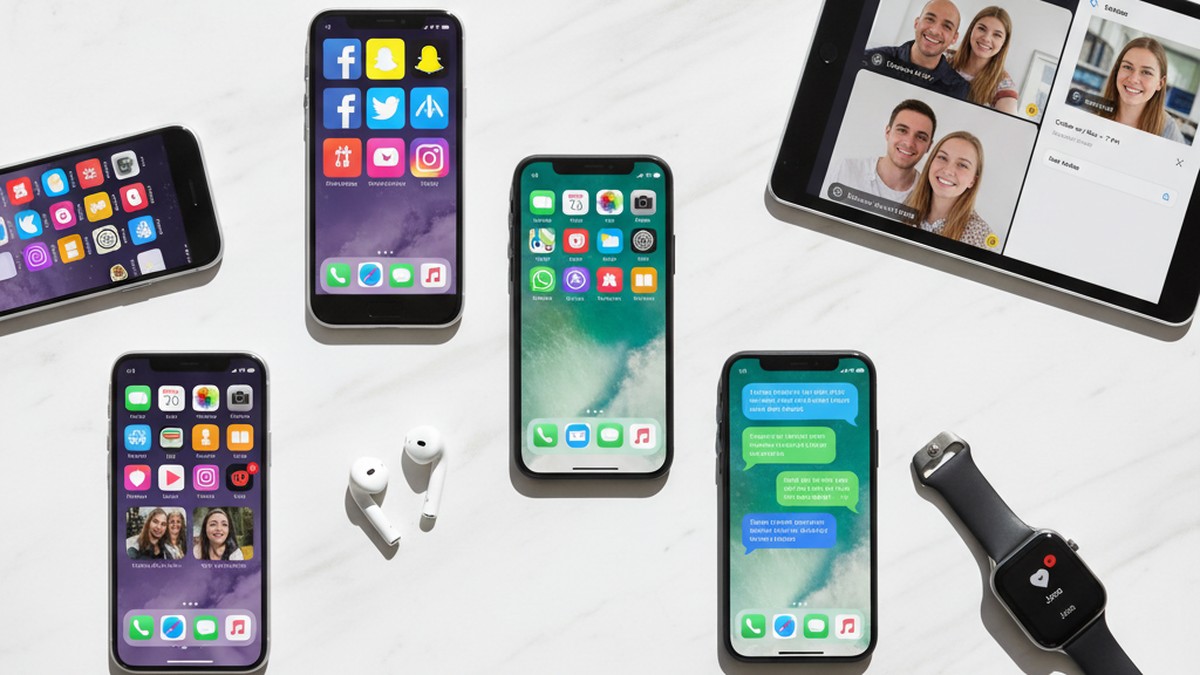
Technology has lowered the barrier to infidelity through five specific mechanisms. Each one addresses a friction point that previously slowed or prevented affairs.
Accessibility. Dating apps, social media, and messaging platforms are available around the clock on devices most people never put down. The opportunity to initiate contact with someone new no longer requires leaving the house, going to a specific social venue, or working up the nerve for an in-person approach. Contact is always one tap away.
Anonymity. Technology makes it easy to present an alternate identity. Fake accounts take minutes to create. Burner numbers are cheap. Secondary email addresses are free. Someone intent on maintaining a secret can compartmentalize digital life in ways that were practically impossible before smartphones.
Deniability. "It was just talking," "we're just friends," "I haven't met them in person" — these defenses are made possible by the incremental, low-stakes nature of digital contact. The progression from friendly messaging to emotional affair is gradual enough that each step can be individually minimized, even as the cumulative pattern is clearly inappropriate.
Erasure. Evidence can be deleted in seconds. Messages disappear from apps like Snapchat by design. WhatsApp conversations can be cleared. Dating profiles can be deactivated. The ease with which digital evidence can be removed creates a false sense of security — though, as the next section covers, erasure is far less complete than most people assume.
Emotional distance. Digital infidelity removes the physical logistics that once governed affairs. An emotional affair can be sustained indefinitely through text without ever requiring hotel bookings, absences from home, or the physical evidence of an in-person meeting. This makes digital-level affairs particularly sustainable — and particularly invisible until they escalate.
Research from 2025-2026 shows that 42% of people who admitted to online affairs described the affair as beginning with what they considered "harmless messaging." This reflects how the accessibility-anonymity-deniability combination creates a path from innocent to inappropriate without any single obvious crossing of a line.
The Pre-Digital vs. Digital Comparison
Understanding the magnitude of the change requires a side-by-side look at how infidelity operated before smartphones became ubiquitous — and how it operates now.
| Dimension | Pre-Digital (Pre-2007) | Digital Age (2026) |
|---|---|---|
| How affairs start | Chance encounters, workplace proximity, social venues | Dating apps, social media DMs, messaging platforms |
| Time to escalation | Weeks to months (required repeated in-person contact) | Days to weeks (24/7 digital access) |
| Evidence created | Minimal unless documented (receipts, hotel records) | Extensive (messages, metadata, location, financial) |
| Detection methods | Behavioral observation, private investigators | Behavioral observation, app scanning, cloud data, financial records |
| Distance from home | Required physical absence | Can be conducted from the same room |
| Ease of ending | Required active effort (move away, change jobs) | Can stop with a few taps, or persist indefinitely |
The most significant column in that table is the last one: distance from home. Before smartphones, sustaining an affair required physical absences that created detectable patterns — unexplained evenings, missed calls, schedule inconsistencies that could only be explained by being somewhere else. Digital affairs can be conducted from a partner's living room, during a family dinner, or during a commute. The physical evidence trail that once existed essentially disappears.
Why Deniability Is the Most Powerful Mechanism
Of the five mechanisms above, deniability deserves the most scrutiny because it is the one that keeps people engaged in behavior they know is inappropriate for longer than any other factor.
The incremental nature of digital communication means that no single step feels definitively wrong. Accepting a message request does not feel like cheating. Responding to a compliment does not feel like cheating. Having a long conversation about shared interests does not feel like cheating. Each micro-decision is low enough stakes to rationalize. The cumulative result — a sustained, secret emotional relationship with someone outside the primary partnership — is only visible when you look at the whole pattern rather than any individual moment.
This escalation structure is not accidental. Platform design amplifies it. Algorithms surface content from people you have engaged with. Notification systems create urgency. Read receipts create social pressure to respond. The platforms that facilitate digital affairs were not designed to do so, but their engagement-maximizing design inadvertently creates ideal conditions for the incremental drift from contact to connection to something more.
Understanding this mechanism matters practically: if you are seeing signs of increasing phone-guarding behavior or decreasing engagement from a partner, the behavior pattern you are observing may have begun with something your partner genuinely believed was harmless — which does not change what it has become. Identifying the pattern early, before it escalates to deeper levels of the digital infidelity spectrum, gives a relationship the best chance of addressing the problem before its effects become irreversible.
Where Do Most Digital Affairs Start? Platform-by-Platform Data
Not all platforms carry the same risk. Analysis of documented digital affair cases reveals distinct patterns in where affairs begin and where they are maintained — and understanding these patterns matters for understanding the scale of the problem.
Instagram leads in documented cases. Instagram DMs feature in 34% of documented digital affair cases, making it the single most common platform for affair communication. The platform's design contributes to this: photo browsing creates emotional connections, Story reactions are low-commitment contact points, and DMs are private by default.
Snapchat features in 19% of documented cases overall, but jumps to 31% for people under 35. The appeal is obvious — Snapchat's ephemeral format was built around disappearing content, which creates the perception (often mistaken) that conversations cannot be recovered.
WhatsApp is used in 16% of documented cases. A particularly notable data point: 73% of WhatsApp users who are involved in hidden contact use the "mute notifications" feature for specific contacts — allowing them to monitor conversations without visible notifications, while maintaining plausible deniability about how active those conversations are.
Dating apps remain a primary channel: by one measure, 38% of affairs begin through social media platforms and dating apps combined. Among people who use dating apps while in relationships, 17% acknowledge cheating as a reason for their use (YouGov, 2024).
Workplace platforms — Slack, Microsoft Teams, and similar tools — account for approximately 6% of documented cases. This is likely undercounted, as workplace affairs are more likely to go unreported to researchers. The plausibility of work communication makes these channels particularly useful for maintaining deniability.
Signal and Telegram together account for roughly 12% of cases, with Signal preferred by people who are more technically aware of evidence trails. The end-to-end encryption and disappearing message features make these platforms difficult to monitor through conventional means.
For a full breakdown of the apps cheaters use most often and how each platform's features are exploited, the pattern is consistent: the apps designed around privacy, ephemerality, and visual browsing are the ones that appear most frequently in infidelity investigations.
Is AI Companionship Considered Cheating? The New Infidelity Frontier
According to a 2025 Kinsey Institute and DatingAdvice.com national study, 61% of singles consider sexting or falling in love with an AI companion as cheating. Among all adults, 40% view any romantic AI engagement as infidelity. Legal systems are beginning to catch up — Los Angeles family courts now handle 3–5 AI infidelity cases per week.
The most significant new development in digital infidelity is one that barely existed five years ago: AI companion relationships. This is not a fringe issue. The data, the court cases, and the relationship counseling caseloads all tell the same story — AI infidelity is a real phenomenon with real consequences.
The scale: A 2025 research study found that 16.4% of singles have used an AI as a romantic partner. Among all adults surveyed, 40% consider any romantic engagement with an AI companion to be a form of cheating on a human partner.
The legal threshold: A national study conducted by DatingAdvice.com and the Kinsey Institute at Indiana University found that 61% of singles consider sexting or falling in love with an AI to be cheating — identical in moral weight to doing the same with a human (Kinsey Institute, 2025). Twenty-nine percent consider AI romantic relationships to be infidelity regardless of whether sexual content is involved.
The courtroom reality: Los Angeles family courts now process three to five AI infidelity cases per week. This figure comes from family law attorneys and court records, not from surveys or estimates — these are cases in which AI companion use has become a material factor in divorce or separation proceedings. The legal and financial implications are real and expanding.
The psychological dimension: The experience of AI infidelity from the betrayed partner's perspective is often indistinguishable from discovering a human affair. The emotional investment the cheating partner put into an AI relationship is real. The time redirected away from the primary relationship is real. The secrecy is real. What is absent is another human on the other end — but for the person who discovers it, that distinction rarely eliminates the hurt.
What AI Infidelity Actually Looks Like in Practice
Understanding AI infidelity as an abstract concept is one thing. Understanding what it looks like in actual relationships is more useful for identifying whether it is relevant to your situation.
The typical pattern begins with a person using an AI chatbot or companion app — ostensibly for entertainment, mental health support, or casual conversation — and gradually developing a more personal and emotionally invested relationship with the AI. Conversations become more intimate. The person begins sharing things they do not share with their partner. They look forward to the conversations. They feel understood or validated in ways they report not feeling in the primary relationship.
The secrecy element usually develops when the person recognizes that their partner would be hurt or angry by the relationship. At that point, the behavior shifts from a potentially innocent habit into something more functionally equivalent to an emotional affair: active concealment, deliberate hiding of device activity, and an emotional investment that is directed away from the primary relationship.
The specific AI companion platforms that most commonly appear in relationship counseling cases include Character.ai, Replika, and various GPT-based companion apps. Partners who discover these apps on a device — particularly when the conversation history shows months of intimate disclosure — consistently report the same emotional response as discovering a human affair. The absence of a biological person on the other end does not register as a meaningful mitigating factor when the primary partner experiences the discovery.
This is the feature of AI infidelity that the legal and ethical debate tends to underweight: the harm is not primarily about what the AI is doing. The harm is about what the person in the committed relationship is doing — redirecting emotional investment, maintaining secrecy, and cultivating an intimate connection outside the primary relationship.
The legal status of AI infidelity remains murky. An analysis published by the Richmond Journal of Law and Technology (2025) examined whether AI companion use can constitute adultery under existing statutes in states where adultery is still legally recognized. The conclusion was that current laws were written with human-to-human interaction in mind and would require legislative updates to address AI relationships explicitly — a gap that is only beginning to be addressed.
What is not murky is the relational impact. If a partner is spending hours daily in secret conversations with an AI companion, developing emotional attachment, and actively hiding this from their primary partner, the behavioral and emotional pattern is functionally identical to an emotional affair. The platform being artificial does not neutralize the cost to the relationship.

Is Digital Infidelity Really Cheating? The Paradox of Modern Definitions
This question comes up constantly, usually from the person doing it: "We never met in person." "It was just texting." "There was nothing physical." These defenses reflect a genuine cultural uncertainty about where lines are, but the research on their actual impact cuts through the ambiguity fairly cleanly.
The emotional impact of digital affairs on betrayed partners is, in most studies, comparable to that of physical affairs. The intimacy created by sustained private messaging — sharing feelings, vulnerabilities, desires — can be more emotionally penetrating than a physical encounter. Many betrayed partners report that discovering an emotional digital affair was more painful than discovering a one-night physical encounter, precisely because the investment and the secrecy felt more personal.
A straightforward test that relationship therapists often use: the visibility test. If you would stop the behavior immediately if your partner walked in, the behavior has likely crossed a line. This test does not rely on definitions of "what counts" — it relies on your own knowledge of what you are doing and why you are hiding it.
The secrecy itself is the primary signal. Research consistently shows that concealment behaviors — hiding phone screens, deleting histories, muting specific contacts — correlate more strongly with relationship damage than the specific content of what is being hidden. The act of maintaining a secret creates distance, erodes intimacy, and, when discovered, ruptures trust in a way that takes substantially longer to repair than the duration of the behavior.
One legitimate area of genuine ambiguity: online flirting. Many couples have never explicitly discussed whether friendly-flirty DMs cross a line. The absence of an explicit conversation does not make the behavior acceptable, but it does mean that discovery is often followed by genuine disagreement rather than clear-cut betrayal. The healthiest approach — and the one that consistently produces better relationship outcomes — is to have explicit digital boundary conversations before there is a problem, not after.
Does Technology Also Make Cheating Easier to Catch?
Yes — and this is what most coverage on digital cheating misses. Technology creates more evidence of affairs, not less. In 84% of documented discoveries, partners noticed behavioral shifts before finding any device evidence. When digital evidence does emerge, 71% of phone-discovered affairs are triggered by an unfamiliar app — not suspicious messages in apps the partner knew about.
Here is the counterintuitive reality that most articles on digital cheating miss entirely: technology makes affairs easier to start and substantially easier to discover.
This is not the conventional wisdom. The popular narrative is that smartphone apps and encrypted messaging have made infidelity virtually undetectable. The data tells a more complicated story.
The behavioral signal comes first. In 84% of cases where a digital affair was eventually discovered, the betrayed partner noticed behavioral changes before finding any digital evidence. Phone-guarding, late-night activity, emotional withdrawal, changes in intimacy patterns — the behavioral signals predate the digital evidence. This matters because it means most discovery paths begin with human observation, not technology.
The digital trail is extensive. Contrary to the assumption that deleting messages eliminates evidence, modern digital life creates multiple overlapping records:
- Apple Watch syncs messages independently of iPhone
- iCloud backups retain data even after on-device deletion
- Car Bluetooth logs connection history and call records
- Google Location History and Apple's location data track movement patterns
- Venmo, Cash App, and credit card statements document unexplained transactions
- Doorbell cameras and home security systems create timestamped behavioral logs
- Shared family plan records show call timing, duration, and frequency even without call content
The new-app trigger. Perhaps the most actionable single statistic in infidelity research: in 71% of cases where affairs were discovered through phone evidence, the trigger was not finding suspicious messages in a known app. It was discovering an unfamiliar app — one the phone's owner had not mentioned — on the device. People install apps for affairs that they never use for anything else, and the presence of those apps is a more reliable signal than any specific message content.
Scan-based discovery. Dating profiles, even when created under different names or with varied photos, often retain enough identifying information — first name, age, approximate location, occupation — to be matched to a real person. Platform-level searches that are not possible manually can be done systematically through tools designed for the purpose. For anyone with specific suspicions, dating app cheating statistics show how common this type of hidden activity actually is.
The overall picture is a genuine paradox: technology has lowered the cost of starting an affair and raised the volume of evidence an affair inevitably creates. Affairs are getting easier to begin and harder to permanently conceal.
The Psychological Impact of Digital Cheating
Digital infidelity does not produce milder psychological consequences because it is "just online." The research on betrayal trauma does not support that distinction.
PTSD-like symptoms are common. Between 30% and 60% of betrayed partners report experiencing symptoms consistent with post-traumatic stress following the discovery of an affair, including intrusive thoughts, hypervigilance, emotional numbing, and sleep disruption (multiple NIH and peer-reviewed studies). These symptoms are not limited to physical affairs — they appear consistently across digital and emotional affair discoveries as well.
The intimacy dimension amplifies the impact. Digital affairs, particularly emotional affairs conducted through text, often involve a depth of personal disclosure that physical affairs may not. A partner who discovers that their spouse has been sharing their deepest fears, relationship frustrations, and private desires with someone else through daily messaging often reports a more acute sense of personal betrayal than if they had discovered a physical but emotionally shallow encounter.
Men and women experience betrayal differently. Research consistently shows that men are more distressed by sexual infidelity, while women are more distressed by emotional infidelity — though both genders experience both types as serious breaches of trust. Digital infidelity, which so frequently begins as emotional and progresses to sexual, activates both dimensions.
Recovery is possible but takes time. Post-discovery outcomes show that 54.5% of couples separate immediately after discovering an affair. Among those who attempt to repair the relationship, outcomes vary significantly based on the duration of the affair, the depth of the emotional investment, and whether the cheating partner takes full accountability without minimizing the behavior.
One of the most consistent findings across relationship research is that the minimization response — "it was just texting," "it meant nothing," "we never met in person" — is one of the most powerful predictors of failed recovery attempts. Betrayed partners heal more successfully when the scope of the betrayal is acknowledged honestly, not explained away.
Digital affairs carry a unique sting of premeditation. One finding that distinguishes digital infidelity from impulsive physical encounters is the evidence of sustained effort. Messages stretching back months, careful management of notification settings, the creation of separate accounts — these are not things that happen by accident. The betrayed partner is often confronted not just with the betrayal itself but with the realization that their partner put deliberate, sustained effort into concealing it. This premeditation dimension is part of why digital affair discovery so frequently produces PTSD-like symptom profiles rather than simpler grief responses.
Why Women's Digital Infidelity Has Risen Sharply
One of the most significant demographic shifts in infidelity research over the past three decades is the rise in female infidelity — and digital technology is a primary driver.
Since 1990, the rate of women who report having engaged in infidelity has increased by approximately 40%, while the rate among men has remained broadly stable over the same period (General Social Survey longitudinal data). The convergence has been notable: among adults aged 18–29, women now cheat at a slightly higher rate than men — 11% versus 10% respectively.
Researchers point to several factors in this shift. The most significant is structural: women now have far greater access to independent social and professional networks, financial independence, and — critically — the same digital platforms and apps that have always been available to men. The barriers that previously constrained women's opportunities for infidelity have been substantially removed.
Digital platforms have been particularly equalizing. Where traditional affair opportunities often required physical access to alternative social venues — workplaces, bars, social circles — digital platforms require only a smartphone. The social geography that once made women's infidelity harder to initiate no longer applies in the same way.
This does not mean women and men pursue digital infidelity identically. The data on platform preferences and affair motivations still shows gender differences: women are more likely to report emotional connection as the primary driver of an affair, while men are more likely to report physical attraction. But the gap in overall rates has narrowed substantially, and the digital age has been the primary equalizing mechanism.
For people trying to understand whether their concerns about a partner's behavior are reasonable, the dating app cheating statistics and the demographic patterns are worth reviewing — because suspicion that would have been statistically unusual twenty years ago is now considerably closer to the base rate for many demographics.

The Legal Status of Digital Cheating in 2026
Digital infidelity intersects with law in ways that have changed significantly in recent years — and that continue to evolve.
Adultery laws still exist. Adultery remains a crime in 16 U.S. states and Puerto Rico, though prosecutions are extremely rare. Michigan and Wisconsin classify it as a felony. The definition of adultery in most of these statutes requires physical sexual contact — which means that purely digital affairs, even involving explicit sexual content exchanged over years, typically do not meet the legal definition of adultery in jurisdictions where it is criminalized.
Decriminalization is accelerating. New York decriminalized adultery in 2024, joining Massachusetts (2018) and Minnesota (2023) in removing it from the criminal code. The trend is clearly toward decriminalization, reflecting both the difficulty of enforcement and shifting social attitudes.
Digital evidence in civil divorce proceedings. The more practically relevant legal question is not whether adultery is criminal, but how digital evidence affects civil divorce proceedings. In states where fault-based divorce is permitted, evidence of infidelity can affect asset division, alimony determinations, and — in some jurisdictions — child custody arrangements. Dating app records, screenshot evidence, financial records showing unexplained expenditures, and location data have all been successfully introduced as evidence in divorce proceedings.
AI infidelity in family court. The most novel legal development is the emergence of AI infidelity as a factor in divorce cases. Los Angeles courts are handling AI infidelity cases weekly. The legal questions are genuinely complex: does AI companion use constitute adultery under existing statutes? Can time and emotional investment in an AI relationship be characterized as redirected marital resources? These questions are being actively litigated without clear precedent.
Practical guidance: If you are in a jurisdiction where infidelity affects divorce proceedings and you believe your partner is engaged in digital cheating, the most important steps are to document what you observe without accessing accounts you do not have authorization for, to consult a family law attorney about what evidence is admissible in your jurisdiction, and to avoid any action that could itself constitute a violation of privacy law. Legal methods exist; unauthorized device access does not fall within them.
Signs Your Partner May Be Digitally Cheating
The behavioral signals of digital infidelity are remarkably consistent across documented cases, and understanding them does not require accessing anyone's device.
Phone behavior changes. The most common early signal is a change in how a partner handles their phone — not just guarding it, but the specific nature of the guarding. Carrying it to the bathroom, sleeping with it face-down, angling the screen away during conversations, or being startled when someone approaches from behind while they are on their phone. These behaviors reflect the management of a secret, not routine privacy preferences.
Notification management. Muting specific contacts, disabling notification previews, or suddenly switching from visible lock screen notifications to none — these are adjustments made when the person does not want contact from a specific person to be visible to others.
App changes. A new app on the phone that was not there before, or an app that seems inconsistent with the person's usual habits, is the highest-signal indicator of hidden digital activity. As established earlier, 71% of phone-discovered affairs began with the discovery of an unfamiliar app.
Schedule and availability shifts. Being unreachable for periods that were previously normal contact times. Explaining absences in ways that do not quite add up. A pattern of being "just about to respond" to their primary partner while clearly actively using their phone.
Emotional withdrawal from the primary relationship. Reduced interest in shared activities, shorter and less engaged conversations, less physical affection — these are consequences of emotional investment being directed elsewhere. The signs of emotional cheating through texting often show up in the primary relationship before anyone looks at the phone.
Defensiveness about device access. Reacting to normal requests — "can I use your phone to look something up?" — with disproportionate anxiety or anger. A person with nothing to hide does not typically treat their phone as a vault.
None of these signs are individually definitive. Many can have innocent explanations. The pattern matters more than any single behavior, and patterns that change across multiple dimensions simultaneously are more meaningful than any individual signal.
Reading the Pattern: A Signal Scoring Framework
One way to organize what you are observing is to score signals by their specificity. High-specificity signals — behaviors that have few innocent explanations — carry more weight than low-specificity signals that could apply to many situations.
| Signal | Specificity | What It Suggests |
|---|---|---|
| New unfamiliar app on device | High | Active digital contact being maintained |
| Specific contacts muted/notification-disabled | High | Managing visibility of contact from a specific person |
| Defensive reaction to casual phone request | High | Something on device they do not want seen |
| Dating app detected via scan | High | Active or recently active profile on platform |
| Screen angled away while texting | Medium | Habitually hiding content, not necessarily affair |
| Sleep schedule changes with phone use | Medium | Late-night contact being maintained |
| Reduced engagement in primary relationship | Medium | Emotional energy redirected elsewhere |
| Phone taken everywhere (bathroom, etc.) | Medium-High | Managing a specific secret, not general privacy |
| Changed passcode without explanation | Medium-High | Anticipating that partner may attempt to look |
| Vague or defensive answers about who they are texting | High | Awareness that the contact would not be acceptable |
The highest-confidence pattern — the one that most reliably indicates something worth investigating further — is a cluster of high-specificity signals appearing together: a new unrecognized app, muted specific contacts, a changed passcode, and a defensive response to normal questions about the phone. Any one of these has innocent explanations. All four together represents a pattern that warrants a direct conversation.
It is also worth noting what these signs are not telling you. They are not telling you definitively that an affair is occurring, or that your partner is a specific type of person, or that the relationship is certainly over. They are telling you that your partner is managing a secret that they believe you would not approve of if you knew about it. What that secret is requires more information — ideally from a direct, specific conversation.
How to Protect Your Relationship in the Digital Age
The most effective protection against digital infidelity is not surveillance — it is conversation. Couples who have had explicit, specific discussions about digital boundaries are significantly less likely to experience digital infidelity, and significantly more likely to recognize when something has gone wrong before it escalates.
Have the digital boundaries conversation before there is a problem. This conversation should cover: what kinds of contact with other people are acceptable, which apps or platforms you both use for what purposes, whether private accounts or hidden contacts are acceptable, and what your expectations are around device transparency. This is not about checking up on each other — it is about establishing shared standards while the relationship is healthy.
Address the underlying relationship quality. Most digital affairs do not begin because someone is looking for an affair. They begin because someone is looking for something they are not getting in the primary relationship — emotional connection, validation, excitement, or attention. This does not excuse the behavior, but it does point toward the primary lever for reducing the risk: maintaining a primary relationship where those needs are being met.
Distinguish monitoring from surveillance. There is a meaningful difference between mutual transparency — both partners having visibility into each other's digital lives by agreement — and covert surveillance. The former can support trust in a healthy relationship. The latter, even when motivated by genuine suspicion, creates its own relational damage and carries legal risk if it crosses into unauthorized account access.
Know when professional help makes sense. If you have discovered evidence of digital infidelity, relationship therapy is one of the few interventions with a meaningful evidence base for supporting recovery. The 15.6% of couples who successfully rebuild after an affair do not typically do so without professional support — the complexity of the repair process generally exceeds what couples can work through on their own.
If data here has you concerned, CheatScanX can scan 15+ dating platforms to check for hidden profiles — giving you factual information rather than leaving you with only suspicion.
What to Do If You Suspect Digital Cheating
Suspicion without evidence creates a specific kind of psychological suffering — one that is neither the relief of being wrong nor the clarity of knowing. Here is how to handle it practically.
Start with observation, not confrontation. Document the behavioral signals you have noticed — specific incidents, dates, and what changed. This is useful both for your own clarity and for any conversation you eventually have with your partner.
Use legal methods to gather information. Dating app profile searches, reverse image searches, and platform-level searches are legal and can provide meaningful information without requiring device access. Understanding the signs your husband is cheating on his phone or similar behavioral patterns can help you assess whether your concern is supported by evidence.
Avoid unauthorized account access. Reading a partner's messages by accessing their accounts without permission can itself constitute a violation of computer fraud laws in many jurisdictions, and evidence gathered this way may be inadmissible in legal proceedings. This is a constraint that matters even when the underlying suspicion is correct.
Consider a direct conversation. The quality of a partner's response to a direct, specific question is often more informative than any digital investigation. Someone with nothing to hide responds very differently than someone who is managing a secret. The defensive reaction itself is data.
Decide what information you need and why. What would confirming your suspicion change? What would finding nothing change? These questions help clarify what you are actually seeking — certainty, closure, a foundation for a difficult conversation — and what next step actually serves that goal.
A Practical Step-by-Step Approach
For people who want a structured approach rather than general principles, here is the sequence that relationship investigators and therapists most consistently recommend.
Step 1: Write down what you have observed, not what you have interpreted. "Partner has new app on phone I have not seen before" is an observation. "Partner is definitely cheating" is an interpretation. Keeping your initial documentation to observations protects you from confirmation bias and gives you clearer information if you eventually need to have a direct conversation.
Step 2: Run a dating app scan. If your concern is specifically about dating platform activity — which accounts for the single largest category of digital infidelity — a scan of the major platforms can confirm or rule out active profile presence. This takes minutes and provides factual information rather than speculation. Understanding which secret messaging apps for cheating are most commonly used can also help you understand what you are looking for.
Step 3: Check the high-signal indicators. Look at what apps are on shared devices (without accessing content). Check whether purchases from dating app subscriptions appear in shared financial accounts — App Store or Google Play charges from specific platforms are visible on billing statements even without accessing the apps themselves. Review whether location patterns have changed — many family phones share location by default, and consistent discrepancies between reported location and actual location are meaningful.
Step 4: Have the conversation from a position of information, not suspicion. The most effective approach to confronting potential infidelity is to be specific about what you have observed rather than leading with accusations. "I noticed [specific app] on your phone and I want to understand what it is" opens a very different conversation than "I think you're cheating." The former gives your partner a chance to explain and gives you clear information about whether the explanation is plausible.
Step 5: Take the response seriously as data. How a partner responds to a direct, specific question is more informative than almost any digital evidence. Denial, minimization, counter-accusation, or explosive anger in response to a calm specific question are all meaningful signals. A genuinely innocent partner typically has a different response profile than someone managing a secret.
Conclusion: Technology Has Changed the Game, Not the Stakes
Digital technology has fundamentally altered how infidelity operates — where it starts, how it progresses, what evidence it leaves, and how it is discovered. But it has not changed what makes betrayal painful, what makes relationships resilient, or what recovery requires.
The old model of infidelity was constrained by geography, opportunity, and the logistics of maintaining a secret physical life. The digital model has removed most of those constraints. What remains is the human element: the decision to invest emotional energy elsewhere, to maintain a secret, to prioritize something hidden over something shared.
What has changed is the evidence environment. People who pursue digital affairs are operating under the misapprehension that deleting messages equals eliminating evidence. The actual evidence environment — across cloud services, device logs, financial records, and behavioral signals — is far richer than most people realize. The data consistently shows that digital affairs leave more traces, not fewer, than their pre-digital equivalents.
Understanding this does not make betrayal easier. But it does mean that people with legitimate concerns have more reliable paths to factual information — and fewer reasons to stay in the corrosive limbo of unresolved suspicion.
The relationship advice has not changed: communicate, maintain boundaries by agreement rather than surveillance, and address the underlying relationship quality before problems escalate. What the digital age has added to that advice is a set of tools that make both the concealment and the discovery of infidelity more technically sophisticated than they have ever been before.
Frequently Asked Questions
Digital cheating includes any romantic or sexual interaction conducted through technology that is hidden from a primary partner. This covers dating app use, secret DMs on social media, sexting, emotional affairs via messaging apps, and increasingly, intimate relationships with AI companions. The defining characteristic is secrecy — if you would stop if your partner walked in, it likely crosses the line.
Yes, by any reasonable definition. Sexting involves sexual communication, and when hidden from a partner, it constitutes infidelity regardless of whether a physical meeting occurred. Research consistently shows the emotional impact on betrayed partners is comparable to physical affairs — the intimacy of the digital exchange, not the location, is what matters.
In 84% of cases, partners noticed behavioral changes before finding digital evidence. When device evidence does emerge, 71% of discoveries are triggered by finding an unfamiliar app on a device — not by stumbling onto suspicious messages in existing apps. CheatScanX can scan 15+ dating platforms in minutes if you suspect hidden profile activity.
Not necessarily more — but differently. Overall infidelity rates have remained broadly stable for decades, but the way affairs begin has shifted significantly. Today, 38% of affairs start via social media or online platforms rather than in-person. Technology has removed the friction of meeting someone new, which accelerates the early stages of affairs even when the underlying relationship problems are the same.
AI infidelity involves developing romantic or sexual relationships with AI companions while in a committed relationship. It is a real and growing issue — 16.4% of singles report having used AI as a romantic partner, and 61% of the general population considers it a form of cheating. Los Angeles family courts now see 3–5 AI infidelity cases per week, indicating it has crossed into legal territory.