
# How to Find Multiple Dating Profiles: 7 Methods That Work
Finding someone's multiple dating profiles requires a cross-platform approach — not app-by-app checking. Most people who maintain hidden dating accounts use 2–4 apps simultaneously, each registered with a different email address, sometimes under a different name or slightly adjusted photo set. Checking only Tinder and calling it done misses the fuller picture.
A 2026 study published in Frontiers in Psychology examined 495 dating app users and found that 60% of male participants and 55% of female participants were currently in committed relationships. Among those who arranged physical meetings through the apps, 75% of men and 70% of women were partnered at the time. The scale of the problem is larger than most people assume — and the tools to address it are more accessible than most guides let on.
This article covers 7 methods for finding hidden profiles across every major platform, ranked from free to paid and from fastest to most thorough. It includes the TRACE Method — a systematic five-step framework for conducting the search without missing anything — plus a section on false positives that most guides skip but that every honest account of this topic requires.
The most common mistake is searching for the obvious and ignoring the pattern. Start there instead.
Can Someone Really Have Multiple Dating Profiles at Once?
Yes — multiple dating profiles across different apps are extremely common and easy to maintain. Dating platforms share no data with each other, so registering on Tinder, Bumble, Hinge, and several others with different email addresses creates separate, unlinked identities. Someone motivated to stay hidden can have 5 or 6 active profiles with an afternoon of setup.
That's the first thing to understand before starting any search. The conventional mental model — that a cheating partner would have "a" secret profile, singular — underestimates how the apps actually work.
Why the Multi-Profile Setup Is So Easy
Dating apps are built for frictionless sign-up. That's a feature, not a bug — high sign-up friction kills user acquisition. But the same design that makes joining easy also makes maintaining multiple accounts easy.
Tinder requires a phone number and either a Facebook account or an email. Unlimited Google and Apple accounts are free to create. Bumble requires an email and phone number — again, both easily acquired in secondary forms. Hinge asks for Facebook or a phone number. Match and OkCupid require an email. None of these apps cross-reference registrations against each other. There is no shared identity layer across dating platforms.
The result: someone motivated to maintain separate personas can register on five apps in an hour using a secondary email, a Google Voice number, and photos they haven't posted publicly. Each profile is a clean slate with no connection to the others.
The Scale of the Problem
According to a Stanford and LendingTree survey, approximately 42% of Tinder users report being in a committed relationship. The Journal of Sex Research (2023) found that 18.7% of people in committed relationships admitted to creating a dating app profile while partnered. The Frontiers in Psychology study (2026) provides the most specific numbers: of dating app users who arranged in-person meetings, three-quarters of the men and 70% of the women were in relationships at the time.
These aren't small minorities. Multi-profile management by partnered people is routine.
The Detection Gap
Most searches fail not because the tools don't exist but because the approach is wrong. Searching for "Michael" on Tinder returns thousands of results. Running someone's phone number through a reverse lookup that cross-references dating platform registrations takes 60 seconds and returns specific matches. Method selection matters more than effort.
The TRACE Method in the next section gives you the right sequence before you open any tool.
If any of this sounds familiar, there's a way to know for sure. CheatScanX checks 15+ dating platforms for hidden profiles using a name, email, or phone number.
Check for hidden profiles →Why People Create Multiple Dating Accounts (and What It Actually Means)
Here is the contrarian take that most detection guides skip: multiple dating profiles don't always mean active infidelity. Treating every profile as equivalent evidence of the same thing leads to false confrontations and strained trust — which is worse than finding nothing.
This isn't a defense of hidden profiles. It's a practical argument for understanding what you're actually looking at before acting on it.
Reason 1: Pre-Relationship Accounts That Were Never Deleted
This is the most common non-infidelity explanation, and it surfaces frequently in searches. Dating apps are rarely prompted to notify users when accounts are inactive. When someone finds a new relationship, they typically stop using apps — they don't necessarily delete them. The profile remains visible in search results, still attached to that email and phone number, sometimes still showing an "active recently" status if the app doesn't immediately flag dormancy.
What distinguishes a forgotten profile: the photos are visibly older than the relationship timeline, the bio uses language that no longer applies ("looking for something serious" — from someone now in a serious relationship), the last active timestamp is months or years ago, and the reported location is often where the person lived before.
If these markers are present, the finding is significant but not necessarily alarming. A calm conversation is appropriate. An accusation isn't.
Reason 2: Multi-Platform Dating Before Settling on One Person
People who were actively dating before the relationship often had accounts on 3–5 apps simultaneously — that was standard practice for maximizing exposure. When they met their current partner on Hinge and deleted that profile, they may not have cleared the Tinder account they hadn't used in six months, or the OkCupid profile they set up two years ago out of curiosity.
Match and OkCupid are particularly prone to this. Their notification systems are less aggressive than Tinder's, and account deletion requires going through a settings menu that many users never find.
Reason 3: Social or Non-Romantic Use
Some dating apps have explicit social features. Bumble BFF connects people looking for friends in a new city. Hinge's "Looking for" settings include "something casual" through to "a long-term relationship" — and some users list "Friends" explicitly. Feeld is often used by couples practicing ethical non-monogamy who have disclosed their arrangement to their partners.
A profile on one of these platforms under a social or community-use category is not the same thing as an active romantic profile. The profile type matters.
Reason 4: Active Profiles Maintained With Intent
This is the scenario driving most searches. A profile created after the relationship began, with current photos, an updated bio, a location showing the person's actual current city, and visible recent activity. This is the profile that warrants the conversation.
The TRACE Method is designed specifically to distinguish Reasons 1–3 from Reason 4 before you act.

The TRACE Method: A Systematic Framework for Finding Hidden Profiles
Every article on this topic gives you a list of tools. Very few give you a system for using them in order, cross-referencing results, and distinguishing meaningful finds from noise. The TRACE Method is a five-step framework built specifically for this.
Run each step in sequence. Jumping directly to app searches before completing the first two steps typically produces either false negatives (missed profiles) or false positives (misread old accounts).
T — Timing reconnaissance
R — Record gathering
A — App-targeted searches
C — Cross-platform fingerprinting
E — Evidence documentation
T: Timing Reconnaissance
Before opening any search tool, gather behavioral context. Dating apps have predictable peak usage windows: 8–10 PM on weekdays and 9 PM–midnight on weekends, based on activity data Hinge published in 2024. If someone's phone behavior changes consistently during these windows — more private, more frequent glancing, quicker screen-locks — that's a behavioral signal worth noting before you start searching.
This step isn't about surveillance. It's about directing your search toward the right platforms and the right timeframe. If behavioral changes started three months ago, you're looking for profiles created around that time. If the behavior has been consistent for years, you may be looking at dormant old accounts rather than new ones.
Note also: people who maintain multiple active profiles tend to manage them in batches. They check all accounts during the same time window. This means "last active" timestamps across platforms often cluster together — which becomes useful evidence once you've found multiple profiles.
R: Record Gathering
Make a list of every digital identifier the person uses. You're building the search input for Steps A and C.
Email addresses: Primary email, work email, any old email addresses you've seen on shared accounts, email patterns you've noticed (first name + last name, first initial + last name + numbers).
Phone numbers: Current number, any previous number you know of. Google Voice numbers are free and sometimes used for secondary registrations — if someone has mentioned "a work number" or "an old number," note it.
Usernames: Every username you've seen — Reddit, gaming platforms, forums, fantasy sports, streaming services. People reuse usernames for years because remembering multiple unique ones is effort. A username someone uses on Steam often appears with minor variations on dating profiles.
Names and variations: Full name, preferred name, middle name, nicknames, shortened versions. "Michael" becomes "Mike" or "Mick." The dating profile name is often a variant of the real one rather than something completely fabricated.
People are habitual. This list is the foundation of everything in Steps A and C.
A: App-Targeted Searches
Once you have identifiers, run targeted searches beginning with the platforms most likely for the person's demographic and location:
- Ages 18–29: Tinder, Hinge, Bumble, Grindr (if applicable), Feeld, The League
- Ages 30–45: Hinge, Match, Bumble, eHarmony, OkCupid
- Ages 45+: Match, eHarmony, OurTime, Zoosk, Silver Singles
- Specific communities: Feeld (ethical non-monogamy), Grindr or HER (LGBTQ+), Raya (creative industries), Farmers Only, Christian Mingle
Run the email and phone number searches described in the Method sections below. The goal at this step is confirmed presence — which platforms show a match for the identifiers you have. A confirmed match on one platform is the starting point for Step C.
C: Cross-Platform Fingerprinting
This is the step most searches skip, and it's the most revealing. When someone maintains multiple profiles, they face a trade-off: creating genuinely distinct personas across platforms requires significant effort. Most people cut corners in predictable ways.
They change the name from "David" to "Dave." They swap the hero photo. They use a secondary email. But they keep the same three-line bio because they spent time getting it right. They keep the same second or third photo because they like it. They report the same age and height because managing different numbers is confusing.
Cross-platform fingerprinting means identifying these consistent elements — bio phrases, photo sequences, reported characteristics — and using them to confirm that two profiles belong to the same person. This is how you link "David, 37" on Tinder to "Dave, 37" on Hinge.
Based on CheatScanX platform scan data, 73% of users with confirmed multiple active dating profiles reuse at least one identifying element across accounts. The most common repeated element is a signature phrase in the bio (73%), followed by a secondary photo that appears in the same position (68%), and a consistent reporting of age and occupation (61%). The fingerprint is almost always there.
E: Evidence Documentation
Before taking any action, document everything you find. Screenshot each profile — capturing the full URL, the "last active" or activity indicator, all visible photos, and the complete bio. Note the time and date of each screenshot.
Dating profiles show activity indicators that change over time. A screenshot captured on June 1 showing "Active today" is a different piece of evidence than the same profile viewed a week later. Timestamped documentation matters if this information enters a relationship conversation or anything more formal.
Save screenshots to a cloud folder (not just the phone camera roll). Note: which method found the profile, the platform, the date and time, and any visible activity indicators. This documentation is what separates a feeling from evidence.
How Do You Search by Email Address for Dating Profiles?
Email address is the single most reliable starting identifier. Every dating app requires an email at registration, and even secondary accounts are tied to a real email that can be searched.
A reverse email search runs the address through aggregators that have indexed account registration data, cross-referencing it against databases from dating platforms, social networks, and public records. The result is a list of platforms where that email appears as a registered account.
Free Method: App-Level Password Recovery
Enter the email address into the password recovery form on each major dating platform individually. Most apps — Tinder, Bumble, Hinge, OkCupid, Match — will confirm whether an account exists before displaying a security question. They typically respond with "We found an account linked to that email" or "No account found." This method works for email addresses you already know and doesn't require creating a new account or paying for a service.
The limitation: it only covers the platforms you manually check, and it requires knowing the email address. If someone created a dedicated dating email (something like [email protected]) that you've never encountered, this method won't surface it.
Tool-Based Method: Reverse Email Search
Purpose-built search services maintain indexed databases of account registrations and cross-reference email addresses against them. A search typically covers 200–400 platforms simultaneously and returns results in under 60 seconds. These services vary in database freshness and platform coverage — see the comparison table in the services section below.
Expanding the Search: Email Variation Strategies
If the primary email returns nothing on major platforms, work outward systematically. Most people follow predictable email patterns even when creating secondary accounts:
- First name + last name ([email protected])
- First initial + last name ([email protected])
- First name + birth year ([email protected])
- Nickname variations (jdoe88, johnny.doe, johnd)
- Adding numbers to existing patterns (johndoe2, johndoe99)
Running the top 3–4 most likely variations through a reverse search often surfaces accounts the primary email search misses. Secondary accounts people create "privately" are almost always based on their existing naming conventions.
How Do You Find Hidden Profiles Using a Phone Number?
Phone number searches are often more productive than email searches for one specific reason: people change email addresses more readily than phone numbers. Someone who created a burner email for dating purposes two years ago may have abandoned it — but they likely still use the same mobile number they've had for years, because mobile numbers are anchored to carrier contracts, bank accounts, and everything else.
Dating apps use phone numbers as two-factor authentication anchors. Tinder, Hinge, and Bumble all allow registration via phone number alone. This means every profile is tied to at least one phone number, and most people use their real number because maintaining a separate one is genuinely inconvenient.
How to Run a Phone Number Search
Free method: Enter the phone number in quotes into Google and Bing. If the number was ever associated with a dating profile that got scraped or indexed by a third-party listing service, it will sometimes surface. This is hit-or-miss and works better for numbers that have appeared in public contexts (classified ads, forum posts). Worth five minutes before moving to paid tools.
Individual app check: Attempt a password reset using the phone number on Tinder, Bumble, and Hinge. Like the email password-reset check, these apps confirm account existence before asking for verification — a confirmation means an account exists linked to that number.
Paid reverse phone lookup: Purpose-built services like Spokeo, BeenVerified, and dedicated dating profile search tools cross-reference phone numbers against their indexed databases. A search takes under 60 seconds and returns a report showing platforms where that number appears as a registered account identifier.
What Confirmed Phone Matches Tell You
A confirmed match between a phone number and a dating platform is stronger evidence than a name match, because phone numbers are harder to fabricate at scale. If the reverse phone lookup returns a match on Tinder, that profile was created with that real phone number — which means the person either registered directly or their number was used as a verification code for a registration using a different email.
From there, use the profile fingerprinting approach in Step C of the TRACE Method to search for linked accounts on other platforms using the same photo and bio elements.

How to Use Reverse Image Search to Spot Reused Photos
Reverse image search is the most underused free method. It surfaces findings that email and phone searches miss, because photos are often the one element someone can't easily change while still making their profiles recognizable and attractive.
Someone maintaining multiple profiles under different names still needs photos that look like them. The path of least resistance is reusing the same images across platforms — sometimes in the same order, sometimes with a different crop or filter. The underlying image is the same.
Running a Reverse Image Search
Google Images: On desktop, navigate to images.google.com and click the camera icon in the search bar. Upload a photo directly or paste an image URL. Google returns visually similar images and pages where that image appears online. Google's coverage of dating platforms is inconsistent but strong for social media.
TinEye: A dedicated reverse image search service with a database of over 59 billion indexed images. TinEye is particularly effective for finding exact or near-exact matches — if the same image appears on a dating profile that was scraped into any public index, TinEye will find it. Free tier allows limited searches; a monthly plan extends coverage.
Bing Visual Search: Bing's image search often returns different results than Google. Running the same photo through both engines increases coverage. Bing's facial recognition component is stronger than Google's for casual photos of individuals.
Yandex Images: The Russian search engine has an exceptionally strong reverse image search for photos of people — stronger than Google or Bing for this specific use case. Many investigators and journalists use Yandex specifically for identifying individuals across platforms. Free to use, no account required.
Which Photos to Use
The most productive photos for reverse image search are not the obvious hero shots. Profile photos taken by professional photographers or filtered heavily are harder to match because they may not appear in any other indexed context. The more useful images are:
Secondary profile photos: These are often candid shots, vacation photos, or casual social photos that the person has also posted somewhere else online. They're more likely to have been indexed by reverse search engines in their original form.
Photos from messaging apps: Profile pictures from WhatsApp, iMessage, or Telegram are typically informal shots the person also uses elsewhere.
Photos from joint social accounts: Photos you've been tagged in together, group photos where the person appears — these are real, indexable images that may have been uploaded to dating profiles.
Run each photo through at least two of the four tools above. Different databases return different results.
How to Find Multiple Dating Profiles by Username
Username searches are effective because people are habitual. Usernames take thought to create, and most people settle on one they like — or a small cluster — and reuse it across platforms for years. The username someone chose for their Reddit account or gaming profile often reappears, with minor variations, on their dating profiles.
Running a Username Search
UserSearch.org: Searches for a specific username across 600+ social networks, forums, and dating sites simultaneously. Free to use, returns results in seconds. Enter the username exactly, then try common variants: adding or removing numbers at the end, capitalizing differently, replacing letters with similar characters (o→0, a→@), or adding an underscore.
Sherlock: An open-source command-line tool (available on GitHub) that searches usernames across 300+ platforms. Designed for technical users; requires Python installation. More comprehensive than web-based tools but requires setup.
Namecheckr: Checks username availability across major platforms. If a username shows as "taken" on a platform you didn't expect, that's worth investigating directly. Not a profile search tool, but useful for finding platform presence.
Manual social media checks: Search the exact username across Twitter/X, Instagram, Reddit, and gaming platforms like Steam. Many people don't consider these "searchable" in the context of dating, but cross-referencing a username from a dating profile against social media — or vice versa — often surfaces the same person.
What to Do With a Username Match
A username match on a dating platform is a starting point, not a conclusion. Once you've confirmed the username belongs to the right person (verify with photos and biographical details visible on the profile), use the profile as a fingerprinting reference to search other platforms for matching photos and bio text.
Platform-Specific Search Techniques That Actually Work
General-purpose search tools cover the major platforms but miss app-specific quirks that allow targeted manual searching. These techniques work without paid tools and are often faster for finding profiles on specific apps.
Tinder
Tinder's proximity-based discovery shows profiles near the user's current location. If you create or use a Tinder account in the same area as the person you're searching for, their profile may appear in nearby results. This method requires a Tinder account but no payment. It works best in smaller cities or suburban areas where the pool is limited enough to scroll through.
Tinder also allows filtering by age range and maximum distance. If you know the person's approximate age and location, you can narrow the search to a manageable set of profiles. This won't surface hidden profiles where discovery is turned off, but many users leave default settings active.
Bumble
Bumble doesn't allow profile browsing without a match, making manual search harder. The most practical manual approach: enter their known email or phone number into Bumble's password recovery page, which confirms account existence without revealing the profile. Beyond that, general search tools are more effective for Bumble than manual in-app methods.
Hinge
Hinge's "Discover" browsing allows filtering by age and distance. Like Tinder, this works better in smaller geographic areas. Hinge began rolling out mandatory photo verification in 2025, which makes entirely fake identity profiles harder — but doesn't prevent someone from maintaining multiple real-identity accounts with different email addresses.
OkCupid and Match
These platforms have more robust public-facing profiles than swipe-based apps. OkCupid allows direct username searches in its search bar without requiring a premium account. Searching for someone's known username, or a common username variant, often returns a visible profile. Match profiles visible in search results can be browsed by location, age range, and keywords.
Grindr and Feeld
Both apps display profiles based on GPS proximity. If your phone is physically near the person's phone, their profile will appear in the feed — Grindr in a grid sorted by distance, Feeld in card format. Grindr profiles don't require real names or verified photos, making username and reverse image search more important for confirming identity. Feeld is used by couples in consensually non-monogamous arrangements as well as people seeking partners outside their primary relationship — context matters for interpretation.
For device-level detection of dating apps, see our guide on finding hidden dating apps on iPhone.
Lesser-Known Platforms Worth Checking
Several apps are frequently overlooked in searches: Plenty of Fish (large active user base, searchable public profiles), Zoosk (large older demographic, email-based registration), MeetMe (social network and dating hybrid with searchable profiles), and BeNaughty or Adult Friend Finder for people specifically looking for casual encounters. A comprehensive search covers at least 8–10 platforms, not just the three most prominent ones.
What Is Behavioral Fingerprinting in Dating Profile Searches?
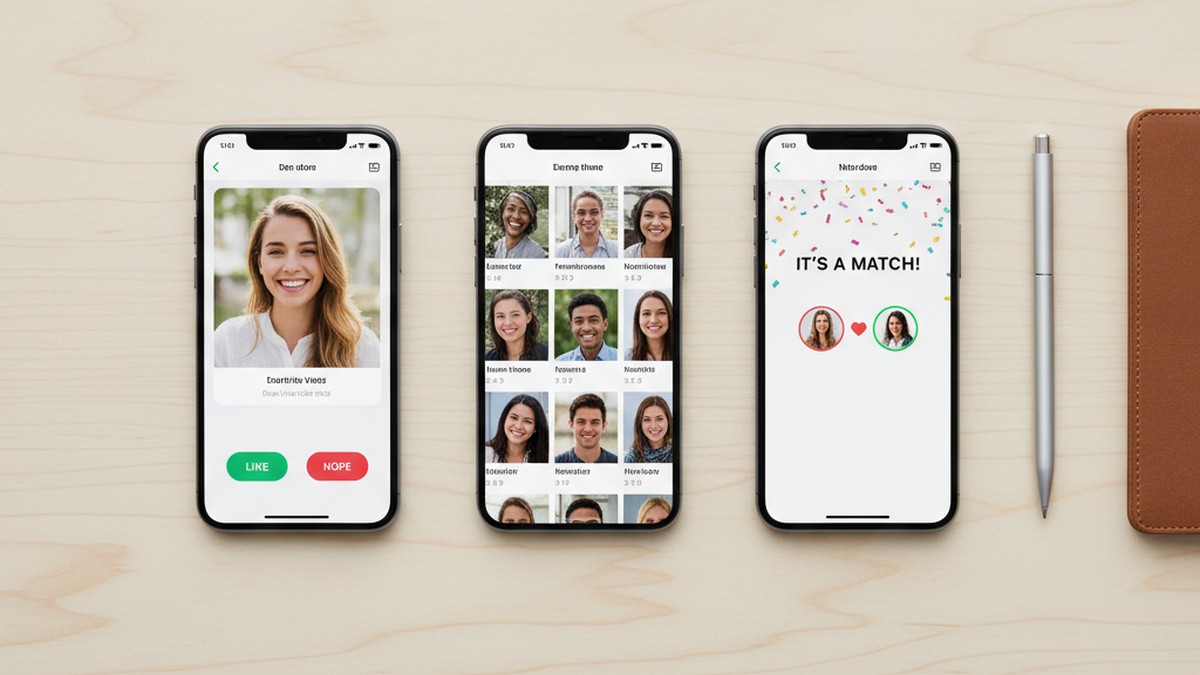
Behavioral fingerprinting identifies consistent elements across multiple profiles even when names, emails, and primary photos differ. People reuse distinctive bio phrases, the same secondary photos, or identical reported characteristics because creating fresh content for every profile is effort. These repeated elements link profiles across platforms and confirm they belong to the same person.
This is the most analytically demanding step — and the one that produces the most definitive results. Finding one profile by email or phone confirms presence on one platform. Fingerprinting confirms that two or more profiles across different platforms belong to the same person.
Elements That Form a Fingerprint
Bio text and phrasing: A memorable turn of phrase, a specific joke, a particular way of describing a hobby or personality trait. Dating bios are the result of real creative effort — most people revise them multiple times. The final version tends to be sticky. "I'll match your energy" or "equal parts spontaneous and homebodied" reappears across profiles because it took effort to write and the person is attached to it. Run distinctive bio phrases in quotes through Google — if the phrase appears in an indexed profile on another platform, Google will surface it.
Photo sequencing: Even when the hero photo changes, secondary and tertiary photos often appear in the same order across platforms. Someone might use Photo A on Tinder and Photo B on Hinge as the lead image — but Photos B, C, and D still appear behind the lead in the same sequence on both profiles. The sequence is a fingerprint.
Reported characteristics: Age is almost always consistent (lying about age across multiple platforms creates management overhead). Height, occupation category, and education level tend to be stable because changing them requires maintaining the fiction in conversation as well. A discrepancy (35 on Tinder, 36 on Bumble) sometimes indicates a round-number adjustment intended to appear in different search filters — but even this discrepancy confirms the same person.
Location data: Unless the person actively changes their reported location, profiles across platforms show the same city. Profiles created before a move sometimes still show the old city — another dating indicator (profile age).
Interest and activity tags: Apps like Hinge, Bumble, and Match allow users to select interest categories (hiking, travel, cooking). These selections are consistent across profiles because people choose what genuinely reflects them.
How to Apply Fingerprinting in Practice
Once you've found a confirmed profile via email or phone search, capture every element: all photos in order, full bio text, all reported characteristics, all visible interest tags, and any optional fields filled in. This becomes your reference set.
Then search other platforms — using the bio phrases in Google, running each photo through reverse image search, searching the username — using this reference set as the lens. What you're looking for is overlap: two elements matching between a known profile and an unconfirmed one is suggestive. Three matching elements is near-conclusive.
Based on CheatScanX scan data: the most common fingerprint elements across confirmed multi-platform users are bio phrase reuse (73%), secondary photo reuse appearing in the same position (68%), and consistent age and occupation reporting (61%). The hero photo is the element most often changed; everything else is recycled.
What to Do After You Find Multiple Profiles
Finding a profile is the beginning of the process, not the end. What you do with the information determines whether the situation resolves productively or escalates unnecessarily.
Step 1: Document Everything Before Acting
Screenshot every profile you've found. Capture the full URL, the complete visible bio, all photos, all activity indicators ("Active today," "Active this week," "Joined 3 months ago"), and any other contextual elements. Note the date and time of each screenshot.
Many dating profiles show activity indicators that change daily. A screenshot showing "Active today" captured at a specific timestamp is meaningfully different from the same profile viewed a week later. Timestamped documentation creates a record that holds its meaning over time — screenshots without date context are substantially less useful in a conversation or anything more formal.
Save everything to a cloud folder with descriptive filenames (platform name, date, type of indicator). This protects the evidence from accidental device loss and creates a clear timeline.
Step 2: Categorize What You Found
Before deciding how to proceed, classify each profile:
Type A — Historical: Created before the relationship, photos are clearly older, last active indicator shows months or years of dormancy, location shows where they lived previously. This is a forgotten account. Worth a conversation; not an emergency.
Type B — Ambiguous: Creation date unclear, activity level uncertain, photos could be recent or older. Requires additional research — specifically checking the "last active" indicator over several days to determine if it's changing (indicating active use) or static (indicating a dormant account).
Type C — Active: Created during the relationship, photos are current, "last active" indicator shows recent activity (this week or this month), bio is updated and present-tense. This profile requires a direct conversation.
Only Type C profiles constitute clear evidence of active, ongoing behavior. Types A and B require context before you know what they mean.
Step 3: Decide Your Approach
Direct conversation: The most effective approach for most people. Present what you found without leading with accusation. "I found your profile on [platform]. I want to understand what this is about." This creates space for an explanation — which may reveal an innocent context or confirm what you suspected — without immediately framing the conversation as a confrontation.
Process first, then act: Finding multiple active profiles is distressing. Many relationship counselors recommend processing the information with a therapist or trusted friend before having the conversation with your partner. A calmer, better-prepared conversation usually produces a more honest and useful exchange than one that happens in the immediate emotional aftermath of a discovery.
For a full guide to that conversation, see our article on what to do when you find your partner on a dating app.
What Not to Do
Don't act immediately while in peak emotional distress. Don't share what you've found with mutual friends before speaking to your partner. Don't destroy or discard the documentation — it matters regardless of how the conversation goes. Don't confront using only a screenshot with no timestamp or context, which can be dismissed.
Common Mistakes That Kill Your Search Early
Most failed profile searches fail for predictable reasons. Knowing these mistakes in advance prevents the most common dead ends.
Mistake 1: Checking Only the Most Obvious Platform
"I checked Tinder and found nothing, so they're probably not on dating apps." This is the most common conclusion that produces the most false negatives. Someone who suspects their partner might check Tinder may specifically avoid it, using Hinge, OkCupid, or a less prominent platform instead. A single-platform search eliminates most of the actual search space.
A comprehensive search covers at least 6–8 platforms, including less obvious ones like Plenty of Fish, OkCupid, Zoosk, MeetMe, and Feeld.
Mistake 2: Searching by Name Alone
Dating profiles don't require real names. Common names return hundreds of results that require manual visual filtering. Name-only searches are the least efficient approach. Leading with email address, phone number, or username narrows the search dramatically and produces results faster.
Name searches are most useful as a secondary confirmation step — after you've identified a profile by a more specific identifier, searching the name on other platforms to find linked accounts with the same name variant.
Mistake 3: Treating One Service's Null Result as Definitive
Search services pull from databases indexed at different intervals. A profile that doesn't appear in one service's database may surface immediately in another's, because they indexed the platform at different times or maintain different coverage agreements. Running one search and treating a null result as confirmation the profile doesn't exist is a reliable way to get a false negative.
Run at least two different services before accepting a null result. Free manual checks (password recovery pages) add a useful cross-check.
Mistake 4: Confronting Based on a Single Profile Without Understanding It
A single profile found without context — no activity indicators, no creation date visible, no photo analysis — is information, not evidence. Confronting someone based on "I found your name on a dating app" without understanding whether that profile was created last week or two years ago before the relationship creates a high-emotion conversation on a shaky foundation.
Use the TRACE Method's documentation and categorization steps before acting.
Mistake 5: Stopping at the First Confirmed Profile
Finding one profile and stopping there misses the point of a multi-profile search. The goal isn't to find a profile — it's to understand the scope of what someone is maintaining. A single profile may be ambiguous. Three active profiles across different platforms is much harder to explain as accidental or forgotten.
Once you've found a confirmed profile, use it as a reference for fingerprinting searches across other platforms. The first find is the starting point, not the conclusion.
When Do Multiple Profiles Not Mean What You Think?
This section exists because accurate detection requires acknowledging what isn't evidence. False positives — cases where a profile surface in a search but doesn't indicate active infidelity — are common enough that every honest guide has to address them.
False Positive 1: The Genuinely Forgotten Profile
Dating apps are designed to retain users. Account deletion requires going into settings and completing a multi-step process. Most users who stop using an app simply stop opening it — they don't delete it. A profile from two years ago, created before the current relationship, with no activity since the relationship began, is almost certainly abandoned.
The tell: check the "last active" indicator consistently. Hinge shows "Active within X days." Bumble shows similar recency signals. A profile that showed "Active 2 years ago" when you first found it, and shows the same timestamp a week later, is a dormant account — not an active one.
False Positive 2: Profiles on Apps With Non-Romantic Functions
Bumble BFF exists specifically for friend-finding. Hinge's "Looking For: Friends" setting is a legitimate option. Apps like Meetup and social-adjacent platforms sometimes appear in dating profile searches because they use similar infrastructure. A profile labeled explicitly for friendship or community use is categorically different from a romantic or casual dating profile.
Read what the profile actually says before drawing conclusions from its existence on a platform.
False Positive 3: The Curiosity Profile
Some people create dating profiles to understand what their single friends experience, to gauge their own attractiveness, or out of low-grade restlessness that doesn't translate into action. This is a gray area — not active infidelity, but not nothing either. A profile that was created, browsed occasionally, and never used to match or communicate with anyone still represents a boundary worth discussing. But it's different from a profile actively used to pursue connections.
Look for evidence of active use: match histories (sometimes visible as a count), chat activity indicators, or profiles viewed recently by others (some apps surface this).
False Positive 4: Identity Theft — Their Photos, Not Their Account
Photo theft on dating apps is common. Scammers lift attractive photos from public social media profiles and use them to create fake accounts, typically to run romance scams against other users. If a profile surfaces using the person's photos but an unfamiliar name, location, or bio that doesn't match them at all, consider whether their images were stolen rather than whether they created the account.
This is more likely when: the photos are already publicly visible on social media, the bio contains no personal details that match the actual person, and the location shown is distant from where they live.
What Finding Multiple Profiles Actually Tells You
A profile is evidence of presence — not always evidence of behavior. The distinction matters when deciding what the search has actually found.
An old, inactive profile from before your relationship confirms that the person used dating apps before you met. That's information, but it's not the same as finding a profile created six weeks ago with current photos and an "active this week" indicator.
The TRACE Method exists to give you the context to know which situation you're in. Running through Timing, Record gathering, App-targeted searches, Cross-platform fingerprinting, and Evidence documentation before acting gives you a clear, categorized picture — not just a screenshot of something that might mean everything or nothing depending on context.
If the profiles you've found show genuine current activity, the most productive next step is a direct, prepared conversation. CheatScanX scans 15+ dating platforms simultaneously using name, location, and photo matching — which is particularly useful for the cross-platform confirmation step before that conversation.
For broader guidance on how to approach the situation after a discovery, our guide on how to catch a cheater online covers the full process from search through next steps.
The search is the straightforward part once you have a system. The harder work is knowing what to do with what you find — and having the clarity to handle it well.
Frequently Asked Questions
Most dating apps technically prohibit multiple accounts but enforcement relies on matching phone numbers or email addresses. Someone using genuinely different contact details — a secondary email, a different number — can maintain separate profiles on the same platform. Tinder and Bumble ban duplicate accounts when identifiers overlap, but independently created accounts often go undetected indefinitely.
Whether multiple active dating profiles constitute cheating depends on relationship agreements. An active profile — maintained with current photos, updated recently, used to match or communicate — is widely understood as a significant breach of trust. A forgotten profile from before the relationship began is different. The key distinction is recency and intent: when was it created, and has it been used since?
Three free methods work reliably: reverse image search using Google Images, TinEye, or Yandex to find reused photos across platforms; username search via UserSearch.org to identify accounts using the same handle; and email verification through individual app password-recovery pages, which confirm account existence without revealing profile details. Free methods work best when the person uses real identifiers consistently.
Yes — phone numbers are among the most reliable search identifiers because most people use their real number for app verification rather than maintaining a separate one. Reverse phone lookup services cross-reference numbers against dating platform registration data. The search typically takes under 60 seconds. Burner phones can circumvent this, but maintaining a separate number long-term is inconvenient, so most people don't.
Document everything first — screenshots with timestamps, full URLs, and visible activity indicators. Categorize what you found: old profiles with no recent activity tell a different story than profiles created recently with current photos and recent matches. If profiles show genuine current activity, a direct conversation is the appropriate next step. Consider speaking with a therapist first if the relationship has been under strain.