
# Narcissist Cheating Patterns on Dating Apps
Narcissists cheat in predictable, repeatable patterns — and dating apps have made those patterns easier to execute than ever before. A person with narcissistic traits doesn't cheat randomly or impulsively. They follow a recognizable behavioral sequence driven by a specific psychological need that researchers call narcissistic supply.
You're probably here because something doesn't add up. The explanations feel scripted. The phone habits changed without a convincing reason. Your instincts are registering something your partner keeps dismissing. If your partner has narcissistic traits, what you're observing isn't accidental — it's a pattern that research has documented and that you can learn to identify.
A 2020 PLOS One study of 407 individuals found that narcissism directly predicts infidelity intentions, with relationship dissatisfaction acting as the mediating mechanism. A separate NIH-published study found that sexual narcissism predicted marital infidelity even after controlling for general narcissistic traits, relationship satisfaction, and sexual satisfaction combined. These aren't clinical abstractions — they describe behavioral tendencies that show up in real relationships in identifiable ways.
This article covers nine documented patterns of narcissistic cheating on dating apps, explains the psychological mechanism behind each, and breaks down what the research says about why these behaviors occur. Most articles on this topic are short on evidence and long on generalities. This one starts from the research and works outward.
Why Do Narcissists Cheat? The Research Behind the Pattern
Narcissists cheat because low relationship satisfaction drives higher infidelity intentions, according to a 2020 PLOS One study of 407 university students. Their need for external validation — called narcissistic supply — creates a cycle where no single partner can provide enough attention, making serial pursuit of new sources a predictable behavioral outcome.
The mechanism is more specific than "they're selfish." Here's what the research actually shows.
Narcissism operates through two distinct subtypes that cheat for different reasons. The first is grandiose narcissism: overt confidence, entitlement, and a high-status self-image. The second is vulnerable narcissism: anxiety, emotional instability, and an intense but fragile need for external approval. These types behave differently in relationships, and understanding which you're dealing with changes how you interpret the signs you're seeing.
Grandiose Narcissism and Infidelity
For grandiose narcissists, infidelity is an expression of entitlement. They believe the rules that apply to other people don't apply to them. Fidelity is a constraint they acknowledge in principle and ignore in practice when it suits them. Research from a 2023 study on the Dark Tetrad found that grandiose narcissistic traits in women were specifically associated with more permissive attitudes toward infidelity — while the same effect was not found for men. That asymmetry contradicts the assumption that grandiose narcissists are uniform in their cheating behavior.
A grandiose narcissist on dating apps isn't hiding what they experience as a shameful secret. They experience maintaining options as an entitlement: multiple supply sources running in parallel, because they see themselves as exceptional enough to deserve it. When confronted, they're as likely to defend the behavior as apologize for it.
Vulnerable Narcissism and Infidelity
Vulnerable narcissists cheat for different reasons, and this is where most coverage gets it wrong. Their self-esteem is fragile rather than inflated. Infidelity functions as a hedge — a way to feel wanted before the current relationship dissolves, or a source of validation that compensates for perceived inadequacy.
A 2024 MDPI study of 997 community members found that vulnerable narcissists showed more favorable attitudes toward infidelity regardless of gender — a finding that runs directly against the common assumption that the anxious, self-deprecating partner is the safer one. Both grandiose and vulnerable narcissism were significantly linked to emotional infidelity, but through different pathways.
The practical implication: if you're expecting a cheating narcissist to look confident and unapologetic, you might miss the anxious, self-deprecating version entirely.
The Common Misconception Worth Correcting
Most people assume that only the overtly arrogant type cheats. The quiet, self-effacing partner who seems to need constant reassurance doesn't fit the cultural image of a narcissistic cheater. But the research doesn't support that assumption. Vulnerable narcissism, characterized by hypersensitivity to perceived slights and a chronic need for external validation, is associated with infidelity at rates comparable to or exceeding grandiose narcissism in some studies.
The mechanism is the same in both cases — a supply deficit that no single relationship can permanently fill — but the presentation is different enough that partners of covert narcissists are often the last to suspect what's happening.
Dating apps are where this plays out with particular intensity because they offer both subtypes what they need: a private, low-friction supply channel that operates parallel to the primary relationship.
If any of this sounds familiar, there's a way to know for sure. CheatScanX checks 15+ dating platforms for hidden profiles using a name, email, or phone number.
Check for hidden profiles →What Is Narcissistic Supply — And Why Dating Apps Deliver It Perfectly?
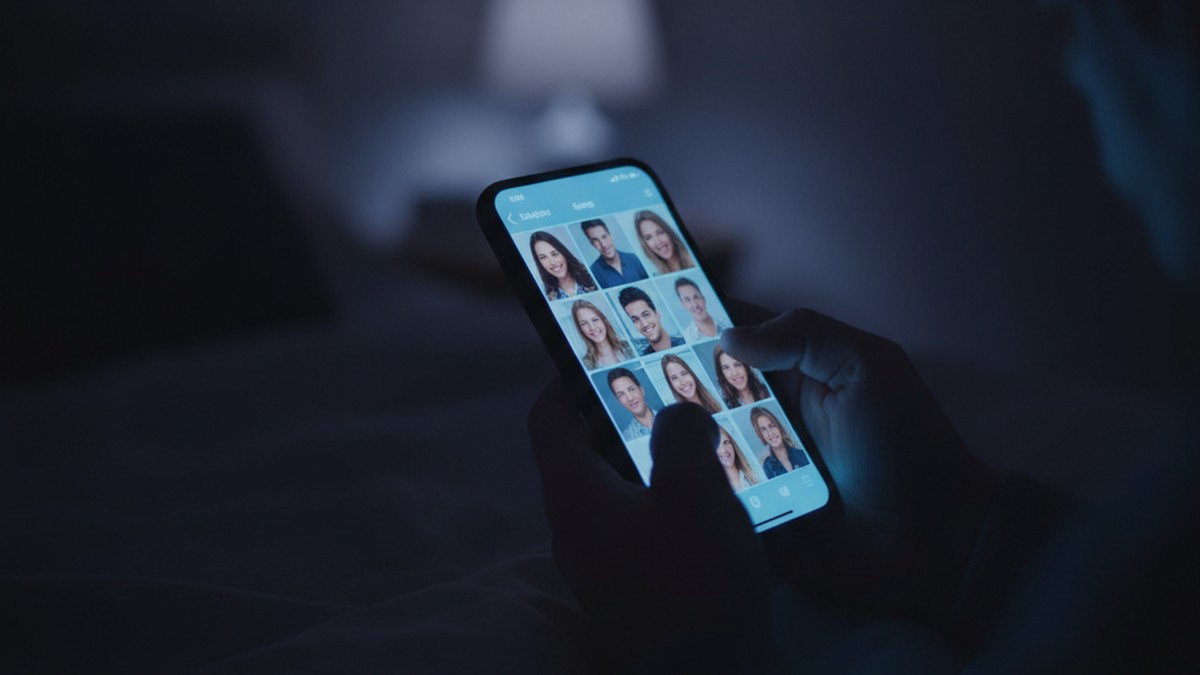
Narcissistic supply is the constant attention, admiration, and validation that people with narcissistic traits seek to maintain their self-image. Dating apps are purpose-built supply machines: swipes, matches, and messages provide measurable, on-demand hits of external validation that mirror the reward loops narcissists seek in real-world relationships.
Understanding this concept changes how you interpret your partner's phone behavior.
A person without narcissistic traits might download a dating app and feel guilty about it while in a relationship. They'd likely delete it quickly. A person with narcissistic traits experiences the same situation differently: the app isn't a betrayal — it's a resource. The matches are supply. The conversations are supply. The sense of options is supply. According to Simply Psychology's overview of narcissistic supply, this need functions similarly to an addiction — when supply runs low, narcissists experience mood drops, irritability, withdrawal, or aggression that are clinically called narcissistic injury.
What Makes Dating Apps Specifically Dangerous as a Supply Source
Dating apps don't just provide supply — they provide it in a form that is structurally ideal for maintaining parallel relationships:
- Anonymity: Profile photos can be curated, bios can be fabricated, and real-life context (being in a committed relationship) is easily omitted
- Volume: A single session on Tinder can produce dozens of potential supply contacts — something not achievable in ordinary social life
- Distance: Emotional investment is lower with an app contact than with a coworker or friend, making the interaction feel low-risk
- Deniability: Early-stage app contact can be framed as "just keeping an old account" or "I forgot to delete it"
- Variable reward mechanics: Notifications and matches operate on the same variable-ratio reward schedule that makes slot machines compelling — a mechanism that narcissistic traits amplify
A 2021 Psychology Today analysis noted that people high in narcissism are drawn to dating apps and social media precisely because these platforms deliver the constant attention their self-image requires. The volume and immediacy of matches and messages function as a reliable supply mechanism in a way that a single committed partner cannot sustain long-term.
The Supply Gap Problem
One of the defining features of narcissistic relationships is that the supply requirement escalates over time. Early in a relationship, a partner provides substantial new supply — they're attentive, curious, admiring. As the relationship matures and the partner starts responding less reflexively to the narcissist's needs, or pushes back on behavior, the narcissist experiences what researchers describe as a supply gap.
Dating apps fill that gap. They provide access to people who haven't yet seen behind the performance — people still in the idealization phase that the narcissist wants to maintain permanently.
If you've noticed your partner seems to pull away and become secretive during periods of relationship friction — precisely when you'd expect closeness — you may be observing a supply gap response in real time.
How Does the Narcissist Supply Chain Work on Dating Apps?
The narcissist supply chain runs in three stages: Acquisition (building a portfolio of new contacts while maintaining the primary relationship), Extraction (deepening a specific external connection through encrypted apps and manufactured absences), and Discard or Reset (either leaving for a replacement or returning with manufactured remorse when the external source ends).
Most articles describe narcissist cheating as a list of behaviors. That list is accurate but incomplete, because it misses the underlying structure that organizes those behaviors into a coherent sequence. The supply chain framework explains why the behaviors appear in the order they do — and what stage your relationship may currently be in.
Stage 1: Acquisition
In the Acquisition stage, the narcissist is actively building a portfolio of supply sources. On dating apps, this looks like maintaining active profiles while in a committed relationship — sometimes the same profiles they used before the current relationship, sometimes new ones created after the relationship began.
Acquisition behaviors include:
- Keeping profiles active with settings adjusted to reduce visibility to mutual contacts (distance filters, age range tweaks)
- Maintaining early-stage conversations that haven't crossed a clear line — plausible deniability conversations that can be claimed as "just talking"
- Gradually escalating contact with the most promising contacts while maintaining surface-level commitment to the primary relationship
What makes Acquisition difficult to detect is that the narcissist's behavior toward you may not change noticeably. They're not yet emotionally absorbed in a new person. The primary relationship still provides stable supply. The external pattern is running in the background, invisible until it escalates.
Stage 2: Extraction
In the Extraction stage, a specific new supply source has been selected and the narcissist begins drawing deeply from that source. This is the stage most people recognize as active cheating.
Extraction behaviors include migrating off the dating app to encrypted messaging, manufacturing absences through fabricated scheduling conflicts or picked fights, increasing cruelty or irritability toward the primary partner (because the new source is providing what the primary partner used to provide), and guarding devices with new urgency — new passwords, face-down phones, deleted message histories.
This is the stage where the signs your partner is cheating typically become visible enough to notice.
Stage 3: Discard or Reset
The third stage has two versions, depending on whether the narcissist is ready to leave.
In a Discard, the narcissist has secured a higher-value replacement and exits — often suddenly, blame-heavily, and with a narrative in which they are the wronged party.
In a Reset, the external supply source ends and the narcissist returns to the primary relationship with manufactured remorse, sometimes accompanied by a brief re-idealization period designed to restart the supply dynamic. This is the cycle that keeps many partners in long loops of hope and disappointment.
If the primary relationship provides too much utility — financial, social, domestic — to abandon, Resets can repeat indefinitely. The primary partner becomes a stable anchor while external supply is continuously refreshed through new acquisition cycles.
What Is the Parallel Profile Pattern?
The parallel profile is the most literal expression of narcissistic cheating on dating apps: an active dating profile maintained while in a committed relationship. What distinguishes a narcissist's parallel profile from other forms of infidelity is how deliberately it's constructed and maintained.
Most people who create a parallel profile do so impulsively and manage it inconsistently. Narcissists tend to be experienced profile builders who know what photos generate matches, how to write a bio that creates intrigue, and how to manage the logistics of maintaining a separate identity without discovery.
How Parallel Profiles Are Built
In data patterns analyzed through CheatScanX's platform, profiles connected to individuals already in committed relationships frequently share several characteristics:
- Photos that omit context: Group photos cropped to remove partners, or professional-quality shots that project success without revealing domestic life
- Deliberately vague location settings: Set to a radius that includes a workplace or travel area, reducing the chance of appearing in searches by someone who knows the primary partner
- Activity timing clusters: App activity concentrated during commute windows or late nights — times a partner can't easily monitor
The parallel profile isn't usually built impulsively. It's constructed deliberately, maintained consistently, and updated regularly. That sustained effort is what separates it from a forgotten account.
What You'll See Instead of the Profile Itself
You won't typically find the profile through casual observation. What you'll see is the circumstantial evidence of maintaining it:
- App notifications appearing briefly on a locked screen before being dismissed
- The phone turning face-down specifically when a notification arrives
- Battery usage data showing apps they've denied having
- Unexplained storage consumption that doesn't correspond to the apps they acknowledge
The challenge in confronting this pattern is that narcissists are skilled at alternative explanations: "That's an old account I keep forgetting to delete." "That was an ad." "Are you monitoring my phone now?" Each explanation is designed not to be definitively convincing — just convincing enough to forestall investigation until the next cycle begins.
The most reliable path to confirming a parallel profile is a direct search of the platforms involved using your partner's name, photos, or contact details — rather than relying on visible behavioral signals alone.
How Does the Narcissist Grooming Cycle Work Online?
The narcissist grooming cycle on dating apps is a three-phase process: love bombing the new contact with overwhelming attention, building selective emotional intimacy through curated self-disclosure, then migrating the relationship off the app to encrypted messaging before any verifiable record can accumulate.
Narcissists don't approach dating app contacts the way most people do. Where a non-narcissistic person seeks mutual connection, the narcissist seeks supply sources — people who can be groomed to provide validation reliably and sustainably.
Phase 1: Love Bombing the New Contact
The first phase involves an overwhelming flood of attention, compliments, and apparent deep connection. In app contexts, this means unusually frequent messages, rapid progression to calls or video contact, and claims of unusual connection: "I've never felt this way about anyone from an app before," "You're different from everyone else I've met here."
Love bombing works because it exploits a genuine human need for recognition. The new contact, often unaware of the pattern, experiences the narcissist as exceptionally attentive and emotionally available — qualities rare enough to be compelling.
What the contact typically doesn't know is that the narcissist is simultaneously maintaining apparent normalcy with the primary partner while managing several other new contacts at various earlier stages of the same process.
Phase 2: Selective Revelation
After establishing initial connection, the narcissist begins curated self-disclosure — enough to create a sense of intimacy, never enough to create real vulnerability. This phase often includes a partial account of the primary relationship: "I'm in something but it's essentially over," "I should have left months ago, I just haven't had the courage."
This framing serves two functions. It explains any domestic-life evidence while positioning the narcissist as emotionally available and in need of rescuing — a powerful draw for empathetic people. It also creates a frame in which the new contact sees themselves as the healthy option, not as the person being deceived.
Phase 3: Migration and Extraction
Once emotional connection is established, the contact is migrated off the dating app. This is strategic: dating apps have records, account histories, and potential for discovery by mutual contacts. Signal, WhatsApp with disappearing messages, or Telegram's secret chat features offer fewer risks.
Partners who find references to an external contact should note whether that contact exists primarily through platforms specifically designed to delete communication histories. That's not coincidence — it's deliberate architecture built to survive a confrontation.

Why Do Narcissists Pick Fights Before Cheating?
Narcissists manufacture conflict before and during infidelity for a specific reason: picked fights create unmonitored time, justify absence, and redistribute moral weight before any accusation can be made. The fight isn't about the stated topic — it's a logistical tool.
This pattern is among the most frequently described by relationship therapists working with narcissistic abuse survivors, and one of the hardest to identify while you're inside it.
What Manufactured Fights Look Like
The trigger is typically minor: a comment about household responsibilities, a request for communication, a casual mention of plans. The narcissist escalates faster than the situation warrants. The argument leaves the partner feeling confused, guilty, or defensive — and the narcissist uses that emotional state to justify leaving.
"I can't be around you right now." "I need space after what you just said." "Don't text me tonight — I need to clear my head."
These exits create unmonitored time. They also serve a second function: they position the narcissist as the aggrieved party, shifting moral authority before any accusation of cheating can be made. If you're upset and unreasonable, the narcissist's behavior outside the relationship starts to feel — internally, to them — like self-preservation rather than betrayal.
The Guilt Redistribution Function
Research on narcissistic self-perception consistently shows that narcissists rarely see themselves as bad people. They construct narratives in which their behaviors are justified responses to circumstances others have created. Manufactured fights are part of that justification-building.
If the relationship is troubled, if the partner is unreasonable, if the narcissist is constantly under attack — then external validation feels less like betrayal and more like something they're entitled to in response to mistreatment. The fight doesn't just create an opportunity. It creates a permission structure.
Identifying the Pattern
The tell is not the argument itself but its timing. Manufactured fights tend to cluster around:
- Periods when a new external contact has been established and is intensifying
- Evenings before unexplained absences
- Moments when you've gotten closer to noticing something
Tracking the timing of arguments against your partner's schedule changes over several weeks often reveals a correlation that random relationship conflict doesn't show. Arguments that reliably precede specific types of absence — rather than being distributed randomly across the week — are worth examining as a pattern.
The patterns that follow in the wake of these fights, including gaslighting after cheating designed to make you doubt your own observations, are documented as a connected behavioral cluster.
Why Does a Narcissist Accuse You of Cheating When They Are?
This pattern — called projection — occurs when someone attributes their own unacceptable behaviors to another person. For narcissists, accusing a faithful partner of cheating deflects suspicion, creates emotional noise that distracts from investigation, and reframes the narcissist as the injured party, a position they use to justify their own infidelity and avoid accountability.
Projection is one of the most disorienting patterns in narcissistic relationships: the person who is cheating accusing the faithful partner of the same.
How Projection Functions in Practice
Projection operates as a psychological defense mechanism, not as a consciously planned strategy. It protects the narcissist from confronting their own behavior by externalizing it. But its practical effects are very similar to those of a deliberate tactic, because it accomplishes several things simultaneously.
It creates defensive positioning. If you're defending yourself against false accusations, you're not investigating the real concerns forming in your mind. Your energy and attention are redirected from investigation to self-defense.
It shifts moral weight. A partner who is constantly accused of suspicious behavior begins to feel that raising their own concerns makes them look hypocritical — even when those concerns are valid. This is particularly effective against partners with strong fairness instincts.
It destabilizes perception. One of the documented downstream effects of sustained projection is that the target begins to doubt their own ability to read situations accurately. This effect is functionally identical to gaslighting after cheating, and over time it erodes the confidence needed to act on clear evidence.
Psychology Today's clinical analysis of narcissistic cheating explicitly names this pattern: "If they accuse, they are telling on themselves." The behavioral signal is reliable enough that it's documented as a key diagnostic indicator, not just a coincidental byproduct.
The Escalation Pattern
Projection typically intensifies as infidelity escalates. When the external relationship is in early stages, a narcissist may not project at all. As the relationship deepens and discovery risk increases, projection becomes more frequent and more intense. A sudden increase in accusations of jealousy or infidelity from a partner who wasn't previously suspicious often marks a period of heightened external activity.
If you're recognizing the escalation — more accusations, more "you're paranoid," more anger at your questions — and you're simultaneously noticing the other behavioral shifts described in this article, those patterns together carry more diagnostic weight than any single behavior on its own.
What Are the Digital Cover-Up Signs of a Cheating Narcissist?
The digital cover-up is a constellation of technical behaviors narcissists use to conceal dating app activity. What distinguishes this from ordinary privacy is its systematicity: multiple behaviors changing simultaneously, consistently, and specifically around communication tools.
Most people who aren't hiding anything have stable, predictable digital habits. They don't change their phone password unexpectedly. They don't suddenly disable notification previews. When these habits change abruptly and comprehensively, the pattern itself is meaningful data — independent of what any individual change might mean in isolation.
Specific Cover-Up Behaviors to Watch For
| Behavior | What It Looks Like | What It Signals |
|---|---|---|
| Password change | New PIN or biometric-only access after sharing previously | Preventing access at a specific moment in time |
| Notification management | Preview text disabled, or specific apps silenced | Preventing visible message content when nearby |
| App concealment | Apps hidden in unrelated folders or behind app lockers | Active awareness of discovery risk |
| Message deletion | Conversation histories cleared immediately after reading | Removing evidence from the device |
| Cloud backup disabled | iCloud or Google backup turned off for specific apps | Preventing message recovery from backup data |
| Second device | Phone or tablet kept at work, in a car, or in a bag | Full separation of the communication channel |
| Browser-based access | Dating platform used through private browser, no app icon | No app visible in the installed app list |
The Consistency Principle
The key diagnostic signal is change, not any individual behavior in isolation. A person who has always been private about their phone is not necessarily concealing anything. A person whose phone behavior changed specifically around a relationship milestone — a commitment conversation, a period of friction, a new work contact — has exhibited a shift that warrants attention.
Narcissists are typically consistent within their cover-up because the external relationship requires ongoing management. This consistency makes the technical patterns stable and repeatable, which is also what makes them detectable over time.
For a detailed walkthrough of how to find hidden dating apps on their phone — including specific investigative techniques for both iPhone and Android — that resource covers the technical methods in practical detail.
The apps cheaters use to hide affairs provides additional context on which specific platforms appear most frequently and why those platforms are chosen, rather than others.
How Does a Narcissist React When Caught Cheating on Dating Apps?
When caught, narcissists typically move through four stages: denial, minimization, DARVO (Deny, Attack, Reverse Victim and Offender), and manufactured remorse. They rarely take direct accountability. Instead they deflect with counteraccusations, claim the confronting partner is paranoid, or briefly perform contrition before resuming the same behaviors within weeks.
Most people who aren't narcissists, when confronted with clear evidence of infidelity, experience genuine distress — guilt, shame, fear. Their response is messy and inconsistent in the way that real emotion is. Narcissists move through a structured, repeatable sequence that looks very different.
Stage 1: Denial
The first response to confrontation is flat denial, regardless of evidence. "That's not what you think it is." "That's an old account." "You're misreading that completely." The denial is typically more confident than the evidence warrants, which can cause the confronting partner to second-guess their own certainty — which is precisely the function it serves.
Stage 2: Minimization
If denial is unsustainable — when evidence is specific and documented — the narcissist shifts to minimization. "It was just conversation. Nothing happened." "I wasn't actually going to meet them." This reframe changes the definition of what constitutes cheating, attempting to move the goalposts to a position the narcissist can defend.
Minimization often involves a narrow, technical definition of infidelity: physical contact only, or specific apps only, or "it doesn't count because the relationship was already over." Each redefinition tries to relocate the narcissist outside the zone of wrongdoing.
Stage 3: DARVO
DARVO — Deny, Attack, Reverse Victim and Offender — is a documented response pattern in which the confronted person attacks the confronter and repositions themselves as the wronged party. "How dare you go through my phone." "You clearly don't trust me — what does that say about you?" "You've been distant for months. What was I supposed to do?"
Psychology Today's clinical analysis notes that narcissists who are caught frequently "play the victim especially to third parties" — positioning themselves as wronged to mutual friends, family members, and therapists. This is not just interpersonal deflection. It's reputation management, executed in advance of any broader disclosure.
Stage 4: Manufactured Remorse
If the partner stays and the relationship stabilizes, the narcissist performs remorse. This performance is clinically distinguishable from genuine guilt in several ways: it emphasizes the narcissist's own suffering ("I hate myself for this," "I can't believe I did this") rather than focusing on the partner's pain. It often includes a brief re-idealization phase — the same love-bombing pattern that characterized the beginning of the relationship.
This manufactured remorse phase is the Reset stage of the supply chain. It is not the end of the pattern. It is the return to Acquisition.

How Do Covert and Grandiose Narcissists Cheat Differently?
Grandiose narcissists cheat with higher volume and less careful concealment — their entitlement means they underestimate discovery risk. Covert narcissists run more elaborate cover-ups, focus on emotional affairs before physical ones, and present as victims in their dating app profiles. Research shows covert narcissists have more favorable attitudes toward infidelity regardless of gender.
Most coverage of narcissistic cheating implicitly describes the grandiose subtype: the swaggering, confident person who maintains multiple options because they believe they deserve them. This pattern is real. But it describes only half the population of people with narcissistic traits.
Grandiose Narcissist Cheating Style
| Dimension | Grandiose Narcissist |
|---|---|
| Volume | Higher — multiple simultaneous contacts |
| Concealment | Less careful — entitlement reduces perceived discovery risk |
| Response when caught | Defensive, may normalize or justify behavior |
| Dating app profile | Projects confidence, success, desirability |
| Primary driver | Entitlement, novelty, dominance |
Grandiose narcissists may be surprisingly transparent about valuing options, sometimes framing it as self-awareness: "I've always been someone who needs to know they're wanted." They experience their behavior less as cheating and more as a lifestyle they're entitled to pursue — which is exactly why their cover-up behavior is often less comprehensive.
Covert Narcissist Cheating Style
| Dimension | Covert Narcissist |
|---|---|
| Volume | Lower — deeper investment per contact |
| Concealment | More thorough — anxiety drives careful cover-up |
| Response when caught | Collapse into apparent vulnerability, tears |
| Dating app profile | Positions as sensitive, misunderstood, trapped |
| Primary driver | Validation deficit, fear of abandonment, backup supply |
The covert narcissist's dating app persona typically emphasizes being misunderstood or stuck in an unhappy situation — hooks that attract empathetic responders. Their cover-up behavior is more elaborate because their anxiety about exposure is higher. And when confronted, they're more likely to collapse into apparent vulnerability than to defend themselves aggressively, which makes confrontation feel cruel — and causes many partners to back down from it.
Research from the 2024 MDPI study found that vulnerable narcissists showed favorable attitudes toward infidelity regardless of gender. This runs directly against the intuition that the quiet, anxious partner is the safer one.
The most practically important implication of this distinction: if you're expecting a cheating narcissist to present as arrogant and unapologetic, you may not recognize one who presents as wounded and in need of rescue.
Can a Narcissist Stop Cheating?
Some can, but the underlying drivers — chronic need for external validation, low relationship satisfaction, and entitlement beliefs — require sustained therapeutic work, typically dialectical behavior therapy or schema therapy with a specialist in personality disorders. Without treatment, research suggests the patterns that make cheating likely do not resolve on their own.
The research on this is honest about its complexity. Narcissistic traits exist on a spectrum. Someone with mild narcissistic tendencies who has developed self-awareness and motivation to change has a different prognosis than someone with a clinical personality disorder diagnosis who hasn't acknowledged the problem.
What Needs to Change
The PLOS One study established that narcissism predicts infidelity through a specific pathway: lower relationship satisfaction leading to higher infidelity intentions. Addressing the behavior without addressing the satisfaction problem — and the underlying supply mechanism — doesn't remove the driver.
Therapies that show evidence in personality disorder research include:
- Dialectical Behavior Therapy (DBT): Addresses emotion dysregulation and interpersonal effectiveness — two core areas where narcissistic patterns cause problems
- Schema Therapy: Specifically targets the early maladaptive schemas that underlie narcissistic behaviors, including the entitlement schema and the approval-seeking schema
- Mentalization-Based Treatment (MBT): Builds capacity for accurately understanding one's own and others' mental states — the foundation of empathy that makes genuine remorse possible
The critical variable is motivation. Many narcissists enter therapy following a crisis — discovery of cheating, a partner's ultimatum, a threatened divorce — and exit therapy once the immediate threat to supply (the relationship) is stabilized. Sustainable change requires a period of work that extends well past the crisis.
What Genuine Change Looks Like vs. Manufactured Remorse
Genuine behavioral change in a narcissistic person is characterized by consistency over time, not by intensity of remorse in the immediate aftermath. A partner who shows dramatically reduced defensiveness six months after a crisis, who continues therapy voluntarily, and who tolerates accountability conversations without escalating to DARVO has demonstrated something different from a partner who performed intense remorse for three weeks and then resumed previous patterns.
The Reset stage of the supply chain looks, in the short term, identical to genuine change. The difference only becomes visible over time.
What to Do If You Suspect Your Partner Is a Narcissist Cheating Online
Suspicion without evidence creates its own particular damage. The loop of checking, wondering, confronting, being denied, and then doubting yourself is one of the most exhausting experiences possible in a relationship. Here's a grounded, sequential approach.
Step 1: Document Observations Without Interpretation
Write down specific behaviors you've noticed, with dates and contexts. Not "he's been acting strange" but "he changed his phone password on May 3, started taking calls in another room starting around April 28, and came home 90 minutes late twice this week without a clear explanation." Specific observations are evidence. General impressions are arguments.
Documenting also protects you from the gaslighting loop. When you're told you're imagining things, a timestamped record of concrete observations is harder to dismiss than "I have a bad feeling."
Step 2: Look for Pattern Clusters, Not Isolated Behaviors
The patterns described in this article are diagnostically meaningful when they appear together and when they represent changes from previous behavior. A partner who has always been private about their phone is not necessarily concealing anything. A partner who changed their phone password, started manufacturing fights, increased accusations of your jealousy, and started guarding their phone at specific times is displaying a cluster that is harder to attribute to coincidence.
Count the patterns present. One pattern has an innocent explanation. Four concurrent patterns that all appeared within the same month are statistically unlikely to be coincidental.
Step 3: Consider a Profile Search Before Confronting
Confrontation without evidence is almost always counterproductive when dealing with a narcissistic personality. The DARVO pattern means that confronting without concrete evidence hands the narcissist an opportunity to deny, attack, and emerge from the conversation with more apparent moral authority than they had before it. You leave feeling worse, more doubtful, and having revealed that you're watching.
A profile search — checking whether your partner's photos or details appear on active dating platforms — provides the kind of concrete, non-deniable evidence that changes the confrontation dynamic entirely. If you're asking yourself whether to check, that instinct matters. Research on relationship intuition consistently shows that a gut feeling your partner is cheating is usually based on real behavioral signals being processed below the level of conscious awareness.
CheatScanX runs profile searches across 15+ dating platforms simultaneously — including platforms specifically chosen by people trying to be discreet — and returns results within minutes.
Step 4: Prepare for DARVO Before Confronting
If you find evidence and decide to confront, prepare for the four-stage response in advance. Name the stages explicitly so you're not destabilized by them when they happen. When the denial starts, you know what stage you're in. When it escalates to attack, you know what stage that is too.
Go into the confrontation knowing what outcome you're seeking. If the goal is to get the narcissist to confess and apologize, that goal is unlikely to be met and you'll leave the confrontation feeling that you failed. If the goal is to communicate clearly what you know and what you've decided — that goal is achievable regardless of how the other person responds.
Step 5: Understand the Reset Before It Happens
The manufactured remorse phase — the Reset stage of the supply chain — is designed to look like resolution. It often includes a period of heightened attention, affection, and apparent accountability that is genuinely compelling to someone who has invested heavily in the relationship.
Understanding that Reset is a stage in a cycle rather than an exit from it is the most protective frame available. It doesn't tell you what to do. But it prevents you from making decisions based on a manufactured performance rather than observable, consistent behavior over time.
What You Know Now — and What to Do With It
The patterns described here aren't proof of cheating in any specific relationship, or proof that a partner has narcissistic personality disorder. Diagnosing anyone — clinically or informally — from behavioral observations alone is beyond what any article can responsibly do. What these patterns represent is a documented behavioral tendency that appears at higher rates when narcissistic traits are present and infidelity is occurring.
They're also most meaningful when they appear together, when they represent change from previous behavior, and when they correspond to instincts you've been trying to rationalize away.
What research is unambiguous about: narcissism predicts infidelity intentions, and that relationship runs through a specific mechanism — lower relationship satisfaction creating a higher drive toward external supply. That's not a character judgment. It's a documented causal pathway with real psychological architecture.
One of the most common experiences of people who eventually leave narcissistic relationships is that they recognized the signs earlier than they acted on them. They second-guessed themselves. They accepted the manufactured alternative explanations. They confused the Reset phase for genuine resolution. Naming what you're seeing is the first step toward evaluating it clearly.
If the patterns here are familiar, that recognition is information worth trusting.
Frequently Asked Questions
Research suggests yes. Individuals with high narcissistic traits report lower relationship satisfaction and greater intentions to cheat, and those with sexual narcissism specifically show significantly higher rates of marital infidelity even after controlling for general narcissism. That said, not every narcissist cheats, and not every cheater is a narcissist.
Narcissists tend to use mainstream apps where new contacts are plentiful — Tinder, Bumble, and Hinge are most commonly reported. For communication outside the app, they often migrate to Signal or WhatsApp, which offer disappearing messages. Some use niche platforms like Feeld or Ashley Madison where users already expect discretion from other members.
Common tactics include app lockers, hiding apps inside folders with unrelated names, screen time restrictions that make apps invisible, or browser-based app versions that leave no icon. Some maintain a second phone kept at work or in their car. Frequently changing passwords and disabling message preview notifications are also standard practice.
Guilt requires empathy and a genuine concern for another person's pain. Research on narcissism consistently shows reduced empathy toward partners. Most narcissists don't experience guilt the way non-narcissistic people do. What looks like remorse is usually manufactured — a performance designed to de-escalate conflict rather than an expression of genuine regret.
The relationship provides stable supply — comfort, social status, domestic support — while the dating app provides novelty and additional validation. Narcissists typically don't see these as incompatible. The relationship is the primary source and the app is supplemental. Discarding a stable source makes no sense to them unless a higher-value replacement has already been secured.