
Something triggered your search. Maybe it was a late-night text notification your partner angled away from you. Maybe a coworker mentioned spotting a familiar face on Tinder. Maybe the pit in your stomach has been growing for weeks and you just need to know. Whatever brought you here, you typed "Cheaterbuster review" because you want an honest assessment before spending your money.
You are right to do that research first. Cheaterbuster has been one of the most recognizable names in the dating profile search space since it launched as Swipebuster in 2016. It promises to tell you whether someone has a Tinder profile. That promise sounds simple, but the actual experience is more complicated than any marketing page will tell you.
We spent weeks breaking down Cheaterbuster from every angle: its features, pricing, accuracy data from independent testers, 233 Trustpilot reviews, technical limitations, and how it stacks up against modern alternatives. This is the full review.
Need multi-platform coverage now? CheatScanX scans 15+ dating apps in one anonymous search -- Tinder, Bumble, Hinge, and more -- starting at $9.99.
What Cheaterbuster Is (and What It Is Not)
Cheaterbuster is a paid online tool that searches Tinder to determine whether a specific person has an active profile. You enter a first name, approximate age, and a location. The system then scans Tinder's public-facing data and returns potential matches.
Tired of single-app search tools that miss the bigger picture? CheatScanX scans 15+ dating platforms in one anonymous search.
Try CheatScanX NowThe service launched in 2016 under the name Swipebuster and quickly drew media attention. The idea that anyone could pay a small fee to check whether a partner was secretly on Tinder was both unsettling and empowering, depending on which side of the equation you sat on. The team rebranded to Cheaterbuster in 2018, leaning fully into the infidelity-detection market.
Since then, the tool has added optional photo-based facial recognition, last-active timestamp reporting, and a detection feature for Tinder subscription tiers (Plus, Gold, Platinum). An iOS app launched in late 2024.
Here is the quick product snapshot:
| Feature | Details |
|---|---|
| Platforms searched | Tinder only |
| Search inputs | First name, age range, location, optional photo |
| Results include | Profile photos, bio, distance, age, last-active time |
| Facial recognition | Yes (optional photo upload) |
| Subscription detection | Tinder Plus, Gold, Platinum |
| iOS app | Yes (released late 2024) |
| Tinder account required | No |
| Anonymous search | Yes |
Now here is what Cheaterbuster is not: it is not a multi-platform dating profile scanner. It does not search Bumble, Hinge, OkCupid, Match, Plenty of Fish, Feeld, Grindr, or any other platform. It does not access private messages, swipe history, or match lists. It cannot show you who your partner has been talking to.
This distinction matters more than you might think. In a market with over 1,500 dating apps and 360 million global users (Business of Apps, 2025), a tool that checks only one platform leaves significant gaps in coverage.
If you want to understand the full scope of platforms people use to hide relationships, our guide on apps cheaters use covers the full range of platforms.
How Cheaterbuster Works: The Search Process
The mechanics are straightforward, even if the results are not always predictable.
Step-by-Step Walkthrough
Step 1: Enter the person's details. You provide their first name, an approximate age (within about a 3-year range), and a city or GPS location where they might have used Tinder recently.
Step 2: Upload a photo (optional). Adding a photo of the person activates Cheaterbuster's facial recognition feature, which attempts to match the uploaded image against Tinder profile photos. This step improves accuracy but is not required.
Step 3: Pay for the search. A single search costs $17.99. There is no way to see results before paying. No free trial exists.
Step 4: Wait for results. The system typically returns results within 2 to 5 minutes. During this time, Cheaterbuster queries Tinder's publicly accessible data endpoints using the criteria you provided.
Step 5: Review potential matches. If profiles matching your criteria are found, you see photos, bio text, the person's listed age, distance from the search location, and when they were last active on Tinder.
There is often a sixth step that the marketing does not emphasize. Multiple users report that initial results display blurred or thumbnail-sized profile images, and viewing full-resolution photos requires an additional payment. A reviewer on Vocal Media described receiving dozens of blurred results with a common name, each requiring a separate unlock fee to view clearly.
What Data Cheaterbuster Can and Cannot Access
Cheaterbuster uses OSINT (Open Source Intelligence) methods to query Tinder's public endpoints. It does not hack into accounts or access anything behind a login wall.
What it can show you:
- Profile photos that are visible to other Tinder users
- Bio text
- First name and age as listed on the profile
- Distance from the searched location
- Last-active timestamp (when the profile was last used)
- Private messages
- Swipe history or match lists
- Who the person has been talking to
- Profiles on any platform other than Tinder
- Deleted profiles (once removed from Tinder, the data disappears)
What it cannot show you:
If you want to know whether you can search Tinder without an account, we have a separate guide covering the available methods.
Cheaterbuster Pricing: What You Will Actually Spend
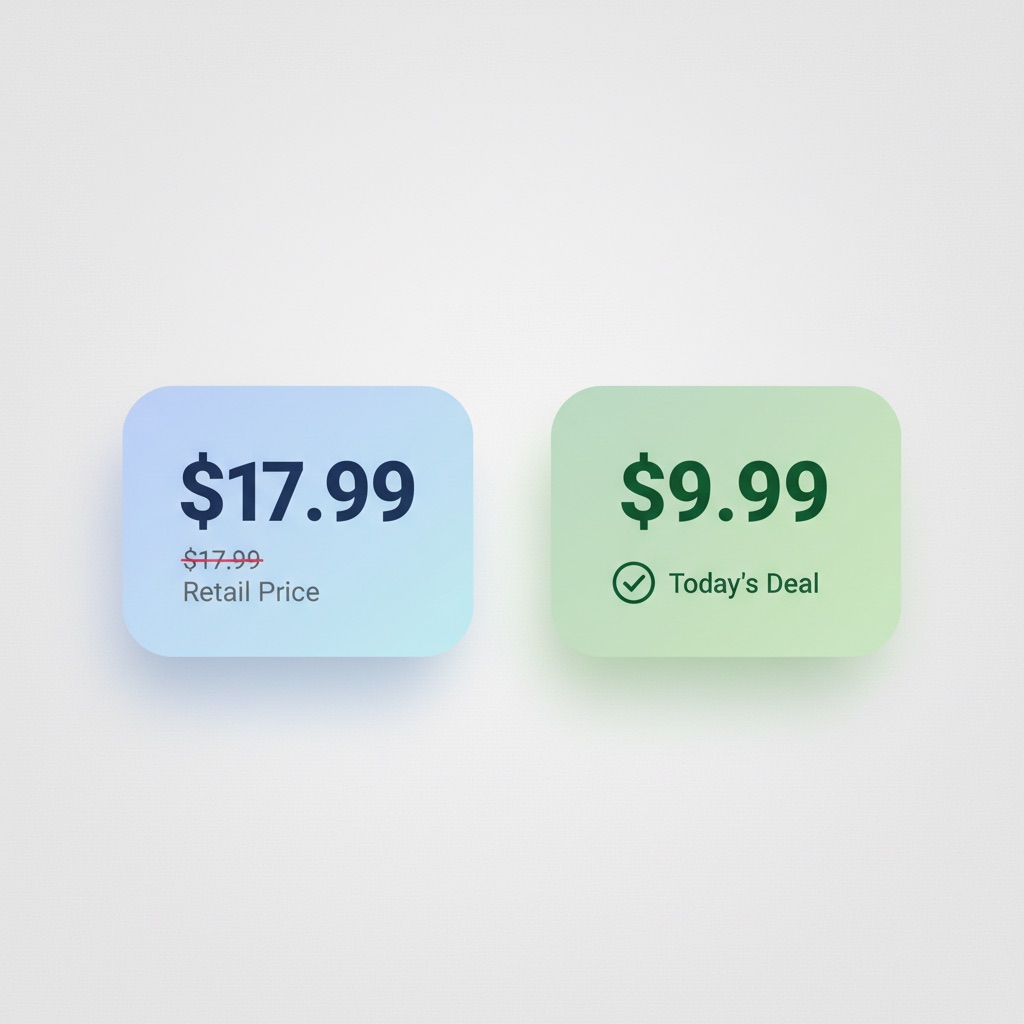
The sticker price is $17.99 for a single search. But the actual cost for most users tends to be higher once you account for how searches multiply in practice.
Published Pricing Tiers
| Plan | Price | Per-Search Cost |
|---|---|---|
| Single search | $17.99 | $17.99 |
| 2-search bundle | $29.99 | $15.00 |
| 3-search bundle | $34.99 | $11.66 |
| Instant Update add-on | $9.99 | One-time |
Some sources also reference monthly subscription tiers: Basic ($9.99/month), Premium ($19.99/month), and Pro ($29.99/month). The coexistence of per-search pricing and subscription options creates confusion, and that confusion feeds directly into billing complaints.
Why the Real Cost Is Usually Higher
Most people do not pay $17.99 once and walk away satisfied. Here is why costs escalate:
Failed searches lead to retries. If your first search returns nothing, the natural reaction is to adjust parameters and try again. A different age range, a slightly different location, an alternative spelling of a name. Each retry costs another $17.99 unless you bought a bundle.
Name variations require multiple searches. If you are not sure whether your partner goes by "Michael" or "Mike" or "Mikey" on Tinder, each variation is a separate paid search. Someone trying three common nicknames has already spent over $50 before seeing a single useful result.
Profile unlocks add up. Several Trustpilot reviewers describe a two-tier payment structure: you pay for the initial search, then pay again to view unblurred profile photos. With common names in large cities producing dozens of potential matches, these unlock fees can accumulate quickly.
Recurring monitoring gets expensive. Some users want to check back periodically to see if a profile reappears or becomes active again. At $17.99 per check, monthly monitoring costs add up to over $200 annually for a single-platform tool.
Cost Per Confirmed Answer
The metric that matters most is not the sticker price but the cost per confirmed, useful answer.
With best-case accuracy at 89% (AllAboutAI, 2026), roughly 1 in 9 searches with perfect inputs will fail. For users with imperfect information, failure rates climb higher.
| Scenario | Estimated Success Rate | Cost Per Confirmed Result |
|---|---|---|
| Precise inputs (exact name, age, location, photo) | ~89% | ~$20.21 |
| Decent inputs (close details, no photo) | ~75% | ~$23.99 |
| Common name, broad location | ~34% | ~$52.91 |
Every figure above covers Tinder only. If your partner is using a different app, no amount of Cheaterbuster searches will produce a result. Your effective cost per actual answer becomes whatever you spent plus the opportunity cost of not searching other platforms.
For comparison, CheatScanX starts at $9.99 per search and covers 15+ dating platforms in one scan. The math favors broader coverage at a lower price point.
Accuracy: What Cheaterbuster Claims vs. What Testing Shows
Cheaterbuster's website advertises 97 to 99% accuracy. That number warrants scrutiny because the independent data tells a substantially different story.
Independent Accuracy Testing
The most comprehensive independent evaluation came from AllAboutAI, which published controlled test results in their 2026 review:
| Input Quality | Accuracy Rate | Practical Meaning |
|---|---|---|
| Exact name + age + location + photo | 89% | Best case. Still misses roughly 1 in 9 searches. |
| Exact name + age + location (no photo) | 80-90% | Slightly lower without facial matching. |
| Common name + approximate location | ~34% | Two out of three searches fail. |
| Partial information only | Below 30% | Results are essentially unreliable. |
Technori reached parallel conclusions in their 2025 testing: accuracy depends heavily on input quality, and false positives alongside missed results are both frequent problems.
Explaining the Gap Between 97% and 89%
The 97 to 99% figure likely refers to profile matching precision -- when the tool does return a result, the matched profile is usually the correct one. That is a different metric from search success rate, which measures how often the tool finds the profile you are looking for.
Here is the distinction in plain terms: if you search for "Sarah, 27, in Denver" and Cheaterbuster returns four profiles, those four profiles probably belong to real people named Sarah near Denver. That matching is accurate. But if your Sarah is not among those four results, the search failed you even though the tool was technically "precise."
This gap explains the polarized reviews. Users who had the right information and found what they were looking for call the tool brilliant. Users who paid $18 and saw nothing, or saw a wall of blurred faces with common names, feel they were misled. Both groups are describing the same product under different conditions.
The Common Name Problem
Names like John, Sarah, Michael, Jessica, David, and Jennifer generate the most frustrating experiences. In a major metropolitan area, searching a common first name can return dozens or even hundreds of partial matches. Users then face a choice: pay additional fees to unlock each blurred profile one by one, or give up and accept they cannot identify anyone.
On the opposite end, people who are actively hiding dating app activity often use nicknames, shortened names, or completely different first names. Cheaterbuster matches only against the exact name you type. If your partner registered as "J" or "Dave" instead of "David," the search will miss them entirely.
False Positives and False Negatives
Cheaterbuster produces two kinds of errors that carry real emotional weight:
False positives happen when the tool shows you a profile that is not the person you searched for. This is most common with popular names in large cities. Mistaking a stranger's profile for your partner's can trigger unnecessary confrontation and panic.
False negatives happen when the tool fails to find a profile that exists. This can occur when the person uses a different name, has altered their age, recently changed locations, or when Tinder's anti-scraping measures block the query. A false negative can deliver false reassurance, which may be worse than no search at all.
If you are weighing whether the accuracy is sufficient for your situation, our full analysis of does Cheaterbuster actually work goes deeper into the data.
What 233 Trustpilot Reviews Reveal About Cheaterbuster
User reviews are the closest thing to a field test. We analyzed every review on Cheaterbuster's Trustpilot page as of February 2026.

Rating Distribution
| Rating | Reviews | Percentage |
|---|---|---|
| 5 stars | 78 | 34% |
| 4 stars | 3 | 1% |
| 3 stars | 1 | 0.4% |
| 2 stars | 4 | 2% |
| 1 star | 147 | 63% |
Overall Score: 2.3 out of 5
This is one of the most polarized distributions you will find for any consumer product. There is almost no middle ground. Users either got exactly what they needed or felt the experience was a complete waste of money. When you see this pattern, it almost always indicates a tool that performs well under narrow, specific conditions and fails everywhere else.
Patterns in the Positive Reviews
The 34% who left 5-star reviews share these common themes:
- Quick delivery. Results appeared within minutes, matching the marketing promise.
- Profile confirmation. The tool found an active Tinder profile that matched the person they were looking for.
- Simple process. The interface was easy to navigate without technical knowledge.
- Emotional resolution. Users described finally having evidence to act on rather than living with uncertainty.
These satisfied users typically had ideal inputs: the correct first name as it appears on Tinder, an accurate age, and a specific recent location.
Patterns in the Negative Reviews
The 63% who left 1-star reviews consistently describe three categories of problems:
Billing issues are the top complaint. Users report unexpected recurring charges after what they believed was a one-time purchase. Some describe being billed $17 to $20 per week with no clear cancellation path. Others say they emailed support to cancel but continued seeing charges. PayPal-based billing creates additional friction, with some users describing difficulty stopping automatic payments through PayPal's interface.
Failed or useless results rank second. Paying $17.99 and receiving either zero results or a wall of blurred thumbnails that require additional payment to view is the second most common frustration. Some users tested the tool by searching for their own confirmed Tinder profiles and still received nothing.
Unresponsive customer support is third. Reviewers describe slow or absent responses to refund requests and cancellation emails. Cheaterbuster's public replies on Trustpilot direct users to [email protected], but many complainants say they never received a response at that address.
For a detailed analysis of whether these issues make Cheaterbuster unreliable, our breakdown of is Cheaterbuster legit examines 221 reviews with pattern analysis.
The App Store Contrast
Cheaterbuster's iOS app holds a 4.7 out of 5 rating from 216 App Store reviews. The gap between a 4.7 on the App Store and a 2.3 on Trustpilot is worth noting. Frustrated users are more likely to seek out a third-party review platform to voice complaints, while casual users rate directly in the App Store. Both data sets are real, but the Trustpilot data tends to reflect the full range of user experiences, including the billing issues that drive the most dissatisfaction.
The Tinder-Only Limitation: Why It Matters More Than Anything Else
If there is one factor that determines whether Cheaterbuster is worth your money, it is this: it only searches Tinder.
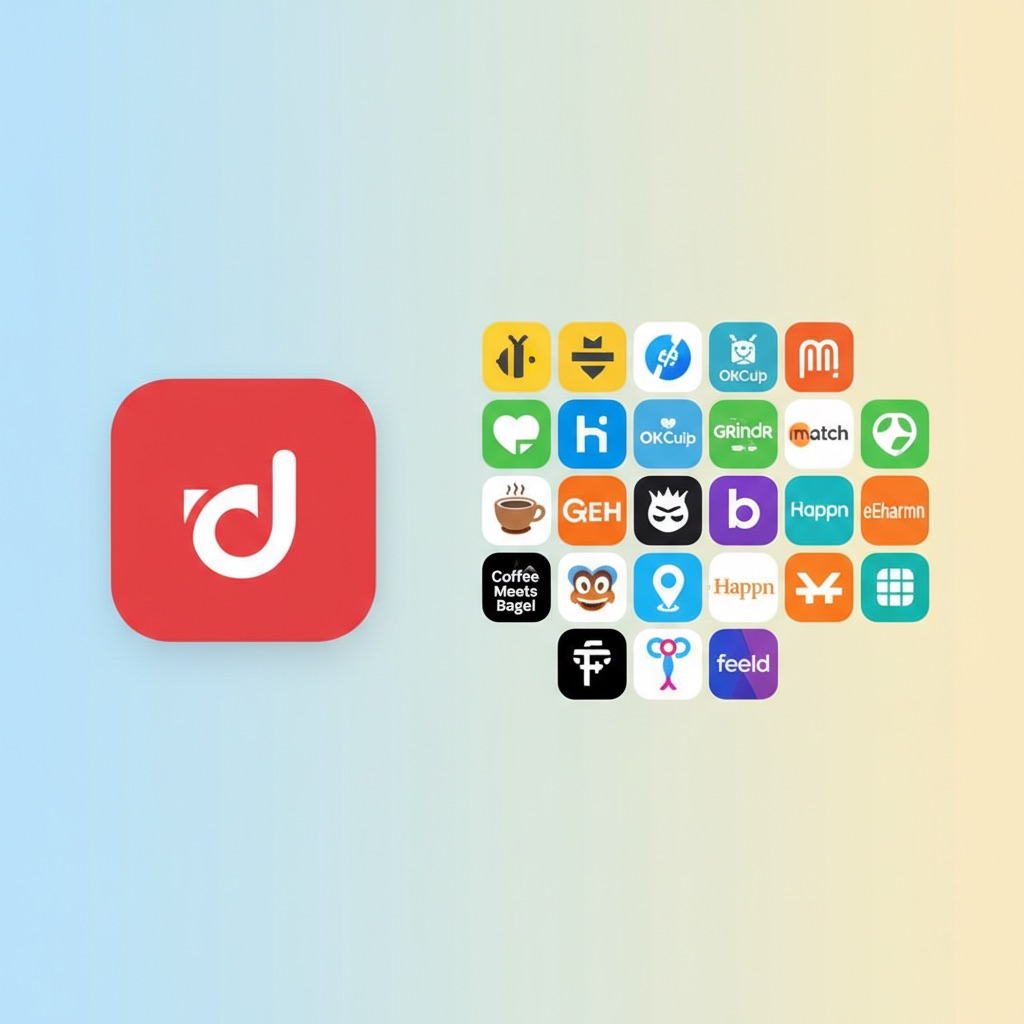
That sounds like a minor detail on the surface. Tinder is one of the largest dating platforms in the world. But consider what the data actually shows.
The Numbers Behind the Problem
According to Business of Apps (2025), there are over 1,500 dating apps and websites worldwide, serving roughly 360 million users. Tinder holds a significant share, but it represents just one slice of a massive ecosystem that includes Bumble, Hinge, OkCupid, Match, Plenty of Fish, Feeld, Grindr, HER, Coffee Meets Bagel, Facebook Dating, Zoosk, and hundreds of niche platforms.
Research published in Computers in Human Behavior (2019) found that 18 to 25% of Tinder users are in committed relationships while using the app. That statistic captures only one platform. Similar or higher percentages likely apply across Bumble, Hinge, and other major apps.
Why People Who Cheat Avoid the Obvious Platform
Here is the problem with a Tinder-only tool in 2026: Tinder is the most obvious place to look. Anyone who is aware that profile search tools exist, and Cheaterbuster has been covered by major media outlets for a decade, knows that Tinder is the first platform someone suspicious will check.
A person who wants to hide dating app activity from a partner has every reason to use a less visible platform. Bumble, Hinge, Feeld, and niche apps carry lower risk of being discovered by a tool that only searches Tinder.
Searching Tinder alone is like checking someone's desk drawer while ignoring the locked filing cabinet, the basement storage unit, and the safe deposit box. If nothing turns up in the drawer, you have not proven anything except that the drawer is empty.
The False Sense of Security Trap
A clean Cheaterbuster result means one of these things:
- Your partner is not on Tinder with the name, age, and location you searched
- Your partner is on Tinder but used different details than you entered
- Tinder's security measures blocked the query
- Your partner deleted their Tinder profile (possibly recently, possibly after being tipped off)
- Your partner is on one of the 1,499+ other dating platforms that Cheaterbuster cannot see
If you accept a clean Tinder result as proof of faithfulness across all platforms, you are building your peace of mind on incomplete evidence. That false security can delay the discovery of real activity happening elsewhere.
To understand the full range of platforms where hidden profiles can exist, our guide on finding out if your partner is on dating apps covers methods beyond single-platform tools.
Technical Limitations: Why Cheaterbuster's Reliability Is Declining
Understanding the technical headwinds Cheaterbuster faces helps explain the trend in reviews: older reviews skew positive while recent ones skew more negative.
Tinder's Escalating Anti-Scraping Defenses
When Swipebuster launched in 2016, Tinder's API was relatively open. Third-party tools could query profile data without significant resistance. That era is long over.
Tinder has implemented multiple layers of defense since then:
Protobuf encryption replaced plain JSON. Tinder's API responses used to be in plain JSON format, which is easy to read and parse. The switch to protobuf (a binary format developed by Google) makes it substantially harder for external tools to extract structured profile data.
CAPTCHA challenges block automated queries. Cheaterbuster's system sends automated requests to Tinder, and those requests now trigger CAPTCHA verification powered by Arkose Labs. This can slow down, degrade, or entirely block searches.
Rate limiting throttles high-volume queries. When any external tool sends too many requests too quickly, Tinder's systems detect the pattern and throttle or block them. This creates intermittent failures where a search might work one hour and time out the next.
Enhanced profile visibility controls. Tinder has given users more granular control over who can see their profile. Options to hide from non-matches, pause a profile, or limit visibility can make certain profiles invisible to tools like Cheaterbuster even when they are technically active.
What This Means for Your Search
Each of these technical changes makes Cheaterbuster's job harder. The tool is engaged in an ongoing arms race with Tinder's security team, and Tinder has vastly more engineering resources. This dynamic explains why some long-time users report that the tool produced better results two or three years ago compared to recent searches.
There is also an existential risk: a single major API change from Tinder could render Cheaterbuster largely non-functional overnight. Because the tool operates in violation of Tinder's Terms of Service (which prohibit scraping), Tinder has every right and motivation to shut down this access permanently.
Terms of Service Considerations
Searching for someone's public Tinder profile through Cheaterbuster does not put you in legal jeopardy in most U.S. jurisdictions. You are a customer using a service, not the one scraping the data. The legal risk sits with Cheaterbuster's operators.
However, the Terms of Service tension creates instability. A tool that could lose its data access at any time is not one you should build a long-term monitoring strategy around.
Cheaterbuster vs. the Alternatives: A 2026 Comparison
If you are going to spend money on a dating profile search, knowing every available option helps you make a more informed decision.
Head-to-Head Comparison Table
| Feature | Cheaterbuster | CheatScanX | Social Catfish | Spokeo | BeenVerified |
|---|---|---|---|---|---|
| Dating apps searched | Tinder only | 15+ (Tinder, Bumble, Hinge, OkCupid, Match, etc.) | General web + social media | 120+ social networks | 60+ social networks |
| Search method | Name, age, location, photo | Name, age, location, photo | Name, email, phone, image | Name, email, phone, username | Name, email, phone |
| Starting price | $17.99/search | From $9.99/search | $27.48/month | $14.95/month | $17.48/month |
| Dating-specific focus | Yes (Tinder only) | Yes (all major dating platforms) | No (general identity) | No (general people search) | No (general people search) |
| Facial recognition | Yes (optional) | Yes | Yes | Limited | No |
| Results speed | 2-5 minutes | Minutes | Varies | Varies | Varies |
| Anonymous search | Yes | Yes | Yes | Yes | Yes |
| Requires your own account | No | No | Subscription required | Subscription required | Subscription required |
| Last-active status | Yes (Tinder only) | Yes (across platforms) | No | No | No |
| Trustpilot rating | 2.3/5 | N/A | 4.0/5 | 3.5/5 | 3.2/5 |
What This Comparison Reveals
The tools in this space fall into two categories. Category one includes dating-focused tools that scan specific dating platforms (Cheaterbuster and CheatScanX). Category two includes general people-search engines that happen to include some social media or dating results alongside public records (Social Catfish, Spokeo, BeenVerified).
For the specific question of "is my partner on dating apps?", a dating-focused tool will almost always outperform a general people-search engine. General tools are designed for background checks, address lookups, and identity verification. Finding hidden dating profiles is a secondary function at best.
Between the two dating-focused tools, the core difference is coverage. Cheaterbuster gives you precision on one platform. CheatScanX gives you breadth across 15+ platforms. In most real-world scenarios, breadth wins.
Research from AllAboutAI (2026) found that 78% of users who switched from Cheaterbuster to alternative tools reported better overall results. That migration pattern tells you something about where the single-platform model falls short in practice.
For a complete comparison including free options, our guide to best cheater finder apps ranks every major tool in the market.
Who Cheaterbuster Works For (and Who Should Skip It)
Being fair means acknowledging that no tool fits every situation. Here is an honest assessment of where Cheaterbuster delivers and where it falls short.
Cheaterbuster May Be Right for You If:
- You are specifically and exclusively concerned about Tinder (not Bumble, Hinge, or other apps)
- You have the person's exact first name as it appears on their Tinder profile
- You know their age within 2 to 3 years of what they listed on the app
- You know the city or area where they most recently used Tinder
- The person has a relatively uncommon name
- You are comfortable paying $18 or more with no refund guarantee
- You understand that a negative result only means "not found on Tinder with those parameters," not "definitely not on any dating app"
You Should Probably Skip Cheaterbuster If:
- You want to check multiple dating platforms in one search
- Your partner has a common first name (John, Mike, Sarah, Jessica, Chris, etc.)
- You are unsure what name they might use on dating apps
- You do not have reliable age or location data
- You need a transparent refund policy before paying
- You want to check periodically without spending $18 each time
- You want definitive, comprehensive results rather than a partial snapshot
For most people searching in 2026, the Tinder-only limitation is the critical factor. If you are going to spend money, spending less to search 15+ platforms gives you a fundamentally better chance of finding what you are looking for. Our Cheaterbuster alternative comparison breaks down every option in detail.
The Emotional Side: What No Feature List Can Prepare You For
Most Cheaterbuster review articles focus on features and pricing. Almost none address the psychological experience of using these tools. That is an oversight, because the emotional cost can be significant.
The Anxiety Loop
Research from Psychology Today (2021) found that suspected infidelity is linked to elevated levels of anxiety, depression, and physical symptoms like sleep disruption and headaches. Women are especially likely to experience both emotional and physical effects.
Profile search tools can amplify this anxiety rather than resolve it, particularly when results are inconclusive:
- You suspect something. Anxiety builds.
- You run a search. Brief relief from taking action.
- The result is inconclusive or empty. The tool only checked Tinder.
- Doubt intensifies. Was the name wrong? The age? Should you have searched another app?
- You search again. Another $17.99. The cycle restarts.
Therapists recognize this as a form of checking behavior -- a compulsive pattern where the act of checking provides temporary relief but ultimately reinforces the anxiety it was supposed to address.
Having a Plan Before You Search
Before you pay for any search tool, consider two questions:
What will you do if the search finds a profile? Confronting a partner based on a search result requires emotional preparation. A profile may be old, inactive, or even belong to someone else with a similar name.
What will you do if the search finds nothing? A clean result from a single-platform tool does not confirm faithfulness. Can you accept that ambiguity, or will you feel compelled to search again?
If you are dealing with persistent worry about a partner's behavior, our guide on the gut feeling he is cheating explores how to evaluate your instincts alongside evidence. And if you are seeing specific behavioral changes, our article on signs your husband is cheating on his phone helps you interpret what you are observing.
7 Mistakes That Waste Money on Cheaterbuster
After analyzing hundreds of user experiences across Trustpilot and independent review sites, these are the errors that lead to wasted spending and incorrect conclusions.
1. Treating a Negative Result as Proof of Faithfulness
A failed search means the tool did not find a Tinder profile matching your specific inputs. It does not mean your partner is not on Tinder under a different name. It does not mean they are not on Bumble, Hinge, OkCupid, or any other platform. Treat every negative result as incomplete data, not as an answer.
2. Searching Only One Name Variation
People use nicknames, middle names, initials, and creative spellings on dating apps -- especially people who are trying not to be found. If you search "Robert" but your partner registered as "Rob" or "Bobby" or "R," you will miss them. Budget for multiple name variations or use a tool with stronger matching algorithms.
3. Guessing on Location
Tinder profiles are location-dependent. If your partner travels for work, uses Tinder Passport (a paid feature that allows location spoofing), or last used the app in a different city than you expected, your search may return nothing. Think about where they have been physically, not just where they live.
4. Ignoring the Common Name Factor
If your partner is named "Michael" and you search a major metro area, expect to receive dozens or hundreds of potential matches. The cost and time to sort through those results makes the tool impractical for common names in large cities.
5. Skipping Other Platforms
Tinder represents one slice of a market with 1,500+ platforms. If your partner is strategic about hiding activity, they are unlikely to use the one app that has a well-known search tool built against it. Multi-platform coverage is not optional -- it is the difference between a partial check and a comprehensive one. Our guide to how to catch a cheater covers approaches that span the full range of platforms and methods.
6. Ignoring Billing Terms
Read every line before entering payment details. Check for pre-selected subscription options, understand the difference between per-search and monthly billing, and know how to cancel before you need to. If you use PayPal, review your automatic payment agreements immediately after purchasing.
7. Acting Impulsively on Results
A profile match is not proof of cheating. Old accounts, inactive profiles, and false positives are all real possibilities. Before confronting anyone, consider whether the evidence is current, confirmed, and complete. Acting on a single data point from a single platform can cause irreversible damage to a relationship that may not warrant it.
Legal and Ethical Context
Using a dating profile search tool raises both legal and ethical questions worth considering before you pay.
Legal Standing
In most U.S. jurisdictions, searching for publicly available information -- like a Tinder profile that is visible to other users -- is legal. You are not hacking an account, intercepting private messages, or accessing protected data.
Cheaterbuster itself operates in tension with Tinder's Terms of Service, which prohibit scraping. That is Cheaterbuster's legal concern, not yours as a customer. However, if you intend to use search results in legal proceedings (divorce, custody), consult an attorney about admissibility rules in your state.
Data from the Institute for Family Studies (2024) shows that 20% of married men and 13% of married women report extramarital affairs based on General Social Survey data. The demand for tools that detect hidden dating activity is driven by real, widespread behavior. That does not make every use of these tools appropriate, but it does provide context for why the market exists.
Ethical Considerations
Legal permission and ethical clarity are not the same thing. Before searching:
Consider having a conversation first. If your relationship has reached the point where you are paying for surveillance tools, a direct conversation about your concerns may be more productive and less expensive.
Match your approach to your evidence. Running a single search because a friend saw a profile is proportional. Compulsively checking every week out of generalized worry is a pattern that may point to anxiety rather than evidence.
Decide what you will do with the information in advance. Having a plan for both outcomes -- positive result and negative result -- reduces the chance of reactive decisions that you cannot undo.
The Bottom Line: Is Cheaterbuster Worth Your Money in 2026?
After analyzing 233 Trustpilot reviews, comparing independent accuracy data, examining pricing structures, and testing the tool against modern alternatives, here is a straightforward assessment.
What Cheaterbuster Gets Right
- It is a real, functional tool that has operated continuously since 2016
- When conditions are ideal (exact name, correct age, precise location, uncommon name), it can find active Tinder profiles with roughly 80 to 90% reliability
- Searches are anonymous and fast, typically returning results within minutes
- The facial recognition feature improves matching when you provide a photo
- It does not require you to have a Tinder account of your own
Where Cheaterbuster Falls Short
- Single-platform coverage is the dealbreaker. Searching Tinder alone in a market with 1,500+ dating apps leaves too many blind spots. People who hide dating activity rarely stick to the most obvious platform.
- Pricing is high relative to coverage. Paying $17.99 to search one app when alternatives offer 15+ platforms starting at $9.99 is difficult to justify.
- Billing practices generate the majority of complaints. With 63% of Trustpilot reviewers leaving 1-star ratings, largely driven by billing problems, unexpected charges, and difficulty getting refunds, the payment experience is a genuine risk.
- Accuracy is overstated. The 97 to 99% marketing claim does not match the 80 to 89% reality from independent testing, and accuracy drops below 34% with common names or vague inputs.
- Technical headwinds are getting worse. Tinder's anti-scraping defenses are strengthening over time, and Cheaterbuster has no guarantee of maintaining its current level of data access.
Our Recommendation
If your sole concern is Tinder, you have precise input data, and you accept the limitations, Cheaterbuster can serve its intended purpose roughly 80 to 90% of the time. That is a real capability for a narrow use case.
For everyone else -- and that includes the majority of people reading this review -- your money is better spent on a tool that gives you comprehensive coverage. Paying less to search across 15+ platforms gives you a fundamentally stronger chance of finding hidden activity than paying more to search one.
Looking for a better option? CheatScanX scans 15+ apps at once -- more platforms, faster results, completely anonymous. See how CheatScanX compares ->
Frequently Asked Questions
Cheaterbuster can be worth it if you are specifically concerned about Tinder and have precise details like an exact first name, accurate age, and recent location. Independent testing shows 80 to 90 percent accuracy under those conditions. For most users who need to check multiple dating apps, a multi-platform tool provides better value.
Cheaterbuster advertises 97 to 99 percent accuracy, but independent testing by AllAboutAI found real-world accuracy closer to 89 percent with precise inputs and roughly 34 percent with common names or vague location data. The gap between marketing and reality is significant when you are paying per search.
No. Cheaterbuster only searches Tinder as of 2026. It cannot find profiles on Bumble, Hinge, OkCupid, Match, Plenty of Fish, or any other dating platform. If you need multi-platform coverage, tools like CheatScanX scan 15 or more apps in a single search.
The three most common complaints are Tinder-only coverage in a market with 1,500 plus dating apps, billing issues including unexpected recurring charges that 63 percent of Trustpilot reviewers flag, and declining accuracy as Tinder strengthens its anti-scraping technology. Many users also report difficulty obtaining refunds.
CheatScanX scans over 15 dating platforms in one anonymous search including Tinder, Bumble, Hinge, and OkCupid. It starts at 9.99 dollars per search compared to Cheaterbuster's 17.99 dollars for Tinder only. It offers broader coverage, faster results, and transparent pricing with no hidden fees.
This review was researched and written by the CheatScanX Research Team. Data was gathered from Trustpilot, AllAboutAI, Technori, Vocal Media, Business of Apps, and direct product analysis. Last updated February 20, 2026.