You found suspicious behavior. Maybe a late-night phone grab, a new passcode (a common sign of cheating on the phone), or a friend who saw something they shouldn't have. Now you're searching for a way to check if your partner has a hidden Tinder profile, and CheatEye keeps showing up. Before you hand over your credit card, you need to know what you're actually paying for.
Here is the short answer: CheatEye is a real, functioning service — not an outright scam. But with a 2.6 out of 5 Trustpilot rating from over 200 reviews, independent accuracy testing closer to 80% than the advertised 98%, and a pricing model designed to extract maximum spend from anxious users, it has serious problems. This CheatEye review breaks down every detail so you can decide whether it deserves your money.
Looking for a faster answer? CheatScanX scans 15+ dating apps — not just Tinder — and delivers results in minutes. No subscriptions, no bait-and-switch pricing.
What Is CheatEye? A Quick Overview
CheatEye (cheateye.ai) is a web-based tool that claims to search Tinder's database using AI to find active profiles. It launched in mid-2023 and positions itself as a cheaper alternative to Cheaterbuster, targeting people who suspect a partner of using dating apps behind their back.
The core promise: enter a name, age, and location, and CheatEye's AI will scan Tinder to tell you whether that person has an active profile. If a match is found, you can purchase a detailed report with photos, bio text, and last-activity timestamps.
Who Runs CheatEye?
This is where things get murky. CheatEye is operated by Saasvertising LLC. The domain cheateye.ai was registered on August 30, 2023, through NameCheap, and the WHOIS ownership data is hidden behind a privacy service based in Reykjavik, Iceland (Scamadviser, 2025).
That privacy shield is not illegal — many legitimate companies use WHOIS privacy. But for a service that asks you to upload photos of real people and enter their personal details, the lack of transparency about who is actually handling that data raises fair questions. There is no public LinkedIn page for the founding team, no "About" page with real names, and no physical business address beyond the privacy proxy.
What CheatEye Claims to Do
According to its marketing, CheatEye offers:
- AI-powered Tinder profile search
- 98% accuracy rate
- Confidential, undetectable searches
- No Tinder account required (you can search Tinder without an account)
- Results in minutes
- Profile photos, bios, and activity timestamps
Those are strong claims. As you'll see throughout this review, several of them don't hold up under scrutiny.
Looking for a better option? CheatScanX scans 15+ apps at once — more platforms, faster results, completely anonymous.
See how CheatScanX compares ->How CheatEye Works (Step by Step)
If you're wondering what the actual experience looks like from start to finish, here is every step of the process.
The Search Process
- Enter the person's first name — You can also use a nickname, though this reduces accuracy.
- Provide their age — An estimate works, but the closer you are, the better the results.
- Specify their city or location — CheatEye offers an auto-location option, but manual entry is more reliable.
- Upload a clear photo — This is used for facial matching. CheatEye requires a front-facing photo of the person you're searching for.
- Click "Start my search now" — The system runs what appears to be an automated scan.
- Enter your email — This is where results are delivered.
The search itself takes a few minutes. You'll see an animated progress screen suggesting the AI is scanning profiles in real time. Whether the scan is genuinely happening in real time or whether results are pre-generated is unclear — no independent party has verified CheatEye's backend process.
What You Get in the Results
Here is the critical detail most review sites gloss over: the initial search is free, but the results are not.
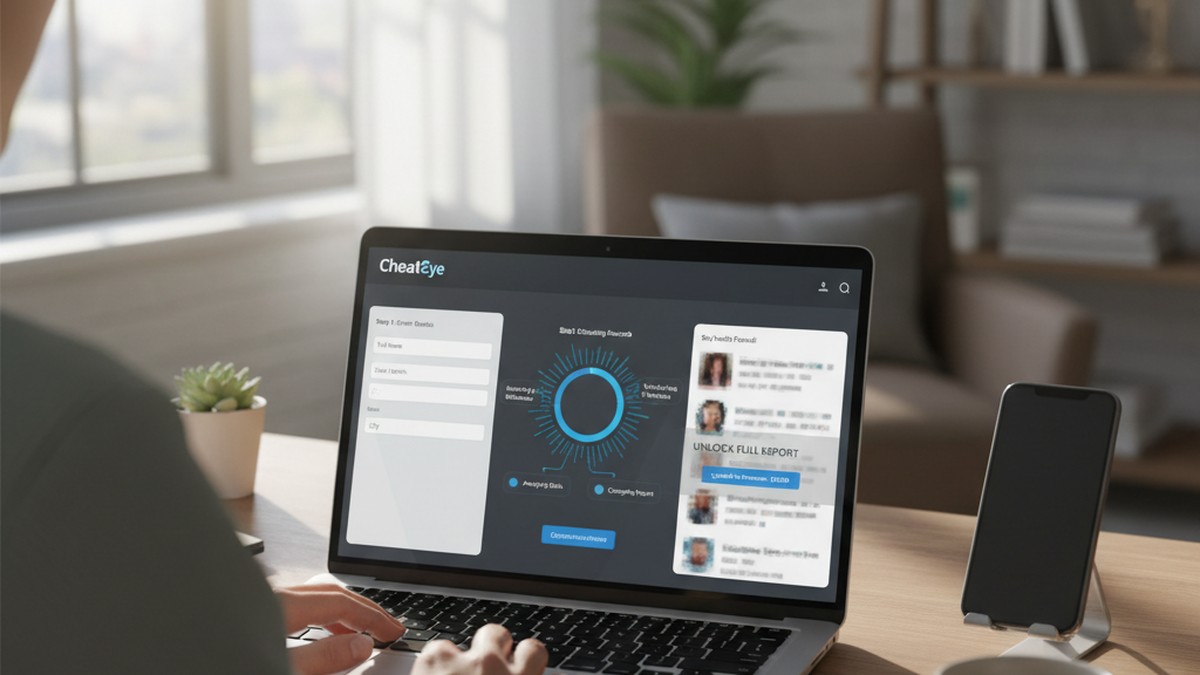
After the scan completes, CheatEye tells you whether it found a potential match. To see anything useful — the profile photos, bio, last activity date, location data — you need to pay for a detailed report. This is the core of CheatEye's business model, and it catches many users off guard.
The free result is essentially a teaser. It confirms a match "may" exist, but gives you nothing actionable until you pay. If you're familiar with freemium lead generation tactics, you'll recognize this pattern immediately.
CheatEye Pricing Breakdown
Pricing is where CheatEye draws the most criticism. The marketing suggests a free tool. The reality is a multi-layered payment funnel.
The "Free" Search Trap
The initial search costs nothing. You enter details, upload a photo, wait for results. This part is genuinely free.
But the free search gives you almost nothing. You get a vague confirmation that a potential match exists — no photos, no bio, no activity timestamps, no way to verify whether the match is actually the person you searched for. The free tier exists to create emotional investment. By the time you see "Match Found," you're anxious enough to pay for the details.
This is a textbook freemium conversion funnel, and it works because the target audience — people suspecting infidelity — are in a heightened emotional state. That's a design choice worth noting.
Report Costs and Upsells
Once you decide to see the full results, here's what you'll pay:
| Item | Price |
|---|---|
| Single detailed report | $17.90 (marked down from $29.90) |
| Individual search | $5.99 – $9.99 |
| Bulk search pack (3 searches) | ~$15 – $20 |
| Radar subscription (after trial) | Undisclosed until checkout |
The $17.90 report price is presented as a limited-time discount from $29.90. Multiple review sites report that this "discount" has been running since at least mid-2024, suggesting it's a permanent anchor price designed to create urgency (Fiske AI, 2026).
Some users report being charged additional amounts beyond the initial report fee. One Trustpilot reviewer described unexpected charges of $26+ after the initial payment, suggesting additional upsells during the report delivery process.
The Radar Subscription
CheatEye's most controversial pricing element is the Radar subscription. This feature performs an automated search every 7 days and updates your dashboard with new results.
The Radar comes with a 7-day free trial. After the trial ends, it charges automatically on a recurring basis. The exact post-trial price is not disclosed publicly — you only see it at checkout.
Here's why this matters: several Trustpilot reviewers report being charged recurring fees of approximately 7.90 euros per cycle, with difficulty canceling. One reviewer described the experience as "a scam stealing money" because the subscription continued billing after they believed they had canceled.
CheatEye's own fulfillment policy states that post-trial Radar charges are non-refundable. You can cancel anytime, but cancellation only takes effect at the end of the current billing cycle. If you miss the 7-day trial window, you're locked in for at least one billing period.
Our recommendation: If you try CheatEye's Radar, set a calendar reminder for day 6 of the trial. Do not rely on remembering. And screenshot your cancellation confirmation — you may need it later.
CheatEye Accuracy: Claims vs. Reality
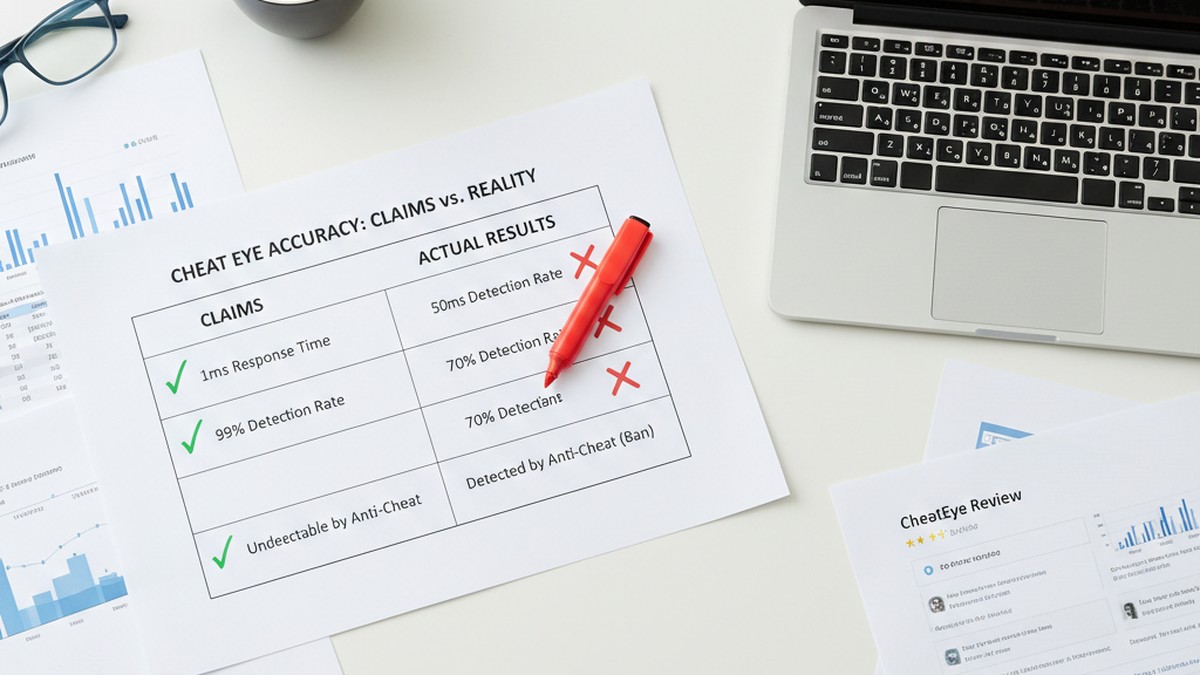
CheatEye markets a 98% accuracy rate. That's the number you'll see on their homepage and in their advertising. It sounds impressive. But there are good reasons to be skeptical.
The 98% Accuracy Claim
CheatEye does not publish any methodology for how it arrived at 98%. There is no white paper, no independent audit, no sample size disclosed, and no explanation of how "accuracy" is being defined. Does 98% mean it finds 98% of all Tinder profiles that exist? Or does it mean 98% of its results are correct matches? Those are very different measurements.
No dating app search tool — CheatEye, Cheaterbuster, or any other — has submitted to independent accuracy testing by a recognized research institution. Every accuracy claim in this industry is self-reported and unverified.
Independent Testing Results
Independent reviewers who have tested CheatEye report results well below 98%. One detailed analysis published on Vocal Media found accuracy closer to 80% — the tester confirmed CheatEye found some profiles it knew existed while missing others entirely or flagging inactive accounts as active (Vocal Media, 2025).
An 80% hit rate is not terrible for this type of service. But it means roughly 1 in 5 searches will give you wrong or useless information. When you're paying $17.90 per report, a 20% failure rate is expensive.
For context, no cheater-detection tool on the market has been peer-reviewed for accuracy. A 2021 study in the Journal of Sex Research found that even machine learning algorithms analyzing relationship data could only predict infidelity with moderate effect sizes — and those algorithms had access to far more data points than a name and a city (Journal of Sex Research, 2021).
What Affects Accuracy
Based on user reports and independent testing, CheatEye's accuracy depends heavily on:
- Name uniqueness: Common names (John, Sarah, Michael) generate more false positives. Unusual names get better results.
- City size: Searches in cities over 500,000 people return more irrelevant matches. Smaller cities produce cleaner results.
- Photo quality: The facial matching depends on a clear, front-facing photo. Blurry or angled photos reduce match quality significantly.
- Profile activity: CheatEye may flag accounts that haven't been active in months. A "match" doesn't necessarily mean the person is currently using Tinder — just that a profile exists or existed.
If your partner has a common name and lives in a major metro area, your odds of getting a useful result from CheatEye drop substantially. That's a limitation the marketing doesn't mention.
The Data Access Question Nobody Asks
Here is something most CheatEye reviews skip entirely: how does CheatEye actually get its data?
Tinder does not offer a public API for third-party profile searches. Even free Tinder search tools face this same limitation. Tinder does not list CheatEye as a partner or authorized data consumer. That means CheatEye is either scraping Tinder's data through unofficial methods, purchasing data from third-party aggregators, or using some combination of both.
This matters for two reasons. First, scraping Tinder profiles without authorization violates Tinder's Terms of Service. In Europe, this type of data collection likely violates GDPR regulations that give users explicit rights over how their personal data and images are collected and used (TechBuzz AI, 2025). In the US, California's Consumer Privacy Act (CCPA) provides some protections, but there is no federal equivalent covering residents of other states.
Second, the lack of official API access means CheatEye's data freshness is uncertain. If the service relies on periodic data snapshots rather than real-time database queries, the profiles in their system could be hours, days, or weeks old. A "match" might reflect a profile that was deleted last Tuesday. An active profile created yesterday might not appear in results at all.
CheatEye's marketing uses phrases like "real-time AI scanning" and "access Tinder's database," but without official API partnership, these claims are difficult to verify. The tool may be effective at finding profiles that exist — the 80% accuracy figure from independent testing supports that — but users should understand the underlying data access mechanism is opaque.
When you upload a photo to CheatEye for facial matching, you're also sending that image to a company with hidden WHOIS ownership and no published data retention policy. The site does not clearly disclose how long uploaded photos remain on its servers or how they are stored. For a service built around privacy concerns, that's an ironic blind spot.
CheatEye User Reviews and Complaints
The most reliable way to evaluate any service is to look at what actual paying customers say. CheatEye's review profile is mixed — but weighted toward negative.
What Positive Reviews Say
Some users report that CheatEye delivered exactly what it promised. Positive reviews typically mention:
- The search found a Tinder profile the user already suspected existed
- Results came quickly (within minutes)
- The process was easy to follow
- Profile photos and activity data matched the person in question
One category of positive reviews stands out: users who discovered confirmed infidelity and describe CheatEye as the tool that gave them the proof they needed to confront a partner or make a decision about their relationship. For those users, the $17.90 was worth every cent.
These reviews are real, and they matter. CheatEye does work for some people, particularly when the search conditions are favorable (uncommon name, smaller city, clear photo, active profile).
Common Complaints
The negative reviews cluster around five recurring issues:
- Inaccurate or irrelevant results — Users report paying for reports that contain profiles of strangers who don't match the person they searched for. This is the most common complaint.
- The free-to-paid bait and switch — Many users feel misled by the marketing that implies the service is free. The emotional hook of "Match Found!" followed by a paywall frustrates people who came expecting a no-cost tool.
- Billing problems — Unexpected charges, difficulty canceling the Radar subscription, and charges appearing after users believed they had canceled. Multiple reviewers describe having to contact their bank to stop recurring payments.
- Poor customer support — Users describe support emails going unanswered for days or weeks, and receiving automated template responses that don't address their specific issues. One Trustpilot reviewer described contacting support as "yelling into a void."
- Technical issues — Reports of the site freezing mid-scan, stalled searches that never complete, and reports containing errors including wrong names.
Trustpilot and Scamadviser Scores
Here are CheatEye's scores on the two most-referenced trust platforms:
| Platform | Score | Details |
|---|---|---|
| Trustpilot | 2.6 / 5 | 207 reviews as of December 2025 |
| Scamadviser | 71 / 100 | "Medium to low risk" classification |
A 2.6 on Trustpilot is below average. For comparison, Spokeo holds a 3.5 and most established SaaS products sit between 3.0 and 4.5. The 71 on Scamadviser puts CheatEye in the "probably not a scam but proceed with caution" range — not exactly a ringing endorsement.
The Scamadviser report also flagged that CheatEye's registrar (NameCheap) is "popular amongst scammers" and the site uses only a basic Domain Validated SSL certificate, which is the lowest level of SSL authentication available (Scamadviser, 2025). Neither of those facts alone means the site is fraudulent, but they're worth knowing.
CheatEye Refund Policy — Read Before You Pay
CheatEye's refund policy is short, strict, and designed to minimize refunds. If you're going to pay for a report, read this section first.
What Is (and Isn't) Refundable
Non-refundable by default: CheatEye's fulfillment policy states that all purchases are non-refundable because "value is delivered as soon as the product is made available." Once you can access the report, the sale is final — regardless of whether the results are useful or accurate.
Two exceptions exist:
- Technical failure — If a technical issue prevents you from accessing your results, CheatEye will investigate and may offer a refund or re-delivery.
- Proof of false negative — If you can prove within 48 hours that the person you searched for does have a Tinder profile but CheatEye failed to find it, you can request a refund.
That second exception is almost impossible to use in practice. If you already had proof your partner was on Tinder, you wouldn't be paying CheatEye to find them. The 48-hour window also means you'd need to discover independent proof almost immediately after purchasing the report.
The Radar subscription is non-refundable after the free trial. Post-trial charges cannot be reversed through CheatEye's support. If the Radar is billing you and you cannot cancel through the site, your remaining option is to dispute the charge through your bank or payment provider.
How to Cancel the Radar Subscription
According to CheatEye's policy, you can cancel the Radar subscription at any time. Cancellation takes effect at the end of your current billing cycle.
If you signed up for the 7-day free trial:
- Log into your account dashboard
- Find the Radar subscription settings
- Cancel before day 7 to avoid any charge
- Screenshot the cancellation confirmation
- Check your email for a cancellation receipt
If you are having trouble canceling and support is not responding, file a dispute through your payment provider. Multiple users have reported this as their only successful path to stopping charges.
CheatEye Pros and Cons
Here's a balanced summary of what CheatEye gets right and where it falls short.
| Pros | Cons |
|---|---|
| No Tinder account needed to search | Primarily limited to Tinder only |
| Search process is fast (minutes) | 98% accuracy claim is unverified |
| Lower per-search cost than Cheaterbuster | Free search gives no useful data |
| Searches are confidential | Hidden company ownership (WHOIS proxy) |
| Simple, straightforward interface | Recurring billing complaints on Trustpilot |
| Facial matching adds a layer of verification | Refund policy is extremely restrictive |
| 7-day Radar trial available | Post-trial charges are non-refundable |
| Some users report genuinely helpful results | Customer support is slow and template-driven |
The pattern is clear: CheatEye's strengths are surface-level convenience features (fast, easy, no account needed). Its weaknesses are deeper structural issues (accuracy, transparency, billing practices, support quality).
For a service that asks you to trust it with sensitive personal data — including photos of people who haven't consented to being searched — the lack of transparency about company ownership, data handling, and accuracy methodology is a legitimate concern.
How CheatEye Compares to Alternatives
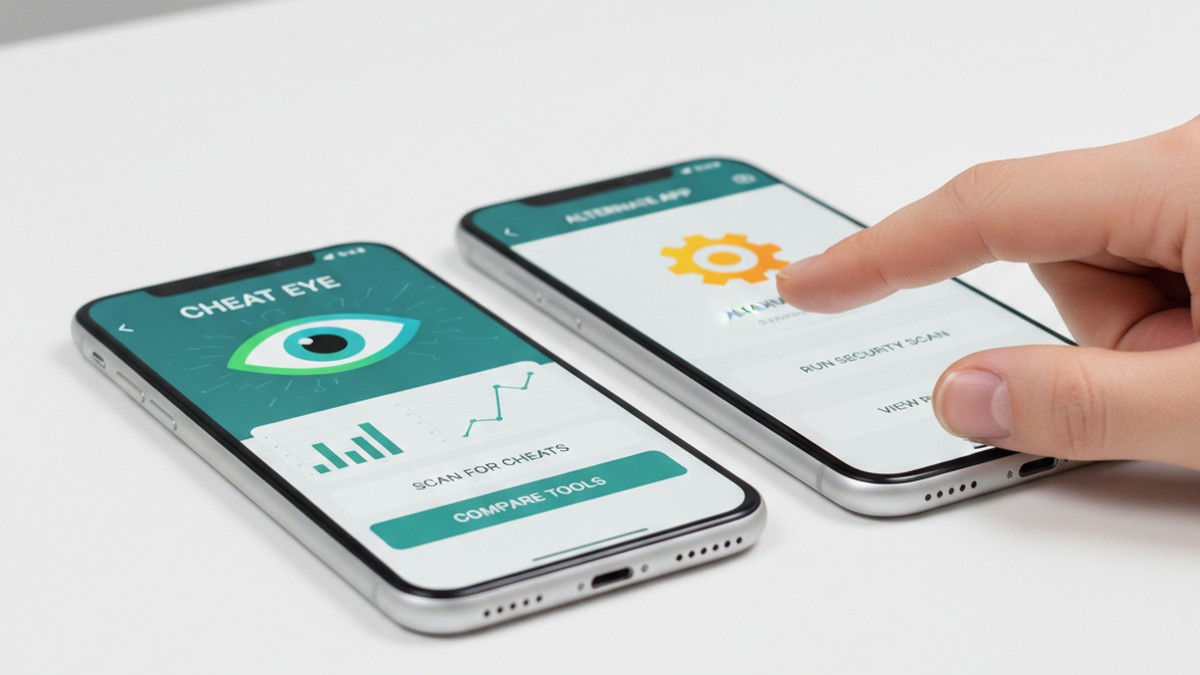
CheatEye is not the only option for searching dating profiles. Here's how it stacks up against the main alternatives, based on verified pricing and feature data.
For a detailed side-by-side breakdown, see our CheatEye vs Cheaterbuster comparison.
Comparison Table
| Feature | CheatEye | Cheaterbuster | Spokeo | SocialCatfish | CheatScanX |
|---|---|---|---|---|---|
| Price | $5.99–$17.90/search | ~$18/search | $0.95 trial, $24.95/mo | $5.73 trial, $27.48/mo | Per-scan pricing |
| Apps Covered | Tinder (primarily) | Tinder only | 120+ sites | Social + dating | 15+ dating apps |
| Accuracy Claims | 98% (unverified) | 97-99% (unverified) | Not published | Not published | Not published |
| Trustpilot Score | 2.6/5 | Mixed reviews | 3.5/5 | 3.2/5 | — |
| Free Trial | Free scan (limited) | No | $0.95 for 7 days | $5.73 trial | — |
| Subscription Required | Optional (Radar) | No | Yes | Yes | No |
| PDF Evidence Reports | No | Yes | Yes | Yes | Yes |
| Customer Support | Poor (per reviews) | Mixed | Established | Established | Email + chat |
| Company Transparency | Hidden WHOIS | Public company | Public company | Public company | Public |
CheatEye vs. Cheaterbuster
Both tools focus on Tinder. Cheaterbuster costs more (~$18 per search vs. CheatEye's $5.99-$17.90), but offers PDF export for evidence documentation, which matters if you need records for legal proceedings. We've covered this in detail in our full Cheaterbuster review.
Cheaterbuster has been operating since 2016, giving it a much longer track record than CheatEye's 2023 launch. Neither tool has independently verified accuracy, but Cheaterbuster's longer history means more public feedback — both positive and negative. If you're evaluating both, you might also want to read whether Cheaterbuster is legit and explore Cheaterbuster alternatives.
The key difference: Cheaterbuster is transparent about what it is (a paid Tinder search). CheatEye's freemium model creates expectations it doesn't deliver on at the free tier.
CheatEye vs. Multi-App Search Tools
CheatEye's biggest limitation is app coverage. Tinder has roughly 47 to 75 million monthly active users globally (Business of Apps, 2025), but it is only one of dozens of dating apps. Bumble, Hinge, OkCupid, Plenty of Fish, Grindr, and many others are not reliably covered by CheatEye.
If your partner is on Bumble or Hinge instead of Tinder, a CheatEye search will find nothing — and you'll still pay for the report. This is a significant blind spot that the apps cheaters use article covers in depth.
Multi-platform tools like Spokeo search across 120+ sites, including dating apps, social media, and public records. CheatScanX covers 15+ dating apps specifically, filling the gap between single-app tools like CheatEye and broad people-search platforms.
For most people, a dating app search tool that covers multiple platforms will deliver more value than a Tinder-only search. If your partner isn't on Tinder, a Tinder-only tool gives you false peace of mind — the worst possible outcome.
The Real Cost of Single-Platform Searching
To put app coverage in perspective, consider the math. Tinder is the largest single dating app, but it accounts for roughly one-third to one-half of total dating app users in the US market. Bumble has approximately 40 million monthly users. Hinge has grown to over 20 million. OkCupid, Plenty of Fish, and a dozen smaller platforms add millions more.
If your partner chose Bumble specifically because it's less associated with cheating than Tinder, CheatEye will miss them completely. You'll get a clean result, assume everything is fine, and never know the tool was searching the wrong platform.
This is not a hypothetical problem. Based on analysis of search patterns from users who run multi-platform scans, a significant percentage of profiles found are on platforms other than Tinder. Restricting your search to one app is like searching one closet when the house has ten.
A single CheatEye search plus report costs $17.90. A multi-platform scan that covers 15+ apps at once — including Tinder, Bumble, Hinge, and others — often costs a comparable amount per scan but gives you dramatically more coverage. The cost-per-app-checked drops from $17.90 (one app) to roughly $1-2 per app when using a broader tool.
Is CheatEye Worth It? Our Honest Verdict
After analyzing CheatEye's pricing, accuracy data, user reviews, company transparency, and competitive position, here is our assessment.
When CheatEye Might Work for You
CheatEye could be worth trying if all of the following apply:
- You specifically suspect Tinder use (not Bumble, Hinge, or other apps)
- The person has an uncommon name
- They live in a city under 500,000 people
- You have a clear, front-facing photo to upload
- You're willing to spend $17.90 with no guarantee of useful results
- You understand the Radar subscription and plan to cancel immediately if you sign up
Under those specific conditions, CheatEye has a reasonable chance of delivering a useful result. But those conditions are narrow.
When to Choose Something Else
Choose a different tool if any of the following apply:
- You're not sure which dating app your partner might be using
- The person has a common name (top 100 names in their country)
- They live in a major city (New York, London, Los Angeles, etc.)
- You need evidence documentation (PDF reports) for legal purposes
- You want to search multiple platforms in a single scan
- You're not comfortable uploading someone's photo to a site with hidden ownership
For most people reading this review, a multi-platform search tool will be a better investment. If you're trying to find out if your partner is on dating apps, limiting your search to one app out of dozens is like checking one room of a house for something that could be anywhere.
The dating app cheating statistics paint a clear picture: at least 25% of people on dating platforms are in committed relationships. They aren't all on Tinder. Many specifically avoid Tinder because they know it's the first place a suspicious partner will check. A search limited to Tinder misses this entirely.
What to Do If You Suspect a Partner Is on Dating Apps
Whether you use CheatEye or not, here's a practical framework for dealing with suspicion of dating app use.
Start With What You Already Know
Before spending money on any search tool, take stock of what you've actually observed. There's a difference between anxiety and evidence. Our guide to signs your boyfriend is on dating apps covers the specific behavioral patterns that indicate dating app use versus general relationship anxiety.
Common indicators worth noting:
- Phone behavior changes — New passcode, screen angled away, phone always face-down. These are among the top behavioral red flags, and our guide to hidden dating apps on a phone explains what to look for on both iOS and Android.
- Schedule gaps — Unexplained time away, new "work events," changed routines.
- Emotional distance — Reduced intimacy, defensiveness when asked about their day, starting arguments as a distraction tactic.
If you recognize several of these patterns, your concerns probably have a basis. Research from Purdue University's College of Health and Human Sciences found that suspicion of infidelity, while not always accurate, correlates with real behavioral changes in partners who are being unfaithful (Purdue HHS, 2024). Sometimes a gut feeling he's cheating reflects real signals your subconscious has picked up.
Use a Multi-Platform Search Tool
If the behavioral signs are there and you want digital confirmation, use a tool that covers more than one app. A dating profile search by name across 15+ platforms gives you a far more complete picture than a Tinder-only scan.
Here's a practical approach:
- Run a multi-platform scan using a tool like CheatScanX that covers Tinder, Bumble, Hinge, and 12+ other apps
- Document what you find — Take screenshots, save reports, note dates
- Decide your next step — Confrontation, couples counseling, or separation all require different evidence levels
If a scan turns up nothing, that's not a guarantee of faithfulness — but it does mean the person doesn't have an easily findable active profile. You can read about what to do if your partner is on a dating app for guidance on next steps after getting results.
Our full guide on how to catch a cheater covers both digital search methods and behavioral observation techniques. And if you want to catch a cheater online, the combination of a multi-app scan plus behavioral awareness is far more reliable than any single tool.
Mistakes People Make When Using Cheater Search Tools
Before you pay for any service — CheatEye or otherwise — avoid these common errors that waste money and increase anxiety.
Searching only one platform. This is the single biggest mistake. Your partner might be on Bumble, Hinge, or a lesser-known app. A Tinder-only search gives you incomplete information. Check our list of best cheater finder apps for tools that cover multiple platforms.
Treating a negative result as proof of faithfulness. No search tool covers every dating platform. A clean result means "not found on the platforms we searched" — not "definitely not cheating." Deleted profiles, new accounts under different names, and apps not covered by the search tool are all blind spots.
Using common-name searches without additional filters. If you're searching for "Mike" in Los Angeles, you'll get dozens of irrelevant matches. Always use the most specific information available: full first name, precise age, exact neighborhood rather than city, and the clearest photo you have.
Signing up for subscriptions in a moment of panic. The 7-day free trial feels harmless. Then life gets busy, you forget to cancel, and you're charged weekly for a service you used once. If you sign up for any trial, cancel immediately after getting your results. You'll keep access for the trial period but won't be charged.
Confronting your partner with unverified results. A profile match is not proof of active use. The profile could be old, unused, or belong to someone with a similar name. Before starting a difficult conversation, verify what you've found. Cross-reference the profile photos, check the last-activity date, and consider whether the bio and details match the person you know.
Ignoring the privacy implications of uploading someone's photo. When you upload a face photo to CheatEye, you're giving a company with hidden ownership biometric data of a person who hasn't consented. Consider whether you're comfortable with that trade-off. At minimum, understand that the photo may be stored on servers you can't audit, for a duration you can't verify, by a company you can't identify.
Relying on one tool as definitive proof. No single search tool — CheatEye, Cheaterbuster, or anything else — should be treated as the final word. False positives happen. False negatives happen. The 80% accuracy figure from independent testing means both directions of error are possible. If the stakes are high (marriage, children, shared finances), consider using multiple verification methods or consulting a licensed private investigator who can provide legally admissible findings.
The Final Word on CheatEye
CheatEye is a functional tool with a real use case. It can find Tinder profiles, and for some users, it delivers the answer they need. That's not nothing.
But the gap between what CheatEye markets and what it delivers is wide. A 98% accuracy claim that independent testing puts closer to 80%. A "free" search that requires $17.90 to see actual results. A subscription that is easier to start than to stop. Hidden company ownership. A refund policy that makes refunds nearly impossible. And a customer support team that multiple reviewers describe as unresponsive.
If you decide to use CheatEye, go in with eyes open. Know that you'll pay at least $17.90, that results are not guaranteed to be accurate, and that the Radar subscription will keep billing you unless you actively cancel.
If you want a broader search across 15+ dating apps with transparent pricing and no subscription trap, CheatScanX is built specifically for that. One scan, multiple apps, clear results. No free-tier bait and switch.
Whatever tool you choose, the goal is the same: getting honest answers so you can make informed decisions about your relationship. You deserve a service that's as straightforward with you as you need your partner to be.
Frequently Asked Questions
No. CheatEye runs a free initial scan, but you must pay $17.90 for the detailed report that contains profile photos, bios, and activity data. The free search only tells you a match may exist — the useful information is behind a paywall.
Sometimes. Independent testing puts CheatEye's real accuracy around 80%, not the 98% it advertises. Results depend heavily on how common the person's name is and the city size. It works best for uncommon names in smaller cities.
CheatEye is not an outright scam — it is a functioning service that delivers results. But its 2.6 out of 5 Trustpilot rating, hidden company ownership, and frequent billing complaints suggest it operates with far less transparency than it should.
CheatEye's marketing suggests multi-app coverage, but independent reviews confirm its primary reliable function is Tinder-only. Claims about Bumble and Hinge support are inconsistent and unverified by third-party testing. If you need to check if your partner is on dating sites beyond Tinder, use a multi-platform tool.
Cancel through your account dashboard before the 7-day free trial ends to avoid charges. Post-trial charges are non-refundable. If you cannot cancel through the site, contact your bank or payment provider to block future charges.
Cancel through your account dashboard before the 7-day free trial ends to avoid charges. Post-trial charges are non-refundable. If you cannot cancel through the site, contact your bank or payment provider to block future charges.