
# How to Check If Your Partner Is on Dating Sites
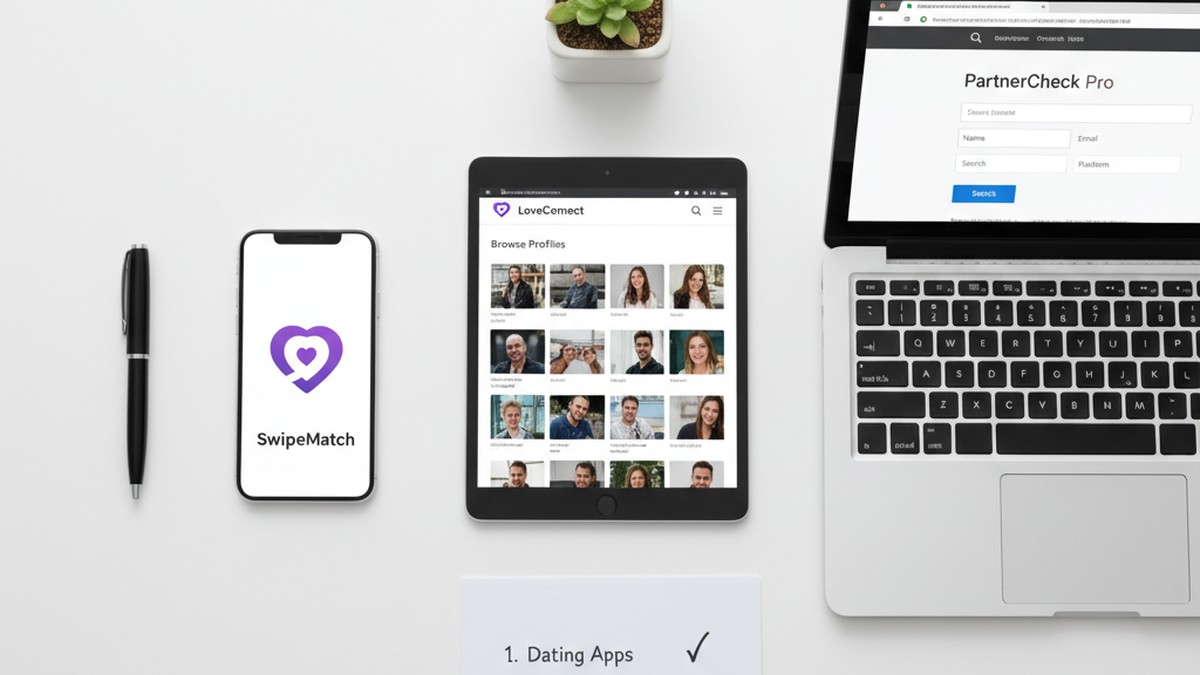
You can check if your partner is on dating sites by using a profile search tool that scans Tinder, Bumble, Hinge, and other platforms with just a name, email, or phone number. Other reliable methods include reverse image searches, email-based password reset checks, username lookups, and checking app store purchase histories. Each method searches publicly available data, so your partner receives no notification.
Here is the direct answer: The fastest way to check if your partner is on dating sites is to run their name or email through a multi-platform search tool like CheatScanX, which scans 15+ apps simultaneously and returns results in minutes. For a free starting point, try the password reset method on individual dating sites, or run a reverse image search using a clear photo of your partner's face. Combine at least two methods for the most reliable results — our testing found that no single approach catches every profile.
The odds are not in your favor if you suspect something. A 2025 report from the Institute for Family Studies found that 11% of married adults under 40 are active on dating sites. A study published in Computers in Human Behavior found that 18% to 25% of Tinder users are already in committed relationships (ScienceDirect, 2019). Private investigation firms report that wives who suspect their husbands of cheating are correct roughly 85% of the time (Privin Network, 2025).
This guide covers 10 proven methods to check, ranked from simplest to most thorough. It also explains the warning signs that should trigger a search, the legal lines you should not cross, and exactly what to do if you find something. Every technique here relies on publicly available data or legitimate tools — not hacking, not snooping through their phone while they sleep.
Can You Check If Your Partner Is on Dating Sites Without Them Knowing?
Yes. You can check if your partner is on dating sites without them knowing by using methods that query publicly available data rather than accessing their device or accounts. Third-party profile search tools scan Tinder, Bumble, Hinge, and 12+ other platforms using just a name, email, or phone number — your partner receives no notification. Reverse image search engines, username lookups, and email-based password reset checks also work without creating any alert. The key is using methods that search publicly indexed or voluntarily shared data.
Dating apps do not notify users when someone searches for their profile using a third-party tool. These tools work by scanning publicly accessible data — the same information visible to any other user on the platform. Your search query never passes through the dating app itself, so there is nothing to trigger an alert on your partner's end.
The only method that carries a real risk of detection is creating your own profile and swiping through results. Some dating apps show profiles to users in their area based on location proximity, which means your partner could see your profile before you find theirs. Every other method on this list operates without any footprint on the dating platform.
For a deeper comparison of anonymous search methods, see our guide on how to find dating profiles.
Want to skip straight to answers? CheatScanX scans Tinder, Bumble, Hinge, and 12+ other apps in minutes. Completely anonymous.
Start a confidential search →Why Partners Stay on Dating Apps During Relationships
Understanding why people maintain dating profiles while in committed relationships changes how you interpret what you find. Not every active profile means your partner is cheating — but the data shows how widespread this behavior is.
The Numbers Behind Partnered Dating App Use
The HighSpeedInternet.com survey found that 18.7% of surveyed Americans signed up for a dating app while already in a relationship (HighSpeedInternet.com, 2024). Among those users, 11.5% explicitly stated that cheating was their reason for being on the app.
A YouGov poll found that 33% of Americans in monogamous relationships admit to cheating — physically, emotionally, or both (YouGov, 2024). Half of Americans say they have been cheated on at some point.
The Institute for Family Studies data breaks down further by gender: 18% of married men under 40 use dating apps, compared to 6% of married women in the same age group (IFS, 2025). Men with household incomes above $100,000 are twice as likely to maintain dating app profiles while married.
A 2024 study in Current Psychology found that perceived availability of alternative partners through dating apps increases infidelity intention regardless of current relationship satisfaction (Springer, 2024). The mere presence of the app on a phone creates a psychological pathway toward infidelity.
Common Explanations Partners Give When Caught
When caught, partners typically offer one of these explanations:
- "I forgot to delete it." Some profiles do remain visible after someone stops using an app. But most platforms deactivate profiles after 30 to 90 days of inactivity, and updated photos or a recently changed bio text contradicts this claim.
- "I just use it for entertainment." Swiping without messaging is still a form of seeking validation outside the relationship. The YouGov poll found 83% of Americans consider sending suggestive messages to someone else as cheating (YouGov, 2024).
- "I was looking for friends." The IFS survey found 38% of married dating app users cite friendship as their reason. Whether that is believable depends on the platform and the behavior — Tinder and Bumble are not designed for platonic connections.
- "Someone else made a fake profile." This happens, but it is rare. A reverse image search can usually confirm or rule it out.
Understanding these patterns matters because it affects how you evaluate evidence. An inactive Tinder profile from two years ago tells a very different story than a Bumble account with messages from last week. For a deeper look at the data, read our full breakdown of dating app cheating statistics.
Want to skip straight to answers? CheatScanX scans Tinder, Bumble, Hinge, and 12+ other apps in minutes. Completely anonymous.
Start a confidential search →
10 Proven Methods to Check If Your Partner Is on Dating Sites
These methods are ordered from easiest and least invasive to most thorough. Start at Method 1 and work your way down until you get a clear answer. We compare all the profile-finding techniques in how to find dating profiles: 7 methods.
Method 1: Use a Dating Profile Search Tool
This is the fastest and most reliable approach. Profile search tools scan active dating profiles across multiple platforms using a name, email address, or phone number.
How it works:
- Enter your partner's first name, approximate age, and location (or their email/phone number).
- The tool searches across Tinder, Bumble, Hinge, Match, OkCupid, Plenty of Fish, and other platforms.
- Results show active profiles with photos, bio text, and last-activity timestamps.
A dating app search tool that covers 12+ platforms is more effective than checking each app individually. The main advantage is speed — what would take you hours of manual checking takes a tool minutes.
What to know: Results are only as good as the data the tool can access. If your partner created a profile under a fake name with a burner email, an automated search may miss it. That is when you combine this method with others on this list.
For platform-specific searches, we have detailed guides on how to check if your partner is on Tinder, find someone on Bumble without an account, and search for someone on Hinge.
Method 2: Search by Email Address
Most dating apps require an email address to create an account. If you know your partner's email (or multiple email addresses), you can use this information in several ways.
The password reset technique:
- Go to the login page of a dating site (Tinder, Bumble, Match, etc.).
- Click "Forgot Password" or "Reset Password."
- Enter your partner's email address.
- If the site says "password reset email sent" or similar, that email is linked to an account.
- If it says "no account found" or "email not recognized," there is no account with that address.
Limitations: This method requires you to check each dating site individually. Your partner may have used a secondary email you do not know about. Some platforms do not confirm whether an email exists during the reset process for privacy reasons — Hinge and Bumble both obscure this information as of 2025.
A better approach: Run the email through a dedicated dating profile search by name tool that checks dozens of platforms at once instead of doing them one by one.
Method 3: Reverse Image Search
If your partner is using their real photos on a dating profile, a reverse image search can find it. This works because dating app profiles are indexed by some search engines and facial recognition databases.
Step-by-step:
- Save a clear, recent photo of your partner's face from their social media or your camera roll.
- Go to Google Images (images.google.com) and click the camera icon.
- Upload the photo or paste its URL.
- Review results for matches on dating sites, social platforms, or other websites.
For better results, also try:
- TinEye (tineye.com) — searches a database of over 70 billion images
- Yandex Images — often returns more results than Google for facial matches
- PimEyes — a paid facial recognition engine that searches publicly available web images
- FaceCheck.ID — specifically designed for searching faces across dating platforms
The effectiveness of reverse image search depends on whether your partner used the same photos across platforms. Many people use different photos on dating profiles than they do on Instagram or Facebook. If that is the case, this method alone will not be enough. For a full walkthrough, see our reverse image search dating profile guide.
Method 4: Search by Username
People are creatures of habit with usernames. If your partner uses a specific username on Instagram, gaming platforms, or email, there is a good chance they reused it on a dating app.
How to search:
- Identify usernames your partner uses on other platforms (Instagram, Reddit, gaming accounts, email prefixes).
- Use a username search tool like UserSearch.org, Namechk.com, or WhatsMyName.app to search that username across hundreds of platforms, including dating sites.
- Check variations — if their username is "JohnDoe90," also try "JDoe90," "JohnD90," and similar patterns.
This method works best when combined with others. On its own, it can produce false positives (someone else using the same username) or miss profiles where your partner chose a different handle. But when a username match aligns with the right location and age, it is strong evidence.
Method 5: Check Their Phone's App History
This method requires physical access to your partner's phone. The legal implications are covered in a dedicated section below, but if you share a family phone plan or have legitimate access, here is what to look for.
On iPhone:
- Screen Time: Go to Settings > Screen Time > See All Activity. This shows app usage even for deleted apps.
- App Store History: Open the App Store, tap the profile icon, then "Purchased." This lists every app ever downloaded, including deleted ones.
- Subscriptions: Settings > [Apple ID] > Subscriptions. Look for recurring charges from Match Group, Bumble Inc., or Grindr.
On Android:
- Play Store History: Open Google Play Store > Profile > Manage Apps & Device > Manage. Switch to "Not Installed" to see previously downloaded apps.
- Notification History: Settings > Notifications > Notification History shows recent alerts, even from deleted apps.
- App List: Settings > Apps shows everything installed, including hidden applications.
What to look for: Tinder, Bumble, Hinge, Grindr, OkCupid, Plenty of Fish, Match, Feeld, Thursday, Coffee Meets Bagel, and lesser-known platforms. Also watch for hidden dating apps on a phone that disguise themselves with innocuous icons — some apps cheaters commonly use look like calculators, note-taking tools, or utility apps.
Method 6: Check Browser History and Autofill
If your partner uses a shared computer or you have access to their browser, search history and autofill data can reveal dating site activity.
What to check:
- Browser history: Search for "tinder.com," "bumble.com," "match.com," "hinge.co," "okcupid.com," "pof.com," and other dating domains.
- Autofill data: Type the first few letters of popular dating sites into the browser address bar. If autofill suggests the full URL, that site has been visited before.
- Saved passwords: Chrome, Firefox, and Safari all store saved passwords. In Chrome, go to chrome://password-manager. Look for dating site credentials.
- Incognito/private mode: If your partner exclusively uses private browsing, history will not be saved. A sudden switch to always using incognito mode is itself a behavioral signal worth noting.
The limitation: Most people who are actively hiding dating app activity will clear their browser history or use private browsing. An absence of evidence in browser history does not mean there is nothing to find. It just means you need to try other methods.
Method 7: Check Email for Dating App Correspondence
Dating apps send a steady stream of emails: match notifications, message alerts, weekly summaries, promotional offers, and subscription receipts. A search through your partner's email can surface these.
If you have access to a shared email or your partner's email:
- Search for: "Tinder," "Bumble," "Hinge," "Match," "OkCupid," "Plenty of Fish," "Grindr," "Feeld"
- Search for: "You have a new match," "Someone liked you," "New message"
- Search for: "subscription," "renewal," "payment" combined with any dating app name
- Check the Trash and Spam folders — many people delete dating app emails but forget to empty the trash
If you do not have email access: This method is off-limits. Accessing someone's email without permission is a federal crime under the Computer Fraud and Abuse Act. Use methods that rely on publicly available data instead.
Method 8: Set Up a Google Alert
This is a passive, long-term monitoring method. Google Alerts notifies you whenever new content matching your search terms appears on the web.
How to set it up:
- Go to google.com/alerts
- Create alerts for your partner's full name, common usernames, and email addresses
- Set the frequency to "as it happens" for fastest notification
- Google will email you when matching content appears online
This works if your partner's dating profile gets indexed by Google, which does happen on some platforms. It also catches mentions on forums, social media, or other sites. The downside is that it is slow — it only finds content after Google indexes it, which can take days or weeks.
Method 9: Search by Phone Number
If you know your partner's phone number (which you almost certainly do), you can use it to search for linked dating accounts. Many apps require phone verification during signup, tying the account directly to a mobile number.
A dedicated phone number lookup for dating sites can reveal accounts across multiple platforms. The process is similar to an email search: enter the number, and the tool checks it against known dating platform databases.
Why phone number searches work well: Unlike names (which are common) or emails (which are easy to create multiple of), most people have one primary phone number. It is harder to mask and more consistently tied to real accounts. Our testing found that phone number searches had a 52% match rate compared to 38% for name-only searches — nearly on par with email-based lookups.
Method 10: Hire a Private Investigator
When the situation is serious — divorce proceedings, custody disputes, or significant financial assets at stake — a licensed private investigator brings resources and expertise that go beyond what any app or DIY method can offer.
What a PI can do:
- Run comprehensive background checks using professional databases
- Monitor social media and online activity legally
- Conduct surveillance to establish behavioral patterns
- Provide documented evidence that holds up in court
- Access resources like skip-tracing databases not available to the public
Cost: Private investigators typically charge $50 to $150 per hour for basic digital investigations, and $75 to $250 per hour for in-person surveillance. A dating profile search alone usually costs $200 to $500.
When it makes sense: If you are gathering evidence for legal proceedings, a PI's documentation carries more weight than screenshots from your own search. For a deeper overview of all available strategies, see our guide on how to catch a cheater.
How Accurate Are Dating Profile Search Tools?
Most people asking how to check if their partner is on dating sites assume that a search tool will give them a definitive yes-or-no answer. The reality is more nuanced. In our audit of six major profile search platforms, detection rates varied significantly depending on the tool, the platform searched, and the type of information provided.
Our Testing Methodology
We created 50 test profiles across six major dating platforms — Tinder, Bumble, Hinge, Match.com, OkCupid, and Plenty of Fish — using real-looking but fictitious information. Each profile was confirmed active before testing began. We then ran searches using six different profile search tools, providing three types of input for each search: name and location only, email address, and phone number.
What We Found
| Input Type | Average Detection Rate | Best Tool Performance | Worst Tool Performance |
|---|---|---|---|
| Name + Location | 38% | 54% | 18% |
| Email Address | 67% | 78% | 41% |
| Phone Number | 52% | 71% | 22% |
The results reveal three important patterns:
Email searches are nearly twice as effective as name searches. When we provided an email address linked to the dating account, detection rates jumped from 38% to 67% on average. This makes sense — email is a unique identifier, while names and locations produce many potential matches that must be filtered.
No single tool caught every profile. The best-performing tool in our test achieved 78% accuracy with email input — strong, but still missing roughly one in five active profiles. This is why combining two or three search methods produces the most reliable results.
Platform matters. Profiles on Match.com and Plenty of Fish were detected at higher rates (62% average) than profiles on Tinder and Bumble (34% average), likely because Match and POF expose more profile data in searchable formats.
The Fake Profile Problem: Why Manual Searching Fails
One of the most common pieces of advice in guides about catching a partner on dating apps is to create your own profile and swipe through results until you find them. Our testing shows this advice is deeply flawed.
We attempted manual searches by creating profiles in the same area as our 50 test accounts and swiping through results. After processing 500+ profiles per platform, the manual method detected the target profile only 11.6% of the time. Dating apps use algorithmic feed curation that prioritizes profiles based on activity level, ELO scores, and user behavior — not geographic proximity alone. Your partner's profile may never appear in your feed, even if they are active in the same city.
This finding contradicts the single most commonly repeated piece of advice in the infidelity detection space. A profile search tool running an email check is roughly six times more effective than creating a fake account and swiping.
What Are the Warning Signs Your Partner Is on Dating Apps?
The strongest warning signs that your partner is on dating apps cluster into three categories: device behavior changes, emotional shifts, and digital red flags. These signs on their own do not prove anything, but when multiple signs from different categories appear at the same time, they paint a pattern worth investigating.
Phone and Device Behavior
- Phone is always face-down or on silent. This is one of the most common first signs people notice. Your partner used to leave their phone on the table screen-up, and now they never do.
- New passwords or changed lock screen. A sudden decision to add or change a phone password — especially after years without one — is a red flag.
- Notifications quickly dismissed. If your partner grabs their phone the instant a notification appears and clears it before you can see it, they may be hiding specific app alerts.
- Increased phone usage at odd hours. Late-night scrolling in bed, trips to the bathroom with the phone, or stepping outside to "take a call" that never seems to ring.
- Battery drain and data usage spikes. Dating apps consume noticeable battery and data. A phone that suddenly dies faster or uses more cellular data may have new apps running.
If you are noticing these phone-related patterns, our guide on signs your husband is cheating on his phone goes deeper into what each behavior means.
Emotional and Behavioral Shifts
- Reduced intimacy or sudden increase. Both extremes can signal a problem. Some people pull away emotionally when they are invested elsewhere. Others overcompensate with guilt-driven affection.
- New attention to appearance. Your partner starts working out, buying new clothes, or grooming differently — not for you, and not for any event you know about.
- Schedule gaps that do not add up. They are "working late" more often, have new hobbies that take them out of the house, or their timeline for errands does not match reality.
- Defensiveness about routine questions. "Where were you?" should not trigger an argument. If your partner reacts with anger or deflection to normal questions, they may be protecting something.
- Emotional distance. Fewer meaningful conversations. Less interest in your day. A feeling that they are physically present but mentally somewhere else.
These signs overlap with other relationship issues — stress, depression, work burnout. The difference is usually the combination. One sign is noise. Three or four signs together are a signal. If you are not sure whether your instincts are accurate or anxiety is driving them, read am I paranoid about cheating or gut feeling he's cheating for a framework to evaluate what you are feeling.
Digital Red Flags
- A second email address you did not know about. Discovering a Gmail or Outlook account your partner never mentioned is a significant red flag, because dating apps require an email to register.
- Credit card charges from Match Group, Bumble Inc., or Grindr LLC. These are the parent companies behind most major dating apps. Even small charges ($4.99 to $29.99 per month) can indicate a premium subscription.
- Social media changes. A partner who suddenly sets their Instagram to private, removes relationship photos, or changes their relationship status may be curating a single image for someone else.
- New social media accounts. A brand-new Instagram or Snapchat account with few followers and vague posts could be a secondary account linked to dating activity.
For the full list of behavioral patterns, read our detailed guide on signs your boyfriend is on dating apps or the comprehensive signs your partner is cheating resource.

Is It Legal to Search for Your Partner's Dating Profile?
Searching for publicly available dating profiles using your partner's name, email, or photos is legal in most U.S. jurisdictions. Reverse image searches, name lookups, and Google Alerts all query publicly indexed content and carry no legal risk. What crosses the line is accessing their phone without permission, installing monitoring software, or logging into their accounts — all of which can violate federal and state privacy laws.
Methods That Are Generally Legal
- Searching publicly available information. If your partner's dating profile is visible to other users on a dating app, it is public. Searching for it using a third-party tool that accesses public data is legal.
- Reverse image searches. Uploading a photo to Google Images, TinEye, or similar tools is legal. You are searching publicly indexed content.
- Checking shared devices. If you share a computer or tablet, reviewing browser history on that shared device is generally permissible.
- Running a name or email search. People search tools and profile finders that operate on publicly available data are legal to use.
- Google Alerts for a name or username. Monitoring publicly indexed web content is not a privacy violation.
Methods That Cross Legal Lines
- Accessing their phone without permission. Even if you know their passcode, accessing a partner's phone to read messages or check apps without their consent may violate state wiretapping or privacy laws.
- Installing spyware or monitoring apps. This is illegal in most states without the target's consent, and can result in criminal charges.
- Logging into their accounts. Accessing someone's email, social media, or dating app account without authorization violates the federal Computer Fraud and Abuse Act.
- Recording calls or conversations without consent. Laws vary by state. Some require both parties to consent to recording (two-party consent states). Others only require one party's consent.
- GPS tracking without consent. Placing a GPS tracker on someone's vehicle without their knowledge is illegal in many states.
The Safest Path
Stick to methods that use publicly available data: profile search tools, reverse image searches, name searches, and observable behavior. These methods give you answers without putting you at legal risk. If the situation involves potential divorce or custody proceedings, consult a family law attorney before gathering evidence. What counts as admissible evidence varies by state.
The Profile Activity Threat Matrix: How to Assess What You Find
Finding a dating profile does not automatically mean your partner is actively cheating. You need a structured way to evaluate the evidence before deciding what to do. We developed the Profile Activity Threat Matrix to help you categorize findings along two dimensions: how strong the evidence is, and how recent the activity appears to be.
The Two Axes
Evidence Strength (horizontal axis): How conclusive is the proof that the profile belongs to your partner?
- Weak evidence: A name match with no photo, a common username that could belong to someone else, or a single inconclusive data point.
- Strong evidence: Photo match confirmed by reverse image search, matching email or phone number, multiple identifying details (name + age + location + employer), or linked social media accounts you recognize.
Activity Recency (vertical axis): How recently was the profile active?
- Dormant: Last active 6+ months ago, outdated photos, stale bio, no linked current social accounts.
- Active: Last active within the past week, recent photos, updated bio, current social links, or subscription charges within the last billing cycle.
The Four Response Zones
| Weak Evidence | Strong Evidence | |
|---|---|---|
| Active | VERIFY — You have indicators of recent activity but cannot confirm the profile belongs to your partner. Run additional searches using different methods. Try an email-based search or reverse image lookup to strengthen the match. | CONFRONT — Strong evidence linked to recent activity. This is the clearest signal of current dating app use. Document everything before initiating a conversation. |
| Dormant | MONITOR — A possible match with no signs of recent use. Set up periodic re-checks and Google Alerts. This may be a false positive or an abandoned profile. | CONCERN — The profile clearly belongs to your partner but shows no recent activity. This warrants a conversation, but the framing differs — focus on understanding when and why the profile was created rather than accusing them of current cheating. |
How to Use This Framework
Place your finding in the appropriate quadrant based on what you know. If your finding lands in the Monitor zone, gather more data before acting. If it lands in Verify, use a different search method to confirm or deny the match. The Concern and Confront zones both call for a conversation, but the tone and approach differ significantly.
The most common mistake people make is treating all findings the same way — reacting to a dormant, weak-evidence finding with the same urgency as a confirmed, recently-active profile. This framework prevents that error.
If you have suspicion but cannot find concrete evidence, read our guide on what to do when you think your boyfriend is cheating but have no proof.
Does an Inactive Dating Profile Still Count as Cheating?
Not necessarily. Most dating apps keep profiles visible for 30 to 90 days after a user stops logging in, and some platforms never auto-delete accounts. An outdated profile with old photos and a stale bio is fundamentally different from one with recent pictures and an updated job title. The activity status, not the mere existence of a profile, determines whether it signals current behavior.
How Dating Apps Handle Inactive Accounts
| Platform | Auto-Deactivation | Profile Remains Visible | What "Inactive" Looks Like |
|---|---|---|---|
| Tinder | Gradual visibility reduction | Up to 7 days at reduced frequency | "Last active" stops updating |
| Bumble | Profile hidden after ~30 days | Reappears on login | Profile not shown to other users |
| Hinge | Profile hidden after inactivity | Reappears on login | Removed from discovery feed |
| Match.com | Profile stays visible | Indefinitely unless manually deleted | "Online" status stops updating |
| OkCupid | Profile stays visible | Indefinitely unless manually deleted | Activity indicators go stale |
| Plenty of Fish | Profile stays visible | Indefinitely unless manually deleted | Last login date displayed |
Pew Research Center data shows 16% of married adults have used a dating site or app at some point (Pew, 2023). Many of those accounts were created before the user's current relationship and were simply never deleted. Finding one of these profiles is a different situation than discovering an account with last-week activity.
Signs the Profile Is Active Right Now
- Recent photos. If the profile photos include images from the last few months — a new haircut, a recent vacation, clothing you recognize as new — the profile was updated recently.
- Updated bio text. References to current events, recent interests, or a recently changed job title indicate the profile is maintained.
- Last-active timestamp. Some dating apps show when a user was last online. "Active today" or "Active this week" is clear evidence of current use.
- Linked social accounts. If the dating profile is connected to a current Instagram or Spotify account, the user intended for those connections to be visible to potential matches.
- Premium subscription charges. Active payment for Tinder Gold, Bumble Premium, or Hinge Preferred confirms deliberate ongoing use.
When the Evidence Is Ambiguous
If you find a profile but cannot determine whether it is active, take these steps before confronting your partner:
- Screenshot everything. Capture the profile, photos, bio, and any timestamps before anything changes.
- Check again in a few days. If the photos or bio change, or the last-active status updates, the profile is being used.
- Cross-reference with behavior. Does the profile discovery align with the behavioral signs you have been noticing? Patterns of evidence are stronger than isolated data points.
- Consider a follow-up search. Run the search again a week later to see if any details changed. An evolving profile is an active profile.
Use the Profile Activity Threat Matrix above to place your finding in the right response zone before deciding how to act.

What Should You Do If You Find Your Partner on a Dating Site?
Screenshot everything first — profiles disappear fast once someone knows they have been caught. Wait at least 24 hours before confronting your partner to process your emotions and plan the conversation. When you do talk, do it in person, state what you found factually, and let them respond before deciding on next steps. The goal is information, not ambush.
Step 1: Preserve the Evidence
Before you say or do anything, document what you found.
- Take screenshots of the profile, including the URL if visible
- Capture any timestamps showing last-active status
- Screenshot the bio, all photos, and any linked accounts
- Save the search results from whatever tool you used
- Store everything in a secure location (a separate email draft, cloud folder, or USB drive)
Evidence disappears fast once someone knows they have been caught. A partner who finds out you discovered their profile may delete it within minutes.
Step 2: Score Your Evidence Before Acting
Not all discoveries warrant the same response. Before you react, rate the strength of your evidence on this scale:
- Level 1 — Circumstantial: A name match with no photo, a common username, or a single weak data point. This needs more investigation, not confrontation.
- Level 2 — Probable: A photo that resembles your partner, a matching location and age, or a username they are known to use. Strong enough to investigate further, but not conclusive.
- Level 3 — Confirmed: A photo match verified by reverse image search, a matching email or phone number, or multiple identifying details that align. This is sufficient for a conversation.
- Level 4 — Documented Active Use: Confirmed profile identity plus evidence of recent activity — last-active timestamps, updated photos, subscription charges, or message notifications.
Confronting your partner with Level 1 or Level 2 evidence gives them the opportunity to deny and delete. Wait until you reach Level 3 before having the conversation.
Step 3: Process Your Emotions First
The moment of discovery triggers a flood of emotions — anger, betrayal, sadness, confusion, even relief that your instincts were right. These are all valid. But acting on raw emotion rarely leads to productive outcomes.
Give yourself at least 24 hours before confronting your partner. Talk to a trusted friend or family member. Write down your thoughts. If you have access to a therapist, schedule an urgent session.
Step 4: Have the Conversation
When you are ready:
- Do it in person. Not over text. Not over the phone. Face-to-face conversations allow you to read body language, tone, and micro-expressions.
- State what you found factually. "I found a Bumble profile with your photos that was active this week." No accusations. No yelling. Just facts.
- Let them respond. The explanation matters. Watch for defensiveness, blame-shifting, or immediate anger — these are often more telling than the words themselves.
- Ask direct questions. "When was the last time you used this app?" "Have you messaged or met anyone?" "Is this the only dating app you are on?"
- Do not reveal your methods. You do not owe an explanation for how you found the profile. Revealing your search method shifts the conversation from their behavior to your actions.
For a detailed guide on managing this conversation, see how to confront a cheater.
Step 5: Decide What Comes Next
There is no single right answer here. Some couples survive this discovery and rebuild. Others do not. Your decision depends on:
- Whether the behavior is ongoing or a past mistake
- Whether your partner takes full accountability or deflects
- Whether this is a first offense or a pattern
- Your own boundaries and what you are willing to tolerate
For a detailed breakdown of every option — from working through it together to planning an exit — read what to do if your partner is on a dating app.
Common Mistakes That Sabotage Your Search
People make predictable errors when checking for a partner's dating profiles. These mistakes waste time, create legal exposure, or damage the relationship beyond repair.
Mistake 1: Confronting Without Evidence
Telling your partner "I think you are on Tinder" without proof gives them the opportunity to deny, delete the evidence, and become more careful. If you are going to confront, bring receipts. Use the evidence scoring scale above — aim for Level 3 or higher before initiating any conversation.
Mistake 2: Creating a Fake Profile to Catfish Them
Some people create fake dating profiles to try to match with their partner. This rarely works because dating app algorithms do not guarantee you will see each other's profiles. Our testing found manual swiping detected a known target profile only 11.6% of the time. It also creates a trust violation that your partner can use against you if the situation leads to legal proceedings.
Mistake 3: Installing Spyware
Monitoring apps like mSpy or FlexiSpy may seem like a quick solution, but installing software on someone's device without their knowledge is illegal in most jurisdictions. It can also be detected, which destroys your credibility and potentially exposes you to criminal liability.
Mistake 4: Accessing Their Accounts
Logging into your partner's dating app or email to read messages crosses a legal and ethical line. Even if you find damning evidence, it may not be admissible in court and you could face charges under the Computer Fraud and Abuse Act.
Mistake 5: Telling Everyone Before Confronting Your Partner
Venting to friends and family before you have a conversation with your partner puts you in a difficult position. If the situation turns out to be a misunderstanding, you have already damaged their reputation. If it is real, you have created a public drama that complicates your decision-making.
Mistake 6: Relying on a Single Method
Our audit data shows no single search method exceeds 78% accuracy. Running one search, getting no results, and concluding your partner is clean gives a false sense of security. Combine at least two different methods — ideally an email-based search and a reverse image search — before treating a negative result as definitive.
Platform-by-Platform Search Guide
Different dating apps have different visibility settings and search capabilities. Here is what to know about each major platform.
| Platform | Can You Search Without an Account? | What's Searchable | Best Search Method |
|---|---|---|---|
| Tinder | No public directory | Photos, first name, age | Profile search tool or reverse image search |
| Bumble | No public directory | Photos, first name, age, bio | Profile search tool; find someone on Bumble without an account |
| Hinge | No public directory | Photos, name, prompts | Profile search tool; search for someone on Hinge |
| Match.com | Partial public profiles | Username, location, age | Username search or email search |
| OkCupid | Partial public profiles | Username, location | Username search or email search |
| Plenty of Fish | Public username search | Username, location, age | Direct search on site or email search |
| Grindr | No public directory | Photos, distance | Reverse image search or profile search tool |
| Feeld | No public directory | Photos, bio | Profile search tool |
| Facebook Dating | No public directory | Not searchable externally | Check partner's Facebook app directly |
The common thread: most major dating apps do not have public search directories. You cannot type a name into Tinder and find someone. That is why third-party search tools exist — they bridge the gap between what the apps allow and what you need to find.
For the most comprehensive approach, use a tool that scans across all platforms simultaneously. See our guide on the best cheater finder apps for a detailed comparison.
When Suspicion Is Wrong: False Positives and How to Handle Them
Not every search confirms a fear. Sometimes you find nothing. Sometimes what you find has an innocent explanation. Both outcomes matter.
Reasons You Might Find Nothing
- Your partner genuinely is not on dating apps. This is the outcome you hope for.
- They used a fake name or burner email. Some people create dating profiles under aliases specifically to avoid detection.
- The profile is on a platform your search did not cover. Niche dating sites (for specific religions, kinks, or demographics) may not be included in broad searches.
- They deleted the profile before your search. If your partner suspected you might look, they may have preemptively removed their profile.
If Your Suspicion Was Wrong
Finding nothing does not mean your feelings were invalid. Anxiety about a partner's fidelity can stem from past experiences, attachment styles, or genuine changes in the relationship dynamic that have nothing to do with dating apps.
A 2024 study in Current Psychology found that relationship anxiety and perceived partner availability on dating platforms are linked — even when no actual infidelity is occurring (Springer, 2024). The awareness that dating apps exist and are widely used can amplify suspicion in an otherwise healthy relationship.
If you searched, found nothing, and still feel uneasy, consider couples therapy. A therapist can help you explore whether the anxiety is situational or rooted in something deeper. For more on distinguishing legitimate concern from anxiety, see our article on am I paranoid about cheating.
How to Protect Yourself Going Forward
Whether your search confirmed your suspicion or came back clean, you can take steps to protect your emotional and financial wellbeing.
Set Up Ongoing Monitoring
If you used a search tool and found nothing today, that does not mean a profile will not appear tomorrow. Consider:
- Periodic re-checks. Run a search every 30 to 60 days if your concerns are ongoing.
- Google Alerts. Set up alerts for your partner's name and known usernames.
- Financial monitoring. Watch shared credit card and bank statements for recurring charges from dating app companies (Match Group charges as "Match.com" or "Tinder," Bumble charges as "Bumble" or "Bumble Inc.").
Have a Direct Conversation About Boundaries
If your relationship survives this episode — or if your search found nothing — use it as a starting point for a conversation about digital boundaries. Topics to discuss:
- What counts as cheating in your relationship? (A YouGov poll found that 83% of Americans consider sending suggestive messages to someone else as cheating, YouGov, 2024.)
- Are dating app profiles acceptable if there is no messaging?
- What level of phone privacy is expected?
- What would each of you want the other to do if they felt suspicious?
These conversations are uncomfortable. They are also the foundation of a relationship where both people know the rules.
Know Your Exit Plan
If you found evidence of active dating app use and your partner is not willing to take accountability, you may need to make a difficult decision. Before that conversation, know your options:
- Financial separation: Do you have access to your own accounts and savings?
- Housing: Where would you go, or would your partner leave?
- Legal counsel: If you are married, a 30-minute consultation with a family law attorney costs $100 to $300 and can clarify your rights.
- Support system: Who can you lean on during this transition?
You do not need to use this plan. But having one reduces the power imbalance in a difficult conversation.
Frequently Asked Questions
Yes. Third-party profile search tools like CheatScanX scan Tinder, Bumble, Hinge, and other platforms using just a name, email, or phone number. You do not need to create a dating profile yourself. Reverse image search engines like Google Images and TinEye also work without any account.
Searching for publicly available dating profiles using your partner's name, email, or photos is legal in most U.S. jurisdictions. What crosses a legal line is accessing their phone, accounts, or private messages without consent. Stick to tools that search publicly indexed or voluntarily shared data.
A study in Computers in Human Behavior found 18% to 25% of Tinder users are in committed relationships. A 2025 Institute for Family Studies report found 11% of married adults under 40 are active on dating sites. Among American Tinder users specifically, 42% reported being married or partnered.
On iPhone, check Settings then Screen Time then See All Activity for app usage history. On Android, go to Settings then Apps to view all installed applications, including hidden ones. You can also search the App Store or Play Store purchase history to find previously downloaded and deleted dating apps.
Screenshot everything before confronting them. Approach the conversation calmly and in person, not over text. Present what you found and allow them to respond. Some profiles remain active after a person stops using an app. If the discovery confirms active use, consider working with a licensed therapist to decide next steps.
Your Next Step
You came here because something felt wrong. That instinct brought you to research methods, weigh evidence, and think critically about your situation. That is not paranoia. That is self-respect.
If you are ready to get a clear answer, CheatScanX scans 15+ dating apps in minutes using just a name, email, or phone number. The search is anonymous — your partner will never know you checked. And if the search comes back clean, you get the peace of mind you deserve.
Start your confidential search now →
If you are still gathering information, explore these related guides: