
Something changed. Maybe she started keeping her phone face down every time she sets it on the counter. Maybe she has a new friend from work she mentions constantly but never invites over. Or maybe she just feels distant in a way you cannot explain but cannot ignore either.
If you are trying to figure out how to catch a cheating wife, here is the direct answer: digital investigation methods give you multiple reliable ways to confirm or rule out infidelity without tipping her off. These range from searching dating app profiles to analyzing phone behavior patterns to reviewing financial records for inconsistencies. Each method has different costs, risk levels, and legal boundaries you need to understand before you start.
The data suggests your instinct is worth taking seriously. Private investigator industry data shows that approximately 85% of people who suspect their spouse of infidelity are eventually proven correct. And infidelity among married women has risen roughly 40% over the past two decades, according to data compiled by Maze of Love from the General Social Survey.
This guide walks you through eight digital methods for detecting infidelity, the legal lines you must not cross, how to preserve evidence if you need it for divorce, and the critical steps to take once you have answers.
If you want an immediate first step, CheatScanX searches dating profiles across major platforms using a name, email, or phone number. It takes minutes, requires no access to her devices, and she will not be notified.
Why Women Cheat Differently — and Why That Changes Your Strategy
Before you begin investigating, you need to understand something that will shape your entire approach: women and men cheat for fundamentally different reasons, and the digital trail looks different as a result.
Want a fast first step? CheatScanX scans dating profiles across Tinder, Bumble, Hinge, and more using just a name, email, or phone number. No device access needed. She won't be notified.
Search Dating Profiles NowA 2024 analysis by Dr. Kathy Nickerson based on 5,783 infidelity reports found that 77% of women who cheated said they fell in love with someone else. By comparison, 75% of men cited sexual gratification as their primary motivation. This is not a small distinction. It changes what you should look for.
Women's affairs tend to start emotionally and escalate to physical contact over time. Compiled research from The Marriage Restoration Project estimates that 50% to 70% of emotional affairs eventually become physical. That means the earliest signs of a wife's infidelity are often emotional, not logistical. She is not necessarily booking hotel rooms. She is texting someone constantly, sharing personal frustrations with them instead of you, and pulling away emotionally from the marriage.
What This Means for Detection
If you are looking only for physical evidence of an affair — lipstick on a collar, hotel receipts, late nights with no explanation — you may miss the first several months entirely. The digital trail of a wife's affair often starts in messaging apps, social media DMs, and emotional conversations that happen in plain sight on her phone.
This is why phone behavior changes are the single most reliable early indicator. You are not looking for a second phone or a hidden GPS tracker. You are looking for who she is talking to, how often, and how she reacts when you notice.
The Emotional Affair Threshold
Not every close friendship is an emotional affair. The threshold, according to Jeffrey Bernstein, Ph.D., writing for Psychology Today, is emotional withdrawal from the primary relationship. When a partner stops sharing their inner world with you and starts sharing it with someone else, the affair has functionally begun — even if nothing physical has happened.
Signs of emotional withdrawal include:
- She stops telling you about her day in any meaningful detail.
- She becomes defensive or dismissive when you ask routine questions.
- Problems that she used to discuss with you now get resolved without your involvement.
- She mentions a specific person's name with increasing frequency but deflects questions about them.
- Physical affection declines without a clear external cause like stress or illness.
If you notice three or more of these patterns occurring together, you have a reason to look more closely. Not to accuse. To investigate.
Method 1: Search Dating App Profiles
This is the single most effective first step for one reason: it requires zero access to her devices, carries almost no legal risk, and delivers a clear yes-or-no answer about whether your wife has an active dating profile.
How It Works
Dating profile search tools scan databases across major platforms — Tinder, Bumble, Hinge, Match, OkCupid, Plenty of Fish, and dozens of others — using identifying information you provide. You enter a name, email address, phone number, or photo, and the tool cross-references that data against active profiles.
Most dating apps require either a phone number or email address to register. If your wife created a profile, her registration data is linked to an identifier you likely already know.
Why This Method Is Low Risk
Unlike phone monitoring or spyware, a dating profile search does not require touching her devices. You are not installing anything. You are not accessing her accounts. You are searching publicly facing or semi-public platforms using information you already possess.
This distinction matters for legal purposes. You are not intercepting communications or violating privacy statutes. You are looking for profiles that she voluntarily created on third-party platforms. This is the same information any other user of those dating apps could see.
Getting the Best Results
To maximize accuracy when running a dating profile search by name:
- Use multiple identifiers. Search with her primary email, then her phone number, then her name combined with your city. Different platforms use different registration fields.
- Try alternate emails. A 2025 study compiled by Lazo found that 40% of cheaters use online platforms. Many create secondary email addresses specifically for dating apps. If you have seen an unfamiliar email in browser autofill or on a notification, search with that.
- Use a recent photo. AI-powered reverse image matching can identify profiles across platforms even when different photos are used.
- Search more than once. A single negative result does not guarantee she is not on dating apps. She may have paused her profile or created it after your search. Run a follow-up search two to four weeks later.
If You Find a Profile
If a search returns a match, screenshot everything immediately. Record the platform name, profile name, the date you found it, visible details like bio text and photos, and activity status. This becomes your baseline evidence.
Do not confront her yet. Read the evidence preservation section of this article first. Reacting emotionally before you have a complete picture can sabotage both the investigation and any future legal proceedings. For a full breakdown of your options, read our guide on what to do when you find your partner on a dating app.
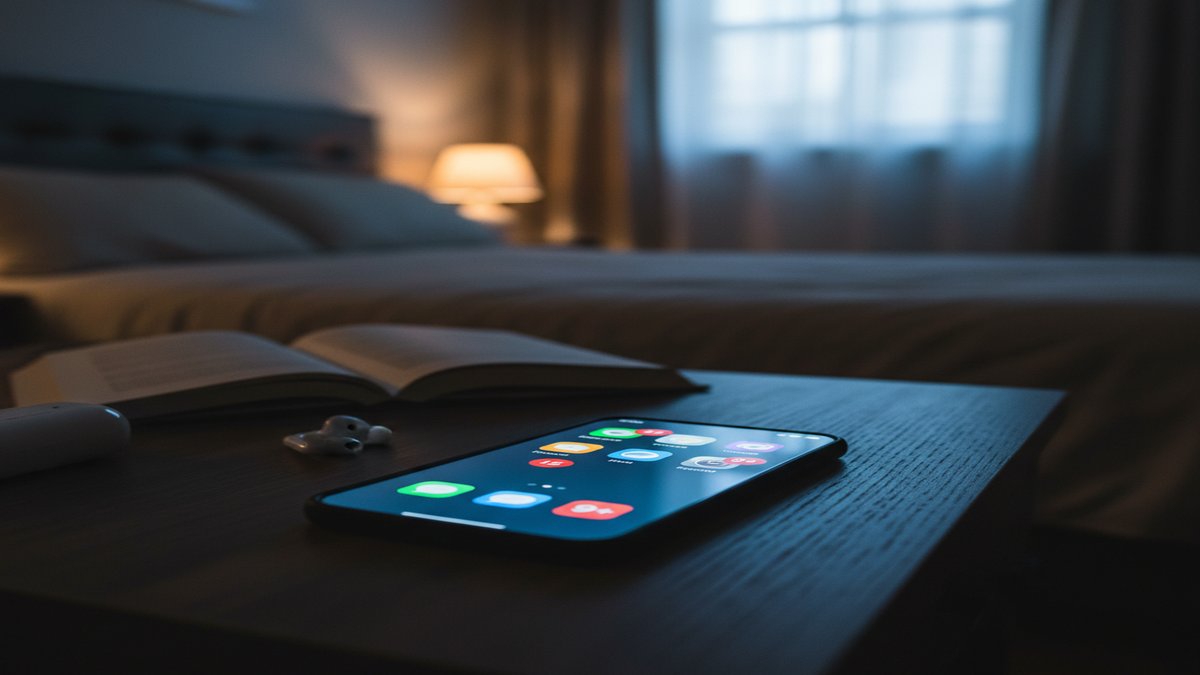
Method 2: Analyze Phone Behavior Patterns
If you have legitimate access to a shared device or a phone on your family plan, behavioral analysis can reveal patterns without installing any third-party software. This is the second method to pursue because it costs nothing and operates within legal boundaries — as long as you are checking a device you own or jointly manage.
Screen Time and App Usage Data
Both iPhone and Android phones track app usage automatically:
- iPhone: Go to Settings, then Screen Time, then See All Activity. This shows which apps were used, how long each session lasted, and exactly when it occurred.
- Android: Go to Settings, then Digital Wellbeing, then Dashboard. You will find similar data showing app usage times, notification counts, and frequency of use.
What to look for specifically:
- Messaging apps with high usage but few visible conversations. If WhatsApp or Telegram shows three hours of daily use but the conversation list looks sparse, she may be deleting threads after each session.
- Browser usage at unusual hours with no corresponding history. If screen time shows 45 minutes of Safari or Chrome use at 11 PM but the browsing history is empty, she is clearing it manually.
- Unfamiliar apps with generic names. Calculator vaults, disguised messaging apps, and dual-space apps are all cheating apps that look like games or utility tools. They hide photos, messages, and sometimes entire secondary dating profiles.
Notification Clues
Even if she deletes messages quickly, notification patterns leave traces:
- On Android, the notification log records every alert the phone receives, including those that were dismissed. Access it through Settings or a notification log widget.
- On iPhone, the Notification Center keeps a rolling log of recent alerts visible on the lock screen or in the pull-down panel.
- Watch for notifications from apps you do not recognize, especially at unusual hours — early morning, late at night, or during times she said she was doing something else.
- Note which apps have notifications disabled entirely. A messaging app with all alerts turned off is worth questioning.
The Baseline Comparison
The most reliable approach is not to look for a single damning piece of evidence. It is to establish a pattern over days or weeks. Track which apps she uses most, when she uses them, and whether her stated activities match her screen time data.
For example: if she says she went to bed early but screen time shows 90 minutes of Instagram and WhatsApp use between 10 PM and midnight, the gap between statement and data is the red flag — not any single data point on its own.
For a deeper analysis of specific phone behaviors, see our full guide on signs your wife is cheating on her phone.
Method 3: Review Social Media Activity
Social media platforms are one of the most common channels for initiating and maintaining affairs. They are also one of the easiest to investigate because much of the activity is visible without needing device access.
What to Look for on Her Public Profiles
- New followers or connections you do not recognize — particularly men she has never mentioned in conversation.
- Likes, comments, and reactions on a specific person's posts. On Instagram, you can check her Following list and recent activity. On Facebook, the Activity Log shows a timeline of interactions.
- Tagged photos or location check-ins at places you did not know she visited.
- Changes in posting behavior. If she used to post photos of you two together and now posts only solo shots, or if she stopped posting entirely, the shift itself is notable.
Direct Message Red Flags
If you have access to her social media accounts — shared login credentials, still logged in on a home computer, or an account on a device you own — review direct message history. Watch for:
- Threads with heavy deletion. Some platforms show "message deleted" placeholders even after content is removed.
- Conversations with people you do not recognize that span weeks or months.
- A pattern of escalation: public comments become DMs, DMs become voice notes, voice notes shift to a different messaging platform entirely. This escalation trajectory is a documented infidelity progression pattern.
Secondary Accounts
Many people who cheat create secondary social media accounts — sometimes called "finstas" or burner profiles. These accounts usually have few followers, follow few accounts, were created recently, and contain no photos of family life.
You can search for secondary accounts by entering her phone number or email variations into the "Find Friends" features on Instagram, Facebook, Snapchat, and TikTok. If a profile appears that is linked to her contact information but uses a different name or photo, you have found something that deserves further investigation.
Method 4: Check Financial Records for Inconsistencies
Affairs cost money. Restaurant dinners, hotel rooms, gifts, dating app subscriptions, rideshare trips, and new clothing all generate a financial trail. If your household finances are shared, this trail is already available to you.
Where to Look
- Joint credit card and bank statements. Search for charges at restaurants you have never been to together, hotels in your own city, flower or gift deliveries you never received, and recurring subscription charges you do not recognize.
- Cash withdrawal patterns. A spouse who suddenly starts withdrawing $100 to $200 in cash regularly — after years of using cards for everything — may be paying for an affair in a way that avoids creating a traceable record.
- New financial accounts. Watch for statements from banks or credit card companies you do not share. A new credit card opened solely in her name, without your knowledge, is both a financial red flag and a planning signal.
- Venmo, PayPal, and Cash App history. Digital payment platforms log transactions including the recipient's name. Even deleted transactions may still be visible on the other person's account.
Subscription Charges That Tell the Story
App store receipts are one of the most concrete forms of evidence. Both Apple and Google send email confirmations for purchases and subscription renewals. Search her email (if you have access) for receipts from:
- Tinder, Bumble, Hinge, Match, OkCupid, Zoosk, eHarmony
- Ashley Madison, Victoria Milan (affair-specific platforms)
- OnlyFans, FanCentro (content subscription platforms)
A subscription charge for Tinder Gold or Bumble Premium is harder to explain away than almost any behavioral sign. It is date-stamped, tied to a payment method, and connected to an active dating account.
Our guide on dating app cheating statistics covers the scale of this problem: a study published in Computers in Human Behaviour found that 42% of American Tinder users admitted to being married or in a committed relationship while using the app.
The Gift Card Blind Spot
One pattern that many guides miss: prepaid gift cards purchased with cash. These do not appear on credit card statements and can be used for dating app subscriptions, hotel bookings, or online purchases with no traceable connection to the buyer. If you notice cash withdrawals followed by small retail purchases at stores that sell gift cards (pharmacies, grocery stores, convenience stores), the combination may indicate a deliberate effort to create an untraceable spending channel.

Method 5: Email and Cloud Account Investigation
Email accounts and cloud storage services are long-running digital archives. If your wife has been conducting an affair, fragments of it almost certainly exist in these accounts — even if she has been careful about deleting messages on her phone.
Email Search Strategies
If you have legitimate access to her email (a shared family account, still logged in on a home computer, or an account on a device you own):
- Search for booking confirmations: Use terms like "hotel confirmation," "reservation," "booking," "flight itinerary," combined with date ranges that concern you.
- Search for dating platform names: "Tinder," "Bumble," "Hinge," "Match," "welcome to," "your profile."
- Check the Trash and Spam folders. Deleted emails remain in the Trash for 30 days on most platforms. Dating app notification emails frequently land in spam.
- Examine email forwarding rules. Some people set up automatic forwarding to route certain messages to a secondary account. In Gmail, check Settings, then Forwarding and POP/IMAP. If messages from a specific sender are being auto-forwarded to an address you do not recognize, that is a significant finding.
Cloud Photo Sync
Cloud services automatically back up photos that may have been deleted from the phone itself:
- Google Photos syncs automatically. Deleted photos remain in the Google Photos trash for 60 days.
- iCloud Photos works the same way. The Recently Deleted album retains photos for 30 days.
- Look for photos that do not match her stated activities. A selfie taken at a location she did not mention visiting. A screenshot of a conversation. A photo of someone you do not recognize.
Finding a Secondary Email Account
Many people maintaining affairs create a secondary email address specifically for affair-related communications. Signs that a second account exists:
- Browser autofill suggesting an email address you do not recognize.
- Password manager entries for unfamiliar email providers.
- Account recovery emails from a secondary address arriving in the primary inbox.
- Apple or Google notifications about "new sign-in" activity on an unknown account.
If you discover a secondary email address, use it as a search term in a dating profile search tool. That address is very likely tied to dating app registrations.
Method 6: Location Tracking and Verification
Location data reveals where your wife actually goes versus where she says she goes. This method is effective but carries more legal risk than the first five methods, so understanding the boundaries is essential.
Legal Ways to Check Location
Several approaches are defensible for married couples:
- Shared family location services. If you both use Find My iPhone, Google Family Link, or Life360 with mutual consent, checking her location is simply using an agreed-upon feature. This is the safest approach.
- Google Maps Timeline. If she is signed into a Google account on a device you own, Google Maps Timeline records every location visited, the route taken, and time spent there. Visit timeline.google.com to review this data.
- Vehicle GPS for jointly owned cars. If both names appear on the vehicle title, installing a GPS tracker is legal in most U.S. states. Devices cost $25 to $100 plus a monthly data subscription. This reveals whether her stated destinations match her actual routes.
Building a Location Pattern Log
A single discrepancy between what she told you and where GPS data shows she was does not prove anything. People change plans. Traffic reroutes happen. The signal that matters is a pattern of inconsistencies.
Keep a simple log:
| Date | What she said | Actual location (per GPS/data) | Duration |
|---|---|---|---|
| Feb 3 | "Working late" | Residential address you don't recognize | 2.5 hours |
| Feb 10 | "Drinks with Sarah" | Restaurant, but Sarah posted she was home that night | 3 hours |
| Feb 15 | "Quick errand" | Hotel parking lot | 1.5 hours |
Three or more entries like this over a two-to-four-week period create a pattern that becomes very difficult to explain.
Location Methods That Cross Legal Lines
Certain location-tracking methods carry significant legal risk:
- Do not install GPS trackers on vehicles titled solely in her name. Many states classify this as stalking.
- Do not place AirTags or Tile trackers in her personal belongings. Apple flags unknown AirTags traveling with a person, and placing hidden trackers in personal items may violate state stalking statutes.
- Do not access her Google or Apple account location history by guessing or cracking her password. Unauthorized account access may violate both the federal Computer Fraud and Abuse Act and state privacy laws.
The general rule: if you need to break into something to get the data, the method is legally risky. If the data is available through a shared account, shared device, or jointly owned asset, you are on much safer ground.
Method 7: Behavioral Pattern Analysis
Technology is not the only evidence channel. Behavioral changes, when documented systematically, can both confirm suspicions and provide context for digital findings. The key is separating isolated changes from clustered patterns.
The Cluster Principle
No single behavioral change proves infidelity. Stress at work, health issues, depression, or personal struggles can all cause individual behavior shifts. The signal is a cluster of three or more changes occurring together within a short time window — especially when those changes do not align with any known stressor.
Based on patterns identified by private investigators and relationship therapists, here are the behavioral clusters most associated with infidelity in wives:
Phone and Device Changes
- New password protection. She adds a lock code, changes her PIN, or enables biometric security for the first time — or changes existing credentials without explanation.
- Phone guarding. The phone goes everywhere with her: bathroom, kitchen, car for a quick errand. She angles the screen away during use.
- Notification lockdown. Lock screen previews get turned off. Specific apps have notifications disabled entirely.
- App rotation. Unfamiliar apps appear and disappear. The App Store purchase history or recently deleted apps folder shows messaging or dating apps.
- Increased late-night screen time. Phone usage spikes during hours she thinks you are asleep.
Schedule and Routine Changes
- New commitments with vague details. "Work drinks" that never happened before. A "book club" or "gym class" she recently joined. Plans described in generalities rather than specifics.
- Appearance shifts. New clothing, changed grooming routine, or renewed interest in fitness — especially if these changes do not align with her established pattern and coincide with other behavioral shifts.
- Emotional oscillation. She alternates between being distant and unexpectedly affectionate. Guilt often drives sudden kindness, gift-giving, or physical attention that feels uncharacteristic.
- Defensiveness about routine questions. Simple questions like "Who was that?" or "Where did you go?" trigger irritation, deflection, or overly detailed responses designed to shut down further inquiry.
- Interest in your schedule. She starts asking more about when you will be home, when you are leaving, or what your plans are for the evening. This is logistical intelligence gathering — she needs to know your movements to plan hers.
A critical caveat: These behavioral signs are indicators, not evidence. They provide direction for your investigation. Many of these changes have perfectly innocent explanations. The combination matters far more than any individual sign. If you are unsure whether your observations reflect real concern or anxious misreading, our guide on am I being paranoid about cheating can help you calibrate.
Method 8: Professional Investigation — When to Bring In Help
If your own investigation has produced concerning patterns but no definitive proof, or if you need evidence that will hold up in divorce proceedings, hiring a licensed private investigator may be the right next step.
What a Professional Investigator Does
Licensed PIs specializing in infidelity cases use methods that are both legal and court-admissible:
- Physical surveillance. Following the subject and documenting activities with timestamped photos and video.
- OSINT (Open Source Intelligence). Searching public records, social media, and online platforms for evidence of relationships or activity outside the marriage.
- Digital forensics. Working with forensic specialists who can recover deleted texts, emails, and app data in a way that preserves chain of custody for legal proceedings.
- Background checks on the suspected third party. Identifying who they are, their relationship history, and their connection to your wife.
Cost and Timeline
The financial commitment varies significantly by location and complexity:
| Factor | Range |
|---|---|
| Hourly rate | $100 - $250 |
| Typical total cost | $2,000 - $5,000 |
| Complex cases | $6,000 - $10,000+ |
| Retainer fee | $500 - $5,000 |
| Timeline | 1-4 weeks |
Data sourced from Atlas Investigations (2025) and JP Investigative Group.
The cost-effective approach is to exhaust the low-cost digital methods first (dating profile searches, phone analysis, financial record review), then bring in a PI only for surveillance or evidence that requires professional handling. A dating profile search that costs under $50 may give you the confirmation — or the relief — you need before spending thousands on professional surveillance.
Choosing the Right Investigator
Not all PIs are equal. For infidelity cases specifically:
- Verify licensing. Every state requires PI licensing. Ask for their license number and verify it with your state's regulatory body.
- Ask about infidelity experience. A PI who primarily does corporate investigations or skip tracing may not have the surveillance skills or family law knowledge you need.
- Confirm reporting standards. Ask what their final report includes. You want timestamped photos, video, written narrative, and a willingness to testify if your case goes to court.
- Understand billing structure. Some charge hourly with a retainer. Others offer flat-rate packages for a defined scope. Get the billing terms in writing before any work begins.
For more on choosing between digital tools and professional investigation, see our comparison of the best cheater finder apps.
The Legal Boundaries You Must Not Cross
Every investigation method carries legal considerations. The difference between gathering admissible evidence and committing a crime can be a single action. Understanding these boundaries before you start protects both your case and your freedom.
Federal Law: The Electronic Communications Privacy Act (ECPA)
The ECPA is a federal law that prohibits unauthorized interception of electronic communications — and it applies between spouses. Key provisions:
- You cannot install spyware or monitoring software on a device you do not own without the user's knowledge and consent.
- You cannot access password-protected accounts without authorization. Even if you once knew her password, if she changed it and you guessed or cracked the new one, that access may be unauthorized.
- Implied consent has limits. If she previously shared a password for a specific purpose (like checking a shared calendar), that consent does not extend to reading her private messages.
Violations carry serious consequences: federal fines, potential imprisonment, and any evidence obtained illegally becomes inadmissible in court. It could also damage your position in divorce proceedings.
State-Level Variations
State laws add additional complexity:
- One-party vs. two-party consent states. In one-party consent states, you can record a conversation you are part of without telling the other person. In two-party consent states (California, Florida, Illinois, and others), all parties must agree to recording. This applies to phone calls, video, and in some states, in-person conversations.
- GPS tracking laws. Most states allow GPS tracking of jointly owned vehicles. Tracking a vehicle titled solely in her name may constitute stalking in many jurisdictions.
- Community property states. In community property states, both spouses have equal legal claim to shared assets, which can affect your right to access shared accounts and devices.
The Safe Rule of Thumb
If you need to break into something — a locked phone, a password-protected account, a private email — the method is legally risky. If the information is available through shared accounts, shared devices, jointly owned assets, or publicly accessible platforms, you are on defensible ground.
When in doubt, consult a family law attorney before acting. A 30-minute consultation costs $100 to $300 and can save you from actions that would undermine your entire case.
How to Preserve Evidence for Divorce Proceedings
If your investigation confirms infidelity and you may pursue divorce, how you store and document evidence matters as much as what you find. Improperly handled evidence can be challenged in court and potentially thrown out.
Documentation Best Practices
- Screenshot everything immediately. Dating profiles, text messages, social media conversations, financial records. Do not assume the information will still be there tomorrow. Screenshots should include timestamps and platform context (the URL bar, the app name, the date).
- Store evidence outside shared devices. Save copies to a personal cloud account, a USB drive kept in a secure location, or forward them to an email account only you control.
- Maintain a chronological log. Record dates, times, what you observed, and where the observation came from. Write entries contemporaneously — notes made at the time of discovery are stronger evidence than recollections written weeks later.
- Do not alter anything. Never edit screenshots, selectively crop messages to change context, or fabricate content. Digital forensics experts can detect alterations, and manipulated evidence destroys your credibility.
- Preserve metadata. When saving screenshots or files, do not rename them or convert formats. The original metadata (creation date, device information, file properties) is part of the evidence chain.
What Courts Actually Consider
The value of infidelity evidence varies significantly by state:
- Fault-based divorce states (such as New York, South Carolina, and Virginia) allow infidelity as grounds for divorce and may factor it into asset division, alimony calculations, and custody decisions.
- No-fault divorce states (such as California, Colorado, and Oregon) do not require grounds for divorce, and courts generally do not consider infidelity when dividing assets. Proof of an affair may still matter in custody disputes if the affair affected the children.
- Hybrid states offer both fault and no-fault options.
Even in no-fault states, evidence of financial infidelity — money spent on an affair that should have gone to the household — can affect asset division. Document every financial irregularity with the same rigor as behavioral evidence.
When to Involve an Attorney
The right time to consult a family law attorney is after you have gathered initial evidence but before you confront your wife. An attorney can:
- Tell you whether your evidence is admissible under your state's laws.
- Advise on whether to gather additional evidence and how to do so legally.
- Begin protecting your financial interests (especially if you suspect she is hiding assets or accumulating debt).
- Help you understand custody implications before any conversation takes place.

The Confrontation: What to Do Once You Know
Gathering evidence is the analytical phase. The confrontation is the emotional one. How you handle this conversation will shape your relationship — whether it ends or continues — for years.
Do Not Confront Without Preparation
The biggest mistake people make after discovering infidelity is reacting immediately. The emotional impulse to confront, to demand answers, to release the anger is overwhelming. But acting on that impulse almost always makes things worse.
Before you say a word:
- Secure your evidence. Make sure copies exist in locations she cannot access or delete.
- Consult an attorney. Understand your legal position, especially regarding assets, custody, and the divorce process in your state.
- Talk to a therapist individually. A therapist can help you process the initial shock and plan the confrontation in a way that serves your interests rather than just venting your pain.
- Decide what outcome you want. Do you want to save the marriage? Pursue divorce? Get more information before deciding? Your goal for the conversation determines how you approach it.
The Conversation Framework
When you are ready:
- Lead with specific observations, not accusations. "I found an active Tinder profile linked to your email" is harder to deflect than "I know you are cheating." Facts first. Emotions after.
- Use "I" statements. "I noticed these charges on our credit card" is less likely to trigger defensive shutdown than "You have been spending our money on someone else."
- Stay calm. This is the hardest part. Her initial response will likely be denial, deflection, or counter-accusation. Yelling, threatening, or breaking down gives her an exit from accountability.
- Present evidence selectively. You do not need to show everything you have. Present enough to demonstrate that you know, then listen. What she says — and does not say — in response to specific evidence tells you more than the evidence itself.
- Do not make ultimatums you are not prepared to follow through on. Threats you do not enforce erode your position and her respect for the conversation.
After the Conversation
Regardless of the outcome:
- Give yourself time. You do not need to make a decision about the marriage today. Or this week. Or this month.
- Seek professional support. Individual therapy, support groups, or trusted friends and family who can provide perspective.
- Protect your financial interests. If divorce is possible, begin separating finances and documenting assets.
- Consider couples therapy — but only if both parties are willing. Therapy only works when both partners commit to the process honestly. Therapy with someone who is still actively cheating is worse than no therapy at all.
For more detailed guidance on your options after discovery, read our guide on how to catch a cheater, which covers the full cycle from suspicion through resolution.
Common Mistakes That Sabotage Your Investigation
Based on patterns documented by private investigators and family law attorneys, these are the errors that most frequently undermine infidelity investigations:
Mistake 1: Confronting Too Early
Revealing your suspicions before you have solid evidence gives her the opportunity to delete data, close accounts, cover tracks, and prepare a counter-narrative. The investigation is most effective when she does not know it is happening.
Mistake 2: Installing Spyware
Phone monitoring software like mSpy, FlexiSpy, or uMobix can capture texts, calls, GPS data, and social media activity. They are also illegal to install on a device you do not own without the user's consent. Evidence gathered this way is typically inadmissible in court and can result in criminal charges against you. In Texas, for example, installing spyware can be classified as a second-degree felony carrying up to 20 years in prison.
Mistake 3: Telling Friends and Family Before You Have Facts
Once you share suspicions with others, you lose control of the information. Well-meaning friends may confront her, post about it on social media, or discuss it with mutual acquaintances. This tips her off and contaminates any future legal proceedings where witnesses might be needed.
Mistake 4: Ignoring the Emotional Affair
Because women's affairs often begin emotionally, some husbands dismiss early signs because nothing physical has happened yet. An emotional affair is still a betrayal of the marriage, and research suggests that 50% to 70% of emotional affairs eventually become physical. Waiting for physical proof while ignoring months of emotional infidelity means you lose time and accumulate more damage.
Mistake 5: Using a Fake Dating Profile to Catfish Her
Creating a fake profile to "test" whether she will respond is tempting but flawed. It proves nothing about her actual behavior, introduces ethical problems, and if discovered, undermines your credibility. A dating profile search tool gives you factual data about profiles she has already created — not hypothetical responses to a trap you set.
Mistake 6: Neglecting Your Own Mental Health
The weeks of investigation take a toll. Anxiety, sleep disruption, inability to concentrate, and emotional volatility are all normal responses to suspected betrayal. Ignoring these symptoms degrades both your judgment and your health. Seek individual therapy support early, not after a crisis.
Understanding the Statistics: How Common Is Wife Infidelity?
Knowing the broader context can help you evaluate your own situation more objectively. Here is what the data actually says.
The Numbers
- 13% of married women report having engaged in extramarital affairs, according to Institute for Family Studies analysis of General Social Survey data. The comparable figure for men is 20%.
- Women's infidelity rates have risen roughly 40% over the past two decades, according to compiled data from Maze of Love.
- 31% of affairs involve a co-worker, per a 2024 report from Health Testing Centers via PR Newswire.
- 42% of American Tinder users reported being married or in a committed relationship while using the app, per a study published in Computers in Human Behaviour and referenced in Maze of Love's 2026 infidelity data.
- 70% of women who cheat cite emotional dissatisfaction as the primary driver, compared to 20% of men (Lazo, 2025).
What the Numbers Mean for You
These statistics tell you two things. First, female infidelity is less common than male infidelity but not rare — roughly one in eight married women will cross that line at some point. Second, the pathway is usually emotional first. If your wife is emotionally withdrawing from the marriage and forming intense connections elsewhere, the statistical trajectory points toward escalation, not de-escalation.
That does not mean your wife is cheating. Statistics describe populations, not individuals. But they do mean that your concern is statistically reasonable, not paranoid. For more on distinguishing between real red flags and anxiety, read our guide on the difference between suspicion without proof and evidence-based concern.
A Method-by-Method Comparison
Each detection method involves trade-offs. This table summarizes the key differences to help you decide where to start:
| Method | Cost | Time to Results | Stealth Level | Legal Risk | Evidence Strength |
|---|---|---|---|---|---|
| Dating profile search | $10-$50 | Minutes to hours | Very high | Very low | High (concrete) |
| Phone behavior analysis | Free | Days to weeks | Medium | Low (if shared device) | Medium (circumstantial) |
| Social media investigation | Free | Hours to days | High | Low | Medium |
| Financial record review | Free | Hours | High | Low (if joint accounts) | High (concrete) |
| Email/cloud investigation | Free | Hours | Medium | Low to medium | High (concrete) |
| Location tracking | $25-$100/month | Days to weeks | Medium | Medium | Medium to high |
| Behavioral pattern analysis | Free | Weeks | High | None | Low (circumstantial) |
| Private investigator | $2,000-$5,000+ | 1-4 weeks | High | Low (they know the law) | Very high (court-ready) |
The recommended sequence is to start at the top of this table and work your way down. Begin with the lowest-cost, lowest-risk methods. Escalate only if needed. Many husbands get the confirmation — or the reassurance — they need from the first two or three methods without ever spending thousands on a private investigator.
If you want to start right now, search for your wife's dating profiles across major platforms. It takes minutes, costs less than a dinner, and requires nothing from her end.
Frequently Asked Questions
It depends on device ownership and your state's laws. If you own the phone or share a family plan, you can generally view screen time data and app usage. But installing spyware, accessing password-protected accounts, or intercepting communications without consent may violate the federal Electronic Communications Privacy Act. Consult a family law attorney in your state before taking action.
Common indicators include emotional withdrawal from you, increased phone secrecy, frequent texting with a specific person, defensive reactions when asked about that person, and sharing personal problems with someone else instead of you. Research shows 70% of women who cheat cite emotional dissatisfaction as the primary driver, so emotional distance often precedes physical infidelity.
Private investigator data suggests roughly 85% of people who suspect their spouse of cheating are eventually proven correct. Your subconscious registers behavioral micro-changes before your conscious mind processes them. That said, suspicion is not evidence. Use the feeling as motivation to investigate calmly, not as grounds for accusation.
Private investigators charge $100 to $250 per hour depending on location and experience. A full infidelity investigation typically runs $2,000 to $5,000 total. Complex cases involving multiple locations or extended surveillance can exceed $10,000. Digital-first methods like dating profile search tools cost under $50 and deliver results in minutes.
Yes. Dating profile search tools scan active profiles across platforms like Tinder, Bumble, Hinge, Match, and OkCupid using identifiers such as name, email, or phone number. They cross-reference registration data against active accounts. Results typically include profile photos, bio text, and activity status. They work best when you search with multiple identifiers.