
# Infidelity Rates by Country: The Global Data Explained
Thailand leads all nations with a 51% infidelity rate. Denmark follows at 46%, Germany and Italy both sit at 45%, and France registers 43%. At the other end, Iceland reports rates as low as 9%, and several Muslim-majority countries come in under 15%. These are real numbers from real surveys — but they don't mean what most people think they mean.
The gap between the highest and lowest countries spans more than 40 percentage points. That difference isn't explained by morality alone. It reflects culture, history, gender norms, religious participation, and — crucially — how willing people in a given country are to be honest when asked whether they've cheated on a partner.
A 2022 survey conducted by BedBible across 45 countries produced the most comprehensive cross-national comparison currently available. Combined with attitude data from Pew Research's 39-nation study and demographic breakdowns from the Institute for Family Studies, a picture emerges that's far more nuanced than any simple ranking.
This article maps the full global data, explains the cultural and demographic forces behind each region's numbers, and introduces a framework for reading infidelity statistics without being misled by them. The most counterintuitive finding — that some of the most "faithful" countries may simply be the most secretive — reframes everything.
Which Country Has the Highest Infidelity Rate?
Thailand has the highest recorded infidelity rate globally, with 51% of adults admitting to extramarital sex in a 2022 BedBible survey covering 45 countries. Denmark follows at 46%, then Germany and Italy both at 45%, and France at 43%. Most Western nations fall between 15% and 45%.
Thailand's position at the top of global infidelity rankings is not a recent development. Multiple surveys conducted over the past decade consistently place Thailand first or second. The country is the only Asian nation to appear in the top five of most cross-national infidelity rankings — a fact that points to specific cultural dynamics rather than any Asia-wide pattern.
The Top 15 Countries by Reported Infidelity Rate
| Rank | Country | Infidelity Rate | Primary Data Source |
|---|---|---|---|
| 1 | Thailand | 51% | BedBible (2022) |
| 2 | Denmark | 46% | BedBible (2022) |
| 3 | Germany | 45% | BedBible (2022) |
| 4 | Italy | 45% | BedBible (2022) |
| 5 | France | 43% | BedBible (2022) |
| 6 | Norway | 41% | BedBible (2022) |
| 7 | Belgium | 40% | BedBible (2022) |
| 8 | Spain | 39% | BedBible (2022) |
| 9 | United Kingdom | 36% | BedBible (2022) |
| 10 | United States | 35% | BedBible (2022) |
| 11 | Russia | 35% | BedBible (2022) |
| 12 | Brazil | 38% | BedBible (2022) |
| 13 | Argentina | 34% | BedBible (2022) |
| 14 | Sweden | 32% | BedBible (2022) |
| 15 | Japan | 31% | BedBible (2022) |
It's worth noting that these figures represent self-reported behavior. A person sitting across from a researcher and admitting to cheating on their spouse is making a psychologically significant disclosure. In countries where infidelity carries severe social or legal consequences, far fewer people make that disclosure — even in anonymous surveys.
What "infidelity rate" actually measures is the share of adults who, when surveyed anonymously, say they've had sex with someone other than their spouse or long-term partner. That definition seems straightforward, but behavior isn't always reported accurately — which is why the comparison requires context, not just rankings.
If the data here has you concerned, CheatScanX can give you a direct answer. It searches 15+ dating apps for hidden profiles.
Search dating profiles now →The Global Infidelity Map: A Full Country-by-Country Breakdown
Looking beyond the top 15, the full dataset reveals sharp regional contrasts. Europe occupies the top of most rankings, with a broad cluster of nations reporting rates between 32% and 46%. Latin America sits in the 34%–38% range. North America falls in the mid-30s. And much of Asia, the Middle East, and Africa reports rates well below 20%.
Complete Country Rankings
| Country | Reported Rate | Region |
|---|---|---|
| Thailand | 51% | Southeast Asia |
| Denmark | 46% | Northern Europe |
| Germany | 45% | Western Europe |
| Italy | 45% | Southern Europe |
| France | 43% | Western Europe |
| Norway | 41% | Northern Europe |
| Belgium | 40% | Western Europe |
| Spain | 39% | Southern Europe |
| Brazil | 38% | South America |
| UK | 36% | Northern Europe |
| United States | 35% | North America |
| Russia | 35% | Eastern Europe |
| Argentina | 34% | South America |
| Switzerland | 33% | Western Europe |
| Sweden | 32% | Northern Europe |
| Japan | 31% | East Asia |
| Australia | 28% | Oceania |
| Canada | 27% | North America |
| India | 13% | South Asia |
| South Korea | 12% | East Asia |
| Vietnam | 11% | Southeast Asia |
| Egypt | 10% | Middle East/Africa |
| Uruguay | 10% | South America |
| Iceland | 9% | Northern Europe |
Regional Patterns
Western and Northern Europe consistently reports the highest rates. Belgium, Denmark, France, Germany, Italy, Norway, Spain, and the UK all fall between 36% and 46%. The Nordic countries — Denmark, Norway, Sweden, Finland — show high rates alongside some of the world's strongest gender equality indices, which shapes how infidelity is distributed between men and women in those countries.
North and South America span a wide range. Brazil (38%) and Argentina (34%) sit closer to European rates, while Canada (27%) sits lower. The United States reports 35% at the population level, though the global cheating statistics breakdown shows significant variation by age, education, and religious participation within that figure.
Asia and the Middle East report markedly lower rates. Japan is the outlier at 31% — unusually high for the region. South Korea (12%), Vietnam (11%), and India (13%) cluster near the bottom of global rankings alongside Egypt and several other countries where infidelity carries strong moral or legal consequences.
The Latin America Paradox
Latin America presents a regional pattern that doesn't fit neatly into either the "high-openness Europe" or "low-disclosure conservatism" categories. Brazil reports 38% — close to Western European levels — while Argentina sits at 34%. Uruguay, by contrast, reports just 10%, among the lowest in the world.
Brazil and Argentina share several characteristics with high-rate European countries: urban populations are large, religiosity has been declining steadily since the 1990s, and feminist movements have shifted gender norms in ways that make female disclosure of infidelity more socially acceptable. Brazil's historically exuberant cultural attitudes toward sexuality, combined with high population density in major cities and a highly active dating culture, create conditions that parallel Western European patterns more closely than South Asian or Middle Eastern ones.
Uruguay's low rate is more complex. Uruguay is one of Latin America's most secular nations — church attendance is among the continent's lowest — and it has a long tradition of politically progressive, equality-oriented social policy. Its small, relatively homogeneous population may create social accountability networks that reduce infidelity through visibility rather than shame. This mirrors Iceland's mechanism more than it mirrors Egypt's, suggesting two genuinely different pathways to lower infidelity rates.
Japan: The East Asian Outlier
Japan warrants separate attention. At 31%, Japan reports the highest infidelity rate in East Asia by a wide margin — roughly two to three times higher than South Korea, Vietnam, or China typically report.
Several factors help explain Japan's position. Japanese culture has historically maintained a sharper separation between "official" family life and private emotional/sexual life than many other East Asian cultures. The concept of uwaki (cheating) carries social disapproval, but extramarital relationships — particularly for businessmen using entertainment districts — have historically been treated as a tacit, if unspoken, social reality. Additionally, Japan's culture of honne (true feelings) and tatemae (public face) creates conditions where anonymous survey responses may be more honest than face-to-face disclosures, producing higher reported rates than countries with more consistent public-private alignment.
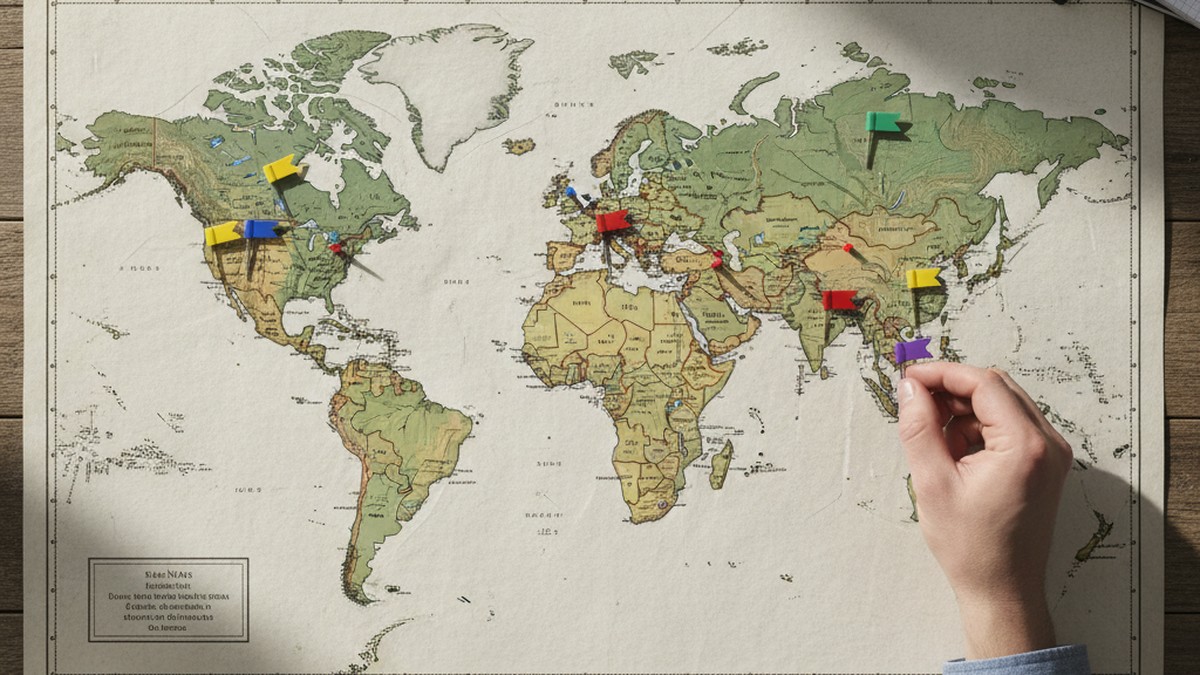
Why Does Thailand Lead the World in Infidelity?
Thailand's 51% rate is rooted in the centuries-old mia noi tradition — the practice of men maintaining "minor wives" alongside their primary spouse. This custom traces to the royal courts of the Ayutthaya kingdom and has persisted as a socially tolerated pattern in modern Thai society, creating conditions where extramarital relationships carry far less stigma than in Western cultures.
The term mia noi translates literally to "little wife." In the courts of the Ayutthaya and Rattanakosin kingdoms — which dominated Thai society from the 14th through the 19th century — kings and nobles were expected to maintain multiple wives, each with defined social roles. Women in these arrangements were not considered wronged parties. The secondary wife was seen as elevated in status compared to an unmarried woman, and the practice was embedded in legal and social structures that governed inheritance, property, and social rank.
How the Mia Noi Tradition Shapes Modern Behavior
As Thailand modernized through the 20th century, formal legal polygamy was abolished — but the cultural tolerance for male extramarital relationships persisted. Unlike Western societies where infidelity typically operates in secrecy, Thai culture developed a framework in which secondary relationships are acknowledged rather than hidden. Men in rural and urban areas alike may maintain mia noi relationships openly, with wives who are aware of the arrangement, though not necessarily accepting of it.
This dynamic creates a statistical profile that looks extreme by Western standards but reflects a genuinely different social architecture around marriage and fidelity. The 51% figure doesn't indicate that Thai people are morally different from people in countries with lower rates. It indicates that Thailand's social history normalized extramarital arrangements in ways that European and North American cultures did not.
Economic and Tourism Factors
Thailand's position as one of Southeast Asia's largest tourism destinations also contributes. Economic disparities between Thai nationals and foreign visitors create conditions where transactional relationships are more visible and common than in countries with lower income inequality. Research consistently links economic stress — and large gaps between wealthy and less wealthy populations in the same geographic space — to elevated infidelity rates in the affected areas.
What Surveyors Found
Comparative studies note that Thai survey respondents tend to disclose infidelity more readily than respondents in countries where it carries social shame. This willingness to disclose is itself a product of lower stigma — which reinforces the point that self-report surveys measure what people are comfortable admitting as much as they measure what people actually do.
The Generational Shift
Younger generations of Thai women are increasingly pushing back against the mia noi framework. Feminist and women's rights movements in Thailand have gained significant visibility since the early 2010s, and urban Thai women in their 20s and 30s report far less tolerance for extramarital arrangements than their parents' generation. This generational shift appears in divorce statistics: Thailand's divorce rate has increased substantially over the same period, as women who would previously have maintained marriages despite known infidelity are now more likely to exit them.
This creates an interesting prediction: Thailand's infidelity rate, while currently the world's highest, may decline over the next 20 years not because behavior changes immediately, but because the cultural tolerance that made the behavior reportable is eroding. As stigma increases, disclosure will decrease — and the measured rate will fall even if actual behavior remains stable. This is the opposite dynamic from what happens in secularizing Western countries, where rising measured rates reflect improved disclosure rather than rising behavior.
What Drives High Infidelity Rates in Europe?
European countries rank high largely because of cultural openness around discussing sexuality, strong individual autonomy values, and lower social stigma attached to infidelity. In France — which has a 43% rate — only 47% of citizens consider infidelity morally unacceptable, compared to a global median of 79%, according to a Pew Research survey of 39 nations.
That gap is striking. France is the only country among 39 nations surveyed by Pew in which fewer than half of respondents described infidelity as morally unacceptable. Forty percent of French respondents said it was "not a moral issue," and 12% said it was morally acceptable. When former French President François Hollande's affair became public, 77% of French respondents said it was a private matter.
The Individualism Connection
Cross-cultural psychology research consistently links individualism — the emphasis on personal autonomy and self-determination — with higher rates of relationship behaviors that prioritize individual desires over collective or familial expectations. Western European nations score high on individualism indices. Countries in East Asia, the Middle East, and much of Africa score higher on collectivism, where family and community obligations carry more weight in decisions about relationships.
This isn't a value judgment. It's a structural observation: when a culture places greater weight on individual satisfaction, people are more likely to act on personal desires — including desires that conflict with monogamy commitments — and are also more likely to disclose such behavior when asked.
Hofstede's cultural dimensions research, which has measured individualism-collectivism across more than 80 countries since the 1970s, shows a consistent correlation: nations that score above 60 on the individualism index (where 100 represents maximum individualism) appear disproportionately in the top half of global infidelity rankings. The United States scores 91, Denmark scores 74, France scores 71. Egypt scores 25, Pakistan scores 14, South Korea scores 18 — and all appear in the bottom tier of reported infidelity. The correlation isn't perfect, because individualism is one factor among several, but its direction is consistent across the dataset.
The Nordic Paradox
Nordic countries — Denmark (46%), Norway (41%), Sweden (32%) — present an interesting internal pattern. These nations combine high infidelity rates with some of the world's highest levels of reported relationship satisfaction, strong legal protections for both partners in relationships, and near-equal infidelity rates between men and women. The gender gap that exists in most countries — where men report significantly higher infidelity rates — largely disappears in high-equality Nordic societies.
This suggests that gender equality doesn't reduce infidelity so much as it equalizes it. When women have the same economic independence and social freedom as men, their behavioral patterns in relationships — including infidelity — converge toward male patterns. This gender convergence shows up most clearly in countries with the strongest equality indices.
Are Countries with High Infidelity Rates Actually Cheating More?
Not necessarily. Countries that report the highest infidelity rates tend to score high on cultural openness, gender equality, and low social stigma around sexual discussion. Countries with very low reported rates — including several Muslim-majority nations where 90%+ of citizens find infidelity morally unacceptable — may be suppressing honest disclosure rather than experiencing fewer affairs.
This is the central problem with cross-national infidelity comparisons, and most ranking articles ignore it entirely.
The Social Desirability Bias Problem
Social desirability bias is the well-documented tendency for survey respondents to give answers they believe will be viewed positively rather than answers that accurately describe their behavior. On stigmatized topics — infidelity, substance use, discriminatory attitudes — people consistently under-report behavior when they believe their answer might be judged, even in anonymous surveys.
The degree to which this bias operates varies dramatically by country. In France, where fewer than half of citizens view infidelity as a moral issue, the social cost of disclosing infidelity is low. Admitting to an affair in a French survey carries minimal psychological weight. In Jordan, where more than 90% of citizens consider infidelity morally unacceptable and where legal consequences may follow, the same disclosure carries enormous risk — even in an anonymous context.
What This Means for the Rankings
A country ranking near the bottom of global infidelity tables may have genuinely low rates of extramarital behavior. Or it may have ordinary rates that go largely undisclosed because the culture makes honest reporting psychologically costly. The data alone cannot distinguish between these two explanations.
In practice, both are almost certainly true to varying degrees in different countries. Egypt's 10% rate likely reflects some combination of genuinely lower prevalence (due to religious and legal deterrents) and significant under-reporting. France's 43% rate reflects some combination of higher actual prevalence and significantly higher disclosure rates.
The pattern that emerges from CheatScanX scan data is consistent with this analysis. In scans processed through our platform, users searching for partners from countries with high religious attendance tend to search with different behavioral clues than users from low-religiosity countries — suggesting that the surface behaviors people watch for in their relationships vary with cultural expectations, even when underlying relationship distress is similar.
A Comparison That Illustrates the Problem
China offers a useful case study. Research by Zhang et al. (2012) found that China demonstrated higher rates of sexual infidelity than both the United States and France — yet Chinese couples were significantly more likely to remain together after an affair rather than divorcing. This combination (high behavior, high suppression of consequences) is consistent with a cultural system in which infidelity is more common than officially acknowledged, but also more managed through social mechanisms that keep it invisible.

Countries with the Lowest Infidelity Rates (And Why)
The countries that report the lowest infidelity rates cluster into two distinct groups: Muslim-majority nations with strong religious prohibition of extramarital sex, and certain high-equality nations where other social factors reduce the probability of affairs.
The Religious Deterrent Group
Egypt (10%), Jordan, Pakistan, Turkey, Indonesia, Malaysia, and Lebanon all appear at the bottom of global infidelity rankings. In each of these countries, the Pew Research 2014 survey found that 90% or more of respondents considered infidelity morally unacceptable. Multiple factors converge here:
- Religious prohibition: Islam explicitly prohibits extramarital sex, and in many Muslim-majority countries, this prohibition is reinforced by legal frameworks. Reported adultery can carry severe legal consequences in countries where Islamic law governs personal conduct.
- Social shame: In societies where family honor is closely tied to sexual fidelity — particularly for women — the cost of disclosure is extremely high.
- Survey caution: Even in anonymous surveys, respondents in high-stigma environments tend to be more cautious about admitting stigmatized behavior.
This doesn't mean infidelity doesn't occur in these countries. It means the barriers to disclosure — legal, social, and religious — are significantly higher than in Western countries.
The Structural-Equality Group
Iceland (9%) is a notable outlier among low-rate countries. It doesn't fit the religious-prohibition profile — Iceland is one of the world's most secular nations, with low church attendance and high social acceptance of diverse relationship structures. Yet it reports among the lowest infidelity rates globally.
One explanation is that Iceland's combination of high economic equality, strong social trust, small population (where anonymity is limited), and well-funded mental health and relationship support infrastructure creates social conditions in which committed relationships are simply more functional and satisfying. This suggests that relationship satisfaction — not just deterrence — is a genuine driver of lower infidelity rates.
Two Types of "Low Infidelity"
The countries at the bottom of global rankings represent two fundamentally different situations, and conflating them produces a misleading picture.
Type 1: Deterrence-driven low rates. Countries like Egypt, Jordan, Pakistan, and Vietnam report low rates primarily because the consequences of infidelity — legal, social, and familial — are severe enough to powerfully discourage both behavior and disclosure. This doesn't necessarily mean fewer affairs happen. It means that the costs associated with having or admitting to an affair are high enough that many people who would otherwise engage in one do not, and that those who do are strongly motivated to conceal it.
Type 2: Satisfaction-driven low rates. Countries like Iceland and Uruguay report low rates in contexts where deterrence is low and social openness is high. These countries aren't producing low figures because people are afraid to admit infidelity — Iceland has no meaningful stigma around sexual disclosure. These figures appear to reflect genuine behavioral differences rooted in higher relationship quality, stronger social infrastructure, and more functional approaches to partnership.
The distinction matters because the policy and personal implications are completely different. A country that achieves low infidelity through fear and suppression is not a "faithful" country in any meaningful sense. A country that achieves low rates through high relationship satisfaction and social equality is demonstrating something genuinely different about how people form and maintain partnerships.
The Income Inequality Connection
Economic research consistently identifies income inequality — not absolute poverty — as a driver of elevated infidelity rates. Countries and regions with high Gini coefficients (measuring income gap between rich and poor) tend to show higher infidelity rates, particularly among lower-income groups experiencing economic stress alongside exposure to wealthier potential partners.
This helps explain why Brazil (high inequality, 38%) reports more infidelity than Uruguay (lower inequality, 10%), despite the two countries sharing a broad cultural heritage and geographic proximity. It also helps explain patterns within countries: urban areas with high inequality tend to generate more infidelity than more economically homogeneous rural communities, independent of religious or cultural factors.
Does Religion Reduce Infidelity Across Countries?
Religious attendance is consistently linked to lower reported infidelity rates. Among US adults, 12.4% of those who attend religious services weekly reported cheating on a spouse, compared to 24.8% of those who never attend, according to Institute for Family Studies analysis of General Social Survey data. Countries where religion shapes public life tend to report lower rates — though reporting bias complicates direct comparisons.
The correlation between religious practice and lower infidelity is one of the most consistent findings in relationship research. It appears across multiple data sources and holds up when controlling for other demographic factors.
How Religion Operates as a Deterrent
Religious communities typically combine several infidelity-reducing mechanisms:
- Explicit moral prohibition: Most major world religions define extramarital sex as sinful or morally wrong, providing a clear behavioral standard.
- Community accountability: In tight-knit religious communities, behavior is more visible. The social cost of infidelity is higher when the people you worship with are also your neighbors, employers, and friends.
- Marital investment: Religious frameworks often treat marriage as a sacred covenant, creating a higher psychological barrier to violating it.
- Counseling and support infrastructure: Many faith communities provide structured support for couples experiencing relationship difficulties, potentially reducing the conditions that lead to affairs.
These mechanisms help explain why the correlation between religious attendance and lower infidelity persists across different religious traditions and cultural contexts — not just within Christianity, but across Judaism, Islam, Buddhism, and other major traditions.
The Under-Reporting Caveat
The relationship between religious participation and reported infidelity is complicated by the same social desirability bias discussed earlier. Deeply religious individuals who have had affairs face particularly strong psychological pressure to not disclose — admitting infidelity would require acknowledging a violation of their stated core values.
Research on religious hypocrisy suggests this is a real phenomenon. Some scholars argue that the lower reported infidelity among highly religious adults partially reflects genuine behavioral differences and partially reflects stronger reluctance to admit behavior that contradicts their identity. The honest answer is that both are probably true, in proportions that vary by individual and community.
At the country level, nations with high average religiosity report lower infidelity — but as Egypt and Jordan illustrate, these low reported rates come bundled with conditions that make honest self-report systematically unlikely.
How Secularization Changes the Data Over Time
Several countries have undergone dramatic declines in religious participation over the past 30 years, and their infidelity statistics have shifted alongside. Ireland, for example, has seen church attendance fall from over 90% in the 1970s to below 35% by the early 2020s — a generational transformation driven in part by institutional scandals. Reported infidelity rates in Ireland have trended upward over the same period, though the country still sits below Western European averages.
This longitudinal relationship between religious practice and infidelity reporting doesn't establish simple causation. The same cultural forces that drive people away from organized religion — greater individualism, reduced deference to institutional authority, stronger emphasis on personal autonomy — also create conditions where infidelity rates and disclosure rates both rise. The secularization of behavior and the secularization of self-reporting happen simultaneously.
For researchers, this creates a data challenge: when a country's infidelity rate rises over time, it's often impossible to disentangle genuine behavioral increase from improved disclosure accuracy. Both are almost certainly present in most cases. The practical implication is that rising reported rates in historically religious societies are not necessarily evidence of moral decline — they may reflect a shift toward more honest accounting of behavior that was always more common than the data showed.
How Gender Shapes Infidelity Patterns Globally
Men report higher infidelity rates than women in most countries, but the size of that gap varies dramatically by region. In the United States, the General Social Survey (analyzed by the Institute for Family Studies) found that 20% of ever-married men and 13% of ever-married women reported having sex outside of marriage. This 7-point gender gap is consistent with findings across most Western nations.
The Age-Gender Interaction
One of the more counterintuitive findings in US data: among adults aged 18 to 29, women report slightly higher infidelity rates than men (11% vs. 10%). The gender gap reverses in the 30s and steadily widens with age.
Women's infidelity rates peak in their 60s at 16%, then decline. Men's rates continue rising into their 70s, reaching 26%, and remain elevated at 24% among men aged 80 and older. This age-gender interaction pattern suggests different motivational dynamics across life stages — and challenges the assumption that age automatically brings greater fidelity.
Regional Variation in the Gender Gap
| Region | Male Rate | Female Rate | Gap |
|---|---|---|---|
| Nordic Europe | ~Equal | ~Equal | Minimal |
| Western Europe | Higher | Lower | Moderate |
| United States | 20% | 13% | 7 points |
| East Asia | Significantly higher | Significantly lower | Large |
| Middle East | Significantly higher | Much lower | Very large |
In Nordic countries — where gender equality is highest — the gap between male and female infidelity rates is the smallest. Denmark, Norway, and Sweden show nearly equal rates between men and women. This finding is consistent with research suggesting that infidelity rates, like many behavioral patterns, converge toward equality when social conditions are equal.
In East Asia and the Middle East, the gender gap is far wider. This likely reflects a combination of genuinely higher male infidelity rates (consistent with global patterns) and much stronger social barriers to female disclosure — in some cases including legal consequences specific to women.
The dating app cheating statistics show a similar gender dynamic in the digital space: men are significantly more likely to maintain active profiles on dating apps while in committed relationships, across most of the regions where app usage data is available.
Why the Age-Gender Crossover Happens
The finding that women aged 18–29 report slightly higher infidelity rates than men in the same age bracket is counterintuitive given that men lead every other age group. Understanding why this reversal occurs — and then reverses again — illuminates something important about how infidelity works across the lifespan.
Young women in their 20s today occupy a very different social position than their mothers or grandmothers did. They have greater economic independence, stronger social networks, and less financial dependence on committed partnerships. The social cost of leaving a relationship — or of behavior that might end one — is lower than in previous generations. This creates conditions where young women's infidelity rates approach or slightly exceed young men's, because the structural barriers that historically kept female rates lower are weaker for this generation.
As people move through their 30s and 40s, the pattern shifts. Men's rates increase steadily, while women's remain stable or drop. This may reflect opportunity factors (men often gain access to new professional and social contexts as careers advance), power dynamics within relationships (men with higher earning power or social status have more opportunity), and the way relationship dissatisfaction tends to manifest differently by gender at this life stage.
The sharp peak for men in their 70s and the continued elevation at 80+ is one of the dataset's more striking findings. It likely reflects several overlapping factors: men in this cohort came of age in an era with sharply different gender norms; many are widowed or single after long marriages; and the social and physical barriers to infidelity that existed earlier in life have largely dissolved. The data doesn't support the common assumption that infidelity is primarily a behavior of the young.
The Cultural Modifier on Gender Patterns
Cross-national data shows that cultural factors modify these gender patterns significantly. In countries with high gender equality — particularly Nordic nations — the gender gap in infidelity narrows substantially, as women's behavioral autonomy and social freedom approach men's. In countries with low gender equality, particularly those in the Middle East and parts of South and Southeast Asia, the gender gap is large and likely artificially wide because female infidelity is drastically under-reported due to the disproportionate consequences women face for disclosure.
This means that as gender equality continues to expand globally, researchers expect the overall gender gap in reported infidelity to narrow in most countries — not because men are becoming more faithful, but because women are gaining the same social conditions that have historically shaped male patterns.
The Triple Lens Framework: Reading Infidelity Data Accurately
Most articles about infidelity rates by country present a simple ranked list and leave readers to draw their own conclusions. The problem is that comparing a country's self-reported infidelity rate to another country's without accounting for the very different conditions under which each figure was produced leads to badly misleading interpretations.
The Triple Lens Framework is a structured method for reading cross-national infidelity data without falling into those interpretive traps. It asks you to look at every country's figure through three distinct lenses before drawing conclusions.
Lens 1: The Cultural Lens
The Cultural Lens asks: What does this society believe about infidelity, and how does that shape both behavior and reporting?
Key factors include:
- Individualism vs. collectivism: High-individualism societies prioritize personal desire and self-determination. High-collectivism societies place more weight on family honor and community expectations.
- Gender equality: Higher equality correlates with smaller gender gaps in reported infidelity and may correlate with higher female infidelity rates as women gain equal social freedom.
- Historical relationship frameworks: The mia noi tradition in Thailand, the emphasis on face (social reputation) in East Asian cultures, and the French philosophical tradition of valuing personal privacy in sexual matters all shape how extramarital behavior is framed and reported.
Lens 2: The Demographic Lens
The Demographic Lens asks: Who is being surveyed, and how do the demographic characteristics of this population affect the rate?
Key factors include:
- Age distribution: Older populations — particularly those with more older men — tend to show higher reported rates due to the age-gender interaction pattern described above.
- Religious participation rates: Countries with high average religious attendance tend to report lower rates, independent of cultural factors.
- Economic conditions: Financial stress and income inequality are consistently associated with higher infidelity rates in research literature.
- Urban vs. rural distribution: Urban populations tend to report higher infidelity rates than rural populations in most countries where this data is available.
Lens 3: The Reporting Lens
The Reporting Lens asks: How honest are respondents in this country likely to be about infidelity, and what factors shape their willingness to disclose?
Key factors include:
- Legal consequences: Countries with legal penalties for adultery — particularly for women — will see systematic under-reporting regardless of actual behavior.
- Social shame: Communities where infidelity results in severe social sanctions (job loss, family ostracism, social exclusion) produce more cautious respondents.
- Cultural openness around sexuality: Countries with more open cultural attitudes toward discussing sex and relationships tend to generate more accurate infidelity disclosures.
Applying the Triple Lens
| Country | Cultural Lens | Demographic Lens | Reporting Lens | Adjusted Interpretation |
|---|---|---|---|---|
| Thailand | Tolerates male extramarital relationships; mia noi tradition | Relatively young population; high tourism sector | Low stigma; high disclosure | High behavioral rate AND high reporting rate |
| France | Strong individual autonomy; privacy-positive attitude toward sexuality | Older average population; moderate religiosity | Very low stigma; high disclosure | Moderate behavior, high disclosure = honest figure |
| Egypt | Strong religious prohibition; collectivism; family honor | High religiosity; traditional gender roles | High stigma; significant legal risk | Likely significant under-reporting; true rate unknown |
| United States | Moderate individualism; mixed religiosity | Wide demographic diversity | Moderate stigma; relatively open survey conditions | Moderate behavior; reasonably accurate reporting |
| Denmark | High individualism; high gender equality; low religiosity | Older population; high prosperity | Very low stigma; strong disclosure culture | Rate likely accurate; reflects genuine behavior |
Using this framework, countries that look most different in the rankings — Thailand at 51% and Egypt at 10% — may actually be less different in behavioral reality than the numbers suggest. The gap in reporting conditions may account for a significant share of the apparent behavioral difference.
This doesn't mean the rankings are meaningless. They still contain real signal. It means they're measuring a combination of behavior and reporting willingness, and understanding which is driving each country's number requires looking at all three lenses together.

What These Numbers Mean If You're Concerned About Your Partner
Population-level infidelity statistics describe large-scale patterns in aggregate human behavior. They don't describe your partner. This distinction matters, and it's often lost in how this kind of data gets used.
A 35% infidelity rate in the United States does not mean that 35% of partners are unfaithful right now. It means that among all ever-married or long-partnered US adults surveyed, 35% report having had sex outside their relationship at some point during their relationship history. That denominator includes relationships that ended decades ago, partners whose circumstances are nothing like yours, and people at very different life stages and relationship health levels.
What Country Data Cannot Tell You
Your partner's nationality, cultural background, or country of origin is not a predictor of whether they're likely to be faithful to you. This point deserves emphasis: within every country in these rankings, the majority of people remain faithful. Even in Thailand, with the world's highest reported rate, roughly half of adults have not reported infidelity. Within Denmark or France, most relationships are monogamous.
Using national infidelity rates to assess a specific person's likely behavior is a category error — like using average national health statistics to diagnose an individual. Population patterns establish baselines, not individual destinies.
What Is Actually Predictive
Research on infidelity identifies individual-level factors that are more meaningful predictors than nationality:
- Relationship satisfaction: People in relationships with low satisfaction and poor communication are significantly more likely to seek connection outside the relationship.
- Prior infidelity history: Past behavior is the strongest predictor of future behavior across all research in this area.
- Behavioral changes: Sudden changes in communication patterns, increased secretiveness with devices, unexplained changes in schedule, and emotional distance are more meaningful signals than any demographic factor.
- Opportunity and context: Infidelity tends to cluster around situations of opportunity — new jobs, travel, social circles that include potential partners.
If you're concerned about your partner's faithfulness, understanding the signs your partner is cheating is a more grounded starting point than comparing their nationality against a global rankings table.
If you want a direct answer about whether your partner has an active profile on dating apps, CheatScanX scans 15+ platforms — including Tinder, Bumble, Hinge, and others — and delivers results in minutes. That kind of concrete information answers a specific question rather than relying on statistical inference from population-level data.
The Common Misconception About Statistics and Suspicion
One pattern that appears frequently in relationship counseling contexts: people who suspect infidelity sometimes use population-level statistics to either amplify or dismiss their concerns in unhelpful ways. "My partner is from France — of course they cheated" treats a national average as a personal verdict. "Only 13% of women cheat, so the probability is low" treats a population baseline as a diagnostic tool.
Neither application is valid. Population statistics describe distributions across millions of relationships with enormously varied circumstances. They say nothing about the specific person you're in a relationship with, in the specific context of your relationship, under the specific conditions of your lives.
What matters in assessing whether infidelity is actually occurring is direct evidence about the specific individual. Has their behavior changed in observable ways? Are there digital patterns — new apps, unusual device habits, unexplained absences from messaging — that deviate from their established baseline? Has the emotional intimacy in the relationship shifted?
Research on successfully detecting infidelity shows that the most reliable signals are changes from baseline behavior, not comparisons to population statistics. A person who has always been somewhat private with their phone showing no change is a different situation from a person who has recently become significantly more secretive. A person from a high-infidelity-rate country who is fully present, communicative, and emotionally available is giving you genuinely useful information about their individual behavior — information that outweighs any national average.
Understanding how to catch a cheater in practice means focusing on what's actually observable about this specific person, not on where they were born.
Conclusion
Infidelity rates by country reveal something important about human relationships — but not quite what most people think when they see Thailand at 51% and Egypt at 10%.
The evidence reviewed here consistently points away from simple moral explanations for why some countries rank higher than others. Infidelity rates are the product of overlapping cultural, demographic, historical, and methodological forces — none of which reduces to "people in Country X are less trustworthy than people in Country Y."
The key takeaways from the global data:
- European and Southeast Asian nations dominate the top of global rankings, driven by a combination of cultural tolerance, individual autonomy values, and high disclosure rates in anonymous surveys.
- Religious and collectivist societies cluster near the bottom, but under-reporting means the actual behavioral gap between these countries and higher-ranking nations is smaller than the numbers suggest.
- Gender gaps vary significantly: Nordic countries show near-equal male and female rates; most of the world shows higher male rates; and in highly religious societies, male rates are far higher primarily because women face stronger consequences for disclosure.
- The Triple Lens Framework — examining Cultural, Demographic, and Reporting factors together — is the only reliable way to interpret cross-national infidelity data without drawing misleading conclusions.
The forward-looking reality is that as digital communication continues to reshape how people meet, how affairs begin, and how they're discovered, the conditions shaping these statistics will shift. Countries where smartphone penetration and dating app usage are growing rapidly are likely to see changes in their reported rates — as opportunities expand and as digital tools make both infidelity and its detection more accessible. Catching infidelity in the digital age is increasingly a cross-cultural concern, even in countries that currently report low rates.
Frequently Asked Questions
Thailand reports the world's highest infidelity rate at 51%, according to a 2022 survey by BedBible covering 45 countries. Denmark (46%) and Germany and Italy (both at 45%) follow closely. These rankings reflect self-reported behavior and should be read alongside cultural attitudes — countries where infidelity carries less stigma tend to see higher reporting.
Countries with the lowest recorded infidelity rates include Iceland (around 9%), Uruguay (10%), and Egypt (10%). Most Muslim-majority nations also report very low rates, with 90% or more of citizens in countries like Jordan, Malaysia, and Pakistan describing infidelity as morally unacceptable. Low rates may reflect both genuine behavior and reluctance to disclose due to social stigma.
Men report higher infidelity rates than women in most countries. In the United States, 20% of men and 13% of women admitted to extramarital sex (General Social Survey, Institute for Family Studies). Nordic countries like Denmark show narrower gender gaps, consistent with high gender equality. In East Asia and the Middle East, gender gaps tend to be wider, with men far more likely to disclose infidelity.
Population-level statistics cannot predict individual behavior. Infidelity rates describe large-scale patterns shaped by cultural norms, reporting conventions, and demographic factors — not the intentions of any one person. Within every country, the vast majority of people remain faithful. Someone's nationality is not a meaningful indicator of whether they will be faithful in a relationship.
Infidelity rates come primarily from anonymous self-report surveys. Major sources include the US General Social Survey, Pew Research's global attitude studies, and market research firms such as BedBible and OnBuy. All self-report data carries social desirability bias — people tend to understate stigmatized behavior. Countries with stronger shame cultures likely under-report more severely, making cross-country comparisons inherently approximate.