
# Is Having Tinder Cheating? What Couples Need to Know
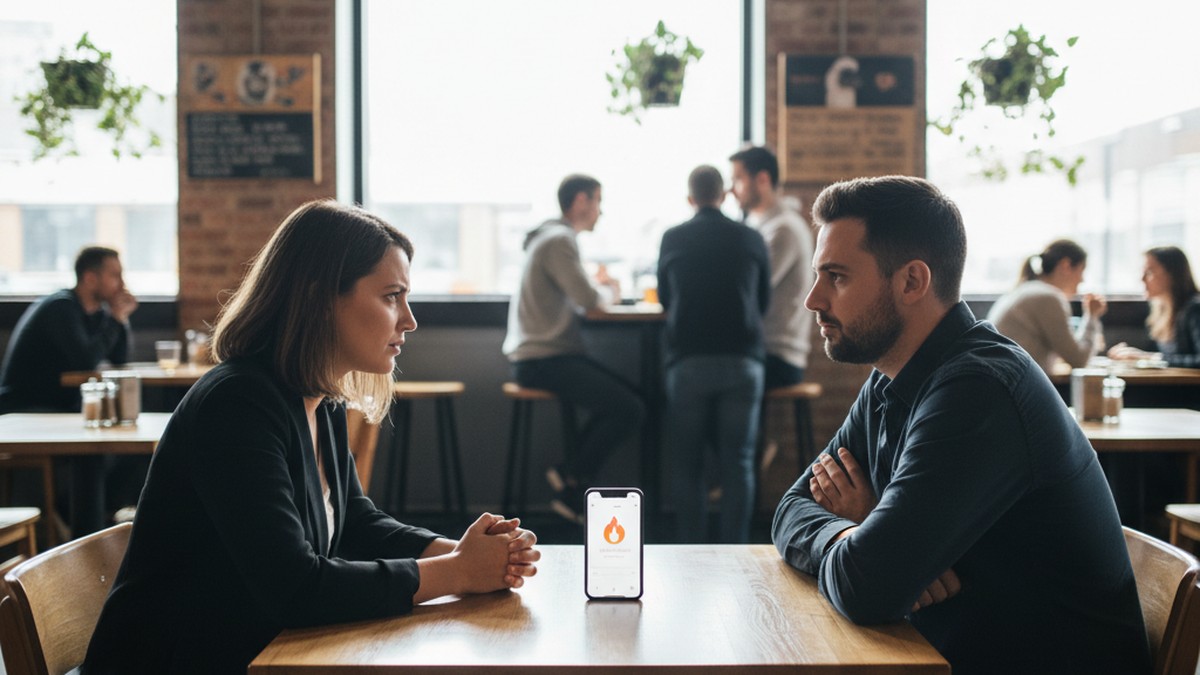
You found it. Maybe you saw the notification. Maybe you spotted the app icon while your partner was scrolling. Maybe a friend sent you a screenshot of a profile that looked too familiar. Now a single question is eating at you: is having Tinder cheating?
The answer is not as straightforward as you might hope. A YouGov survey found that 67% of women consider signing up to Tinder while in a relationship to be cheating — but only 43% of men agree. That 24-point gap tells you something important: there is no universal definition. What counts as betrayal depends on the couple, the context, and the boundaries you have (or have not) set together.
This article breaks down the full spectrum — from harmless leftover apps to active deception — so you can figure out where your situation falls. You will hear from relationship therapists, see the data on how common this really is, and get practical steps for what to do next.
If any of this sounds familiar, there is a way to know for sure. CheatScanX checks 15+ dating platforms for hidden profiles using a name, email, or phone number.
Why the Question "Is Tinder Cheating?" Has No Simple Answer
Everyone Defines Cheating Differently
Ask ten people to define cheating and you will get ten different answers. For some, cheating only happens when there is physical contact with another person. For others, creating a dating profile — even without sending a single message — already crosses a line.
A study published in Computers in Human Behavior found that between 18% and 25% of Tinder users globally are in a committed relationship. Among American users, that number jumps to roughly 42%. These are not rare edge cases. Millions of people in relationships have the app on their phones right now, and many of them would argue they are not doing anything wrong.
The disconnect comes from how each person weighs three factors: intent, action, and secrecy. Someone might download Tinder out of boredom with no plan to meet anyone. Another person might use it specifically to line up dates behind their partner's back. Same app, same swipe motion, completely different situations.
The Role of Explicit Agreements
Most couples never sit down and spell out what is and is not allowed on dating apps. They assume exclusivity means the same thing to both people. But assumptions are where trust breaks down. If you have never told your partner that having a Tinder profile feels like a betrayal to you, they may genuinely not realize they have crossed a line.
This does not excuse the behavior. It does explain why so many couples end up in this exact argument — both people feeling justified, both people feeling hurt.
Culture and Generational Differences
Views on dating apps and fidelity vary across age groups and cultural backgrounds. Younger adults who grew up with dating apps may see a dormant profile as meaningless clutter, the same as an unused social media account. Older adults who did not grow up swiping may view any dating app presence as a clear statement of intent. Neither perspective is wrong. Both are valid starting points for a conversation.
Religious and cultural backgrounds also shape how people interpret dating app use. In communities where commitment is taken very seriously and marriage is seen as a sacred bond, any engagement with a dating platform — even idle swiping — may be viewed as a profound violation. In more secular or liberal communities, the bar might be higher, with only physical meetings crossing the threshold.
The point is that your feelings about finding Tinder on your partner's phone are shaped by your upbringing, your past experiences, and your personal values. Recognizing where your definition comes from helps you communicate it more clearly to your partner.
CheatScanX scans all of these platforms — and more — in a single search. Enter a name, email, or phone number and get results in minutes.
Try a multi-platform search →What Relationship Experts Say About Dating Apps
The Therapist Consensus
Most licensed therapists draw a clear line: an active dating profile while in a committed relationship is a form of infidelity. The word "active" matters here. A profile that someone created three years ago and forgot about is different from one that was updated last Tuesday with new photos.
Therapists point to secrecy as the most reliable indicator. If your partner is hiding their Tinder use from you, that secrecy itself is a betrayal — regardless of whether they have matched with anyone or sent a single message. Hiding things from a partner signals awareness that the behavior would cause harm, and choosing to do it anyway.
The Concept of Micro-Cheating
Psychology Today defines micro-cheating as small breaches of trust that fall short of a full physical affair but still erode relationship security over time. Keeping an active dating profile is one of the most commonly cited examples.
Micro-cheating matters because it rarely stays micro. What starts as idle swiping can become matching, then messaging, then meeting. Research from Psychology Today found that over half of partnered Tinder users eventually met someone they had matched with in person. The slope is not just slippery — it has a track record.
If you have noticed other small signals alongside a Tinder discovery, like increased phone secrecy or emotional distance, those patterns may add up. You can read more about signs of emotional cheating through texting and signs your partner is cheating to see if the pieces fit together.
Why Some Experts Push Back
Not every therapist sees dating app use as automatic betrayal. Some argue that humans are naturally curious, that looking at profiles is no different from glancing at an attractive person on the street, and that policing a partner's phone creates more damage than the app itself.
These experts emphasize that the conversation should focus on why the partner is on Tinder rather than the mere fact that the app exists. A person dealing with low self-esteem who seeks validation through matches has a very different problem than someone actively planning to cheat.
The Different Types of Dating App Activity
The Spectrum of Behavior
Not all Tinder use is created equal. Understanding where your partner's activity falls on the spectrum can help you assess the situation more clearly.
Level 1 — Dormant Profile: The app is installed but has not been opened in months. The profile exists from before the relationship or from a period when the relationship status was unclear. There is no recent activity, no updated photos, no new matches.
Level 2 — Passive Browsing: Your partner opens the app occasionally, maybe to look at profiles or out of habit, but does not swipe right, does not match, and does not message anyone. Think of it as window shopping with no intention to buy.
Level 3 — Active Swiping: Your partner is regularly swiping, accumulating new matches, and keeping their profile updated with current photos. Even without messaging, the act of actively seeking matches sends a signal: they want to see who finds them attractive.
Level 4 — Messaging and Flirting: Your partner is having conversations with matches. The content might be light and flirty or deeply personal. Either way, they are investing time and emotional energy into people outside the relationship.
Level 5 — Planning or Having Meetups: Your partner has moved from digital interaction to real-world contact. They are arranging dates, coffee meetups, or hookups with people from the app.
Most people would agree that Levels 4 and 5 are cheating by any reasonable definition. The debate lives in Levels 1 through 3 — and where you draw the line depends on your relationship.
Why the Distinction Matters
If you have discovered your partner on Tinder, your first step should be figuring out which level applies. A dormant profile from before you were exclusive requires a very different response than an active profile with recent messages. Reacting to a Level 1 situation as if it were a Level 5 can cause unnecessary damage. Dismissing a Level 4 situation as "just an app" can allow real harm to continue.
For help figuring out whether your partner's profile is actually active, you can check if your partner is on Tinder or find out if your partner is on dating apps across multiple platforms at once.
Signs Your Partner's Tinder Use Crosses a Line
Behavioral Red Flags
Tinder use in a relationship becomes a real problem when it comes with a pattern of deception. Watch for these behaviors:
Increased phone secrecy. Your partner suddenly keeps their phone face-down, changes their passcode, or takes their device into another room for conversations. If you have noticed this pattern, our guide on signs your husband is cheating on his phone covers the most common tells.
Emotional withdrawal. They seem less interested in date nights, physical affection, or deep conversation with you. Their emotional energy is going somewhere else.
Defensiveness when questioned. Asking a simple question about their phone or schedule triggers an outsized reaction — deflection, counter-accusations, or guilt-tripping you for being "controlling."
New attention to appearance. Sudden interest in grooming, new clothes, or gym routines can be innocent. But combined with other signs, it may indicate they are trying to impress someone new.
Unexplained schedule gaps. Time that used to be accounted for is now vague. "Running errands" takes three hours. "Working late" happens twice a week with no extra pay.
If you are seeing several of these patterns at once, trust your instincts. Many people who later discovered infidelity report that their gut feeling he's cheating was right from the start.
Digital Evidence to Watch For
Beyond behavioral clues, there are digital signals that Tinder use has crossed a line:
- Push notifications from Tinder or other dating apps appearing on their lock screen
- Battery drain consistent with apps that use GPS and constant data connections
- Storage usage showing dating apps you did not know were installed
- Social media activity that includes following or liking posts from people you do not recognize
Some people go to great lengths to hide dating app activity. They may use apps cheaters use that disguise themselves as calculators or utility tools, or they may rely on secret messaging apps used for cheating to keep conversations off the main texting app.
When Tinder Use Is Clearly Cheating
Active Deception Leaves No Room for Debate
Certain behaviors remove all ambiguity. If your partner is doing any of the following, you are dealing with infidelity — not a gray area:
Maintaining an updated profile while committed to you. Fresh photos, a recently edited bio, and an active location mean they are presenting themselves as available. That is a deliberate choice.
Messaging other people with romantic or sexual intent. Flirty messages, explicit photos, or emotional vulnerability shared with matches all constitute betrayal. Whether or not they have met anyone in person does not change the intent behind those conversations.
Arranging dates or hookups. The moment your partner moves from digital conversation to planning a real-world meeting, the line is not just crossed — it is far behind them.
Lying about the app when confronted. If your partner says they deleted Tinder but you find it still active, the lie compounds the original betrayal. Dishonesty about the app is often more painful than the app itself.
Creating a profile after agreeing to be exclusive. If you have had the exclusivity conversation and your partner then creates a new dating profile, there is no ambiguity. They understood the agreement and chose to break it.
The Numbers Behind Tinder Infidelity
The Tinder cheating statistics paint a clear picture of how widespread this is. According to DatingZest's 2025 analysis, only 54% of Tinder users are actually single. The remaining 46% are married (30%), in a relationship (12%), or divorced (3%).
A UK study by Compare and Recycle found that 18% of respondents caught their partner in a digital affair — and 59% of those relationships ended as a result. That statistic cuts two ways: digital affairs are destructive, but 41% of couples who faced this challenge did find a way forward.
You can see more detailed breakdowns in our full report on dating app cheating statistics and broader cheating statistics.
When Tinder Use Might Not Be Cheating
Gray Areas That Deserve a Closer Look
Calling all Tinder use cheating would be inaccurate and unfair. Several situations exist where a partner's profile does not automatically equal betrayal:
The forgotten app. Your partner downloaded Tinder before you started dating and simply never deleted it. The profile has not been updated, there are no recent matches, and the app has been sitting in a folder untouched. This is the digital equivalent of finding an old love letter in a drawer — it is a relic, not an ongoing activity.
The newly exclusive relationship. You recently had the "What are we?" conversation, but your partner has not yet gotten around to deleting the app. In the first few days or weeks after becoming official, some overlap is understandable. What matters is whether they delete it promptly once they realize it is still there.
Open or non-monogamous relationships. Couples who have explicitly agreed to see other people may use dating apps as part of that arrangement. If both partners know about and consent to the app use, it falls within the agreed-upon boundaries of the relationship.
Using it for networking or friendship. Some people genuinely use Tinder for purposes beyond dating. LGBTQ+ individuals who have relocated may use it to find community. Professionals in creative fields sometimes network through the platform. This is less common than people claim, but it does happen.
Showing a friend how the app works. Your partner might open Tinder to demonstrate something to a single friend who is new to online dating. A brief, one-time use in front of other people is different from regular private activity.
How to Tell the Difference
The distinction between a harmless leftover and active deception usually comes down to three questions:
- Is your partner being transparent about it? If they openly acknowledge the app and offer to delete it, that is very different from hiding it.
- Is there recent activity? Updated photos, new matches, or recent messages indicate intentional use.
- How do they react when you bring it up? Openness and willingness to address your concerns signals good faith. Defensiveness or dismissal signals something else.
If you are not sure whether to worry or let it go, you might find it helpful to read about whether you are being paranoid about cheating — sometimes your concern is valid, and sometimes anxiety is driving the interpretation.
How Couples Define Boundaries Around Dating Apps
Why Boundaries Need to Be Explicit
Unspoken rules are the most commonly broken ones. Many couples assume that exclusivity automatically means no dating apps, but that assumption is not always shared. One partner may think keeping the app for ego boosts is harmless. The other may see it as a fundamental breach of trust.
The solution is not to assume — it is to state clearly what you expect and ask your partner to do the same. Boundaries only work when both people know what they are.
What Healthy Dating App Boundaries Look Like
Here are examples of boundaries that couples have successfully used:
Mutual deletion. Both partners agree to delete all dating apps and profiles, and they do it together — at the same time, in front of each other. This creates accountability and shared commitment.
Transparency about past profiles. Both partners acknowledge any profiles that may still exist from before the relationship and agree to deactivate or delete them within a specific timeframe.
Open phone policy. Some couples agree that either partner can look at the other's phone at any time. This is not about surveillance — it is about creating an environment where secrecy is unnecessary.
Clear definitions. Both partners spell out what counts as crossing a line: Is downloading the app a problem? Swiping? Matching? Messaging? Meeting? Having a shared understanding prevents future arguments.
Regular check-ins. Boundaries are not set-it-and-forget-it. As relationships evolve, periodic conversations about expectations keep both people aligned.
The Conversation Starter
If you are not sure how to raise the topic, try something like: "I want to make sure we are on the same page about dating apps. Can we talk about what we are both comfortable with?" This approach is collaborative, not accusatory. It frames the conversation as something you are building together rather than a confrontation.
For more on how to approach this kind of discussion, our guide on what to do when you find your partner on a dating app walks through each step.

What to Do If You Discover Your Partner on Tinder
Step 1 — Verify Before You React
Before you confront your partner, make sure you have accurate information. A screenshot from a friend, a glimpse of a notification, or a search result can all provide context — but they can also be misleading. Profiles can be outdated. Screenshots can be faked. Notifications can come from apps that were never properly closed.
If you want to confirm whether your partner currently has an active profile, you can check if someone is on Tinder or use a Tinder profile search tool to get a clear answer before having the conversation.
Step 2 — Manage Your Emotions First
Finding your partner on a dating app triggers a rush of emotions — anger, sadness, betrayal, confusion, and sometimes even relief that your suspicions were confirmed. All of those reactions are valid. But acting on raw emotion rarely leads to a productive conversation.
Give yourself a few hours, or even a day, to process what you are feeling. Talk to a trusted friend. Write down your thoughts. Get clear on what you want to say and what outcome you are hoping for before you bring it up.
Step 3 — Have the Conversation
Choose a time when both of you are calm, sober, and not rushed. Avoid bringing it up during an argument about something else, in front of other people, or through text.
Start with what you found, stated factually: "I saw that you have an active Tinder profile." Then share how it makes you feel: "That makes me feel hurt and confused about where we stand." Then ask an open-ended question: "Can you help me understand what is going on?"
This approach — fact, feeling, question — gives your partner room to explain without immediately putting them on the defensive. It also makes your boundary clear without issuing an ultimatum.
Our detailed guide on how to confront a cheater covers additional strategies for keeping the conversation productive even when emotions run high.
Step 4 — Listen to the Response
Your partner's reaction tells you more than the Tinder profile itself. Look for:
- Honesty and accountability. They acknowledge the profile, explain why it exists, and offer to delete it immediately. This is the best-case response.
- Minimization. They say things like "It is just an app" or "I was just bored." This dismisses your feelings and avoids accountability.
- Deflection. They turn it around on you: "Why were you looking through my phone?" This shifts blame away from their behavior.
- Denial despite evidence. They claim they do not have Tinder even when you have seen it. This is gaslighting, and it is a serious red flag.
Step 5 — Decide What You Need Going Forward
Based on the conversation, you have several options:
- Set clear boundaries and move forward. If the explanation is credible and your partner is genuinely willing to change, establish specific rules about dating apps and agree on how you will both ensure they are followed.
- Seek professional help. If trust has been broken but you want to repair the relationship, couples therapy provides a structured environment for rebuilding.
- Take space. If you are not sure what you want, it is okay to ask for time to think. You do not have to make a permanent decision immediately.
- End the relationship. If the Tinder use is part of a broader pattern of dishonesty, or if your partner is unwilling to change, walking away may be the healthiest choice.
The Emotional Impact of Finding a Partner on Tinder
Why It Hurts So Much
Discovering your partner on a dating app often hurts more than people expect. Even if nothing physical happened, the emotional impact can be severe. Here is why:
It feels premeditated. Unlike a drunken kiss at a party, creating a dating profile requires deliberate steps — downloading the app, choosing photos, writing a bio, swiping through people. Each step is a choice.
It attacks your self-worth. The question shifts from "Are they cheating?" to "Am I not enough?" This spiral is painful and hard to stop once it starts.
It introduces uncertainty. You start questioning everything. How long has the profile been active? Have they met anyone? Are there other things you do not know about? The unknowns can feel worse than the known facts.
It breaks the assumption of safety. Relationships are built on the belief that your partner has chosen you. Finding them on an app designed to find alternatives undermines that foundation.
It triggers a comparison spiral. Once you know about the profile, you may start imagining who they are swiping on, what those people look like, and how you measure up. This comparison loop is exhausting and almost always distorted — but knowing that does not make it easier to stop.
It changes how you view the relationship's history. You start rewriting the timeline. That weekend they seemed distant — were they messaging someone? That night they stayed up late on their phone — were they swiping? The discovery reframes past events and makes you doubt memories that felt solid before.
If you are struggling with these feelings, know that your response is normal. Research from South Denver Therapy confirms that infidelity — including digital infidelity — affects 44% of unmarried couples and 18% of married couples. You are not alone in this experience, and your pain is valid regardless of whether anything "physical" occurred.
The Unique Pain of Digital Betrayal
Digital infidelity carries a specific kind of sting. Because everything happens on a screen, the partner who was betrayed often does not get the closure that comes with clear evidence. There is no lipstick on a collar, no hotel receipt. Instead, there are apps that can be deleted in seconds, messages that disappear, and profiles that can be deactivated before anyone sees them.
This ambiguity makes it harder to trust your own perception. You might find yourself wondering whether you are overreacting, which is why so many people search for answers about whether they are being paranoid about cheating or whether they think their boyfriend is cheating but have no proof.
Your feelings are not an overreaction. If finding your partner on Tinder causes you pain, that pain is a legitimate response — full stop.
How to Have the Conversation About Dating App Boundaries
Timing Matters
Do not bring up dating app boundaries in the heat of an argument, right after discovering a profile, or when either of you is stressed about unrelated things. The best time is during a calm, private moment when you both have the emotional bandwidth for an honest discussion.
If you have already discovered a profile and need to address it, give yourself time to process before starting the conversation. Reactive discussions tend to escalate; planned ones tend to resolve.
Use the Right Framework
The most effective structure for this conversation follows four steps:
1. State what you observed. Keep it factual and specific. "I noticed you have a Tinder profile" is better than "I know you have been cheating on me." The first opens a dialogue. The second starts a fight.
2. Share your feelings using "I" statements. "I feel worried when I see that" communicates your emotional reality without accusing your partner. Blame-heavy language ("You always..." or "You never...") triggers defensiveness and shuts down communication.
3. Ask about their perspective. "What does having the app mean to you?" or "Is there something you are looking for that I should know about?" These questions invite honesty rather than demanding a specific answer.
4. Propose boundaries together. "What would make us both feel secure? Can we agree on what is okay and what is not?" This creates a collaborative framework where both people contribute to the solution.
Common Responses and How to Handle Them
"It's not a big deal." If your partner minimizes your concern, restate your boundary calmly: "It may not feel like a big deal to you, but it is important to me. I need us to take this seriously."
"I forgot it was even on my phone." This is possible, especially early in a relationship. Ask them to delete it in front of you. If they hesitate, that hesitation tells you something.
"I was just curious / bored." Curiosity and boredom are real motivations, but they do not erase the impact. Acknowledge the reason while reinforcing the boundary: "I understand that, and I need us to find other ways to deal with boredom that do not involve dating apps."
"You are being controlling." This is a deflection tactic. Wanting your partner not to use dating apps while in a committed relationship is a reasonable boundary, not control. If your partner frames basic relationship expectations as controlling behavior, that response itself is a warning sign.
When Professional Help Makes Sense
If the conversation stalls, repeats in circles, or keeps escalating, a couples therapist can mediate. A trained professional provides a neutral space where both people can speak honestly without the discussion devolving into blame or stonewalling.
Therapy is especially valuable when:
- The Tinder discovery is part of a larger pattern of trust issues
- One partner refuses to set or respect boundaries
- The emotional damage is severe enough that normal communication has broken down
- You keep having the same argument without resolution

How Common Is Tinder Use in Relationships?
The Data Paints a Surprising Picture
If you feel like you are the only person dealing with this, the numbers say otherwise. According to research compiled by DatingZest, only 54% of Tinder's user base is actually single. That means nearly half of all users are in some form of existing relationship.
Here is the full breakdown:
- 30% are married
- 12% are in a relationship
- 3% are divorced
- 54% are single
A study by Timmermans and De Caluwé published in Computers in Human Behavior explored why partnered people use Tinder. The reasons ranged from curiosity and boredom to ego boosts and active pursuit of affairs. Notably, the study found links between partnered Tinder use and certain personality traits, including lower agreeableness and higher levels of thrill-seeking.
These numbers do not normalize the behavior or make it acceptable. They do show that if your partner is on Tinder while in a relationship with you, this is a common pattern — and one you are right to take seriously.
For a deeper look at the research, our full breakdown of Tinder cheating statistics covers the most recent data across multiple studies.
The Gender Gap in Perception
The YouGov survey that found the 24-point gap between men and women on whether Tinder use is cheating reveals a deeper issue: couples often have fundamentally different definitions of fidelity. This gap means a man might genuinely believe he is doing nothing wrong while his partner feels deeply betrayed — not because either person is lying, but because they are operating under different assumptions.
This is why explicit conversations about boundaries are not optional. They are essential. Without them, you are almost guaranteed to end up in a situation where one person feels blindsided.
If you are in a long-distance relationship, these conversations are even more critical. The physical distance creates opportunities and temptations that closer-proximity couples may not face. Our guide on long-distance cheating signs can help you identify issues early.
Protecting Yourself and Your Relationship
Trust but Verify
If your partner says they have deleted Tinder or stopped using dating apps, it is reasonable to verify that claim — especially if trust has already been damaged. This is not about being paranoid. It is about protecting yourself after a breach of trust.
You can check if your partner is on Tinder or find out if your partner is on dating apps without installing spyware or violating their privacy in ways that could backfire legally.
The question of should you check your partner's phone is one that many people wrestle with. There is no single right answer, but there are approaches that are more ethical and effective than others.
Building a Relationship That Does Not Need Monitoring
A Tinder discovery often creates a cycle: you check, you find something (or you do not), and then you check again a week later. That cycle is draining for both partners and can become its own source of conflict. The goal should not be permanent surveillance — it should be a relationship where monitoring feels unnecessary.
The healthiest relationships are ones where neither partner feels the need to check the other's phone. Getting there requires:
- Ongoing communication about needs, desires, and concerns
- Transparency about friendships, social media, and digital habits
- Consistent follow-through on promises and agreements
- Individual accountability for behavior, even when the other person is not watching
If your relationship has been shaken by a Tinder discovery, rebuilding trust takes time, effort, and patience from both people. It is possible — but only if both partners are willing to do the work.
Know Your Options
If you suspect your partner is still active on dating apps despite claiming otherwise, you have practical tools available. You can check if someone is on Tinder, look for signs your girlfriend is on Tinder, or watch for husband cheating on Tinder signs. If you suspect the issue extends beyond Tinder, consider checking whether your husband is on Tinder or using a how to catch a cheater approach that covers multiple platforms.
If any of this sounds familiar, there is a way to know for sure. CheatScanX checks 15+ dating platforms for hidden profiles using a name, email, or phone number.
Frequently Asked Questions
It depends on what you and your partner have agreed to. Most relationship therapists say an active profile — swiping, matching, messaging — crosses into infidelity territory. A forgotten or dormant app is less clear-cut. A YouGov survey found 67% of women consider it cheating, while only 43% of men agree.
Research published in Computers in Human Behavior found that 18% to 25% of Tinder users globally are in committed relationships. Among American users specifically, that figure rises to roughly 42%, according to the same study. About 30% of all Tinder users are married.
Many therapists classify keeping an active dating profile while in a relationship as micro-cheating — small breaches of trust that fall short of a full physical affair but still cause emotional damage. The key factors are secrecy, intent, and whether your partner knows about the app.
Choose a calm, private moment and lead with how you feel rather than accusations. Use statements like 'I felt hurt when I saw that' instead of 'You are cheating on me.' Ask open-ended questions, listen to their explanation, and then set clear boundaries together about what you both consider acceptable.
Yes, many relationships recover after this kind of discovery, but it requires honest conversation, accountability, and rebuilt trust. Couples who establish clear boundaries about dating apps and follow through on agreed-upon actions tend to come out stronger. Professional counseling can help if trust has been deeply broken.