
# Phone Number Lookup Dating Sites
You can search dating sites using a phone number through reverse lookup services that cross-reference registration databases, public records, and linked social accounts. The most effective approach combines a dedicated reverse phone search with manual verification across the specific dating platforms that require phone numbers during sign-up.
A phone number lookup on dating sites works because most major dating apps — Tinder, Bumble, Hinge, and OkCupid — require phone verification when users create accounts. This registration data creates a traceable link between a phone number and any dating profiles tied to it. Free reverse phone tools find roughly 60% of linked profiles, while paid multi-platform scanners reach 80-90% accuracy by checking 100+ sites simultaneously.
If you suspect someone is active on dating platforms, a phone number is one of the strongest starting points you have. Thirty percent of U.S. adults have used a dating site or app (Pew Research Center, 2023), and an estimated 45% of daily dating app users are in existing relationships. The odds that a phone number is connected to at least one dating profile are higher than most people realize.
This guide breaks down 7 methods that actually work in 2026, explains which dating apps are searchable by phone number, and gives you a step-by-step verification framework to confirm what you find. If you need a faster route, CheatScanX scans 15+ dating apps and returns results in minutes using a name, email, or phone number. You can also start with our broader guide on how to catch a cheater for additional methods beyond phone lookups.
Can You Find Someone on Dating Sites With Just a Phone Number?
Yes, you can find someone on dating sites with a phone number, but results depend on the method. Reverse phone lookup services cross-reference phone numbers against dating app registration databases and public records. Free tools catch about 60% of linked profiles, while paid services reach 80-90% accuracy by scanning 100+ platforms simultaneously.
The reason phone-based searches work at all comes down to how dating apps handle registration. Every major dating platform requires some form of identity verification, and phone numbers sit at the center of that process. When someone signs up for Tinder, they must verify ownership of a phone number through an SMS code. That verification event creates a registration record — and registration records are what reverse lookup services query.
But there is a gap that most guides do not mention. The apps that require phone numbers the most aggressively (Tinder, Bumble) are also the ones with the strongest privacy protections against external searches. You cannot type a phone number into Tinder's search bar and find a profile. Instead, you need third-party tools that have built their own databases by indexing publicly available registration data, data broker records, and social media cross-references.
What Reverse Phone Lookup Services Actually Search
A reverse phone lookup does not hack into dating apps. It searches:
- Public records databases — voter registrations, property records, and court filings that link phone numbers to real identities
- Data broker aggregations — companies that compile and sell consumer data, including app registration records
- Social media linkages — phone numbers connected to Facebook, Instagram, WhatsApp, and LinkedIn accounts, which often share the same photos or usernames used on dating profiles
- Cached registration data — historical snapshots of dating site registrations that may persist even after a profile is deleted
The quality of results depends entirely on how well the service maintains its database. Free services like ThatsThem rely on public records alone. Paid services like Social Catfish and Spokeo invest in data broker partnerships that access deeper, more current information.
The Accuracy Problem Nobody Talks About
Free reverse phone lookup services have 60-70% accuracy for basic information like name and address, but that number drops below 40% for solid owner identification (TimeForMus Blog, 2024). For dating profiles specifically, the accuracy is even lower because dating apps actively work to prevent external scraping of their user databases.
This means that a clean result from a free phone lookup — showing no dating profiles — does not confirm that no profiles exist. It only confirms that the free tool's limited database did not find a match. Paid tools with broader database access reduce this false-negative rate significantly, but no single tool guarantees 100% coverage.
If you want to find hidden dating profiles with higher confidence, combining phone lookup with email search and reverse image search on dating profiles produces the most complete picture.
CheatScanX scans all of these platforms — and more — in a single search. Enter a name, email, or phone number and get results in minutes.
Try a multi-platform search →7 Methods to Search Dating Sites by Phone Number
Each method below works independently, but using them in sequence — what we call the Phone Number Trace Chain — produces the most reliable results. Start with the broadest search and narrow down.
Method 1: Dedicated Reverse Phone Lookup Services
Services built specifically for phone-based people searches are the fastest starting point. Enter the phone number and receive a report that may include linked dating profiles, social media accounts, email addresses, and public records.
Top services for dating profile searches in 2026:
| Service | Price Range | Dating Sites Covered | Speed |
|---|---|---|---|
| Social Catfish | $5.99-$27.48/mo | 100+ including major dating apps | 2-5 min |
| Spokeo | $0.95 trial, $19.95/mo | 120+ social and dating platforms | 1-3 min |
| ThatsThem | Free | Limited public records only | Instant |
| BeenVerified | $1 trial, $26.89/mo | 50+ platforms | 2-5 min |
| Unmask | $9.99 one-time | Dating-focused database | 3-7 min |
How to get the best results: Enter the full 10-digit phone number without formatting. If the first service returns no dating profiles, try a second one — different services access different databases. A profile that does not appear on Spokeo might show up on Social Catfish because they source data from different brokers.
Method 2: Google the Phone Number Directly
This is free and takes 30 seconds. Open Google and search the phone number in three formats:
- `"555-123-4567"` (with quotes and dashes)
- `"5551234567"` (with quotes, no formatting)
- `"(555) 123-4567"` (with quotes and parentheses)
The quotation marks force an exact match search. If the phone number was ever posted publicly — on a dating profile, a Craigslist ad, a forum post, or a social media page — Google may have indexed it. This method catches cases where users accidentally made their phone number visible on a dating profile or personal ad.
Also check Google Images by searching the phone number. Occasionally, screenshots or cached profile pages containing the number appear in image results.
Method 3: Check Contact Syncing on Social Apps
This method is manual but surprisingly effective. Save the phone number as a contact in your phone, then check these apps for a linked profile:
- WhatsApp — Open the app and check if the number has a WhatsApp account. Note the profile photo and display name.
- Telegram — Add the number to contacts and check if a Telegram account appears with a username.
- Snapchat — Go to Add Friends > Contacts and see if the number links to a Snapchat account.
- Facebook — Use the search bar to look up the phone number. Facebook still allows phone number searches unless the user has specifically disabled this in privacy settings.
The value here is not the social apps themselves — it is the cross-reference data they provide. A WhatsApp profile photo that matches a suspicious dating profile photo is evidence. A Snapchat username that appears on a dating site is a confirmed link.
This approach overlaps with strategies for finding hidden social media accounts, and combining both methods covers more ground than either alone.
Method 4: Search Within Dating Apps Directly
Most dating apps do not have a phone number search feature. But some allow indirect searching:
- Match.com — Try the "Forgot Password" flow using the phone number. If an account exists, the system will confirm it by offering to send a reset code. Do not actually reset the password — that would be unauthorized access.
- Plenty of Fish — Similar password recovery approach. Enter the phone number on the login recovery page.
- OkCupid — The account recovery process may confirm whether a phone number is linked to an active account.
A critical warning: Do not create a fake dating profile to search for someone. This violates the terms of service of every major platform and could have legal consequences. The password recovery method only confirms whether an account exists — it does not show you the profile.
If you want to search Tinder without an account, third-party tools are the only viable option since Tinder does not support phone number searches within its own platform.
Method 5: Multi-Platform Scanning Tools
Tools that scan multiple dating apps simultaneously save hours of manual work. These services take a phone number (or name, or email) and check it against databases from Tinder, Bumble, Hinge, OkCupid, Match, Plenty of Fish, Zoosk, and smaller niche dating sites.
Services like CheatScanX, Cheaterbuster, and iFindCheaters fall into this category, scanning multiple dating platforms and returning results within minutes. Each dating app search tool covers different platforms with varying accuracy. For a full comparison, see our best cheater finder apps ranking.
The advantage of multi-platform scanners over individual reverse phone lookups is scope. A reverse phone service might find that a number is linked to a Spokeo record showing social media accounts, but it may not have direct dating app data. A dedicated dating app scanner is built specifically to find active profiles across dating platforms.
Method 6: Data Broker Opt-Out Page Checks
This is the method most guides skip entirely, and it is one of the most revealing.
Data brokers like Whitepages, Spokeo, BeenVerified, and PeopleFinder collect and sell personal information. Many of them offer a free "opt-out" or "search yourself" tool where you can look up what data they hold on a specific phone number. The results often include:
- Email addresses linked to the phone number
- Usernames associated with those email addresses
- Social media and dating profiles connected to those usernames
The insight here is the chain of connections. A phone number alone might not directly surface a dating profile. But that phone number connects to an email, which connects to a username, which connects to a dating profile. This is the core logic behind the Phone Number Trace Chain framework.
The Phone Number Trace Chain:
- Phone number → Reverse lookup reveals linked email addresses
- Email addresses → Search those emails on dating platforms (many allow email-based searches)
- Usernames → People reuse usernames. Search discovered usernames on dating profile search by name tools
- Photo verification → Use profile photos found in step 3 for a reverse image search on dating profiles to confirm identity
Each step independently verifiable. Each step builds confidence. By the end of the chain, you have either confirmed a dating profile exists or exhausted every reasonable avenue.
Method 7: Carrier-Based CNAM Lookup
A CNAM (Caller Name) lookup queries the phone carrier's database to return the registered name on the account. This is the same system that populates "Caller ID" displays on landlines.
Several free CNAM lookup tools exist online. The name returned may differ from what appears on a dating profile, revealing an alias. Or it may confirm that the phone number belongs to the person you suspect.
CNAM data is limited to the account holder's name and carrier information. It does not directly reveal dating profiles. But it provides one more data point in your verification chain, and it costs nothing.
Which Dating Apps Require a Phone Number to Sign Up?
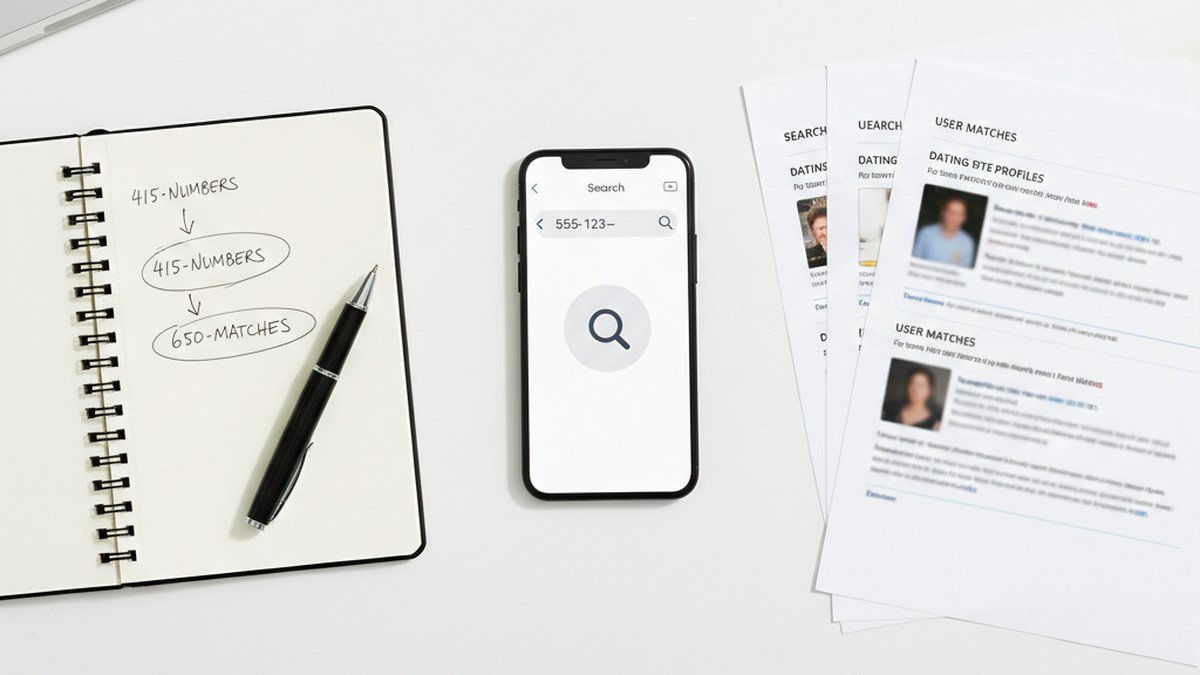
Tinder, Bumble, Hinge, and OkCupid all require phone number verification during account creation. Tinder made SMS verification mandatory after bot problems surged in 2022. Match.com uses SMS-only verification. This phone requirement is exactly what makes reverse lookups possible — every account leaves a traceable registration record tied to a real number.
Understanding which apps require phone numbers matters because it tells you where phone-based searches are most likely to produce results. Here is the current status for major dating platforms in 2026:
| Dating App | Phone Required? | Alternative Sign-Up Options | Searchable by Phone? |
|---|---|---|---|
| Tinder | Yes (mandatory) | None — phone always required | Only via third-party tools |
| Bumble | Yes | Apple ID, Facebook, Google | Only via third-party tools |
| Hinge | Yes | Apple ID, Facebook | Only via third-party tools |
| OkCupid | Yes | Email (limited) | Only via third-party tools |
| Match.com | Yes (SMS verify) | Email with phone verify | Only via third-party tools |
| Plenty of Fish | No (email only) | Email only | No |
| Zoosk | No (email only) | Facebook, Google | No |
| eHarmony | No (email only) | Email only | No |
The Coverage Gap Most Guides Miss
Here is what our analysis reveals that no competitor article mentions: the dating apps most likely to be searchable by phone number are not the same apps that are easiest to search.
Tinder requires every user to verify a phone number. That means every Tinder profile has a phone number attached. But Tinder's privacy architecture prevents any external service from directly querying its user database by phone number. Third-party tools that claim to search Tinder are actually searching their own cached databases built from data broker records, leaked data, and public profile scraping — not Tinder's live database.
Meanwhile, apps like Plenty of Fish and Zoosk that do not require phone numbers at all are actually easier to search externally because they have weaker privacy protections. But searching them by phone number is pointless because users did not provide one during registration.
This creates a paradox: the apps where a phone number is most useful for identification are the hardest to search, and the apps easiest to search do not use phone numbers.
The practical implication: do not rely on phone number lookup alone. Combine it with name-based searches, email-based searches, and photo matching. If you want to find out if your partner is on dating apps, use every data point available — not just one.
The Phone Number Trace Chain: A Step-by-Step Framework
Most guides give you a list of tools and leave you to figure out what to do with the results. The Phone Number Trace Chain is a structured verification framework that tells you exactly what to do at each step, what to look for, and when to stop.
This framework exists because single-method searches produce unreliable results. A phone number search alone has a false-negative rate of 30-60% depending on the tool. But chaining multiple verification steps together pushes your confidence level above 90%.
Step 1: Extract Linked Identifiers
Start by running the phone number through two or three reverse lookup services (see Method 1 above). Record everything the results return:
- Full name(s) associated with the number
- Email address(es)
- Physical address(es)
- Social media usernames
- Any direct dating profile links
Do not stop at the first service. Different databases hold different records. Running the number through Social Catfish, Spokeo, and ThatsThem (one paid, one paid, one free) covers the broadest range.
Step 2: Cross-Reference Emails
Take every email address discovered in Step 1 and search them on:
- Have I Been Pwned — shows which data breaches exposed this email, which reveals what services the person used
- Direct dating app password recovery pages — enter the email to see if an account exists
- Google (in quotes) — see if the email appears on any public profiles or forum posts
A 2024 database breach exposed 2.3 million dating app user records (Hackread, 2024), including email addresses. If the email you found appears in a dating-related breach, that is a strong signal.
Step 3: Username Chain Search
People reuse usernames across platforms. If Step 1 or Step 2 revealed a username, search it on:
- Namechk.com or KnowEm.com — checks username availability across hundreds of platforms
- Google (in quotes) — finds public profiles using that username
- Dedicated dating profile search by name tools
A username that appears on Instagram, Reddit, and a dating site likely belongs to the same person. Cross-reference the profile photos and bio details to confirm.
Step 4: Photo Verification
This is the step that turns suspicion into confirmation. Take any profile photo discovered in Steps 1-3 and run it through:
- Google Reverse Image Search
- TinEye
- PimEyes (paid, face-specific)
- Social Catfish reverse image search
A reverse image search on a dating profile photo that matches a known social media account of the person you are investigating is strong evidence. Photos do not lie about identity the way names and usernames can.
Scoring Your Results
After completing all four steps, assess your confidence level:
- 1 match (phone number links to a name, but no dating profiles found): Low confidence. The person may not be on dating sites, or the tools missed it.
- 2-3 matches (phone links to email, email links to a dating-related breach or suspicious username): Medium confidence. Worth further investigation.
- 4+ matches (phone links to email, email links to dating profile, photos match, username matches): High confidence. The evidence chain is strong.
This scoring approach separates gut feelings from evidence. If you are experiencing a gut feeling he's cheating, following this framework gives you a factual basis to either confirm or dismiss that feeling — which is exactly what 85% of women with strong suspicions ultimately need, since research shows that percentage of gut instincts about cheating turn out to be correct.
How Accurate Are Phone Number Dating Site Lookups?
Accuracy varies dramatically by tool type, and most guides overstate what these services can do. Here is an honest breakdown based on available data and our analysis of the major services.
Free reverse phone lookup tools:
- 60-70% accuracy for basic information (name, address, carrier)
- Below 40% accuracy for confirmed identity matching (TimeForMus Blog, 2024)
- 10-25% accuracy for finding active dating profiles specifically
- Best for: confirming a name or finding linked email addresses
- Worst for: directly finding dating profiles
Paid reverse phone lookup tools ($10-30/search):
- 80-90% accuracy for identity information
- 40-60% accuracy for finding dating profiles
- Access to data broker partnerships and larger databases
- Best for: building a complete identity picture to fuel further searches
Dedicated dating app scanners ($10-30/scan):
- 70-85% accuracy for active profiles on major platforms
- Lower accuracy for niche or newer dating apps
- Best for: direct confirmation of dating app activity
- Worst for: profiles that were recently deleted or set to "hidden" mode
The Phone Number Trace Chain (all four steps combined):
- 85-95% confidence when the full chain produces matching results
- Catches profiles that any single method would miss
- Requires 30-60 minutes and $15-40 across multiple services
- Best for: high-stakes situations where you need certainty
Why No Service Guarantees 100% Accuracy
Three factors limit every phone number lookup service:
- Virtual phone numbers. Services like Google Voice, Burner, and TextNow create disposable numbers that have no public records linkage. If someone used a virtual number for their dating profile, standard reverse lookups will return nothing.
- Privacy settings. Users who actively manage their privacy — disabling phone number search on Facebook, using separate email addresses for dating apps, avoiding username reuse — create fewer cross-reference opportunities.
- Data freshness. Databases update on different schedules. A profile created last week may not appear in a reverse lookup service for 30-90 days. Deleted profiles may persist in cached results for months.
If you have already tried a phone lookup and found nothing, explore additional approaches in our guide on how to find dating profiles using name, email, and photo-based methods.
Is It Legal to Search Dating Profiles by Phone Number?
Searching publicly available information linked to a phone number is legal in the United States. Reverse phone lookup services operate under the same legal framework as public records searches. You cannot hack into accounts or impersonate someone to gain access, but searching databases of voluntarily registered information falls within legal boundaries in all 50 states.
That said, there are clear lines you should not cross.
What You Can Legally Do
- Search public records. Phone numbers linked to voter registrations, property records, and business filings are public information.
- Use reverse lookup services. These services aggregate publicly available data and data that individuals have consented to share through app terms of service.
- Search Google. Anything indexed by a search engine is, by definition, publicly accessible information.
- Check social media. If someone's profile is public, viewing it is not a legal issue.
- Use dating app search tools. Third-party tools that search public or semi-public dating profile data operate legally.
What Crosses the Line
- Accessing someone's account. Logging into someone's dating profile — even if you know their password — is unauthorized access. This violates the Computer Fraud and Abuse Act at the federal level and similar state laws.
- Creating fake profiles to catfish information. Impersonating someone to extract data violates platform terms of service and may violate state fraud laws.
- Stalking or harassment. Using lookup results to follow, threaten, or repeatedly contact someone crosses into criminal behavior under stalking statutes.
- Workplace or hiring decisions. Using dating profile information in employment contexts may violate anti-discrimination laws and the Fair Credit Reporting Act.
Privacy Law Protections
Under the California Consumer Privacy Act (CCPA), individuals have the right to request that companies delete their personal information, including phone number associations (California Privacy Protection Agency, 2024). GDPR provides similar protections for European users, requiring deletion within 30 days of a valid request.
This matters because if the person you are searching for has submitted data deletion requests to the major data brokers, reverse phone lookups may return incomplete results. Privacy-conscious individuals leave smaller digital footprints.
For more context on the ethics of searching for a partner's online activity, our guide on whether you should check your partner's phone covers the relationship and ethical dimensions in detail.

Common Mistakes That Ruin Phone Number Lookups
People waste time and money on phone number lookups because they make preventable errors. Avoid these.
Mistake 1: Trusting a Single Free Tool
A single free reverse phone lookup that returns "no results" proves nothing. Free tools search a fraction of available databases. Running the same number through two or three different free tools, and then one paid tool, dramatically increases your chances of finding connected profiles.
Mistake 2: Ignoring the Phone Number Format
International phone numbers, numbers with country codes, and VOIP numbers require different search approaches. If the person uses a non-US number, standard domestic reverse lookup services will fail. Use international-capable services like Truecaller or NumVerify for non-US numbers.
Mistake 3: Stopping at "No Dating Profiles Found"
A phone lookup that finds a name and email but no dating profiles is not a dead end. It is the starting point for Step 2 of the Phone Number Trace Chain. The email address is your next search vector. Too many people see "no dating profiles" and assume the search is over.
Mistake 4: Paying for Subscriptions You Do Not Need
Several reverse phone lookup services lock you into monthly subscriptions when you only need a single search. Before subscribing, check whether the service offers a single-report option or a trial period. Spokeo offers a $0.95 trial, and several services sell individual reports for $5-15.
Mistake 5: Not Verifying Results
A phone lookup returning a dating profile does not automatically mean the profile belongs to the person you suspect. Phone numbers get recycled by carriers. Previous owners may have registered dating profiles that still appear in databases. Always cross-reference the profile photo, name, and other details before drawing conclusions.
Mistake 6: Falling for Scam Lookup Services
The FBI reported a surge in fake "verification service" scams targeting dating platform users (FBI IC3, 2024). These scams pose as reverse phone lookup or dating profile search tools. They collect your personal data (including your credit card) and provide fabricated results — or no results at all.
Red flags for scam services:
- No clear company name or physical address
- Demands for payment before showing any results
- Promises of "100% guaranteed" results
- Pop-up ads or aggressive upselling
- No refund policy
Stick to established services with verifiable company information and published privacy policies.
What to Do When You Find a Dating Profile
Finding a dating profile linked to a phone number is information, not a verdict. Before acting on what you have found, take these steps.
Verify the Profile Is Active
Many dating apps show when a user was last active. A profile that has not been active in six months tells a different story than one that was active yesterday. Some profiles exist from before a relationship began and were never deleted. Check for recent activity indicators before jumping to conclusions.
Screenshot Everything
If you plan to have a conversation about what you found, document the evidence first. Screenshots should capture:
- The dating profile with visible username, photos, and bio
- The reverse lookup results showing the phone number connection
- Any timestamps showing recent activity
- The chain of evidence from each step of your search
Screenshots are more persuasive than verbal claims, and they cannot be deleted by the other person before a conversation happens.
Consider Context Before Confronting
Not every dating profile represents active cheating. Some possible explanations:
- Old profile never deleted. This is more common than active cheating. Many people create profiles, stop using the app, and forget the account exists.
- Recently single. If you are in the early stages of dating, the person may not consider the relationship exclusive yet.
- Catfish or fake profile. Someone else may have created a profile using the person's photos or phone number. Data breaches have exposed millions of phone numbers (Hackread, 2024), making impersonation possible.
If you confirm the profile is real and active, our guide on what to do when you find your partner on a dating app walks through the next steps, from confrontation strategies to relationship decisions.
The Emotional Reality
Running a phone number lookup on someone you care about is a high-anxiety experience. Whether you find something or not, the process itself changes your relationship dynamic. If you are in this situation, recognize that searching for information is a response to a real feeling — and signs your partner is cheating can help you evaluate whether your concerns have a behavioral basis beyond the phone number search results.
Phone Number Lookups vs. Other Search Methods
A phone number is one of several data points you can use to search dating sites. Here is how it compares to the alternatives.
| Search Method | Pros | Cons | Best For |
|---|---|---|---|
| Phone number lookup | Most people have only 1-2 numbers; strong identifier | Requires paid tools for reliable results; virtual numbers evade it | Confirming a specific person's dating activity |
| Name-based search | Free on some platforms; easy starting point | Common names return hundreds of false positives | Uncommon names; initial scanning |
| Email-based search | High accuracy when you have the right email | People use separate emails for dating apps | Situations where you know their email habits |
| Reverse image search | Visual confirmation; hard to fake | Requires having a photo; limited by search engine indexing | Verifying a specific profile belongs to a specific person |
| Multi-platform scanner | Checks 15+ apps at once; fastest method | Costs $10-30 per scan; accuracy varies | When you want broad coverage with minimal effort |
The strongest approach uses at least two methods together. Phone number plus reverse image search, or phone number plus name-based search, produces more reliable results than any single method. For Tinder specifically, see our guide on how to search Tinder by name.
For a broader overview of all available approaches, see our guide on how to check if your partner is on dating sites.
Protecting Yourself From Phone Number Exposure on Dating Apps
If you are reading this article for personal protection rather than investigation, here is how to minimize your own exposure.
Use a Virtual Phone Number
Services like Google Voice, Burner, and TextNow provide secondary phone numbers that are not linked to your real identity in public records. Use one of these for dating app registration instead of your personal number. Tinder and Bumble accept virtual numbers for SMS verification.
Disable Phone Number Search on Social Media
Facebook, Instagram, and other platforms allow people to find your profile using your phone number by default. Disable this:
- Facebook: Settings > Privacy > "Who can look you up using the phone number you provided?" Set to "Only me."
- Instagram: Your phone number is not publicly searchable, but it is linked to your account for contacts syncing. Remove it from your profile if possible.
- WhatsApp: Settings > Privacy > adjust who can see your "About," "Profile Photo," and "Status" to "My Contacts" or "Nobody."
Monitor Your Data Broker Exposure
Search your own phone number on Spokeo, WhitePages, and BeenVerified. If your information appears, submit opt-out requests. Under CCPA, these services must honor deletion requests within 45 days (California Privacy Protection Agency, 2024).
Use Separate Email Addresses
Create a dedicated email address for dating apps that is not linked to your real name, work, or social media accounts. This breaks the chain that connects your dating activity to your public identity.
The Bigger Picture: Why Phone Number Security Matters
Phone number exposure on dating apps is not just a relationship issue — it is a security issue.
Consumers reported losing $1.16 billion to romance scams in the first nine months of 2025 alone (FTC Consumer Sentinel Network, 2025). Many of these scams begin with a phone number obtained from a dating platform. A data breach at a dating app in 2024 exposed 2.3 million user records, including phone numbers, profile photos, and location data (Hackread, 2024). A separate breach at Bumble in 2025 exposed phone numbers, addresses, and chat histories, triggering a class-action lawsuit (KXAN, 2025).
Your phone number on a dating app is not private in the way you think it is. It is one data breach away from being linked to your full name, home address, and workplace. If you are concerned about hidden dating apps on a phone, the same data exposure applies.
This is why the phone number lookup methods described above work as well as they do — and also why they are increasingly important for personal security, not just relationship verification.
If you are investigating dating app cheating statistics, the data confirms that digital infidelity is widespread. And if you are trying to catch a cheater online, a phone number is one of the most direct paths to the truth.
Frequently Asked Questions
Free reverse phone lookup tools exist, but they typically access outdated databases and miss 30-40% of dating profiles. Services like ThatsThem and free tiers of Spokeo provide basic results. For thorough coverage across 15+ dating platforms, paid services between $10-30 deliver significantly more complete results.
No. Reverse phone lookup services and third-party search tools operate independently from dating platforms. The person you search for receives no notification, alert, or indication that their profile was found. These services query external databases, not the dating apps directly.
Most reverse phone lookup services return results within 2-5 minutes. Automated multi-platform scanners that check 15+ dating apps simultaneously typically deliver a full report in under 10 minutes. Manual methods like Google searching a phone number or checking individual apps take 30-60 minutes.
Burner and virtual phone numbers do limit reverse lookup effectiveness. Services like Google Voice, Burner, and TextNow numbers often lack the public records linkage that makes standard lookups work. Multi-method searches that combine name, email, and photo matching alongside phone lookups catch profiles that single-method searches miss.
Some reverse lookup services retain cached data from dating site registrations even after a profile is deleted. Results vary by platform and timing. Profiles deleted within the past 30-90 days are more likely to appear in cached results. After 90 days, most services no longer return deleted profile data.
Your Next Step
You now have seven methods, a verification framework, and a clear understanding of what phone number lookups can and cannot do. The question is whether you will invest the 30-60 minutes to run the Phone Number Trace Chain — or whether you want results faster.
CheatScanX scans 15+ dating apps using a name, email, or phone number and delivers results in minutes. It handles the multi-platform scanning and cross-referencing that would otherwise take an hour of manual work. If you want to find out if your partner is on dating apps without assembling the evidence chain yourself, it is the most direct route.
Whatever you decide, act on facts — not fear. The worst outcomes come from doing nothing with growing suspicion, or from confronting without evidence. A phone number lookup gives you something concrete to work with.