
# The 3AM Phone Check: Why We Do It & What to Do Instead
Checking your partner's phone at night is one of the most common—and least-talked-about—behaviors in modern relationships. Most people who do it know, on some level, that it won't resolve anything. They do it anyway.
That's not a character flaw. It's anxiety doing what anxiety does: reaching for the illusion of control at the exact moment you feel most powerless.
A 2024 SellCell survey found that 51% of people have checked a partner's messages without their knowledge. The impulse spikes at night, when the day's distractions are gone and the nervous system has nothing left to process except the fear that's been sitting in the background since morning.
This article examines what's actually driving the 3AM phone check, why a clean screen doesn't quiet the anxiety, and five evidence-based methods that work better than snooping—for your anxiety, your relationship, and your sleep. If a specific pattern or incident is fueling your concern, the section on distinguishing real intuition from anxiety covers that directly.
Why Do People Check Their Partner's Phone at Night?
People check their partner's phone at night because anxiety peaks when there is nothing left to suppress it. Nighttime removes the cognitive buffers that keep intrusive thoughts at bay during the day, leaving fear-based impulses—particularly those tied to relationship insecurity—fully in control of decision-making.
This is the short answer. The longer one requires understanding what's actually driving the behavior.
The Anxiety Arrives Before the Reasoning Does
Most people who check their partner's phone describe the impulse as arriving before the conscious thought. That's because it usually does. Anxiety doesn't begin with a logical case. It begins with a physical sensation: a chest tightness, a shift in the stomach, an unnamed sense that something is wrong.
The phone is the object the anxiety attaches to. But the underlying fear is almost always older, more diffuse, and more personal than whatever's on that screen. It might be the fear of abandonment—formed long before this relationship. It might be the memory of a previous betrayal, by this partner or another. It might be a pattern of relational insecurity that started in childhood and has persisted through every relationship since.
April Kilduff, MA, LCPC, LMHC, a therapist at NOCD, puts it plainly: "When you start checking someone's phone, you erode the trust." The more clinically precise observation is that phone checking is a symptom, not a cause. The trust erosion started somewhere earlier—in the relationship or before it.
What People Are Actually Afraid Of
In research by BankMyCell (2025), 89% of men and 70% of women cited suspicion of betrayal as their primary motivation for checking a partner's phone. But suspicion is rarely the complete picture. Under the surface of that suspicion are almost always one or more of these fears:
- Fear of abandonment: If I find out they're leaving, at least I'll know. Knowing feels safer than not knowing.
- Fear of deception: Being lied to feels like a loss of reality. Finding the truth—even painful truth—feels like regaining control.
- Fear of inadequacy: If they're interested in someone else, it confirms something I already suspect about myself.
- Fear of the unknown: Not knowing is its own kind of suffering. The phone offers the possibility of resolution.
None of these fears are resolved by a phone screen. But the phone offers the feeling of doing something—and when you're lying awake in the dark, doing something feels much better than lying still with fear.
Why the 3AM Window Is Different
Nighttime creates specific conditions that amplify anxiety. During the day, the prefrontal cortex—the brain's executive function center—is engaged by tasks, conversations, and stimulation. It moderates signals from the amygdala, the region that processes threat and fear.
At 2 or 3am, that moderating influence weakens. Sleep disruption further reduces prefrontal activity, which means fear signals run with less interference. What feels like a manageable worry at noon feels like an emergency at 3am.
Research published in the National Institutes of Health database confirms that rumination—the repetitive, uncontrolled cycling of distressing thoughts—is significantly worse at night, and that pre-sleep rumination on intrusive thoughts increases the likelihood of anxiety-related dreams (NIH, 2022). The phone presents itself as a solution precisely because it's concrete and immediate. Your fear is vague and overwhelming. The phone is specific and within reach.
If you're also dealing with a gut feeling your partner is cheating, that heightened nighttime state makes it much harder to assess whether that feeling has merit.
If any of this sounds familiar, there's a way to know for sure. CheatScanX checks 15+ dating platforms for hidden profiles using a name, email, or phone number.
Check for hidden profiles →What Actually Happens in Your Brain When You Check the Phone?
When you pick up your partner's phone, your brain runs a neurochemical sequence that provides short-term relief and long-term reinforcement of the behavior. Understanding this sequence is the first step toward breaking it.
The mechanism works in five stages:
1. Trigger: An intrusive thought, memory, or physical sensation activates the amygdala's fear response. You feel anxious, vigilant, uncomfortable.
2. Urge: Your brain searches for a way to resolve the discomfort. Because you've checked the phone before and temporarily felt better, that behavior presents itself as the solution.
3. Action: You pick up the phone. During this phase, your nervous system begins to de-escalate because you're doing something. The act of doing—not what you find—provides the first wave of relief.
4. Finding: You see nothing alarming. Cortisol drops. You feel a brief, genuine sense of calm.
5. Reinforcement: Your brain records the lesson: "Checking the phone = relief." The next time anxiety spikes, this pathway is more established, more automatic, and requires less internal negotiation.
This is the same reinforcement loop seen in compulsive behavior broadly—whether handwashing, checking door locks, or reassurance-seeking. Each repetition makes the next instance slightly more likely.
Why a Clean Phone Doesn't Actually Help
Here is the critical piece most people underestimate: finding nothing doesn't resolve the anxiety. It resolves the immediate discomfort, which is different.
Tracie Ibrahim, LMFT, CST, explains: "Trust is built on clear communication and honesty. Without these, doubt and uncertainty fill the gap." A clean phone can't substitute for that communication. It's a snapshot of one moment, not evidence about a person's character, intentions, or emotional availability.
The relief window also gets shorter with each checking episode. The first time you check, you might feel calm for two weeks. The second time, for a week. Over time, the checking happens more frequently and delivers diminishing returns—until you're checking multiple times a night and barely registering any improvement.
In practice, what emerges from clinical observation is that people who check frequently report higher baseline anxiety levels than those who check rarely—not because their relationship is worse, but because the behavior has conditioned their nervous system to expect a threat requiring constant monitoring.
The Paradox: Checking Can Create the Problem You're Checking For
There is an additional, often-overlooked consequence. Partners discover snooping more often than snoopers expect. A 2024 SellCell survey found 57% of people have caught their partner checking their phone without permission.
When discovered, the dynamic almost always deteriorates—regardless of what was found. The snooped-on partner experiences a violation of privacy, has their integrity presumed suspect, and discovers that their partner chose surveillance over conversation. This typically produces the withdrawal, emotional distance, and reduced availability that the checker was afraid of in the first place.
The checking doesn't manufacture evidence of a problem. But it can manufacture the conditions for one.
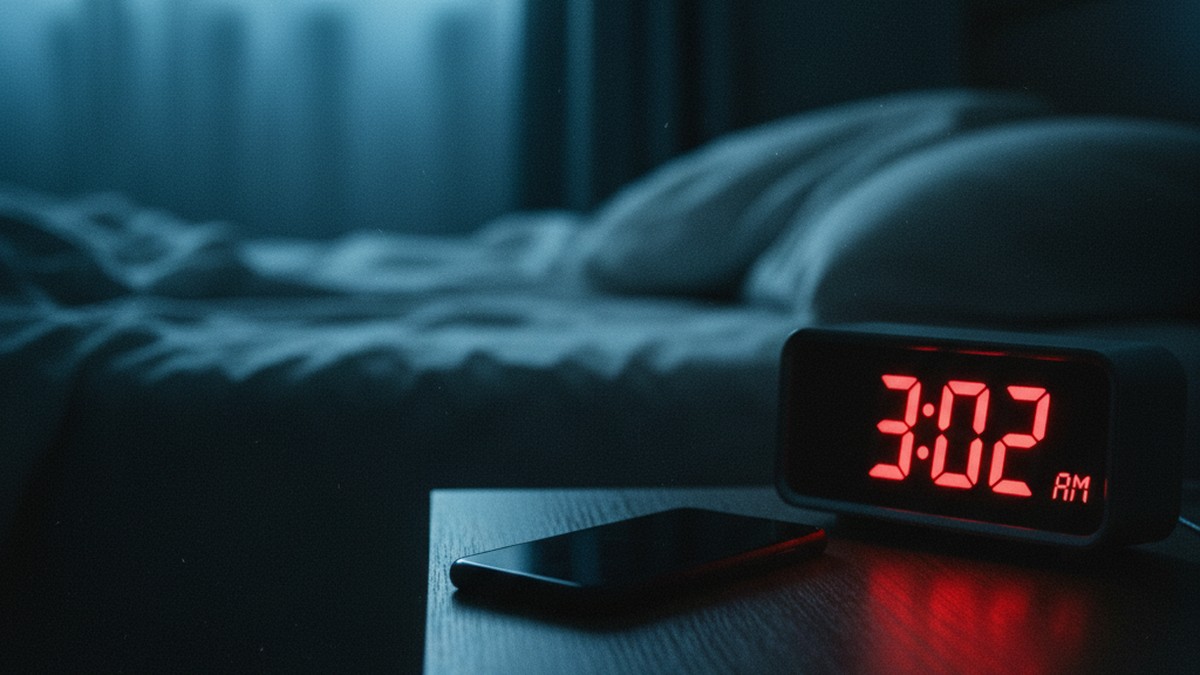
The 3AM Window: Why Nighttime Makes Everything Worse
There is a reason "the 3AM phone check" has its own name. Nighttime anxiety has a distinct quality—different from daytime worry in ways that make the phone more appealing, the impulse harder to resist, and the sleep cost more serious.
The Cortisol Connection
Sleep researchers identify the window between 2am and 4am as the period when cortisol—the primary stress hormone—begins its natural pre-dawn rise in preparation for waking. This hormonal shift causes lighter sleepers or anxious individuals to wake earlier than intended, often with a sense of unease they can't immediately explain.
That unexplained unease is looking for a home. If relationship worry is present in any form—a tone from the previous evening, a message that seemed off, a general sense of distance—the waking brain will attach to it. What felt like a manageable background concern at 10pm can feel like a crisis at 3am.
This process is compounded in people who have experienced prior relationship betrayal. Research from Couples Therapy Inc. (2024) documents that sleep disruption—specifically waking between 3 and 4am with a racing mind—is a recognized physical symptom of betrayal trauma. The hypervigilance that develops after betrayal activates the amygdala's threat-detection system at a heightened baseline. The pre-dawn cortisol rise adds to an already-elevated threat response, producing nighttime waking that feels urgent even when no new information has emerged.
The Sleep Cost of the Check Itself
Every time you reach for a phone in the night, you create a cascade of physiological effects that degrade sleep quality:
- Blue light exposure suppresses melatonin production, making it harder to return to sleep
- Cognitive activation—even processing innocuous content—pulls the brain out of slower, restorative sleep stages
- Emotional activation from anxiety, hope, or brief relief extends wakefulness by 20-40 minutes, according to sleep medicine research on nighttime cognitive arousal
Over time, the 3AM check embeds itself in your sleep architecture. Your body begins to anticipate it, creating micro-awakenings at the same time each night. What began as an anxiety response becomes a sleep disorder. The sleep deprivation that results then reduces emotional regulation capacity the following day—lowering your threshold for anxiety and reducing your ability to assess situations accurately.
This is how the cycle sustains itself. Poor sleep creates more anxiety; more anxiety drives more checking; more checking produces worse sleep.
What Daytime Exhaustion Does to Your Judgment
After even one night of fragmented sleep from 3AM phone checking, you'll have a reduced ability to distinguish between real threat signals and free-floating worry. The emotional blunting that follows poor sleep affects both your assessment of your partner's behavior and your assessment of your own thinking.
Many people report their relationship concerns feeling most valid on mornings after they've slept poorly. That isn't a coincidence—it's the neurological consequence of reduced prefrontal function. Your partner's neutral actions will seem more suspicious; your own fear will feel like evidence. This is the moment when the decision to have a conversation or conduct a search feels most urgent, and when it is least likely to be well-reasoned.
Is Checking Your Partner's Phone Ever Justified?
Checking your partner's phone without their knowledge is rarely justified and almost never produces the outcome you actually want. Even when you find evidence, you've violated trust in a way that complicates every conversation that follows. The one genuine exception is mutual, agreed-upon transparency—which isn't snooping at all.
This question deserves a careful answer rather than a blanket prohibition. The experience of the person doing the checking is real, and their fears sometimes have merit.
When Suspicion Has a Factual Basis
There is a meaningful difference between these two situations:
- Anxiety without triggering events: "I'm scared they might be cheating, but nothing specific has happened"
- Anxiety with specific, observable changes: "They've been coming home late, have become secretive with their phone, and have been emotionally withdrawn for six weeks"
The first is anxiety-driven checking. The second involves legitimate concern that warrants a direct conversation—but still not covert phone access.
Here is why: even when there is real cause for concern, what you find on the phone creates a new problem while addressing the old one. If you find something, you now have to explain how you know, which derails any possibility of honest confrontation. If you find nothing, you've introduced a privacy violation into a relationship that already has stresses.
Research from BankMyCell (2025) found that 49% of women and 46% of men who snooped found incriminating evidence. But 25% of all snooping incidents resulted in fights or breakups—and many were driven not by what was found, but by how it was found.
The question of whether checking a partner's phone is ever justified has no simple answer, but the process almost always costs more than it resolves.
The Mutual Transparency Alternative
Some couples establish explicit agreements about phone access—sharing passwords during a difficult period, or using a scanning tool transparently. This isn't snooping. It's a negotiated trust-building measure both parties have consented to.
If concern about dating app activity is specifically driving the anxiety, a transparent approach—one you discuss openly—resolves the specific question without the privacy violation. CheatScanX is designed for exactly this scenario: a targeted search you can conduct openly, with your partner's knowledge, rather than scrolling through their phone at 3am without it.
The fundamental difference between mutual transparency and snooping isn't only ethical. It's about outcomes. Snooping leaves you with information, no trust, and a difficult conversation to start from a compromised position. A transparent approach leaves you with information and the relationship's communication channels still intact.
Why Covert Checking Fails Even When It "Works"
Even when covert checking produces useful information, the process creates costs that aren't immediately obvious. You've established a pattern of deception in yourself. You know something you cannot openly reference. You've demonstrated—to yourself—that you'll breach your partner's privacy when you're scared enough, which means that option is available the next time anxiety peaks.
The information found through snooping exists in a complicated category. You can't cite it without revealing the violation. You can't act on it naturally. It sits in a space of knowledge that subtly poisons the relationship from within, whether or not you ever confront anything.
What Are the Signs This Has Become a Problem?
Phone checking has become a problem when it happens more than once a week, when a clean phone doesn't relieve anxiety for more than a day or two, when you feel compelled to check even after agreeing not to, or when the behavior is affecting your sleep, concentration, or ability to trust your own perceptions.
If you're trying to assess whether you're being paranoid about cheating versus responding to something real, the patterns below can help clarify which is which.
Frequency and Escalation
Occasional checking—once, after something specific happened that genuinely concerned you—is different from habitual checking. The threshold question is escalation: is this happening more often than it was three months ago? Multiple times in a single night? During the day as well?
Compulsive behavior escalates because the reinforcement cycle requires more of the behavior to produce the same level of relief. If you're checking twice as often as you were three months ago, that's not because the relationship has become twice as suspicious. It's because the behavior has become self-sustaining.
The Clean Phone Doesn't Help
This is one of the clearest indicators. If you check the phone, find nothing alarming, and still feel anxious within 48 hours—or feel briefly calm and then feel the urge return—the checking is not doing what you're hoping it will.
A clean phone proves that the phone was clean at the moment you looked. It proves nothing about the past, nothing about intentions, and nothing about future behavior. If the anxiety doesn't respond to a clean result, it was never really about the phone.
You're Actively Hiding the Behavior
Most people who have a justified reason to look at a phone don't hide that they're doing it. They ask. Or they mention it afterward.
If you're actively concealing the checking—re-locking the phone exactly as you found it, timing the check for when your partner won't notice, deleting browser history—the concealment itself is a signal. Some part of you knows the behavior isn't defensible. That knowledge doesn't stop the behavior, but it confirms the problem.
It's Affecting the Relationship Itself
Partners discover snooping more often than snoopers expect. When discovered, the dynamic deteriorates regardless of what was found. If you've been caught before and are still checking, that's a significant indicator the behavior is driven by something beyond rational concern.
Comparison: Occasional Check vs. Compulsive Pattern
| Indicator | Occasional Check | Compulsive Pattern |
|---|---|---|
| Trigger | Specific event or observation | General anxiety or free-floating fear |
| Frequency | Rare, non-escalating | Weekly or more, escalating |
| Relief after clean result | Lasts days or weeks | Lasts hours at most |
| Concealment | No | Yes |
| Impact on sleep | Minimal | Significant disruption |
| Relationship impact | Negligible | Noticeable tension or distance |
| What drives the next check | New information | The anxiety itself |
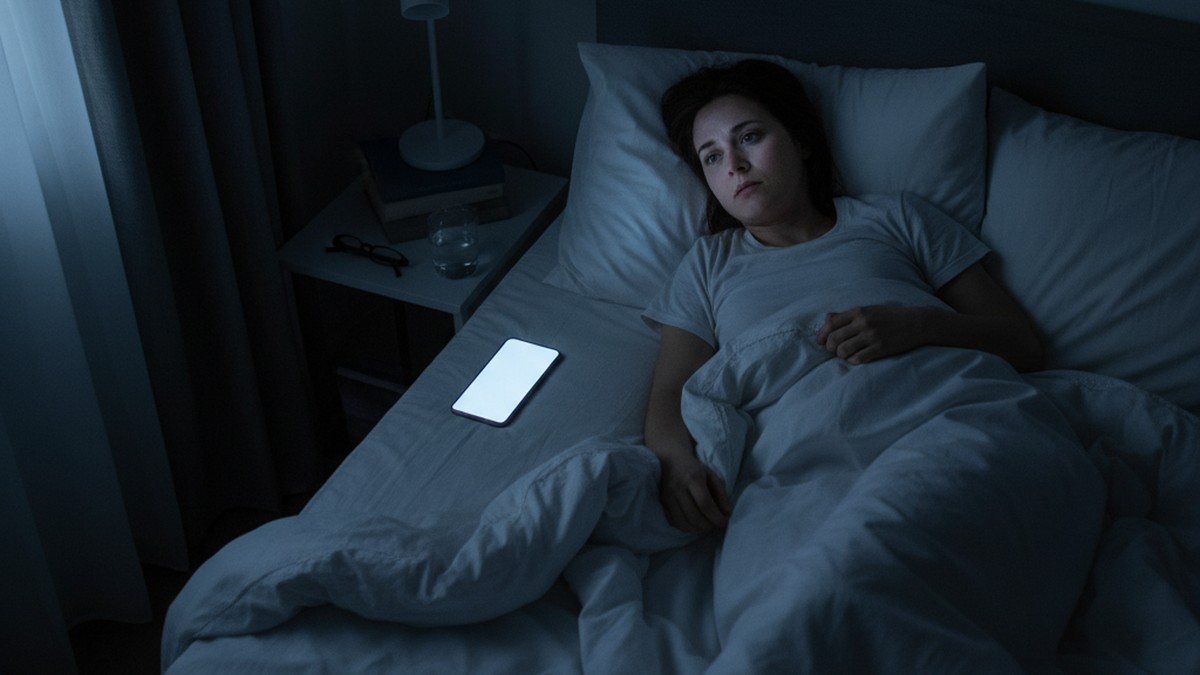
The Trust Erosion Ladder: How Snooping Reshapes Relationships
Even when checking produces no findings, the behavior has ongoing effects on the relationship dynamic that accumulate over time. We identify this progression as the Trust Erosion Ladder—a five-rung sequence that describes how covert phone checking reshapes a relationship, regardless of what's on the screen.
Rung 1: Private Checking
The checker looks at the phone occasionally, finds nothing alarming, and the relationship continues without visible disruption. This rung feels harmless. That's what makes it dangerous—there are no immediate consequences to signal that something is developing.
Rung 2: Surveillance Lens
The checker begins interpreting normal partner behavior through a monitoring frame. A locked bathroom is evidence. A delayed text response is suspicious. The relationship is being experienced through a filter of ongoing suspicion that doesn't require new evidence—it produces its own.
April Kilduff, LCPC, notes that "boundaries and privacy are allowable in relationships"—not as loopholes for secrecy, but as the basis for genuine respect. At Rung 2, that basis is already being eroded from the checker's side, without the partner's knowledge.
Rung 3: Escalation
The checking frequency increases. What began as monthly becomes weekly, then nightly. The partner may begin to notice shifts in mood or atmosphere without knowing the cause, and often responds by becoming slightly more guarded—which the checker interprets as evidence of concealment.
Rung 4: Discovery
The partner discovers the checking. Research shows 57% of people have caught their partner checking their phone without permission (SellCell, 2024). The discovery damages trust in both directions: the checker violated privacy; the discovery reveals that the checker didn't trust them.
The conversation that follows is almost always harder because of the covert nature of the behavior. Even if the checker found nothing, they now have to account for the surveillance.
Rung 5: Relationship Crisis
Whether or not the discovery is ever directly addressed, the relationship enters a period of heightened tension, mutual guardedness, and reduced openness. Both parties feel, in different ways, that something has been breached.
This is not an inevitable sequence—it's a trajectory, and it can be interrupted at any rung. But understanding it as a progression, rather than a series of isolated incidents, helps make the stakes visible while the behavior still feels manageable.
The Physical and Emotional Toll
Research from a 2025 PMC study found that "phone use around partner predicted lower relationship satisfaction and coparenting quality"—and this looked at ordinary phone use, not surveillance. The phone as a competing emotional object creates measurable distance.
Covert phone checking adds a psychological layer to that distance. The checker is often physically present but mentally preoccupied with monitoring. The partner frequently senses a disconnection without knowing its source. Physical intimacy and spontaneous emotional connection both tend to decline under conditions of chronic surveillance-related anxiety.
Attachment Styles and the 3AM Urge
Attachment theory—developed by psychologist John Bowlby and extended by researchers including Mary Ainsworth and Philip Shaver—describes the relational patterns formed through early caregiving experiences. These patterns persist into adult relationships and have significant predictive power for how people respond to relationship threat.
Three primary attachment styles are relevant to nighttime phone checking:
Anxious Attachment
People with an anxious attachment style experience intense fear of abandonment, seek frequent reassurance, and interpret ambiguous partner signals as threatening. They tend to monitor partner behavior closely, feel hyperattuned to shifts in emotional availability, and experience relief-seeking behaviors—including phone checking—as rational, given how genuinely distressing the uncertainty feels.
Research from the Attachment Project (2024) describes anxious attachment as involving "intense fear of abandonment" and "constant search for physical and emotional closeness." When that closeness feels threatened, the nervous system responds as though the threat is physical. Lying awake at 3am, reaching for a phone, is a direct expression of that threat-response system.
Anxiously attached individuals are disproportionately represented among frequent phone checkers. The behavior makes complete sense from within their experience. It also tends to worsen anxiety over time, because it doesn't address the underlying relational wound—it temporarily soothes it.
Managing anxiety about a partner cheating is particularly difficult with an anxious attachment style, because the attachment system is already primed to scan for threats.
Avoidant Attachment
People with an avoidant attachment style suppress emotional needs and maintain psychological distance from partners. They're less likely to engage in phone checking and more likely to be the partner whose behavior triggers the checker's anxiety—not because they're being deceptive, but because emotional distance and limited disclosure are their default relational patterns.
The anxious-avoidant pairing is common and produces a predictable dynamic: the anxious partner monitors; the avoidant partner withdraws; the withdrawal triggers more monitoring; the monitoring triggers more withdrawal. Nighttime phone checking is often the anxious partner's response to an avoidant partner's emotional inaccessibility during the day.
Secure Attachment
Securely attached individuals experience relationships as fundamentally safe. They can tolerate uncertainty, communicate concerns directly, and trust their partner's integrity without requiring ongoing verification.
Secure attachment doesn't eliminate jealousy or suspicion. But it provides the internal resource to respond to those feelings through conversation rather than surveillance. Research consistently shows that securely attached individuals report lower rates of snooping and higher relationship satisfaction overall.
Understanding your attachment style doesn't automatically change behavior—but it reframes the problem. Phone checking isn't primarily a decision. It's a symptom of a relational orientation that was formed long before this relationship existed.
Is It Relationship OCD or Relationship Anxiety Driving You?
Relationship OCD (ROCD) is a subtype of obsessive-compulsive disorder in which intrusive thoughts center on romantic relationships—specifically on doubts about a partner's fidelity, the quality of feelings, or the relationship's long-term stability. It is distinguished from general relationship anxiety by one key feature: the intrusive thoughts feel unwanted. ROCD sufferers often know rationally that their fears are unfounded but cannot stop the cycle.
Distinguishing between ROCD and general relationship anxiety matters because the treatment approaches differ meaningfully.
Signs of Relationship OCD
- The intrusive thoughts feel ego-dystonic—you don't want to believe your partner is cheating, but the thought returns despite contrary evidence
- A clean phone provides relief for minutes or hours at most before doubt resurfaces
- You engage in mental review: repeatedly replaying conversations or interactions to search for signs of deception
- You seek reassurance from your partner, feel temporarily better, then feel the anxiety return stronger than before
- The doubts persist even when the relationship is objectively going well
- The pattern has appeared across multiple relationships, often with different content (previous partners, or different fears)
ROCD is not about having a suspicious partner. It's about having an intrusive-thought pattern that has attached itself to the relationship. The phone is a compulsion—a ritual performed to reduce anxiety—not a genuine investigation.
Signs of General Relationship Anxiety
- Anxiety spikes around specific events: a late return, an unanswered message, a behavioral change
- The anxiety responds to reassurance more sustainably—days or weeks, not hours
- There are identifiable triggers in your partner's actual behavior
- The anxiety is context-specific rather than constant and background
- It's clearly linked to previous experiences of betrayal in this or prior relationships
Why the Distinction Matters for Treatment
ROCD typically requires Exposure and Response Prevention (ERP)—a specialized CBT approach that involves deliberately tolerating the anxiety of not checking, without performing the compulsion. General relationship anxiety responds well to standard CBT, communication-based interventions, and in some cases, couples therapy.
If you're unsure which you're experiencing, a licensed therapist specializing in OCD or relationship anxiety can clarify. The NOCD platform, which specializes in OCD treatment, documents that "phone checking feeds anxiety cycles rather than resolving them"—a key clinical indicator of OCD-spectrum behavior, regardless of the specific content of the anxiety.
Both conditions are treatable. Trying to stop compulsive checking through willpower alone is the least effective approach for OCD, and only mildly effective for general anxiety. Knowing which you're dealing with lets you use the right tool.
The PAUSE Protocol: 5 Steps for the Moment the Urge Hits
When you're lying awake at 3am with the urge to reach for your partner's phone, you need an in-the-moment intervention—something that works faster than a therapy session and doesn't rely on willpower alone. The PAUSE Protocol is a five-step sequence designed specifically for this window. Each step builds on the previous one. The goal is not to suppress the anxiety but to interrupt the specific pathway that leads from urge to compulsion.
P: Pause Before You Pick Up
Stop. Don't reach for the phone immediately. Put both hands flat on the mattress and breathe for ten seconds.
This is not meditation—it's a physical interrupt signal. Research on impulse control shows that a ten-second delay before acting on an urge significantly reduces the likelihood of performing the compulsive action. Your brain needs just enough space between the urge and the action for the next four steps to become possible.
If ten seconds feels impossible, start with three. The goal is any gap.
A: Ask What You're Actually Afraid Of
Say it quietly—out loud or in your head: "What am I actually afraid of right now?"
Not what you think might be on the phone. Not what you might find. The underlying fear.
Common honest answers include: "I'm afraid he's interested in someone else." "I'm afraid she's going to leave." "I'm afraid I'm not enough." "I'm afraid I'm going to get hurt the same way I did before."
Writing it down—reaching for your own phone, not your partner's—serves two functions. It moves the experience from raw amygdala activation toward cortical processing, and it reveals whether the fear is about this relationship or something older.
U: Use Physical Grounding Before Mental Processing
At 3am, cognitive interventions are harder to access because the prefrontal cortex is running at reduced capacity. Start with the body before attempting to rationalize.
The 5-4-3-2-1 technique is effective: name five things you can see in the dark room, four things you can physically feel, three sounds you can hear, two things you can smell, one thing you can taste. This interrupts the internal focus of anxiety and re-anchors you in the present.
Controlled breathing also helps: inhale for four seconds, hold for four, exhale for six. The longer exhale activates the parasympathetic nervous system, reducing the physiological arousal that makes the urge feel unmanageable.
S: Separate the Anxiety from the Evidence
Ask: "Is there specific new information that caused this feeling tonight, or did I just wake up with it?"
If the answer is "I just woke up with it"—that's critical. Free-floating 3AM anxiety is almost never a reliable signal about your partner's current behavior. It's a signal about your nervous system's state, the cortisol rise, and the specific vulnerability of the pre-dawn window.
If there is specific new information—something happened today or this week that genuinely concerns you—acknowledge it. Write it down. That's a conversation to have in daylight, not a justification for covert access at 3am.
This distinction between anxiety signals and evidence-based concern isn't always clean. But making the effort to separate them interrupts the automatic association between "I feel scared" and "therefore I should check the phone."
E: Engage With What You Know, Not What You Fear
Close out the fear scenario by bringing to mind what you actually know—not what you might find, but what the totality of evidence says about this relationship over time.
This isn't forced positivity. It's deliberate counterweight to a brain currently amplifying threat signals and suppressing context. Ask: "What is the cumulative evidence about this relationship—not just tonight, but across all of it?"
Most people running the 3AM check are in relationships where the daytime evidence is mixed or ambiguous—not where something definitively wrong is visible. The PAUSE Protocol doesn't tell you whether your fears are warranted. It gives you enough stability to assess that question rationally, in the morning, with full prefrontal function available.
If you get through all five steps and still feel the urge strongly, that's worth noting. Strong urges that don't respond to grounding and reflection may indicate ROCD or anxiety that warrants professional support.

How to Have the Conversation You're Actually Avoiding
The 3AM phone check is almost always a substitute for a conversation. Whatever fear is driving the urge—"Are you still interested in me?", "Are you pulling away?", "Did something change?"—is a question that can be asked directly. It feels harder than checking the phone, which is precisely why people check instead.
The direct conversation feels harder for several reasons: it requires vulnerability, it risks a painful answer, and it makes the fear explicit. But the phone check doesn't avoid any of those outcomes. It delays them while adding additional damage in the process.
Before the Conversation: Know What You're Actually Asking
The surface question—"Have you been honest with me?"—is almost never the real question. The real question is usually one of these:
- "Do you still want to be with me?"
- "Have I done something that created distance between us?"
- "Is there something I should know about?"
- "Are we okay?"
Knowing your real question before starting the conversation helps you ask for what you actually need, rather than opening an accusatory exchange that immediately puts your partner on the defensive.
How to Start Without an Accusation
Starting from your own experience rather than a claim about your partner's behavior is both more effective and more honest.
| Instead of this | Try this |
|---|---|
| "Are you cheating on me?" | "I've been waking up anxious and I'm not sure why. Can we talk about where things are between us?" |
| "Why are you being so secretive?" | "I've felt some distance lately and it's bothering me more than I expected." |
| "Who were you texting last night?" | "Something about last night didn't feel right to me. I want to talk about it when you have time." |
The second framing invites the partner into problem-solving rather than self-defense. It's also more accurate—you genuinely don't know what's causing the anxiety, and saying so is true.
What a Productive Conversation Looks Like
A productive conversation about relationship anxiety typically involves:
- Describing what you're feeling, not what you suspect
- Your partner having space to respond without being interrogated
- Both of you identifying specific things that would help (more check-ins, clarity on something, agreed transparency)
- A shared understanding of what comes next
This is harder than checking a phone. It's also far more likely to address the actual issue—whether that's a genuine problem in the relationship, an anxiety pattern that needs attention, or both.
What Should You Do When the Fear Is Real?
Not all nighttime anxiety is unfounded. Some people check their partner's phone because something specific has changed—and they're right to be concerned. Distinguishing between anxiety-driven checking and evidence-based concern is important, and the distinction isn't always obvious.
Signs the Concern Has a Factual Basis
Real, evidence-based concern tends to look like this:
- Behavioral changes with a clear before-and-after: Your partner has become emotionally withdrawn, secretive about their phone, or is keeping unusual hours—and these are changes from a prior baseline, not lifelong patterns
- Inconsistencies: Stories that don't add up, locations that don't match accounts, unexplained gaps in time
- Physical distance: A pronounced reduction in intimacy that coincides with other behavioral changes, not explained by stress or health
- Specific, triggered gut response: Not free-floating anxiety, but a particular reaction to a particular thing you observed
Research in relationship psychology suggests that roughly 79% of strong, specific suspicions—based on observed behavioral changes rather than free-floating anxiety—have some basis in fact. The challenge is distinguishing that specific, behavior-triggered concern from the generalized, anxiety-driven one.
If you're trying to evaluate whether signs your partner is cheating are actually present, that assessment is worth making carefully and with as much objectivity as possible—not at 3am.
What to Do When the Concern Is Real
If specific evidence or behavioral changes are driving the concern, the right response is different from the anxiety response:
- Document what you've observed: Dates, specific behaviors, inconsistencies—before raising anything
- Seek an external perspective: A trusted friend or therapist can help assess whether the pattern has merit, with less emotional charge than you currently have
- Have a direct conversation: Using your observations as the starting point, not the phone
- If you need specific verification: Use a transparent tool rather than a covert search. CheatScanX allows you to check for active profiles across 15+ dating platforms—a targeted, specific inquiry you can conduct openly rather than hiding
The key difference between anxiety-driven checking and evidence-based investigation is that the second is about answering a specific question, not about managing a feeling.
How to Stop the 3AM Phone Check for Good
Stopping the behavior permanently requires addressing both the immediate impulse and the underlying conditions that generate it. Willpower alone is the least effective approach. These evidence-based strategies have the strongest support:
Exposure and Response Prevention (ERP)
ERP is the gold-standard treatment for compulsive behaviors, including those associated with relationship OCD and anxiety-driven phone checking. The principle: deliberately expose yourself to the anxiety-producing situation (the urge to check) while resisting the compulsive response (the check itself).
This initially increases anxiety. That's expected and necessary. Over repeated exposures, the anxiety response to the urge weakens because the brain learns that the feared outcome doesn't materialize when the compulsion isn't performed.
ERP is most effective with guidance from a therapist trained in OCD or anxiety treatment. It's not a comfortable process, but the evidence for its effectiveness exceeds that of any other approach for this type of compulsive behavior.
Cognitive Restructuring
CBT-based cognitive restructuring helps identify and challenge the specific thought patterns that drive phone checking. Common patterns include:
- All-or-nothing thinking: "If I can't verify, I have no way of knowing if I'm safe"
- Catastrophizing: "If they're cheating, everything is over"
- Emotional reasoning: "I feel scared, therefore something is wrong"
Challenging these patterns involves examining the evidence for each thought, identifying the logical distortion, and replacing it with a more accurate assessment. This is most effective with a therapist's guidance but can be practiced independently using CBT workbooks for relationship anxiety.
Environmental Changes
Some of the most effective behavior changes are structural rather than cognitive:
- Charge your phone outside the bedroom. If the phone isn't within reach, the 3AM impulse can't act automatically. The added friction of getting up may be enough to engage the PAUSE Protocol.
- Put your partner's phone across the room before sleeping. Remove physical access.
- Establish a night-mode agreement with yourself: phones are not checked between 11pm and 7am, regardless of what the anxiety suggests.
People who remove the phone from easy reach report significantly reduced checking frequency. The impulse is strongest when the object is immediately available.
Couples-Level Interventions
If the anxiety is driven by something in the relationship dynamic—avoidant behavior from a partner, a history of dishonesty, a communication breakdown—individual anxiety management will only go so far. Couples therapy addresses the dynamic directly.
Specific couples strategies include:
- Regular emotional check-ins: Brief, low-stakes daily conversations about how each person is feeling reduce the accumulation of unspoken concern that peaks at 3am
- Transparency agreements: Explicit, mutually negotiated agreements about phone use and privacy that both partners have agreed to
- Tabling nighttime concerns: An agreement that concerns raised after 10pm wait until the following morning—when both people are better resourced to address them
What Healthy Trust Actually Looks Like in Practice
Healthy trust in a relationship isn't the absence of fear. It's the presence of enough security—built through accumulated experience, honest communication, and shared history—that fear doesn't require constant management.
Healthy trust tolerates uncertainty. It doesn't demand access to every message. It doesn't treat privacy as a threat signal. It operates on the assumption that your partner is a person with their own inner life, not a potential source of evidence to be monitored.
That doesn't mean ignoring real concerns. Healthy trust includes the confidence to raise those concerns directly, and the expectation that they'll be taken seriously.
If you've been in the 3AM phone check cycle—checking regularly, finding nothing, feeling briefly better, then checking again—the goal isn't just to stop the behavior. It's to build the internal and relational conditions where the impulse doesn't carry the same weight.
That work is slower than picking up a phone. It requires conversations that feel risky, vulnerability that feels uncomfortable, and sitting with uncertainty that feels unbearable at 3am. It also requires accurate information when specific questions need answers.
If concern about dating app activity is part of what's driving the anxiety, addressing that specific question directly—through a targeted, transparent search rather than covert phone access—is one concrete step. It answers the specific question without reinforcing the anxiety loop. The rest—the attachment patterns, the nighttime rumination, the communication gaps—deserves its own direct attention.
That's where the real work is, and it's work that actually produces lasting change.
Frequently Asked Questions
The impulse is extremely common—surveys suggest over 51% of people have checked a partner's phone without permission at some point. Whether it's worth acting on depends on frequency and motivation. If checking a clean phone doesn't relieve your anxiety for more than a day or two, the anxiety itself is the thing worth addressing, not the phone.
It usually says more about your internal state than your partner's behavior. Compulsive phone checking is typically a sign of anxiety, previous betrayal trauma, or an anxious attachment style. It doesn't reflect poor character—it reflects a fear response that hasn't found a healthier outlet yet. Most people who check regularly already know it isn't helping.
Yes—even when you find nothing. Research shows 57% of people have caught their partner checking their phone without permission, and 38% of couples who snoop report arguments or breakups as a result. The violation of privacy damages trust regardless of findings, and often produces the emotional withdrawal the snooper was initially afraid of.
Name the fear underneath the urge rather than acting on it. Ask yourself: what am I actually afraid of right now? Most of the time, the fear is about abandonment or betrayal—not about phone content. Physical grounding techniques, journaling the specific fear, or agreeing to raise the concern in the morning are more effective ways to address it.
The most evidence-based approaches combine resisting the compulsion—which briefly increases anxiety but breaks the reinforcement cycle—with addressing root causes: attachment patterns, past trauma, and communication gaps. Cognitive Behavioral Therapy and Exposure and Response Prevention have the strongest research support. Charging your phone outside the bedroom also reduces the behavior significantly.