
# Best Time to Check If Partner Is Active on Dating Apps
The best time to check if your partner is active on dating apps is between 7 and 10 PM on Thursday or Sunday evenings — when combined traffic across Tinder, Bumble, and Hinge reaches its weekly peak. But knowing the peak window is only the starting point. Understanding what each platform's activity indicators actually measure — and how easily they mislead — is what separates a useful observation from a false conclusion.
Suspicion about a partner's dating app activity is more common than most people acknowledge. A 2026 study published in Frontiers in Psychology (n=495 participants) found that 75% of partnered men and 70% of partnered women who used dating apps reported having sex organized through those platforms. The apps were already open for many of them. The relevant question often isn't whether a profile exists — it's whether it's still being used.
This guide breaks down exactly how activity status works on each major platform, which time windows are most revealing, and why a single-moment check so often produces the wrong answer. You'll also find the Activity Window Method — a structured four-step approach that builds a meaningful pattern instead of a single, easily-dismissed data point. That difference matters more than any individual observation.
What Does "Active" Actually Mean on Dating Apps?
Activity status on dating apps means the user opened or interacted with the app within a specific window. Tinder shows a green dot for any interaction within 24 hours and "Online Now" for activity within 2 hours. Hinge shows "Active Today" for the past 24 hours and "Active Now" for the past 2 hours. All indicators fire on any app open — not only active swiping.
This single fact changes how you should interpret everything these platforms show you. Most people assume "Active Today" means the person was browsing new profiles, composing messages, or updating their bio. That's not how the system works. Any interaction — tapping a push notification, opening the app before immediately closing it, accidentally pressing the icon, or checking a two-year-old conversation — generates the same "active" signal as 45 minutes of dedicated swiping.
Here is how each major platform handles activity tracking in detail:
Tinder
Tinder uses two separate activity layers. The "Recently Active" feature places a green dot next to a match's name when they have been on the app at any point within the last 24 hours. The "Online Now" label appears on profiles in the browsing stack when a user has been active within the previous two hours.
Both signals fire on any form of app interaction. The 24-hour window is broad enough that it provides limited precision — someone who opened Tinder at midnight will still show an active indicator at 11 PM the following evening. The 2-hour "Online Now" window is more informative.
Critically, users can disable their activity status entirely. In Tinder settings, the option appears under Profile > Settings > Recently Active Status. Toggling "Show Activity Status" to off removes the green dot from their profile. The tradeoff is that when hidden, the user also loses the ability to see other users' activity status.
You can only see a Tinder activity indicator if the person's profile appears in your swiping feed. If their profile is filtered out due to location differences, age range settings, or if they have enabled the Tinder "Blurred Profiles" feature for non-subscribers, the indicator will not be visible to you regardless of when you check.
Hinge
Hinge's Last Active feature is more technically precise than Tinder's. "Active Now" appears next to a profile when the user has interacted with Hinge within the past two hours. After two hours pass, the status transitions to "Active Today," which remains visible until the 24-hour mark, then disappears entirely without being replaced by any indicator.
The most important limitation of Hinge's system: Last Active status is only visible when browsing new profiles in the discovery feed — not within existing matches. Once two people have matched, neither person can see the other's Last Active status inside the conversation view. This means someone actively messaging their existing Hinge matches will not show as "active" to those same matches — only to new people who haven't matched with them yet.
Hinge allows users to hide their Last Active status in Settings > Preferences. Hidden status is symmetrical: when you hide yours, you can no longer see others' either.
Bumble
Bumble does not use a traditional "last active" timestamp in the same way Tinder and Hinge do. Instead, Bumble's platform automatically geotags users when they open the app, updating their listed location. A profile appearing in your area — particularly if you know the person doesn't live nearby — is a strong indicator of recent activity, since the location only updates when the app is opened.
Bumble does show connection status to paying subscribers, and the platform confirms activity through profile visibility and location signals rather than explicit timestamps. For partners who use Bumble, the geolocation update behavior is the closest equivalent to the activity indicators found on Hinge and Tinder.
Match.com and OkCupid
Match.com uses green activity indicators similar to Tinder, with a 24-hour window for "recently active" and a shorter window for "online now." OkCupid displays last-active timestamps with varying specificity — sometimes as granular as "active an hour ago" for users with high recent activity.
Both platforms allow paid subscribers to hide their activity status. The absence of an indicator on either platform does not confirm inactivity — it may simply mean the user has paid for privacy settings.
Understanding the mechanics of each platform's system sets up the practical question: at what times are those systems most likely to show you something real?
CheatScanX scans all of these platforms — and more — in a single search. Enter a name, email, or phone number and get results in minutes.
Try a multi-platform search →When Are Dating Apps Most Active?
Dating apps peak between 7 and 10 PM, with maximum engagement around 9 PM on most platforms. Thursdays and Sundays consistently draw the heaviest traffic across Tinder, Bumble, and Hinge. The single busiest day of the year is the first Sunday of January — known as Dating Sunday — when activity spikes up to 69% above a normal Sunday on Match.com.
The data behind these peaks is more detailed than most summaries acknowledge. Bumble published its official peak times by day based on internal analysis of user activity patterns across the platform:
| Day | Bumble Peak Activity Window |
|---|---|
| Monday | 7–8 PM |
| Tuesday | 8–9 PM |
| Wednesday | 5–6 PM |
| Thursday | 9–10 PM |
| Friday | 6–7 PM |
| Saturday | 4–5 PM |
| Sunday | 3–4 PM |
For Tinder, research cited by VIDA Select from Nielsen and Ogury shows activity picking up around 6 PM and reaching peak engagement at approximately 9 PM, with a secondary spike on Sunday afternoons. Ogury data specifically identifies Thursdays as the highest-traffic day for Tinder; Hinge and Bumble internal reports point to Sundays.
The scale of Dating Sunday gives context to the broader engagement numbers. Hinge reported a 31.2% rise in likes sent and a 24.5% increase in messages on Dating Sunday 2026 compared to an average Sunday in 2024. Match.com recorded spikes of up to 69% above normal Sunday traffic, with peak messaging hitting 9:05 PM EST.
Daily Usage in Context
American adults spent an average of 50.9 minutes per day on dating apps as of April 2024, according to Statista data. Women averaged 52.3 minutes daily; men averaged 49.3 minutes. This is habitual daily use for most active accounts — not occasional browsing.
That daily average also means activity is distributed throughout the day, not concentrated only in peak windows. Someone on dating apps for 50 minutes per day might use 10 minutes during a lunch break, 10 minutes on a commute, and 30 minutes in the evening. Peak hours increase the density of active users — but they don't define the only possible usage window.
Why Peaks Matter for Your Situation
Checking during peak windows maximizes the probability that an activity indicator you see reflects deliberate, present-tense use rather than a brief anomalous check. A "Recently Active" indicator observed at 9:30 PM on a Thursday — during Bumble's heaviest traffic and within Tinder's peak window — carries more interpretive weight than the same indicator spotted at 2:30 PM on a Wednesday, when most users aren't on the apps at all.
The timing context doesn't change what the indicator means technically. But it changes how easily you can explain it away. And as you'll see in the next section, the ability to construct a convincing alternative explanation is what makes single-moment checks so unreliable.
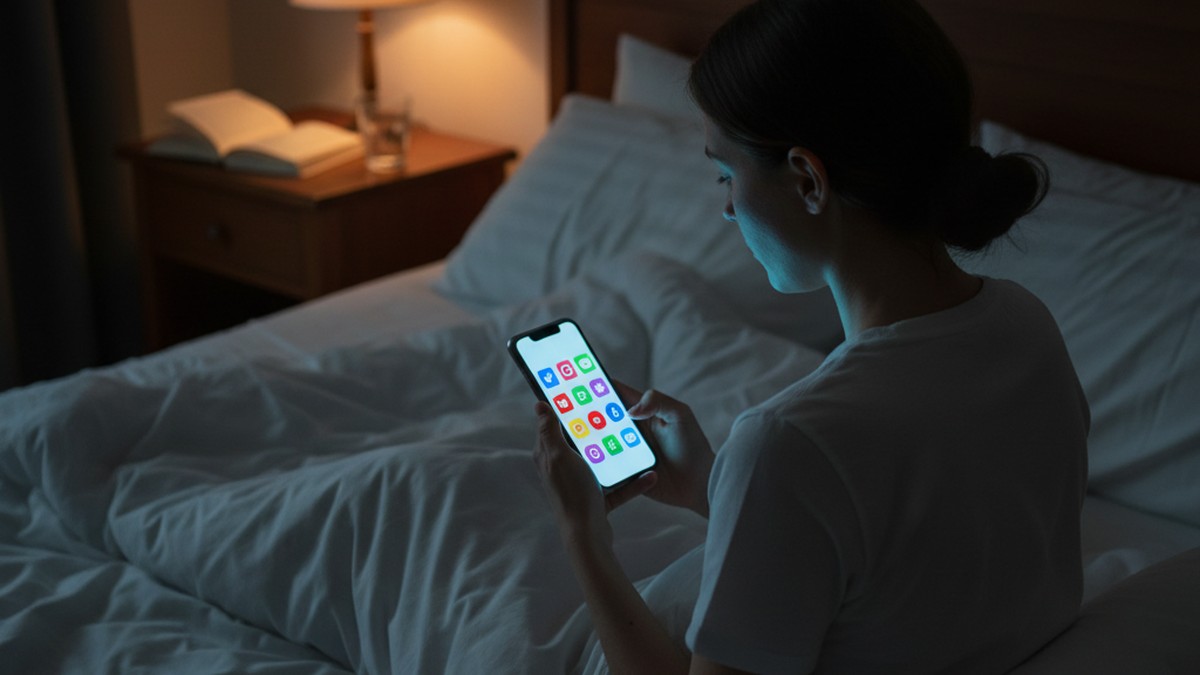
The Best Times to Check Each Platform for Activity
Targeting the right time window for each platform improves the precision of what you observe. Here is a platform-specific breakdown designed for someone who wants to check whether a specific person's account is actively used:
| Platform | Activity Indicator | Time Window | Optimal Check |
|---|---|---|---|
| Tinder | Green dot (24h) / Online Now (2h) | 24h / 2h | 8–10 PM Thu or Sun |
| Bumble | Location update / geotag signal | Real-time on app open | 9–10 PM Thursday |
| Hinge | Active Today (24h) / Active Now (2h) | 24h / 2h | 7–9 PM Sunday |
| OkCupid | Timestamp ("active X hours ago") | Variable precision | 8–10 PM Sunday |
| Match.com | Green dot (24h) | 24h | 8–10 PM Thu or Sun |
Prioritizing the 2-Hour Window
If your goal is to determine whether someone is actively on the app right now rather than at any point today, target the 2-hour indicators. On Tinder, that is "Online Now." On Hinge, that is "Active Now." These are harder to attribute to a background notification tap because a 2-hour window requires the app to have been opened in the relatively recent past.
Observing "Online Now" at 9 PM on a Thursday — during Bumble's published peak and within Tinder's highest-traffic window — means the app was opened within the last two hours during the platform's most active period of the week. That is a more specific data point than "Active Today" spotted at noon.
Combining Platform Checks for a Stronger Signal
Checking multiple platforms within the same observation window is more efficient and more informative than checking a single platform across different days. If a person maintains active profiles on both Tinder and Hinge, observing activity indicators on both platforms during the same 2-hour window is a stronger signal than seeing activity on one platform across two separate weeks.
Simultaneous activity across multiple apps during the same evening hour is statistically harder to attribute to accidental opens or notification taps. One accidental app tap is plausible. Two accidental opens on different platforms during the same hour, on a Thursday evening at 9 PM, is a different situation.
Cross-platform checking also partially addresses the false negative problem. Someone who has enabled activity-status hiding on Tinder may have left it visible on Hinge, or vice versa. Inconsistency in privacy configuration is common — most people don't think through every platform's settings — and that inconsistency creates an opening that serial, single-platform checking misses.
When timing coincides across platforms — Tinder showing "Online Now" at the same time Hinge shows "Active Today" — the combination is more informative than either indicator in isolation. It reduces the realistic set of explanations without requiring any access to private information.
Platform Access Requirements
A persistent practical constraint: you can only observe activity indicators if the target profile appears in your browsing feed. On Tinder and Hinge, this requires an account with age and location settings that overlap with your partner's profile settings. If they have set their location to a different city, or if their age range filters don't include you, their profile won't appear in your stack regardless of when you look.
This is where third-party profile-discovery tools become relevant. Rather than relying on in-feed visibility, these tools index profiles independently and return results by name, age, and location — without requiring you to appear in the other person's match pool.
Why Doesn't Timing Alone Tell You What You Need to Know?
Most guides on checking dating app activity focus entirely on timing — check at 9 PM on Thursday, look for the green dot. That advice is incomplete in ways that produce real errors. Single-moment observations are vulnerable to both false positives and false negatives, and the gap between "they were active on the app" and "they are actively pursuing someone" is wider than any single timestamp can bridge.
The False Positive Problem
Every activity indicator, regardless of when you observe it, can be explained by non-romantic behavior. Common reasons someone in a relationship opens a dating app without romantic intent include:
- Receiving a push notification from a match they never unmatched
- Curiosity about whether their old profile is still visible after years of inactivity
- An accidental screen tap that opens the app without deliberate intention
- Checking their own bio or photos out of idle habit
- A friend using their phone who opened the app by mistake
None of these involve any intent to pursue another relationship. Yet every one of them generates the same "Recently Active" or "Active Today" indicator as an hour of dedicated browsing. You cannot distinguish between these scenarios from activity status alone.
The False Negative Problem
Absence of an indicator is equally unreliable. Users who pay for Tinder Gold, Bumble Premium, or Hinge's subscription tier can hide their activity status with a single settings change. This is not a rarely-used option — it is one of the first features relationship-aware users configure.
The practical implication is significant: the users most likely to be actively dating while in a committed relationship are also the most likely to have enabled privacy settings. A sophisticated approach to concealment and a blank activity status are not separate signals — they tend to appear together.
When you check a profile and see no activity indicator, you have confirmed one of four things: the account is inactive, the account no longer exists, the privacy settings are enabled, or the profile isn't visible in your feed. You have not confirmed that your partner isn't using the app.
What a Single Observation Actually Tells You
A single "Recently Active" indicator gives you this, and only this: the app was opened on a device at some point within the specified time window. It cannot tell you whether swiping occurred, whether messages were sent or received, whether the profile has been updated, whether there are active conversations, or whether any meeting has been planned.
For any of those questions, a different approach is needed — one built on pattern recognition rather than single-point observation.
If you've already noticed signs of phone-based cheating alongside these activity indicators, the combination is more significant than either signal alone. A timing-based check is most useful when it corroborates something you've already noticed in behavior.
If you want a definitive answer about whether a profile exists and is active — without the uncertainty of timing-based checks — CheatScanX scans Tinder, Bumble, Hinge, and 12+ other apps simultaneously and returns active profiles matched by name and location.
The Activity Window Method: Building a Pattern That Actually Means Something
The core problem with timing-based checks is that they produce single data points. A single data point is noise. Three to five corroborating data points, gathered across multiple observation windows and cross-referenced with behavioral changes, are a pattern — and patterns are what actually support a meaningful conclusion.
The Activity Window Method replaces one-off checks with a structured four-step approach. It takes roughly three weeks to produce reliable results. That is not a slow timeline — it is the minimum required to distinguish a pattern from coincidence.
Step 1: Define Your Observation Windows in Advance
Before you begin, choose three to five specific check times per week and write them down. Don't adjust these times based on your emotional state or when you "feel like looking." Consistency is what makes the data interpretable.
Effective observation windows:
- Thursday 9–10 PM (Bumble's published peak; Tinder's highest-traffic window)
- Sunday 8–9 PM (Hinge and Tinder peak; highest single-day engagement)
- A weekday morning, 8–9 AM (control window — activity here is genuinely anomalous)
The morning control window matters more than it initially seems. Most legitimate dating app use clusters in the evening. Observing an active indicator at 8 AM on a Tuesday — well outside peak hours — is a more anomalous signal than seeing one at 9 PM on a Sunday, when millions of single people are also actively using the same platforms. Anomalous timing is often more significant than peak-hour activity.
Step 2: Document What You Observe Without Interpretation
For each observation window, record only verifiable facts:
- Date and exact time of your check
- Platform(s) checked
- Indicator status: green dot / Active Today / Online Now / Active Now / no indicator
- Any visible profile changes: new photos, updated bio, different location shown
- Whether the privacy setting appears enabled (indicator hidden)
Do not write your interpretation. Write the observation. "Active Today indicator visible at 9:18 PM Thursday, May 21" is useful. "They were definitely on there swiping" is not, because it assigns meaning the indicator cannot carry.
Factual documentation also gives you something concrete to reference if you choose to have a direct conversation later. Specific, dated observations are far harder to dismiss than generalized feelings.
Step 3: Cross-Reference With Behavioral Observations
This is where the method produces its most reliable signal. Isolated activity indicators become meaningful when they correlate with behavioral changes you observe simultaneously.
For each observation window, note whether you observe any of the following:
- Your partner is more engaged with their phone during the same time window
- Their response time to your messages slows noticeably during that period
- They are physically less present or emotionally more distant
- They mentioned being somewhere or doing something inconsistent with phone activity
An activity indicator at 9 PM on a Thursday, combined with your partner claiming to be asleep at 9 PM and their Tinder showing "Online Now" — that is a meaningful pattern. The same indicator, observed during a period of normal communication and behavior, carries far less weight.
A Note on Documentation Format
The format of your documentation matters almost as much as its consistency. A simple note app with three columns — date and time, platform and indicator status, concurrent behavioral observation — is entirely sufficient. Entries should take under two minutes to write. If documentation becomes a significant time investment, it is too detailed and will be abandoned before the pattern has time to emerge.
Over a three-week observation period, you should accumulate between nine and fifteen entries. At that point, you will have enough data to answer three questions: Is the activity random or clustered in specific time windows? Were privacy settings enabled at any point mid-observation, and when? Do behavioral changes consistently accompany the digital observations, or do they appear independently?
One specific pattern to watch for in your documentation: activity indicators that appear during windows where your partner has explicitly stated they are unavailable or asleep. An app opened during a window the person specifically accounted for as offline is the single cross-reference that carries the most weight in the entire method. It requires not just activity, but activity during a window that was specifically designated as free of that possibility. In the Activity Window Method, this type of contradiction — "I'm in bed" combined with "Online Now" at 10:45 PM — is the finding that most reliably withstands alternative explanations.
Step 4: Look for Consistency Over Three Weeks
One positive observation across a three-week period may mean nothing. Three to five positive observations, appearing consistently in the same time windows, with concurrent behavioral changes — that constitutes a pattern worth taking seriously.
In practice, what we consistently observe in profiles discovered through our platform is that active accounts belonging to people in relationships cluster their most recent activity timestamps in the 7 PM to 11 PM window, with Thursday and Sunday evenings showing the highest frequency. Isolated checks rarely surface this concentration. Sustained, structured observation over multiple weeks does.
The Activity Window Method doesn't require technical skills or special access. It requires consistency, documentation, and the discipline not to draw conclusions before the pattern has had time to emerge.

Does "Active Today" Actually Mean They're Swiping?
No. "Active Today" on Hinge, a green dot on Tinder, or any "recently active" indicator means the app was opened within the past 24 hours — not that the person was swiping through new matches or building conversations. A push notification tap, an accidental app open, or a quick check of an old conversation all generate the same activity signal as an hour of active swiping.
This distinction is the most commonly misunderstood aspect of dating app activity tracking. The platforms do not log purpose — they log presence. Five seconds in the app to dismiss a notification is technically identical to 45 minutes of deliberate browsing, from the activity indicator's perspective.
What Signals Suggest Intentional Use
If activity indicators tell you the app was opened but not why, profile-level changes tell you something closer to intent. These signals are only visible if you can view the profile directly, but they are far more specific:
Profile recency signals:
- A recently updated profile photo that wasn't there last week
- A bio that has been edited or rewritten
- A location that shows a different city or neighborhood than the person actually lives in
- A changed photo order or newly added images
Usage pattern signals (visible if you match with them):
- A message received after a long period of dormancy
- A profile appearing as a new potential match after having previously been hidden
Temporal anomalies:
- Activity indicators appearing consistently during times your partner claims to be unavailable
- Activity appearing during times you know they are asleep or occupied with other people
- Activity absent during the times you are physically together (the absence itself becomes informative)
An updated profile bio or a new set of photos is the clearest signal of intentional, active use. Someone who genuinely stopped using an app months or years ago does not have a freshly refreshed profile with new photos. Someone actively looking for connections does.
The Notification Problem
Tinder, Hinge, and Bumble all send push notifications for events that may have occurred months earlier — a match from a dormant conversation suddenly sends a message, a profile is liked, or the app sends a reengagement notification designed to bring inactive users back. Every one of these triggers an "active" indicator if the person taps the notification to open the app — even if they close it immediately after.
This is not a rare edge case. Dating apps are specifically engineered to maximize reengagement through notification design. An activity indicator that follows one of these notifications is not evidence of deliberate use. The only way to distinguish notification-triggered opens from deliberate sessions is to look for the profile-level changes described above — things that require the person to have taken action inside the app, not just opened it.
How to Check for Dating App Activity Without Creating an Account
Checking for activity through in-app browsing has two significant constraints: it requires you to have an account on the same platform, and it requires the target profile to appear in your potential match feed. When either of those conditions fails — different location settings, filtered age ranges, or privacy features blocking profile visibility — in-app activity checking returns nothing useful.
There are several approaches that work around these limitations:
Name and Photo-Based Profile Discovery
Profile-discovery tools maintain indexed databases of active dating profiles and return results by name, approximate age, and location — without requiring you to be a matching user on the platform. These tools search across multiple platforms simultaneously and return confirmed active profiles without requiring the target profile to appear in your personal discovery feed.
This approach differs from in-app checking in an important way: instead of observing a live activity indicator, you receive confirmation that an account exists (or doesn't) along with available profile content. This tells you something the activity indicator cannot — that a deliberate, constructed profile exists under that name.
When profile discovery returns a result, combine it with the Activity Window Method timing checks. Discovery confirms presence; timing checks track current use. Together they answer both the structural question (does the account exist?) and the behavioral question (is it being actively used?).
Reverse Image Searching
If your partner has photos they use consistently across social platforms, running those photos through a reverse image search can surface dating profiles where the same images appear. This works best when the person hasn't thought carefully about photo consistency — which is common, since most people use the same attractive photos everywhere.
The limitation: this approach only works when the same photo is used on both the social profile and the dating profile. A person who uses different photos on dating apps specifically to avoid being found — a common precaution among people managing parallel relationships — will not appear in reverse image results.
The Account Creation Approach
Creating a new account on a specific platform with location and age settings matching your partner's profile can bring their profile into your browsing feed, where you can observe activity indicators directly. This is the most direct approach and provides real-time information about activity status.
The practical constraints are significant. If their profile location is set differently from your area, or if their age range filter doesn't include you, the profile won't appear regardless of when you check. Tinder's Passport feature and Bumble's location settings make it possible to hide a profile from anyone in a specific geographic area, which is a straightforward way to avoid recognition.
What Doesn't Yield Reliable Results
Checking an app's notification history or purchase records on a shared device confirms the app exists on the phone, but doesn't establish whether the account is currently active. A deleted app still appears in app store purchase history. An undeleted app may not be actively used. Neither record distinguishes between dormant and active.
Running a Google search for "[name] + [dating site name]" surfaces old indexed profiles from several years ago but rarely current ones. Dating platforms stopped making individual profile pages publicly indexable around 2018 as a privacy response, so this approach has limited utility for any profile created or maintained after that point.
Which Behavioral Signs Reinforce Timing Evidence?
Timing-based checks gain their real power when they correlate with behavioral shifts you've independently noticed. An activity indicator observed in isolation means little. The same indicator, corroborating changes in phone behavior and communication patterns, becomes part of a coherent picture.
Phone Behavior During Peak Hours
Increased phone engagement during peak dating app windows — specifically 7 to 10 PM on Thursday and Sunday evenings — is more significant than general increased phone use at other times. If your partner spends most evenings casually scrolling social media, that baseline matters. If they become noticeably more engaged with their phone precisely during the peak dating app windows, and noticeably more distracted or brief in conversation at the same time, that temporal correlation is worth documenting.
Watch for screen orientation behavior rather than trying to see the screen. Someone browsing a dating app will pivot or angle their phone away from view more quickly than someone reading an article, because the perceived stakes of being seen are higher. The speed of the pivot is often more informative than anything visible on the screen.
Communication Pattern Changes
Pay attention to response time changes during the same windows where you observe activity indicators. If your partner typically responds to messages within a few minutes but consistently takes 30 to 45 minutes during Thursday evenings between 8 and 10 PM, that temporal correlation is worth noting. The pattern matters more than any single delayed response.
The inverse is also meaningful. Unusually attentive behavior immediately following a period where activity indicators are positive — greater affection, uncharacteristic gestures, or heightened engagement — has been documented in relationship research as a compensatory pattern. A 2023 study published in the Journal of Sex Research found that 61% of people who had concealed an affair from their partner reported making deliberate compensatory gestures — increased affection, gifts, or attentiveness — as a form of guilt management. Sudden warmth following suspicious timing is not reassurance. It is another data point.
Routine Changes
Established daily habits rarely shift without a reason. If your partner has maintained consistent evening routines for months or years — consistent bedtimes, consistent phone-free periods, predictable patterns — and those routines have recently changed without clear explanation, document that change alongside your activity-window observations.
A later bedtime, more private bathroom use with the phone, or a new habit of taking calls in another room are individually explainable. Clustered alongside consistent dating app activity indicators during those same time windows, they contribute to a pattern. Understanding how to find out if your partner is on dating apps across multiple platforms adds digital confirmation to what behavioral changes alone cannot prove.
Emotional Distance and Temporal Patterns
Beyond phone behavior, emotional distance often follows a predictable temporal pattern when dating app use is active. People managing a secondary pursuit tend to compartmentalize — reliably present in certain contexts, notably absent in others.
Watch for a consistent pattern where your partner is engaged and warm during earlier evening hours but becomes preoccupied or physically busy after 10 PM. This temporal shift corresponds almost exactly with the late-night activity window — 10 PM to midnight — where relationship-context dating app use concentrates. On its own it means nothing. Paired with late-night activity indicators across multiple observation windows, the behavioral match gives the digital observations context they otherwise lack.
Shifts in social planning are also worth tracking. A new pattern of solo activities or out-of-home commitments on Thursday or Sunday evenings — the peak windows for app activity — can reflect deliberate schedule management. Three weeks of uncharacteristic Thursday-evening "gym sessions" or "work dinners" alongside consistent Thursday-evening dating app activity indicators tells a more complete story than either observation alone.
What Behavioral Signs Cannot Do Alone
Behavioral signs without digital evidence are frustrating to act on because they are too easily explained away. Digital evidence without behavioral signs is technically significant but contextually ambiguous. Together — consistent activity indicators during specific time windows, correlated with phone behavior changes and communication pattern shifts — they narrow the range of plausible explanations to a manageable set.
The Psychology of When Cheaters Are Most Active on Dating Apps
The timing patterns of dating app use by people in relationships have a psychological logic that most guides ignore entirely. Understanding that logic helps you interpret what you're observing and decide how much weight to give it.
The Availability-Privacy Intersection
People who use dating apps while in committed relationships are not randomly active at all hours. They use the apps when they have the most privacy and when the most other users are online — because the point is to generate responses, not just browse. This happens to overlap with platform peak hours for a structural reason: evenings and weekends are when people have free time and when partners are most likely to be occupied elsewhere.
The 2026 Frontiers in Psychology study (n=495) provides specific context. Among participants in relationships, 75% of men and 70% of women who used dating apps reported sexual contact with someone they met through those platforms. The study identified Machiavellian personality traits as predictive of this behavior in men, while for women both Machiavellianism and self-reported sexual satisfaction were predictors. This was not impulsive or accidental behavior — it was patterned and deliberate.
Why Late-Night Activity Carries More Weight
Platform peak hours fall in the evening — roughly 7 to 10 PM — but the most strategically revealing window for relationship-context dating app use is often slightly later: 10 PM to midnight. This window sits just after peak hours, meaning fewer casual users are active, and it corresponds to when many relationship partners have reduced awareness of their partner's phone behavior.
If your observation windows consistently reveal activity indicators between 10 PM and midnight, that timing is more anomalous than activity at 9 PM. It falls outside the easy explanation of "they probably just checked it casually during a busy evening" and sits in a window with fewer innocent explanations.
Session Pattern Differences
People in relationships who maintain dating app profiles tend to exhibit different usage patterns from single users. Single users typically have high-frequency, shorter sessions throughout the day — checking the app multiple times for 5 to 15 minutes. Relationship-aware users tend toward less frequent but longer sessions: they open the app less often but stay longer during each session, because they're waiting for the right unobserved window rather than habitually grazing.
This means a single "Online Now" observation — which requires the app to have been open for a continuous 2-hour window — is a more specific signal than a "Recently Active" indicator, which only confirms any interaction within 24 hours. Duration implies intention in a way that frequency does not. The apps cheaters commonly use also tend to be chosen partly for their in-app privacy features, which is consistent with deliberate management of detection risk.
Which Privacy Features Hide Activity Status?
Every major dating platform offers some form of activity status control, and understanding what each one hides — and what it doesn't — determines how to interpret both a visible indicator and the absence of one.
Tinder's Activity Controls
Tinder allows users to hide their Recently Active green dot by toggling off "Show Activity Status" in the Profile settings. This feature was introduced following user demand for greater privacy. It is not enabled by default — it must be manually switched on, which means its presence reflects a deliberate choice.
Tinder Gold and Platinum subscribers have additional visibility control through features that limit who can see their profile in the swiping stack. A profile set to "Only People I Like" becomes invisible in normal browsing — no one will see it unless the user has already swiped right on them.
Hinge's Activity Controls
Hinge allows users to hide Last Active status from Settings > Preferences > Show Last Active Status. As with Tinder, this requires intentional action and is not a default. The symmetry rule applies: hidden status means you also lose visibility into others' activity.
Hinge's Pause feature allows users to temporarily remove their profile from the discovery feed without deleting it. A paused profile doesn't show up for new potential matches, but existing matches retain access to the chat. Long-term Pause use can look identical to account deletion from the outside.
Bumble's Approach
Bumble's Snooze mode removes a profile from the discovery stack for up to 30 days. It can be renewed indefinitely. Unlike a deleted account, a snoozed account preserves all existing matches and conversations, allowing the user to continue messaging without appearing active to new people browsing the platform.
Bumble Premium subscribers can also enable "Invisible Mode," which makes their profile completely hidden to non-matches while keeping all existing connections active. This feature is designed for privacy but serves the same concealment function in a relationship context.
What Hidden Status Tells You
The choice to hide activity status is a signal in itself, though not a conclusive one. Some users enable privacy settings for legitimate reasons unrelated to infidelity — they don't want potential matches checking whether they're still active, or they want to limit their app use to deliberate sessions.
But the combination of hidden status, consistent behavioral changes during peak dating app hours, and profile-discovery results showing an active account — that combination has a narrower range of explanations than hidden status alone. The absence of an indicator is not reassurance when you're working with incomplete information about whether privacy settings are enabled.
For a definitive answer about whether an account exists, rather than whether its activity is visible, a profile-discovery search is more reliable than activity-status checking. Checking hidden dating apps on their phone alongside a platform search covers both the direct evidence and the broader pattern.
What Privacy Settings Cannot Conceal
Even with all available privacy settings enabled across Tinder, Bumble, and Hinge, certain information remains accessible. Privacy settings control two things specifically: the activity status indicator and the profile's appearance in the standard browsing feed.
They do not hide the account from profile-discovery databases that indexed it before privacy was enabled. They do not hide the account from people who have already matched with the user. They do not hide profile content from any tool that operates outside the in-app discovery stack. And they do not protect against someone running a name-and-location search through a third-party service.
This asymmetry matters in practice. The most careful privacy configurations still leave the account visible to anyone who searches for it by name rather than browsing by algorithm. A profile hidden from browsing is not the same as a profile that doesn't exist. Understanding this distinction is what makes profile-discovery tools — rather than in-app checking — the more reliable starting point when the goal is determining whether an account is present at all.
What to Do After You Confirm Dating App Activity
If the Activity Window Method produces consistent results — activity indicators during multiple observation windows, corroborated by behavioral shifts — you are at a specific decision point. You have confirmed that an account exists and is being opened. What you do not yet have is context.
Opening an app is not the same as pursuing someone else. Before drawing a conclusion, identify what additional information would genuinely change your understanding. Is the profile recently updated? Are there new photos? Does the activity timing consistently match moments when your partner claimed to be unavailable?
Document Before You Act
If you have been running the Activity Window Method, your documentation is your most useful asset. Dated, specific observations are far more durable under the emotional pressure of a difficult conversation than recollected feelings. Bring the factual record — timestamps, indicators, concurrent behavioral notes — not accusations.
The Direct Conversation
Relationship research consistently shows that direct conversation framed around specific observations produces more honest responses than confrontational accusation. "I noticed you've been active on [platform] on Thursday evenings — can we talk about what's going on?" is more productive than leading with conclusions.
If you've used CheatScanX or a profile-discovery tool to confirm an active profile, you don't need to hide that fact. Stating clearly what you searched for, what you found, and that you want to understand the situation gives your partner the opportunity to explain — and removes the posture of surveillance from the conversation.
For guidance on how to catch a cheating husband through digital evidence more broadly, the process documented there complements the timing-based approach described here.
If the findings are confirmed and you need support navigating what comes next, a licensed couples therapist can provide tools and perspective that no digital investigation replaces. The evidence is a starting point for a conversation — not a conclusion on its own.
Frequently Asked Questions
Most dating apps peak between 7 and 10 PM local time, with the highest engagement around 9 PM. Thursdays and Sundays see the heaviest traffic. Bumble's official data identifies peak windows for each day: Monday 7–8 PM, Thursday 9–10 PM, and Sunday 3–4 PM. The single busiest day each year is the first Sunday of January, called Dating Sunday.
If your partner's Tinder profile appears in your match feed, a green dot means they were active within the last 24 hours. 'Online Now' means within 2 hours. Both indicators are triggered by any app open, not active swiping. Users can disable their activity status in settings. If their profile doesn't appear in your feed due to location or age settings, you won't see the indicator at all.
No. Hinge's Last Active status — 'Active Now' or 'Active Today' — appears only when browsing new profiles, not inside existing matches or conversations. Matches cannot see your last active status, and you cannot see theirs from within a chat thread. The feature is only visible to people who have not yet matched with you.
Yes. People open dating apps while in relationships for reasons unrelated to dating — checking old conversations, receiving a notification, forgetting to delete an account, or reviewing what their own profile looks like. A single activity indicator is not evidence of infidelity. A consistent pattern of late-night activity alongside behavioral changes is far more meaningful than any single observation.
Searching for a partner's profile on a dating platform is different from accessing their private account. Running a name search or using a profile-discovery tool falls within publicly accessible information. Relationship experts consistently recommend having a direct conversation before or alongside any investigation, as unresolved suspicion — whether or not it turns out to be justified — erodes trust over time.