
# Car GPS Tracking and Cheating: What the Data Reveals
Your partner's car might already be holding the answers you're looking for — no purchase required. Car GPS tracking reveals cheating by logging every destination a vehicle visits, complete with timestamps, routes, and trip durations. Modern vehicles store this location data in at least three separate places, most of which your partner probably hasn't thought to clear.
If you're dealing with unexplained absences, inconsistent stories about where they went, or mileage that doesn't match the destinations they describe, vehicle location data is one of the most concrete starting points available. Unlike dating app activity, which depends on digital access, GPS evidence comes from the car itself.
According to research documented by The Drive, a 2018 Chevrolet Volt captures GPS coordinates continuously. That level of data capture is typical of modern connected vehicles — and most drivers have no idea how much their car is storing.
This article covers three distinct sources of GPS location data in modern vehicles, how to access each one, what patterns to look for, and what the legal framework means for how you can use what you find. It also addresses the question most guides avoid: when GPS tracking is the wrong tool entirely.
How Does Car GPS Tracking Reveal Cheating?
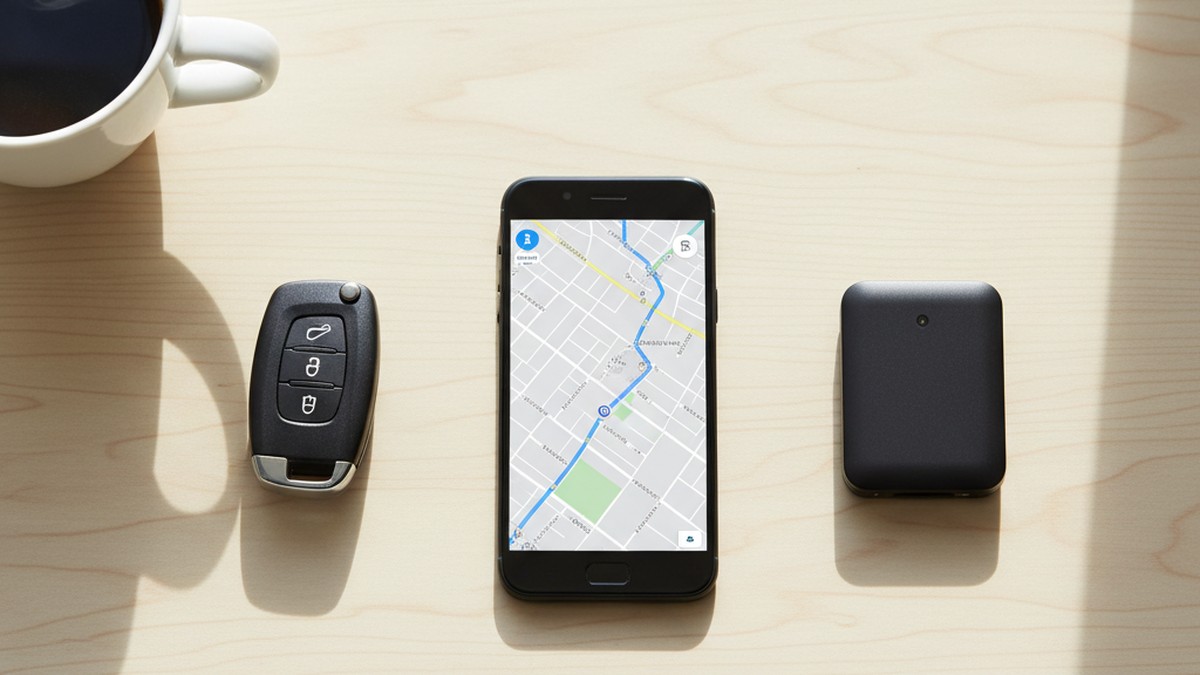
Car GPS tracking reveals cheating by logging every destination a vehicle visits, including timestamps and routes. Modern cars store this data in at least three places: the built-in navigation history, connected car apps tied to the manufacturer's account, and any aftermarket tracking device installed on the vehicle. Each source provides different levels of detail, stores data for different lengths of time, and carries different legal implications.
The core mechanism is straightforward. Every time someone enters a destination into a navigation system, or every time a connected vehicle service pings the car's location, that data is recorded. The built-in navigation stores recent destinations and searches in the head unit's local memory. Manufacturer apps like OnStar, FordPass, Subaru Starlink, Toyota Connected Services, and similar platforms log full trip histories to remote servers. Aftermarket GPS trackers operate independently, sending location pings to a monitoring app at regular intervals.
Where GPS evidence gets useful is not in any single location — it's in patterns over time. A one-time stop somewhere unexpected means very little. Repeated visits to the same residential address, stops at hotels during lunch hours, or consistent trips to unfamiliar neighborhoods during "work meetings" are a different category of finding. The value is in the frequency and context of locations, not individual data points.
What GPS data does not tell you is who your partner was with or what happened at any given location. A repeated stop at an address could be a coworker, a therapist, a gym, or something else entirely. GPS narrows the field of what to investigate — it rarely closes it.
If any of this sounds familiar, there's a way to know for sure. CheatScanX checks 15+ dating platforms for hidden profiles using a name, email, or phone number.
Check for hidden profiles →The 3-Source GPS Method: Three Types of Data You May Already Have
Most guides about GPS tracking and cheating jump straight to recommending you buy a new device. That's the wrong starting point. Before spending any money or wading through any legal complexity, there are data sources already sitting in or connected to your partner's vehicle that you may have the right to access right now.
The 3-Source GPS Method breaks vehicle location data into three distinct categories based on where the data lives, how it's accessed, and what it contains:
| Source | Where Data Lives | Retention Period | Access Required | Deletion Risk |
|---|---|---|---|---|
| Built-in navigation history | Head unit local memory | Last 20–50 destinations | Physical car access | High — easily cleared |
| Connected car apps (OEM telematics) | Manufacturer's cloud server | 30–90 days of full trips | Account login or app | Low — server-side |
| Aftermarket GPS tracker | Tracker's remote server | Varies (30 days to unlimited) | Tracker account login | None — inaccessible in-car |
Each source requires a different access method, serves a different investigative purpose, and carries different implications for evidence. Understanding the distinction before you act is critical — both for what you'll find and for the legal standing of how you found it.
Why Built-In Navigation Is Underestimated
The built-in navigation history is the most overlooked source of location intelligence. It requires no device purchase, no technical skill, and no subscription. If you have access to the car, you have access to this data. The catch is that it shows only destinations that were actively entered — not the full trip log. If your partner drives somewhere without using navigation, it won't appear here.
Why Connected Car Apps Are More Powerful
If the vehicle is enrolled in a manufacturer's connected service, the app logs every trip the car makes — including trips where no navigation was used. This is the most comprehensive free source of location data available, and it persists in the cloud even after the local navigation history is cleared. The limitation is that you need account credentials or co-ownership access.
Why Aftermarket Trackers Remain Useful
An aftermarket GPS tracker provides real-time location monitoring and trip history from a remote server. This is the most complete surveillance option, but it comes with the most significant legal considerations, which are covered in the legal section of this article. The device's remote storage means your partner cannot delete the evidence from inside the car.
Source 1: Built-In Navigation History — The Free Method Almost Nobody Checks
The first thing worth doing before anything else: sit in the car alone and look at the navigation system's destination history. This takes about two minutes and costs nothing.
Every factory-installed navigation system — whether it's Garmin, Here, TomTom, or a manufacturer's proprietary system — maintains a list of recently searched and recently navigated destinations. This list is usually accessible directly from the main navigation menu.
How to Access It
The exact path varies by manufacturer, but the pattern is consistent:
- Turn on the car and open the navigation or maps application on the infotainment screen
- Look for a search bar, then find a clock icon, a "Recent" tab, or a "History" button
- On some vehicles (BMW iDrive, Mercedes MBUX, Ford SYNC 4, Toyota/Lexus), you'll find this under "Previous Destinations," "History," or "Recents"
- Scroll through the list — entries typically include the address or place name and a timestamp
Most systems display the last 20 to 50 searched destinations. Some systems also show "Favorites" that have been saved — an address stored as a saved location can be revealing even without timestamps.
What Built-In Navigation Actually Shows
The destinations list is more useful than it first appears. Here's what you can extract from it:
- The address itself: Is this a home address you don't recognize? A hotel? A specific restaurant or neighborhood that doesn't match any stated plans?
- The frequency: Have you noticed the same address appearing repeatedly across different dates?
- The timestamp: When does the pattern show up? Midday? Late nights? Specifically during times that were explained differently?
- The gap: Are there addresses for known destinations (the office, the gym) but conspicuously missing addresses for places they say they went?
One pattern worth noting from infidelity investigations: partners who are actively concealing something often forget the built-in navigation history entirely. Unlike a phone, which most people guard carefully, the car is rarely treated as a surveillance concern. Research on data recovery from used vehicles found that 88% of test drives at 72 dealerships discovered personal data — including detailed location histories — left completely intact by previous owners (CBT News, 2024). The same lack of awareness applies within relationships.
The Limitations of This Method
Built-in navigation history only captures entered destinations. Trips driven from memory or using a phone mounted separately (via CarPlay or Android Auto) may not appear in the car's local history. Additionally, this data is easy to delete — most systems allow clearing history through the settings menu in a few taps.
If the history appears unusually clean or shows only locations that match a narrow, expected set of destinations, that itself can be informative. A history that's been recently cleared is not evidence of anything on its own, but it is a notable data point when combined with other behavioral signals.
Source 2: Connected Car Apps and OEM Telematics
The second GPS data source is the one most people don't know exists: manufacturer-provided connected car services. If your partner drives a late-model vehicle from any major manufacturer, there's a strong chance the car is enrolled in one of these services — and it's been logging every trip.
Here are the major platforms by manufacturer:
| Manufacturer | Service Name | App Available |
|---|---|---|
| General Motors (Chevrolet, GMC, Cadillac, Buick) | OnStar | Yes — myChevrolet, myCadillac, etc. |
| Ford / Lincoln | FordPass / Lincoln Way | Yes |
| Toyota / Lexus | Toyota Connected Services / Lexus Enform | Yes |
| Honda / Acura | Honda Link / AcuraLink | Yes |
| Subaru | Subaru Starlink | Yes |
| BMW | BMW ConnectedDrive | Yes |
| Mercedes-Benz | Mercedes Me | Yes |
| Hyundai / Kia | BlueLink / UVO | Yes |
| Volkswagen / Audi | VW Car-Net / Audi Connect | Yes |
What These Apps Record
Connected car services log a comprehensive picture of the vehicle's activity. Unlike built-in navigation, which only records entered destinations, OEM telematics track the vehicle's actual GPS position at regular intervals — typically every 30 to 60 seconds while the vehicle is moving. This means:
- Full route history: Not just where the car ended up, but the exact path taken
- Trip duration and idle time: How long the car sat at each location
- Departure and arrival times: Exact timestamps for when the car left and arrived
- Speed data: How fast the vehicle traveled, which can corroborate or contradict a stated timeline
- Mileage: Total distance driven, which can be cross-referenced against claimed destinations
This data is stored on the manufacturer's servers, not in the car's local memory. Clearing the navigation history in the head unit does not erase connected service trip logs.
How to Access Connected Car Data
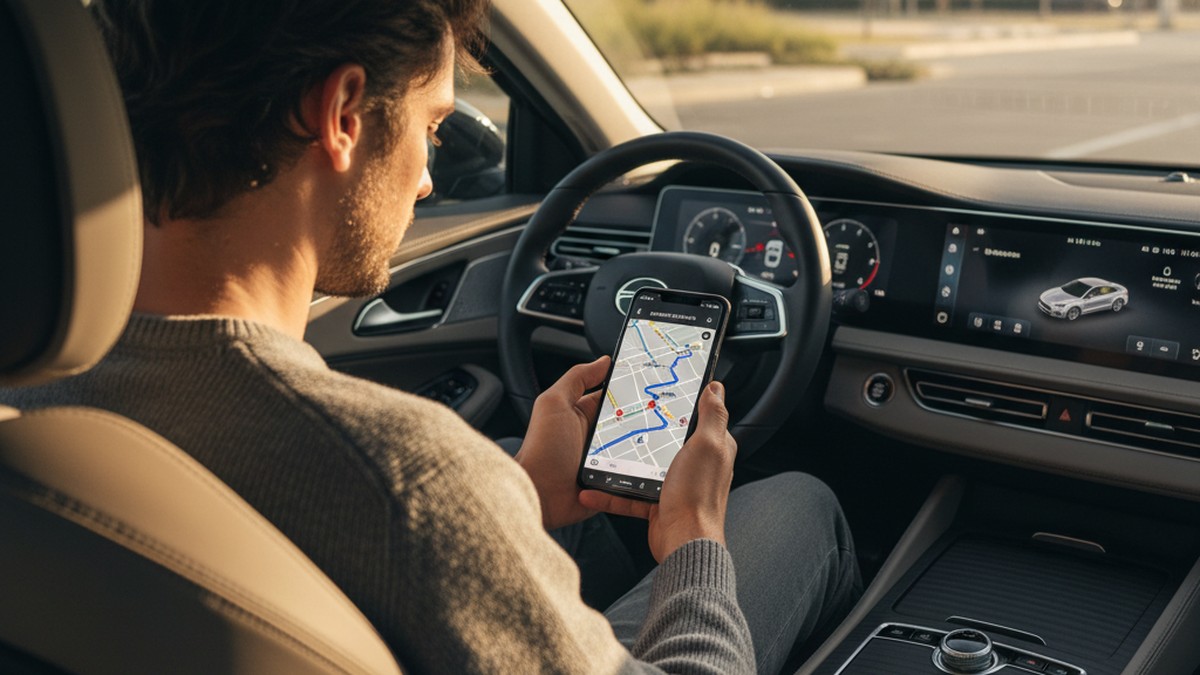
Access depends on who the primary account holder is. If the vehicle's connected services are linked to an account in your name, or if both partners share account access, you can log into the manufacturer's app or web portal and view trip history directly. Most services display this under "My Trips," "Vehicle Status," "Activity," or "Drive History."
If your partner is the sole account holder and you do not have access, you'll need to establish access through account-sharing features many manufacturers offer — or work through other legal avenues to obtain the records. In the context of divorce proceedings, vehicle telematics data has been successfully subpoenaed from manufacturers (Tracking Technology in Divorce Litigation, Shelly M. Ingram Law, 2025).
The Data Retention Window
Most OEM connected services retain detailed trip history for 30 to 90 days. Some services cap it at 30 trips. If you're looking for patterns from several months ago, this source may not cover that window. For ongoing monitoring of current activity, it's the most comprehensive free option available.
It's worth checking what subscription tier the vehicle's connected services are on — some features require an active paid subscription. Many new vehicles come with a free trial period that eventually expires, which could mean trip history is being collected but not viewable without a paid account.
Source 3: Aftermarket GPS Trackers
The third source is an aftermarket GPS tracker — a device you install on the vehicle that reports its location to an app or web dashboard. This is the approach most people think of when "GPS tracking" comes up, and it does offer capabilities the other two sources don't.
What Aftermarket Trackers Provide
A dedicated GPS tracking device offers:
- Real-time location: See where the car is right now, updated every 10 to 60 seconds depending on the device
- Geofencing alerts: Get a notification when the car enters or leaves a specific area (a neighborhood, a building, a city block)
- Trip playback: Review the full route history of any trip, with a time-stamped breadcrumb trail
- Speed and idle alerts: Know when the car is stationary for extended periods
- Arrival/departure notifications: Instant alerts when the car reaches or leaves a location
These features go beyond what built-in systems or connected car apps typically offer in terms of real-time monitoring and customizable alerts.
Device Types
Aftermarket trackers generally come in three form factors:
Magnetic hardshell units: Self-contained, battery-powered, and designed to attach magnetically to a vehicle's undercarriage, wheel well, or interior. Batteries typically last from one week to several months depending on tracking frequency. These are the most commonly discussed type for discreet placement.
OBD-II plug-in trackers: Devices that plug directly into the car's OBD-II diagnostic port (located under the dashboard on the driver's side). These draw power from the car rather than relying on a battery, providing continuous tracking without maintenance. The tradeoff is that they're visible if someone looks under the dash and can be unplugged.
Hardwired trackers: Professionally installed units connected directly to the vehicle's power system. They're hidden within the car's wiring and the most difficult to detect, but require installation work.
The Critical Legal Caveat
This is where the article must be direct: the legality of placing an aftermarket GPS tracker on a vehicle depends on vehicle ownership, your state's law, and in some cases the intent behind the tracking. This is covered in detail in the next section. Do not skip it.
The physical placement of a tracker on a vehicle you don't own without consent is illegal in most US states. The fact that it's technologically possible does not make it legally permissible, and evidence gathered through an illegal tracker may be inadmissible in legal proceedings — or, worse, could expose you to criminal liability. Understanding the legal framework before taking action isn't optional.
What Do GPS Location Patterns Actually Reveal About Suspicious Activity?
Raw location data doesn't interpret itself. A list of addresses, trip times, and routes is only meaningful when you understand what patterns warrant a closer look and which ones have innocent explanations.
Based on patterns from investigations documented across the private investigator community, these are the location behaviors that recur most frequently in infidelity cases — and the alternative explanations worth considering before drawing conclusions.
The Same Unknown Address, Repeatedly
Pattern: The vehicle visits the same residential or commercial address two or more times per week, outside of any context you'd expect (work commute, regular errands, known friends/family).
Why it matters: A one-time stop at an unknown address means very little. A consistent pattern of visits — especially if the timing aligns with claimed whereabouts that don't match — is a different signal entirely.
Alternative explanations: A therapist or counselor they haven't mentioned, a new gym or fitness studio, a friend or family member you're not aware of, a professional service (contractor, trainer, doctor), or a hobby location.
Trips That Don't Match Stated Destinations
Pattern: The stated destination ("I'm going to the gym" / "I'm working late") doesn't match where the GPS shows the car went, or the car visited additional stops before/after that weren't mentioned.
Why it matters: This is the pattern with the most direct evidentiary value, because it creates a factual inconsistency between what was said and what occurred. The GPS doesn't fabricate destinations.
Alternative explanations: A surprise being organized, an errand they forgot to mention, a personal matter they haven't felt ready to discuss. The inconsistency warrants a conversation, not immediate certainty.
Extended Idle Time at Unexpected Locations
Pattern: The vehicle sits stationary for an unusually long time — 1–4 hours — at a location that doesn't explain the duration. Hotels, residential parking lots, and parking garages that appear in trip logs with extended idle times are worth examining.
Why it matters: Connected car apps that report idle duration can show exactly how long the car sat at each stop. An hour-long stop at a hotel that wasn't part of any stated plans is a specific, verifiable data point.
Alternative explanations: A work meeting at an unusual location, an appointment that ran long, or sitting in a parking lot during a phone call. Context and frequency matter.
Late-Night or Early-Morning Trips You Weren't Told About
Pattern: The trip log shows vehicle movement during hours when the car should have been stationary — 11 PM to 3 AM, or very early morning — that wasn't explained.
Why it matters: Any trip that occurs without your knowledge is a potential red flag. The time of day amplifies the concern but doesn't confirm anything on its own.
Alternative explanations: An emergency that wasn't disclosed, a convenience run, or a sleepless night drive.
The CheatScanX Pattern Observation
In the course of processing relationship verification cases on our platform, we've observed a consistent pattern: people who suspect vehicle-based deception most often find the corroborating evidence not in dramatic discoveries, but in the accumulation of minor inconsistencies — a second stop on a supposedly direct commute, or a 90-minute idle at an address that matches a residential location rather than any business. It's rarely one smoking-gun location. It's the pattern over time.
Is It Legal to Track a Partner's Car with GPS?
The legal question is the most important one in this article, and it deserves a direct answer before you take any action.
Whether GPS car tracking is legal depends primarily on who owns the vehicle. In most US states, tracking a vehicle registered in your name or jointly titled is generally permitted. Tracking a car you do not own without consent is illegal in most states and may constitute stalking. Always consult an attorney in your state before installing any tracking device.
The National Conference of State Legislatures (NCSL) tracks specific statutes across all 50 states. As of 2025, at least 11 states have enacted explicit laws criminalizing the installation of GPS tracking devices on vehicles without the owner's consent: Delaware, Illinois, Louisiana, Michigan, North Carolina, Oregon, Rhode Island, Tennessee, Texas, Utah, and Wisconsin (NCSL, 2025).
The Vehicle Ownership Rule
Courts most frequently apply this test: if your name is on the title or registration, and you share ownership of the vehicle, tracking it is generally permissible. If the vehicle is titled solely in your partner's name, the legal picture shifts significantly.
Several important nuances apply:
- Jointly titled vehicles: In most states, either owner has the right to track a jointly owned vehicle. This covers the majority of married couples who own cars together.
- Your-name-only vehicles: If the car is yours, no legal question arises.
- Partner's-name-only vehicles: This is the legally risky category. Installing a tracker on a vehicle you don't co-own without consent can expose you to criminal liability in many states, regardless of the circumstances.
State-Specific Penalties
Texas provides the clearest example of how seriously these laws are enforced. Under Texas Penal Code § 16.06, installing a tracking device on a vehicle without the owner's permission is a Class A misdemeanor, carrying a maximum sentence of one year in jail and a $4,000 fine (Texas Legislature, 2023). This is not a hypothetical penalty — people have been charged under statutes like this.
Texas family law attorneys note a critical nuance in the ownership question: even when a vehicle is jointly titled, courts may evaluate whether the partner who placed the tracker was actually an authorized user of that vehicle — not simply a co-owner listed on paper. The specific circumstances around how the vehicle was primarily used, and whether the tracking party had practical access, can affect how evidence is weighted at trial even when its collection was technically legal (Walters Gilbreath, PLLC, 2024).
What "Consent" Means
Some people interpret a joint bank account, shared household, or marital relationship as implying consent to tracking. Courts generally don't apply that logic. In states with explicit consent requirements, consent means the vehicle owner has actively agreed to the tracking — not that consent is implied by the relationship.
Florida presents an important edge case: tracking that might have been legal before divorce proceedings can become illegal once papers are filed or if a protective order is in place, because the legal relationship changes the consent framework.
The Admissibility Problem
Even in cases where tracking is technically legal, how the evidence was gathered matters for court proceedings. Evidence from a tracker placed on a jointly owned vehicle by a spouse, gathered without deception or illegal access, generally carries more weight than evidence gathered in legally ambiguous ways. DivorceNet notes that courts weigh the vehicle ownership question carefully when evaluating GPS tracking evidence in divorce cases (DivorceNet, 2025).
The practical takeaway: If you're considering installing an aftermarket device, talk to a family law attorney in your state first. This is not optional. The conversation takes 30 minutes and could save you from criminal exposure or inadmissible evidence.
Can GPS Data Be Used as Evidence in Divorce or Legal Proceedings?
GPS location data can be introduced as evidence in divorce proceedings in many jurisdictions, but its admissibility depends on how it was collected. Data gathered legally — from a jointly owned vehicle or built-in systems you're authorized to access — generally carries more evidentiary weight than data from unauthorized tracking devices.
How GPS Evidence Has Been Used
In divorce litigation, vehicle location data has been used to:
- Contradict a spouse's stated whereabouts during specific dates and times
- Establish a pattern of visits to a location associated with a third party
- Corroborate other evidence, such as phone records, hotel receipts, or testimony
- Support claims of marital waste (using marital funds for an affair, traceable through combined location and financial records)
In the New Jersey case Villanova v. Innovative Investigations, Inc., courts addressed the admissibility of GPS surveillance evidence in the context of a civil dispute involving spousal surveillance — establishing precedent that ownership context is central to how courts evaluate this evidence (DivorceNet, 2025).
The Built-In Data Advantage
One underappreciated aspect of built-in navigation and OEM telematics data is that it wasn't "placed" by anyone — it was generated automatically by the vehicle's own systems. This reduces legal complications compared to aftermarket tracker evidence. Connected car service records, particularly those subpoenaed directly from the manufacturer, arrive with timestamps and chain-of-custody documentation that aftermarket device records may not provide.
When GPS Data Isn't Enough
GPS evidence shows where the car went. It doesn't prove who was in it, or what happened there. In legal proceedings, location evidence typically functions as corroboration for other evidence rather than standalone proof. An attorney working an infidelity case will usually want GPS data combined with photographic evidence, phone records, financial records, or witness testimony to build a complete picture.
If you're considering divorce and believe infidelity is relevant to your case, speak with a family law attorney about the evidentiary value of what you've found before confronting your partner or taking additional steps. How the evidence is preserved and presented matters significantly.
Can a Cheating Partner Detect or Delete GPS History?
A partner can delete the destination history on a built-in navigation system, typically through a settings menu. However, connected car apps store trip logs server-side, outside the vehicle's local memory, meaning deletions on the device don't erase the app's cloud records. Aftermarket trackers store data remotely and are not accessible from inside the car.
Built-In Navigation: High Deletion Risk
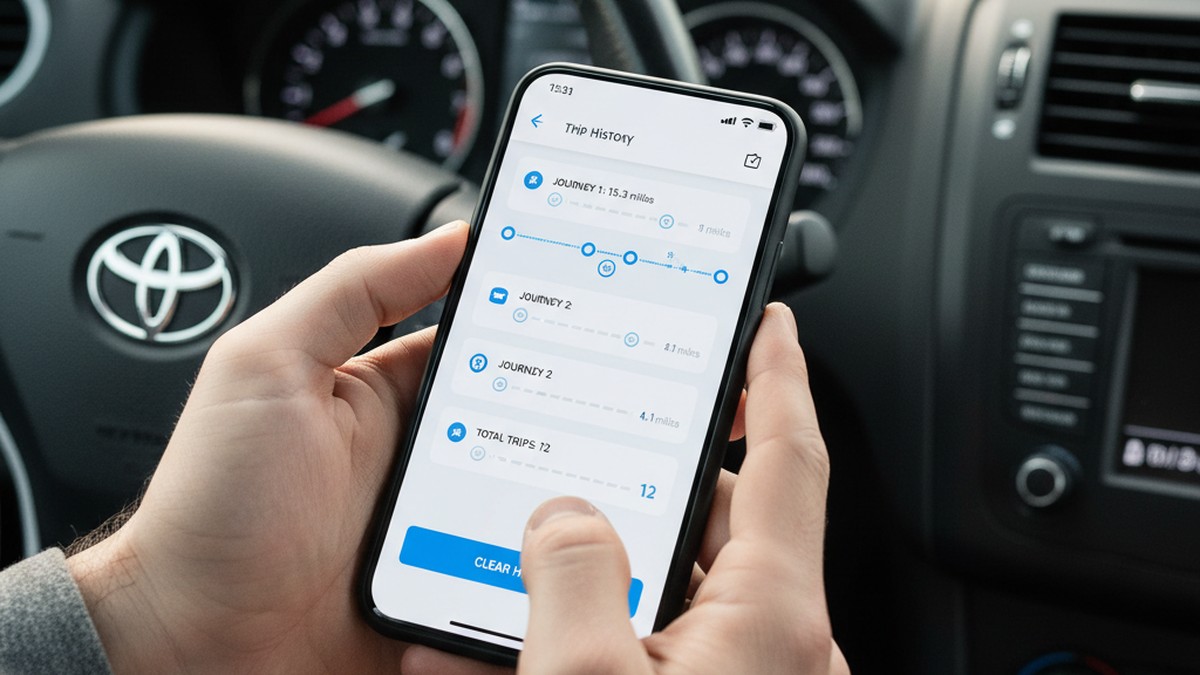
The local destination history on a factory-installed navigation system is the easiest data to erase. Most systems include a "Clear History" option in the navigation settings menu. This takes about 30 seconds and leaves no obvious trace. If your partner has any awareness that navigation history can be checked, they may be clearing it regularly.
Signs that the history may have been cleared: a navigation system showing unusually few recent destinations relative to how much the car is driven, or a history that only covers a recent narrow window rather than the typical 20–50 stored entries.
Connected Car Apps: Low Deletion Risk
This is where the data durability advantage becomes clear. Connected car service trip logs are stored on the manufacturer's servers. A user can log into the app and delete individual trips or clear activity within the app interface, but server-side record retention policies mean the data often persists in backup systems regardless.
Additionally, most vehicle owners don't even realize their connected car service is logging trip history. In practice, this data is rarely deleted because the user isn't aware it exists — which is precisely why it's often intact when you look for it.
Aftermarket Trackers: No In-Car Deletion
A tracker installed on a vehicle cannot be accessed or deleted by anyone who doesn't know the account credentials for that tracking service. The data lives on the tracker company's servers, not in the car. The only way a partner could interfere with an aftermarket tracker is by finding and removing the physical device — which requires knowing it exists.
Counter-surveillance for GPS is real. There are devices and apps specifically designed to detect GPS trackers, and a technically sophisticated partner who suspects monitoring might use one. This is another reason the legal section matters: if someone discovers an illegally installed device, it creates a cascade of problems for the person who placed it.
When GPS Tracking Is the Wrong Tool for the Job
Most articles about GPS tracking cheating never mention this. They present GPS as a solution and move on to product recommendations. That's a disservice.
GPS tracking is the wrong approach in several situations, and being honest about those limits is important.
When GPS Confirms Location, Not Behavior
GPS tells you where the car went. It does not tell you who was in the car, who your partner met, or what occurred at any location. A partner who is meeting someone could park two blocks away and walk. A partner who is having an emotional affair entirely conducted by phone would show up as completely normal vehicle usage.
For this reason, GPS is most useful when it establishes a pattern of repeated visits to specific locations that can then be verified through other methods — not as a standalone surveillance solution.
When the Relationship Can't Survive the Method
There's a meaningful difference between checking the built-in navigation history of a jointly owned car (a low-intrusion, passive data review) and installing a covert tracking device to monitor your partner without their knowledge. The second option — even when legal — fundamentally changes the relationship dynamic if discovered, and if the goal is to stay in the relationship, that change may be harder to come back from than the original suspicion.
Private investigator firms note this consistently in client consultations: the method of investigation can become its own relationship fracture point, separate from what is or isn't found.
When You Already Know What You Need to Know
If the GPS data confirms what you suspected, you still have to decide what to do with that information. Many people discover location evidence and then spend weeks collecting more, when what they actually need is to make a decision about the relationship. More data rarely changes the decision — it just delays it.
If you've found clear, unambiguous patterns and you're still adding to the evidence file, the question may no longer be "did they cheat?" — it may be "what do I do now?" That's a different kind of conversation, and one where a therapist, counselor, or attorney may be more useful than a GPS dashboard.
When It Crosses Into Obsession
Monitoring someone's movements daily, checking the app multiple times an hour, and planning your responses around real-time location data is a state of extreme anxiety that causes significant psychological harm regardless of what the data shows. If you find yourself doing this, the location data is no longer informing decisions — it's feeding hypervigilance. That's a signal to talk to a professional, not to add more data collection.
For finding other digital signals of infidelity that don't require vehicle access at all, catching a cheater without their phone outlines approaches that may be more appropriate depending on your situation.
How Should You Interpret GPS Data Without Drawing Wrong Conclusions?
Found something in the navigation history or trip log that concerns you? Before you draw any conclusions, here's the analytical framework for evaluating what you've found.
Step 1: Document Before Anything Else
Before you do anything else, document what you've found. Take photos of the navigation screen. Screenshot the connected car app. Write down every address, date, and timestamp. This serves two purposes: it preserves the evidence in case the history gets cleared later, and it gives you an accurate record to reason from rather than a memory that emotional stress will distort.
Step 2: Identify the Pattern, Not the Incident
A single unexplained destination is not meaningful on its own. Before raising your concern level, ask: Does this address appear more than once? Is there a temporal pattern — does it show up consistently on the same day of the week, during the same hours? Does the total trip time and distance match what was stated?
A one-time stop at an unknown address might be a wrong turn, a delivery pickup, a spontaneous errand. The same address appearing eight times over six weeks is a different finding.
Step 3: Rule Out the Obvious Explanations
For any suspicious address, do basic research: Is this a business? A medical facility? A gym, studio, or recreational facility? A workplace your partner has mentioned? A friend or family member's address you haven't visited? Google Street View the location before forming a theory.
Many addresses that initially seem alarming turn out to be entirely ordinary when given 90 seconds of research.
Step 4: Cross-Reference Against Other Data
GPS data becomes significantly more meaningful when it lines up with other evidence. Does the location appear during times that match other behavioral changes you've noticed? Do the timestamps align with specific occasions where your partner's story didn't track? Does it coincide with unexplained financial transactions?
For a structured approach to correlating multiple types of evidence, the evidence checklist before confronting covers this process in detail.
Step 5: Calibrate Your Threshold
Not every unexplained location warrants a confrontation. Everyone has some degree of personal life that exists independently from a partner — private appointments, personal errands, spontaneous changes of plan. The GPS data that merits a serious conversation is data that shows a pattern of deception, not a single unexplained stop.
This is where the Google Maps timeline evidence available on your partner's phone — if you have access — can provide an additional layer of verification or clarification. Multiple data sources telling the same story is much more reliable than a single source.
What to Do After You've Checked the GPS
Checking GPS data is a means to an end, not the end itself. What you find — or don't find — should inform a decision, not become the focal point of your relationship.
If the data shows nothing concerning, that's meaningful information. The absence of suspicious patterns is its own answer, and it may be worth examining what's driving the suspicion in the first place. A conversation about communication and trust in the relationship is often more useful at that point than continued surveillance.
If the data shows patterns that warrant concern, the next step is deciding who else needs to know and in what context. If you're considering legal action, talk to a family law attorney before confronting your partner — how that conversation goes can affect what evidence remains admissible and what positions you can take. If your goal is to address the relationship directly, a couples therapist can help structure that conversation in a way that's productive rather than destructive.
Other connected devices that reveal location — including smart home systems, fitness trackers, and location-sharing apps — can provide corroborating data points if the car GPS data wasn't conclusive. And if you want a professional set of eyes on the digital picture, how private investigators use GPS explains how licensed investigators approach location evidence in a legally sound way that's built for court use.
The hardest part of this process isn't finding the data. It's deciding what to do when you have it. That decision deserves the same care and deliberateness that went into the investigation.
Frequently Asked Questions
You can place a GPS tracker on a vehicle you legally own, and in most US states tracking a jointly titled vehicle is permitted. Tracking a car you don't own without consent is illegal in most states and can result in criminal charges. Always consult a family law attorney in your state before installing any tracking device.
A car's built-in navigation system typically stores the last 20–50 destination addresses, including timestamps for recent searches. Connected car apps extend this, logging full trip routes, departure and arrival times, vehicle speed, and idle duration — sometimes for 30 to 90 days of history.
For built-in navigation, go to the infotainment system's navigation menu and look for 'History,' 'Previous Destinations,' or 'Recent Searches.' For connected car apps (OnStar, FordPass, Toyota Connected Services), log into the manufacturer's app or web portal under trip history or activity logs.
Built-in navigation history can be cleared through the system settings menu. However, connected car service trip logs are stored in the manufacturer's cloud and generally persist even after the local head unit cache is cleared. Aftermarket GPS trackers log remotely and cannot be deleted from inside the vehicle.
In most US states, installing a GPS tracker on a vehicle you do not own without the owner's consent is illegal and can constitute stalking. Eleven states have explicit statutes criminalizing unauthorized tracker installation. Texas makes it a Class A misdemeanor, carrying up to one year in jail and a $4,000 fine.