
# How to Catch Someone Cheating on Their Phone
You can catch someone cheating on their phone through a combination of behavioral observation, phone bill analysis, app auditing, and platform-based searching — none of which require spy software or physical access to the device. The most effective approach is systematic: tracking changes across multiple signal categories rather than trying to draw conclusions from any single behavior.
If your partner's relationship with their phone has shifted sharply — new passwords, face-down placement, leaving the room to answer calls — that departure from their prior behavior is the first real signal. According to a nationally representative survey by the Survey Center on American Life (2023), more than 1 in 10 married adults under 40 are actively using dating apps. This problem is common enough to take seriously.
This article covers 9 specific detection methods, a structured framework for distinguishing real signals from anxious misreadings, why spy apps make the situation worse legally and practically, and one method that produces confirmed evidence without ever touching their phone. The final sections tell you what to do once you have something.
What Does Phone-Based Cheating Look Like?
Phone-based cheating is the use of a smartphone to maintain contact with a secret partner, manage hidden dating profiles, or conduct an emotional affair outside the relationship. It is detectable through behavioral pattern shifts — sudden password changes, protective phone posture, and unexplained data usage — even without direct access to the device.
The defining characteristic of phone-based cheating is not any single action. It's the cluster. A new password alone might mean they're tired of kids or coworkers glancing at their screen. A new password combined with angling the screen away from you, stepping out to answer certain calls, and sleeping with the phone face-down under the pillow — that cluster is different. Pattern recognition, not individual sign-spotting, is the core skill here.
The Difference Between Privacy and Secrecy
Privacy is a normal, healthy relationship boundary. Secrecy is privacy that appears suddenly in response to something you're not supposed to know. The key diagnostic question is simple: Was this behavior present six months ago?
Someone who has always kept their phone locked, never shared passwords, and takes calls alone is exercising privacy. That's their established baseline. Someone who gave you their passcode freely for two years and suddenly changes it, starts angling the screen, and grows defensive when their phone buzzes — that represents a departure from baseline. The behavior itself matters less than whether it's new.
Research published in 2024 in the Journal of Sex & Marital Therapy found that digital secrecy — systematically removing and hiding applications before anticipated confrontations — is a consistent behavioral marker in confirmed cases of phone infidelity. Cheaters often clear their apps and message history in advance of situations where discovery feels possible, which means the behavioral gaps are as telling as anything found on the device.
How Phone Infidelity Typically Develops
The behavioral sequence most commonly reported in discovered cases follows a predictable arc:
- Initial contact on a known or public platform — often Instagram, a dating app, or TikTok
- Migration to a private channel — encrypted or disappearing-message apps like Telegram, Snapchat, or Signal
- Introduction of hiding mechanisms — vault apps, secondary phone numbers, individual app locks, or a second device
- Behavioral adaptation — increased phone protectiveness, routine clearing habits, changed placement and charging routines
By the time Stage 4 behaviors are visible, there are typically six to ten observable changes from the person's prior patterns. The challenge is that they accumulate gradually, making each individual change easy to explain away in isolation. The FADE method, covered next, is designed to address exactly this.
Want to skip straight to answers? CheatScanX scans Tinder, Bumble, Hinge, and 12+ other apps in minutes. Completely anonymous.
Start a confidential search →The FADE Method: A Framework for Reading Phone Behavior
Every guide to catching a cheating partner on their phone lists behavioral signs. None of them help you organize those signs into a coherent picture. The FADE Method is a structured diagnostic approach built on five signal categories that, evaluated together, give you a calibrated read on what's actually happening — rather than a pile of ambiguous observations that can mean anything.
FADE stands for:
- F — Frequency shifts
- A — Access barriers
- D — Digital footprint anomalies
- E — Emotional response patterns
- Direct platform search (confirmation step)
Evaluate each category separately. Track observations over two to four weeks. A score of three or more signal-positive categories — where clear changes from established baseline behavior are present — warrants a direct conversation or a platform search for confirmation. A score of four or five means the pattern is consistent with active phone infidelity.
F: Frequency Shifts
Frequency shifts are changes in how often your partner uses their phone, at what times, and for what apparent purpose. Phone use that has measurably changed in the past 60-90 days is the entry-level signal.
Meaningful frequency signals include:
- Messaging activity spikes during work commutes, lunch hours, or after 10 PM
- Calls are now taken in a separate room with increasing regularity — a habit that didn't exist before
- They return to messaging almost immediately after putting the phone down, suggesting an active, ongoing conversation thread
- Response time to your messages has slowed while their overall phone usage has clearly increased
- Screen time has risen significantly without an obvious cause like a new game or streaming habit
Frequency shifts alone carry a high false-positive rate. Work stress, a family situation, or a new social group can all drive increased phone use. The pattern becomes meaningful when combined with access barriers.
A: Access Barriers
Access barriers are newly erected obstacles to normal phone interaction. A single access barrier can have an innocent explanation. A cluster of them appearing within the same month cannot.
Watch for:
- Lock screen password has changed recently, and you weren't informed or offered the new one
- Face ID or fingerprint access has been removed or your biometric data deleted from the device
- Individual apps are now locked with separate passwords, particularly messaging or photo apps
- The phone is placed consistently face-down or screen-to-surface, even at the dinner table
- The phone travels everywhere — including bathroom visits — when it previously stayed behind
- The phone is now charged in a separate room rather than beside the bed at night
- Cloud backup is disabled or the backup account has been switched to one you don't recognize
Access barriers are the single most correlated category with active cheating. A partner who freely shared their passcode for two years and then systematically locks down their device has made a series of deliberate choices. That pattern has a narrow range of explanations.
D: Digital Footprint Anomalies
Digital footprint anomalies are evidence gaps — what is conspicuously absent from a phone rather than what is present. Active communication leaves traces. Systematic removal of those traces leaves a different kind of trace.
Signals in this category:
- Call logs and message threads are cleared regularly — multiple times per week rather than occasionally
- Browser history is consistently empty despite obvious regular phone use
- Downloaded apps appear and disappear without explanation or discussion
- App storage shows significant usage for apps whose visible content doesn't justify it — indicating messages or media were deleted but storage hasn't been reclaimed
- Location sharing that was previously enabled has been quietly turned off
- The "recently deleted" albums in photos appear cleared more frequently than makes sense for normal photo management
- Purchase history in the app store shows apps they can't explain
The storage anomaly deserves particular attention. If a messaging app shows 300–500 MB of storage used but only a few visible conversations exist in it, the gap between stored data and visible content indicates significant deleted material.
E: Emotional Response Patterns
How your partner reacts to phone-adjacent situations is a secondary but meaningful signal. Watch specifically for these scenarios:
Startled response when approached while texting. Someone messaging a friend or dealing with work email doesn't typically flinch when a partner walks into the room.
Disproportionate defensiveness when the phone is mentioned. "Why are you always watching what I do?" or "I'm allowed to have privacy" as a response to "who were you texting?" is a reaction that doesn't match the question's weight.
Spontaneous phone-offering as a deflection. Some people feeling guilty will offer their phone unprompted — "here, look at it if you don't trust me." This is often done moments after the relevant content has already been cleared.
Behavioral reset after phone use. Someone who steps away with their phone and returns in a noticeably different emotional state — calmer, more irritable, distracted, or abruptly affectionate — may have just had a significant interaction.
Projection onto your own phone. Suddenly accusing you of hiding things on your phone is a documented guilt-response pattern in relationship psychology research.
A 2026 study in Frontiers in Psychology (n=495) found that individuals high in Machiavellian personality traits were significantly more likely to conduct app-based infidelity while successfully maintaining normal relational presentation. The emotional camouflage can be sophisticated in this subset.
Direct Platform Search
The most reliable confirmation method in the FADE framework doesn't require phone access, spy software, or any illegal activity. A name-based search across major dating platforms — Tinder, Bumble, Hinge, OKCupid, Match, and others — can surface an active profile using only publicly known information.
This method is covered in full in its own dedicated section below. It's treated as the confirmation step of the FADE framework because behavioral signals indicate something may be happening; a confirmed active profile on a dating platform demonstrates it.
What Are the Signs Someone Is Cheating on Their Phone?
The most reliable signs someone is cheating on their phone include: a sudden new lock screen password they haven't explained, consistently turning the phone screen away during conversations, deleting call and message history immediately after routine use, increased data usage at unusual hours, and the presence of vault apps with no obvious function. No single sign constitutes proof — three or more appearing together within a short period is a meaningful pattern.
Here are the 9 most diagnostically significant phone signs, with an honest assessment of what each one actually indicates and what else it might mean.
1. Sudden Password Change
What it might mean: They've started communicating with someone they don't want you to see and need to secure the access point.
What it could also mean: A work IT policy change, a response to a data breach notification, a privacy preference they decided to enforce, or a recent theft/loss scare.
How to weight it: By itself, this sign is close to meaningless. A password change combined with two or more other signals from this list shifts the calculus significantly.
What to do: Note the approximate date the change occurred and watch for whether other behavioral changes correlate with the same time window.
2. Phone Placed Face-Down at All Times
What it might mean: Incoming notifications display the sender's name or message preview, and they don't want you to see who's contacting them.
What it could also mean: A habit formed in open-plan offices where screen privacy became automatic, a response to previous awkward notification moments, or a general screen-protection preference.
How to weight it: More meaningful if they have a phone case — the face-down placement then carries no practical screen-protection benefit, so it's deliberate. Also more meaningful if this is a new behavior rather than a long-standing habit.
3. Stepping Out for Certain Calls
What it might mean: The call involves someone they don't want you to hear or overhear their reaction to.
What it could also mean: A work call requiring focus or confidentiality, a conversation about a planned surprise, a conversation with someone experiencing a personal crisis who asked for privacy.
How to weight it: The specificity matters. Stepping out for all calls is a preference. Stepping out for some calls — particularly at certain times of day or with certain notification patterns — is a selection that tells you something.
4. Regular History Deletion
What it might mean: They're systematically removing evidence of communication after each session.
What it could also mean: A privacy habit developed before this relationship, or a learned practice of "keeping the phone clean" they don't think to mention.
How to weight it: Frequency is the key variable. Clearing history once a month is different from clearing call logs and message threads multiple times per week. The latter suggests responsive deletion — clearing as communication happens, not as a routine maintenance task.
5. Vault Apps or Unexplained App Installations
What it might mean: A vault app disguised as a utility is being used to hide messaging content, photos, or a second phone number.
What it could also mean: A legitimate utility they installed for work or a recommendation they never got around to explaining.
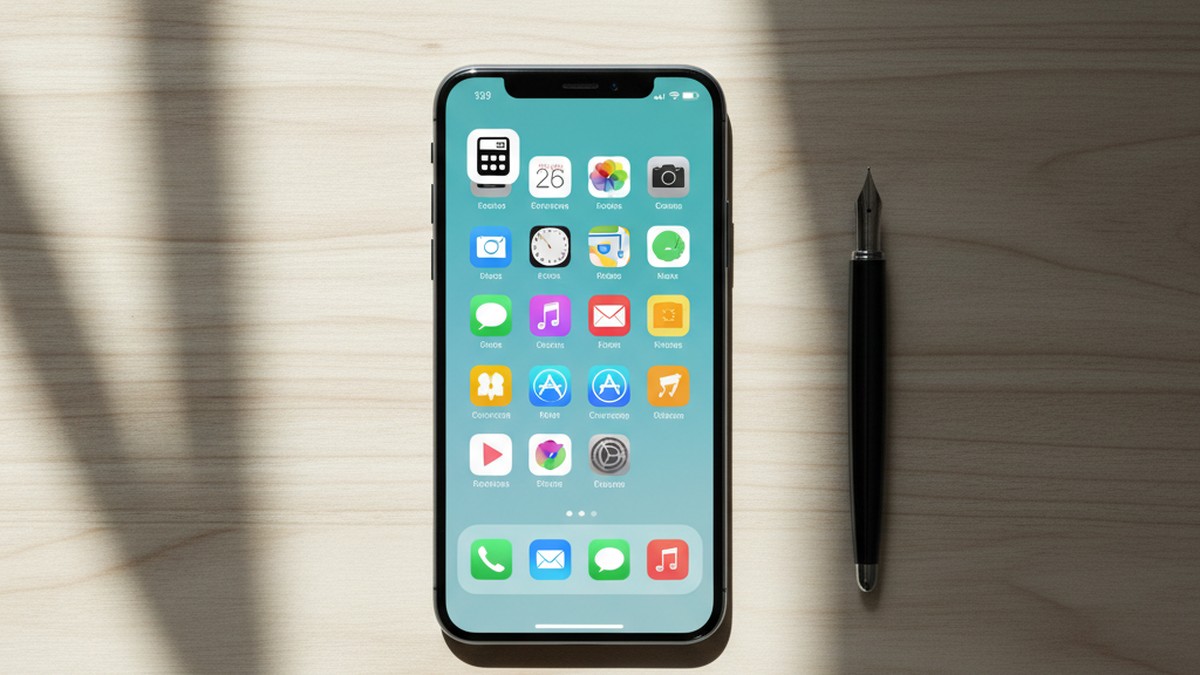
How to weight it: Look for two characteristics: the app has a password requirement that serves no obvious function for its stated purpose, and the app shows meaningful data usage. An app labeled "Calculator+" that uses 180 MB of storage and requires a separate PIN is not performing calculation functions. For more on hidden dating apps on a phone and how to identify them, that topic is covered in its own detailed guide.
6. Data Usage Spikes at Unusual Hours
What it might mean: Late-night messaging or video calls conducted over mobile data — not Wi-Fi — to avoid appearing in the home router's traffic log.
What it could also mean: Automatic app updates, overnight cloud backups, or a streaming habit you're not aware of.
How to weight it: Check the device's built-in data usage breakdown (Settings → Cellular on iPhone, Settings → Network → Data Usage on Android). If data usage spikes between 11 PM and 2 AM on specific nights, or shows a usage pattern that doesn't match their stated whereabouts and activities, that granularity is more informative than total monthly usage.
7. A Second Phone or SIM Card
What it might mean: A dedicated communication device for the secondary relationship — the most explicit physical hardware signal.
What it could also mean: A work phone, a travel SIM for an international trip, a secondary device used for specific apps, or an old backup phone repurposed for music or podcasts.
How to weight it: The key question is whether it was disclosed. A work phone gets mentioned. A phone kept in a bag and never discussed is categorically different. If you find a device and it hasn't been mentioned unprompted, that absence of disclosure is itself meaningful.
8. Increased Battery Drain
What it might mean: Sustained messaging activity is draining the battery at a rate inconsistent with their stated activities.
What it could also mean: Background apps, aging battery capacity, a recent software update that increased power consumption, or GPS-heavy app use.
How to weight it: Low weight in isolation. More useful for triangulating timing: if battery drain is consistently higher on certain days or during certain hours, that tells you when activity is concentrated — which can be cross-referenced against other behavioral signals.
9. Defensive Reaction to Simple Questions
What it might mean: A guilt response to perceived scrutiny — the question triggers awareness of what they're doing and produces a disproportionate defensive reaction.
What it could also mean: Frustration at feeling surveilled, particularly if they've experienced this level of scrutiny before in a previous relationship.
How to weight it: The key indicator is disproportion. A calm "just my sister" in response to "who was that?" is proportionate. A five-minute argument about trust and privacy in response to the same question is not. The gap between stimulus and response is information.
If you're looking for patterns specific to a spouse, the full breakdown of signs a husband is cheating on his phone covers 17 specific red flags in that context.
| Sign | Diagnostic Weight | Key Question to Ask |
|---|---|---|
| Sudden password change | Medium | Was there a stated reason? |
| Phone face-down, always | Medium | Is this new behavior? |
| Steps out for specific calls | Medium | Which calls specifically? |
| Regular history deletion | High | How frequently — daily or weekly? |
| Vault apps with data usage | High | Can they explain the app and its password? |
| Late-night data spikes | Medium-High | Which app generates it? |
| Undisclosed second device | High | Was it ever mentioned? |
| Defensive reaction to questions | Medium | Is the response proportionate? |
| Battery drain pattern | Low | Does it correlate with other signals? |

Can You Catch Someone Cheating Through Their Phone Bill?
A phone bill can surface suspicious contact patterns — high-frequency calls or texts to unfamiliar numbers, especially at unusual hours or during periods when your partner's location is unaccounted for. However, most phone-based cheating now happens through Wi-Fi-based apps like WhatsApp, Snapchat, Signal, and Telegram, which generate no record on a standard phone bill. Bill analysis is a useful starting point, not a conclusion.
What a Phone Bill Actually Shows
A standard carrier bill displays:
- Call records (number dialed or received, date, duration)
- SMS records (number, date — not the content of messages)
- Data usage totals by billing cycle
- International calls and texts
What it does not show:
- Content of any message or call
- App-by-app data breakdown
- Any Wi-Fi-based messaging (iMessage over Wi-Fi, WhatsApp, Signal, Telegram, Snapchat)
- App-based voice and video calls (FaceTime, WhatsApp calls, Google Meet)
If your partner primarily communicates through messaging apps while connected to home Wi-Fi — which most people do the majority of the time — none of that traffic appears on the phone bill at all.
How to Review a Phone Bill Effectively
If you have legitimate access to the shared account, look for:
- Repeated contacts with unfamiliar numbers. A number appearing 15 times in 10 days carries more weight than one appearing twice. Save the recurring numbers and look them up.
- Timing patterns. Calls or texts late at night, during your known scheduled absences, or immediately after you leave the house or go to bed are more significant than calls during business hours.
- Call duration. A 47-minute call to a number that isn't in your shared contacts is more informative than a two-minute call. Long calls indicate sustained relationship, not a misdial or vendor call.
- Month-over-month comparison. A sudden spike in SMS volume to unfamiliar numbers over a single billing cycle is more diagnostic than the absolute count.
The Wi-Fi Loophole Is the Normal Case
The majority of cheating communication is deliberately routed through messaging apps precisely because those apps leave no phone bill trail. Services like Google Voice, TextNow, and Sideline allow a completely separate phone number to be operated through an app, generating zero visible carrier records.
This means a clean phone bill doesn't clear someone — it only tells you they're either not cheating or they're communicating through apps rather than carrier-tracked channels. Given that app-based messaging has become the default for most people under 45, a clean bill is close to uninformative without other context.
Phone bill analysis is worth doing, but treat it as one input into a broader assessment rather than a stand-alone verdict. For more direct methods, the guide on how to find out if your partner is on dating apps covers approaches that don't depend on carrier records.
What Apps Do Cheaters Use — and How Do They Hide Them?
Cheaters most commonly use apps with disappearing or encrypted messages, vault apps disguised as utilities, and dating apps hidden through app-lock software or by moving them off the main screen. Understanding what these apps look like in practice is central to detecting them.
Category 1: Disappearing-Message Apps
These apps delete content automatically after it's read or after a timer expires. The absence of message history in these apps is a built-in feature, not evidence of deletion.
- Snapchat: Messages and images disappear by default after viewing. Conversations can be configured to delete immediately.
- Telegram: Offers "Secret Chats" with self-destruct timers configurable from one second to one week. The secret chat is stored only on the two devices involved — not on Telegram's servers.
- Signal: End-to-end encrypted with configurable disappearing messages. The presence of Signal on a phone is not inherently suspicious — it's widely used for privacy in general — but its combination with other FADE signals is worth noting.
- WhatsApp: Disappearing message mode available per conversation. Messages can be deleted for both parties simultaneously, including after they've been read.
Category 2: Vault and Disguise Apps
Vault apps present as something functional and innocent while providing a hidden compartment accessible only by password.
The most common disguises:
- Calculator apps: Apps like "Calculator+" or "Secret Calculator" function as normal calculators but reveal hidden photo and video storage when a specific PIN sequence is entered.
- Utility and productivity apps: Note-taking, file management, or photo-organizing apps that have a second, password-protected section containing communication records or intimate media.
- Secondary cloud storage: Some people maintain a second Google account or iCloud account specifically for storing shared intimate content — keeping it out of the primary account's photo library.
A vault app is identifiable by two characteristics: it requires a password for something a utility app wouldn't need a password for, and it shows higher data usage than its stated function would justify. A "notes" app using 400 MB of storage is not storing notes.
Category 3: Dating Apps Hidden Through System Features
Active dating apps can be made invisible on the home screen without third-party software.
On iPhone: Apps can be moved to the App Library, removing them from all home screen pages. They remain installed and functional — they simply don't appear anywhere visible when scrolling through the home screen. The presence of an app is still detectable in Settings → Screen Time → App Usage.
On Android: Many Samsung and Pixel devices include a native app-hiding feature in the Secure Folder or through the launcher's "hide apps" setting. Apps moved to Secure Folder require a separate PIN to access and don't appear in the main app drawer.
Both methods mean someone could be actively using Tinder, Bumble, or Hinge without the app icon ever appearing during a normal screen browse. For a full breakdown of apps cheaters use to hide affairs across all major platforms, that guide covers the complete picture.
Detecting Hidden Apps Through Storage and Data
Every installed app occupies storage space. Even apps hidden through system features remain visible in the phone's storage breakdown.
On iPhone: Settings → General → iPhone Storage lists every app installed, including those moved to the App Library.
On Android: Settings → Apps (or Application Manager) lists all installed apps, including those hidden from the home screen.
If you see an app you don't recognize in the storage list — especially one with meaningful data usage — that app exists on the device regardless of whether it's visible on the home screen.
How to Find Hidden Dating Profiles Without Touching Their Phone
This is the single most reliable detection method available, and it requires no phone access, no spy software, and no account credentials. A name-based search across major dating platforms surfaces active profiles using only publicly available information.
How the Method Works
Dating platforms index user profiles in ways that make them searchable. A dedicated multi-platform search scans active profile databases across Tinder, Bumble, Hinge, OKCupid, Match, and a dozen other platforms simultaneously, looking for profiles that match a specific name, age range, and location.
This approach is more reliable than creating individual accounts on each platform and manually searching — a process that is time-consuming, frequently inaccurate due to location-radius limitations, and potentially against platform terms of service.
What you need:
- Their first name, or the name they're likely to use in a dating profile
- Approximate age
- City or metropolitan area
What a confirmed match returns:
- Active profile with photo verification
- The specific platform the profile was found on
- Last-active date where available
Why Name-Based Search Works Better Than People Expect
Based on patterns observed through CheatScanX's platform, over two-thirds of profiles found on dating apps use a variation of the person's real first name. Profile creation on most major dating apps requires social authentication — signing in through Facebook, Google, or a phone number — and changing the display name noticeably enough to avoid recognition requires deliberate extra steps that most people don't take. A first-name search is more likely to surface a real profile than most searchers anticipate.
A 2026 study published in Frontiers in Psychology, tracking 495 participants across committed relationships, found that 52% of dating app users who arranged dates through the apps also reported sexual encounters through those apps. Among partnered users, the rate was even higher than among single users. The apps being used are active in a meaningful way.
This method produces the only direct, platform-confirmed evidence available without device access. All the behavioral signals in the FADE framework indicate something may be happening. A confirmed active dating profile on a named platform demonstrates it.
If you want to run that search, CheatScanX scans 15+ platforms simultaneously and returns results without requiring any installation or device access.
Is Installing a Spy App on My Partner's Phone Legal?
Installing monitoring software on an adult's phone without their knowledge and consent is illegal under the federal Computer Fraud and Abuse Act and the Electronic Communications Privacy Act in most US jurisdictions. Courts have consistently held that consent, not ownership, determines legality — even if you own the phone or share the account. Evidence collected this way is often inadmissible in court and can expose you to civil or criminal liability.
Nearly every guide to catching a cheating partner recommends monitoring or spy apps. Most of those guides are written by affiliates who earn a commission on every download. The legal and practical reality is considerably less favorable than those guides acknowledge.
The Federal Law Problem
The Computer Fraud and Abuse Act (CFAA) criminalizes accessing a computer — including a smartphone — without authorization. A key 2020 Supreme Court ruling clarified that "without authorization" includes exceeding the scope of permitted access, meaning access to specific content you're not supposed to see even on a shared device.
The Electronic Communications Privacy Act (ECPA) separately prohibits intercepting electronic communications without consent. Installing an app that records or transmits messages, calls, or location data without the device owner's knowledge almost certainly violates the ECPA.
State-level laws add additional layers. Several states — including California, Illinois, and New York — have wiretapping statutes that are stricter than federal law and impose criminal penalties on individuals, not just organizations.
The Admissibility Problem
Evidence obtained through unauthorized surveillance is subject to exclusionary rules in civil proceedings. If your goal is to use cheating evidence in divorce proceedings — particularly in states where marital misconduct affects asset division or spousal support — illegally obtained evidence is typically excluded before it can be used. Most US states now have no-fault divorce options that make infidelity evidence legally irrelevant anyway, which means the risk/reward calculation for spy apps doesn't make sense even setting the legal risk aside.
The Practical Problem
Spy apps require physical installation on the target device, meaning you need the phone, the PIN, several minutes alone with it, and the ability to hide the installation. That process leaves traces — new app installations appear in the device's purchase history and software logs even when the app icon is hidden. A partner who discovers a monitoring app will be alerted that surveillance is occurring before you have a complete picture, eliminating any evidentiary advantage.
What Actually Works Better
The combination of behavioral observation through the FADE framework, phone bill review, app audit via the device's storage settings, and direct platform searching produces more actionable, legally defensible intelligence than a spy app — without the federal legal exposure. For a broader full guide to catching a cheater that covers the complete range of methods, that resource covers the entire process.
What Digital Forensic Investigators Actually Do
If you've worked through the methods above and have reason to believe legal proceedings are likely — divorce, custody dispute, or potential criminal conduct — professional digital forensic investigators offer capabilities that significantly exceed what individuals can access.
What They Can Recover
Digital forensic professionals work at the file system level, examining what is stored on a device below the user interface layer. Unlike consumer spy apps that intercept live data, forensic tools examine data that users believe they've deleted.
Recoverable data typically includes:
- Deleted text messages and iMessages: On most devices, deleted messages remain in unallocated storage until new data overwrites that space. A forensic extraction can often recover them days to weeks after deletion, depending on phone usage since deletion.
- App data fragments: Even after an app is uninstalled, fragments of its data — message caches, image thumbnails, login tokens — remain in storage and can identify what app was used and when.
- Location history: Phones maintain detailed location logs in multiple places, separate from specific GPS apps and largely inaccessible to users through normal interfaces.
- Wi-Fi and network connection logs: Shows which networks the device connected to, with timestamps — useful for verifying or contradicting claimed locations.
- Account authentication tokens: Forensic tools can identify accounts the device has been signed into, including accounts the user has "logged out" of.
What Forensics Cannot Do
Forensic recovery has important limits that legitimate forensic firms will tell you upfront:
Encrypted messaging is often a genuine wall. Signal Secret Chats and Telegram Secret Chats use device-level encryption tied to the specific device. If a message has been deleted and the encryption keys aren't recoverable from the device, the content may be permanently gone.
Consent or legal authority is required. Any forensic firm operating legally will not examine a device without documented consent from the device owner, a court order, or clear legal authority. Firms advertising "no-consent data extraction" are operating outside the law and exposing their clients to liability.
The timeline is measured in days, not hours. A professional forensic examination takes several days to several weeks to complete properly, not a same-day turnaround.
When Professional Forensics Make Sense
Hiring a professional is worth considering when:
- Divorce proceedings are likely and phone evidence may affect asset division, child custody, or spousal support in a state where that's relevant
- Potential criminal conduct is suspected alongside the infidelity (harassment, threats, financial fraud)
- The suspected behavior extends beyond relationship infidelity into something with legal consequences for third parties
For the large majority of people investigating whether their partner is active on dating apps, the platform-search approach is faster, less expensive, and legally simpler.
The Confirmation Bias Problem: When Normal Behavior Looks Suspicious
One of the most consistently overlooked aspects of this kind of investigation is how profoundly emotional state shapes perception. Confirmation bias — interpreting ambiguous evidence in ways that confirm an existing suspicion — is well-documented in cognitive psychology and causes real harm when applied to relationship investigation.
What Confirmation Bias Does to Your Perception
Once suspicion is activated, the brain begins cataloguing evidence that confirms the hypothesis and discounting evidence that challenges it. A partner who has always kept their phone locked now seems suspicious for doing so. A phone placed face-down after a meal becomes a data point in an emerging theory. Stepping outside for a call to their mother becomes more evidence of hiding.
Research on attachment theory has found that people with anxious attachment styles are significantly more likely to interpret neutral or ambiguous partner behavior as infidelity-confirming, particularly when the relationship has experienced previous stressors. If you have a history of relationship anxiety — in this relationship or previous ones — you're at meaningfully higher risk of misreading normal privacy behavior as threatening.
This is not a dismissal. It's a calibration note: the same evidence looks different to different people, and knowing your own baseline anxiety level is important context for assessing what you're seeing.
Questions That Help Distinguish Real Signals from Anxiety
Ask yourself these questions honestly before acting:
- Am I noticing these behaviors retroactively? Looking back and attributing new meaning to things you didn't find notable at the time is a classic confirmation bias pattern.
- Does the specific evidence keep shifting? When the "proof" changes every few days — different phone behavior, different timing, different concern — the evidence may be less concrete than it feels.
- Has my partner offered plausible explanations for most of what I've flagged? If the explanations hold up, consider their weight.
- Have I had similar suspicion cycles in previous relationships that turned out to be unfounded? A prior pattern of unfounded suspicion is relevant context for interpreting current suspicion.
A "yes" to two or more of these questions doesn't mean you're wrong. It means the most helpful next step is getting concrete evidence — particularly a platform search — rather than acting on behavioral interpretation alone.
The Misconception Most Guides Perpetuate
Most guides on catching a cheating partner implicitly assume that if you're searching this keyword, your partner is definitely cheating. The honest picture is more complicated.
A 2023 nationally representative survey by the Survey Center on American Life found that 42% of young women in relationships had checked their partner's phone without permission. The majority of those investigations found no evidence of infidelity. The harm from a false accusation — the damage to trust, the relational rupture, the self-recrimination that follows — can be as lasting as the discovery of real infidelity.
That's not an argument for inaction. It's an argument for specificity: pursue the most concrete evidence available before confronting. Use that confrontation as a conversation, not an indictment.
How to Have the Conversation About Phone Behavior
You've gathered your observations. You've run the FADE assessment and flagged three or more signal-positive categories. You may or may not have confirmed an active dating profile. The next decision is how to use that information.
The Conversation Structure That Produces Honest Responses
Opening with "I went through your phone" or "I've been watching your behavior for weeks" puts your partner immediately on the defensive and shifts the conversation to your methods rather than their behavior. Even if they're guilty, a defensive opening produces denial and deflection more reliably than honesty.
The approach that more consistently produces genuine responses:
1. State what you've observed, not what you've concluded. "Your phone habits have changed a lot in the past couple of months — new password, always face-down, taking calls in another room. I want to understand what's happening." This opens a conversation. It doesn't launch an accusation.
2. Give them space to explain without interruption. How they explain — and what they explain — is itself information. Watch for deflection (attacking your right to notice), minimization ("you're being paranoid again"), or pre-emptive counter-accusation about your own behavior.
3. If you have a confirmed profile, use it directly. "I found your active profile on [platform]" is a fundamentally different conversation starter than a list of behavioral observations. Behavioral evidence is interpretable; a confirmed, current profile on a named platform is not.
4. Know what you want before you start. The conversation will go in directions determined partly by what you're looking for. If you're hoping for an explanation that might preserve the relationship, that shapes how you approach it. If you've already decided the relationship is over and want closure, that's a different conversation.
What to Avoid
- Revealing your detection methods before they confirm the core fact. If you say "I've been checking the router log" before they acknowledge anything, the conversation shifts from their behavior to your surveillance.
- Making ultimatums in the opening conversation. Ultimatums produce capitulation or shutdown, not honesty. Save them for after the core facts are established.
- Confronting while emotionally activated. The conversation will go better — for your goals, whatever they are — if you can approach it from a regulated state. That's difficult. It still matters.
If the relationship involves children, shared finances, or real property, consult a family law attorney before any confrontation, particularly if you expect denial or rapid account-closing behavior.

What to Do After You've Found Evidence
Discovering confirmed evidence of phone cheating produces a specific, disorienting kind of clarity. You finally know. But knowing and knowing what to do with knowing are different things. The decisions made in the first 72 hours matter more than most people realize.
Step 1: Document Before Acting
Before confronting anyone or doing anything else, document what you found.
- Screenshot everything — the dating profile, the confirmed search result, anything from a phone bill — including timestamps and the platform or source where found.
- Record the date and time of discovery.
- Save copies in a location your partner cannot access: a personal email account they don't know about, a cloud service under a separate account, or a device they don't have access to.
If you confirmed through a platform search, save the profile URL, a screenshot with the timestamp visible, and note the search parameters you used. If you find this through any other method, the documentation discipline is the same.
Step 2: Wait Before Acting
The impulse to confront immediately is entirely understandable. It's also almost always a mistake. The first 24-48 hours after discovery are the period of highest emotional volatility, which produces the least effective confrontations and the decisions you're most likely to regret — in either direction.
Research published in the Journal of Sex & Marital Therapy (2024) found that 83.5% of betrayed partners remained in their relationships with the person who cheated. That means most people navigating this situation are making complex, long-term decisions about a relationship they're not simply walking away from. Those decisions deserve a regulated emotional state.
Step 3: Decide What You Want Before the Conversation
The three primary goals people have when confronting a partner:
- Confirmation so you can leave: You've decided the relationship is over and want the confrontation to close that chapter cleanly.
- Explanation before deciding: You're not sure yet what you want — you need a truthful account before you can determine your next step.
- Acknowledgment as a foundation for repair: You want to salvage the relationship; you need them to acknowledge what happened as a precondition for couples work.
Each goal calls for a different approach. Mixing goals — wanting honesty while simultaneously signaling you might leave — produces evasive responses rather than honest ones.
Step 4: Get Support for Yourself
The psychological impact of discovering infidelity is documented and real. Research published in the Journal of Sex & Marital Therapy found that 87% of betrayed partners reported significant self-blame after discovery, and the stress response profile — hypervigilance, intrusive thoughts, sleep disruption — mirrors PTSD symptomatology.
This isn't a situation that resolves itself through willpower. A therapist who works with relationship trauma, a trusted friend who can hold confidence, or an attorney if legal decisions are imminent — these are not overcorrections. They're appropriate responses to a real stressor.
What You've Learned and Where to Go From Here
Catching someone cheating on their phone doesn't require surveillance technology, spy apps, or any action that puts you in legal jeopardy. It requires systematic observation, a clear framework for distinguishing meaningful patterns from anxious misreadings, and access to the single most reliable confirmation method available — a direct platform search that requires no device access.
Here are the five detection methods covered in this article, ranked by reliability and legal safety:
| Method | Reliability | Legal Risk | Device Access Needed |
|---|---|---|---|
| Direct platform search | Highest | None | No |
| FADE behavioral framework | High (3+ signals) | None | No |
| App audit via storage settings | Medium-High | None | Requires shared access |
| Phone bill review | Low-Medium | None | Requires shared account |
| Spy / monitoring apps | Moderate | High (federal law) | Yes |
The most common mistake is fixating on a single behavioral signal and making decisions based on ambiguous evidence. The FADE framework is designed to prevent that error — it requires pattern recognition across multiple categories, not single-point interpretation.
Strong suspicion is worth investigating. Acting on strong suspicion as if it were confirmed evidence is where most situations go wrong — both the relationships where suspicion was accurate and the ones where it wasn't.
Confirm first. Then decide.
If you want to run a platform search and confirm whether your partner has an active profile on any major dating app, CheatScanX scans 15+ platforms simultaneously. No device access required, no software to install, no legal exposure.
Frequently Asked Questions
Watch for behavioral shifts from their established baseline: a sudden new password, always placing the phone face-down, stepping away to take certain calls, and sharp screen-time increases late at night. You can also run a name-based dating profile search across all major platforms — this requires no device access at all and returns results in minutes.
Cheaters most commonly use Snapchat and Telegram for disappearing messages, Signal for encrypted conversations, and vault apps disguised as calculators or utilities. Dating apps like Tinder, Bumble, and Hinge are frequently hidden in app folders or the App Library. Look for apps with high data usage that have no obvious function, or icons you don't recognize with their own password.
A phone bill shows call and SMS records but not app-based messaging. Look for repeated contacts with unfamiliar numbers at unusual hours. Most modern phone cheating routes through Wi-Fi apps like WhatsApp, Snapchat, or Signal, which leave no phone bill trace at all. A clean bill does not clear a partner — it just means they used apps over Wi-Fi.
In most US states, installing spy or monitoring software on an adult's phone without their consent is illegal under the Computer Fraud and Abuse Act and the Electronic Communications Privacy Act. Spousal ownership of the device or the account does not provide legal cover. Evidence gathered this way is often inadmissible in court and can expose you to civil or criminal liability.
Document everything immediately — screenshots with timestamps, saved to a location your partner cannot access. Wait 24-48 hours before confronting; decisions made in peak emotional distress are rarely the best ones. Decide in advance what you want from the conversation: confirmation, an explanation, or a foundation for repair. If children or finances are involved, speak with a lawyer first.