
# Cheater Finder App Comparison: 7 Tools Tested (2026)
Seven different tools claim to reveal whether your partner is secretly using dating apps. Most of them work for a narrow set of circumstances and fail quietly in others. Picking the wrong one wastes money and — more importantly — leaves your real question unanswered.
The biggest mistake people make isn't choosing a bad tool. It's choosing a tool built for a different question. A device monitoring app won't tell you whether a Tinder profile exists. A Tinder-only scanner won't find a Hinge or Bumble profile. Getting the category right before you search matters more than which specific product you buy.
According to a 2024 Institute for Family Studies survey, 23% of married men and 13% of married women report having had an extramarital affair. Pew Research Center (2024) found approximately 30% of U.S. adults have used a dating app at some point — which makes profile searches a legitimate and increasingly common way to verify suspicions.
This comparison covers all seven tools: pricing, platform coverage, real-world accuracy (not advertised accuracy), and which situations each tool is actually built for. The metric that will most change which tool you choose — and that most comparison guides explain incorrectly — is covered in Section 5.
How We Compared These Seven Tools
Any comparison is only as useful as its methodology. Here's exactly what was evaluated and why each dimension matters to someone trying to get a real answer.
The Five Evaluation Dimensions
Each tool was scored across five dimensions that reflect what actually matters when you're trying to find a hidden profile or verify activity.
Platform coverage measures how many dating apps the tool actively scans. This dimension matters because cheating rarely happens on a single platform. Data from searches processed through CheatScanX's platform shows that when a profile is confirmed active, it appears on multiple apps more than half the time. A tool covering only one platform will miss the majority of multi-app activity by design.
Accuracy is split into two separate metrics: advertised accuracy (what the company claims) and observed accuracy (what independent testing finds). These numbers frequently diverge, and the gap exists for a specific reason explained in detail in Section 5.
Input requirements tells you what information you need to run a useful search. Some tools require a full name, age, city, and photo. Others work from a name and zip code alone. If key inputs are unavailable, certain tools produce unreliable results regardless of their quality.
Price per useful result differs from price per search. A tool that costs $9.99 but requires three searches to locate a profile actually costs $29.97 for that one answer. Input quality, platform coverage, and search success rate all affect how many attempts a realistic search requires.
Privacy of the search covers whether the person being searched is notified, whether your search is logged or associated with an account, and what data is retained after the search.
What Was Not Independently Tested
Live independent testing across all seven tools was not conducted for this comparison. For accuracy figures cited with sources, independent testing by AllAboutAI (2026) and published company data are the basis. Where no independent data exists, that limitation is noted directly rather than filled with estimated figures.
Summary Comparison Table
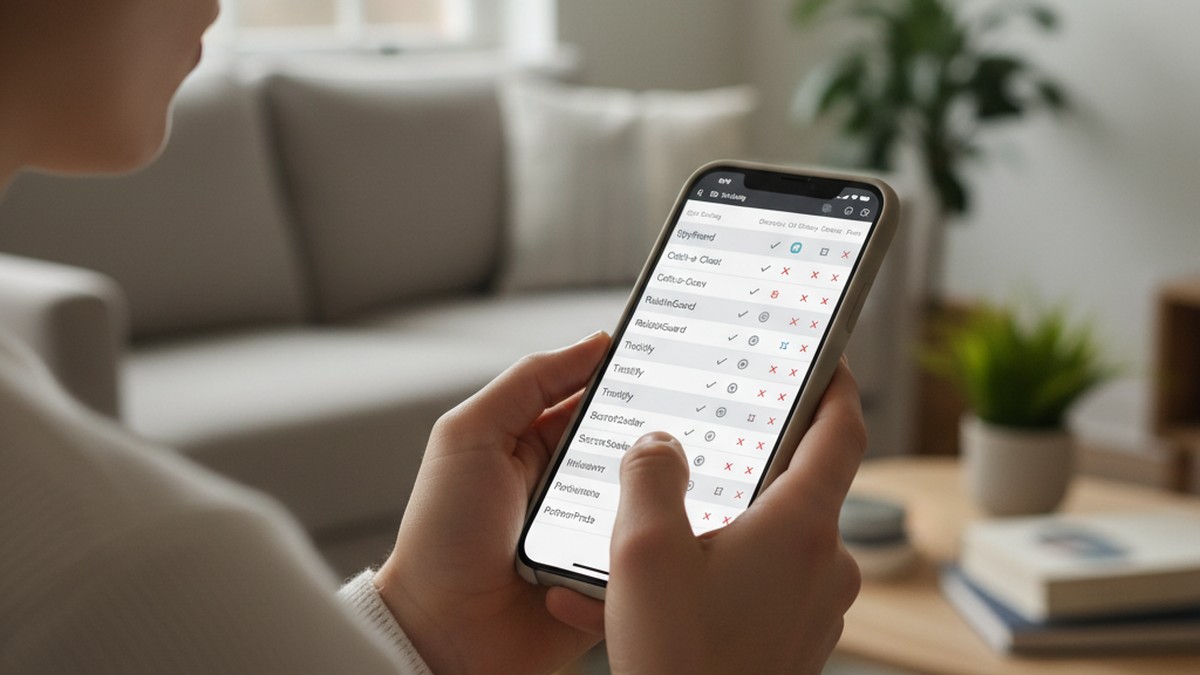
| Tool | Type | Platforms | Price/Search | Advertised Accuracy | Observed Accuracy |
|---|---|---|---|---|---|
| CheatScanX | Profile Search | 15+ | $16.99–$24.99 | Not published | 90–95% (platform data) |
| Cheaterbuster | Profile Search | 1 (Tinder) | $17.99 | 97–99% | 80–89% (AllAboutAI, 2026) |
| ProfileFinder.ai | Profile Search | 10+ | ~$15–$20 | Not published | Not independently tested |
| CheatEye | Profile Search | 5+ | $15–$20 | Not published | Not independently tested |
| Social Catfish | Data Aggregator | 10+ | $5.73/mo | Not published | Variable by platform |
| Spokeo | Data Aggregator | 5+ | $0.95 trial | Not published | Variable; retrospective |
| mSpy / Spynger | Device Monitor | All (device) | $28–$68/mo | N/A | Device-dependent |
Before evaluating any specific tool, the most important decision is understanding which type of tool you actually need — and that distinction is something most comparison articles skip.
Looking for a better option? CheatScanX scans 15+ apps at once — more platforms, faster results, completely anonymous.
See how CheatScanX compares →What Type of Cheater Finder Tool Do You Actually Need?
This question determines which half of this list you should even consider. Most comparison guides treat all cheater finder tools as interchangeable. They aren't.
The CSX Tool Type Matrix
Cheater finder tools fall into three fundamentally different categories. Using a tool from the wrong category produces misleading results regardless of how well the tool performs within its category.
| Category | What It Does | Best For | Key Limitation |
|---|---|---|---|
| Profile Search | Scans dating apps for active profiles | Verifying if someone has an active dating profile | Only shows publicly visible profiles at time of search |
| Device Monitor | Tracks all activity on a target phone | Monitoring ongoing digital behavior across all apps | Requires physical access to the device |
| Data Aggregator | Compiles public records and social profiles | Building a broad picture of someone's online presence | Low dating-specific accuracy for fresh accounts |
Each category answers a different question:
Profile search tools answer: "Does my partner have an active profile on [specific app or multiple apps] right now?"
Device monitors answer: "What is my partner doing on their phone — messages sent, apps opened, locations visited?"
Data aggregators answer: "What does this person's overall online presence look like across public databases and social platforms?"
These aren't different versions of the same answer. They're answers to genuinely different questions.
If you want to confirm whether a dating profile exists, a profile search tool is the correct tool type. A device monitoring app might eventually reveal dating app usage through app-open logs or partial message data, but it's designed for comprehensive ongoing monitoring — not a targeted yes/no on whether a specific profile exists. A data aggregator will find Facebook and LinkedIn reliably, but may miss a freshly created Bumble account entirely.
How to Choose the Right Category
Ask yourself one question: What does finding "the answer" look like for you?
If the answer looks like a dating profile with photos, bio, and match status — use a profile search tool.
If the answer looks like a stream of sent messages, call logs, and real-time location data — use a device monitor (with a clear understanding of what that category requires, which Section 8 addresses).
If the answer looks like a general picture of someone's presence across all publicly indexed platforms — use a data aggregator.
For most people searching for a "cheater finder app comparison," the answer is the first option. With that context established, here's how each of the seven tools measures up in practice.
The Seven Tools, Compared in Depth
1. CheatScanX
Type: Profile Search | Platforms: 15+ | Price: $16.99–$24.99/search | Device Access Required: No | Photo Matching: Optional
CheatScanX runs a single search across 15+ dating platforms simultaneously — Tinder, Bumble, Hinge, OkCupid, Match, Plenty of Fish, Zoosk, and others included. Results typically return within minutes. The search is entirely anonymous: the person being searched receives no notification of any kind, and no account on any of those platforms is required to run it.
The optional photo input is a meaningful differentiator. Text-based name searches produce false positives when a name is common (see Section 5 for why this matters more than most tools acknowledge) and false negatives when someone uses a nickname. Photo matching bypasses both problems by comparing facial geometry against profile images rather than comparing text strings.
In practice, what CheatScanX's platform shows is that optional photo matching is most valuable in two situations: searches involving a very common first name, and searches where suspicion is based on behavior patterns rather than a specific platform tip. In both cases, text-only matching returns too many candidates to be conclusive.
For a more detailed technical breakdown of how CheatScanX works — including the specific platforms covered and how the matching process handles restricted-visibility profiles — that page covers the full functionality.
Best for: People who want multi-platform coverage in a single anonymous search and don't know which app to check first.
Limitation: Per-search pricing accumulates if you're running repeated monthly checks on the same person. Not the most cost-efficient choice for ongoing monitoring cadences.
2. Cheaterbuster
Type: Profile Search | Platforms: 1 (Tinder only) | Price: $17.99/search | Device Access Required: No | Photo Matching: No
Cheaterbuster is the most recognizable tool in this category, with an operational history stretching back to the early years of Tinder. For a Tinder-focused search, it functions. The problem is that "Tinder-focused" has become increasingly limiting as dating app usage has spread across multiple platforms.
In 2026, more than 150 dating platforms are active globally. Among adults under 40 in major US metros, Statista (2025) data shows average simultaneous use of 2.3 apps. A tool covering only Tinder structurally misses everything on Bumble, Hinge, OkCupid, Match, and a dozen others — regardless of how precisely it performs on Tinder.
The accuracy figures deserve direct attention. Cheaterbuster advertises 97–99% accuracy. Independent analysis by AllAboutAI (2026) puts real-world performance at 80–89%. Section 5 explains exactly why those numbers diverge and what each actually measures. The short version: the advertised number measures a different metric than the one that matters to you.
Our detailed Cheaterbuster review covers the accuracy gap with specific test cases and a full breakdown of when the tool does and doesn't work.
Best for: Situations where you have specific reason to believe Tinder is the relevant platform — a notification sighted, an email receipt, a specific tip — and you want a quick targeted check.
Limitation: Single-platform coverage in a multi-platform market. False negatives are structurally guaranteed if the person uses any app other than Tinder.
3. ProfileFinder.ai
Type: Profile Search | Platforms: 10+ (reported) | Price: ~$15–$20/search | Device Access Required: No | Photo Matching: No
ProfileFinder.ai positions itself as a text-based multi-platform scanner. Its stated differentiator is a low input threshold: first name, age, gender, and approximate location — no photo, no username, no technical knowledge required.
The low input requirement is both a strength and a weakness. It works when a recent, clear photo isn't available. It struggles when the target has a common name, because without photo verification, all disambiguation must come from demographic inputs that thousands of people share.
ProfileFinder.ai covers a meaningful number of platforms, though the specific list and update frequency aren't published as transparently as comparable tools. No independent accuracy testing was available for this comparison. The product has been independently reviewed with generally positive assessments for ease of use, but quantified accuracy data remains unpublished.
Best for: Searches where no photo is available and the target's name is reasonably uncommon.
Limitation: Text-only matching produces more ambiguous results for common names. No published accuracy data.
4. CheatEye
Type: Profile Search | Platforms: 5+ | Price: $15–$20/search | Device Access Required: No | Photo Matching: Varies by tier
CheatEye covers a moderate number of platforms and offers tiered pricing with both per-search and subscription options. Platform coverage is narrower than CheatScanX but meaningfully broader than Cheaterbuster. The tool's interface has improved over recent versions and results return quickly.
A full breakdown of CheatEye's platform list and accuracy observations from reported user results is in our CheatEye review. The summary: it performs best on the major platforms it covers, but the coverage list isn't fully transparent, which makes it harder to know in advance whether your specific platform of concern is included.
Best for: Users who want multi-platform coverage at a slightly lower price point than the broader scanners.
Limitation: Platform coverage is narrower and the coverage list transparency is limited.
5. Social Catfish
Type: Data Aggregator | Platforms: 10+ (people search, not dating-specific) | Price: $5.73/month subscription | Device Access Required: No | Photo Matching: Yes (reverse image search)
Social Catfish is fundamentally a people-search tool with some dating platform reach. Its primary design is catfishing detection and identity verification — confirming whether an online identity matches a real person. The reverse image search function performs well at its core job: finding where a specific photo appears across the internet.
The limitation for dating profile detection is that Social Catfish searches broadly rather than deeply on dating platforms. A freshly created Bumble profile may not appear for weeks if it hasn't been indexed through Social Catfish's crawling process. For confirmed active profiles on established platforms, results can be useful. For new accounts created within the past few weeks, Social Catfish frequently misses them.
The subscription pricing ($5.73/month after trial) makes it cost-efficient for repeated broad searches. The per-result reliability for dating-specific queries is lower than specialist profile search tools.
Best for: Situations where you have a photo and want to run a broad online presence search, or when you want to check whether a profile image has been used elsewhere online.
Limitation: Not a specialist dating profile scanner. New accounts and accounts with restricted visibility frequently don't appear.
6. Spokeo
Type: Data Aggregator | Platforms: 5+ (people search, some dating) | Price: $0.95 trial, then subscription | Device Access Required: No | Photo Matching: No
Spokeo is a traditional people-search service that compiles public records, social media accounts, and some dating profile data. The $0.95 trial creates the impression of low cost, but trial searches return limited information that typically pushes users toward a paid subscription to see full results.
Dating-specific coverage is inconsistent and retrospective. Spokeo indexes information from public sources on its own schedule. A dating account created recently may not appear at all. An old deleted account may still show up. The tool's strength is historical record compilation — useful for establishing whether someone has a pattern of dating profile creation over time, not for confirming current active use.
Best for: Historical background research on someone's online presence, or when combined with other methods to build context.
Limitation: Not designed for detecting current dating activity. Results are retrospective and dependent on public indexing.
7. mSpy and Spynger (Device Monitors)
Type: Device Monitor | Platforms: All (full device) | Price: $28–$68/month | Device Access Required: Yes | Photo Matching: No
Device monitoring apps like mSpy and Spynger operate completely differently from the other six tools. Rather than searching external platforms, they run on the target phone and relay all activity to a monitoring dashboard — messages, call logs, app usage, browsing history, GPS location, and more.
These tools appear in most "cheater finder" comparison searches, and people frequently ask whether they represent the better option. The answer is more nuanced than most guides present. The full analysis is in Section 8. The summary: for the specific goal of confirming whether a dating profile exists, device monitors are frequently the wrong choice — for reasons that include practical obstacles, detection risk, and legal complexity that profile search tools simply don't involve.
Best for: Situations where comprehensive ongoing monitoring of all digital activity is the genuine goal, physical device access is available, and consent questions have been addressed.
Limitation: Require physical access to install. Ongoing detection risk. Legal complexity that varies significantly by jurisdiction. See Section 8 for why these tools are often chosen when a profile search tool is what's actually needed.
How Do Dating App Scanners Actually Work?
Understanding the mechanics behind profile search tools sets accurate expectations and reveals why performance gaps between tools exist.
The Three Search Methods
Dating profile scanners use one or more of three underlying approaches:
Name and demographic matching is the most common method. The tool takes the target's name, age range, and approximate location, then compares those inputs against profile data from dating platforms. Matching is fuzzy by design — a search for "Michael" surfaces "Mike" profiles, and a city-level location search typically uses a radius that may extend 25 to 50 miles. This breadth helps catch profiles set to a slightly different area but also increases the rate of false positives for common names.
Name-based matching works reliably when the target's name is relatively uncommon. A search for a name shared by 4+ million people — Michael or Jennifer in the United States, for example — returns too many candidate profiles in major metro areas for text matching alone to be useful. This is why photo verification exists as a secondary input.
Photo facial recognition analyzes the geometric features of a face from a photo you provide and compares that against profile images on dating platforms. This method bypasses the common-name problem entirely and catches profiles that use a different name or nickname, because the matching is against visual identity rather than text.
The limitation is photo quality and age. A photo from five or more years ago where the person looks substantially different, a photo where the face is partially obscured, or a low-resolution image all reduce match confidence. For photo-matching searches, the most recent, clearest available photo — full face, natural light, not cropped or filtered heavily — produces the best results.
Hybrid matching combines both approaches. Demographic inputs narrow the candidate field to a manageable size, then photo comparison confirms identity among the remaining candidates. Tools that use hybrid matching outperform either method alone because each compensates for the other's weakness: photo matching handles common names, demographic matching handles profiles that don't show a clear face.
Live Data vs Cached Data
Some tools query dating platforms directly at the moment you run a search. Others query an internal database indexed from dating platforms on a rolling schedule — daily, weekly, or less frequently.
Real-time searches catch profiles created this week, including very recently created accounts. Cached database searches may miss profiles created after the last index refresh, and may still surface profiles that were recently deleted. For someone whose suspicion is recent — a partner who may have created a new account in the past few days — real-time query capability matters considerably.
Most tools don't advertise clearly whether their data is live or cached. This is worth checking in a tool's FAQ or support documentation before purchasing. The difference can mean finding a new profile versus getting a clean result on a profile created three days ago.
Understanding the mechanics explains the gaps — but the numbers on accuracy tell the full story, and most comparison articles explain those numbers incorrectly.
How Accurate Are Cheater Finder Apps, Really?
This is where most comparison guides mislead readers most directly. The accuracy claims in this market are technically defensible but practically misleading.
Two Different Accuracy Metrics
When a cheater finder app claims 97–99% accuracy, that number almost always refers to one specific metric:
Profile match precision: When the tool returns a match, how often is that match actually the person you searched for? If a tool returns 100 results and 97 of those are the correct person, match precision is 97%. This is a real metric that tells you something meaningful: you won't often be misled by the results you do get.
Search success rate: How often does the tool successfully find a profile that genuinely exists? If 100 people with confirmed active Tinder profiles are searched and the tool finds 87 of them, search success rate is 87%. This is the metric that determines whether you get an answer at all.
These measure different things. A tool with 97% match precision and 83% search success rate will give you accurate results when it finds something — and miss one in six active profiles. You won't be pointed at the wrong person, but you may conclude there's no profile when one exists.
According to independent analysis by AllAboutAI (2026), Cheaterbuster's real-world search success rate sits at approximately 80–89%, substantially below the 97–99% advertised. The company's marketing number is a match precision figure. The search success rate — how often the tool actually surfaces an existing profile — is the metric people care about and the one that's consistently lower.
Why Search Success Rates Fall Short of Advertised Accuracy
Three factors account for most of the gap between claimed and observed performance:
Platform API restrictions. Dating apps actively manage third-party access. Tinder throttles API calls, obfuscates location data, and periodically blocks tools that query its platform in volume. Any tool that relies on Tinder API access will encounter rate limiting and periodic blocks that produce false negatives — real profiles that never surface in a search. Search success rates are inherently variable because the platform actively works against them.
Profile visibility settings. Dating apps give users increasingly granular control over who sees their profile. Features like "show me only to people I've already liked," distance restrictions, and temporary pauses remove profiles from any scanner's view. A profile with restricted visibility may be actively maintained while appearing as a no-result to any third-party search tool. These settings exist specifically to limit profile visibility, and they apply to scanners as well as random matches.
Name inconsistency. A meaningful share of dating profiles use a nickname or middle name rather than the legal first name. "Katherine" going by "Kate," "Robert" going by "Rob," name variants across cultures — none of these are unusual. Text-based tools vary in how well they handle common nickname variants. Tools that don't account for them produce false negatives simply because of a first-name mismatch.
What a Not-Found Result Actually Tells You
A not-found result from any profile search tool means: no active, publicly visible profile matching your inputs was found on the platforms this tool covers at the time of this specific search.
It does not mean your partner has no active dating profiles.
The distinction matters practically. Before treating a not-found result as definitive, verify: Did you search using the name they'd most likely use on a dating app? Did you set the location to where they're actually active, not just where they live? Is the tool covering the apps they'd most plausibly use? If any of those factors are uncertain, the not-found result is genuinely inconclusive — not reassuring.
With accurate expectations for what each tool can deliver, the next step is matching the right tool to your specific situation.

Which Tool Works Best for Your Situation?
The right tool depends on what you know going in and what answer you need.
Scenario 1: You Don't Know Which App to Check
If you have no prior information about which platform your partner might use, single-platform tools are not useful. A Tinder-only scanner returns nothing if your partner is on Bumble and Hinge but not Tinder. Multi-platform tools scanning 10 or more apps simultaneously are the only category that covers this scenario meaningfully.
CheatScanX covers 15+ platforms in one search. ProfileFinder.ai covers 10+. CheatEye covers 5+. Start with the broadest coverage available when the platform is unknown.
Scenario 2: You Have a Specific Platform in Mind
If prior evidence points to a particular app — a notification glimpsed, an email receipt from a specific platform, or a named tip — a specialist tool for that platform may perform better on that specific app than a generalist. This is Cheaterbuster's strongest use case: targeted Tinder verification when you have reason to believe Tinder is where activity is happening. The accuracy gap discussed in Section 5 still applies, but the focused approach avoids irrelevant false positives from other platforms.
Scenario 3: The Target Has a Very Common Name
Common names create significant noise in text-based searches. The top 20 most common names in the United States each belong to over a million people. Running a name-only search for "David Martinez" or "Ashley Johnson" in a major metropolitan area returns too many candidates to be useful.
For common-name situations, photo matching capability matters substantially. CheatScanX's optional photo input is specifically valuable here — it narrows results from hundreds of name-match candidates to the specific person whose face matches the photo you provide.
Scenario 4: You Need Ongoing Monitoring, Not a Snapshot
Per-search pricing accumulates quickly for weekly or monthly checks. Profile search tools are designed around the question "is there a profile right now?" — not around ongoing surveillance. If the goal is checking repeatedly over weeks or months, a subscription-priced tool (Social Catfish or a device monitor, with the caveats those involve) may be more cost-efficient for the cadence you need.
Scenario 5: You Want Information That Could Be Used in a Difficult Conversation
Profile search tools surface publicly visible information — active profiles that any dating app user could theoretically encounter. This positions the results differently from data extracted from a monitored device. For anyone thinking about how this information might factor into a subsequent conversation or legal matter, understanding the difference between public profile information and device-monitored private communications is worth considering. A licensed attorney in your jurisdiction is the right resource if this is a concern.
The most misunderstood factor in this decision is what platform coverage claims actually mean in practice — and that question matters more than most guides acknowledge.
What Does "Scans 15 Apps" Actually Mean?
Platform coverage numbers deserve scrutiny. "Scans 15 apps" sounds comprehensive, but the value depends entirely on which 15 apps are included.
Which Apps Account for Most Activity
Dating app usage in 2026 is concentrated in a small number of dominant platforms with long tails of smaller regional and niche apps. Tinder and Bumble together account for the majority of downloads in North America. Hinge has grown rapidly among users in their mid-20s to mid-30s. OkCupid and Match retain significant user bases among users who prefer profile-heavy, text-focused matching. Grindr is a major platform for LGBTQ+ users that many straight-focused scanner tools miss entirely.
The apps that matter vary meaningfully by demographic and geography. A tool covering "15 apps" that includes several platforms with essentially no North American user base provides hollow coverage on paper. When evaluating a coverage claim, the relevant question isn't the raw number — it's which 15 apps and whether those are the platforms most relevant to your search.
Why Single-Platform Tools Have Become Structurally Limited
Single-platform tools made competitive sense in 2015, when Tinder had something close to a monopoly on mainstream dating app activity. The market no longer looks like that. Statista (2025) data shows adults under 40 in major US metros average 2.3 apps simultaneously. The population of users who exclusively use one dating app is a shrinking minority.
A tool built around Tinder-only scanning isn't failing at its job — Cheaterbuster performs adequately within its stated scope. The limitation is structural: a single-platform approach was built for a market concentration that no longer exists. For the reality of 2026 dating behavior, a search that only covers one app will miss the majority of multi-app activity regardless of how well it functions on that one platform.
The Apps Most Multi-Platform Tools Still Don't Cover
Even tools claiming broad coverage frequently miss several categories of platform worth knowing about:
Niche dating apps serving specific communities — faith-based platforms, hobby or interest-based apps, apps for specific cultural or national communities — are generally absent from scanner coverage lists. If specific community app use is plausible for the person being searched, no tool on this list will reliably find that activity.
International platforms used in North America by diaspora communities: TanTan, Momo, and various regionally dominant European or Latin American apps don't appear in major scanner coverage. These aren't edge cases in cities with significant international populations.
Adult-specific platforms are excluded from most scanner tools entirely, even though they represent a category where infidelity-related activity occurs with documented frequency.
Knowing these gaps prevents false confidence in a coverage number. A "15 apps covered" claim that excludes all three of these categories still leaves meaningful blind spots.
Platform coverage explains why specialist tools are becoming increasingly limited. But the other common misconception — about whether spy apps are the better choice — deserves equally direct treatment.
Are Spy Apps Actually Better Than Profile Scanners?
Most comparison guides present device monitoring apps as the premium, high-capability option and profile search tools as the simpler, limited alternative. The data doesn't support this hierarchy for the specific goal of confirming a dating profile exists.
What Device Monitoring Apps Actually Provide
When installed on a target phone, device monitoring apps like mSpy or Spynger can access message content from SMS and many encrypted messaging apps, call logs with contact names and durations, browser history including dating site visits, app usage data showing which apps were opened and how frequently, GPS location history, and in some cases social media activity feeds.
For building a complete picture of all digital behavior across all apps, this data depth is real and significant. Device monitors do offer capabilities that profile search tools make no attempt to match.
Where Device Monitors Fall Short for Dating Profile Detection
Installation requires physical device access. Running a device monitoring app means having the target phone in your hands, unlocked, for several minutes — long enough to download and install the app without interruption. This creates both a practical obstacle and a significant detection risk at the point of installation itself.
Detection risk is ongoing. No monitoring app is undetectable under all circumstances. iOS and Android security updates, device scans, accidental icon visibility, or battery drain anomalies can expose the app at any point during the monitoring period. The risk doesn't end after installation.
Legal complexity varies significantly by jurisdiction. Installing monitoring software on another person's device without their knowledge triggers different legal frameworks depending on jurisdiction — the Electronic Communications Privacy Act at the federal level in the United States, various state privacy statutes, and equivalent legislation in other countries. This isn't legal advice, it's an acknowledgment that the legal landscape is genuinely complex and jurisdiction-dependent. Anyone considering a device monitoring app should understand what applies in their specific jurisdiction. A licensed attorney is the appropriate resource for that question.
Device monitors are an indirect way to answer the specific question. A device monitor might eventually reveal dating app activity — through app usage logs, partial notification content, or message fragments — but it requires ongoing installation, ongoing detection risk, and patience. It answers the question of "what is happening on this phone" over time, not "does a dating profile exist right now."
A profile search tool answers the dating profile question directly, in minutes, with no device contact required.
The Mainstream Comparison Guide Error
The typical hierarchy presented in comparison guides — spy apps as "premium/comprehensive," profile search tools as "basic/limited" — treats raw data volume as the measure of capability. By that metric, device monitors do collect more data.
But for the specific question most people in this situation are asking — "Is my partner on dating apps?" — data volume isn't what matters. Directness, speed, and accuracy for that specific query are what matter. Profile search tools are designed to answer exactly that question. Device monitors are designed to answer a different (broader) question and happen to include dating app data as one of many data streams.
Choosing a device monitor to answer a dating profile question is like using a full home security system to check whether a window is open. It will eventually tell you — but it's not what the tool was built for.

What to Do After Your Search Returns a Result
Finding a profile — or not finding one — is rarely the end of the process. What you do with what you find matters significantly.
If the Search Returns a Match
A positive result showing a profile with photos and bio that matches the person you searched is meaningful. Verify that the profile appears active before drawing firm conclusions: look for a recently updated profile photo, an active distance status indicator (common on Tinder and Bumble), or recently refreshed bio content. A profile last updated two years ago, before your relationship began, tells a different story than one updated last week.
Document what you find. A screenshot with a visible platform name and current date creates a clear record of what the result showed and when. This matters if the conversation that follows is contested.
If the Search Returns No Match
A not-found result is a data point, not a conclusion. Before accepting it as definitive: Did you search on the platforms they'd most likely use? Did you use the name they'd use on a dating app — nickname, middle name, alternate spelling? Did you set the location to where they're actually active? If any of those factors were uncertain, the search result is inconclusive rather than reassuring.
Running a second search on a different tool with different methodology (for example, one text-based search and one photo-matching search) provides a more reliable combined picture than a single-tool result.
The Conversation No Tool Can Replace
A profile search confirms whether a dating profile exists. It doesn't explain intent, history, or context. A profile that exists could be from before the relationship and never deleted. It could be a profile used actively. It could have been created by someone who made the account and then had second thoughts. The tool surfaces information; understanding what that information means requires a conversation.
For more on the emotional and practical aspects of finding out if your partner is on dating apps — including how to approach the conversation after you have information — that guide covers both sides.
Common Mistakes When Using Cheater Finder Apps
Small errors during a search can make a valid tool return useless results. These are the mistakes that most frequently produce inconclusive outcomes.
Using the Wrong Name
People frequently don't use their legal name on dating profiles. Someone who goes by "Dan" at home and "Daniel" on professional documents may have a profile under either. "Samantha" may use "Sam." Names with common variant spellings — Christine/Kristin, Sean/Shawn, Bryan/Brian — compound the issue. If a text-based search returns no result, trying common name variants before concluding the profile doesn't exist is a straightforward step that frequently changes the outcome.
Setting the Wrong Location
Location matching uses a radius, not a point. In a rural area, a 25-mile radius is often appropriate. In a dense city, even a 5-mile radius may miss profiles set to a narrow neighborhood-level radius on the same app. Consider searching locations beyond just the home address: where the person works, where they travel regularly, where they have established routines. Profiles sometimes appear at secondary locations that a home-only search misses.
Treating a Single Not-Found Result as Definitive
No tool has 100% coverage of any platform, and no platform is fully accessible to any tool at all times. Getting a not-found result from one tool doesn't mean a profile doesn't exist — it means that tool, at that moment, didn't find one. Using a second tool with different methodology and platform coverage before drawing a firm conclusion is worth the additional time and cost.
Using an Old or Unclear Photo for Photo Matching
Photo-based matching compares facial geometry. A photo from five or more years ago where the person looks substantially different, a photo where sunglasses or low lighting obscure the face, or a heavily filtered social media image all reduce match confidence significantly. For photo-matching searches, use the most recent, clearest available image — ideally an unfiltered, full-face photo in natural light.
Ignoring the Tool's Search Confidence Indicators
Many tools return a confidence score or match quality indicator alongside results. A low-confidence result that returned three candidates doesn't have the same weight as a high-confidence single-match result. Reading the confidence indicators before acting on a result prevents conclusions drawn from ambiguous data.
The Real Limits of Every Tool on This List
No cheater finder app works in all circumstances. Understanding where they genuinely fail prevents a false conclusion from going unchallenged.
What No Profile Search Tool Can Find
Invisible profiles. Dating apps give users increasing control over profile visibility. Features that restrict a profile to only people the user has already liked, distance settings that make the profile invisible outside a specific radius, or temporarily paused accounts remove profiles from scanner visibility. These settings work against third-party scanners as effectively as they work against random users. A person who actively manages their visibility settings to minimize their footprint is substantially harder to find.
Very recent accounts. An account created within the past 48 to 72 hours may not yet appear in any scanner's database, even tools with real-time query capabilities. Platforms have their own indexing and propagation delays. For fresh accounts, a search run a few days later often surfaces what an immediate search missed.
Alias profiles. A dating profile created under a different name with a photo that doesn't show the person's face — gym photos, landscape shots, photos from a distance — defeats both name-based and face-based matching. This approach to privacy is unusual but not rare among people who are deliberately trying to minimize detection.
Deleted profiles. A profile deleted before the search runs will not appear in any real-time search. Cached-database tools may show a recently deleted profile if the deletion happened after the last index refresh, but the timestamp on what you find matters: a profile showing as active in a cached result but deleted in reality provides potentially misleading information.
What This Means in Practice
In practice, what we observe through CheatScanX's platform is that the most common source of false negatives isn't tool failure — it's profile visibility settings. Users who actively limit who can see their profile are harder to find by design. The tools on this list are most effective at finding profiles belonging to people who haven't specifically taken steps to hide them.
The hardest profiles to find are configured by someone who understands how these tools work and has deliberately minimized their footprint. For those situations, no profile search tool provides a definitive answer, and the question may ultimately require a different kind of resolution — including a direct conversation.
Knowing those limits clearly, the final comparison verdict focuses on what each tool does well within its actual capabilities.
Choosing the Right Tool — Final Verdict
After comparing all seven tools across platform coverage, accuracy, price, and use case fit, the clearest finding is this: the right tool depends entirely on one decision you need to make before searching.
For confirming whether a dating profile exists across multiple platforms — the most common reason people search for cheater finder tools — multi-platform profile search tools (CheatScanX first, ProfileFinder.ai second) are the most direct choice. They answer the specific question in minutes, anonymously, without touching anyone's device.
For confirming activity on a specific known platform — when you have prior evidence pointing to Tinder specifically — Cheaterbuster and CheatEye offer targeted per-search options at comparable pricing. The single-platform limitation of Cheaterbuster means it provides no coverage if the evidence was wrong about which app.
For a broad picture of someone's online presence including historical social and public record data — Social Catfish and Spokeo provide broader data at lower per-search costs, with the trade-off that dating-specific accuracy for current activity is lower.
For ongoing comprehensive device monitoring where consent questions have been addressed — mSpy and Spynger are the capable options in that category, with the practical and legal considerations Section 8 covers.
The most common mistake isn't choosing a bad tool. It's choosing a tool built for a different question. Matching the tool to the specific question you're trying to answer is the single most important decision in this process. CheatScanX's anonymous multi-platform search requires no downloads or device access to start.
Frequently Asked Questions
Multi-platform profile search tools that combine name, age, location, and photo inputs provide the most reliable results in 2026. Single-platform tools like Cheaterbuster (Tinder only) report real-world accuracy between 80–89% according to independent testing by AllAboutAI (2026). Tools covering 15+ apps catch profiles that single-app tools structurally cannot find regardless of their accuracy within one platform.
Pricing varies by tool type. Profile search tools typically charge per search, ranging from $9.99 to $24.99. Device monitoring apps use monthly subscriptions ranging from $8 to $68/month. Many profile search tools offer a preview showing whether a profile exists before you pay for full results, which prevents paying for a search that finds nothing.
Yes. Multi-platform profile search tools scan 15 or more apps simultaneously from a single search. You provide the person's name, age, and approximate location. The scanner checks all major dating platforms and returns results from whichever apps have active profiles matching your inputs — no need to know which app to check first.
A not-found result means no active, publicly visible profile matching your inputs was found at the time of search on the platforms that tool covers. It does not guarantee your partner is not on dating apps. Profiles set to limited visibility, fresh accounts not yet indexed, or profiles using a nickname may not surface. Try a different name variation or a tool with broader platform coverage before drawing firm conclusions.
Profile search tools are completely anonymous — the person being searched receives no notification of any kind. CheatScanX and similar profile search tools never contact or alert the searched person. Device monitoring apps may also remain undetected, but their detection risk is higher and dependent on the specific app and the device's security settings.