
# Couples Therapy After Cheating: Does It Work?
When one partner cheats, the question isn't just whether the relationship can survive — it's whether it's worth trying to save it. Couples therapy after cheating helps approximately 70% of committed couples rebuild their relationship, according to research published by the American Association for Marriage and Family Therapy. Without professional help, that figure drops to roughly 15%.
You're here because you're at a turning point. Either someone cheated and you're both asking whether therapy is worth attempting, or you're making that decision alone. The answer isn't "it depends" and then nothing more. This article gives you the research, the realistic timeline, the specific conditions that predict success or failure, and a framework for deciding whether to start.
One detail that changes the math: couples who discover infidelity through evidence rather than confession start therapy under different psychological conditions. The recovery arc isn't identical for everyone — and that distinction matters more than most therapy articles acknowledge.
What Does Couples Therapy After Cheating Actually Look Like?
Couples therapy for infidelity is structured treatment in which a licensed therapist guides both partners through addressing betrayal, rebuilding trust, and repairing emotional connection. Sessions typically occur weekly, last 50–90 minutes, and run for 6 months to 2 years depending on the severity of the breach and both partners' commitment level.
It differs meaningfully from standard couples counseling. Standard couples therapy addresses communication patterns, conflict styles, and compatibility. Infidelity therapy does those things, too — but it starts with a specific psychological wound that requires its own protocol before any of the deeper relationship work can happen.
Most couples begin with crisis stabilization: getting through the immediate shock and preventing destructive behaviors before doing deeper work. This phase involves establishing ground rules — typically no contact with the affair partner, no major life decisions for 30–90 days — and creating a baseline of communication that doesn't escalate into crisis every session.
From there, sessions move into the processing phase: understanding why the affair happened, what needs weren't being met, and what patterns in the relationship created conditions that allowed it to develop. This is not the same as assigning blame. A skilled therapist helps distinguish between the unfaithful partner's complete responsibility for their choice and the pre-existing relationship dynamics worth addressing separately.
The final phase focuses on rebuilding — either rebuilding the current relationship or, in some cases, separating more thoughtfully than either partner would have managed alone. Not every successful outcome means staying together.
What a Typical Session Looks Like
Sessions aren't the screaming matches people fear. A skilled infidelity therapist controls the environment — if one partner becomes too emotionally flooded to think clearly, the therapist pauses, redirects, and re-grounds the session before continuing.
Typical session elements include:
- Structured check-ins (how the week has gone — behaviorally and emotionally)
- Processing specific incidents or triggers that arose between sessions
- Perspective-taking exercises (the betrayed partner articulating what they need; the unfaithful partner demonstrating understanding rather than defensiveness)
- Homework assignments (journaling prompts, agreed-upon transparency practices, small acts of deliberate reconnection)
You're not expected to relitigate the affair in exhaustive detail every week. A therapist experienced in infidelity work knows when to contain and when to open — that calibration is what separates specialized infidelity treatment from generic couples counseling.
Individual Therapy Alongside Couples Work
Most infidelity specialists recommend individual therapy alongside couples sessions, not instead of them. Each partner carries their own psychological weight: the betrayed partner needs to process trauma symptoms independently; the unfaithful partner needs to understand their own motivations without projecting defensiveness into the shared sessions.
The Gottman Institute's research supports a sequential model: individual stabilization, then couples work, then integration. Skipping individual therapy and jumping straight into couples sessions can cause the unfaithful partner to appear emotionally unavailable — creating the mistaken impression that they're unwilling to change, when in fact they haven't yet done the individual work required to show up differently.
This is why asking a therapist about their approach to individual sessions is one of the most diagnostic questions you can ask in an initial consultation.
If any of this sounds familiar, there's a way to know for sure. CheatScanX checks 15+ dating platforms for hidden profiles using a name, email, or phone number.
Check for hidden profiles →Does Couples Therapy Work After Cheating? What Research Shows
Couples therapy after cheating is effective for approximately 60–75% of couples who commit to the process. A 2012 American Association for Marriage and Family Therapy study found 74% of couples successfully recovered from an affair through therapy. Without professional intervention, research suggests only about 15% of relationships survive long-term.
The raw numbers are more encouraging than most people expect mid-crisis.
| Outcome | Couples in therapy | Without therapy |
|---|---|---|
| Relationship survives long-term | 60–75% | ~15% |
| Higher satisfaction post-recovery than pre-affair | 70% report this | Rarely measured |
| Forgiveness achieved | 80% when both committed | Significantly lower |
| Meaningful healing timeline | 6 months – 2 years | Often incomplete |
Shirley Glass, Ph.D., a researcher and therapist who treated hundreds of infidelity cases, found that 71% of couples she saw in therapy after an affair chose to stay together and rebuild. More telling: many described the post-affair relationship as qualitatively different — and in some ways more honest — than what they had before.
Among couples where the betrayed partner successfully achieves genuine forgiveness — not premature forgiveness, but processed, earned forgiveness — 80% remain married after five years, according to research published in the Journal of Family Psychology. That figure represents couples who stayed together not out of inertia but through documented relational change.
A five-year longitudinal study published by the APA found that couples who remained together after infidelity and completed therapy did not differ in marital satisfaction from couples with no infidelity history — meaning they fully closed the gap. Not just survived. Recovered.
What the Research Gets Wrong
Most studies on infidelity therapy outcomes share a significant methodological limitation: self-selection bias. The couples who participate in research are those who sought professional help — already a subset more motivated than the general population. Real-world success rates for all couples who experience infidelity (and don't pursue help) are considerably lower.
The honest reading of the data: therapy gives you access to better-than-baseline outcomes, but only if both partners are genuinely willing. The 70% figure isn't a promise — it's the ceiling available to couples who actually do the work consistently.
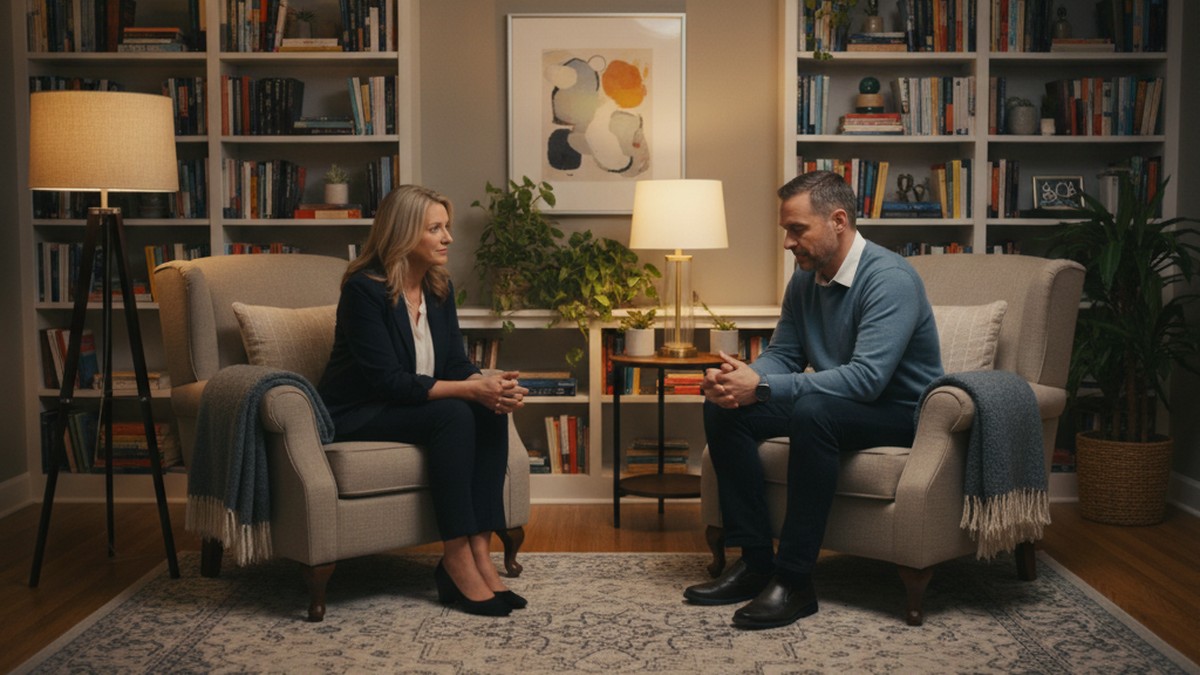
The Gottman Trust Revival Method: A Three-Stage Framework
The most widely used evidence-based framework for infidelity recovery is the Gottman Trust Revival Method, developed by Drs. John and Julie Gottman from the Gottman Institute based on decades of relationship research. It divides recovery into three sequential stages, each with specific therapeutic goals.
Stage 1: Atonement
This stage addresses the immediate aftermath — the anger, guilt, shame, and confusion that accompany discovery. The betrayed partner needs space to express their pain without the unfaithful partner becoming defensive or shutting down. The unfaithful partner needs to demonstrate genuine accountability — not performative remorse — without expecting forgiveness to arrive quickly.
Key tasks in the Atonement stage:
- Complete transparency: access to phone, email, and location
- No contact with the affair partner, documented and verifiable
- Consistent, patient responses to the betrayed partner's questions (within limits set by the therapist)
- Individual therapy for each partner to process their own emotional weight
The Gottmans note that this stage breaks down most often when the unfaithful partner confuses atonement with punishment. They feel they've "done their time" and expect the betrayed partner to be moving on. That expectation is almost always premature and typically causes a significant setback that resets progress.
Stage 2: Attunement
Once the immediate crisis stabilizes, therapy shifts to understanding the relationship itself — not to explain or justify the affair, but to address what was broken or missing before it happened.
Here, couples identify communication failures, unmet emotional needs, and patterns of disconnection that predated the crisis. The Gottmans are explicit on one point: addressing pre-existing relationship problems is not assigning blame. The unfaithful partner's choice to cheat rather than address problems directly was their responsibility alone. But ignoring those problems and simply returning to the pre-affair status quo virtually guarantees future ruptures.
Stage 3: Attachment
The final stage is about building what the Gottmans call "Marriage #2." The couple creates a new relationship — one with updated communication norms, deeper emotional intimacy, and explicit agreements about needs, boundaries, and expectations.
This stage typically includes:
- Rituals of connection (deliberate daily or weekly practices that sustain emotional closeness)
- A shared narrative about what happened, what it meant, and what changed
- Forward-looking plans that both partners feel genuinely invested in
Most couples reach Stage 3 around the 12–18 month mark of consistent therapy. Some take longer. The model has been tested in randomized clinical trials, making it one of the few infidelity recovery frameworks with empirical validation rather than just practitioner consensus.
When Is Couples Therapy Most Likely to Succeed?
Couples therapy after cheating is most likely to succeed when both partners genuinely want the relationship to survive, the unfaithful partner has ended all contact with the affair partner, and neither person is using therapy as a procedural step before leaving. Consistent transparency and patience are the strongest individual predictors of positive outcomes.
Success in infidelity therapy isn't random. Research consistently identifies specific conditions that predict whether couples make meaningful progress:
Both partners want the relationship to survive. This sounds obvious but is frequently not true. One partner often comes to therapy out of obligation — afraid of social judgment, unwilling to disappoint children, or hoping the process will make the decision feel more justified. If one person is secretly resolved to leave, therapy can still help facilitate a healthier separation, but it cannot rebuild a relationship that one person has already mentally abandoned.
The affair is fully over. All contact with the affair partner must end — completely and verifiably. The data is consistent: couples where the unfaithful partner maintains any communication with the affair partner — even for ostensibly logistical reasons — show outcomes essentially indistinguishable from not attending therapy at all. "We work together" or "we share friends" are situations requiring practical restructuring, not accepted limitations.
The unfaithful partner demonstrates genuine accountability. Therapists track a specific distinction: guilt versus shame. Guilt says "I did something terrible." Shame says "I am terrible." Shame-based responses make the unfaithful partner seek rapid absolution, become defensive under continued questioning, and ultimately undermine the process. Guilt-based accountability — holding space for the partner's pain without collapsing into self-protection — is a far stronger predictor of positive outcomes.
The betrayed partner's commitment isn't conditional on constant proof. Setting a reasonable condition — "I'll try therapy, but if I feel my trust is violated again, I'm done" — is fair and expected. Partners who require daily verification, monitor every message, and cannot allow any space for the unfaithful partner to demonstrate change over time make rebuilding practically impossible. Vigilance is understandable early on. Sustained hypervigilance becomes its own barrier to the process.
Factors That Significantly Reduce Success Odds
- Serial infidelity: A first discovered affair is one data point. A second or third is a pattern — and patterns require deeper individual work before couples therapy can succeed.
- Unaddressed addiction: Affairs driven by sex addiction or substance use require specialized treatment for the underlying condition, not just infidelity-focused couples work.
- Coercive relationship dynamics: When one partner has a history of controlling or manipulating the other, the power imbalance makes couples therapy ineffective and, in some cases, actively harmful.
- Ongoing deception: If the unfaithful partner continues to minimize details, omit information, or reshape their account over time — a pattern known as trickle truth and gaslighting — the transparency required for repair never solidifies.
If you're still in the stage of gathering information about what actually happened, understanding the full picture before committing to a therapeutic direction often makes the early sessions more productive.
If any of this sounds familiar, there's a way to know for sure before making a major decision. CheatScanX scans 15+ dating platforms to check whether a partner has active hidden profiles — giving you concrete ground to stand on before you decide what to do next.
The Four Readiness Questions: Should You Start Couples Therapy?
Most people approach this question by asking "Is it worth trying?" That framing puts pressure on an outcome neither partner can guarantee. A more useful question is: "Are we actually ready to try?"
The Readiness Framework below — based on therapist-cited predictors of couples therapy outcomes — gives you a clearer read on where you both stand before investing in sessions that may not yet be productive.
Question 1: Can the unfaithful partner articulate, in specific terms, why the affair happened?
Not a vague "I was unhappy" or "I made a mistake." A specific, honest account that doesn't position the betrayed partner as a contributing factor. If the unfaithful partner cannot or will not provide this — or if their explanation still casts themselves as the victim of circumstances — individual work hasn't happened yet. Starting with individual therapy first is the clearer path.
Question 2: Can the betrayed partner commit to 90 days without making a final decision?
The immediate post-discovery period is neurologically unfit for major life decisions. Trauma floods the system with cortisol, disrupts sleep, and impairs sustained judgment. If the betrayed partner can commit to attempting therapy without making an irrevocable decision for 90 days, it creates space where genuine assessment can happen. If they've already decided and are certain — couples therapy is likely not the immediate next step.
Question 3: Are both partners willing to let the therapist control when and how affair details are processed?
Couples who spend every session relitigating the affair's specifics — who, when, where, what was said — rather than moving toward understanding and rebuilding often burn through months without meaningful progress. This doesn't mean details are never addressed. But if either partner cannot agree to a structure where the therapist guides when those details are processed, sessions become an expensive venue for conflict rather than recovery.
Question 4: Can both partners identify one specific thing about the relationship worth saving?
Not sentimentality, not obligation to children — one concrete, present-tense thing that still exists between them that's worth the difficulty ahead. Research shows that couples who relate only through the wound, with no identified shared value, are significantly less likely to sustain the long and non-linear recovery process.
Scoring: Three or four "yes" answers — proceed to couples therapy. Two — proceed to individual therapy first, then reassess in 60–90 days. One or zero — the relationship may not be viable for repair in its current state, and a therapist can help navigate a healthier ending regardless.
This framework doesn't replace professional assessment, but it does give you an honest reading before you spend money and emotional energy on sessions either partner isn't ready for.
How Long Does Recovery Take After Infidelity?
Full recovery from infidelity typically takes 2–5 years for most couples who pursue therapy, though meaningful progress — reduced conflict, increased emotional safety, partial trust restoration — is usually noticeable within 6–12 months. The timeline is non-linear: setbacks are normal and do not indicate failure.
This is the question that shapes whether people even attempt therapy. The honest answer is harder to sit with than most articles suggest.
Research published in the Journal of Counseling Psychology indicates the average recovery timeline is 2–3 years of active work. A 2025 analysis from therapist platform HereCounseling found meaningful healing takes an average of 2–5 years when accounting for full psychological restoration — not just cessation of crisis-level conflict.
What recovery typically looks like at each stage:
| Timeframe | What typically changes | What typically doesn't change yet |
|---|---|---|
| 0–3 months | Crisis stabilizes, destructive behaviors reduce | Trust, intrusive thoughts, emotional safety |
| 3–6 months | Communication patterns improve, some empathy emerges | Spontaneous intimacy, deep trust, predictable mood |
| 6–12 months | Emotional safety returning in most situations | Full forgiveness, consistent intimacy |
| 1–2 years | Deeper reconnection, genuine forward momentum | Occasional setbacks, some unresolved grief |
| 2–5 years | Most couples reach stable footing | Distant triggers in some; others report full resolution |
The non-linear nature of recovery is the detail that surprises couples most. Weeks or months can pass with genuine progress — then an anniversary, a smell, or a passing comment creates a setback that feels like returning to the beginning. Rick Miller, LICSW, a clinical social worker specializing in relationship trauma, describes recovery as "two steps forward, one step back" — and notes that the step back doesn't erase the steps forward; it's part of how trauma integrates over time.
Expecting linearity is one of the most common reasons couples abandon therapy prematurely. They're at month seven, things feel measurably better, a trigger produces a bad week — and they conclude "it's not working" — when in fact they were progressing within the normal arc.
How to Recognize Real Progress
Progress isn't the absence of pain. It's a change in how you relate to it:
- Arguments de-escalate faster and with less collateral damage
- The betrayed partner can go hours or days without intrusive thoughts, not just minutes
- The unfaithful partner responds to triggers with patience rather than defensiveness
- Both partners can reference the future without it feeling impossible or hollow
- Reconnection feels chosen rather than forced
If you're working through full recovery from infidelity, understanding this arc in advance dramatically reduces the likelihood of giving up during a normal dip in the process.

What Happens in Your First Few Sessions of Infidelity Therapy
Many couples avoid starting therapy because they don't know what they're walking into. Here's what most infidelity-specialized therapists actually do in the first several meetings.
Session 1: Assessment, Not Action
The first session is diagnostic. The therapist listens for information that shapes whether and how couples work can proceed: the nature of the affair, the history of the relationship, what each partner wants from therapy, and whether any safety concerns — anger escalating to threats, substance use, controlling behaviors — need to be addressed before joint sessions continue.
You're not expected to reach breakthroughs in session one. You're providing the information a therapist needs to chart a realistic path forward.
Sessions 2–3: Brief Individual Check-Ins
Many infidelity therapists spend sessions two and three meeting briefly with each partner individually. This creates a private space for each person to say things they might not say in front of their partner — including whether they genuinely want to be there.
What's shared in these individual meetings stays private (with limited exceptions for safety concerns). The purpose is to give each partner a baseline sense of psychological safety before the harder shared work begins. It also lets the therapist detect misalignment between what each person says in front of their partner versus what they're actually experiencing.
Session 4 Onward: The Structured Work
By sessions four or five, most couples are in the core work of infidelity therapy: exploring what happened, identifying patterns, developing communication skills, and beginning the slow process of rebuilding emotional safety.
Homework starts here. Assignments vary by therapist and model but commonly include:
- Written exercises where each partner describes what they need, separately, before discussing it in session
- Transparency practices (agreed-upon phone protocols, daily check-ins, location sharing during the early period)
- Connection rituals — small, consistent acts that signal recommitment without requiring major emotional leaps
Frequency matters. Weekly sessions are standard at the beginning. Some couples need twice-weekly in the immediate post-discovery period. Dropping below every two weeks in the early months significantly slows progress, because the week's events and emotions need the container a regular session provides.
Which Therapy Approaches Work Best for Infidelity?
The most effective approaches for infidelity are Emotionally Focused Therapy (EFT) and the Gottman Method, both with clinical trial evidence. EFT shows a 70–75% success rate in restoring emotional bonds after betrayal and outperforms Cognitive Behavioral Therapy in improving intimacy and forgiveness for couples recovering from affairs.
Not all therapists are equally equipped to handle infidelity cases. And not all therapy models are equally effective for this specific type of relational wound. Here's what the research shows about each approach.
Emotionally Focused Therapy (EFT)
EFT is currently the most empirically supported approach for infidelity recovery. Developed by Dr. Sue Johnson at the University of Ottawa, EFT focuses on the attachment injury — the moment of betrayal where the relationship ceased to feel safe — and rebuilds the couple's emotional bond from that wound outward.
A comprehensive meta-analysis of EFT outcomes found that 70% of couples were symptom-free at the end of treatment, with greater therapist fidelity to the model associated with stronger couple gains. A 2022 comparative study published in the Journal of Marital and Family Therapy found that EFT significantly outperformed Cognitive Behavioral Therapy in improving intimacy scores among women recovering from a partner's infidelity — a finding that held in forgiveness measures as well.
Why EFT works for infidelity specifically: Infidelity is, at its core, an attachment rupture. It violates the primary relational bond at a neurological level — disrupting the felt sense that the relationship is a safe base. EFT is specifically designed to address attachment injuries, making it structurally suited to this type of wound in a way that problem-solving-focused models are not.
The Gottman Method
The Gottman Method is the second most empirically supported approach. Its Trust Revival Method provides a clear three-stage framework that gives couples a roadmap — and research shows that having a structured sequence of tasks and milestones reduces anxiety about the process and improves consistency with homework between sessions.
The Gottman approach works particularly well for couples who function better with defined structure, where explicit milestones help reduce the overwhelming sense that there's no clear way through.
Cognitive Behavioral Therapy (CBT) for Infidelity
CBT focuses on thoughts, beliefs, and behaviors. For infidelity, it's useful for addressing distorted beliefs (the betrayed partner's "I'll never trust anyone again"; the unfaithful partner's self-justifying narratives) and for developing communication and conflict-resolution skills.
It's less effective as the primary approach because it doesn't directly address the attachment wound — the disruption to emotional safety that makes everything else harder to process. Most therapists now blend CBT techniques into EFT or Gottman frameworks rather than using CBT as a standalone model for infidelity.
What to Ask a Potential Therapist
Before committing to sessions, ask during an initial consultation:
- "What is your primary approach for infidelity cases?"
- "Do you have specific training in EFT, the Gottman Method, or another evidence-based model?"
- "Do you recommend individual sessions alongside couples work? How do you structure that?"
- "What does success look like in your approach, and how do you measure progress over time?"
A therapist who cannot answer these questions with specificity likely doesn't specialize in infidelity work. Infidelity requires a specialist — not because generalists lack skill, but because the psychological dynamics are distinct enough that generic couples approaches often miss critical elements.
When Couples Therapy Doesn't Work After Cheating
Couples therapy after cheating fails most often when the unfaithful partner hasn't ended the affair, when one partner secretly plans to leave regardless of outcome, when ongoing deception continues between sessions, or when a serial-infidelity pattern or unaddressed addiction underlies the behavior. In these cases, couples work typically prolongs pain without producing repair.
This is the angle most therapy articles avoid. Acknowledging when couples therapy reliably fails — and why — is more useful than maintaining false optimism. Here's when the data shows it doesn't work.
The affair hasn't actually ended. This is the single most reliable predictor of failure. Couples who begin therapy while the unfaithful partner maintains active contact with the affair partner — whether romantically, sexually, or "just as friends" — show outcomes essentially indistinguishable from not attending therapy at all. The continued deception makes genuine repair impossible. The sessions become a performance that exhausts the betrayed partner without producing any real change.
One partner is using therapy to check a box. Some unfaithful partners suggest couples therapy not because they want to rebuild, but because they fear the social or financial consequences of immediate separation. They attend, appear cooperative, and produce no real behavioral change between sessions. Experienced therapists typically detect this pattern within 4–6 sessions — but by then money and emotional energy have already been spent.
Trickle truth is happening. The pattern where the unfaithful partner gradually reveals details of the affair over time, rather than providing a complete account upfront, is one of the most consistent predictors of failed recovery. Each new revelation resets the betrayed partner's trauma clock — they're effectively rediscovering the affair repeatedly. Couples where trickle truth continues cannot stabilize, because the foundational requirement of transparency is never actually met.
The underlying issue is untreated. Affairs driven by sex addiction, covert personality patterns, or other clinical conditions require targeted individual treatment before couples work can succeed. Sending a person with unaddressed compulsive behavior to couples therapy addresses the symptom — infidelity — while leaving the cause untouched.
A Contrarian Note on the "Try Therapy First" Advice
Standard advice tells couples to try therapy before making any decisions. The research suggests a more nuanced read: attempting couples therapy before the unfaithful partner has done meaningful individual work frequently produces sessions dominated by defensiveness — which the betrayed partner experiences as additional evidence the relationship cannot be saved.
In practice, what we see is that couples who rush into joint sessions before the unfaithful partner is emotionally ready tend to produce sessions where the unfaithful partner reacts defensively to every question, and the betrayed partner interprets that defensiveness as unwillingness — even when the underlying issue is readiness, not commitment.
The implication is counterintuitive: if the unfaithful partner resists individual therapy before starting couples work, couples therapy is unlikely to be productive yet. That resistance is itself diagnostic information about readiness.
If you're still in the stage of knowing how to confront a cheater and gather information, that step comes before therapy — not as a replacement for it, but because you need an accurate picture of what you're working with.
The Hidden Injury: Betrayal Trauma After Infidelity
Most discussions of couples therapy treat the relationship as the primary unit of repair. The betrayed partner, however, is also carrying a specific individual injury that, if unaddressed, limits progress regardless of how committed both partners are.
Betrayal trauma is the psychological injury produced when a person's primary attachment figure — the person they depend on for safety and security — is simultaneously the source of harm. It isn't simply sadness or anger. It's a specific disruption to the fundamental sense that the world and one's closest relationships can be trusted.
Research published in the journal Personal Relationships found that 45.2% of unmarried young adults who experienced infidelity showed symptoms consistent with probable PTSD. Among married individuals in longer-term relationships, clinical estimates range from 30–60% experiencing PTSD-level symptoms. The condition is typically described as Post-Infidelity Stress Disorder (PISD) or betrayal trauma, since infidelity doesn't technically meet the specific stressor criterion required for a clinical PTSD diagnosis in most diagnostic frameworks.
Common symptoms of betrayal trauma in the aftermath of infidelity:
- Intrusive thoughts, mental images, or flashbacks of the affair or the affair partner
- Hypervigilance — monitoring partner's location, messages, tone of voice, and behavior constantly
- Emotional numbing or dissociation — periods of feeling nothing at all
- Sleep disruption, appetite changes, difficulty concentrating at work or at home
- Panic symptoms triggered by contextual cues: a song, a phrase, a certain time of day
- Difficulty trusting one's own perception — wondering what else might not have been real
What makes betrayal trauma particularly complex in couples therapy is this: the person who caused the trauma is also the primary source of comfort. The betrayed partner's nervous system is simultaneously drawn toward and afraid of the same person — a pattern that research on trauma bonds describes as oscillating between approach and avoidance.
Acknowledging this dynamic explicitly in therapy — rather than treating it as "emotional sensitivity" — is one of the key differences between effective and ineffective infidelity therapy. Therapists trained in attachment-based models understand this oscillation as a normal trauma response. Those without specific infidelity training sometimes misread it as the betrayed partner being "difficult" or "unwilling to move on" — which compounds the injury.
What Effective Betrayal Trauma Treatment Includes
Effective treatment for the individual injury typically combines three elements, often running parallel to couples work:
- Stabilization — reducing acute physiological symptoms through mindfulness practices, sleep regulation, and daily routine restoration
- Processing — structured trauma-focused work, often EMDR (Eye Movement Desensitization and Reprocessing) or somatic approaches, to integrate the trauma memories rather than suppress them
- Meaning-making — integrating the experience into a coherent personal narrative that doesn't require minimizing what happened or remaining defined by it
If you're the betrayed partner and your couples therapist isn't acknowledging the trauma dimension of your experience, consider asking specifically about their approach to betrayal trauma — or seeking a consultation with a trauma-informed individual therapist to run alongside the couples work. The two tracks reinforce each other rather than competing.

How to Find the Right Therapist for Infidelity Recovery
Finding a good couples therapist is difficult enough. Finding one with genuine expertise in infidelity requires a more specific search. Most people who've had poor experiences with couples therapy after infidelity were working with a generalist who lacked the specific training. Here's how to avoid that mistake.
What to Look for in Credentials
Start with licensure: LMFT (Licensed Marriage and Family Therapist), LCSW (Licensed Clinical Social Worker), or licensed psychologist (PhD or PsyD). Any of these are qualified to provide couples therapy. Licensure alone, however, doesn't indicate infidelity expertise — any more than a general practitioner's license indicates cardiac surgery expertise.
Specific training indicators worth asking about:
- EFT Certification: Certified through the International Centre for Excellence in Emotionally Focused Therapy (ICEEFT). Look for "Certified EFT Therapist" or "EFT Supervisor" designations.
- Gottman Level 3 Training: The Gottman Institute's training program runs in levels; Level 3 includes the most rigorous work, including infidelity-specific protocols.
- AASECT Certification: The American Association of Sexuality Educators, Counselors, and Therapists. Relevant when the affair involved sexual compulsivity or addiction.
Where to Search
- Psychology Today (psychologytoday.com/therapists) — filter by "Infidelity" under specialty and your location
- The Gottman Referral Network — lists certified Gottman Method practitioners
- ICEEFT's therapist directory — lists certified EFT therapists by location and training level
What to Ask Before Committing
Call or email before booking a paid session. Three questions that reveal expertise quickly:
- "How many infidelity cases have you treated, and what's your primary approach?" — Look for a named model and specificity about phases of treatment, not vague talk about "a safe space."
- "Do you recommend individual therapy alongside couples work?" — An infidelity specialist almost always says yes.
- "What does the first 30 days of treatment look like?" — An expert can describe a clear structure with early stabilization steps, not just a general philosophy.
What It Costs and What to Expect
Couples therapy runs from $150–$300 per session nationally, with infidelity specialists in major metropolitan areas often charging $250–$600. Insurance rarely covers couples therapy outright, though individual sessions for a diagnosed condition — depression or anxiety stemming from the affair — may be billable under some plans.
For a typical 18-month course of weekly sessions at $200 per session, the total investment runs approximately $14,000–$16,000. That figure compares favorably to the average cost of divorce in the U.S., which ranges from $15,000–$30,000 for contested cases and considerably higher in high-asset situations.
If cost is a significant barrier, options include:
- Community mental health centers with sliding-scale fees ($30–$80 per session based on income)
- Therapist training clinics associated with university programs (lower rates with supervised graduate students or interns)
- Online therapy platforms that offer couples sessions at $80–$150 per session
The sliding-scale route requires patience — availability varies by location and waitlists can be long — but it's a meaningful option if financial barriers would otherwise prevent starting at all.
Is It Possible to Have a Stronger Relationship After Cheating?
Research suggests approximately 70% of couples who complete infidelity-focused therapy report higher marital satisfaction post-recovery than they had before the affair — not just returning to baseline, but exceeding it. This outcome is more likely when therapy addresses underlying relationship dynamics rather than focusing solely on the betrayal event.
This is the counterintuitive finding that deserves more attention than it typically gets. The post-affair relationship can be stronger than the pre-affair relationship — and not in spite of what happened, but partly because it forced an honest reckoning that comfortable relationships often defer indefinitely.
What changes in relationships that successfully rebuild after infidelity:
Communication depth. Couples who've navigated infidelity therapy have typically done more honest, direct communication about needs, fears, and relationship dynamics than most long-term couples do across decades. The crisis forces conversations that comfortable relationships defer until they become crises themselves.
Explicit agreements instead of assumed ones. Couples who rebuild after infidelity tend to have explicitly negotiated agreements rather than assumed understandings. What does fidelity mean to each partner? What are each person's needs around sexual intimacy, emotional connection, and independence? Most couples never discuss these questions until a crisis makes them unavoidable.
Lower tolerance for unaddressed disconnection. Partners who've been through infidelity therapy often describe a changed threshold for tolerating distance without speaking up. The implicit lesson — that unaddressed disconnection creates conditions for problems to grow — becomes an active motivator for both people to raise issues earlier.
The Gottman Institute frames this as building "Marriage #2" — not repairing the marriage that existed before the affair, but constructing a new relationship between the same two people, with the crisis incorporated into its design rather than buried under it.
This isn't inevitable. Couples who focus only on healing the betrayal without addressing the underlying relationship dynamics that preceded it tend to return to the same patterns. The path to a stronger relationship requires both partners understanding that the goal isn't restoration of what existed before — it's construction of something better.
A relationship that's been honestly rebuilt after infidelity often has, paradoxically, a more durable foundation than one that was never tested. That isn't a reason to romanticize what happened. It's a reason to take seriously what the process, done correctly, can actually produce.
Making the Decision: A Realistic Assessment
If you've worked through the information above, you're weighing whether to try. That's already evidence of something worth working with.
Couples therapy after cheating works for a majority of committed couples who meet the basic readiness conditions: both partners want to try, the affair has ended, and both people can sustain the process long enough for it to work. Those conditions aren't always in place immediately after discovery — and accepting that isn't failure, it's accuracy.
If the Four Readiness Questions above returned three or four yes answers, the practical next step is individual consultations with 2–3 infidelity-specialized therapists. Not a commitment to months of sessions — just a first meeting to assess fit and structure. Most infidelity specialists offer a free or reduced-cost initial consultation.
If the conditions aren't yet met — if the affair hasn't fully ended, if one partner's resolve to leave is already firm, if an underlying compulsive behavior pattern hasn't been addressed — individual therapy is the clearer starting point. Couples work needs a foundation to build on, and building that foundation is its own legitimate form of progress.
The data is unambiguous on one point: couples who pursue professional help show vastly better outcomes than those who navigate infidelity alone. Whatever comes next in your relationship, doing it with professional support is the decision most likely to lead somewhere livable — whether that's a rebuilt relationship or a thoughtful ending to one.
If you're still in the process of establishing the facts of what happened, there's value in knowing what you're actually dealing with before you decide how to proceed. CheatScanX scans 15+ dating platforms to check for hidden profiles — because making one of the biggest decisions of your life requires accurate information.
Frequently Asked Questions
Most infidelity specialists recommend waiting 2–4 weeks before starting couples therapy to allow the initial shock to stabilize enough for productive sessions. Starting within 48 hours is rarely effective. Individual therapy for the betrayed partner can begin immediately — processing trauma before joint work typically improves couples therapy outcomes significantly.
It can begin the process, but success is unlikely until the unfaithful partner has worked through the affair relationship in individual therapy. Emotional attachment to an affair partner is a clinical issue requiring individual-focused work first. Couples therapy while that attachment persists places impossible demands on the betrayed partner and rarely produces genuine repair.
Research suggests it matters significantly. Couples where the unfaithful partner voluntarily disclosed show faster trust recovery and better long-term outcomes than those where discovery happened through evidence. Voluntary disclosure signals the unfaithful partner was moving toward honesty — an indicator of accountability that predicts better behavior in therapy. CheatScanX users who discover a partner's hidden profiles without a prior confession often face this additional layer in recovery.
Skepticism doesn't automatically make recovery impossible. Many successful couples contained one reluctant partner who adjusted within the first 4–6 sessions. The relevant question isn't belief in therapy as a concept — it's willingness to attend and participate honestly. Complete refusal to try is itself the deciding factor, not initial skepticism.
Most couples don't have a formal endpoint. Progress is marked by mutual agreement to reduce frequency — from weekly to biweekly, then monthly. The functional signal is that both partners navigate relationship challenges, including occasional triggers, without needing a therapist to mediate. Most couples maintain the option to return during major stressors even years later.