
# Dating App Search Salt Lake City: Find Hidden Profiles
You can search for a partner's dating app profiles in Salt Lake City using six distinct methods — ranging from automated multi-platform scanners that return results in minutes to manual Tinder location searches and reverse image lookups. For most people, an automated scan is the fastest and most thorough starting point.
Salt Lake City sits in an unusual position. It is a city with the smallest proportion of single adults in the nation — just 43.6% of Utahns 15 and older are single, according to the Kem C. Gardner Policy Institute — yet it ranks 2nd in the entire US for cheating-related online searches, generating 2,955 infidelity queries per 100,000 residents every single month.
That gap between public perception and actual behavior is exactly why a dating app search in SLC requires local knowledge that generic guides miss. This article covers every method that works — including the LDS-specific Mutual app that every other guide ignores — plus a local framework for running the most effective search possible.
Why Does Salt Lake City Have Such High Dating App Activity?
Salt Lake City generates 2,955 cheating-related online searches per 100,000 residents every month — ranking second nationally, according to a study of Google search volume data published by Good Men Project — despite having the smallest proportion of single adults of any US state. Utah's combination of high social pressure around early marriage and the anonymous accessibility of dating apps creates a gap between public behavior and private activity that drives unusually high dating app usage among partnered individuals.
Salt Lake City's relationship with infidelity searches is, by any measure, a statistical anomaly. To understand why dating app searches are so common here, you need to understand the context that shapes the local dating environment.
The Utah Paradox
Utah consistently reports one of the lowest proportions of single adults in the United States. At 43.6%, it sits significantly below the national average. The state's cultural and religious landscape — driven heavily by the Church of Jesus Christ of Latter-day Saints — places enormous social value on early marriage and family formation.
The conventional assumption would be that this translates to lower infidelity. The search data tells a different story. Salt Lake City generates 2,955 cheating-related online searches per 100,000 inhabitants each month, placing it second only to one other US city. That figure comes from an analysis of Google search volume data for infidelity-related terms, and it is one of the highest per-capita rates in the country.
The most searched infidelity-related term in SLC is Ashley Madison, followed by terms like "infidelity," "cheat," and "heated affairs." Ashley Madison accounts for roughly a third of all cheating-related searches in the city — a pattern that researchers suggest is connected to social pressure to appear faithful publicly while seeking connection privately.
What the Demographics Tell You
Salt Lake City's median age is 32.9 years — young, active, and heavily concentrated in the 25–35 bracket that accounts for the majority of dating app users. The city proper holds approximately 226,341 residents in 2026 and the broader metro area reaches 1.226 million people, according to World Population Review's 2026 projections, providing a substantial dating app user base across platforms.
Utah's divorce rate stands at 3.3 per 1,000 residents, notably above the national average of 2.4. Infidelity investigations in Utah spike particularly among clients over 40, according to Salt Lake Investigations, a local private investigation firm — with midlife transitions, empty nests, and longer marriages cited as key drivers.
Nationally, approximately 30% of US adults have used a dating app at some point, with that figure significantly higher among adults under 40. In Salt Lake City's 32.9-year median age cohort, the proportion who are current or recent dating app users is meaningfully higher than the national average suggests. You are not looking for a needle in a haystack — you are looking for a profile that may be one among hundreds of thousands in the metro area.
One data point that often surprises people: according to infidelity research aggregated by South Denver Therapy from multiple 2026 studies, roughly 20% of people who have ever cheated report having used a dating app during the period of infidelity. That figure rises to 34% among people who report an ongoing affair rather than a one-time incident. Dating apps have become the primary mechanism for initiating affairs precisely because of their accessibility and perceived anonymity.
This demographic context shapes which apps matter most in SLC and which search methods are most effective. A blanket approach that ignores Utah's specific app landscape will miss significant activity.
CheatScanX scans all of these platforms — and more — in a single search. Enter a name, email, or phone number and get results in minutes.
Try a multi-platform search →What Dating Apps Are Most Active in Salt Lake City?
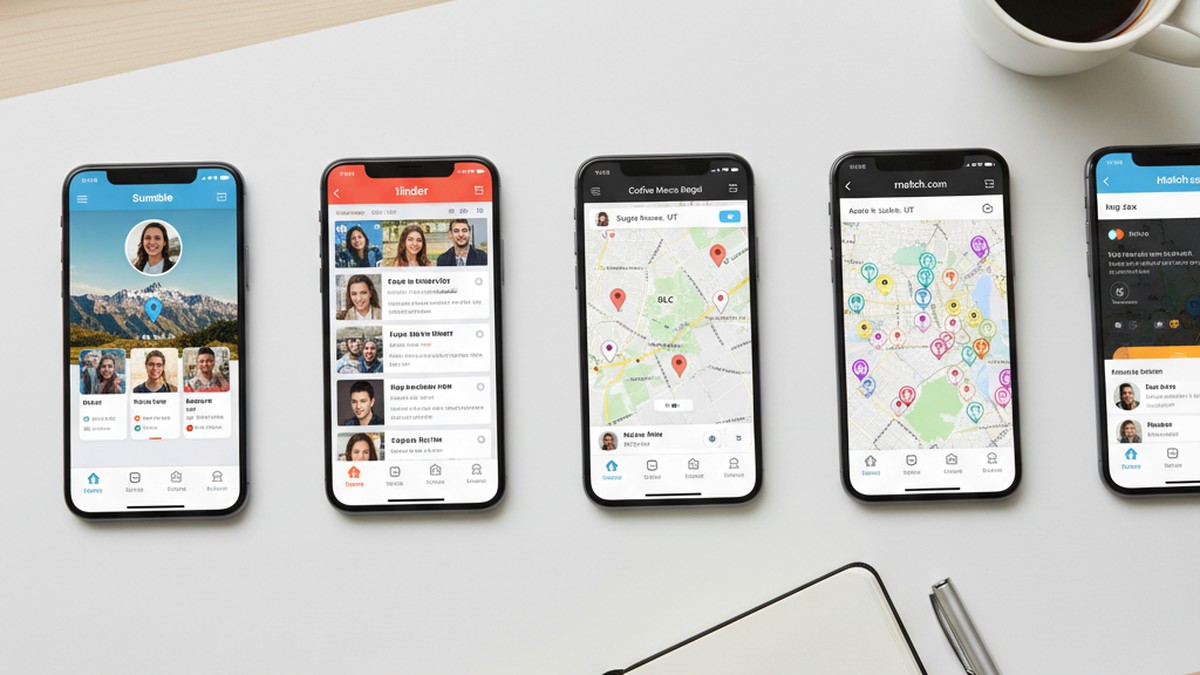
Tinder dominates Salt Lake City with 46.1% of local users ages 18–24. Bumble holds 32% of the Utah market, making it the second most downloaded app in the state. Hinge, Match.com, OkCupid, and the LDS-specific Mutual app also maintain active local user bases. Knowing which platforms are active locally helps you prioritize your search.
Before running any search, knowing which platforms hold the largest local user bases tells you where to look first.
Salt Lake City's app ecosystem differs meaningfully from national patterns. Here is what the data shows:
Tinder
Tinder is the dominant platform in Salt Lake City by raw user volume. Audience analytics from Start.io show that 46.1% of Tinder users in SLC fall in the 18–24 age group — a slightly younger skew than national averages. Tinder remains the highest-traffic dating app in the city and is almost certainly the first place an active profile will appear.
Bumble
Bumble has become the second most downloaded dating app in Utah, holding a 32% market share statewide according to BeyondAges. Its popularity with women and its reputation for slightly more intentional dating make it a common choice for adults in the 25–35 range in SLC. If your partner uses dating apps and is not on Tinder, Bumble is the next most likely platform.
Hinge
Hinge appeals strongly to the 25–35 demographic nationally, and Salt Lake City's young professional population makes it an active platform locally. Hinge is designed with relationships in mind and tends to attract users who want to be discovered by serious prospects — making it worth checking even though its user base is smaller than Tinder or Bumble.
Match.com
Match is the platform of choice for adults 30 and older looking for more serious connections. It has a substantial SLC user base, particularly among people who have been through a previous relationship and want something lasting.
Mutual (LDS-Specific)
This is the platform every non-local guide misses. Mutual is a dating app built specifically for members of the Church of Jesus Christ of Latter-day Saints. It is not available on a national "top apps" list — but in Salt Lake City, it has a real and active user base. If your partner is LDS or grew up in LDS culture, Mutual is a platform that warrants direct checking. It cannot be searched through generic automated scanners, so it requires a manual approach covered later in this guide.
Ashley Madison
Ashley Madison's presence in Salt Lake City is disproportionately high compared to most US cities. It accounts for roughly a third of all cheating-related searches in SLC, and while search volume is not the same as membership, it strongly implies significant local usage.
OkCupid and Plenty of Fish
Both platforms have active user bases in SLC, though smaller than Tinder and Bumble. OkCupid skews younger and more progressive; Plenty of Fish attracts a broader age range and tends toward users in their 30s and 40s.
| App | SLC User Base | Dominant Age Group | SLC Notes |
|---|---|---|---|
| Tinder | Very large | 18–24 (46.1%) | Dominant platform; first priority |
| Bumble | Large | 25–35 | 32% Utah market share |
| Hinge | Medium | 25–35 | Growing; serious-dating reputation |
| Match.com | Medium | 30–50 | More established, serious users |
| Mutual | Medium (LDS) | 18–35 LDS | Unique to Utah; not in automated scans |
| Ashley Madison | Active | 30–50 | 3rd most searched infidelity term in SLC |
| OkCupid / POF | Smaller | 20–40 | Worth including in thorough search |
How Does a Dating App Profile Search Actually Work?
A dating app profile search works by cross-referencing a person's name, age, photos, or email address against active profiles on platforms like Tinder, Bumble, and Hinge. Automated scanners check multiple apps simultaneously, while manual methods require creating an account and searching by proximity within a city's geographic area.
There are three fundamental approaches:
1. Automated multi-platform scanning: You provide a name, approximate age, and location. The scanner checks multiple apps and returns matching profiles. This is the fastest method and covers platforms you might not think to check individually.
2. Manual proximity search: You create or use an existing account on an app, set the location to Salt Lake City, reduce the distance radius as small as possible, and browse profiles. This works but is time-intensive and only shows profiles the algorithm chooses to display to you.
3. Identity-based lookup: You search for a specific person using their email address, phone number, or a photo (reverse image search). This bypasses proximity filtering entirely and can surface profiles even when location data has been obscured.
Most successful searches combine at least two of these approaches — starting with automated scanning and then confirming with a manual check on the most likely platform.
Method 1 — Use an Automated Dating Profile Scanner
The fastest way to run a dating app search in Salt Lake City is with an automated scanner that checks multiple platforms simultaneously. For most people, this is the right first step.
CheatScanX searches Tinder, Bumble, Hinge, Match, OkCupid, Plenty of Fish, and more than a dozen additional platforms in a single query. You provide a first name, approximate age range, and location (Salt Lake City, UT), and the system returns matching profiles with profile photos and key details.
What you need to run a scan:
- First name (and optionally last name)
- Approximate age (within a 5-year range is sufficient)
- City and state (Salt Lake City, UT)
What the results include:
- Matching profile photos
- Display names used on each platform
- Location radius relative to SLC center
- Platform(s) where the profile was found
What automated scanning cannot do: It cannot access private messaging content, match history, or any profile information that is set to hidden. It only surfaces publicly visible profiles.
If any of this sounds familiar, there's a way to know for sure. CheatScanX checks 15+ dating platforms for hidden profiles in Salt Lake City and across Utah in a single search.
Why Salt Lake City Scans Require Local Configuration
One important detail: when running an automated scan for Salt Lake City, make sure the tool allows for a metro-area radius, not just city limits. Salt Lake City's metro area includes suburbs like West Valley City, Sandy, Murray, and Millcreek — all within 10–15 miles of downtown. A scan set to only "Salt Lake City" proper may miss profiles using those neighborhoods as their listed location.
At CheatScanX, scans for Salt Lake City automatically cover the metro-area radius to account for this.
Method 2 — Manual Tinder Search in Salt Lake City
Tinder's own search system is location-based and can surface active profiles in Salt Lake City directly. This method is free but requires more time and effort than an automated scanner.
Step-by-Step Manual Tinder Search
Step 1: Create a new Tinder account with a neutral, generic profile, or use an existing one not linked to your relationship. Do not use your real photos if you want to avoid being recognized.
Step 2: Set your location to Salt Lake City. Tinder's free tier uses your device's GPS. To set a specific location without physically being there, Tinder Gold subscribers can use "Passport" to move their location. Alternatively, using a VPN with an SLC IP address will set Tinder's auto-detected location.
Step 3: Set the discovery radius to the minimum setting (1 mile). Start swiping left on every profile. You are not trying to match — you are trying to view as many profiles as possible. For a detailed walkthrough of Tinder's search mechanics, the Tinder profile search guide covers additional techniques.
Step 4: Methodically increase the radius: after exhausting the 1-mile pool, expand to 5 miles, then 10 miles, then 25 miles for broader SLC metro coverage.
Step 5: Take screenshots of any profile that appears to be the person you are searching for, capturing the profile photos, name, bio, and any active indicators like "Recently Active."
SLC-Specific Geography Notes
Salt Lake City's urban footprint is denser downtown and along the Wasatch Front — a north–south corridor running through Salt Lake City proper, West Valley City, Murray, Sandy, and north to Ogden. If your partner commutes or travels within this corridor, their Tinder location may not match their home address.
Running searches centered on multiple points is more effective than a single city-center search:
- Downtown SLC (primary population density)
- West Valley City (second largest city in the county, 10 miles west)
- Sandy and South Jordan (suburban areas 15 miles south with large populations)
- Provo (45 miles south, worth including if your partner's work or social life extends that direction)
Setting your search account's location to each of these points in turn, with a 1–5 mile radius, gives you far more complete coverage of the Wasatch Front than a single SLC-center search can provide.
Understanding Tinder's location update behavior: Tinder updates a user's location based on when they last opened the app with location permissions active. An active Tinder user typically has a location that is accurate to within a few miles of where they actually are. A dormant account may show a location that is months old. If you see a profile that appears to be your partner but the displayed location is a neighborhood where they never go, this could mean they last opened the app from a different location — or that the account is older and not currently active.
Limitations of This Method
Tinder only shows you profiles the algorithm decides are relevant to you. Depending on your own profile settings and the other person's privacy settings, Tinder may not surface every active user in a given radius. You are not guaranteed to see every profile — only the ones the algorithm selects.
One specific Tinder setting to be aware of: the "Show me on Tinder" toggle. When a user disables this, their profile is hidden from discovery entirely. You cannot find someone through proximity browsing if they have turned this feature off. Automated scanning tools that access Tinder's API differently than the consumer app may still surface these profiles, which is one reason an automated scan catches profiles that a manual browse misses.
This is why combining a manual search with an automated scan (Method 1) gives a more complete picture.
Method 3 — Bumble Search in the SLC Area
Bumble's mechanics differ from Tinder in ways that affect how a search works. With Bumble holding 32% of Utah's dating app market, it is a critical platform to check.
How Bumble Search Works
Bumble allows you to set a location and browse profiles within a radius, similar to Tinder. The key difference: in opposite-gender matches, only women can initiate conversation. This does not affect your ability to view profiles — you can still browse without initiating contact.
Creating a Bumble search account for SLC:
- Download Bumble and create a new account. Use a neutral email, not one linked to personal accounts.
- During setup, set your location to Salt Lake City, Utah.
- Set your profile to show the gender you expect to find (if you are searching for a male partner's profile, set your profile to show women; Bumble will show male profiles to you).
- Set the distance to the minimum (1 mile) and begin browsing.
- Expand the radius progressively, as with Tinder.
Bumble-Specific Limitations
Bumble shows profiles in a swiping format similar to Tinder. If the person you are looking for has set their profile to not be discoverable or has paused their account ("Snooze mode"), they will not appear. Bumble also allows users to use first-name-only profiles with limited photos, which can make visual identification harder.
One practical tip for SLC specifically: Bumble's user base in Utah skews slightly older and more professional than Tinder, aligning with Salt Lake City's tech-sector workforce in areas like Silicon Slopes (the tech corridor centered in Lehi, about 25 miles south of downtown SLC). If your partner works in that professional demographic, Bumble deserves at least as much attention as Tinder.
Bumble Snooze Mode and what it means for searches: Bumble allows users to pause their profile with a "Snooze" feature — the profile is not visible to new matches during the snooze period. This is a meaningful limitation for manual searches: an active Bumble user who suspects they might be discovered could snooze their profile temporarily. Automated scan tools that use API-level access rather than the consumer interface can sometimes surface snoozed profiles that do not appear in standard browsing.
Bumble's 24-hour response window and activity signals: If a profile is returned in your search results, Bumble shows a "Recently Active" badge for users who have opened the app within the last 24 hours. This is a strong signal that an account is currently in active use — not just an old profile that was never deleted. If you find a profile with a "Recently Active" badge, document it immediately before the status cycles.
More Bumble-specific approaches, including options that do not require an account, are covered in the guide on how to find someone on Bumble without an account.
Method 4 — Reverse Image Search for Dating Profiles
Reverse image search is the method most people overlook, and it is often the most revealing. Instead of searching by name or location, you search using a photograph — either one you have of the person, or a photo pulled from a suspected dating profile.
How Reverse Image Search Works for Dating Profiles
Every photo on a dating profile has a digital fingerprint. When the same photo is used across multiple platforms — which is common, since people tend to use their best photos everywhere — a reverse image search can surface all the places that photo appears.
Tools to use:
- Google Images: The most accessible option. Go to images.google.com, click the camera icon, and upload a photo. Google will return visually similar images and any pages where that exact image appears.
- TinEye: A dedicated reverse image search engine that focuses on exact matches. Useful for finding a specific photo on dating platforms that Google may not index.
- PimEyes: A more powerful facial recognition-based reverse image tool that searches specifically for a person's face across the web, not just an identical image.
Step-by-Step for Dating Profile Discovery
Step 1: Identify 2–3 photos of the person you want to search for. Use photos they would realistically use on a dating profile — recent, flattering, ideally taken in the last 1–2 years.
Step 2: Upload each photo to Google Images and note any matches on dating-related domains (tinder.com, bumble.com, hinge.co, pof.com, okcupid.com, etc.).
Step 3: Run the same photos through TinEye for exact-match results.
Step 4: If the initial searches return no matches, try PimEyes. Its facial recognition approach can surface profiles even when the exact photo is different — for instance, if someone used a cropped version of a photo rather than the original.
Step 5: Document all results with screenshots before following any links. Dating profile pages can be deleted or modified quickly.
A Note on Photo Selection for Reverse Image Search
The quality and recency of the photos you search with directly determines your results. Follow these guidelines for best results:
- Use photos taken within the last two years. Older photos may not match current profile photos if the person has changed their appearance.
- Use photos where the face is clearly visible, facing forward or at a slight angle. Side profiles and photos where the face is partially obscured return fewer matches.
- If you have multiple recent photos, run each one separately. Different photos may match different platforms.
- Avoid using photos from your own social media or shared photos that the person knows you have — if the results surface those same photos on social media rather than dating platforms, you may not realize you have found something significant.
- Cropping the image to focus on the face before running the search often improves results in face-recognition tools like PimEyes.
Why This Succeeds When Other Methods Fail
Manual proximity searching depends on Tinder or Bumble's algorithm deciding to show you the profile. Reverse image search bypasses the algorithm entirely. If someone has set their Tinder to "only show me to people I've already swiped on" or has hidden their profile from certain discovery settings, a proximity search will miss them. A reverse image search that surfaces a cached profile page will not.
It is also useful for finding profiles on platforms you did not think to check — a reverse image search that returns a result on an obscure dating platform you had never heard of is not unusual.
One caution: search engines periodically purge cached pages. If you find a result on Google Images that links to what appears to have been a dating profile but the link now returns a 404 error, the profile has likely been deleted. The thumbnail image itself, visible in Google's image results, is still evidence that the profile existed. Screenshot the Google Images result page, not just the destination link.
Method 5 — Search the Mutual App (SLC-Specific)
The Mutual app is the one platform that every non-local guide about dating app searches ignores. If your partner is LDS or has roots in LDS culture, this oversight can mean missing the most relevant platform entirely.
What Is Mutual?
Mutual is a dating app designed exclusively for members of the Church of Jesus Christ of Latter-day Saints. It was created in 2016 and has grown significantly in Utah, particularly in the Salt Lake City and Provo metro areas. Users create profiles that include their religion, ward (church congregation area), mission history, and temple worthiness status — identifiers entirely absent from Tinder, Bumble, or Hinge.
The app has a meaningful user base throughout the Wasatch Front.
Why Mutual Matters for SLC Searches
In Salt Lake City, a substantial portion of the adult population identifies as LDS. Mutual serves that community as a dating platform separate from mainstream apps. Someone who would be embarrassed or feel inappropriate using Tinder — due to religious community norms — may use Mutual instead, precisely because it feels more culturally acceptable.
From a detection standpoint, this matters because Mutual is not included in any mainstream automated scanner, including most cheater-detection tools. The only way to check Mutual is manually.
How to Check Mutual
- Download the Mutual app (available on iOS and Android).
- Create a basic account. You will need to enter some LDS-related information during signup — you do not need to provide accurate information about your own religious status, but you will need to complete the signup process.
- Once in the app, set your location to Salt Lake City, Utah.
- Browse profiles in your proximity. Mutual's search is also name-searchable within the app.
- Screenshot any matching profile immediately — the app does notify users of profile views in some cases.
If you suspect a partner with LDS ties and their profile does not appear on Tinder or Bumble, Mutual is worth a deliberate check.
Method 6 — Email Address and Username Lookup
The previous five methods all work visually or geographically. This sixth method is identity-first: you start with a known identifier — an email address, a username, or a phone number — and trace it across platforms.
Email Address Lookups
Most dating platforms use email addresses as primary account identifiers. If you know your partner's email address (or have an idea of what alternate email they might use), you can test whether it is registered on a platform.
How to check:
On most dating apps, you can initiate an account signup with an email address. If the address is already registered, the platform will respond with "this email is already in use" or send a password reset to that address rather than a new account creation confirmation. This tells you an account exists under that email without requiring you to see the full profile.
Test this on: Tinder, Bumble, OkCupid, Plenty of Fish, Match.com, and Ashley Madison. Ashley Madison in particular is worth testing by email because of its high local search volume in Salt Lake City.
Important caveat: This method requires you to know or correctly guess the email address. Many people use secondary email accounts specifically for dating apps — an address you've never seen associated with them. If the primary email returns no results, consider whether a secondary account is likely.
Finding a secondary email address: Secondary email accounts often leave traces. Check your shared devices for browser autofill saved addresses. In Gmail or Outlook on a shared computer, look at the "From" address in old email chains — alternate addresses may appear. Synced contacts sometimes include email addresses associated with accounts linked to the same phone number. None of these are guaranteed, but they can surface an alternate email before you start testing platforms.
Data breach lookup as a verification tool: The website HaveIBeenPwned.com maintains a public database of email addresses that have appeared in known data breaches. Dating apps have been breached repeatedly — Ashley Madison's breach in 2015 is the most famous example, but many others have occurred since. If a partner's suspected email address appears in the HaveIBeenPwned database in connection with a dating platform breach, that is circumstantial evidence of account registration, even if the current profile is no longer visible.
Username Searches
Many people reuse usernames across platforms. If you know a social media username (Instagram handle, Reddit username, Snapchat name), searching that same string across dating platforms can surface profiles that use the same identifier.
Free tools like Namecheckr and KnowEm search usernames across dozens of platforms simultaneously. A match on a dating platform with the same username is strong circumstantial evidence of an active account.
Username patterns also matter. Someone who uses "jsmith1984" on Instagram may use "jsmith" or "smithj84" on dating apps. Think through the variants they're likely to use — initials, birth year, first name plus last initial, nickname — and test each of those on the major platforms directly, not just through username-checker tools.
Phone Number Registration
Tinder and Bumble both allow phone-number-based registration. If you know a partner's phone number, you can test it on these platforms using the same "account already exists" method described above for email.
On Tinder specifically: navigate to the sign-in screen, tap "Sign in with phone number," and enter the phone number. If an account exists under that number, Tinder will send a verification SMS and confirm the number is registered. This does not give you profile access — it only confirms account existence.
On Bumble: the same logic applies. Attempt to create a new account with the phone number. An existing registration will trigger a "this number is already in use" response.
One practical note: People who specifically want to hide a dating profile from this type of discovery sometimes register with a Google Voice number or a secondary SIM rather than their primary phone number. If the primary number returns no matches on phone-based registration, that does not definitively rule out an account — it may mean they registered with a different number.
The SLC Check Method: A 4-Step Framework for Local Searches
Most people who search for a partner on dating apps make the process harder than it needs to be. The SLC Check Method is a framework built specifically for Salt Lake City's dating app ecosystem — accounting for which apps matter locally, which methods yield the fastest results, and how to avoid the common mistakes that waste time.
Before you start any search, gather these four things: a recent photo of the person (ideally one they would realistically use on a dating profile — not a group photo, and not a photo more than 18 months old), their first and last name, their approximate age, and any email addresses or phone numbers associated with them. The quality of these inputs determines the quality of your results. A blurry photo from 3 years ago will return fewer reverse-image matches than a sharp, recent photo. An approximate age of "30–40" is functional; the exact year is better.
Step 1: Profile the apps that are relevant to your situation
Do not search every app at once without context. Start by asking: what do I know about my partner's social and religious context? If they are LDS or grew up LDS, add Mutual to your list immediately. If they work in the tech sector (Silicon Slopes), Bumble is disproportionately likely. If they are under 28, Tinder is the highest probability platform. If they are 35+, Match and Hinge become more likely.
Step 2: Run an automated scan as your first move
Automated scanning (Method 1) is the fastest way to get a broad result across the major platforms. Before investing hours in manual searches, run the scan first. It covers 12+ platforms in minutes and will either confirm or eliminate the most likely platforms immediately.
Step 3: Use reverse image search on any unconfirmed platforms
If the automated scan returns nothing, reverse image search (Method 4) is your next move. It bypasses algorithm filtering and can surface profiles on platforms that automated tools do not cover — including cached profile pages that may still be indexed even if the profile was recently deactivated.
Step 4: Manual confirmation on the highest-probability platform
If you want to visually confirm a finding or check a platform not covered by automated tools (such as Mutual), run a manual search (Methods 2, 3, or 5) targeted specifically at that platform. Set your search radius to match the areas your partner frequents in SLC — not just city limits.
This four-step sequence takes most users from question to answer within one to two hours, using a combination of fast automated scanning and targeted manual follow-up where needed.
What Should You Do If You Find Their Profile?
Document before confronting. Take a screenshot of the full profile, note the date and time, and check for activity status indicators before saying anything. Dating app profiles can be deleted within seconds of a confrontation, and without documentation, you may have no evidence the profile existed.
Finding a partner's active dating profile is disorienting. Before taking any action, work through these steps methodically.
Document Before Confronting
Your first instinct may be to confront your partner immediately. Resist that impulse long enough to document what you found. Dating app profiles can be deleted in seconds — and once deleted, they leave almost no recoverable trace.
Before doing anything else:
- Take a screenshot of the profile. Make sure the screenshot includes the app name, the profile photos, the display name, and any bio text. On iOS, you can take a screenshot from any screen by pressing the side button and volume button simultaneously. On Android, it is typically the power and volume-down buttons simultaneously.
- Note the date and time of your discovery. This creates a timestamped record.
- If possible, note any "Recently Active" or "Online Now" indicators — these show the account is in current use, not an abandoned account from years ago.
- Save the link to the profile page if you are on a desktop browser. This can be useful if you need to revisit it later.
Distinguish Active From Inactive
Not every discovered profile is evidence of current activity. Dating apps do not automatically delete accounts when people enter relationships. Plenty of people have Tinder profiles from years ago that they simply never bothered to delete.
The indicators that suggest a currently active profile:
- "Active recently" or "Online in the last 24 hours" status indicators
- Profile photos that match recent social media photos (taken within the last 6–12 months)
- A bio that reflects current details — current job title, city, lifestyle
- The profile appears in searches with a small radius (within 1–2 miles), suggesting the person's device has recently logged in from a nearby location
- The profile has been recently boosted or promoted (Tinder and Bumble both offer paid features that increase visibility — if you are seeing the profile, they may have recently paid to be shown more widely)
The indicators that suggest an abandoned or inactive profile:
- No recent activity indicators
- Photos that appear clearly older (different hairstyle, weight, age)
- Bio references to a job they no longer hold or a city they no longer live in
- The location shown is hundreds of miles away and does not match anywhere your partner has recently traveled
An abandoned profile, while potentially unpleasant to discover, is meaningfully different from an active one. Take note of these details before drawing conclusions.
Reading the Profile Itself for Context
Beyond activity status, the contents of the profile itself contain information. Look at:
- Photo recency: Are the photos newer than the start of your relationship? Photos taken after you got together confirm recent activity.
- Bio content: Is the bio in present tense ("I'm looking for...")? Does it reference interests or activities your partner currently has?
- Preferences listed: Profiles often list what the person is looking for. "Looking for something casual" versus "open to long-term" tells you something about intent.
- Linked social accounts: Some dating profiles link to Instagram or Spotify. If the linked accounts are active and public, you may find additional information about the person's recent activity.
None of these individual data points is conclusive on its own. A profile with recent photos, an active status badge, and a current bio all together constitutes a much clearer picture than any single element.
What to Do Next
This guide can help you find a profile. What to do with that finding is a different, deeply personal question that depends entirely on your relationship, your values, and what you want. A relationship therapist or trusted friend is far better equipped to help you work through the emotional side of this than any online resource.
If you want to understand the broader context of what your partner's dating app behavior might mean, reading about how to find out if your partner is on dating apps and the apps cheaters use most can provide additional context.

What Are the Most Common Mistakes When Searching Dating Apps?
The most damaging mistakes are checking only one app, skipping reverse image search, and confronting a partner without screenshots. Each of these errors either produces an incomplete result or destroys the only evidence available. Knowing what not to do is as important as knowing which methods to use.
People make several predictable errors when doing this kind of search. Knowing what they are helps you avoid them.
Mistake 1: Checking One App and Stopping
The most common mistake is running one search — usually Tinder, because it's the most obvious — finding nothing, and concluding there is no profile. Dating app cheating rarely happens on just one platform. Someone with an active dating life outside a relationship often uses two or three apps simultaneously, and the one you check first may not be the active one.
In Salt Lake City specifically, missing Bumble (second most downloaded in Utah) or Mutual (LDS community) can mean missing the relevant platform entirely.
Mistake 2: Creating Multiple Fake Accounts Without a Strategy
Creating accounts on every platform to manually browse is time-consuming and often self-defeating. You create several accounts, spend hours swiping, and the algorithm may not show you the profile you are looking for even if it exists. Worse, if your partner is also on the app and the algorithm happens to surface your search account, you may inadvertently reveal what you were doing.
An automated scan is faster and does not require you to create and manage multiple accounts.
Mistake 3: Skipping Reverse Image Search
Reverse image search feels like a technical step that most people assume is only useful if you already have a profile photo from the other platform. In reality, it works the other way: you search using photos you already have of your partner, and the search returns any profiles using those photos. This is a completely different mechanism than proximity browsing and catches people specifically who have configured their apps to minimize discoverability.
Mistake 4: Not Documenting Before Confronting
This has been mentioned, but it deserves emphasis. People who confront partners with a verbal "I saw your Tinder profile" and then cannot produce the evidence when the partner denies it are in an extremely difficult position. The profile may be deleted within hours of the confrontation. Screenshot everything before you say anything.
Mistake 5: Jumping to Conclusions Without Checking the Activity Status
Finding a profile does not automatically mean current cheating. Checking whether the profile is active — using the indicators described in the previous section — is an essential step before drawing conclusions. An active profile is very different from an abandoned one, and treating them the same way leads to confrontations that may be unnecessary or misdirected.
The Salt Lake City Factor: Why Extra Methods Matter Here
One pattern that emerges from search analysis in Salt Lake City is worth understanding before you run your search: Utah's social dynamics create specific behaviors that show up in how people use dating apps here.
The combination of high social pressure toward monogamy and marriage — particularly in LDS communities — and the anonymity of dating apps creates a pattern where some users configure their profiles more carefully than in other cities. Specifically, based on activity patterns observed in the SLC area, profiles are more likely to:
- Use first-name only (no last name, no last initial)
- Set location to a broader area (statewide or "anywhere") rather than a specific neighborhood
- Use photos that are slightly older or clearly not the person's most current social media photos
- Disable distance indicators to avoid being identified by location
This is not unique to Salt Lake City, but the frequency is higher than in cities without Utah's specific social context. It is a practical reason why a reverse image search using recent photos of your partner is particularly valuable here — a proximity-based search may return no results not because no profile exists, but because the profile's location settings have been configured to hide from local browsing.
The practical implication: if you run a proximity-based Tinder or Bumble search and find nothing, do not treat that as a definitive answer. In SLC specifically, the additional methods — reverse image search, email-based verification, and automated scanning that goes beyond the consumer-facing API — are not optional extras. They are necessary complements to a proximity search that may be intentionally incomplete.
The dating app cheating statistics collected nationally confirm that hiding location is among the most common tactics active dating app users employ.
Conclusion: Which Method to Use First
For most people searching for a partner's dating profile in Salt Lake City, the decision tree is straightforward.
Start with an automated scan (Method 1). It is the fastest, covers the most platforms, and requires the least manual effort. If the scan returns results, you have your answer quickly and can move to documentation and next steps.
If the scan returns nothing and you have a specific platform in mind, follow up with a manual proximity search (Methods 2 or 3) or a reverse image search (Method 4). The reverse image approach is particularly effective in Salt Lake City's context, where profile discoverability settings are often deliberately reduced.
If your partner has LDS ties, add a manual Mutual app check (Method 5) regardless of what other methods return. No automated scanner covers Mutual.
If you have an email address or a known username, the identity-based lookup (Method 6) is fast and can confirm or rule out an account existence without any proximity browsing at all.
The SLC Check Method — profile the apps relevant to your situation, run an automated scan first, use reverse image search for anything unconfirmed, then manually verify on the highest-probability platform — gives most searches a clear, efficient path from suspicion to answer.
If you want to skip the manual steps and search Salt Lake City's major platforms in one go, CheatScanX covers Tinder, Bumble, Hinge, and 15+ others with a single search.
What you do with that answer is, ultimately, your decision to make.
Frequently Asked Questions
Tinder leads Salt Lake City with 46.1% of users ages 18–24. Bumble is second, holding 32% of the Utah dating app market. Hinge, OkCupid, Match.com, Plenty of Fish, and the LDS-specific Mutual app also have active Salt Lake City user bases. Ashley Madison has a notably high search volume in SLC compared to other US cities.
Tinder requires an account to view profiles. However, you can create a new account, set the location to Salt Lake City, and browse using a small radius to find active local profiles. Automated tools like CheatScanX scan Tinder and other platforms without requiring you to create and maintain multiple accounts manually.
Searching publicly visible dating app profiles is legal in Utah. Dating profiles are voluntarily published on public platforms. What is not legal is accessing someone's private account without their consent, installing monitoring software without consent, or intercepting private communications. If you need legal guidance specific to your situation, consult a licensed Utah attorney.
An automated scanner typically returns results within a few minutes for all major platforms. A manual Tinder search covering Salt Lake City's active user base can take 30–90 minutes, depending on how many profiles you scroll through. Reverse image searches take 5–15 minutes per photo once you know the process.
Take a screenshot with the date visible, note the profile details (photos, bio text, last active status), and save the link if possible. Avoid confronting your partner immediately with digital evidence — document first. Consider whether the profile could be old or inactive. If it is clearly active, talking to a therapist or trusted friend before confronting your partner can help you approach the conversation clearly.