
# Discord Cheating: Hidden Chat Servers Partners Use
Discord cheating signs are easy to miss because the platform doesn't look like a cheating tool. Its architecture — private servers, anonymous usernames, and invite-only voice channels — creates a communication layer that's significantly harder to detect than a dating app profile or a text message thread. Most people know to check Tinder or Bumble. Very few think to check Discord.
That oversight is by design. Discord allows users to build entire hidden worlds: communities, friendships, and relationships that exist behind server names you've never seen and usernames you'd never recognize. With 259.2 million monthly active users worldwide as of 2025 (DemandSage, 2026), most of them between the ages of 18 and 34, the platform has become one of the most intimate digital spaces couples routinely leave unexamined.
This article covers how Discord-based cheating actually works, 10 behavioral patterns that consistently appear in real cases, a structured framework for analyzing what you're seeing, and concrete steps for what to do next.
Why Discord Has Become a Cheater's Platform of Choice
Discord's privacy architecture makes it significantly harder to detect than the apps most people think of when they think of digital cheating. Private servers, anonymous handles, and disappearing messages create a communication environment where relationships can develop and deepen without leaving the usual digital footprints.
Most cheating detection advice focuses on dating apps: Tinder profiles, Bumble activity, Hinge matches. That approach made sense five years ago. It's increasingly incomplete today. Among the apps cheaters commonly use in 2026, messaging and community platforms have grown substantially more prevalent — specifically because they're harder to scan for and easier to explain away.
Discord's appeal for secrecy comes down to five specific architectural features.
No phone number required. Unlike WhatsApp or iMessage, Discord accounts need only an email address. That email can be a throwaway. A person can maintain a second Discord account — a completely separate identity — that their partner would have no way to trace back to them.
No real name required. Every user chooses a display name. Those names are typically pseudonyms, gamer tags, or nicknames that mean nothing to outsiders. "xNightOwl_77" doesn't tell you anything about who your partner is talking to.
Servers don't broadcast membership. Discord servers don't show up in a contact list or a visible feed. Unless you're actively navigating the app, there's nothing on the home screen that tells you someone has joined 25 servers versus 2. A private server a person is hiding doesn't surface anywhere obvious.
Voice and video are built in. Discord has native voice channels — rooms where people talk in real-time, for hours, without any record of the call appearing in a message thread. You won't find call logs. There's no "missed call from xNightOwl_77" in a phone call history. The intimacy of hours-long voice conversations leaves almost no trace.
Gaming gives plausible deniability. This is the platform's most powerful cover. If someone is on Discord at 1 a.m. and you ask why, the answer is always "playing games with friends." That answer is often true. That's precisely what makes it difficult when it isn't.
A 2025 analysis from ZipDo found that 29% of people in relationships have engaged in secret chats with someone other than their partner, and that 80% of online infidelity starts with what both parties described as a "friendly message." Discord's community architecture — built around shared interests, not explicit romantic pursuit — creates exactly that kind of low-stakes entry point.
If any of this sounds familiar, there's a way to know for sure. CheatScanX checks 15+ dating platforms for hidden profiles using a name, email, or phone number.
Check for hidden profiles →What Is Discord and How Does It Work?
Discord is a communication platform organized around servers — themed chat spaces that users join by invitation or public link. Accounts require only an email address, no phone number or real name. Each user chooses their own display name and can join hundreds of servers, most of which are invisible to anyone outside them.
Understanding how Discord works explains why it presents different detection challenges than other apps.
Servers: The Core Architecture
A Discord server is a private community. It can be public (searchable and joinable by anyone), community-structured (for larger organized groups), or private — invite-only, not listed anywhere publicly, and completely invisible to anyone who doesn't have the specific link.
Most large gaming communities run public or semi-public servers. The servers that matter in a suspected cheating context are typically private — created for a small group, sometimes just two people. A person can name a private two-person server anything they want, including something innocuous like "Study Group" or "Work Chat." There's no external indicator of what it contains or who's in it.
Direct Messages
Separate from servers, Discord supports direct messages between any two users who share a server or are on each other's friend list. DMs behave like any standard messaging thread. They can be muted so notifications don't appear. Message previews in notifications can be disabled entirely — so a Discord notification appears as a ping with no content shown on the lock screen.
The Status System
Discord shows users as Online, Idle, Do Not Disturb, or Invisible. Users can set a Custom Status — a short message visible to their friend list. That status field becomes relevant when someone uses it for private communication: coded references, inside jokes, or simply a message meant for one specific person in their list to see.
Invisible mode is particularly significant. A person set to Invisible appears offline to everyone, including their partner, while they remain fully active on the platform. There is no way to tell, from outside the account, whether someone is genuinely offline or set to Invisible.
Voice Channels and Why They Leave No Record
When someone joins a voice channel, Discord shows them as "In Voice" on their profile — but only to people in that server. If you're not in the same server, you see nothing. There is no notification, no call log, no indication that a two-hour voice conversation just happened. The phone shows Discord as recently used, nothing more.
For someone building an emotional connection over time, those unrecorded voice conversations are often where the relationship becomes most intimate. Voice carries tone, laughter, long pauses. It builds a kind of closeness that text threads don't. And it leaves nothing recoverable.
The 10 Behavioral Signs of Discord Cheating
The most reliable signs of Discord cheating are behavioral, not digital. Watch for sudden changes in Discord usage patterns, device guarding when specific notifications arrive, and unexplained emotional distance after long gaming sessions. The app itself won't tell you anything — behavior will.
These 10 patterns appear consistently in cases where Discord has been used for relationship infidelity:
1. Late-night Discord sessions with no clear gaming endpoint.
Gaming sessions have natural boundaries — matches end, queues close, content finishes. Sessions that run from 11 p.m. to 2 a.m. on a Tuesday, then Thursday, then Sunday, with no apparent game structure, have a different rhythm. Especially when the claimed game doesn't require that level of daily commitment.
2. Device guarding that intensifies specifically when Discord notifications arrive.
Most people are somewhat private with their phones. The tell is specificity: they're relaxed with the phone on the table normally, but pick it up immediately when a Discord notification sounds. The reaction is tied to the app, not to phone privacy in general. Watch for whether this behavior exists with other apps or is concentrated around Discord.
3. A recent Discord password change with no stated reason.
People change passwords proactively when they're worried about access. A newly changed Discord password — especially if paired with a Discord email you don't recognize — is a deliberate action, not a default update.
4. Unknown usernames appearing in their visible contact environment.
Discord friend lists aren't fully private by default, though settings can hide them. Names that feel personal rather than gamertag-style — names that look like nicknames for a specific person — are worth noting if they appear without context.
5. Custom status messages that feel coded or personal.
A status that reads "missing you 🌙" or references an inside joke that you're not part of tells a clear story about an emotional connection that exists somewhere. Custom statuses are expressive; people write them for specific audiences.
6. Screen minimizing when you enter the room, specifically when Discord is open.
Everyone has some privacy habits. The tell isn't the screen change itself — it's the speed and consistency of the reaction, and whether it's tied specifically to Discord rather than to phone use generally. A startle reaction that correlates with Discord sessions is a pattern, not a coincidence.
7. Voice channel sessions without audible game sounds.
Gaming in a voice channel involves ambient game audio — keyboard noise, in-game sound effects, responses to what's happening in the match. If someone starts wearing headphones they don't normally use, or if you no longer hear any game sounds during hours of Discord use, the activity may not be gaming.
8. Emotional closeness to unnamed online friends.
References to "my friend from Discord" or "someone I know online" that keep appearing in conversation, without any introduction or context, suggest an emotional connection being maintained at a careful distance. People developing close online relationships often want to mention the other person — but not too specifically.
9. Defensive reactions to neutral questions about Discord use.
"Who were you talking to last night?" is a simple question. A neutral question should get a neutral answer. Excessive explanation, immediate topic-changing, or visible irritation at what should be an ordinary conversation are all worth noting.
10. A new Discord account or Discord installed on a secondary device.
If your partner mentions creating a new Discord account because they "lost access" to the old one, or you notice Discord newly installed on a tablet or old phone they don't typically use, that points to intentional identity separation — maintaining a distinct digital presence they don't connect to their main account.
CheatScanX scans Tinder, Bumble, Hinge, and 15+ other dating platforms simultaneously — and returns results in minutes. If your concern extends beyond Discord to dating app activity, cheatscanx.com can give you a direct answer on that side of the picture.
How Do Discord's Hidden Servers Work?
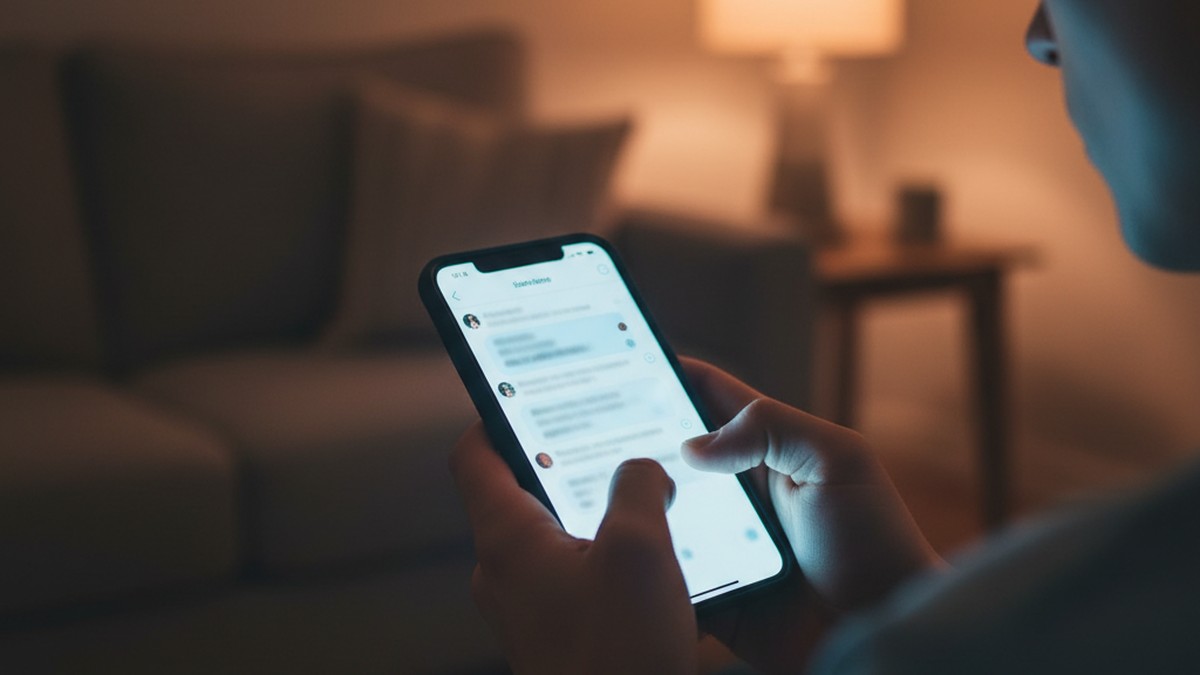
Private Discord servers are invite-only spaces that don't appear in any public directory. They're invisible to anyone who isn't a member, and a user can leave or be removed from a server and all evidence of its existence vanishes from their server list. This makes them fundamentally different from hidden apps on a phone — there's nothing installed to find.
The Three Server Types
Discord's servers fall into three categories. Public servers are searchable in Discord's own discovery tab and indexed by external directories. Community servers are structured for larger groups, with roles, moderation systems, and organized channels. Private servers are invite-only: they're not discoverable, not indexed anywhere externally, and require a specific invite link to join.
A private server between two people looks exactly like any other server — except it's named whatever the creator chose, has whatever channels they set up, and its existence is completely invisible to everyone outside it.
How Conversation History Disappears
Several Discord features make evidence disappear naturally and without much technical skill. Users can delete their own messages at any time with no archive retained. They can leave a server, after which it disappears entirely from their server list. They can disable message previews in notifications so no content appears on the lock screen. They can set their profile to Invisible.
None of this requires expertise. These are standard user settings, available to anyone within seconds.
Why a Physical Phone Check Reveals Almost Nothing
This is the technical detail that makes Discord different from SMS or even WhatsApp. Discord stores all messages on its own servers, not locally on the user's device. The app on your partner's phone is a viewer — it loads content from Discord's servers in real-time.
When someone clears Discord's local app data, the messages don't disappear. They still exist on Discord's servers and reload the next time the app opens. When someone deletes messages or leaves a server, that content is gone from Discord's servers — and there's nothing on the phone to recover.
What a physical phone check gives you: the Discord app, a logged-in account session, and whatever is currently visible in the app. If private servers and deleted DMs have been managed with basic care, a phone check yields nothing useful.
This architectural reality means that the behavioral approach — documented observation over time — is not just a starting point for Discord investigations. It's the primary tool available.
How Notification Settings Conceal Activity
Discord's notification system offers multiple layers of concealment that don't require any technical knowledge to use. A user can disable notification previews globally, so Discord notifications appear as a generic ping with no message content visible on the lock screen. They can mute individual servers or DM threads, preventing any notification from appearing at all. They can suppress Discord's badge count on the app icon, so there's no visible indication of unread messages.
The result is a communication channel that can be actively used without producing any of the visible indicators — banner notifications, lock screen previews, unread counts — that typically signal digital activity on other apps.
Someone maintaining a secret relationship on Discord while living with a partner can receive and respond to messages throughout the day with no indication visible on their phone's home or lock screen. This isn't a technical exploit. It's a standard settings configuration that any Discord user can apply in under a minute.
What Does an Emotional Affair on Discord Look Like?
An emotional affair on Discord typically starts in a shared gaming or interest-based server, where two people bond over a common activity before moving to private direct messages. The shift to a private one-on-one server or extended voice channel sessions marks the escalation from community member to intimate connection.
Understanding this progression matters because emotional Discord affairs often don't feel like cheating to the person having them — at least not at first. They met in a server. They were both there for the same game or community. The relationship grew from shared interest, not from an explicit search for something outside the relationship. That framing makes it easier for the person involved to rationalize what's developing, and harder for a suspicious partner to get an honest account when they ask.
The Typical Progression
Stage one: Shared community. Two people are in the same Discord server — a gaming guild, a fan server, a hobby group. They interact publicly within channels, reacting to each other's messages, playing together, becoming recognizable presences to each other.
Stage two: Private DMs. The conversation shifts out of public channels and into direct messages. This transition is the first significant step — it means they're choosing to talk separately from the community that brought them together.
Stage three: Escalating intimacy. The DMs become regular. Topics extend past the original shared interest into personal territory: their relationship, their dissatisfactions, their emotional needs. Voice channels enter the picture. Conversations run longer. The tone becomes more private.
Stage four: Private server. At some point, they may create a shared private server — a space that belongs only to them, with whatever channels they choose to name, and complete invisibility from the outside. A private server built for two people is the Discord equivalent of a physical space that exists only for the secret relationship.
Stage five: Offline escalation. Some emotional Discord affairs remain entirely digital. Others progress to phone calls, physical meetings, or sexual contact. The gradual emotional foundation makes the later stages feel like a natural continuation rather than a distinct decision.
According to the Institute for Family Studies (2022), 38% of affairs now begin through social media and online platforms. Gaming communities contribute to this number as prolonged online interaction with consistent partners has become normalized as a relationship context. The distinction between emotional affair versus physical affair is particularly relevant here — many Discord-based situations begin as emotional and are rationalized as "not really cheating" for extended periods.
"Emotional affairs often cut deeper and linger far longer than physical cheating, even when the relationship still looks perfect from the outside," according to a 2022 Psychology Today analysis of infidelity in the digital age. That depth comes in part from the accumulation of shared private language, inside references, and hours of unrecorded voice time — all of which Discord facilitates without leaving a documentary trail.
The Gaming Cover Problem
The specific challenge with Discord is that the gaming context provides continuous, socially acceptable cover. Spending hours with "gaming friends" on Discord is normal, common, and — for most users — exactly what it appears to be. That genuine normality is what makes the behavioral signals so important to read carefully.
A person who has always used Discord heavily, has always been somewhat private about their online communities, and whose behavior hasn't changed presents a very different picture from someone whose Discord patterns shifted six months ago. Baseline comparison is the foundation of accurate behavioral reading. Without knowing what was normal before, a single signal is just noise.

The DISCORD Method: A 7-Point Behavioral Pattern Analysis
The DISCORD Method is a structured framework for analyzing whether a partner's Discord usage is consistent with casual gaming or warrants serious concern. It organizes seven distinct behavioral signals into a scoring system that moves an assessment from gut feeling to documented pattern analysis.
Work through each letter and score it on a three-point scale: 0 (not present, clearly explained, or normal for this person's established baseline), 1 (present occasionally or mildly, with a possible innocent explanation), 2 (consistently present, unexplained, and different from baseline behavior).
D — Device Behavior
Does your partner guard their device specifically during Discord activity? The benchmark is whether this behavior is consistent across all apps or specifically intensified when Discord is involved. A phone that's face-down, that gets picked up immediately when Discord sounds a notification, or a screen that angles away when you sit down nearby — particularly when these aren't patterns with other apps — is a meaningful signal. Score against their baseline, not against an abstract standard.
I — Identity Signals
Have new, unfamiliar usernames appeared in their Discord environment? Have they created or referenced a new account without a clear reason? Have they changed their Discord display name or profile picture in ways that feel like a presentation shift — presenting themselves differently to a new audience? Identity changes on a platform where you can be anyone to anyone often aren't accidental.
S — Server Secrecy
Do they avoid showing you their server list? Do they minimize the app quickly when it's open on a device you can see? Have they declined opportunities to join a shared server or play together in Discord when doing so would be natural given the activity they're describing? Server secrecy is particularly meaningful because it's an observable action, not an inference.
C — Communication Changes
Has their Discord usage changed in volume, timing, or character? Late-night sessions that are new. Increased hours that don't correlate with a new game or gaming event. More headphone use during Discord sessions when previously they played without. Communication changes are among the most reliable signals available because they represent a measurable shift from an established baseline. These patterns overlap directly with phone-based behavioral signs of cheating more broadly.
O — Offline Emotional Distance
Does emotional withdrawal correlate with Discord activity? A partner who is less present, less communicative, or more distracted after long Discord sessions — particularly when this is a new pattern — is displaying a meaningful signal. Individual moods don't tell you anything. A consistent correlation between Discord time and emotional distance is a different category of information.
R — Reaction to Questions
How does your partner respond when Discord comes up in neutral conversation? Ask a simple, non-accusatory question — "What were you playing last night?" — and observe the response. Defensiveness out of proportion to the question, an unusually detailed justification of completely normal behavior, or immediate deflection onto another topic are all worth noting. The emotional quality of the response to a neutral question often carries more information than the content of the answer.
D — Deletion Patterns
Have they recently cleared Discord history, left servers they haven't mentioned leaving, or changed privacy settings that limit what you can see? Timing is particularly significant here. Privacy setting changes made shortly after a conversation about Discord, or after any moment where access to their activity seemed possible, are deliberate actions rather than routine maintenance.
Scoring and Interpretation
Add your scores across all seven signals. The total positions the pattern in one of three response categories.
| Score Range | Pattern Assessment | Suggested Response |
|---|---|---|
| 0–4 | Normal usage. Individual signals are absent or clearly explained. | No specific action indicated. |
| 5–8 | Pattern worth discussing. Multiple low-level signals present without clear explanation. | Direct, specific conversation using observed examples. |
| 9–14 | Significant behavioral concern. Multiple consistent signals align across categories. | Serious conversation; consider couples counseling as a support. |
A score of 9 or above doesn't confirm infidelity. It confirms that a pattern of behavior exists that deserves an honest conversation. The DISCORD Method gives you something concrete to reference — specific behaviors, specific timeframes — rather than asking you to articulate a feeling that's hard to put into words.
One important note: run this assessment against your partner's established baseline, not against how you'd expect an average person to behave. Someone who has always been somewhat private about their digital life will score higher on this scale than their behavior actually warrants. The question isn't whether the behaviors exist — it's whether they represent a change.
Can You See Who Your Partner Is Talking to on Discord?
Without access to their account, you cannot see your partner's Discord DMs, private server membership, or friends list. Discord exposes nothing about a user's conversations to outsiders. What you can observe is their behavior, online status if they haven't hidden it, and the servers they choose to show you.
This is worth stating directly because many guides imply there's a technical workaround available to ordinary users. There isn't a legitimate one.
What Is Visible to You From Outside the Account
If you share a server with your partner, you can see their activity in that shared server: when they post, which channels they enter, when they're in a voice channel within that server. You can see their profile, their username, and their online status — unless they've set it to Invisible.
If you're on each other's friend list, you can additionally see their current activity status (what game they're playing, if they've made that public) and their custom status message.
That is the complete list of what's observable from outside their account without any form of unauthorized access.
What Requires Account Access (and Why That's the Wrong Path)
Their DMs, their full server list, their message history, and their complete friend list are only visible if you're logged into their account. Accessing someone else's Discord account without their consent constitutes unauthorized computer access under the Computer Fraud and Abuse Act and equivalent legislation in most countries. This applies regardless of your relationship to the person.
Tools marketed as "Discord DM viewers," "Discord account checkers," or similar are either fraudulent (they access no real data) or illegal (they involve unauthorized credential use or account exploitation). The marketing language these tools use doesn't change their legal status.
The Practical Implication for Verification
If you're trying to understand what's happening, behavioral observation is your legitimate tool. The DISCORD Method gives you a structured approach to documenting what you're seeing. That documentation — specific behaviors, dates, patterns — is what actually supports a productive conversation. A conversation built on "I've observed X on these dates" is more honest and more effective than one built on information obtained through unauthorized means.
One exception worth noting: if you're in a shared server, you can see when your partner is online and active in that server, which channels they post in, and when they enter voice channels. If you've never been invited to join any of their servers despite extended time together — or if an invitation to join comes with visible resistance — that gap itself becomes a meaningful signal.
For a broader guide on how to approach digital suspicion in a relationship, how to catch a cheater covers the full range of methods across platforms, including what produces real evidence and what typically doesn't.
How Is Discord Different From Other Cheating Apps?
Discord requires no phone number, no real name, and no searchable public profile. Unlike dating apps, there is no database of Discord users that can be scanned for someone's account. The platform's anonymity, combined with its gaming cover, makes it fundamentally harder to detect than Tinder, Bumble, or standard messaging apps.
This matters practically because most digital infidelity detection is built for dating app databases. Profile scanners work by searching for a match across Tinder, Bumble, Hinge, and similar apps — comparing name, age, location, and photo across millions of indexed profiles. That approach is highly effective for dating app activity. For Discord, it simply doesn't apply.
Here's how the detectability comparison looks across platform types:
| Feature | Dating Apps (Tinder, Bumble) | Discord | Messaging Apps (WhatsApp, SMS) |
|---|---|---|---|
| Real name required | No, but typical | No | Phone number (WhatsApp) |
| Phone number required | No | No | Yes (WhatsApp) / Yes (SMS) |
| Searchable public profile | Yes | No | No |
| Profile database scannable | Yes | No | No |
| Call log visibility | No | No | Yes (SMS) |
| Message storage location | App servers | App servers | Device + cloud (WhatsApp); device (SMS) |
| Plausible cover | Dating intent | Gaming | Communication |
| Detectable by profile scan | Yes | No | No |
The practical takeaway: if your concern centers on Discord specifically, you need behavioral evidence rather than a profile search. If your concern extends to the possibility of dating app activity alongside Discord use, those are two distinct verification tracks — one behavioral, one searchable.
For signs of cheating through other messaging platforms with similar privacy architecture, secret messaging apps used for cheating covers how the major platforms compare in terms of what they hide and what behavioral patterns they produce.
The Psychological Difference: Community Versus Dating Intent
There's a dimension to Discord-based infidelity that the comparison table above doesn't capture: the way the platform shapes how people interpret their own behavior.
Dating apps involve explicit intent. A person on Tinder is presenting themselves as available. If they're in a committed relationship and maintain an active Tinder profile, there's no ambiguous reading — the behavior is incompatible with the relationship on its face.
Discord's community structure creates genuine ambiguity that doesn't exist on dating apps. Two people can spend 60 hours a month in voice channels together, share personal details they've never told anyone else, and build a relationship of significant emotional intimacy — while both sincerely believe, at least initially, that it's "just a gaming friendship." The community context provides an ongoing rationalization that isn't available on a platform whose purpose is explicit.
This matters for partners trying to understand what's happening. Discord-based infidelity often begins in a gray zone that both parties experience differently. The person in the committed relationship may have convinced themselves that what they're doing isn't cheating; their partner often senses something is wrong before there's a discrete act to point to. That gap between "this doesn't count as cheating" and "something is wrong here" is one of the more painful aspects of Discord-based situations.
Why the 18–34 Demographic Matters for This Conversation
Discord's primary user group — 18 to 34 year olds, who represent the majority of its monthly active users — is also the demographic with the highest rates of digital social interaction and the most normalized relationship with extended online communities. For someone in this age group, having close online friends they've never met in person is genuinely unremarkable. Most of those friendships are exactly what they appear to be.
This context matters because it shapes how a partner's concern should be framed. "You spend time on Discord" is not a meaningful concern for this demographic. "Your behavior on Discord has changed in ways that concern me" is. The distinction between the platform and the behavior change is the entire difference between an unfair accusation and a legitimate conversation.
Why Does Most Discord Catch-a-Cheater Advice Miss the Point?
Most guides suggest installing monitoring software or checking your partner's phone. Both approaches fail for Discord specifically. Discord stores messages server-side, not locally, so a physical phone check reveals almost nothing. Monitoring software raises serious legal concerns. The most actionable evidence for Discord cheating comes from behavioral observation, not digital forensics.
This isn't a minor caveat — it's the central structural fact about Discord that separates it from most platforms. Generic "catch a cheater" advice that doesn't account for it isn't just unhelpful. It sends people down a path that wastes time, creates legal exposure, and often damages the relationship further without producing any real information.
Why Phone Checks Don't Work for Discord
When you check an SMS thread, you're reading messages stored on the device itself — in the phone's memory, synced from the carrier, or backed up to iCloud or Google. Discord doesn't work this way. All Discord messages live on Discord's own servers. The app on your partner's phone is a client — a viewer — that retrieves content from those servers in real-time.
Clearing Discord's local app cache changes nothing about the message history, which remains on Discord's servers. If your partner deletes messages from within Discord, those messages are gone from Discord's servers entirely — and there is nothing on the device to recover. A forensic data recovery tool won't help you here.
What a physical phone check can tell you: Discord is installed, the account has an email address attached to it, and whatever is currently visible on screen if the app is open. If a partner using Discord for infidelity has taken any basic precautions — which typically requires only knowing how to delete a message and leave a server — a phone check yields nothing useful.
Why Monitoring Software Is the Wrong Tool
Third-party apps claiming to monitor Discord face two structural problems. First, Discord's servers send messages to the app through encrypted channels, and Discord actively works to prevent unauthorized API access. A genuine third-party monitoring solution would require either Discord's cooperation (which it does not provide for personal surveillance) or an exploit — which would be both illegal and unreliable.
Second, installing monitoring software on an adult's device without their knowledge or consent can constitute a violation of federal wiretapping laws and computer fraud statutes, regardless of your relationship to that person. The legal exposure from using such tools is real. Courts have treated unauthorized device monitoring as a serious matter in civil and criminal proceedings.
What Actually Works
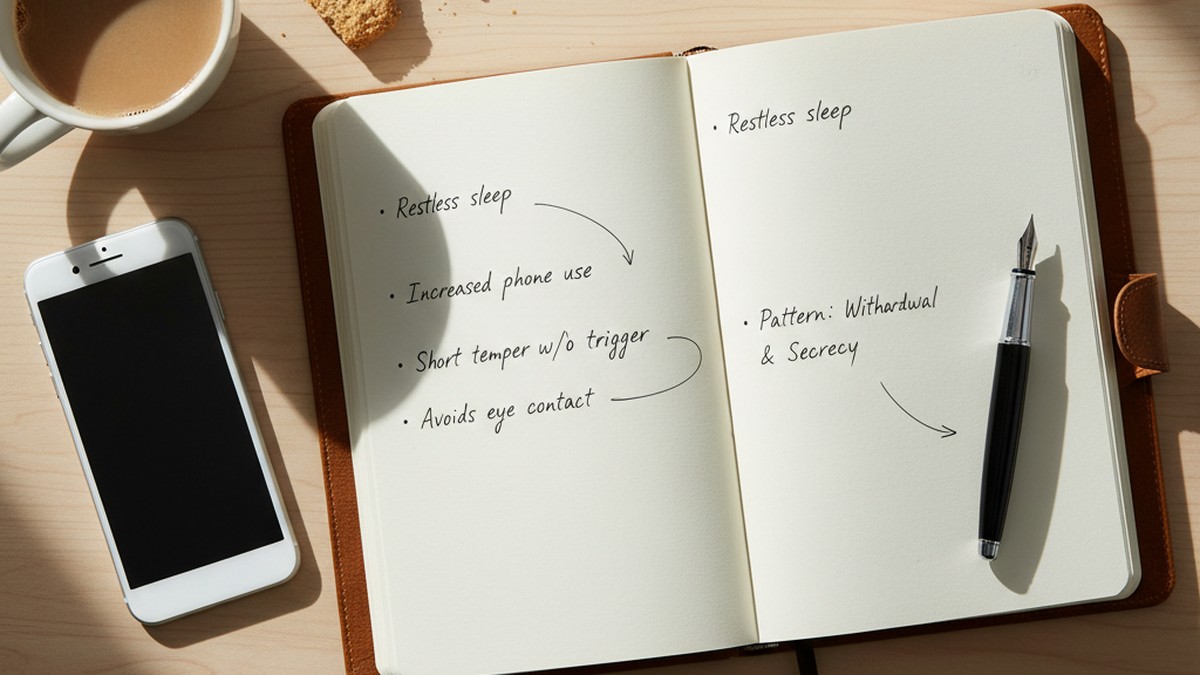
The evidence that holds up in practice — both in honest conversations and in legal contexts if things go further — is documented behavioral observation. Specific behaviors, dates, and patterns. The DISCORD Method above gives you the structure for this.
"I've noticed that over the past three weeks, you've been on Discord until after 1 a.m. on Tuesdays and Thursdays, and you've seemed emotionally distant afterward" is a specific, honest statement that creates space for a real conversation.
"I looked through your phone but couldn't find anything" ends a conversation before it begins.
The contrast matters. Behavioral documentation builds toward clarity. Unauthorized access builds toward conflict without resolution.
What to Do If You Suspect Discord Cheating
The most effective approach to suspected Discord infidelity follows a clear progression: document specific behavioral observations, have a direct conversation built on those specifics, and assess the response before deciding on next steps. The goal is honest information — not a digital investigation.
Step 1: Document what you've observed, with dates and specifics.
Before any conversation, write down what you've actually noticed — with dates, times, and concrete details. Not "you're always on Discord late" but "on the 14th, 19th, and 23rd of this month, Discord activity ran past 1 a.m., and you seemed withdrawn after each session." Specificity demonstrates a genuine pattern and prevents the conversation from becoming a general argument about feelings.
Step 2: Run the DISCORD Method as a structured assessment.
Before assuming the worst, score your observations against the framework above. A total below 5 suggests your concern may be based on isolated signals with innocent explanations. A score above 8 gives you a documented pattern worth addressing — and gives you something specific to reference in the conversation rather than a general unease.
Step 3: Choose direct conversation over investigation.
A calm, specific conversation — built on observations rather than accusations — produces more honest information than any investigation. Lead with what you've noticed: "I've observed X and Y, and I've been feeling Z. I'd like to understand what's happening." Their explanation, and how well it matches or contradicts the pattern you've documented, tells you more than any digital check could.
Step 4: Ask to join a server or play together on Discord.
This simple test is often more revealing than anything else. If your partner's Discord use is genuinely about gaming with friends, the suggestion of playing together should be met with openness or at most logistical reasons ("I'm in the middle of a match," "it's a specific friends group"). Resistance that feels disproportionate — excuses that don't quite land, deflection, or unusual reluctance — is itself meaningful information.
Step 5: Know what digital verification can and can't cover.
If you want to check whether your partner has active profiles on dating apps — Tinder, Bumble, Hinge, Match, or a dozen others — that search is possible, produces concrete results, and can be done in minutes. Discord cannot be scanned this way; that's been established. But if the suspicion extends beyond Discord to the possibility of dating app activity, those are separate questions with different verification paths.
Step 6: Consider relationship counseling before the confrontation, not after.
Suspected infidelity — whether or not it's confirmed — creates significant relationship strain on its own. A couples therapist provides a structured environment where both people can be honest without the conversation immediately becoming adversarial. Earlier professional involvement generally leads to better outcomes than waiting for a confrontation to go wrong first. Research from the American Association for Marriage and Family Therapy indicates that 60-75% of couples who pursue professional help after infidelity disclosure remain together, with earlier intervention producing better results.
Common Mistakes People Make When Investigating Discord Activity
The way people typically approach suspected Discord infidelity tends to make things worse rather than better — either legally, relationally, or practically. These are the most damaging mistakes and why they backfire.
Accessing their Discord account without permission.
The damage is twofold. You've committed unauthorized account access regardless of what you find, and anything you discovered cannot be used constructively without revealing how you obtained it. More importantly: if the relationship has any future, the breach of trust involved in unauthorized account access is itself nearly impossible to repair — separate from and in addition to whatever the original concern was.
Installing monitoring software on their device without consent.
The same legal exposure applies, plus a false sense of security. As described earlier, most third-party Discord monitoring tools are either fraudulent (producing fabricated output) or technically incapable of capturing Discord's server-side messages. You may pay for a tool, create legal exposure, and still have no reliable information.
Presenting a general accusation without specific evidence.
"I think you're cheating on Discord" produces a denial. "I've noticed X, Y, and Z over the past three weeks, and I'm genuinely concerned" produces a real response — even if that response is defensive, it gives you something to work with. Specifics force engagement with facts. Generalizations invite denial and deflection.
Treating all Discord use as inherently suspicious.
67.7% of Discord users are male (DemandSage, 2026). The platform has 259.2 million monthly active users. The vast majority of people on Discord are there for gaming, creative communities, fan groups, and professional networks. Treating Discord use itself as a red flag creates false positives and damages trust without cause. The question is always whether behavior has changed from baseline — not whether the platform is used at all.
Acting on a single signal instead of a pattern.
One late-night Discord session proves nothing. One defensive response to a question proves nothing. One unfamiliar username in a visible friend list proves nothing. Any single signal from the DISCORD Method can be explained by a dozen innocent causes. What matters is the pattern — multiple signals, consistent over time, that together represent a meaningful shift from established behavior. Acting on a single observation before a pattern exists damages the relationship without producing useful information.
Telling mutual friends before having the direct conversation.
People managing the anxiety of suspected infidelity sometimes seek support from shared friends. That choice has significant consequences regardless of whether the suspicion turns out to be correct. If it's wrong, the suspicion is now in the social network. If it's right, the disclosure happened through a third party rather than between the two people involved. The conversation between you and your partner should come before any disclosure to a shared social circle.
Expecting immediate honesty from the first conversation.
Even when someone is ready to be honest, the first direct conversation often produces defensiveness before openness. That's a normal response to feeling confronted, regardless of whether the underlying concern is accurate. A partner who gets defensive and then becomes more reflective over the following days is showing a different pattern from one who maintains a consistent denial over weeks. Give the first conversation time to settle before concluding what it means.
Ignoring relationship distance while fixating on digital evidence.
The most important information about a relationship's health isn't found in an app. If there's genuine emotional withdrawal, reduced intimacy, or communication breakdown, those are the real signals — and they're worth addressing directly, regardless of what's happening on any platform. Digital evidence, when it exists, confirms something your emotional intelligence has usually already registered. Starting from the relationship rather than from the app is generally the right order of operations.
What the Evidence Is Really Telling You
Discord is one platform in a larger pattern. The people who work through this article having scored high on the DISCORD Method, or who recognized most of the behavioral signs described above, are not really asking about an app. They're asking whether the relationship they're in is honest.
That question deserves a direct answer — from your partner, not from an investigation. Every behavioral signal described in this article points toward the same conclusion: the gap between what someone's actions demonstrate and what they're willing to say is where the truth lives. The app is the location. The behavior is the evidence.
If you've worked through this article and concluded that something significant has changed — that the person you're with is conducting a relationship you don't know about — trust that assessment. Not reactively, not accusatorially, but with the confidence that comes from documented, specific, consistent observations.
Have the conversation. Ask directly for honesty. Give the relationship a real chance to respond to the truth before you make any larger decisions. The behavioral framework above gives you the language to do that with specificity and clarity rather than hurt and accusation.
If digital verification of dating app activity is also part of what you need, CheatScanX can run that check across Tinder, Bumble, Hinge, and 15+ other platforms — results in minutes, no account required.
Frequently Asked Questions
Yes. Discord's anonymous username system, private invite-only servers, and built-in voice channels create a communication environment that's harder to detect than dating apps or standard messaging. While most Discord users are there for gaming or communities, the platform's privacy architecture makes it attractive for people conducting secret relationships.
The most reliable signs are behavioral: device guarding when Discord notifications appear, sudden password changes, emotional withdrawal after long Discord sessions, and defensive reactions when the app is mentioned. Discord itself is invisible to outsiders — you can't search for their account — so behavioral patterns are your primary evidence.
No. Discord's DMs, private servers, and friend list are only visible to the account owner. Accessing someone else's account without consent is unauthorized computer access under federal law. The observable signals — their behavior, their online status, and how they react when Discord comes up — are what you can legitimately assess.
Dating apps are scannable — CheatScanX and similar tools can search for profiles by name, age, and location. Discord has no searchable profile database. Accounts need only an email address, no real name, and a person can have multiple accounts under different usernames. This makes digital detection much harder than with Tinder or Bumble.
Yes, but with specific observations rather than accusations. Name what you've noticed — 'I've seen you minimize Discord whenever I sit down' or 'You seem distant after late-night gaming sessions' — and give them space to explain. This opens a real conversation without triggering defensiveness, and their response tells you more than any app could.