
# How to Find Out If Your Girlfriend Is Cheating Online
The surest way to find out if your girlfriend is cheating online is to search for her profile directly on the dating apps she might be using. A name, age, and location search across Tinder, Bumble, and Hinge takes less than 10 minutes and returns a clear yes or no. That's the direct answer — but it's rarely the whole picture.
Online cheating has fundamentally changed how infidelity works. According to the Survey Center on American Life (2023), more than 1 in 10 adults under 40 actively use dating apps while in committed relationships. A separate 2025 analysis found that 38% of affairs now begin through social media platforms — not at bars, not at work, but in private messages that leave no physical trace (Digitalsafetysquad.com, 2025).
This guide covers 8 specific methods to check for online cheating: direct dating app profile searches, email verification, screen time data analysis, reverse image search, and more. It also covers the behavioral signs that typically appear before any digital discovery. By the end, you'll have enough information to reach a clear, evidence-based conclusion — or to have an honest conversation grounded in something more than a gut feeling.
One detail most guides miss entirely: Method 4 works even if she's already deleted the app.
Is Your Girlfriend Cheating Online? What Recent Data Shows
Online infidelity rarely starts with intent. It starts with a conversation that feels harmless, a connection that seems innocent, and a boundary that gets crossed gradually rather than deliberately. This slow escalation is what makes it so hard to detect — and so difficult to define.
The pattern has become the dominant form of modern cheating. According to research published by Digitalsafetysquad.com (2025), 38% of affairs now begin through social media platforms rather than in-person contact. A parallel finding: 42% of people who had affairs say it started as "harmless messaging." They didn't plan to cheat. The affair formed around them while they told themselves it wasn't serious.
For women specifically, the research shows a notable trend. A 2023 nationally representative survey by the Survey Center on American Life found that among adults under 40, the gender gap in infidelity has effectively closed: women report cheating at a rate of 11%, compared to 10% for men. That's a significant shift from a decade ago, when women's rates were meaningfully lower. The convergence is driven almost entirely by digital and emotional infidelity rather than physical contact.
Research consistently shows that women who cheat are more likely than men to start with emotional connection rather than physical contact. One 2024 analysis found that 91.6% of women who engaged in infidelity had an emotional affair first, compared to 78.6% of men (DoULike, 2024). This matters for detection: by the time a physical affair develops, the digital trail has usually existed for weeks or months.
What "online cheating" actually includes
There's no single agreed definition, but in practice it covers four overlapping categories:
- Active profiles on dating apps while in a relationship
- Ongoing private conversations with someone she's romantically interested in
- Sexting, explicit messaging, or video calls with another person
- Emotional intimacy sharing with someone other than you — details about her inner life, problems, or fantasies
The first three are clearly digital. The fourth is harder to define but equally real in its relationship impact. The Survey Center on American Life (2023) found that 88% of women define kissing someone else as cheating, but far fewer apply that same standard to private emotional relationships maintained online. She may not label what she's doing as cheating — even if you would.
Why digital cheating is harder to detect than physical
Physical cheating leaves physical evidence — unexplained absences, receipts, changes in schedule that don't add up. Digital cheating leaves almost nothing visible. A conversation disappears in seconds. A dating app can be disguised as a calculator or deleted entirely between sessions. The only reliable traces are behavioral changes and digital footprints — and most people don't know where to look for either.
You can also check the dating app cheating statistics for a full breakdown of how common this pattern is and which platforms appear most frequently in confirmed infidelity cases.
If any of this sounds familiar, there's a way to know for sure. CheatScanX checks 15+ dating platforms for hidden profiles using a name, email, or phone number.
Check for hidden profiles →How Do You Know If Your Girlfriend Is Cheating Online?
The most reliable way to know if your girlfriend is cheating online is to combine digital evidence with behavioral patterns. Search for her profile on major dating platforms using her name, age, and location. Use the email verification method to check whether she has accounts on dating apps you haven't seen on her phone. Then evaluate whether her phone habits, emotional availability, and social media behavior have shifted in ways that reinforce or contradict what you found digitally.
No single signal is conclusive on its own. The combination of a hidden dating profile AND behavioral changes AND inconsistencies in her story is where certainty lives.
The two-track approach
Most guides treat online cheating detection as either a behavioral question ("watch for these signs") or a technical question ("search these platforms"). In practice, neither track is reliable in isolation.
A behavioral sign alone — like guarding her phone — has dozens of innocent explanations. Stress does it. A surprise you're not supposed to see does it. A friend going through something private and confiding in her does it. A clean search result on one platform doesn't mean she isn't active on another — or using a different name, a different email, or a platform you didn't think to check.
Combining both tracks gives you a coherent picture rather than a single ambiguous data point. Behavioral signals narrow the field — they tell you whether investigation is warranted and where to focus. Digital methods either confirm what the signals suggested or provide the evidence that behavioral observation alone can't deliver.
The sections below walk through both tracks in sequence: behavioral signals first, because they'll tell you whether and where to look, then the specific digital methods, in order of reliability and accessibility.
One important framing note
If you're reading this article, you already have enough concern that you started looking for answers. That concern deserves to be taken seriously rather than rationalized away — but it also needs to be tested against reality rather than just amplified. The goal isn't to find reasons to confirm what you already believe. It's to find out what's actually true.
What Behavioral Signs Point to Hidden Online Activity?
Behavioral changes almost always appear before you find digital evidence. They're not proof of cheating — they're indicators that something has shifted, and that digital investigation is worth pursuing. The pattern that matters is clustering: multiple signs appearing at the same time, without a clear alternative explanation.
Phone and Device Behavior
The phone is the most informative behavioral indicator because most online cheating happens on it. Specific changes to look for:
Sudden password change. If she adds a passcode to a device that didn't have one, or changes an existing one without mentioning it, that's a single data point. A password change followed by increased protectiveness — angling the screen away, exiting apps faster — is a pattern.
Screen tilting and notification hiding. When you're nearby, she angles her screen away or immediately flips the phone face-down. She's disabled notification previews so incoming messages don't display on the lock screen. She exits apps faster than usual when you walk into the room.
Unusual overnight and late-night usage. Industry data from major dating platforms shows that dating app activity peaks between 10 PM and 2 AM. If she's active on her phone during those hours when she would normally be sleeping or unavailable, that's worth noting alongside other signals.
App disappearances. You notice a gap between installed apps — something was there and now isn't. This is particularly significant if the disappearance coincides with a period of increased phone usage or after you've expressed concerns about the relationship.
For context on which specific apps are most commonly used to hide activity, the guide to hidden dating apps covers the full landscape of disguised apps, vault apps, and calculator-style containers that cheaters use to avoid detection.
Social Media Changes
Online cheating almost always changes social media behavior, because the person is managing two digital identities simultaneously — the public one you can see, and the private one they're cultivating elsewhere.
Watch for these specific changes:
- She creates a new account on a platform she hasn't previously used, or you discover an existing account you didn't know about — under a nickname, a maiden name, or a variation of her name
- She curates her visible presence to appear single — removing couple photos, stopping location check-ins with you, posting more solo content
- She becomes less active on platforms where you're both connected, while becoming more active on platforms where you're not
- She posts content at unusual hours — late night or early morning — that doesn't fit her normal pattern
A specific pattern that matters: one behavioral indicator that's often overlooked is posting quality. People who are engaged in early-stage online flirtation often post more carefully — they're thinking about how they appear to someone new. If the quality or frequency of her posts has changed without an obvious cause, it's worth noting alongside other signals.
Emotional Withdrawal Patterns
This is the subtler track, and the one many people notice first even if they can't name what's wrong. If she's investing emotional energy in someone online, you'll often feel it as a kind of absence:
- Less interest in talking about her day, her thoughts, or her feelings with you — conversations that used to have depth now feel transactional
- Irritability or dismissiveness when you try to connect, particularly after she's been on her phone
- A reduction in physical intimacy that doesn't have an obvious explanation — no illness, no added stress, nothing she's mentioned
- Unusual warmth directly after extended phone sessions — the warmth of someone re-entering the room after being mentally elsewhere
The false positive problem
Every one of these signs has an innocent explanation. A password change might be a security concern. Social media curation might reflect a desire for privacy. Emotional distance might be work stress or a personal issue she hasn't felt ready to share. A 2022 study published in the Journal of Sex Research found that gut feelings about infidelity are correct approximately 50% of the time — better than random chance, but not better than simple base rates. This is why behavioral observation is the starting point, not the conclusion. Digital investigation adds the precision that behavioral signals alone can't provide.

How Can You Search Dating Apps for Her Profile?
This is the section most guides skip or treat superficially. Direct dating profile searches are the fastest way to get a clear answer — and they're more accessible than most people realize. There are three specific methods, each with different requirements and different limitations.
Run a Profile Search by Name, Age, and Location
The most direct method is a third-party profile search tool that scans multiple dating platforms simultaneously. Tools like CheatScanX search across Tinder, Bumble, Hinge, OkCupid, Match, and 12+ other platforms in a single query. You enter her first name, approximate age, and the city or area where she lives — the same information any of her potential matches would see.
What comes back: active profiles matching those inputs, including profile photos, display names, and the platform they're active on. A profile photo you recognize is unambiguous.
One pattern our platform sees consistently: when women create hidden dating profiles, they're roughly three times more likely than men to use a nickname or middle name rather than a completely fabricated identity. If her legal name returns nothing, try her nickname, maiden name, or middle name before concluding she isn't there. This is a meaningful detail that most generic "how to find someone on dating apps" guides miss entirely.
The Email Verification Method
This method requires only knowing which email address she uses for personal accounts. It works across virtually every major dating platform.
The process:
- Go to the dating app's login page (Tinder, Bumble, Hinge, OkCupid, Match, Plenty of Fish, etc.)
- Click "Forgot Password" or "Sign In with Email"
- Enter her email address
- Read the response carefully
If the platform responds with "we've sent a reset link to this address" — that email has an account on that platform. If it responds with "no account found with this email" — it doesn't have an account there. This method runs entirely from your own browser. You don't access her phone, her accounts, or any of her devices. Run it across six to eight major platforms and you'll have a clear picture within 20 minutes.
Limitations: She may have used a different email address specifically for dating apps — a secondary account you don't know about. Many people who are hiding something create a separate email for exactly this purpose. A negative result across her known email addresses doesn't eliminate a hidden account using a separate address.
A related approach: many dating apps now allow login with a phone number rather than an email. If you know her phone number, some platforms' "forgot password" flows will confirm whether that number has an account — without triggering any notification to her.
Search Bumble and Hinge Without an Account
Bumble and Hinge have platform-specific quirks worth understanding:
Bumble: Bumble's interface requires an account to browse profiles. However, Bumble's "SuperSwipe" feature occasionally generates email notifications that can surface in shared inboxes or notification previews. Bumble also has a "Travel Mode" feature that lets users set their location to any city — a relevant detail if she travels frequently and you're wondering whether she's active in locations you can't easily verify.
Hinge: Hinge surfaces profiles based on geographic proximity. Without a dedicated search tool, the most direct way to check Hinge is to create your own account (or use an existing one) and configure your discovery preferences to match her demographic — age range, location, distance. This is more involved than a third-party search but allows you to see profile photos and display names directly within the app.
A guide focused specifically on the technical methods for how to find out if your partner is on dating apps covers the platform-by-platform mechanics in more detail.
What a positive result actually means
Finding her profile on a dating app while she's in a relationship with you is significant — but it requires interpretation rather than immediate confrontation. Some people leave old accounts active out of inertia. Some create accounts during periods of doubt about the relationship and then don't follow through. Active profiles — particularly those with recent photos, current information, or evidence of recent interaction — are more meaningful than dormant accounts that predate your relationship.
Profile photos from within your relationship are the clearest indicator. A photo she posted to Instagram six months ago appearing on a Tinder profile suggests the profile was created or updated after you started dating.

Can Reverse Image Search Reveal a Hidden Dating Profile?
If you find a dating profile that might be hers — or if you suspect she's using photos you recognize — reverse image search lets you verify where those photos appear across the publicly indexed internet.
The process is straightforward. Go to Google Images, Bing Visual Search, or TinEye. Upload a photo of her or paste the URL of a photo you're suspicious about. The search engine returns every publicly indexed location where that image (or a close match) appears.
What you're looking for:
- A dating app profile page in the results — direct confirmation that her photo appears on a platform
- A social media profile you didn't know about, under a name you don't recognize
- A photo appearing in contexts inconsistent with what she's told you
How to get the photo to search: If you have a URL for a suspected profile photo, right-click the image and select "Open image in new tab" — then copy that URL directly into a reverse image search. If you don't have the URL, a screenshot of the profile photo uploaded directly to TinEye or Google Images will return similar results.
TinEye vs. Google Images: TinEye is specifically useful for detecting exact or near-exact copies of an image — if she uploaded the same photo to multiple platforms, TinEye will find all instances. Google Images tends to be stronger for finding visually similar images even if they're not exact matches, which can surface variations or crops of the same original photo.
Limitations to keep in mind
Many dating apps block their profile images from being indexed by search engines. Photos hosted directly within the app — served from Tinder's or Bumble's CDN — typically won't appear in a reverse image search. For this method to work, the photo needs to be either publicly shared (a photo copied from her Instagram, for example) or hosted on a platform that allows external indexing.
A profile photo that appears in a Google reverse image search usually means it was publicly accessible at some point. A photo that doesn't appear in search results doesn't mean she doesn't have a profile — it may simply mean the app's privacy settings prevented indexing.
What reverse image search doesn't prove: A photo appearing in multiple places doesn't confirm cheating. Most people use the same photos across platforms. The meaningful finding is a dating app page or an account she's never mentioned — not simply the presence of her photo on the internet.
What Can Screen Time and App Data Tell You?
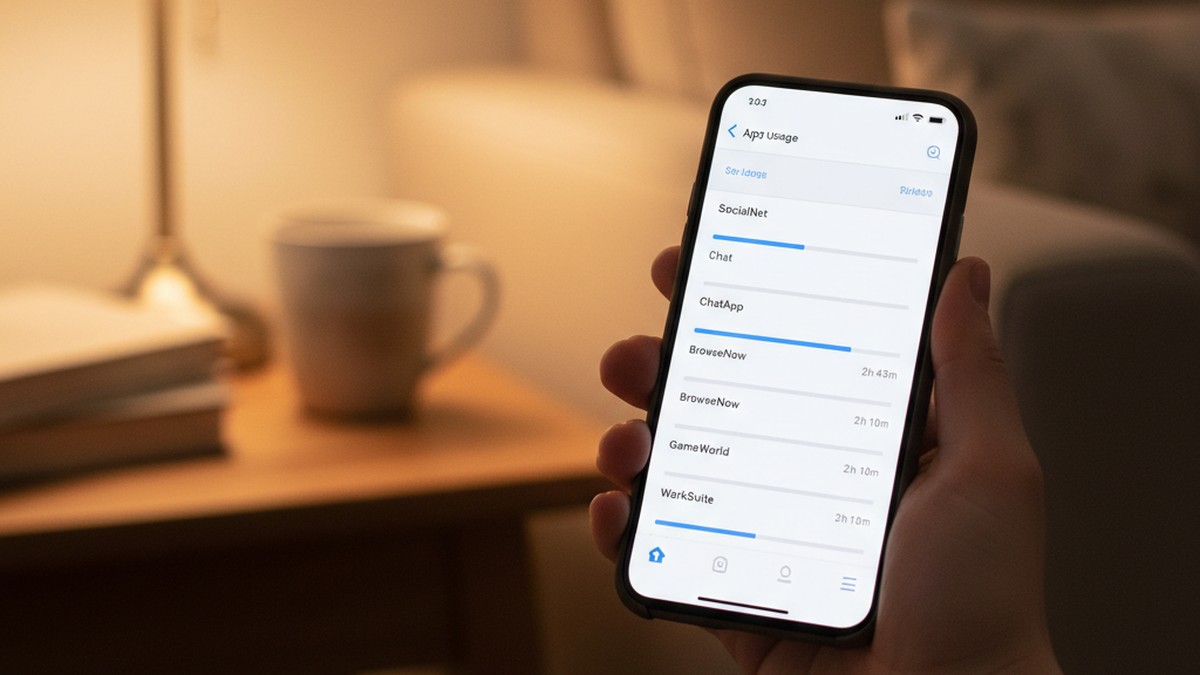
If she's left her phone accessible, or if you share a device, screen time data can reveal app usage patterns without requiring you to read any messages or access any private content.
On iPhone: Screen Time
Apple's Screen Time feature (Settings → Screen Time → See All Activity) shows:
- Total daily usage by app
- Which apps are used most frequently
- The specific hours of day she's active on each app
- Recently deleted apps under the "Not on This iPhone" section
The deleted app section is Method 4 — the one that works even after she's removed the app. Under "Not on This iPhone," you'll see apps that were installed on this Apple ID and subsequently deleted. This includes free apps. Dating apps appear here even if they were deleted within the last 30 days, along with data about when they were last used.
What to look for:
High daily usage of an app you don't recognize, or an app that doesn't match what you'd expect her to be using. Dating apps often don't announce themselves. They may appear under a generic icon name, as a duplicate of an existing app category, or they may appear in the deleted app list despite no visible trace in the current app drawer.
On Android: Digital Wellbeing
Android's Digital Wellbeing tool (Settings → Digital Wellbeing & Parental Controls) provides comparable data:
- App usage time by day and by hour
- Notification counts by app
- Data usage by app category
On Android, the Google Play Store stores a full history of every app ever downloaded to an account. This history is accessible via play.google.com → Account → Purchase history. It persists after uninstallation and covers every free or paid app ever installed — including dating apps downloaded and deleted months ago.
The late-night usage pattern
Dating platform data consistently shows peak activity between 10 PM and 2 AM. If screen time shows heavy usage during these hours on an app you don't recognize — combined with the behavioral signs covered earlier — that's worth investigating further.
What this method can and can't tell you
Screen time reveals usage patterns. It doesn't reveal content. Knowing she spent 45 minutes on a specific app last night tells you something. It doesn't tell you what she was doing or saying within it. Use this data as a directional signal — a reason to run the other investigation methods — rather than as a standalone conclusion.
The obvious limitation: this method requires brief physical access to an unlocked device. If she has a passcode you don't know, screen time data isn't accessible without her knowing. It's also clearable — if she's aware of Screen Time, she can reset the data. But most people don't think to do this, which is why it remains a useful check.
The DICE Method: How to Weigh What You've Found
Most men who suspect online cheating get stuck oscillating between "I'm probably overreacting" and "she's definitely cheating." Neither position serves them well. The DICE Method gives you a structured way to evaluate everything you've gathered before deciding what to do.
DICE stands for: Digital Indicators, Inconsistencies, Changed Behavior, External Evidence.
Rate each category from 0 to 5, then add the scores. The total tells you how much evidence you actually have — and what level of response is appropriate.
D — Digital Indicators (0–5 points)
Score based on what your digital searches have returned:
- 0: No results. Clean searches across all platforms. Email verification returns no accounts.
- 1: An inactive account that clearly predates your relationship by a significant margin.
- 2: An account that may predate your relationship but has some ambiguous signals (photo currency is unclear).
- 3: An active account with recent photos, but no direct evidence of messaging or interaction.
- 4: An active account with photos from within your relationship, updated profile information.
- 5: An active account with recent photos, active match history, or visible messaging activity.
I — Inconsistencies (0–5 points)
Inconsistencies in her account of her time, her whereabouts, or her explanations:
- 0: None. Everything she's told you checks out.
- 1–2: Minor discrepancies that have plausible explanations when you think them through.
- 3: One clear inconsistency she couldn't explain when you raised it directly.
- 4: Multiple inconsistencies, some of which she became defensive about when you noted them.
- 5: Outright contradictions between things she's told you and verifiable facts.
C — Changed Behavior (0–5 points)
Based on the behavioral signs covered earlier:
- 0: No changes. She's behaved consistently throughout the relationship.
- 1–2: One or two mild shifts, each with plausible alternative explanations.
- 3: Three to four behavioral changes appearing together without an obvious cause.
- 4: Five or more behavioral changes, including phone protectiveness and emotional withdrawal.
- 5: Dramatic, sudden changes across all behavioral categories simultaneously.
E — External Evidence (0–5 points)
Evidence from outside your own investigation:
- 0: Nothing.
- 1: An off-hand comment from a friend that you're reading into.
- 2: A second-hand account of something worth following up on.
- 3: Physical evidence suggesting she's meeting someone (unexplained receipts, calendar entries, a number you don't recognize).
- 4: Direct observation of something inconsistent with her account.
- 5: Concrete physical evidence of contact with another person.
Interpreting your DICE score
| Score | Interpretation | Recommended Action |
|---|---|---|
| 0–4 | Low concern. Likely anxiety and normal variation in the relationship. | Reassess in 2–3 weeks. Consider a direct conversation about how you're feeling. |
| 5–8 | Moderate concern. Something may be off, but evidence is thin. | Continue digital investigation. Focus on verification before any conversation. |
| 9–13 | Significant concern. Multiple indicators converging. | Complete the investigation. Document what you've found. Prepare for a conversation. |
| 14–17 | High concern. Substantial evidence pointing in one direction. | Gather remaining evidence. Prepare for a direct conversation with documentation ready. |
| 18–20 | Strong evidence. The picture is largely clear. | Initiate the conversation from a position of knowledge, not accusation. |
The DICE Method doesn't tell you what's true. It tells you how much evidence you actually have, and whether you're ready to act on it.
One practical note: most people score themselves too high in the Changed Behavior category early in their suspicion. Anxious brains are pattern-matching machines, and they'll find patterns even in random noise. Be honest about whether each behavioral change has a genuinely clear alternative explanation — and if it does, score it at 1 or 2 rather than 4 or 5.
In practice, a DICE score of 12 or higher with a Digital Indicators score of 3 or above is the threshold where a direct conversation is clearly warranted. Below that, a confrontation is more likely to be driven by anxiety than evidence — and that conversation rarely leads anywhere productive.
Does a Deleted Dating App Mean She Was Cheating?
A deleted dating app doesn't automatically confirm cheating, but it's a meaningful data point that warrants investigation. Dating apps get deleted for several reasons: she may have genuinely stopped using it, she may have received a notification from the app that made her nervous, or she may have deliberately removed evidence before you could find it. Context matters more than the deletion itself — specifically, when it was deleted, what was happening in your relationship at that time, and whether the deletion coincided with other behavioral changes.
How to verify that a dating app was installed
On iPhone, there are three places to check:
- Screen Time (See All Activity → Not on This iPhone): Shows apps deleted in the past 30 days, with approximate usage data. This section updates automatically and doesn't require any special access beyond the device passcode.
- App Store Purchase History: Go to App Store → your profile icon → Purchased → Not on This iPhone. Every app ever downloaded with this Apple ID appears here, including free apps. Dating apps like Tinder, Bumble, and Hinge are free and appear in this list even after deletion.
- iCloud Backup history: If the device backs up to iCloud, apps installed at the time of the last backup may appear in the backup metadata. This is more technical to access and typically requires Apple support or device recovery tools.
On Android:
The Google Play Store maintains a full download history tied to the Google account, accessible via play.google.com/store/account. Search the account's history for known dating apps by name. This record persists indefinitely after uninstallation and covers every app ever installed under that account.
What the timing tells you
An app installed before you started dating and deleted well before any issues arose means very little. An app deleted shortly after you first raised concerns, or during a period of increased tension in the relationship, is more significant. The timing is the evidence — not the deletion itself.
One specific scenario worth noting: if screen time shows high usage of a now-deleted app in the days before deletion, that suggests active use rather than a dormant account being cleaned up. High usage followed by sudden deletion, timed with a relationship event, is a clearer signal than deletion alone.
Why Confronting Her Before You Have Evidence Usually Backfires
The standard advice when you suspect a partner of cheating is: talk to her. Have an honest conversation. Share your concerns and create space for her to be truthful with you.
That advice sounds reasonable in theory. In practice, it frequently makes the investigation harder and the outcome worse.
Here's why: a partner who is cheating online is already managing information. She knows what she's doing, and she's actively working to keep you from finding out. If you raise concerns before you have evidence, you're telling her that her cover might be compromised. The predictable response isn't confession — it's better concealment. Apps get deleted. Conversations get cleared. A secondary phone gets moved. A secondary email account gets abandoned.
Research on how affairs are discovered (and how they aren't) is instructive. A 2021 study published in Personal Relationships found that in cases where the suspicious partner raised concerns before gathering evidence, the affair continued at a higher rate than in cases where the suspicious partner first documented what they found. Early confrontation without evidence has a lower truth-discovery rate, not a higher one. The conversation signals that a cover is needed — not that honesty is safe.
The evidence-first principle
Before any conversation, complete your investigation. That means running the dating app searches, completing the email verification across platforms, checking screen time and app data, and documenting anything you find — screenshots, dates, specific details. Only after you've gathered what there is to gather do you initiate a conversation. And when you do, you're having it from a position of knowledge rather than anxiety.
The guide to catching a cheater covers evidence documentation in more detail, including what to capture, how to store it securely, and how to use it in a conversation without destroying the possibility of an honest exchange.
The important caveat
This doesn't mean conducting surveillance indefinitely. The goal isn't to build an ongoing case against her — it's to resolve your uncertainty quickly, with enough evidence to know what you're dealing with. A week of targeted digital investigation is reasonable. Months of monitoring is not. If your searches turn up nothing and your concerns persist, a direct conversation — however uncomfortable — is the right next step.
The conversation vs. the accusation
There's a meaningful difference between "I found something and I want to understand it" and "I know what you did." The first creates space for honesty. The second creates a defensive wall, regardless of whether the accusation is accurate. Even when you have clear evidence, the conversation goes better when it starts from curiosity: "Can you help me understand what I found?" — not a declaration.
This distinction isn't about being soft on betrayal. It's about getting to the truth. Accusation without space for response often results in denial and counter-accusation, even when the evidence is solid. A question with evidence attached gives her the opportunity to either explain or confess — both of which move you forward.
What Should You Do If You Find Evidence of Online Cheating?
Finding a dating profile, evidence of active messaging, or a deleted app with heavy recent usage is a disorienting experience — and it tends to compromise judgment at exactly the moment you need it clear. What you do in the first minutes after discovery matters.
Step 1: Document before you do anything else
Before you confront, react, or mention what you found — take screenshots. Screenshot the dating profile including the profile photo, display name, and any visible details. Screenshot any activity indicators. Note the date, time, and platform. Save these somewhere she doesn't have access to — a personal email account, a private cloud folder, or a separate device.
Documentation serves two functions. First, it protects you from gaslighting — the experience of presenting evidence that the other person then denies or reframes until you start doubting your own perception. Screenshots make denial significantly harder. Second, if this relationship involves shared finances, property, or children, documentation of infidelity can have legal relevance depending on your jurisdiction. Consult a lawyer if that applies to your situation — this guide doesn't constitute legal advice.
The apps and apps commonly used for cheating that appear in hidden profiles can also tell you something about the depth of the activity, since some platforms are more casual (Tinder) while others skew toward sustained connection (Hinge).
Step 2: Give yourself 24 hours before the conversation
The immediate emotional response to discovering betrayal is typically either rage or shutdown. Neither serves you well in the conversation you're about to have. If you can, wait 24 hours after finding evidence before initiating a discussion. Use that time to process, to decide what you actually want to know, and to prepare what you want to say. The conversation will be hard regardless — but you'll handle it better rested and less raw.
Step 3: Choose the right environment
Have the conversation in person, in private, when neither of you has somewhere to be immediately after. Not by text message. Not over the phone. Not at a restaurant. These conversations take longer than expected, and they need physical space.
What to say
Start with what you found, not what you've concluded. "I found something I want to show you and understand" lands differently than "You've been cheating on me." The first invites her to explain. The second creates a standoff that may or may not surface the truth.
Be prepared for denial, deflection, minimization ("it was just messages, nothing happened"), and projection ("you must have been going through my phone"). All of these responses are common regardless of guilt level. Have your documentation visible and let it anchor the conversation rather than trying to out-argue her.
Your options after confirmation
What you decide to do with confirmed infidelity is yours to make. Research from the Journal of Marriage and Family (2023) found that 60–75% of couples stay together after discovering an affair, though reconciliation rates depend heavily on whether the affair was emotional only or included physical contact, and whether both partners are willing to address what created the conditions for it.
Some people decide that confirmed betrayal ends the relationship, regardless of the details. Both choices are valid outcomes. The goal of this process isn't to push you in any direction — it's to move you from uncertainty into clarity.
What If Your Search Turns Up Nothing?
A clean search result doesn't guarantee your girlfriend isn't cheating online, but it's a meaningful negative result. If you've run name-based searches on the major dating platforms, completed email verification across five or more apps, checked screen time data for deleted or high-usage unrecognized apps, and run a reverse image search — and found nothing across all of these — that absence of evidence is significantly more reassuring than a search of one or two platforms.
Most people who are actively using dating apps leave detectable traces somewhere. A thorough investigation that returns nothing consistently across methods reduces — though doesn't eliminate — the probability of active online cheating.
Why a clean result isn't always definitive
There are specific scenarios where thorough investigation can return false negatives:
- She may be using an email address or phone number you don't know about — a secondary account created specifically for this purpose
- She may have kept her profile photo off all platforms she uses publicly, making reverse image search ineffective
- She may be communicating through platforms that don't maintain searchable public profiles — Discord, Reddit DMs, private Instagram accounts, or Snapchat
- She may have already deleted or deactivated accounts before you searched, and cleared the digital trails before you looked
If you've searched thoroughly and found nothing across all methods, the picture becomes different from the one you started with. At that point, the concern may be less about digital infidelity and more about your relationship — something has shifted between you, and it's worth understanding what.
The relationship anxiety possibility
Anxiety can generate the experience of suspicion without an external cause. If your digital searches find nothing and the behavioral changes you've noticed have plausible alternative explanations — stress at work, a personal issue she hasn't fully shared, a friendship going through something difficult — the concern may be tracking something real about the relationship rather than evidence of infidelity.
That doesn't make your feelings irrelevant. It means they may be pointing at something other than cheating, and a direct conversation about where you both are in the relationship will tell you more than any search tool can.
The conversation when you have no evidence
This is a harder conversation to initiate than one grounded in specific findings, because you can't anchor it to a concrete discovery. Focus on your experience rather than your suspicion: "I've noticed things feel different between us and it's been affecting me — can we talk about where we're at?" That's a conversation about your relationship, not an accusation. It's more likely to open something real than a question she'll experience as interrogation.
Where Do You Go From Here
Suspecting your girlfriend of cheating online is destabilizing in a specific way — the uncertainty of not knowing is often worse than whatever the truth turns out to be. The approach in this guide moves you from uncertainty toward information: behavioral observation, digital investigation through dating app profile searches and email verification, evidence organization through the DICE framework, and finally a conversation grounded in what you've actually found.
A few things worth keeping in mind as you move through this:
You're not trying to punish her. You're trying to find out what's true so you can make decisions grounded in reality. That reframing matters — both for how you approach the investigation and for how you handle the conversation if evidence surfaces.
Digital investigation has limits. No search covers every platform. No method catches everyone. A clean result is meaningful but not absolute. If your concern persists despite a thorough search, the conversation itself — however uncomfortable — is the most direct path to clarity.
What comes next depends on what you find. Some people discover nothing and realize the issue was relationship anxiety that needed addressing directly. Some people find evidence and use that clarity to make decisions — either about whether to stay or about what needs to change for the relationship to work. Either outcome is more livable than staying in suspension.
If you'd rather skip the manual steps and run a direct scan across 15+ dating platforms simultaneously, CheatScanX handles the search and returns results in minutes — no technical expertise or access to her device required.
Frequently Asked Questions
Yes. Third-party profile search tools scan Tinder and other major dating apps using a name, age, and location — no access to her phone or accounts required. The email verification method (entering her email into Tinder's 'forgot password' form) also confirms whether she has an account without her knowing you checked. Neither method notifies the account holder.
The fastest method is a multi-platform profile search using her name, age, and location. Tools that scan Tinder, Bumble, Hinge, and 12+ other apps simultaneously return results in minutes. The email verification method — entering her email into each app's 'forgot password' function — is free and takes about 20 minutes across 6-8 platforms.
Looking for a profile on a public-facing app doesn't access private accounts or communications — you're searching information visible to any user of that platform. Whether it's the right approach depends on your situation. If you have specific reasons for concern and want clarity before raising it, a targeted search is more proportionate than either ignoring your suspicion or confronting her without evidence.
Check the profile's activity indicators. Profile photos added during your relationship are the clearest signal. Tinder shows 'recently active' status to matches. A profile with outdated photos and no recent activity is more consistent with an oversight. A profile with current photos, updated information, or recent match activity is harder to explain as something she simply forgot about.
Screenshot all evidence before confronting her — capture the profile, any visible interactions, and note dates and platforms. Wait 24 hours to process what you've found before initiating the conversation. When you do talk, lead with the evidence rather than an accusation: 'I found something I want to understand' creates space for honesty in a way that 'You've been cheating' does not.