
# Physical Signs of Cheating Wife
Physical signs of a cheating wife are changes you can observe directly — in how she looks, how she treats her body, how she acts around you, and how she responds to physical contact. The most documented cluster includes sudden grooming upgrades, significant shifts in intimacy, increased body language distance, and unexplained hygiene changes that appear together over weeks, not days.
You're reading this because something feels off. That instinct matters. A 2021 study in Personal Relationships found that gut-level suspicion is rarely random — it typically tracks real behavioral changes your brain detected before you consciously registered them. Infidelity occurs in approximately 25% of all marriages, according to a 2023 review published in Frontiers in Psychology (Rokach & Chan, 2023), and women's infidelity rates have increased significantly over recent decades, with the gender gap narrowing considerably among adults under 35.
This article covers 18 specific physical signs organized across four observable categories, explains the psychology behind why each one occurs, and identifies which signs are routinely misread. One sign in isolation rarely means anything. Read through each category before drawing conclusions — patterns are what matter, not individual incidents.
What Are the Most Reliable Physical Signs of a Cheating Wife?
The most reliable physical signs of a cheating wife involve changes across multiple domains simultaneously: sudden grooming upgrades, reduced or dramatically altered physical intimacy, increased body language distance (avoiding eye contact, flinching at touch), and unexplained hygiene shifts like showering immediately after returning home. No single sign is reliable alone.
No individual behavior on the list below constitutes evidence. Behavioral research on infidelity consistently shows that the meaningful signal is a cluster of changes across different areas of daily life — not any one specific action. Here are the physical signs that relationship researchers and private investigators identify as carrying the highest predictive value when appearing together:
Appearance-category signs:
- Unexplained wardrobe upgrades for outings you're not part of
- New hairstyle, fragrance, or aesthetic changes tied to specific days or events
- Increased gym attendance with no apparent health motivation you're aware of
- New lingerie or undergarments appearing without explanation
Intimacy-category signs:
- A sharp decline in physical affection (kissing, hugging, initiating sex) sustained over weeks
- A sudden unexpected increase in sexual interest after a period of low engagement
- Changed sexual behavior that differs from established patterns without explanation
- Emotional withdrawal that manifests physically — sitting farther away, less touching during conversations
Body language signs:
- Consistent eye contact avoidance when answering questions about her schedule or whereabouts
- Physical distancing during formerly affectionate moments (pulling away during hugs)
- Phone-protective body positioning (screen down, body angled away from you)
- Disproportionate irritability in response to routine questions about her day
Hygiene-category signs:
- Showering immediately upon arriving home, outside her normal routine
- Excessive application of perfume, deodorant, or mouthwash after time away from home
- Arriving home smelling of a fragrance you don't own
These categories form the foundation of the Signal Cluster Method explained later in this article. Before assigning meaning to any single sign, track whether it appears in isolation or as part of a broader pattern across multiple categories. For context on the full behavioral picture, the guide to apps cheaters use to hide their activity covers the digital side of the same behavior pattern.
If any of this sounds familiar, there's a way to know for sure. CheatScanX checks 15+ dating platforms for hidden profiles using a name, email, or phone number.
Check for hidden profiles →Sudden Changes in Physical Appearance and Grooming
One of the most visible and commonly noticed physical signs is a sudden, unexplained upgrade in personal appearance — and it matters most when the upgrade is directional and asymmetric.
The distinction is important. A woman who starts dressing better for work after a promotion is responding to an identifiable life change. A woman who starts buying new clothes, wearing perfume on Tuesday afternoons, and spending 45 minutes on her appearance before "running errands" — with no explained reason — has shifted her grooming behavior in a way that doesn't map to any known context.
The New Wardrobe Pattern
New clothing alone is not a red flag. Unexplained new clothing, specifically bought for occasions you're not part of, is different. Pay attention to whether the upgrades correspond to time she spends with you or time she spends elsewhere. Affair partners often dress significantly better for the person they're hiding than for their primary relationship — a pattern that's mechanistically consistent with the New Relationship Energy effect described later in this article.
A useful question to ask yourself: Has the improvement in her appearance made your shared life together look better, or has it almost exclusively shown up when she's leaving without you?
Changed Fragrance
A signature scent change — switching from a perfume you know to something new, or beginning to wear fragrance when she previously didn't — can indicate image-crafting for a new audience. The signal is strongest when the new scent appears specifically before certain outings and is notably absent during time at home.
This is not a standalone sign. Combined with schedule changes and intimacy decline, it contributes to a pattern worth noting.
New Workout Routine With No Clear Health Context
Increased gym attendance is often the first visible sign husbands notice — and it has the highest false-positive rate of any physical sign on any popular list. Women begin or intensify exercise for dozens of reasons entirely unrelated to infidelity: health goals, stress management, a friend's influence, a new class, post-illness recovery, or general wellness changes.
What makes a new fitness habit potentially relevant to this discussion is the surrounding context:
- Did the gym habit appear alongside other changes, or as an isolated development?
- Does she go at specific times that coincide with schedule secrecy?
- Does she seem more broadly motivated about appearance, or specifically about fitness health?
A genuine fitness motivation typically comes with visible health-focused changes — improved diet, talking about goals, tracking progress, discussing the classes or workouts she enjoys. An appearance-oriented motivation linked to someone else often exists in isolation, without any health-adjacent conversation.
Hair, Makeup, and Aesthetic Shifts
Style changes are entirely normal and carry minimal predictive weight alone. Women change their aesthetic after consuming new content, spending time with differently-dressed friends, receiving compliments, or simply wanting a refresh. What makes appearance changes meaningful is when they're asymmetric — consistently better presentation for outings you're excluded from, combined with unchanged or declining effort during time at home.
The table below shows the most common appearance changes, their most likely innocent explanation, and what context makes them more worth noting:
| Appearance Change | Most Likely Innocent Explanation | Context That Raises Concern |
|---|---|---|
| New wardrobe | Fashion refresh, seasonal change, new job | Clothes worn only for outings you're not part of |
| New workout routine | Health goal, friend influence, stress relief | Appears alongside schedule secrecy and intimacy decline |
| Changed hairstyle | Self-expression, stylist recommendation | Tied to specific unexplained period of change |
| New perfume | Personal preference, gift, impulse purchase | Worn before certain outings, absent at home |
| More makeup effort | Confidence boost, social occasion | Consistently applied before time without you |
| New lingerie | Spontaneity, personal comfort | Appearing without any shared context or mention |
Use this table as a calibration tool, not a scorecard. Each innocent explanation is genuinely plausible. What shifts the meaning is when multiple entries in the right column apply simultaneously.
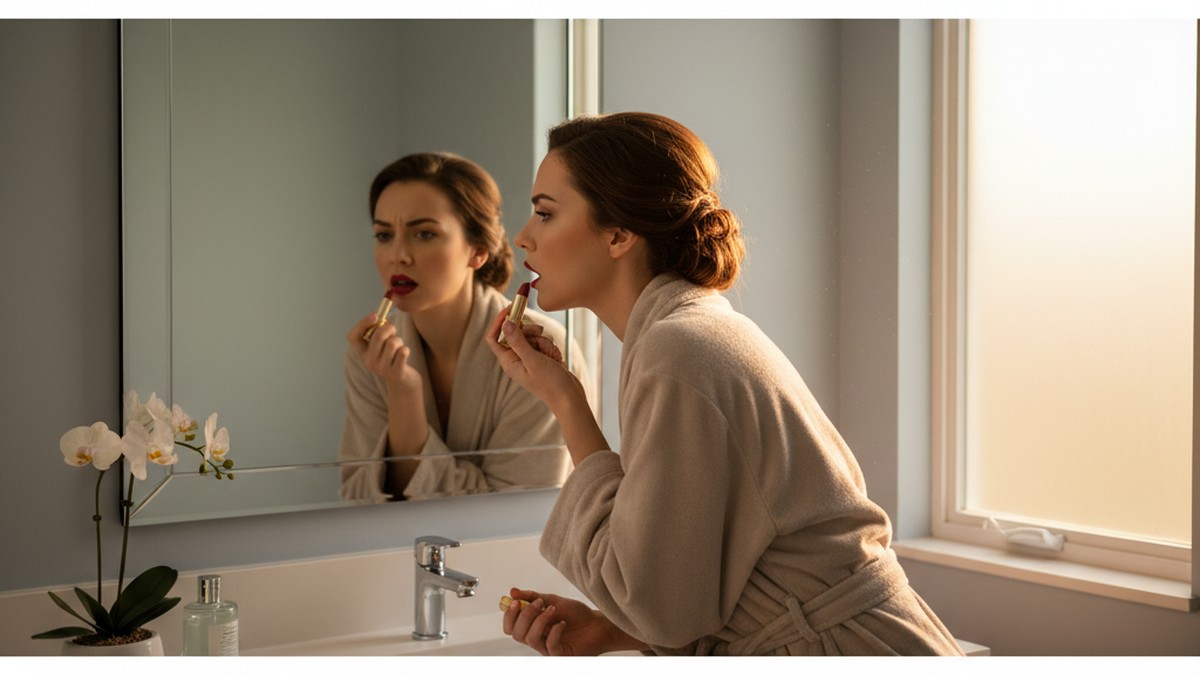
How Physical Intimacy Patterns Shift When a Wife Is Cheating
Intimacy patterns shift in two distinct directions when cheating occurs: either a sharp decline driven by guilt and emotional withdrawal, or a sudden unexpected increase from guilt compensation or heightened arousal. A rapid reversal of an established pattern — in either direction — is more telling than the direction of the change alone.
Both directions are documented in infidelity research, and both can be misread if you don't understand what drives each one.
The Decline Pattern
The more widely recognized pattern is a drop in physical intimacy. When a wife is emotionally invested in another relationship, physical connection with her primary partner often decreases naturally — desire redirects, guilt makes intimacy feel emotionally dishonest, and psychological distance grows physical.
Specific signs of the decline pattern include:
- Reduction or near-cessation of sexual initiation where she previously initiated regularly
- Shorter, more perfunctory physical affection (quick kisses instead of lingering ones, brief hugs instead of embraces)
- Physically moving away during moments that were previously close — sleeping at the edge of the bed, sitting at the far end of the couch
- Difficulty maintaining extended eye contact during physical contact
- Describing herself as "too tired" or "not in the mood" consistently over multiple weeks, not just occasionally
Each of these individually has innocent explanations. Stress, fatigue, depression, health issues, and relational disconnection all produce identical patterns. The sustained duration — weeks rather than a bad stretch — and the combination with other categories are what separate meaningful signals from normal relationship fluctuation.
The Sudden Increase Pattern
Less discussed but equally documented is the opposite: a sudden increase in sexual interest or physical affection, particularly from a previously lower baseline. This occurs for several documented reasons:
- Guilt compensation — Some people increase affection with their primary partner as an unconscious attempt to balance their emotional accounting. The logic doesn't hold, but the behavior is well-documented.
- Heightened arousal spillover — New sexual activity can increase overall libido temporarily, affecting the primary relationship.
- Suspicion management — A deliberate attempt to appear normal and reduce the chance of detection.
The key differentiator between this pattern and a genuine positive change: sudden increases unconnected to any relationship-level improvement (no resolved conflict, no recent reconnection, no reason you can identify for the shift) warrant attention. Genuine improvement in intimacy typically has an identifiable cause you both understand.
Changed Sexual Behavior
Changed sexual behavior — new preferences, techniques, or patterns — is one of the more specific intimacy-category signs, though also one of the most emotionally difficult to assess honestly. Research doesn't provide clean predictive accuracy here, and innocent explanations exist (new content exposure, spontaneity, personal initiative to improve the relationship).
What makes this sign worth noting: when it appears alongside multiple other signals from different categories, and when the changes seem disconnected from any mutual conversation or initiative within the relationship. If new behavior arrived with no acknowledgment, no conversation, and no explanation you can identify, that absence of context is itself worth noting.
Body Language Changes That Signal Deception
Body language research on deception shows consistent patterns, though individual variation is significant. No single body language cue is conclusive on its own — but clusters of specific behaviors, particularly in response to direct questions about whereabouts or schedule, carry meaningful weight.
A 2021 study in Personal Relationships found that people suspecting infidelity reported observing "changes in behavioral patterns" as their primary detection signal — more consistently than any technological evidence (Weigel & Shrout, 2021).
Eye Contact Changes
The most commonly documented body language change is altered eye contact — but it appears in a specific context. Not generally avoiding looking at you, but specifically avoiding eye contact when answering questions about her schedule, whereabouts, or particular events.
A person managing active deception expends cognitive resources on maintaining a false narrative. That cognitive load competes with the capacity for direct gaze, which is why the eye contact change tends to appear specifically when deception-management is active, not across all interactions.
The specificity matters: does the eye contact change happen broadly throughout your interactions, or only during particular types of conversation? The first pattern suggests disengagement or emotional withdrawal. The second is more consistent with active deception.
Physical Distancing
Spontaneous physical affection typically decreases when someone is managing guilt from infidelity. This shows up as more physical space maintained during activities that previously involved closeness, less spontaneous touch in neutral moments, and a subtle flinching or stiffening response to physical contact — particularly unexpected contact.
The flinching response is specifically noted in infidelity literature as a guilt reaction: an involuntary physical response when someone feels they don't deserve affection from a person they're deceiving. It's subtle, brief, and easily rationalized as fatigue or preoccupation if you're not paying attention. The distinction from general tiredness: it's most pronounced at specific moments (physical contact immediately after she returns from somewhere), not distributed evenly throughout the day.
Phone Protective Behavior
This category appears in virtually every resource on cheating, and its high false-positive rate deserves honest acknowledgment. Most adults are more protective of their phones than they were five years ago, regardless of infidelity. Privacy expectations around phones have shifted across the culture.
That said, changed phone behavior — a shift from open to guarded — does carry weight. The meaningful signal is not that she has phone privacy (most people do), but that the level of privacy has noticeably changed without any explanation. Signs of changed phone behavior include:
- Screen-down placement in rooms you share, when this wasn't previously her habit
- Immediate screen-lock when you enter the room or approach
- Physically moving away when a notification arrives
- Immediate phone-checking upon arriving home that exceeds her established pattern
None of these are individually meaningful. As part of a pattern with other changes, the shift from her baseline is what matters.
Disproportionate Irritability Around Specific Topics
One of the more reliable context-specific body language signals is heightened defensive reactivity — specifically, disproportionate irritability or anger in response to neutral questions about her schedule. A simple "who were you with?" or "where did you go?" receiving a sharper response than the question warrants is worth noting.
This differs from normal relationship conflict, which tends to be broader and connected to real tension points in the relationship. Guilt-driven irritability is disproportionate to the specific question, specifically concentrated around topics adjacent to what's being concealed, and notably different from her responses to similar questions in the past.

Changes in Hygiene and Scent Habits
Hygiene pattern changes are among the most specific physical signs available, but they're also among the easiest to over-interpret. This section identifies the high-signal patterns and explains why the others carry less weight than they appear to.
The Post-Return Shower
The most specific hygiene sign with the highest signal-to-noise ratio is showering immediately upon arriving home — when this behavior represents a genuine departure from her established routine.
Context calibration is essential here. If she works in a physical job, commutes in warm weather, works out before coming home, or has always preferred evening showers, a post-return shower is completely unremarkable. The signal is present only when the behavior has changed — when she previously didn't shower immediately upon returning from a particular type of outing and now consistently does.
Private investigators focused on infidelity cases identify the post-return shower as a meaningful behavioral signal specifically because of what it may represent: an effort to remove physical evidence of contact with another person. But they also emphasize that it only carries weight as part of a cluster — not as a standalone indicator.
Perfume and Deodorant Over-Application
A pattern worth noting is excessive application of scent products upon arriving home — perfume, deodorant, or body spray applied more heavily or more frequently than usual after certain outings. The proposed mechanism: masking an unfamiliar scent with a familiar one, or neutralizing evidence of physical contact.
The counter-consideration: some people use fragrance as a mood management tool, as a stress response, or simply as habit. The relevant signal is a change from her previous pattern, specifically correlated with certain outings.
Arriving Home Smelling Different
If your wife arrives home smelling of a cologne or body wash you don't own, this is a concrete physical observation rather than an interpretation. Taken alone, innocent explanations exist — office social events, crowded public spaces, spending time with family members who wear strong fragrance. Combined with other signs across the categories described in this article, it contributes to a pattern worth addressing.
Oral Hygiene at Unusual Times
An uptick in mouthwash use or teeth brushing at unusual times can reflect anxiety-related hygiene behavior as much as anything else. This sign is low-reliability in isolation and should not be weighted heavily without multiple accompanying signs from other categories.
The 4-Category Signal Cluster Method
Most guides about physical signs of infidelity present a numbered list and leave interpretation to the reader. The problem is that human beings under anxiety are poor at probabilistic reasoning — and when you're already suspicious, you're significantly more likely to interpret neutral behavior as confirming evidence.
The 4-Category Signal Cluster Method addresses this by providing a structured evaluation framework rather than a checklist that grows as anxiety grows.
The core principle: No single physical sign reliably predicts infidelity. Meaningful concern requires observable deviations in at least two of the four categories below, sustained over at least two to three weeks, representing a genuine break from her established behavioral baseline — not just behaviors that match a list you found.
The Four Categories
Category 1: Appearance
Signs related to grooming, clothing, fragrance, hairstyle, fitness, and physical self-presentation — specifically changes that are asymmetric (better for certain outings, unchanged at home).
Category 2: Intimacy
Signs related to sexual frequency, initiation patterns, physical affection, and emotional closeness during physical contact — specifically sustained changes over weeks, in either direction.
Category 3: Body Language
Signs related to eye contact patterns during specific conversations, physical distance, touch responses, phone-protective behavior, and defensive reactivity around schedule questions.
Category 4: Behavioral and Scheduling
Signs related to schedule changes, unexplained time away, social availability, communication patterns, and changes in how she accounts for her time.
How to Apply the Framework
Step 1: Establish her baseline. Before evaluating any sign, be honest about what is normal for her specifically. Her baseline is the only meaningful reference point — not what a list says about "cheating wives" in general.
Step 2: List observed changes and categorize them. Write down what you've noticed and assign each change to one of the four categories.
Step 3: Count how many categories show changes.
| Categories Showing Changes | Interpretation |
|---|---|
| 1 category | Low concern. Most life transitions affect only one behavioral domain. |
| 2 categories | Moderate concern. Worth noting and monitoring. Could still reflect independent stressors. |
| 3+ categories | Elevated concern. Simultaneous changes across multiple behavioral domains, sustained over weeks, are less likely to reflect unconnected independent causes. |
Step 4: Evaluate baseline deviation honestly. Ask yourself: is this a change from her established pattern, or does it just match a list you found? The answer matters enormously.
Step 5: Apply the innocent explanation test. For each observed change, identify the most plausible innocent explanation. If you cannot rule out the innocent explanation with reasonable confidence, keep it in the "possible" column rather than the "evidence" column.
Why the Framework Reduces Errors
Confirmation bias — the tendency to notice and remember information that confirms a pre-existing belief — applies with particular force to relationship suspicion. When you're looking for signs of infidelity, you will find them, whether they're genuinely there or not.
A 2021 study on suspicion-related behavior found that people who were already suspicious reported significantly more "confirming" behaviors from their partners than those who were not suspicious, even when observing equivalent situations (Weigel & Shrout, 2021). This isn't a character flaw — it's how selective attention functions.
The Signal Cluster Method creates a structure that requires cross-category evidence and baseline comparison rather than a growing collection of individually ambiguous observations.
Why Do Cheating Wives Change Physically?
A cheating wife changes physically due to what psychologists call New Relationship Energy (NRE) — a hormonal and neurological response to a new romantic connection that increases self-awareness and grooming attention. Guilt also drives behavioral change, including avoiding touch with a partner and increased personal grooming to manage chronic low-level anxiety.
Understanding the mechanisms behind physical changes helps you assess whether what you're seeing is mechanistically consistent with infidelity or more likely reflects something else.
New Relationship Energy and Physical Self-Presentation
NRE is a documented phenomenon in relationship psychology describing the heightened motivation, increased self-awareness, and elevated mood that accompanies new romantic connections. It produces measurable physical effects: increased energy, heightened motivation for personal appearance, and a general sense of engagement that others notice.
For a woman conducting an affair, NRE manifests as the appearance changes described throughout this article — new clothes, increased grooming, more energy before certain outings. The key diagnostic indicator: Are these changes directional? If she's more vibrant, more put-together, and more physically engaged when leaving without you — and less so during time at home — that asymmetry is more consistent with NRE from a hidden relationship than with general personal development.
General self-improvement tends to distribute across a person's life. NRE-driven self-improvement concentrates specifically around the person who's triggering the energy.
Guilt-Driven Physical Changes
Guilt produces specific physical behaviors in most people. Deception psychology research identifies several consistent physical responses to maintaining a significant ongoing deception:
- Reduced physical intimacy with the deceived partner — physical contact triggers cognitive reminders of the deception, creating discomfort
- Hypervigilance and chronic low-level tension — the cognitive load of managing multiple narratives produces physical stress that manifests as stiffness, irritability, and difficulty relaxing around the deceived partner
- Compensatory behaviors — some people increase attentiveness or affection as a guilt-offset, a well-documented but internally contradictory response
- Over-explanation — a verbal pattern rather than physical, but worth including: people actively managing deception tend to provide more detail than questions require, an unconscious effort to seem transparent
These guilt responses explain the body language cluster described earlier: the physical distancing, the flinching response, the eye contact avoidance during specific conversations.
Stress as the Most Important Competing Explanation
Here is the critical counterpoint that most guides skip: stress, anxiety, depression, and major life transitions produce nearly identical physical changes to infidelity-related guilt. Reduced intimacy, altered grooming patterns, changed mood, and physical distance are all documented responses to work stress, health concerns, grief, family difficulties, and mental health episodes.
This is not a reason to ignore your observations. It's a reason to investigate the cause before reaching conclusions. The most productive first step is a direct, non-accusatory conversation about what you've noticed, rather than treating physical signs as settled evidence.
Physical Signs That Most Guides Get Wrong
Here's the counterintuitive finding: the most commonly cited physical signs of a cheating wife carry the highest false-positive rates. Following standard advice from popular articles will lead many men to suspect infidelity where none exists — and that suspicion carries documented real costs regardless of whether it turns out to be correct.
A 2021 study published in Personal Relationships found that suspecting a partner's infidelity was associated with significantly greater depression, physical health symptoms, and engagement in risky behaviors — even when the suspicion ultimately proved unfounded (Weigel & Shrout, 2021). The anxiety of suspicion harms you whether or not you're right.
"She Started Going to the Gym" — Usually Not a Sign
New or intensified exercise is the single most over-interpreted physical sign in popular infidelity guides. The reality: women begin or intensify exercise due to New Year's motivation, health recommendations, influence from friends, post-illness recovery, stress management, or general wellness goals. These reasons account for the overwhelming majority of new gym attendance.
What makes exercise a potentially relevant signal is the surrounding context: Did the gym habit appear alongside other changes, or as an isolated development? Does she discuss it, or is it oddly private? Does she seem healthier and more energetic overall, or only more dressed-up for specific outings?
A genuine fitness motivation typically includes visible health-adjacent changes: better food choices, discussing goals or progress, a sense of accomplishment she references. Appearance-motivated behavior linked to an affair partner often exists in isolation without the health-focused context.
"She Started Dressing Better" — Almost Always Innocent Alone
Fashion and self-presentation changes happen continuously for entirely self-directed reasons. Women change their style after consuming new content, spending time with differently-dressed friends, receiving compliments, changing jobs, or simply wanting a refresh.
Treating any improvement in appearance as suspicious produces more harm than insight. What makes appearance changes potentially meaningful — as discussed at length earlier — is the asymmetry: noticeably better presentation for outings you're excluded from, combined with unchanged or declining effort at home.
"She's on Her Phone More" — A Near-Universal Cultural Trend
Average phone usage has increased dramatically across all adult demographics over the past several years, driven by social media, work communication, digital news consumption, and entertainment. Someone who uses their phone more in 2026 than in 2022 is exhibiting a normal social trend. Treating increased phone use as a red flag will generate false positives in nearly every case.
The meaningful signal is changed behavior relative to her established baseline — specifically, a shift from open to guarded, concentrated around specific conversations or events.
"She Seems Emotionally Distant" — Extremely Low Predictive Value Alone
Emotional distance is associated with dozens of life circumstances that have nothing to do with infidelity: depression, anxiety, work stress, physical health issues, grief, social difficulties, or simply a quiet personal period. Treating increased emotional distance as infidelity evidence without other corroborating signs frequently leads to a harmful, accusatory confrontation over something that has an entirely different cause.
The responsible response when you notice emotional distance: name what you're observing without accusation. "I've noticed we've been less connected lately. Is there something going on that I should know about?" This opens a productive conversation regardless of the underlying cause, and it's a more honest approach than privately building a case.
Why These False Positives Matter
For context on why accuracy matters here: approximately 13% of married women report extramarital affairs (General Social Survey, 2024). This means that if you're in a marriage without any other genuine risk factors, roughly 87 out of 100 wives do not cheat. Interpreting high-false-positive signs as evidence in that statistical context produces far more false accusations than correct identifications. The Signal Cluster Method and the calibration in this article are designed to reduce that error rate.
Can You Tell If Your Wife Has Been Physically Intimate with Someone Else?
Behavioral indicators that may suggest recent physical contact include: showering immediately after arriving home outside her normal routine, applying excessive perfume or deodorant upon entry, smelling of an unfamiliar cologne or body wash, unexplained physical marks, and unusual sensitivity when you initiate physical contact immediately after she returns.
These represent the most direct physical observations available without any intrusive methods — they're all externally visible. None is conclusive on its own, and all require honest baseline calibration.
The Post-Return Shower in Specific Context
As noted in the hygiene section, the post-return shower carries meaningful weight only when it represents a genuine departure from her established routine on specific types of outings. The question isn't whether she showers after coming home — it's whether this is a new behavior specifically correlated with certain circumstances.
Private investigators report this as one of the more reliable single-behavior indicators they observe, specifically because of the limited range of explanations for showering immediately upon arrival in a case where the person previously didn't do so. That said, even investigators treat it as one data point in a broader pattern, not standalone evidence.
Scent Observation
Direct scent observations — arriving home smelling of an unfamiliar fragrance, or of a body wash you don't own — are among the more concrete physical observations possible because they don't require interpretation. Unlike reading body language or assigning meaning to phone behavior, identifying a specific unfamiliar scent is an observable fact.
Treat it proportionally: a single occurrence has multiple innocent explanations (a colleague who wears strong cologne, a crowded event, a gift store, a friend's home with a diffuser). A repeating pattern on specific days or after particular types of outings is harder to explain innocently.
What Private Investigators Actually Focus On
Professional investigators focused on marital infidelity cases consistently report that the most actionable physical indicators are not dramatic — they're consistent patterns in ordinary behavior that deviate from the established baseline: specific days when her return-home routine changes, specific times when she's unreachable, and combinations of hygiene and behavioral changes that don't match any explained life event.
They also consistently note that physical behavioral signs matter most as context for a conversation or digital investigation, not as standalone evidence. Behavioral interpretation can always be explained away. Documentary evidence — such as the existence of a hidden dating profile — is much harder to dismiss. Resources like catching a cheating wife with digital methods can provide concrete, verifiable starting points that behavioral observation alone cannot.
What Cheating Wife Body Language Actually Looks Like
Cheating wife body language is not a dramatic performance of guilt. It's a subtle cluster of behavioral micro-patterns that appear in specific contexts — primarily when she's actively managing deception — not as a constant, visible presentation of wrongdoing.
The common mistake: looking for movie-style obvious guilt — someone who seems visibly nervous in all interactions, can't sustain eye contact at all, or reacts defensively to everything. Actual deception-related body language is context-dependent and subtle.
What Research Shows About Deception and Body Language
Studies attempting to identify universal deception markers consistently find that people are not reliably better than chance at detecting deception from body language alone — including trained professionals (Bond & DePaulo, meta-analysis, 2006). There is no universal liar's tell. People vary enormously in how they physically express deception, and cultural, personality, and situational factors all influence the expression.
What does have predictive value: changes from the individual's established baseline, specifically in response to particular topics or situations. Someone who was previously relaxed and open may become measurably more guarded when specific topics come up — not because they're exhibiting universal deception behavior, but because that topic triggers active deception-management for them specifically.
This is why knowing her is the irreplaceable foundation for any of this assessment. A list of generic body language signs tells you nothing about a specific person. What you know about her baseline behavior does.
Context-Dependent Signals to Watch
For someone managing infidelity, body language changes are most likely to appear in these specific situations:
During schedule and whereabouts questions: Eye contact may decrease, breathing may change, and answers may become more elaborate than the question requires. Over-explanation — providing more detail than was asked for, or volunteering information to seem transparent — is a well-documented deception signal in psychological research.
During physical contact: A brief stiffening, delayed relaxation into an embrace, or subtle physical hesitance that wasn't previously present. This is most pronounced during moments of unexpected physical contact rather than initiated contact.
Around her phone: Body positioning to prevent screen visibility, a startle response when you're nearby while she's using it, or immediate lock when you enter the room. Again — the relevant signal is a change from her previous habits, not simply having phone privacy.
When her timeline doesn't add up: If she describes her afternoon and the timing doesn't fit, watch for micro-expressions of discomfort — brief expressions of concern, anxiety, or contempt that last less than a second before being suppressed. These are involuntary and extremely difficult to fake or sustain.
The Guilt-Driven Irritability Pattern
One of the more reliable context-specific signals is disproportionate defensive irritability in response to neutral schedule questions. This is mechanistically consistent with guilt — the cognitive load of maintaining a deceptive narrative creates a reservoir of anxiety that discharges as anger when conversation gets close to the deception.
The key calibration question: Is this irritability new, or has she always been sensitive about her schedule? Does it appear specifically around certain questions, or is it general relationship conflict? The former is potentially meaningful. The latter is a relationship dynamic issue worth addressing regardless of infidelity.
What Body Language Cannot Tell You
Body language observation is an interpretive skill, not a detection instrument. It's inherently vulnerable to confirmation bias — you will perceive what you're primed to look for if you're primed hard enough.
The value of body language observation is in establishing patterns over weeks, not in drawing conclusions from individual interactions. One conversation where she avoided eye contact could be fatigue, distraction, or a difficult day at work. A pattern of it appearing specifically when her schedule is discussed, over multiple weeks, is more meaningful.
For context on the broader category of behavioral signs, the 30+ warning signs your partner is cheating resource covers the full spectrum beyond physical indicators.
How Many Physical Signs Actually Point to Cheating?
No single physical sign reliably predicts infidelity. Research on confirmation bias shows that suspicious partners misinterpret neutral behavior as confirming evidence at significantly elevated rates. Meaningful concern typically requires observable deviations in at least two to three categories simultaneously — appearance, intimacy, body language, and behavioral patterns — rather than any one isolated change.
Understanding how many signs constitute a meaningful threshold helps you avoid two equally harmful errors: ignoring real evidence, or weaponizing ordinary behavior into a case against someone who isn't doing anything wrong.
The False Positive Problem
Partners who are already suspicious of infidelity report noticing significantly more "suspicious behaviors" than non-suspicious partners observing equivalent situations. This is not because suspicious partners are more perceptive — it's because primed attention selectively registers confirming information and discounts disconfirming information.
A study examining the psychological effects of suspecting infidelity found that 246 participants experiencing suspicion reported significantly elevated depression, physical health symptoms, and risky behavior (Weigel & Shrout, 2021) — regardless of whether the suspicion was accurate. This matters: treating ambiguous signs as evidence doesn't just affect your relationship, it affects your health and decision-making whether or not your wife is actually cheating.
The implication: before treating multiple signs as a pattern, honestly audit whether you're noticing more signs because more signs are actually present, or because you started looking for them.
The Meaningful Threshold
Based on the research literature and the Signal Cluster Method described earlier, a meaningful threshold for concern — not accusation, but concern worth addressing directly — is:
- 2+ categories showing sustained changes (not single incidents)
- Changes persisting over 2–3 weeks minimum (not a difficult week or a stressful month)
- Changes representing genuine baseline deviation (not just behaviors that match a list)
- No plausible innocent explanation you can honestly identify for each change individually
When these four conditions are met, you have reasonable grounds for a direct conversation. That conversation should not begin with an accusation — it should begin with an observation. "I've noticed we've been less physically connected, and there seem to be some changes I want to understand" is more productive than naming a conclusion you haven't confirmed.
The Role of Digital Verification
Behavioral signs can always be explained away — by you, by her, or by both of you rationalizing something you don't want to face. Digital evidence is harder to dismiss. If multiple physical categories are showing sustained changes, understanding whether a hidden dating profile exists provides a concrete, checkable fact rather than another layer of behavioral interpretation. The 30+ warning signs your partner is cheating resource covers the full behavioral spectrum if you want to build a more complete picture before any conversation.

What to Do After Spotting Multiple Physical Signs
Noticing multiple physical signs isn't the endpoint — it's the starting point for finding out what's actually happening. The path from observation to clarity involves three steps, and shortcutting any of them creates problems.
Step 1: Document Patterns, Not Incidents
Before saying anything, track what you're observing for at least a week. Not accusatorially — just dated, factual notes. "Tuesday, returned home at 9pm, showered immediately, unusually quiet through dinner. Not typical of her usual Tuesday routine."
This does two things: it forces you to assess whether the behavior is genuinely recurring or whether you're registering isolated incidents as a pattern, and it gives you concrete observations to reference in a conversation instead of vague impressions that are easy to dismiss.
Step 2: Rule Out Non-Infidelity Explanations Honestly
Have you noticed changes in her work environment recently? Has she mentioned stress with family members or close friends? Has there been a shift in your relationship dynamic that might explain withdrawal on her side — unresolved conflict, emotional neglect, or disconnection that pre-dates your suspicion? Has she mentioned any physical health concerns, or does she seem unwell in ways that might explain changed energy and behavior?
Asking these questions honestly doesn't mean excusing possible infidelity — it means approaching a potential conversation with accurate information and honest self-assessment. Many men who ultimately confirmed genuine infidelity have also acknowledged, in retrospect, that there were relationship problems they had contributed to and hadn't addressed.
Understanding what to do when you have a gut feeling about cheating is worth reading before you reach the confrontation stage — particularly the guidance on separating intuition from anxiety-driven pattern-matching.
Step 3: Have the Direct Conversation
If you've documented patterns, ruled out obvious innocent explanations, and multiple categories continue to show sustained, unexplained changes, the responsible next step is a direct, non-accusatory conversation.
The approach that relationship researchers consistently recommend: start with what you've observed, not with a conclusion you've reached. "I've noticed that we've been physically distant lately and there are some changes I don't understand. I'd rather talk about what's going on than keep noticing things and not saying anything." This is both more honest and more likely to open productive dialogue than framing the conversation as an accusation.
If the conversation ends without resolution and the pattern continues, you're in a situation where trust is the central issue — and that decision has implications for the relationship regardless of whether infidelity is the specific cause.
What These Signs Actually Mean
Physical signs of a cheating wife carry genuine diagnostic value — but only when they appear as a sustained cluster of changes across multiple behavioral categories, and only after you've honestly ruled out alternative explanations.
The research is clear: no single sign predicts infidelity reliably. Women who are stressed, depressed, dealing with health issues, or unhappy in their relationship for entirely unrelated reasons display many of the same physical signals. Treating isolated changes as evidence creates false accusations with real relationship consequences — for you, for her, and for any shared life you've built.
What physical signs genuinely tell you: something has changed in your wife's behavior. That change deserves attention and a direct conversation. The cause — whether infidelity, personal struggle, dissatisfaction in the relationship, or something else — cannot be determined from behavioral observation alone.
If you're seeing multiple sustained changes across the four categories described in this article, you have sufficient grounds to address the change directly. That conversation is the actual next step — not surveillance, not building a case from behavioral interpretation, and not accumulating more signs while the uncertainty grows.
The physical signs described here are starting points for understanding a shift, not endpoints for a verdict. Trust your observations enough to raise them. Reserve your conclusions until you have something more than interpretable behavior to work from.
If the behavioral picture is pointing in a clear direction and you want verifiable information before any conversation, CheatScanX can check whether an active profile exists across 15+ dating platforms — providing a concrete fact rather than more interpretation to weigh.
Frequently Asked Questions
The most observable physical signs include sudden unexplained grooming upgrades (new wardrobe, changed appearance for outings you're not invited to), significant changes in sexual intimacy patterns, body language withdrawal such as avoiding eye contact and flinching at touch, and immediate showering upon returning home outside of her usual routine. These carry more weight when multiple appear together across different behavioral categories.
A sudden increase in grooming effort often reflects New Relationship Energy — a neurological response to a new romantic connection that produces heightened self-awareness and physical motivation. This manifests as new clothing, changed hairstyle, increased gym attendance, or new perfume, especially when the changes don't coincide with any explained life event like a new job or social circle change.
Direct physical evidence is uncommon without forensic methods. Behavioral indicators that may suggest recent physical contact include showering immediately upon returning home outside her normal pattern, unusual sensitivity to physical contact from you, arriving home smelling of an unfamiliar cologne or body wash, and unexplained physical marks. No single indicator is conclusive.
Cheating wife body language shows as increased eye contact avoidance during specific conversations about schedule or whereabouts, physical distancing when previously affectionate, subtle defensive gestures, and microexpressions of discomfort during direct questions. Guilt-driven behavior also includes hypervigilance about her phone and disproportionate irritability when her schedule is questioned.
Research on confirmation bias strongly cautions against treating any single sign as meaningful. Most relationship researchers recommend looking for a cluster of changes across multiple areas — appearance, intimacy, and body language — that represent a genuine break from established baseline behavior. Two or more unexplained changes across different categories, persisting over weeks, warrant a direct conversation rather than an accusation.