
# Tinder ELO Score: Can It Reveal Cheating?
The Tinder ELO score cannot reveal whether your partner is cheating. Tinder officially retired its ELO ranking system in 2019, replacing it with a more complex algorithm that tracks multiple behavioral signals — none of which are visible to outside users. If you've been searching for a way to use someone's "desirability score" as evidence of dating app activity, that path ends here.
What the current algorithm does surface — indirectly — is more useful. Two visible signals still exist on Tinder profiles: the "Recently Active" badge and the green "Online Now" dot. These features confirm recent app engagement and update close to real time. Whether a person's internal ranking is high or low, these activity markers exist on every profile and are accessible to anyone who encounters it.
Data from the NORC General Social Survey shows approximately 20% of married men and 13% of married women admit to extramarital affairs. A 2026 study in Frontiers in Psychology found direct links between dating app use and infidelity behavior patterns — confirming that where cheating begins is increasingly digital. Understanding what Tinder's algorithm actually exposes, and what it withholds, gives you a more accurate starting point than chasing a score that no longer exists.
This guide covers the full Tinder algorithm, every publicly visible profile signal, and a step-by-step process for confirming whether an account is currently active.
What Is the Tinder ELO Score?
The Tinder ELO score was an internal desirability ranking system borrowed from competitive chess. Tinder used it from its early years until 2019, when it officially retired the single-score system and replaced it with a multi-factor dynamic algorithm. The ELO score was never visible to users outside Tinder's own systems.
Where ELO Came From
The ELO rating system was not Tinder's invention. Arpad Elo, a Hungarian-American chess master and physics professor, designed it in 1960 as a method for ranking competitive chess players by relative skill. The core mechanic is self-correcting: your score rises when you defeat higher-ranked opponents and falls when you lose to lower-ranked ones. Every outcome updates the score in proportion to the skill gap between the two players.
The system is elegant because it's both simple and accurate. By the mid-20th century, international chess federations had adopted Elo as the global standard for player ratings. A grandmaster with an Elo of 2700 and a club player with an Elo of 1200 exist in the same rating universe — you can calculate the probability of any match outcome from those two numbers alone.
Tinder adapted this framework for dating in its early years by substituting right swipes for chess victories and left swipes for defeats. The implicit logic was straightforward: if a highly-liked profile swiped right on you, that indicated genuine interest from a desirable person, which should boost your own desirability score. Conversely, a left swipe from a popular profile reduced it. Your score reflected not just how many people liked you, but the weighted average desirability of those people.
How Tinder Used the ELO Score Internally
In practice, the ELO score functioned as a tiering mechanism. High-ELO users were shown to other high-ELO users. Low-ELO users saw and were seen by users with similar scores. The system created relatively stable "decks" — the stack of profiles that appeared when you swiped — where your rank determined roughly how attractive your pool of potential matches was.
This had obvious structural problems. A new account had no history to establish a baseline score, so it entered a kind of ranking limbo. An unflattering first photo that triggered a run of early left swipes could suppress a profile's visibility in ways that were difficult to recover from. The system rewarded profiles that were universally attractive rather than profiles that were highly appealing to specific compatible users.
Why Tinder Retired ELO in 2019
Tinder announced the retirement of the ELO system in 2019, with the company explicitly stating "Elo is old news at Tinder." In their explanation of the replacement algorithm, published in Tinder's official help documentation, Tinder described moving to "a dynamic system that continuously factors in how you're engaging with others on Tinder through Likes, Nopes, and what's on users' profiles." The goal was smarter matching rather than simple desirability ranking.
The replacement system is contextual rather than absolute. Your ranking relative to any specific user depends on both your behavior patterns and theirs, not a fixed numerical hierarchy.
Why ELO Was Always Irrelevant for Cheating Detection
The ELO score was internal to Tinder's systems from its introduction. Other users could never see a person's ELO score. No external tool could query it. It was a matching mechanism, not a profile feature. The idea of checking someone's ELO score to detect cheating was always technically impossible — even in the years it actually existed.
This distinction matters because a significant amount of online guidance about detecting Tinder activity still references ELO. That guidance is based on a system that hasn't existed since 2019 and that was never externally accessible in any case. With ELO out of the picture, the relevant question becomes what Tinder's current algorithm actually tracks and which parts of that are visible to other users.
CheatScanX scans all of these platforms — and more — in a single search. Enter a name, email, or phone number and get results in minutes.
Try a multi-platform search →How Does Tinder's Current Algorithm Actually Work?
Tinder's current algorithm evaluates five core signals in real time: right-swipe rate, activity level, mutual interest patterns, profile quality, and engagement quality. Unlike the retired ELO system, this algorithm is contextual — a profile's visibility to any given user depends on both parties' behavior patterns, not a single universal score.
The Five Core Ranking Signals
Understanding these signals matters for a specific reason: some generate externally visible outputs, while others are entirely internal. Knowing the difference tells you what is and is not observable about someone's account from outside it.
Signal 1: Right-Swipe Rate
The most foundational metric is what percentage of users who see a profile swipe right on it. A profile shown to 200 users that receives 80 right swipes has a 40% rate. Higher rates produce more algorithmic visibility. This signal is entirely internal — no other user can see a person's right-swipe rate, and it doesn't appear anywhere on the profile.
Signal 2: Activity Level
Tinder heavily weights recent engagement. Frequent logins, longer session durations, and daily interaction all boost how prominently a profile is shown. The system attempts to show active users to other active users, keeping the platform's most engaged members in circulation together. This signal has one externally visible output: the activity status indicator, which shows as "Recently Active" or a green dot on profiles you encounter.
Signal 3: Mutual Interest Patterns
The algorithm tracks whether the profiles a user likes tend to like them back. High rates of mutual matches signal that recommendations are working — that the system is correctly identifying compatible people. This is entirely internal and generates no visible output on a profile.
Signal 4: Profile Quality
Photo diversity, bio completeness, verification status, and linked social accounts all contribute to a profile quality metric. A verified, complete profile with multiple photos ranks more strongly than an incomplete one. Most of this is partially visible to other users through the profile itself — you can see the photos, read the bio, and check the verification badge.
Signal 5: Engagement Quality
The algorithm tracks post-match behavior: whether messages are sent within 24 hours, whether conversations develop beyond a few exchanges, and whether matches are frequently unmatched shortly after connecting. Accounts with high unmatch rates receive reduced visibility. This is entirely internal and leaves no visible trace on the profile.
What Changed from ELO to the Current System
The practical difference is significant. ELO was a single number that updated relatively slowly based on who liked and disliked a profile. The current system is continuously recalculated based on dozens of behavioral signals, and it's contextual — the same profile might appear near the top of the deck for one user and much lower for another, depending on compatibility signals between the two accounts.
A profile that scores poorly on a universal desirability measure might score very well in the deck of someone with similar preferences, demographics, or behavioral patterns. The algorithm is optimizing for mutual interest and match quality, not for ranking everyone on a single attractiveness ladder.
The External Window Into Internal Signals
Of the five signals described above, only activity level produces a consistent, publicly visible output. The "Recently Active" badge and the green "Online Now" dot exist because activity level is such a central ranking signal — and because Tinder decided that surfacing recent activity to potential matches serves the platform's interest in connecting active users to each other.
These two activity indicators are the closest thing to an externally observable reflection of the algorithm's internal state. They don't reveal match counts, message content, or swipe patterns. But they answer the specific question most relevant to someone checking a partner's account: has this profile been used recently?
What Can You Actually See on Tinder Profiles?
Tinder profiles display first name, age, photos, bio, approximate distance, verification status, and — when not hidden — an activity status indicator. The "Recently Active" badge shows app use within the past 24 hours. The green dot shows use within the past 2 hours. Most other algorithm data, including swipe history and match counts, is entirely internal.
The Full List of Publicly Visible Information
When another user encounters a Tinder profile — through swiping, through the match list, or through an external profile search — the following information is accessible:
- First name (or the name the account uses, which may be a nickname)
- Age (or an adjusted age, since Tinder allows small variations)
- Profile photos (all images added to the profile)
- Bio text (the written self-description)
- Location as approximate distance ("3 miles away," "12 km away" — not exact coordinates)
- Verification status (a blue checkmark for accounts that have passed photo verification)
- Linked interests and lifestyle tags (optional profile additions)
- Activity status (if not hidden: "Recently Active" or "Online Now" green dot)
The Two Activity Status Indicators
These are the signals most directly relevant to anyone trying to determine whether a profile is still in use.
The green dot, labeled "Online Now," appears when a user has been active within the last two hours. It displays next to their name in the match list and, in some contexts, on their profile card during swiping. The presence of this dot is a relatively strong confirmation of very recent app engagement — opening the app, swiping, or reviewing messages — within a tight time window.
The "Recently Active" label appears when a user has been active within the last 24 hours but not within the last two hours. Tinder's help documentation confirms that the exact timing within that 24-hour window is not disclosed, intentionally, to protect user privacy. A user who opened Tinder 20 minutes ago and one who opened it 22 hours ago both show "Recently Active" if neither currently has the green dot.
What the Activity Status Does Not Tell You
These indicators are confirmatory, not comprehensive. They establish that the app was opened within a specific window. They do not reveal:
- Whether the user was swiping on new profiles or reviewing existing matches
- How long the session lasted
- Whether they sent or received messages
- Whether they matched with anyone
- Whether they changed their profile
A partner who opened Tinder to check an old conversation triggers the same "Recently Active" badge as one who spent an hour actively swiping. The indicator distinguishes "opened the app" from "hasn't opened the app" — not between passive and active use.
What Is Permanently Invisible
For completeness, here is what cannot be seen on any Tinder profile regardless of account type:
- Total match count or cumulative swipe history
- Message content with other users
- Which specific profiles the account has swiped right or left on
- Right-swipe rate or desirability ranking
- Account creation date
- Subscription tier or paid features active on the account
- Whether the profile has been recently modified (unless a photo change is visible)
Knowing what's off-limits prevents misplaced effort. The observable space on a Tinder profile is limited. Working within those limits — with realistic expectations — produces more useful information than chasing unavailable data. The next sections cover how to use each visible signal effectively.
Does "Recently Active" Mean Your Partner Is Using Tinder?
Yes, with caveats. "Recently Active" confirms the account holder opened Tinder within the past 24 hours. It does not specify how recently, how long they used it, or what they did. The green "Online Now" dot narrows the window to 2 hours. Both indicators can be hidden through a free setting that also prevents the user from seeing others' activity status.
What Counts as "Activity" on Tinder
Tinder's activity status updates when a user engages with the app in any of these ways:
- Opening the app and browsing the swiping deck
- Tapping into an existing match conversation to read or send messages
- Updating profile information — photos, bio, age display, or preferences
- Purchasing a subscription or activating a paid feature
- Responding to push notifications in a way that opens the app
The common thread is intentional interaction. The app must be actively opened and used. Passive background processes alone don't count.
Does Background App Refresh Trigger Activity Status?
A reasonable concern is whether a phone's background app refresh — the process that checks for notifications while the app is closed — can cause activity status to update without the user deliberately opening Tinder. This can occasionally occur on devices where background location permissions are set to "Always," but it's both uncommon and not something most users configure intentionally.
For standard setups with location access set to "While Using the App," background refresh doesn't update the activity status. The location data (covered in the next section) behaves somewhat differently, but activity status itself requires active app engagement for the vast majority of device configurations.
In practice: if you're seeing "Recently Active," the user almost certainly opened the app. Background refresh edge cases are rare enough to treat as the exception rather than the rule.
The 24-Hour Window Problem
The "Recently Active" badge confirms app use within the past 24 hours. It gives no information about where within that window the activity occurred. This ambiguity is deliberate. Tinder's documentation confirms that exact timestamps are withheld to protect user privacy.
For someone checking a partner's profile, this creates a specific challenge. The signal is confirmatory — activity definitely occurred — but not precise. A single "Recently Active" check tells you the profile was used at some point in the last day. Multiple checks over time provide a clearer picture of how consistently the account is being used.
Hiding Activity Status: The Setting and Its Cost
Tinder allows every user — free and paid — to hide their activity status through the Settings menu, under "Show Activity Status." When this toggle is off, the "Recently Active" badge and green dot no longer appear on the profile.
There is a meaningful cost attached to this choice: when you disable your own activity status, you lose the ability to see anyone else's. The setting is symmetrical — the privacy it provides comes at the expense of the visibility it grants. You cannot selectively hide your status from one person while still seeing others'; the toggle removes activity indicators universally.
What Hidden Activity Status Actually Tells You
If you find your partner's Tinder profile and see no activity status indicator at all, two explanations are possible:
- They deliberately turned off "Show Activity Status" in their settings
- The profile hasn't been used in the last 24 hours
There is no external way to distinguish between these. However, the behavioral context matters. Manually disabling activity status is not a default configuration. Most users leave it enabled because the default setting shows it to potential matches, which Tinder actively encourages for engagement purposes. According to patterns in scans processed through the CheatScanX platform, the deliberate removal of activity status from an otherwise active profile is a notable configuration choice — not the kind of setting most users stumble into accidentally.
A partner whose profile exists, shows no activity status, and hasn't been used in over 24 hours might have an abandoned account. A partner whose profile exists, shows no activity status, but has other signs of active use — recently changed photos, location data that updates — is more likely to have hidden the status deliberately.
If you want to check a partner's Tinder profile and activity status directly, CheatScanX's Tinder profile search surfaces available activity signals as part of the scan results, without requiring you to create a Tinder account.
Can Tinder's Location Algorithm Reveal Cheating Behavior?
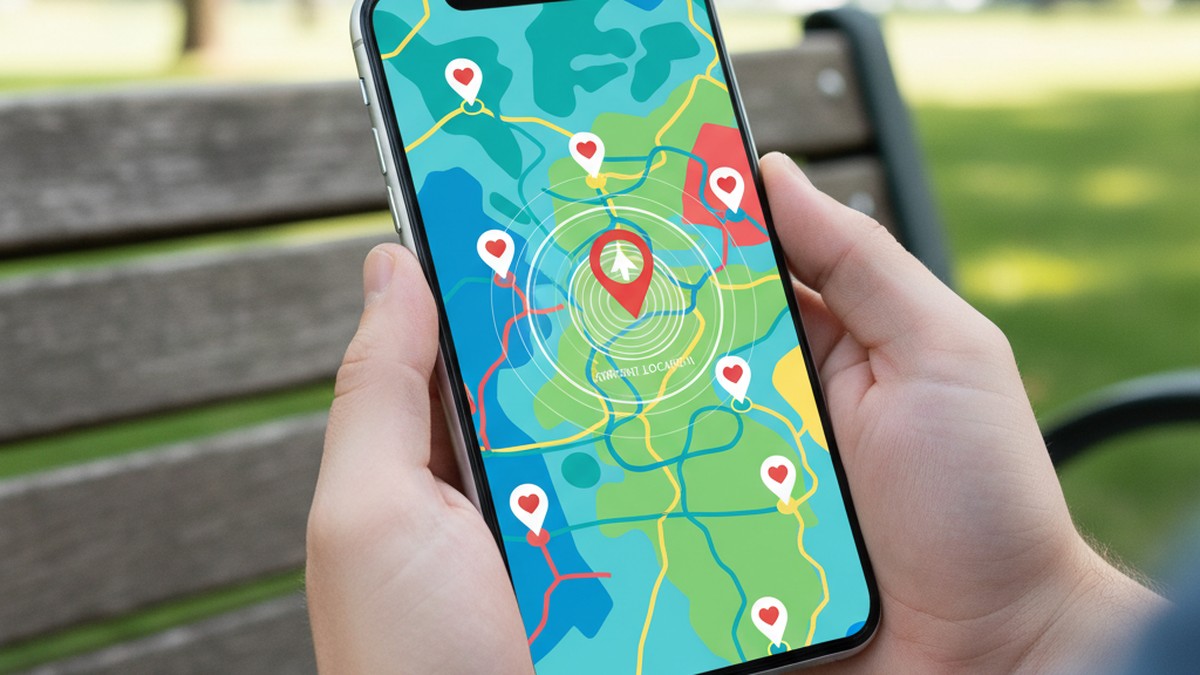
Partially. Tinder updates a profile's displayed location when the user actively opens the app. Repeated distance changes across multiple checks suggest ongoing app use. However, Tinder Passport — a paid feature — lets users set a completely false location, making the displayed distance unreliable as standalone evidence. Use location as one signal among several, not as proof on its own.
When Does Tinder Update Your Location?
Tinder's profile distance updates under specific conditions:
- When the app is actively open and in use — the primary and most common trigger
- When background location permissions are set to "Always" — less common; most users set location access to "While Using the App," which prevents background updates
For standard configurations, the distance shown on a Tinder profile reflects where the user was the last time they actively opened the app. If someone opened Tinder last Wednesday at their office, their profile will still show approximately that location until they open the app again somewhere else.
This creates a useful inference: if a profile's displayed distance changes between two of your checks — say, from 8 miles to 47 miles and back — that change reflects the user opening the app in a different location and then again in the original one. It's a reasonably strong indicator of active app use, not just the phone traveling in a pocket.
Location Changes as Activity Evidence
Monitoring distance changes across multiple checks over 24-48 hours can provide evidence of ongoing app engagement even when activity status indicators are hidden. The method has limitations:
- You need to find the profile first
- Tinder displays approximate distance, not precise coordinates, making small changes ambiguous
- Normal daily movement (commuting, errands) creates natural distance fluctuations
- Tinder Passport can completely falsify this data
Despite these limitations, consistent distance changes correlated with times your partner claims to be elsewhere — combined with other signals — create a stronger evidentiary picture than any single indicator provides alone.
What Is Tinder Passport?
Tinder Passport is a paid feature included with Tinder Plus, Gold, and Platinum subscriptions. It allows a user to set their profile location to any city in the world, entirely decoupled from their actual physical location. A person in New York can set their profile to appear in London. Profiles using Passport show up in the deck of users in the chosen city, not the user's real location.
Cheaters who worry about being recognized by someone in their actual area sometimes use Passport to shift their profile to a distant city. The profile then appears in searches for that distant location, reducing the chance of a mutual contact discovering it locally. The displayed distance on anyone who encounters the profile reflects the chosen fake city, not the user's real position.
Critically, Tinder Passport affects location data only. It has no effect on activity status. A profile using Passport with "Recently Active" still shows real app engagement — the location is spoofed, but the timing of use isn't. A profile showing "Recently Active" with an implausible location (distant from where you know your partner to be) isn't evidence of actual travel; it's more likely evidence of Passport use.
Interpreting Location Data Accurately
The most useful scenario for location-based detection is not the current distance reading in isolation — it's the change. A partner's profile that shows consistently within 5 miles of home when they're home, but shows 300 miles away when they're on a supposed work trip, is behaving consistently. A profile that shows 40 miles away in an unexpected direction when you have information about where they claimed to be is a discrepancy worth noting.
Combined with activity status indicators, location data adds temporal and geographic context. Alone, it's too easily manipulated to carry much weight.
What Is Tinder Incognito Mode — and Can It Hide Activity?
Tinder Incognito Mode hides a profile from the standard swiping deck, meaning only users the Incognito user swipes right on can see them. It does not remove the profile from external search tools, does not hide activity status from existing matches, and does not erase the account. It is included with Tinder Plus subscriptions at approximately $7.99 per month.
What Incognito Mode Does
With Incognito Mode enabled, a user's profile is removed from the standard discovery deck. Anyone browsing Tinder in the same area won't encounter the profile by swiping. The profile becomes effectively invisible to new potential matches — unless the Incognito user has liked them first.
In practice: the profile becomes invitation-only. Instead of appearing randomly in other users' decks, it only surfaces to someone the Incognito user has already swiped right on. If you haven't been liked by the Incognito user, you'll never encounter their profile through normal swiping, no matter how close you are geographically.
This creates a meaningful detection barrier for people searching by creating a Tinder account and swiping through nearby profiles hoping to stumble across a partner. That approach won't work against a profile using Incognito Mode.
What Incognito Mode Does NOT Do
The feature's name implies more comprehensive concealment than it provides. Several significant limitations apply:
External search tools still work. Dedicated dating profile search services that index Tinder data by name, photo, or email address can still surface Incognito Mode profiles. The feature controls visibility within Tinder's internal swiping interface — not who can find the account through tools that operate outside that interface.
Activity status still shows when the profile IS visible. When an Incognito Mode user likes someone and that person encounters the profile, any enabled activity status indicators are still present. The feature hides the profile from random discovery; it doesn't scrub activity data from the profile once someone does see it.
Existing matches are unaffected. Anyone who matched with the account before Incognito Mode was enabled can still see the profile and send messages. The inbox continues to function normally.
The account itself remains active. Photos, bio, match history, and the account record all persist. Incognito Mode is a visibility filter, not account deletion.
Reading the Subscription Signal
A detail most guides don't mention: Tinder Plus subscriptions, which include Incognito Mode, generate charges that appear on bank and credit card statements as transactions from "Tinder" or "Match Group Inc." A recurring subscription charge on a partner's statement is indirect evidence of paid Tinder use.
This is not definitive by itself — Tinder subscriptions are also used for unlimited swipes, Boosts, and Super Likes that have nothing to do with concealment. But a Tinder subscription charge is a starting point. Combined with other indicators, it eliminates the "I haven't been on Tinder in years" explanation.
When a Profile Search Returns No Results
If a profile search turns up nothing for a partner, Incognito Mode is one possible explanation. Others include:
- The account was genuinely deleted
- The photos used for reverse image search don't match what's on the profile
- The account uses different identifying information than expected
- The platform search doesn't have complete coverage of that geographic area
Profile search tools that use multiple identifiers simultaneously — name plus photo plus location plus email — are more likely to surface accounts regardless of Incognito status than tools relying on a single search parameter. If the first search returns nothing, a more comprehensive search using additional identifiers is worth attempting before drawing conclusions.
The 4-Signal Detection Matrix: What Each Tinder Indicator Actually Reveals
The signals discussed in the previous sections can be organized into a single decision-making framework. The 4-Signal Detection Matrix categorizes every meaningful Tinder signal by what it reveals, whether it can be hidden, and how reliable it is for determining whether an account is actively being used.
This framework prevents two common errors: over-interpreting ambiguous signals as definitive proof, and dismissing meaningful signals because they're imperfect.
The Matrix
| Signal | What It Reveals | Can Be Hidden? | Reliability for Activity Detection |
|---|---|---|---|
| Recently Active badge | App used within last 24 hours | Yes — free setting, takes seconds | High when present; ambiguous when absent |
| Green dot (Online Now) | App used within last 2 hours | Yes — same setting as above | High when present; invisible when hidden |
| Distance/Location | Approximate location at last active app session | Yes — via Tinder Passport | Medium — changes confirm use; absolute value may be false |
| Profile existence | Account exists and has not been deleted | Partial — Incognito hides from swiping deck | High — existence confirms account not deleted |
Four signals. Four distinct reliability profiles. Each serves a different role in building a complete picture.
Tier 1: High-Reliability Signals (Recently Active and the Green Dot)
When visible, these two indicators provide the most direct confirmation of recent app engagement. The green dot is stronger evidence than "Recently Active" because its window is narrower — two hours versus twenty-four. If you find a profile with the green dot active at a specific time you have independent context for (for example, when your partner claims to be in a meeting or asleep), that timestamp has interpretive value.
The shared weakness: both can be hidden with a single settings toggle, available to any user at no cost. A user who disables activity status eliminates both indicators permanently from their profile. Their profile still exists and is still searchable, but it carries no timing data.
For practical purposes: the presence of either indicator is meaningful; the absence of either is ambiguous.
Tier 2: Medium-Reliability Signals (Location/Distance)
Location data is most useful as a change indicator rather than an absolute reading. A static distance tells you where the profile was during its last active session. A changing distance across multiple checks tells you the app has been opened multiple times in different locations.
The medium reliability rating reflects two vulnerabilities: normal daily movement creates ambiguous small-scale distance changes, and Tinder Passport can completely falsify the location. For accounts not using Passport, repeated distance changes are meaningful corroborating evidence. For accounts that might use Passport, distance data needs to be treated with much more skepticism.
Tier 3: Existence Signals (Profile Found)
Finding the profile itself is binary and meaningful. A deleted account won't surface in profile search results. An account that exists — even with all activity indicators hidden, even using Incognito Mode — confirms the person has an active Tinder presence. Incognito Mode complicates profile discovery through in-app swiping but not through external search tools that operate against indexed profile data.
The primary question profile existence answers: "Does this person have an active Tinder account?" That question has a yes-or-no answer that no activity indicator can substitute for.
How to Use the 4-Signal Matrix
Work from the most reliable signal down:
- Establish profile existence. Find the profile using a search tool, not random swiping. Confirm the photos match your partner. Note the name and listed information.
- Check Tier 1 signals. Is Recently Active showing? Is the green dot present? If yes, you have confirmation of recent app use and a rough time window.
- If no Tier 1 signals, check Tier 2. Run the search at different times over 24-48 hours. Does the displayed distance change? Consistent changes suggest ongoing use despite hidden activity status.
- Combine what you find. A profile with no activity indicators and a static distance may be an abandoned account that hasn't been deleted. A profile with hidden activity indicators but consistent distance changes warrants more attention than the absence of visible status suggests.
What the Matrix Does Not Resolve
The Matrix tells you about account activity, not intent or behavior within the app. An active Tinder profile in a committed relationship might reflect habit ("I keep forgetting to delete it"), curiosity, or active pursuit of other connections. The algorithm signals confirm use. They don't characterize it.
That characterization — what the activity means for the relationship — comes from a direct conversation with your partner, not from continued algorithmic analysis. The Matrix is a tool for answering the question "is this profile active?" It is not a tool for answering the question "is my partner cheating?" Those are related questions, but they're not the same question, and conflating them leads to either false certainty or false exoneration.

Why the ELO Myth Is Leading You Astray
Most articles about detecting cheating on Tinder still reference ELO scores. They describe methods for "checking" or "boosting" a score that hasn't existed since 2019. This matters not just as a technical correction — it matters because following ELO-based advice actively misdirects people away from methods that work toward methods that can't possibly work.
The Three Forms of the ELO Myth
Online guidance about ELO and cheating typically takes one of three forms:
"A high ELO score proves your partner is active on Tinder." ELO was always an internal ranking, invisible to any user other than Tinder's own systems. Even when it existed, there was no mechanism for seeing it. A method that was always impossible doesn't become possible by describing it confidently.
"Track your partner's ELO score changes to monitor their activity." This requires a baseline ELO score to compare against, which requires accessing the account. Accessing another person's account without their permission is not a legitimate detection method. And since ELO was retired in 2019, there's no score to track regardless.
"Third-party tools can calculate or reveal a Tinder ELO score." No legitimate tool can access Tinder's internal scoring data. A tool claiming to reveal a specific ELO score is generating a fabricated number. The output of such tools is meaningless — it will consistently return results regardless of actual account activity, because it isn't connected to any real data.
Why Outdated Information Dominates Search Results
The ELO myth persists because search engine optimization, not accuracy, determines what most people read. Tinder's ELO system was described in a widely-cited Fast Company article in 2016. That coverage spread through dating forums and advice websites. Those articles generated backlinks, established domain authority, and continued to rank years after the information became outdated.
Tinder's 2019 announcement about retiring ELO generated far less coverage than the original exposé. The correction didn't accumulate the same citation network as the original claim. As a result, a substantial portion of articles people find today when searching for information about Tinder and cheating detection are working from seven-year-old premises.
The Practical Consequences of Following ELO Advice
People who follow ELO-focused guidance end up at one of two dead ends. The first is spending time and money on tools that generate fake ELO scores, reaching conclusions — either false certainty that a partner is active or false reassurance that they aren't — based on numbers that have no connection to reality.
The second is ignoring the signals that do provide real information. Activity status indicators require knowing they exist and knowing how to find the profile to check them. Location change analysis requires repeated checks over time. Profile existence search requires using the right tools. None of these are difficult, but they require attention directed at the right places. Every hour spent chasing ELO data is an hour not spent on approaches that actually work.
The Accurate Replacement Framework
The relevant question for detecting Tinder activity has always been: "Is this profile currently being used?" That question is answerable through activity status indicators, profile existence searches, and location data cross-referencing. The 4-Signal Matrix above provides the framework. None of these approaches require knowledge of a score that hasn't existed since 2019, and all of them produce results connected to real account data rather than fabricated outputs.
How to Find Someone's Tinder Profile Without Logging In
To check any of the activity signals described above, you first need to locate the profile. Encountering it by creating a Tinder account and swiping is unreliable — it's geographically constrained, requires sustained use, and is blocked entirely if the account uses Incognito Mode. More direct methods are available.
Method 1: Dedicated Profile Search Tools
Purpose-built dating profile search services allow you to search for a Tinder account using identifying information: typically name, age, and approximate location. Some accept photos for reverse image matching. The more identifiers provided, the more precise the results.
Services like CheatScanX scan Tinder's publicly accessible profile data and return matches based on the parameters entered. Where activity status is enabled on the found profile, scan results include whether the profile shows recent activity. For accounts using Incognito Mode, the in-app swiping approach won't find the profile — but external search tools operating outside Tinder's discovery interface often can.
To use a dedicated profile search tool effectively, provide as many identifiers as possible:
- First name — or the name the account likely uses (nickname, middle name)
- Age — Tinder allows small adjustments; aim for a range of ±2 years around your partner's actual age
- Location — the city or area where the account would most plausibly be based
- Photos — recent, clear photos improve reverse image matching significantly
Results typically include profile photos, any visible activity status, and listed profile information that can be compared against what you know.
Method 2: Google Search Operator
A free technique that sometimes surfaces public Tinder profiles: searching `site:tinder.com "[first name]" [city]` in Google. Tinder profiles with public-facing pages are indexed by search engines, though this is inconsistently applied and depends heavily on individual privacy settings.
This method is more useful for confirming profile existence than for checking activity status. Google's indexing is delayed — a profile deleted recently might still appear in results for days or weeks. A profile created recently might not yet be indexed. Use it as a quick first check, not as a definitive tool. To search Tinder without an account, the Google operator is the simplest starting point.
Method 3: Reverse Image Search
If you have recent photos of your partner — which is almost certain — you can upload them to reverse image search tools. Google Images, TinEye, and dedicated social profile scanners compare the uploaded image against indexed web content, including Tinder profiles linked to social accounts or shared on other platforms.
This method is resistant to name obfuscation. An account using a nickname rather than a real name, or a different age, can still be identified if the same photo appears on both the Tinder profile and somewhere the reverse search can access. It's the primary method for finding accounts that have deliberately altered their identifying information.
Comparison of Methods
| Method | Strengths | Weaknesses |
|---|---|---|
| Profile search tools | Multi-signal, returns activity data, works around Incognito | May have associated cost; coverage isn't universal |
| Google search operator | Free, no account needed, immediate | No activity data, delayed indexing, gaps in coverage |
| Reverse image search | Bypasses name/age manipulation, face-based matching | Requires clear photos; filtered or cropped images may evade detection |
What to Document When You Find the Profile
Finding the profile is a starting point, not a conclusion. Document what you observe:
- Profile photos (screenshot or note which ones are shown)
- Activity status, if visible, and the time you checked
- Listed name, age, and approximate distance
- Any recently changed photos you recognize as new
This documentation serves your own clarity. If you intend to raise the discovery in a conversation with your partner, specific details ("I found this profile at 11 PM last Tuesday showing Online Now") are more substantive than a general "I found you on Tinder."

How Cheaters Conceal Tinder Activity (And What Still Shows)
People who use Tinder while in committed relationships often take deliberate steps to reduce discovery risk. Understanding these steps clarifies which detection methods remain effective regardless of precautions taken. This is not a guide to concealment — it's a guide to understanding what detection methods remain viable when common countermeasures are in place.
Concealment Method 1: Incognito Mode
As covered in detail above, Incognito Mode removes the profile from the swiping deck. Someone creating a Tinder account and browsing locally won't encounter it. A purpose-built profile search tool that accesses indexed data outside Tinder's in-app discovery interface remains effective.
Concealment Method 2: Nickname or Alias
Using a nickname (Jay instead of James, Lex instead of Alexis) or a shortened version of a middle name disrupts name-based searches. This is perhaps the most common low-effort concealment approach — it doesn't require any settings change and creates immediate ambiguity for anyone searching by full legal name. Reverse photo search bypasses this entirely, since the face is consistent regardless of the name attached to it.
Concealment Method 3: Tinder Passport for Location Spoofing
Setting Tinder's location to a distant city eliminates the geographic signal. A profile set to Denver while the user is in Chicago won't appear in scans for Chicago-based profiles and will show a distance consistent with Denver for anyone who finds it. Photo-based searches aren't affected by location spoofing — the face appears regardless of the listed city.
Concealment Method 4: Different or Altered Photos
Some accounts are created with cropped, filtered, or older photos that reduce recognizability. This specifically targets reverse image search. A standard selfie uploaded to Tinder and then found via Google Images is easily connected. A heavily filtered or closely cropped version of the same photo may not match. Purpose-built profile search tools that use multiple identifiers simultaneously — name, age, location, and email in addition to photos — are more resistant to this approach.
Concealment Method 5: Disabling Activity Status
Turning off "Show Activity Status" removes the two most accessible activity signals from the profile. As noted earlier, this is not the default setting — it requires a deliberate configuration change. It eliminates activity status visibility entirely but doesn't affect profile existence, location data, or the ability to find the account through external search tools.
Concealment Method 6: A Completely New Account
The most thorough concealment approach is creating a new account with a different phone number, a different name, and photos that don't match the person's usual online presence. A new account also benefits from Tinder's "newbie boost" — increased initial visibility given to fresh accounts. This approach defeats most search methods based on the original account's identity.
The limitations: maintaining a credible alternative identity requires sustained effort; facial recognition-based tools can still match new photos to known images of the person; and subscription charges for the new account still appear on financial records tied to the user's payment method.
What Remains Visible Regardless of Precautions
Despite the range of concealment options, several signals are difficult to fully suppress:
Face recognition across photo variations. Even significantly filtered or cropped photos share underlying biometric data that AI-based reverse image search can match against other images of the same person. Perfect photo disguise is harder than it looks.
Subscription charges on financial records. Paid Tinder features (Incognito Mode, Passport, Boost, subscription tier) generate billing records. These are visible on shared accounts, bank statements, or card statements.
Notification behavior. A partner who receives Tinder match or message notifications and quickly silences or dismisses them exhibits observable behavior — visible to anyone in the same room — even when all app-based signals are suppressed.
The account's continued existence. An account not deleted remains findable. Even with every privacy setting maximized, a persistent Tinder account can be discovered by a search tool with comprehensive coverage.
What Tinder Activity Signals Actually Prove
Getting this right matters more than finding the profile. Understanding what the evidence does and does not establish prevents both premature conclusions and dismissed legitimate concerns.
What an Active Tinder Profile Confirms
Finding a partner's Tinder profile with active signals confirms three things:
- An account in their name and likeness exists on Tinder — it hasn't been deleted
- The account has been used recently — the time window specified by the activity indicator
- The account is being maintained — if photos have been updated recently, the profile is being actively managed, not just left dormant
These are factual observations about digital behavior. They're meaningful. They narrow the scope of reasonable explanations considerably.
What an Active Tinder Profile Does Not Confirm
Finding an active profile does not, by itself, confirm:
- That physical infidelity has occurred
- That emotional infidelity has occurred
- That conversations with other users have moved beyond the app
- That your partner's intent in using the app is romantic or sexual
- The nature, frequency, or extent of in-app activity
The Scenario Table
| What You Find | What It Supports | What It Does Not Prove |
|---|---|---|
| Profile exists, inactive (no activity, no distance changes) | Account not deleted; possible abandonment | No recent use; no malicious intent |
| Profile exists, Recently Active (24-hour window) | App was opened within the last day | What they did; who they contacted |
| Profile exists, green dot (2-hour window) | Very recent app engagement | Content of that engagement |
| Profile shows recently updated photos | Profile being actively maintained | Specific conversations or matches |
| No profile found | Account deleted, search incomplete, or Incognito barrier | That no Tinder presence exists |
| Activity status hidden, distance static | Inconclusive; could be disuse or deliberate settings | Either inactivity or active concealment |
Why the Distinction Matters
The move from "active Tinder profile" to "they're definitely cheating" is a logic error with real consequences. People have ended relationships based on misinterpreted signals — a profile that exists but hasn't been used since before the relationship began, or one that exists because the person forgot to delete it and genuinely isn't using it actively.
Conversely, dismissing an active, recently updated profile with consistent activity signals as definitely innocent is also an error. A profile actively maintained and in daily use while your partner claims to have deleted the app is a contradiction worth addressing.
The evidence positions you to have an informed conversation, not to skip one. A finding of "active profile with Recent Activity at 11 PM last Tuesday" is a specific, discussable data point. It deserves a specific, honest answer from your partner — which is far more informative than additional algorithmic analysis.
Behavioral signals that often accompany app-based cheating — phone avoidance, changed routines, unexplained absences — tend to appear alongside the digital ones. A broader guide on how to find out if your partner is on dating apps covers what to look for across multiple platforms beyond Tinder.
A Step-by-Step Process to Check If Your Partner Is Active on Tinder
Given everything covered above, here is a practical, ordered process for confirming whether a partner has an active Tinder profile with recent use. This process avoids the ELO dead end and uses the signals that actually provide real information.
Step 1: Define What You're Actually Trying to Establish
Before searching, be specific about the question you need answered. "Does a profile exist?" and "Is a profile currently active?" require different levels of investigation. "Was there app use last night specifically?" requires more than a single check.
Clarity about the specific question prevents you from stopping too early (finding the profile and not checking activity) or going too far (running multiple searches looking for specificity that the available signals can't provide).
Step 2: Gather All Identifying Information
The more identifiers a profile search can use, the more accurate the results:
- Full legal name and any known nicknames
- Exact age (not just approximate)
- Primary city where you'd expect the account to be based
- Email address associated with their phone (many Tinder accounts are linked to email)
- Recent photos — clear, full-face images work best for photo matching
Compile these before starting. Running the search once with complete information produces better results than running it multiple times with incrementally added data.
Step 3: Run a Dedicated Profile Search
Use a purpose-built Tinder profile search service with the identifiers from Step 2. A well-built tool returns matches including profile photos, any visible activity status, and listed profile details.
Review results carefully: compare profile photos to known photos of your partner, check listed age against actual age, review any activity status indicators shown in the results. Note exactly what you find and when you ran the search.
Step 4: If No Result, Try Alternate Identifiers
If the first search returns no results, check whether any identifiers might be different on the account. A different first name (nickname, middle name), a slightly different age, or a location set via Passport to a different city can all cause a search to miss an existing profile. Try running the search with alternate name variants or photo-only matching if available.
If search tools consistently return no results after multiple approaches, the three likely explanations are: the account was deleted, it uses significantly different identifying information, or Incognito Mode is active and the search tool's coverage is incomplete.
Step 5: Check for Activity Changes Over 24-48 Hours
If you found the profile but it shows no activity status, checking again at different times over 24-48 hours can reveal whether the distance displayed changes. Consistent distance changes across multiple checks indicate active app use even when activity status is hidden.
Note the time of each check and the distance shown. Patterns — such as activity consistently occurring in the evening, or location shifts that coincide with times your partner is away — are more informative than isolated readings.
Step 6: Interpret What You Found Using the Matrix
Apply the 4-Signal Matrix to what you've gathered:
- Profile exists + Recently Active or green dot: Strong indication of active use. Move to a direct conversation.
- Profile exists + no activity signals + distance changes: Probable active use with hidden status. Direct conversation warranted.
- Profile exists + no activity signals + static distance: Ambiguous. Could be abandoned or very carefully maintained with hidden signals.
- No profile found: Inconclusive. Account may not exist or may be difficult to find with available identifiers.
The Direct Conversation
Digital evidence informs but doesn't replace human communication. Once you have a clear picture of what the signals show, the next step is addressing it directly with your partner. What you found is specific and discussable. The conversation that follows will tell you more than any additional searches.
What to Do Once You Have the Evidence
Finding an active Tinder profile is the beginning of a process, not the end of one. The digital evidence gives you something concrete to work from. How you use it matters as much as finding it.
If you've found an active profile with strong activity signals — Recently Active or Online Now indicators, recently changed photos, consistent distance changes — the most direct path forward is a conversation with your partner about what you found. The evidence is specific enough to be discussable: you found the profile, it shows recent activity, and you'd like an explanation. That's a clear, factual starting point for a conversation that deserves clear, factual answers.
You're entitled to honesty about what the profile means and why it's active. Finding a profile doesn't obligate you to dismiss what you found, accept vague explanations without follow-up, or wait for something more definitive before raising the subject. The activity signals you've observed are real. Ask directly.
CheatScanX searches Tinder and 15+ other dating platforms in a single scan — surfacing active profiles by name, photo, and location with available activity signals returned in the results. If a profile exists, the scan finds it.
If a profile search returns no results and suspicion persists, the non-digital behavioral patterns documented at signs your husband is cheating on his phone often accompany app-based activity and may provide additional context. What to do immediately after finding a profile — including how to handle the conversation — is covered in what to do when you find your partner on a dating app.
The algorithm tells you about digital behavior. The conversation tells you about the relationship. Both matter, but they're not substitutes for each other.
Frequently Asked Questions
No. Tinder officially retired its ELO scoring system in 2019, replacing it with a multi-factor dynamic algorithm. The ELO score was always internal data — never visible to other users, never accessible through any external tool. No legitimate method exists to check a person's Tinder ELO score because the score no longer exists in that form.
Recently Active means the account holder opened Tinder within the past 24 hours. The green Online Now dot indicates activity within the last 2 hours. Both can be hidden through the Settings menu. When a user hides their own activity status, they can no longer see anyone else's status either — the setting removes access in both directions.
Incognito Mode hides a profile from Tinder's standard swiping deck, so random browsing won't find it. It does not make the profile invisible to external profile search tools, does not hide activity status from existing matches, and does not delete the account. The profile data and photos remain active — they simply don't appear in the in-app discovery queue.
Moderately accurate. Tinder updates a profile's displayed distance when the user actively opens the app, so changes across multiple checks suggest recent use. However, Tinder Passport lets users set a false location, which can make the distance completely unreliable. Treat location changes as a supporting signal, not as primary evidence.
Searching for publicly visible Tinder profile information through legitimate tools that access publicly available data is legal in most jurisdictions. You are viewing information any Tinder user could potentially see. Accessing another person's Tinder account directly, installing monitoring software without consent, or intercepting communications is not legal. Consult a legal professional if you are uncertain about specific actions in your jurisdiction.