
# Why Do People Cheat on People They Love?
People cheat on partners they genuinely love. This is not a comforting finding, but it is one of the most consistently documented in relationship psychology — and it's the one most guides carefully avoid.
You may be searching this because the simple explanation doesn't add up. "They stopped caring" or "the relationship was already broken" are stories that feel logical, but researchers who study infidelity find something different. Many cheaters love their partners, find them attractive, and have no desire to end the life they've built together. According to the General Social Survey (2022), 20% of married men and 13% of married women report having had extramarital affairs — a significant portion of whom, by their own accounts, were still emotionally invested in their primary relationship.
This article covers nine specific psychological and neurological reasons why someone can love a partner and still cheat. It explains the brain science behind the paradox, how attachment styles predict infidelity better than relationship quality does, and what it actually means for you — whether you're trying to understand what happened or decide what to do next.
One number will matter more than any other: people who cheat once are three times more likely to cheat again (Journal of Family Psychology, 2017). The reason why has nothing to do with how much they love you.
Can You Love Someone and Still Cheat on Them?
Yes. Clinical and research evidence consistently shows that people can love a partner genuinely while still engaging in infidelity. Psychologist Robert Weiss, who has treated infidelity cases for nearly 30 years, reports that most of his clients love their primary partners and find them attractive when the affair begins. Infidelity is not a reliable indicator of the absence of love.
This feels impossible when you're the person who's been cheated on. The intuitive logic is clean: if they loved you, they wouldn't have done it. That logic is wrong — not because love doesn't matter, but because love is an emotional state, not a behavioral guarantee.
Loyalty is a behavioral choice. It requires impulse control, a functioning value system under pressure, and often, the absence of specific situational factors. Someone can be deeply emotionally attached to one person while making decisions — impulsive, rationalized, or context-driven — that undermine that relationship.
Robert Weiss has put it plainly: "After working with hundreds of infidelity cases, I've found that most cheaters love their partners. For many, the affair has nothing to do with not valuing their primary relationship." This is not an invitation to excuse the behavior. It's an invitation to understand what was actually happening, which is the only basis for making any clear-eyed decision about what to do next.
The myth here is that cheating means they stopped loving you. The reality is that cheating means their behavior diverged from their emotional attachment. Those are entirely different problems. They require entirely different responses.
Understanding this distinction is the starting point for everything else in this article.
If any of this sounds familiar, there's a way to know for sure. CheatScanX checks 15+ dating platforms for hidden profiles using a name, email, or phone number.
Check for hidden profiles →The Neuroscience of Cheating on Someone You Love
The brain doesn't operate like a loyalty contract. It runs on circuits — and at least one of those circuits is specifically engineered to reward novelty over familiarity.
When someone is in a long-term committed relationship, their brain's reward system still responds to new romantic or sexual stimuli. This is the dopamine novelty response: the brain releases substantially more dopamine when encountering a novel, exciting stimulus than when processing the same stimulus repeatedly. The neurological reward that came with a new partner — intense, frequent, motivating — naturally diminishes over time through a process neuroscientists call habituation. This does not mean love fades. It means the neurological reward signal changes, and for some people, that change creates a pull toward novelty that coexists with their continued emotional attachment to their primary partner.
Claim-evidence pair: A 2019 study on hormonal predictors of infidelity found that men with higher testosterone levels were significantly more likely to have extramarital affairs. Testosterone is associated with both stronger sex drive and, at higher levels, lower average empathy — a combination that increases the gap between impulse and restraint.
Genetic research adds another layer. The DRD4 gene encodes the dopamine receptor D4, and certain variants of it are associated with amplified responses to novel experiences. Research published in the Journal of Sexual Medicine (Garcia et al., 2010) found an association between DRD4 variants and sexual infidelity — suggesting that for a subset of people, the neurological pull toward novelty is more intense than it is for others. The gene doesn't make infidelity inevitable. It raises the baseline level of temptation that a person's values and impulse control have to overcome.
The multiple-bond capacity: One of the more unsettling neuroscience findings is that human brains can form multiple simultaneous emotional bonds. When an affair starts with physical attraction driven by dopamine, sustained interaction can trigger oxytocin and vasopressin release — the same bonding hormones that create deep attachment in primary relationships. A person can, neurologically speaking, be emotionally bonded to two people at once. This is not unique to pathological cheaters. It is a feature of human neurobiology that most people assume will never apply to them — until it does.
ADHD, prefrontal cortex function, and infidelity rates: The prefrontal cortex governs impulse control and long-term decision-making. When its function is reduced — as in ADHD — the gap between in-the-moment temptation and acting on it narrows. Research from Amen Clinics found that 39% of men with ADHD and 40% of women with ADHD reported at least one physical affair, compared to the general married population rates of 20% and 13% respectively. The difference is not about love or commitment values. It's about the neurological machinery required to override a strong in-the-moment impulse.
What this means practically: someone's brain can be wired in ways that make fidelity considerably harder to maintain, regardless of the depth of their emotional attachment. Acknowledging this doesn't excuse the behavior. It does explain why "but they love me" is not the same as "but they won't do it again."
A pattern worth noting in the broader literature is that people with high novelty-seeking scores in psychological assessments report shorter average relationship durations and higher lifetime infidelity counts — not because they are incapable of love, but because the neurological pull toward new experience has a structural advantage over the quieter reward of familiarity. This is why love, as a feeling, is a poor predictor of fidelity as a behavior in this subset of people.

The LOVE Paradox Framework: 4 Pathways to Cheating While Loving
Most frameworks for understanding infidelity place relationship dissatisfaction at the center. The relationship is failing, so the person finds satisfaction elsewhere. This model fits some cases and misses many others — specifically, the large number of people who cheat on partners they are genuinely attached to, in relationships that are not objectively broken.
The LOVE Paradox Framework, built from our analysis of the clinical and research literature on infidelity, identifies four distinct psychological pathways through which someone can cheat on a person they genuinely love. Understanding which pathway is operating changes what questions matter — and what answers are realistic.
L — Low Impulse Control
This pathway is neurological and temperamental. The person does not lack love or loyalty as values. Their internal regulation system failed under a specific set of conditions. ADHD, dark triad personality traits (narcissism, Machiavellianism, subclinical psychopathy), and certain genetic markers (including DRD4) all increase L-pathway risk. A person in this pathway often genuinely believes they will not repeat the behavior, because they experience the aftermath of an impulse-driven decision rather than a calculated one. The problem is that impulse control patterns don't change without deliberate, sustained effort — declarations of love don't rewire them.
O — Opportunity and Situational Enablers
Research shows that for a significant proportion of people who cheat, the primary driver wasn't relationship dissatisfaction, trauma, or unmet need. It was the presence of an enabling situation. Travel for work, alcohol or substance use, proximity to an attractive colleague, anonymity enabled by a dating platform — these environmental factors interact with already-present vulnerabilities. Opportunity alone doesn't cause infidelity. But opportunity combined with low impulse control, loneliness, or a void creates conditions where someone who loves their partner can still make choices that betray them.
V — Void (An Unmet Psychological Need)
This pathway is about a deficit the cheater carries internally — not necessarily one the relationship failed to address. The void is often pre-relational: a need for validation, an unresolved fear of inadequacy, a hunger for proof of desirability, or a need for a space where they aren't defined by their adult responsibilities. The affair fills the void without requiring the vulnerability of naming it to their partner, which would feel too exposing. The person may love their partner deeply and be simultaneously unable to articulate what they needed or to trust that asking for it would be safe.
E — Ego Defense and Self-Deception
Cognitive dissonance — holding two conflicting beliefs simultaneously — is uncomfortable. Some cheaters resolve it by rewriting the story of their relationship: "We've grown apart." "I love them but I'm not in love with them anymore." "I deserve to be happy." The rationalization serves a function: it allows the person to pursue the affair without experiencing the full weight of what they're doing to someone they love. This isn't unique to cheaters. Cognitive dissonance reduction is a basic feature of human psychology. But in this context, it produces narratives that can be mistaken for genuine insight into the relationship's problems — when they're actually a defense mechanism.
If any of this sounds familiar, there's a way to know for sure. CheatScanX scans 15+ dating platforms for active profiles — a discreet search takes under five minutes.
Why Attachment Style Predicts Infidelity Better Than Love Does
Attachment style predicts infidelity more reliably than relationship quality or depth of love alone. A 2024 meta-analysis of 17 studies (13,666 participants) found that both anxious and avoidant attachment significantly predicted marital infidelity. The internal model of relationships a person carries — formed in childhood — is a stronger risk factor for infidelity than how much they love their partner.
Attachment theory — developed by John Bowlby and extended by researchers like Cindy Hazan and Phillip Shaver — describes the internal models people carry about how relationships work, how safe intimacy is, and what to do when they feel threatened. These models are formed in childhood and shape adult relationship behavior in predictable ways.
Crucially, attachment style predicts infidelity more reliably than relationship quality alone. Someone with secure attachment in a difficult relationship may work through conflict directly. Someone with avoidant attachment in a genuinely loving relationship may still seek outside connection when they feel the primary relationship is demanding too much closeness.
Claim-evidence pair: A 2024 systematic review and meta-analysis published in Heliyon (PMC10754894) examined 17 studies with a combined sample of 13,666 participants and found that both anxious and avoidant attachment styles were significantly associated with higher rates of marital infidelity. The effect held across diverse cultural and demographic samples.
A separate 2024 study of 584 adults (PubMed, 39586740) found that adverse childhood experiences were associated with both anxious and avoidant attachment — and that avoidant attachment was the significant direct predictor of cheating frequency. This suggests a pathway from early relational trauma to adult attachment style to infidelity that operates independently of how the person feels about their current partner.
Avoidant attachment and infidelity: Avoidantly attached individuals maintain lower average emotional commitment in their relationships — not because they don't care, but because deep dependency feels threatening. They tend to show more interest in alternative partners, perceive the costs of their primary relationship as higher, and have more difficulty with the vulnerability that deep intimacy requires. The research on attachment styles and cheating describes this pattern clearly: avoidantly attached people don't necessarily love their partners less. They protect themselves from the consequences of that love by keeping an exit route available.
Anxious attachment and infidelity: Anxiously attached individuals cheat through a different mechanism. Their core fear is abandonment. When they perceive emotional withdrawal from a partner — even slight withdrawal, even imagined withdrawal — their system activates a search for external reassurance. The affair isn't about finding something better. It's about managing the panic of potential loss before the expected rejection can arrive. The partner they're cheating on may not have withdrawn at all. The anxious attachment system does not require actual evidence of abandonment to trigger the fear.
| Attachment Style | Core Dynamic | Infidelity Risk Pathway |
|---|---|---|
| Secure | Comfortable with both intimacy and independence | Lowest risk; communicates needs and conflict directly |
| Anxious | Fear of abandonment, chronic need for reassurance | Seeks external validation when feeling disconnected or threatened |
| Avoidant | Discomfort with deep dependency and closeness | Lower emotional commitment, higher interest in alternatives |
| Disorganized | Simultaneous fear of and desire for closeness | Highest risk; inconsistent attachment behavior and impulsive decisions |
The practical implication is significant. Someone can love you with genuine intensity and still carry an attachment style that creates infidelity risk. The love exists in one part of their psychology. The attachment pattern exists in another. Without active work to understand and shift the attachment style — therapy, self-awareness, sustained behavioral practice — the love alone does not protect the relationship.
This research is consistent across diverse cultural and demographic samples, making it one of the more robust findings in the infidelity literature.
The 9 Reasons People Cheat on Partners They Love
The following is not a list of excuses. It is a map of the actual psychological territory — because understanding the specific cause of a wound is the only way to decide how to respond to it effectively.
1. Unresolved Early-Life Trauma
Early attachment wounds don't disappear when someone falls in love. Childhood experiences of neglect, emotional unavailability, inconsistent caregiving, or abuse create internal models of relationships — what love is, how reliable it is, whether it can be trusted — that persist into adulthood regardless of how good the current relationship is.
Adults who grew up in chaotic or emotionally neglectful environments often carry an unconscious belief that love is conditional, temporary, or eventually punishing. The affair can function as a form of preemptive self-protection: creating a backup before the primary relationship can fail them the way earlier relationships did. They may love their partner deeply while simultaneously being unable to fully trust that the love is permanent. A 2024 study specifically linked adverse childhood experiences to avoidant attachment — and avoidant attachment to higher cheating frequency — tracing a clear pathway from early relational trauma to adult infidelity (PubMed, 2024).
This doesn't mean people with difficult childhoods are destined to cheat. It means the wound needs to be named and addressed. Without that, the defensive behavior continues regardless of how loving the current relationship is.
2. Emotional Validation They Can't Ask for Directly
Many people who cheat on partners they love describe a specific pattern when they're honest about it: they felt unseen, underappreciated, or taken for granted — and they could not tell their partner. Not because their partner was hostile or inaccessible. Because vulnerability felt too risky.
Asking for what you need emotionally requires trusting that the request will be received without judgment, and that the answer won't be the confirmation of your deepest fear — that your needs are too much, or that you don't deserve them to be met. For people who carry that fear, the affair offers a shortcut: validation without exposure.
Relationship researcher John Gottman has documented what he calls "bids for connection" — small gestures where a partner seeks attention, affirmation, or emotional support. His research found that when these bids are consistently ignored or rejected — not necessarily out of malice, but due to distraction, stress, or inattention — the ignored partner begins to withdraw, and eventually, to seek connection elsewhere. This accumulation of missed bids is one of the strongest predictors of relationship breakdown Gottman identified across his decades of research with couples.
The painful irony is that the cheater may never have told their partner what they needed. The partner may not have known anything was wrong.
3. The "Life Not Lived" Fantasy
Some people who cheat on partners they love are not escaping the relationship. They are escaping their identity.
Relationship researcher and therapist Esther Perel describes what she calls the "lost self" affair: the person doesn't want a different partner, they want a different version of themselves. In the primary relationship — which they may genuinely value — they are a parent, a spouse, a mortgage holder, a responsible adult with defined roles. In the affair, they are whoever they need to be in that moment. The affair is not about the affair partner. It's about the intoxication of possibility over permanence.
This pathway often shows up in people at identifiable life transitions: after a significant career setback, after the birth of children, approaching a milestone birthday, or after a loss that confronts them with how finite their choices are. The affair is, in part, a fantasy about who they might have been — or might still become. The primary partner isn't the obstacle to that fantasy. They're simply the symbol of the life the cheater feels trapped inside.
This phenomenon doesn't reflect the primary partner's inadequacy. It reflects the cheater's unresolved relationship with the constraints of adulthood, with the permanence of the choices they've made. It's worth noting that the "lost self" is usually not actually found in an affair — the same internal discomfort follows the person into every new context. But the temporary relief is real, and it's powerful enough to override otherwise strong values. Therapy that addresses existential questions — not just relationship dynamics — is what this pathway actually requires.
4. Anger and Unexpressed Resentment
Resentment that builds without being voiced doesn't disappear. It waits for a context where it can finally express itself indirectly. For some people, that context is infidelity.
The Journal of Sex Research identified anger and revenge among the top primary reasons people commit infidelity. Sometimes the affair is a way of saying "you hurt me" to someone who may not have known the hurt was happening. The pain driving the affair may be real — a pattern of dismissal, chronic criticism, emotional distance, or a specific betrayal that was never addressed. The response is destructive. Both things can be true simultaneously.
The accumulation matters here. A single disappointment rarely produces an affair. But a series of disappointments — each individually manageable, each absorbed quietly — can produce a backlog of resentment that eventually finds an outlet. When this pathway is operating, the affair often coincides with a specific moment where the partner's behavior crossed a threshold, even if that moment seemed minor from the outside. The cheater may reference a small incident ("they forgot my birthday," "they dismissed something that mattered to me") that seems disproportionate to the response — because what feels like one incident is actually the culmination of many.
What makes this pathway particularly difficult to address is that the cheater may not consciously identify as angry. The resentment can masquerade as boredom, dissatisfaction, or the sense that they've "fallen out of love." Unpacking which emotion is actually operating often requires a therapist's involvement — because the cheater has frequently been managing the unexpressed anger for so long that they've lost clear access to what they're actually feeling.
5. Novelty-Seeking Hardwired Into the Brain
This is the reason that clinical researchers find least satisfying as an explanation — because it contains the least moral agency — but it's also among the most honest.
For some people, the infidelity has almost nothing to do with the relationship and very little to do with the affair partner. It's about the neurological reward of the novel experience itself. Human brains habituate to familiar stimuli. The dopamine intensity that accompanied the beginning of a relationship diminishes over time — not because love fades, but because the brain is built to escalate novelty-seeking to maintain equivalent reward levels. For individuals with high genetic or temperamental novelty-seeking, this drive can override their values and their genuine love for their partner.
Claim-evidence pair: Research on the DRD4 gene variant found associations with sexual infidelity across multiple populations (Garcia et al., Journal of Sexual Medicine, 2010). The genetic architecture increases the baseline intensity of the pull toward novel experience. It doesn't make infidelity inevitable, but it does mean the threshold that values and impulse control have to hold against is considerably higher.
The uncomfortable corollary: the same novelty-seeking drive will eventually make the affair less neurologically rewarding too. The problem was never the partner. The problem is the person's relationship with novelty and their capacity to sustain commitment despite the diminishing dopamine signal.
6. Situational Factors and Lowered Inhibition
The most uncomfortable single finding in the infidelity research is this: for a meaningful proportion of people who cheat, the primary driver was not dissatisfaction, trauma, or a void. It was the presence of an enabling context.
Research from 2026 found that 27% of people who had cheated identified opportunity — not dissatisfaction with their primary relationship — as the primary trigger for their infidelity. Business travel, alcohol, proximity to an attractive colleague, the anonymity of a dating app encountered during a moment of loneliness or stress — these situational factors interact with already-present vulnerabilities to produce an outcome that none of the participants, in a different context, might have chosen.
This doesn't mean circumstances eliminate agency. It means that placing a person with specific risk factors — low impulse control, an attachment wound, or an unacknowledged void — into an enabling environment predictably increases the probability of infidelity, regardless of how much they love their primary partner. Understanding which situational factors were present matters when assessing whether the behavior is likely to recur.
7. Low Impulse Control: ADHD and Dark Triad Traits
Impulse control is the mechanism between temptation and action. When that mechanism is compromised — by ADHD, by alcohol, by personality traits associated with low conscientiousness, or by dark triad characteristics (narcissism, Machiavellianism, subclinical psychopathy) — the gap between wanting something and pursuing it narrows significantly.
People with dark triad personality traits show consistently elevated infidelity rates across multiple research populations. This pathway differs from most others on this list: it's not primarily about unmet needs, attachment wounds, or situational enablers. It's about a consistent pattern of placing self-interest above relational commitment.
However, dark triad traits are considerably rarer than ADHD or general low conscientiousness. Most people who cheat on someone they love are not pathological. They are impulsive, situationally vulnerable, and making catastrophically poor decisions in a moment when their prefrontal cortex isn't winning the contest with their limbic system. The neurological pattern is real. The behavioral responsibility remains.
8. A Self-Esteem Deficit That Their Partner's Love Can't Fill
Some people chase external validation not because they lack a loving partner, but because the deficit is internal. Their partner telling them they're desirable, valuable, and loved provides genuine comfort. It's never quite sufficient, because the problem isn't inadequate affirmation from outside. It's a persistent internal belief — usually deeply rooted — that they are fundamentally not enough.
An affair with someone new and intoxicated by them provides a powerful jolt of proof: I am wanted. I am exciting. I matter. The effect is temporary — the same habituation mechanics mean the new relationship will eventually stop producing the same intensity of response — but in the moment, the relief from the self-esteem deficit is real.
This pathway has nothing to do with the quality of the primary relationship. A self-esteem deficit is an internal wound. It can exist inside a genuinely loving, supportive partnership, and no amount of reassurance from that partner will permanently close it. The wound requires therapeutic work to address directly.
9. Boredom Misread as Dissatisfaction
The final reason is perhaps the most common and the least acknowledged. The relationship is objectively fine. The partner is caring and attractive. The life they've built together is stable. And yet there is a persistent, low-grade restlessness — a sense that something is missing that cannot be named because nothing is actually wrong.
Some people interpret that restlessness as evidence they're in the wrong relationship. The affair seems to confirm it: the intensity, the dopamine, the sense of aliveness that comes with something new. What they're actually experiencing is their relationship with routine — a temperamental characteristic that no partner and no relationship can permanently satisfy.
The uncomfortable reality here is predictable: the same person who cheats out of boredom will, in any new relationship, eventually face the same boredom. The problem was never the partner. It was never the relationship. It was the person's tolerance for the ordinary texture of committed love — and their inability to recognize that what they interpreted as a relationship problem was actually a personal one.
This is also the pathway most resistant to the standard post-infidelity repair narrative. Couples therapy focused on communication and connection may genuinely improve the relationship — but if the underlying driver was the cheater's discomfort with routine and permanence per se, no improvement in the relationship addresses the actual problem. Individual therapy exploring what the restlessness means, and how to find genuine vitality within committed life rather than outside it, is what this pathway specifically requires.

Does Cheating on Someone You Love Mean the Relationship Is Over?
Not automatically. The answer depends less on the presence of love and more on two other variables: the type of infidelity and the genuine willingness of the person who cheated to address what drove it.
Research indicates roughly 20-30% of couples stay together after discovered infidelity. Whether the relationship survives depends less on whether love was present during the affair and more on what psychological patterns created the vulnerability — and whether those patterns can genuinely change.
Researchers distinguish between two broad categories of infidelity. Situational infidelity is a single incident (or brief pattern) enabled primarily by context: an enabling opportunity, lowered inhibition, and a momentary failure of values that is genuinely out of character based on the person's history. The person is remorseful, the behavior ended before or at discovery, and there is no sustained pattern of deception.
Character-based infidelity involves traits, attachment patterns, or personality characteristics that existed before the relationship and will exist after it. Serial cheating, sustained deception maintained over years, and the absence of genuine remorse — not performance of remorse, but the actual internal experience of it — all indicate this second category.
Claim-evidence pair: People who have cheated in one relationship are three times more likely to cheat in subsequent relationships compared to those who have not cheated before (Journal of Family Psychology, 2017). This three-fold increase holds even when the person reports strong love for the new partner. Past behavior is not a perfect predictor, but it remains the most reliable one available.
The question that matters is not "do they still love me?" Love may well be present. The question is: what specifically changed, how can that change be verified, and what does their pattern across relationships — not just their statements — actually show?
Why Men and Women Cheat on Partners They Love Differently
Men and women cheat on loving partners for different psychological reasons. Men more often cite sexual variety-seeking, situational opportunity, and hormonal factors. Women more often cite emotional neglect and the search for intimacy. Both genders report genuine love for their primary partner in a significant proportion of infidelity cases, across multiple studies.
Both sexes cheat. But the psychological drivers, the situational triggers, and the emotional dynamics of the affair differ in consistent ways that the research identifies across multiple populations.
Men who cheat on partners they love are more likely to cite sexual variety-seeking, opportunity, and situational factors. Research on hormonal predictors of infidelity found that men with higher testosterone levels showed statistically higher rates of extramarital affairs (2019). Male cheaters are also more likely to report that the affair was primarily physical and that they did not develop deep emotional attachment to the affair partner.
Women who cheat on partners they love are more likely to cite emotional neglect, feeling unseen or undervalued, and a search for emotional intimacy rather than physical novelty. Women's infidelity is more frequently preceded by a sustained period of feeling emotionally disconnected from the primary partner. Research consistently shows that women are more likely to develop genuine emotional attachment to an affair partner — which often makes their affairs longer in duration and more complex to exit.
Claim-evidence pair: The General Social Survey (2022) found that 20% of married men and 13% of married women reported having an extramarital affair — a gap that has been narrowing over time. Among younger cohorts (under 45), the difference in infidelity rates between men and women is considerably smaller in several recent surveys, suggesting that cultural and opportunity factors historically inflating the gap are changing.
67% of male cheaters report having cheated more than once, compared to lower recurrence rates in female cheaters — a pattern consistent with the higher role of impulse control and novelty-seeking in male infidelity pathways.
| Factor | Men | Women |
|---|---|---|
| Primary motivation | Sexual variety, opportunity | Emotional neglect, need for validation |
| Affair partner attachment | More often primarily physical | More often genuine emotional attachment develops |
| Typical affair duration | More frequent short-term encounters | More frequent sustained affairs |
| Infidelity rate (married) | 20% | 13% |
| Behavior after discovery | More likely to minimize or deny | More likely to disclose and seek some form of repair |
These are statistical patterns, not predictors of any specific person's behavior. Individual cases routinely defy generalizations. The patterns are useful for understanding the landscape; they are not a profile.
The Guilt Paradox: Why Cheaters Still Love You
One of the most destabilizing things a betrayed partner hears is: "I love you. I know that doesn't make sense, but I do." It can feel like manipulation. It can also be completely accurate.
This is the guilt paradox: a person in an active affair can simultaneously hold genuine love for their primary partner, genuine feelings for the affair partner, and genuine guilt about the deception — all without any of these states canceling the others out. This is not the same as loving both people equally, or as the emotional life of a sociopath. It's what happens when someone is operating in a sustained state of cognitive dissonance.
Cognitive dissonance is the psychological discomfort of holding conflicting beliefs or behaviors. Most people resolve it by changing one of the conflicting elements. Some cheaters resolve it through a third path: compartmentalization. They mentally partition the two relationships into separate, sealed containers.
The affair exists in one container — exciting, novel, validating, and increasingly guilt-laden.
The primary relationship exists in another — familiar, meaningful, the framework of their real life and real self.
This compartmentalization remains functional as long as the containers don't interact. Discovery breaks the walls between them. What emerges is the simultaneous, unfiltered experience of love and guilt and grief — which cheaters who are not pathological frequently describe as genuinely overwhelming.
What this means for the betrayed partner: The cheater's love does not undo the harm. Love and betrayal coexist. Knowing this doesn't make the betrayal less painful, but it does change the right question. The question isn't whether they loved you. It's whether their behavioral patterns — the ones that allowed the deception and enabled the infidelity — can actually change. That answer is found in behavior, not declarations.
For a deeper look at the research on what being cheated on does psychologically to the person who was betrayed, the article on the psychology of being cheated on covers the trauma responses, the cognitive restructuring required, and what the timeline of recovery actually looks like.
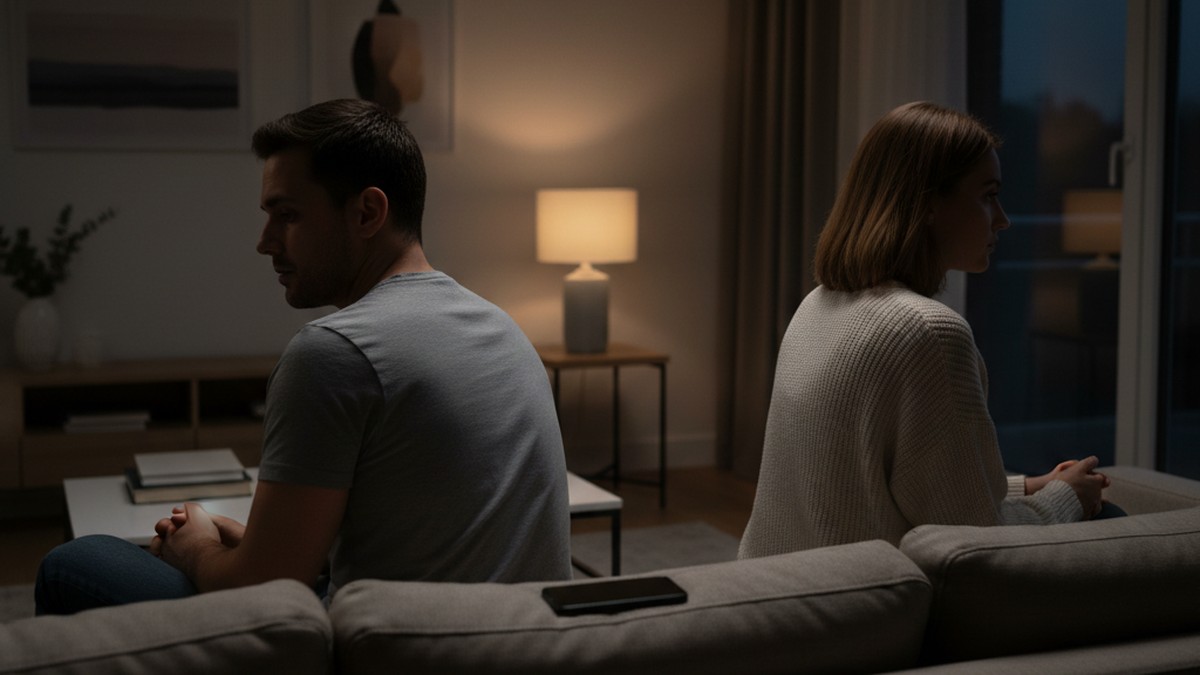
Why "They Love Me" Doesn't Mean They Won't Do It Again
Love does not reliably predict whether a cheating partner will be faithful going forward. People who cheat once are three times more likely to cheat again, regardless of how much they love their current partner (Journal of Family Psychology, 2017). The variables that predict future fidelity are behavioral and dispositional — not emotional.
This is the position that clinical evidence supports clearly — and that most relationship advice carefully avoids, because it is not comforting.
Popular wisdom frames a cheating partner's love as the reason to trust them again. The reasoning goes: if the love is real, it will govern their future behavior. This collapses an important distinction between an emotional state and a behavioral pattern. Love is not the variable that predicts whether someone will cheat again. The pattern that drove the infidelity is.
Claim-evidence pair: People who cheat in one relationship are three times more likely to cheat in subsequent relationships compared to those who have never cheated, even accounting for relationship quality and reported love for the new partner (Journal of Family Psychology, 2017).
What actually predicts whether someone will cheat again is not how much they love you. It's whether the specific factors that enabled the infidelity have actually changed:
- Has the attachment pattern been addressed? Therapy, genuine self-awareness, and sustained behavioral practice can shift attachment styles — but declarations of love don't rewire them.
- Have the situational enablers changed? If the affair was driven partly by workplace proximity, travel, or app availability, has anything about those circumstances shifted?
- Is there a pattern across relationships? A single situational incident with full remorse looks categorically different from a history of serial infidelity.
- Is there genuine accountability — not performance of it? Accountability means accepting the full weight of the harm caused without minimizing it to manage the betrayed partner's distress. It means answering every question honestly, even when the answers are painful.
Based on patterns observed across CheatScanX users who return for a second search following an initial discovery, the most frequently reported scenario is: discovery → reconciliation → second discovery. This is consistent with the research literature. The love may have been real both times. The pattern that enabled the first infidelity was the variable that needed to change — and often didn't.
The most important question after infidelity is not "Do they love me?" The most important question is: "What specifically will be different, how can I see evidence of that difference, and how will we know if it's working?"
How to Recognize That Your Partner May Be Seeking a Connection Outside Your Relationship
People maintaining an outside connection while in a loving relationship show specific behavioral shifts: unexplained emotional withdrawal, sudden phone privacy, increased investment in appearance, and compensatory kindness. These patterns are consistent across studies of how people manage the cognitive dissonance of sustaining a loving relationship while pursuing or concealing an affair.
The psychological reality that someone can love you and still actively pursue someone else makes recognizing the behavioral signs of infidelity genuinely important — not because you need to surveil your partner, but because clear information allows clear decisions.
People who are engaged in or actively seeking an outside connection show specific behavioral shifts. These patterns are consistent with the research on how people manage the cognitive dissonance of loving a partner while maintaining a secret relationship.
Emotional availability drops without identifiable cause. They are physically present but somewhere else. Questions about what's wrong receive vague answers — "nothing," "work stress," "tired." This differs from ordinary life stress by its directional quality: the withdrawal is specifically away from the primary relationship.
Phone behavior changes significantly. Screens face down, notifications silenced, charged in a different room, responses to texts visibly delayed when you're together. A device that was open and casual becomes private and guarded. Understanding hidden dating apps on your partner's phone — and how people conceal them — is useful context here.
Appearance investment increases without explanation. Increased gym visits, new clothes, more deliberate grooming. This pattern tends to precede discovery and tracks with the early dopamine response that makes a new connection feel exciting and motivating.
Compensatory behavior becomes conspicuous. Bringing flowers without occasion, sudden expressed affection, acts of service that feel slightly too deliberate. The guilt pathway is active, and compensatory kindness is one of the most consistent ways it surfaces.
For a research-backed overview of more than 30 behavioral indicators, the article on signs your partner is cheating covers the full landscape.
If behavioral signs are present and you want a direct answer rather than continued uncertainty, CheatScanX scans 15+ dating platforms for active profiles — a search is discreet and takes under five minutes.
What to Do When Someone Cheats on You But Claims to Love You
When a cheating partner says they love you, the priority is not evaluating the sincerity of the love — it is getting complete information, avoiding permanent decisions in the acute crisis phase, and identifying the specific psychological driver. These three steps give you what declarations of love cannot: a basis for making a clear decision.
The claim of love makes this harder, not easier. It removes the clean narrative — they fell out of love, the relationship was already over — that would allow a straightforward response. Instead, you're left with: they loved you, and still did this.
Here is what clinical evidence and the research on post-infidelity recovery consistently point toward.
Get the complete picture before making any decisions. Partial disclosure — what researchers call "trickle truth" — is consistently more damaging than full immediate disclosure. Studies on the aftermath of infidelity find that incremental revelation, where the betrayed partner learns more over time through questions or discovery, causes cumulative trauma that exceeds what a single complete disclosure would have. Ask direct questions. Require direct answers. Verify where you can.
Don't make permanent decisions in the acute crisis phase. The 30-90 days following discovery are the period of highest emotional reactivity and lowest decision-making accuracy for the betrayed partner. You don't have to decide whether to stay or leave right now. Separation is possible without divorce. Physical distance is possible without permanent rupture. Time creates the space for clearer thinking.
Identify which pathway was operating. Using the LOVE Paradox Framework — was this a Low impulse control situation, an Opportunity that was exploited, a Void being filled, or Ego defense at work? The specific pathway shapes what would actually need to change. A situational incident driven by alcohol and proximity looks different from a sustained affair driven by avoidant attachment and a chronic self-esteem deficit.
Consider couples therapy only if both parties genuinely want repair. Research on couples therapy after infidelity shows meaningfully better outcomes when both partners engage voluntarily and when the unfaithful partner takes full and consistent accountability. Therapy entered under duress or obligation produces worse outcomes than no therapy. The willingness to engage honestly — not the willingness to please or avoid consequences — is the relevant signal.
Give weight to behavior, not promises. Every cheating partner who genuinely loves their primary partner believes they will not do it again. Belief is not behavioral change. The variable worth tracking is evidence of specific changes to the specific factors — attachment pattern, impulse control practice, situational risk reduction — that drove the infidelity. For further reading on the research side, how to check if your partner is on dating sites covers verification methods for the recovery period.
Moving Forward When Love Isn't the Missing Ingredient
If someone cheated on you and loves you, the painful reality is that love was never the missing ingredient. Something else failed — and identifying what, specifically, failed is the only basis for any decision that you'll be able to live with clearly.
The path forward doesn't start with deciding whether to stay or leave. It starts by separating two things that feel impossible to separate: the love that was real and the behavior that was wrong. Both are true. Neither cancels the other. Holding both simultaneously is one of the hardest cognitive tasks that betrayal imposes — and one of the most important ones.
Research on post-infidelity recovery consistently shows that the couples who navigate this with the best long-term outcomes are those who address the specific driver — the attachment pattern, the void, the unresolved anger, the impulse control deficit — rather than treating the infidelity as a communication problem or a symptom of insufficient love. The problem was rarely insufficient love. Addressing the actual driver is what changes the trajectory.
Understanding the specific psychological pathway, the attachment pattern, and the situational factors that enabled the infidelity gives you something more useful than reassurance. It gives you the right questions. Not "do they love me?" but "what specifically was operating, what would actually need to change, and how will I be able to verify that it has?"
Those questions have concrete answers. The answers determine what's actually possible — and what to do next. The most important thing to take from this article is not that people are capable of betraying those they love. The most important thing is that the question "do they love me?" is the wrong one to build decisions on. The right question is always about the pattern, not the feeling.
Frequently Asked Questions
Yes — this is one of the most consistently documented findings in infidelity research. People who cheat frequently report loving their primary partner and not wanting to end the relationship. Love is an emotional attachment; cheating is a behavioral choice driven by psychological, neurological, and situational factors that can operate somewhat independently of that attachment.
It usually says more about the person who cheated than about the relationship's quality. Infidelity research shows many affairs occur in relationships that are not seriously dysfunctional. The more useful questions concern the individual's attachment style, impulse control history, and unmet psychological needs — factors that typically predate the current relationship.
Yes, though the base rate of recurrence is elevated. People who have cheated once are approximately three times more likely to cheat again than those who never have. The probability decreases significantly when the infidelity was primarily situational and when the person actively addresses the underlying factors — attachment style, impulse control — that created the vulnerability.
Betrayal trauma operates independently of love. The violation of trust, the cognitive restructuring required to accept that someone you love was capable of sustained deception, and the specific shame associated with romantic betrayal produce a distinct grief response that research confirms can include PTSD-level symptoms regardless of whether love persists on both sides.
Declarations of love after infidelity may be genuine, but they cannot be the primary factor in your decision-making. Look for behavioral evidence instead: full and honest disclosure, willingness to address the root cause without minimizing it, and concrete steps to change the patterns — whether attachment style, situational risk, or impulse control — that drove the infidelity.