
# Bank Statement Signs of Cheating: 12 Red Flags
Bank statement signs of cheating are often the clearest early evidence of an affair — because money tells a story your partner can't easily unspin. Affairs cost money: hotels, restaurants, gifts, rideshares, flowers, and the steady drain of cash kept off the joint record. That financial trail shows up on statements whether your partner intends it to or not.
If you've noticed shifts in your household finances — more ATM withdrawals than usual, charges at unfamiliar restaurants, or statements that no longer arrive in the mail — you're not being paranoid. A 2024 Bankrate survey of 2,217 adults found that 40% of people in committed relationships have kept at least one financial secret from their partner. And 45% of those adults said financial secrets are just as serious as physical infidelity.
This article covers twelve specific bank statement patterns that signal cheating, how each pattern functions as a cover, and what separates a genuinely suspicious charge from an innocent one. You'll also find a practical four-category framework for reviewing statements systematically, and clear guidance on what you can and can't do legally with what you find.
Can a Bank Statement Really Show Cheating?
Bank statements can reveal cheating because affairs cost money. Hotels, restaurants, gifts, and cash withdrawals all leave transaction records. The financial trail exists whether a partner is careful or not — and the pattern across multiple spending categories over time is more revealing than any single charge.
An affair isn't just an emotional event — it's a series of financial transactions. Hotels charge a room rate. Restaurants bill for two. Gifts get purchased, rideshares get summoned, and someone pays for them. That paper trail exists whether your partner is careful or not. The challenge isn't finding the evidence — it's knowing what to look for.
A bank statement shows every electronic transaction: debit card purchases, ATM withdrawals, transfers, and automatic payments. Credit card statements add another layer: point-of-sale purchases, cash advances, and recurring charges. Digital payment apps like Venmo, Zelle, and PayPal sit in a third category — one many people overlook entirely when reviewing finances for unusual patterns.
What "bank statement signs" actually covers
This article addresses romantic infidelity — specifically where a partner is having an affair and using shared or personal finances to fund it. That's distinct from pure "financial infidelity" (hiding money from a partner for non-affair reasons), though there's significant overlap between the two.
The signs below apply across all account types you have legitimate access to: joint checking accounts, shared credit card statements, and digital payment records you can view through authorized means. What you're looking for isn't a single smoking-gun transaction — it's a pattern that doesn't fit the life you share together.
Why affairs leave financial evidence regardless
Cheaters make one of two errors. They either use traceable payment methods because it's convenient — tapping a debit card at a restaurant, booking a hotel on a shared credit card — or they switch to cash specifically to avoid detection, which creates its own suspicious pattern in the form of changed withdrawal behavior. Either way, the statement tells a story.
Research compiled by divorce attorneys consistently identifies bank and credit card records as among the most useful evidence in infidelity cases. In fault-based divorce states, financial evidence of an affair — hotel stays, gifts, restaurant bills — can directly influence asset division. That legal weight reflects how legible financial behavior is as a behavioral record.
If any of this sounds familiar, there's a way to know for sure. CheatScanX checks 15+ dating platforms for hidden profiles using a name, email, or phone number.
Check for hidden profiles →How Do Cheaters Use Cash to Hide an Affair?
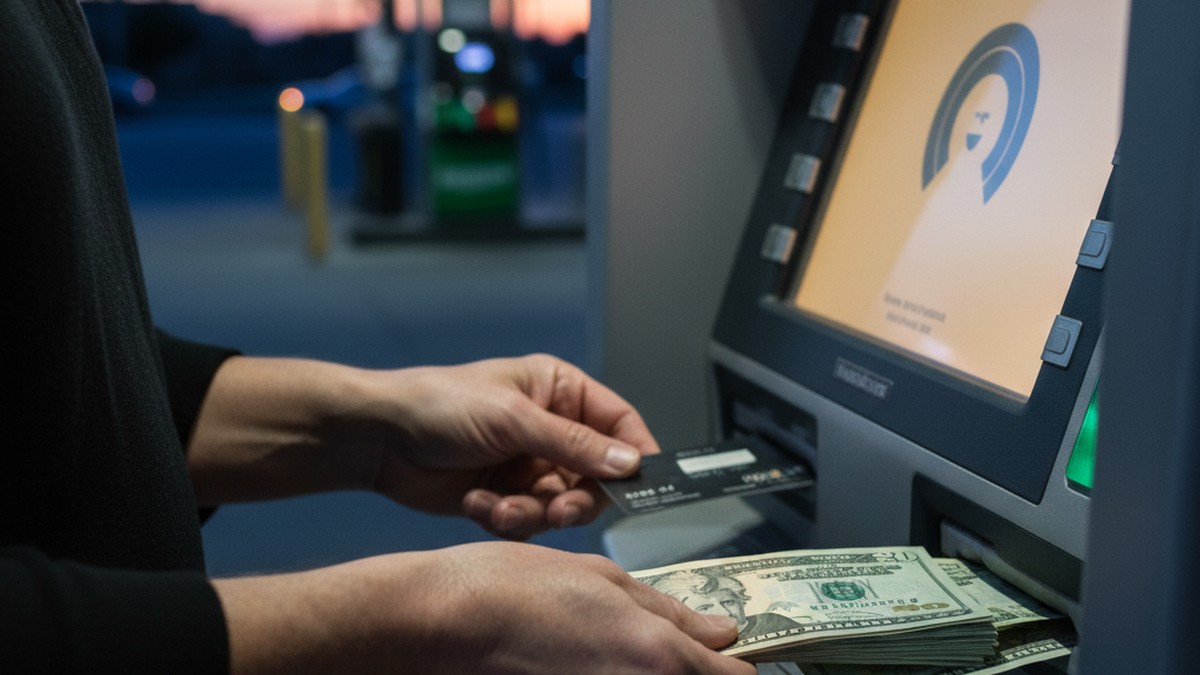
Cheaters switch to cash to erase the destination of spending — paying for restaurants, motels, and gifts with bills so no card record exists. But the shift in ATM withdrawal frequency, amount, and location appears on statements regardless, creating its own pattern that often proves more telling than any card transaction.
What normal ATM behavior looks like
Most people have predictable ATM habits. They withdraw cash at a consistent amount — $60, $100, $200 — at a particular machine near home or work, on a roughly consistent schedule. That baseline is your starting point for any analysis.
Cheaters who shift to cash spending change that baseline in visible ways. Frequency increases. Amounts grow. The ATM location shifts — withdrawals begin appearing at machines across town, near the airport, in neighborhoods your partner has no apparent reason to visit. Each individual withdrawal looks normal. The aggregate shift doesn't.
The cash problem cheaters can't solve
Cash hides the destination of money but cannot hide the departure. If your partner is withdrawing $200 twice a week when they used to withdraw $100 once a week, that shift shows up on the statement. The only explanation available is "I needed cash" — which becomes increasingly difficult to sustain when household visible spending shows no corresponding increase.
What does the extra cash go toward? Restaurants where a card trail would create a record. Rideshare drivers paid in app credit purchased with cash. Budget motels that accept cash at check-in. Small gifts bought with bills so no receipt is generated. The less traceable the transaction, the more the cash withdrawal pattern itself becomes the signal.
The secondary cash trail: ATM fees
One pattern private investigators note in infidelity investigations: people conducting affairs often withdraw cash from ATMs at gas stations or convenience stores rather than bank branches. These machines charge higher fees — typically $3-5 per withdrawal — which appear as small auxiliary charges on statements.
Those fees create a secondary indicator. A string of small ATM fee charges at locations your partner has no explained reason to visit, running alongside increased withdrawal frequency, builds a geographic picture of where someone has been spending time. A charge from an out-of-network ATM in a neighborhood 45 minutes away from home or work tells a story even before you know what the cash paid for.
What to flag in this category
- Frequency increases: A 30% or greater jump in how often ATM withdrawals occur
- Location changes: Machines far from home, work, school, or any regular route
- Amount escalations: Withdrawal amounts climbing steadily over weeks or months
- Timing clusters: Withdrawals concentrated on weekend afternoons or weekday evenings — times when an affair would be active
- Round-number pulls: Unusual $300 or $500 withdrawals untied to any visible household expense
Hotel and Travel Charges to Watch For
Hotel charges are among the clearest bank statement signs of cheating — and also among the easiest to explain away, which is why cheaters still use cards for them and why context matters so much.
How hotel charges appear on statements
Hotel names don't always appear cleanly on bank or credit card statements. Many hotel groups use parent company names, property-specific codes, or billing entity names that bear no obvious resemblance to the hotel brand. A stay at a mid-range Marriott property might appear as "Marriott International," "Marriott Hotels," or a property-specific code. Some budget and independent properties appear entirely under management company names.
When you see an unfamiliar hospitality charge, search the exact business name along with the transaction amount and approximate date. The charge amount itself provides context: a room rate of $89-$150 suggests a mid-range overnight stay; a $200+ charge at a property in your city suggests something specific rather than a budget overnight.
Airbnb charges appear as "AIRBNB" on statements. VRBO charges appear as "VRBO" or "HOMEAWAY." Short-term rental platforms are increasingly preferred by people conducting affairs over hotels specifically because they require no front-desk check-in and are less associated with overnight stays in the conventional sense.
Weekend patterns vs. legitimate business travel
Legitimate business travel follows patterns you'd recognize. It's planned in advance, you'd know about it, and it concentrates on weekdays around work schedules. The suspicious pattern looks structurally different:
- Weekend hotel stays: Friday or Saturday night charges at a hotel within driving distance — close enough for a night away, not close enough to feel like a work trip
- Local properties: Any hotel charge within 30-50 miles of your home, on a night when your partner claimed to be at a friend's, at work, or simply absent
- Short mid-week stays: A single-night charge on a Tuesday or Wednesday when no business trip was mentioned
- Timing adjacency: A hotel stay that coincides with dates your partner was supposedly elsewhere doing something else
Rideshare and transportation patterns
Uber, Lyft, and taxi charges that don't correspond to known routes deserve attention. Rideshare charges appearing at 10pm or 1am, or rides originating from or going to residential addresses your partner can't explain, are meaningful. These appear on statements as "UBER*TRIP," "LYFT," or similar, sometimes with a partial address or city encoded in the description field.
Rental car charges are harder to explain away than rideshares. A rental car in your city — when your partner has a functioning vehicle — or a rental that extends longer than a known trip suggest the transportation was for purposes that couldn't involve a shared vehicle.
Restaurant and Entertainment Red Flags
Restaurant charges are high-frequency and easy to overlook — which is exactly why they're such useful indicators when the pattern shifts away from your established baseline.
The dining-for-two problem
A solo meal at a midrange restaurant typically runs $18-35. A meal for two covers $45-90 at a casual spot, $80-150 at a nicer restaurant. When someone who normally dines alone or doesn't frequent restaurants starts generating charges in the $80-130 range on weekday evenings at places neither of you visits together, the bill math suggests company.
This isn't conclusive on its own. A business dinner, a meal with a close friend, a team lunch — all are legitimate explanations. Context matters more than any individual charge. A single unexplained restaurant bill is a data point. A series of unexplained restaurant bills at dinner-appropriate times, at unfamiliar locations, in amounts suggesting two people, is a pattern worth examining systematically.
When charges appear matters as much as the amount
Look at the timing of charges rather than defaulting to just the dollar amount:
- Weekend evenings, 7pm-10pm: Classic date-night window
- Weekday evenings after work, 6pm-9pm: Suggests the person went somewhere before coming home
- Holiday periods: Valentine's Day, New Year's Eve, anniversaries — charges at restaurants on those dates for meals you didn't share carry specific weight
- Friday afternoon: A charge at 3pm on a Friday, at a wine bar or restaurant, when your partner supposedly went straight home
The critical signal is a recurring pattern of restaurant activity that happens in windows you can't account for — times when you thought your partner was elsewhere.
Entertainment and experience charges
Affairs aren't funded only through restaurants. Watch for:
- Concert or event tickets: Two tickets purchased through Ticketmaster, AXS, or similar — to an event you weren't part of and didn't know about
- Cinema charges: Movie theater purchases on evenings you weren't together, in amounts suggesting two admissions
- Hotel spa services: Spa charges billed under a hotel name, often bundled with overnight stays
- Adventure and activity venues: Escape rooms, bowling alleys, mini golf — shared-experience venues bought for two
The critical thread through entertainment charges is that they represent time spent somewhere, with someone, doing something experiential. Physical experiences are hard to conduct alone and hard to justify as private. A charge at an axe-throwing venue for $90 on a Saturday afternoon your partner was supposedly "running errands" creates a specific question.
What Gift Purchases Signal an Affair on Bank Statements?
Purchases at jewelry retailers, flower shops, lingerie stores, and fragrance counters — for items you never received — are strong indicators. The key signals are purchases timed around gift-giving occasions (Valentine's Day, anniversaries) that don't correspond to anything you got, and online retail charges in amounts suggesting a personal gift rather than a household purchase.
Categories to watch
Jewelry and accessories: Charges at Zales, Kay, Jared, independent jewelers, or online jewelry retailers. Jewelry purchased for you would typically appear on an occasion you'd recognize — birthday, anniversary, holiday — or would involve you in some way. Jewelry purchased without your knowledge, in amounts suggesting a personal piece rather than a token gesture, is a specific data point.
Flowers: Charges at FTD, 1-800-Flowers, Teleflora, or local florists. Flowers are a classic early-affair purchase — they signal romantic intent and are purchased impulsively. If you didn't receive them, where did they go?
Lingerie and intimate apparel: Victoria's Secret, Aerie, Adore Me, or similar. Lingerie purchases that don't correspond to any gift you received, particularly in a size that isn't yours if you can tell, are among the more direct signals in this category.
Fragrance and cosmetics: Sephora, Ulta, department store cosmetics counters. Fragrance purchases specifically are associated with gifting — they're intimate, personal, and rarely bought for practical reasons. A $95 charge at Sephora for something you didn't receive warrants a straightforward question about what was purchased.
The online retail gap
Amazon, Etsy, and other e-commerce platforms appear on statements by company name rather than item. An Amazon charge could be anything. But a series of Amazon charges in amounts ($45-$150) that don't correspond to any household item you received — combined with packages you weren't present for — creates ambiguity worth addressing.
Personalized gift platforms are even more specific. A charge at Etsy or Uncommon Goods in the $40-100 range, for something you never saw, suggests a personalized or experiential gift purchased for someone specific. These platforms don't have obvious cover explanations.
The occasion-amount pattern
Context does more work here than the charge alone. A $280 jewelry purchase in the two weeks before Valentine's Day is either a gift for you — verifiable — or a gift for someone else. A $280 jewelry purchase in September, on no recognizable occasion, has no obvious innocent framing.
Affair partners typically receive gifts during the same emotional moments as legitimate partners — Valentine's Day, birthdays, and the anniversaries that define romantic relationships. If your partner spends unexpectedly during those periods on items you never received, the timing is meaningful beyond just the transaction itself.

Digital Payment Apps: The Modern Paper Trail
Cash was the traditional way to hide affair-related spending. Digital payment apps are the modern approach — and they're often more revealing because many people don't think of app transaction histories as bank statements.
Venmo, Zelle, Cash App, and PayPal
Transfers through Venmo, Zelle, and Cash App appear on bank statements as line items. A Zelle transfer of $180 to "Jamie" on a Saturday morning, in a household with no obvious reason for that transfer, is a specific data point worth examining. Recurring transfers to the same person, at regular intervals, across multiple months, suggest an ongoing financial relationship.
Venmo adds an extra dimension: transactions can be public on user profiles. If your partner's Venmo activity is set to public or friends-visible, transactions between them and a specific person may be visible with notes attached — emoji, partial descriptions, or context that makes the nature of the exchange clearer. Many people conducting affairs don't realize their Venmo activity is visible to mutual friends or contacts who might recognize the pattern.
Subscription charges and what they reveal
Monthly subscription charges are easy to scroll past because they're small and recurring. But certain subscriptions are directly relevant to affair detection:
- Dating app subscriptions: Tinder Gold, Bumble Boost, and Hinge Preferred charges often appear under parent company names — Match Group, Bumble Inc., or Hinge LLC — that partners don't immediately connect to dating apps. A recurring monthly charge of $29.99 to "Match Group" is Tinder Gold.
- Privacy and security subscriptions: VPN services, encrypted messaging app subscriptions (like Wickr or Telegram Premium), or second-phone apps. These don't have obvious innocent explanations for someone without clear professional privacy needs.
- Cloud storage: Additional storage on accounts not linked to household devices — a Google One charge for a Google account you don't recognize, for example.
The subscription start date as a behavioral marker
When a new subscription begins on a specific date, that date potentially marks a behavioral change. If Tinder Gold charges start appearing six months ago, and you can identify a shift in your partner's behavior or availability around that time, the correlation becomes meaningful. Subscription timing creates a timestamp for when something changed.
According to a 2024 Bankrate survey, 17% of people in committed relationships have kept a secret credit card and 13% maintain a secret checking account. Digital payment apps function similarly — as financial channels that operate entirely outside joint account visibility, leaving only indirect traces in the bank statement record of the connected funding source.
The 4-Category Statement Scan
Most people investigating a suspected affair approach bank statements looking for a specific smoking-gun charge. That approach finds some things — but it misses the more powerful method, which is systematic pattern analysis across four categories simultaneously over a multi-month window.
The 4-Category Statement Scan is a structured framework for reviewing three to six months of statements in a way that makes anomalies visible even when individual transactions are ambiguous.
Category 1: Hospitality
All charges related to travel, accommodation, dining out, and entertainment. Pull every statement line that falls into these subcategories:
- Hotels, motels, short-term rentals (Airbnb, VRBO)
- Restaurants and bars
- Coffee shops (look for unusual frequency or location)
- Transportation: Uber, Lyft, taxis, rental cars, parking
- Entertainment venues: cinemas, concert halls, activity centers
How to measure it: Calculate the monthly total spent in this category, and the average charge size for restaurant-category entries specifically. Compare those numbers across each of the three to six months you're reviewing. A 20% or greater increase in monthly hospitality spending without a corresponding lifestyle explanation — a new social habit, a job with more client dinners, a fitness routine that involves regular café visits — is a flag worth examining.
Look also at the geographic distribution of charges. Are they all in the same areas you've always spent money? Or has a new cluster of charges appeared in neighborhoods, suburbs, or cities that don't correspond to any known activity?
Category 2: Gifting
All purchases at gift-adjacent categories: jewelry, flowers, cosmetics, lingerie, specialty foods, experience retailers (Airbnb Experiences, online courses used as gifts), gift cards, and personalized-item platforms.
How to measure it: Any charge in this category that you can't account for as a gift you received, or as a gift purchased for a recognized third-party occasion (a family member's birthday, a colleague's retirement), belongs on a list. A single unaccounted gifting charge is worth a simple conversation. Three or more unaccounted charges across this category in a three-month window constitute a pattern.
Pay particular attention to charge timing relative to gift-giving seasons. Unexplained Category 2 charges in February, on birthdays and anniversaries, or during December holiday spending deserve specific attention.
Category 3: Cash
All ATM withdrawals and cash advances. Include third-party ATM fees as secondary data points for geographic information.
How to measure it: Calculate total monthly cash withdrawn and average withdrawal frequency versus the prior six-month average. Identify the geographic location of ATM use where the statement provides it. Any 30% or greater increase in cash volume, any new ATM location pattern, or any shift in withdrawal timing (moving from midday to evenings, for example) belongs in your findings.
Category 4: Access Control
Signs that someone is restricting your visibility into financial accounts:
- Changed passwords to online banking platforms you previously accessed
- Statements that no longer arrive by mail
- New cards or accounts you didn't open together
- Removal as an authorized user on an existing account
- New credit card solicitations in amounts or categories that suggest recent credit activity
How to measure it: This category isn't about amounts — it's about changes to your financial visibility. Document any change in the past three to six months that limits your ability to see financial information you previously could access.
Using the framework as a pattern tool
Run the 4-Category Scan across three full months of statements before drawing any conclusions. Don't evaluate charges in isolation — the framework works by surfacing aggregate patterns, not individual anomalies.
A 40% increase in Category 3 (cash), combined with four unexplained Category 1 charges (restaurants and hotel) and two Category 2 charges (jewelry, flowers) across the same 90-day window, is a coherent signal — not three separate coincidences. The power of this approach is that it forces you to see the full picture rather than getting fixated on one suspicious entry while missing the context around it.
Secret Account Warning Signs
One of the most reliable bank statement signs of cheating isn't something you find on the statement — it's evidence of accounts the statement doesn't cover at all.
How separate accounts get created
A secondary checking account at a different bank, a credit card in the cheating partner's name only, or a PayPal business account are tools for keeping affair spending completely invisible to joint financial review. These accounts don't appear on shared statements because they're structurally separate from them.
But they leave secondary evidence on the records you do have access to:
New credit inquiries: Each new credit account triggers a hard inquiry on the applicant's credit report. If you have legitimate access to your partner's credit profile — through a joint credit-monitoring service, for example — new accounts or unfamiliar inquiries are significant markers. An account opened six months ago that you have no knowledge of is a direct flag.
Credit card solicitations by mail: Unsolicited credit card offers are often triggered by recent credit application activity. A spike in card offers arriving for your partner — especially from premium or travel-rewards issuers — can indicate recent credit inquiries that don't correspond to any purchase you made together.
Declining credit score: Opening new accounts reduces average account age and may increase total utilization, both of which affect credit score. An unexplained drop of 20 or more points may reflect new accounts opened without your knowledge. Many joint credit-monitoring platforms send alerts when scores shift, giving you a timestamp for when new activity occurred.
Rerouted mail: Cheaters who open separate accounts often change statement delivery to a work address, P.O. box, or email address you don't know about. If you used to receive a credit card statement by mail and it stopped appearing, the statement hasn't disappeared — it's going somewhere else. Banks don't stop mailing statements without a delivery address change.
Tax documents: W-2 forms, 1099s, and investment account year-end statements arrive in January and February. Tax documents reflecting income sources, accounts, or investment activity you weren't aware of are direct evidence of hidden financial infrastructure — whether affair-related or otherwise.
The "locked out" pattern
One of the most explicit signs of deliberate financial concealment: you're suddenly locked out of an account you previously accessed, or a shared financial app has been removed from a device or had its credentials changed. Being locked out of a joint account isn't an oversight — it requires a deliberate credential change. Banks don't automatically expire account access.
If your partner claims the password "just changed" or suggests you set up your own login separately, that framing is worth examining. Joint account access is a shared right, not a convenience feature that can be selectively revoked.
What Does Normal Financial Behavior Look Like — And Why Does the Contrast Matter?
Here's the contrarian view on bank statement investigation: most guides tell you to hunt for dramatic red flags — a hotel charge, a jewelry purchase, a suspicious cash withdrawal. Those do matter. But the most consistent signals from financial investigation cases aren't dramatic events — they're boring baseline shifts that accumulate over weeks and only become visible in aggregate.
Establishing the baseline before looking for anomalies
Before you can identify what's unusual, you need to quantify what's normal. Pull the last twelve months of available statements — or six months at minimum — and calculate these figures:
- Average monthly total spending
- Average weekly restaurant spend and typical charge amounts
- Average ATM withdrawal frequency and dollar amount
- Regular subscription charges (document which ones are normal)
- Typical discretionary spending on entertainment and experiences per month
This baseline is your reference point. You're not looking for a single alarming charge — you're looking for measurable drift away from the established pattern.
Why boring shifts reveal more than dramatic ones
A cheater who takes out $400 at an ATM once created a single data point with a plausible explanation. A cheater who has incrementally increased cash withdrawals from an average of $80 per week to $220 per week over five months has left a much clearer behavioral record, even though no individual withdrawal is alarming.
Similarly, restaurant charges that drift from $180 per month to $380 per month over six months, with no corresponding increase in social events you participated in together, signal a change in spending behavior that only the aggregate makes visible. This matters because cheaters who avoid obvious single errors — big hotel charges, obvious jewelry purchases — often believe they've left no trace. They haven't accounted for pattern-level analysis across months.
A framework for distinguishing innocent from suspicious
Context does more work than any charge in isolation. The following table distinguishes how the same transaction type reads differently depending on circumstances:
| Transaction | Innocent explanation | Suspicious pattern |
|---|---|---|
| Hotel charge | Known business trip, family emergency | Local property, weekend, no trip mentioned |
| Jewelry purchase | Known occasion gift | Non-occasion timing, item you didn't receive |
| Restaurant charge | Lunch with coworker you know | Dinner hour, unfamiliar area, recurring pattern |
| Cash withdrawal | Farmer's market, home repair | New location, unexplained amount increase |
| Flower purchase | Known occasion (Mother's Day) | Non-occasion, you didn't receive them |
| Digital app transfer | Splitting a bill with a mutual friend | Recurring transfer to unknown contact |
A single charge with a plausible explanation is just that — plausible. The framework shift happens when explanations become strained across multiple categories simultaneously, or when the explanation given for an individual charge contradicts other available information.

How to Document What You Find Without Crossing Legal Lines
Before acting on anything you find in bank statements, it's worth understanding what you're legally entitled to access and how to preserve evidence you've found.
What you can access legally
In a joint account, both account holders have full legal right to the statement. You don't need your partner's permission to review a joint checking account, joint credit card account, or any account where you're a co-signer or authorized user. That access is a contractual right, not a courtesy.
Individual accounts are different. Accessing a bank account that is only in your partner's name, without their authorization, may violate financial privacy regulations in your jurisdiction even if you know the login credentials. The critical distinction is whether your name is on the account. If it isn't, accessing it without explicit permission carries legal risk.
Digital payment apps sit in a gray area. Viewing Venmo transactions through a mutual friend's view of a public profile, or through your partner's own public-facing activity, is generally permissible. Logging into your partner's Venmo, PayPal, or Cash App account without their authorization is a different matter legally.
The practical rule: Document everything you find through legitimate access. If you're not sure whether a specific access method is legitimate, consult a family law attorney before proceeding — particularly if a separation or divorce is a realistic possibility.
How to preserve what you find
Digital bank statements can be altered or access can be revoked. If you find something significant through legitimate means:
- Download PDFs of statements you have authorized access to, from your own device, saved to a location only you access (a personal email account or cloud storage your partner doesn't use)
- Screenshot specific transactions with the statement date and account information visible in the same frame
- Create a written log of what you found, the date you found it, and which statement or account it appeared on
Preserve evidence before confronting your partner. A confrontation that turns adversarial can result in accounts being closed, statement access being revoked, or records being purged from shared apps. Courts can compel disclosure through formal discovery processes, but that takes time and having your own preserved record matters.
When to involve a professional
If you're moving toward separation and financial evidence of an affair could affect asset division in your state, a divorce attorney can advise you on discovery procedures that carry legal standing. In states where fault-based divorce affects asset splits, demonstrating that marital assets funded an affair can result in a reimbursement from the cheating spouse's portion of the settlement.
A forensic accountant, retained through your attorney, can trace hidden assets, analyze statement patterns professionally, and produce findings that carry evidentiary weight in proceedings.
This article does not constitute legal advice. Laws governing financial privacy and evidence collection vary significantly by jurisdiction. Consult a licensed attorney for guidance specific to your situation.
What Should You Do After Spotting Financial Red Flags?
Finding patterns in bank statements is clarifying but not conclusive on its own. What you do with the information matters as much as what you find.
Don't confront based on statements alone
A bank statement pattern is evidence of financial behavior — it's not proof of an affair. The $120 restaurant charge could be a client dinner. The hotel charge could be a last-minute stay during a delayed flight. The jewelry purchase could be something arriving next week.
Confronting a partner based solely on financial patterns before you've built a fuller picture creates two problems. If you're wrong, the relationship sustains real damage from a false accusation. If you're right, a premature confrontation allows them to eliminate remaining evidence, change passwords, close accounts, and coordinate a cover story before you've gathered the complete picture.
What to gather before any conversation
Before raising the subject, consider what you have:
- Three to six months of relevant statements, downloaded and saved to a secure location
- A written summary of the specific patterns and the dates they occurred
- Some form of corroborating information beyond financial records — behavioral changes, phone behavior signs, digital signals, or other patterns
If you want certainty before confronting, a platform like CheatScanX scans 15+ dating apps for active profiles using a name and email address — often revealing hidden profiles that, combined with financial evidence, create a more complete picture. Knowing what you're dealing with before the conversation changes the dynamic significantly.
If the gut feeling he's cheating has been with you for a while, the financial record is one structured way to test that intuition against something concrete.
Have a clear sense of what you want from the conversation
Before initiating anything, think through what you actually want as an outcome. Do you want the truth? Do you want the relationship to continue or end? Do you need legal evidence for a potential divorce proceeding? The answer shapes what kind of support you need — whether that's a therapist, a family law attorney, or simply space to process what you've found.
Approach any conversation with the specific information you've found, not as a blanket accusation. "I noticed hotel charges from this date and this restaurant pattern over the past three months, and I'd like you to explain them" invites a response. What your partner says — and what they can't explain — will tell you what you need to know.
Conclusion: Reading the Financial Record Honestly
Bank statements are one of the most reliable places to look when you suspect a partner is hiding something. Affairs require spending. Spending leaves records. What looks like a routine account review is actually a behavioral log of someone's recent life, rendered in rows and transaction codes.
The twelve patterns this article covers — from cash withdrawal shifts to hotel charges, gift purchases, digital payment transfers, and secret account signals — aren't individually conclusive. Any single charge has a plausible innocent explanation. The pattern across categories, measured over time against an established baseline, is what carries evidential weight.
The 4-Category Statement Scan gives you a systematic way to approach this without getting anchored on individual transactions. Map spending into Hospitality, Gifting, Cash, and Access Control across three full months. Establish what normal looks like. Then measure what's changed.
What you find may confirm your concern, or it may show you that the financial record is entirely consistent with the life you share. Either result is useful. Financial evidence either builds a case or eliminates a hypothesis — and both outcomes move you toward clarity faster than sustained uncertainty.
If the financial record raises more questions than it answers, it rarely provides the complete picture alone. Learning how to catch a cheater typically involves combining financial signals with behavioral observation and digital evidence. For a broader view of the statistical context around infidelity, dating app cheating statistics shows how common digital cheating has become alongside the financial patterns it generates. The bank statement is a starting point — a place where the truth has a way of surfacing in columns and line items, whether anyone intended it to or not.
Frequently Asked Questions
The most telling transactions include unexplained hotel charges (especially local or weekend stays), restaurant charges at dinner-appropriate times at unfamiliar places, jewelry or flower purchases you never received, ATM withdrawals at unusual locations, and Venmo or Zelle transfers to unrecognized contacts. No single transaction is conclusive — the pattern across multiple categories matters most.
Cheaters most often switch to cash for affair spending, masking the destination while the withdrawals themselves remain visible. Others open a separate credit card at a different bank, change statement delivery addresses, or use digital payment apps like Venmo and Cash App. Dating app subscriptions sometimes appear under parent company names — Match Group, Bumble Inc. — that partners don't immediately recognize.
Bank records can reveal strong evidence of affair spending — hotel stays, gift purchases, restaurant patterns, and suspicious cash habits. They're rarely conclusive alone but are highly useful combined with other evidence. In states with fault-based divorce, financial evidence of affair spending on marital assets can directly affect property division settlements.
Hotels typically appear under parent company names (Marriott International, Hilton Worldwide Holdings, IHG) or the specific property name. Budget hotels sometimes appear under a management company name. Airbnb charges appear as 'AIRBNB' and VRBO as 'VRBO' or 'Homeaway.' If you see an unfamiliar hospitality charge, search the business name with the city to identify the property.
You have full legal access to any joint account you're both named on, and reviewing those statements is within your rights. Individual accounts in your partner's name only are different — accessing them without authorization may violate financial privacy laws depending on your jurisdiction. If you're uncertain whether your access is legitimate, consult a family law attorney before proceeding.