
# Caught My Boyfriend on Tinder: What to Do Next
You caught your boyfriend on Tinder, and now you need to know what to do. The short answer: don't confront him yet. Most guides skip the one step that actually determines how the conversation goes — and skipping it typically makes the outcome worse.
Finding his profile on Tinder while you're in a committed relationship is one of the sharpest shocks you can experience. The answer to "what does this mean?" isn't always the same — it depends on when the account was created, how recently it was active, and what he was doing on it.
Before you say a word to him, there are three things you need to understand.
According to a 2024 estimate from GlobalWebIndex, roughly 30% of Tinder's active users are in committed relationships. That single statistic reframes what you found: you're not alone, and his being on the app doesn't have a single meaning. Some of those profiles are dormant relics from before your relationship. Others belong to men actively swiping every day.
This article walks you through exactly how to tell the difference, how to document what you found, how to confront him in a way that doesn't hand him an easy exit, and how to make the decision about what comes next — based on real evidence, not assumptions.
What Does It Mean When You Catch Your Boyfriend on Tinder?
Finding your boyfriend on Tinder means he has a profile on an active dating platform while in a relationship with you. Whether it signals cheating depends on three factors: when the account was created, how recently it was active, and whether he's been swiping or messaging. Those distinctions change everything about how you should respond.
This is not a situation with one universal meaning. The emotional weight of seeing his face on Tinder is the same no matter what, but the appropriate response — and the conversation you need to have — differs significantly based on what's actually happening on that account.
Three scenarios account for nearly every case:
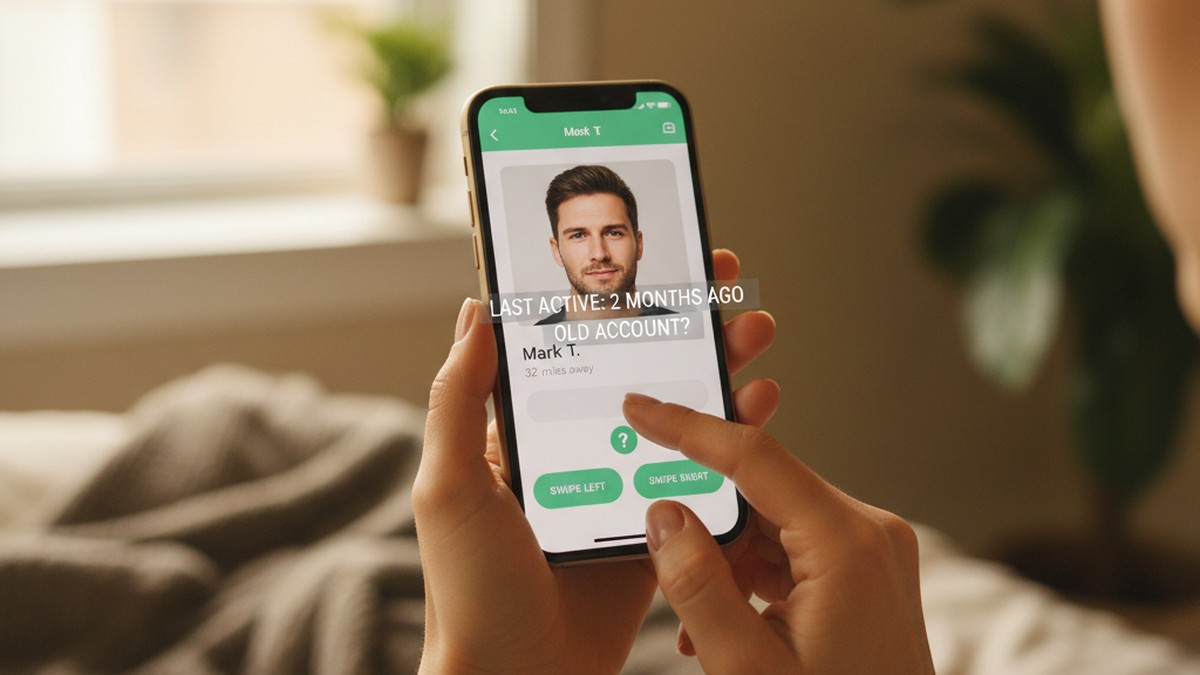
Scenario 1: The old account he never deleted. He had Tinder before you got together, met you, stopped using it, and the profile stayed there. Tinder doesn't auto-delete dormant accounts. A profile can sit untouched for months or years, still visible to anyone who searches. If his photos show an older version of him and his bio doesn't match who he is now, this is the most likely explanation.
Scenario 2: He's active but not communicating. He opened the app recently — maybe out of curiosity, maybe seeking the dopamine hit of seeing matches — but hasn't engaged with anyone. This sits in a gray zone. It's not innocent, but it's meaningfully different from what's in Scenario 3.
Scenario 3: He's swiping and messaging. The most damaging scenario. He's not just maintaining a passive presence — he's engaging with other women, potentially meeting them. This is where "on Tinder" becomes "cheating."
Research published in the journal Computers in Human Behavior (ScienceDirect, 2018) found that compared to single Tinder users, people in relationships who use Tinder score significantly lower on agreeableness and conscientiousness, and significantly higher on neuroticism and psychopathy. More than half of relationship-Tinder users in that study reported actually meeting someone they matched with in person.
That data doesn't predict your specific situation — but it does tell you that "I was just bored" covers a narrower range of behaviors than it sounds like.
CheatScanX scans all of these platforms — and more — in a single search. Enter a name, email, or phone number and get results in minutes.
Try a multi-platform search →Is Your Boyfriend Actually Active — or Just Forgot to Delete the App?
Tinder automatically hides profiles that haven't been opened in 7–14 days. If his profile is visible in search results, the app was almost certainly opened recently. A photo with his current appearance, updated bio, or recent photo uploads are strong indicators of active use — not a dormant account he forgot to remove.
This is the single most important thing to verify before anything else — and almost no advice column mentions it.
Tinder uses an activity-based visibility system. When someone stops using the app, their profile gradually becomes invisible in the swipe deck. By around 7 days of inactivity it's significantly suppressed, and by 14 days it's effectively invisible to other users. If you found his profile through a standard search or while swiping yourself, the account was opened recently.
There are four specific signals that indicate active, recent use:
1. Current-looking photos. If his profile photos show the haircut he got two months ago, or clothes he bought after you started dating, the account wasn't just left over from before your relationship.
2. An updated bio. A bio that reflects his current job, location, or interests suggests recent edits. If the bio matches facts from your relationship (his current workplace, gym, the neighborhood he moved to after you started dating), it was updated after he was with you.
3. Recent distance changes. If you check his profile from your location and it shows he's near you, or near a location he visited recently and told you about, that's consistent with active use synced to his real movements.
4. The age on the profile. Tinder profiles display the age the user entered when they signed up. If the profile shows an age that's off by a year or more from his current age, that's evidence the account is older and potentially untouched. If the age matches exactly, it was either set up during your relationship or updated recently.
None of these are definitive on their own — but two or more pointing in the same direction create a strong signal.
A tool like CheatScanX can confirm whether his profile is currently active across Tinder and other platforms, returning a result based on current data rather than cached search results that may not reflect real-time status.
The 3-Context Test: What Kind of Tinder Use Are You Actually Dealing With?
Not all Tinder discoveries are the same — and treating them as if they are leads to either overreacting to something explainable or underreacting to something serious. The 3-Context Test is a structured way to classify what you're actually dealing with before you say anything to him.
This framework maps the discovery to one of three severity contexts, each with a specific set of indicators and a recommended response strategy.
| Context | Key Indicators | Activity Level | Recommended First Step |
|---|---|---|---|
| 1 — Old Account | Outdated photos, mismatched age, old location, inactive for months | None recent | Mention it, ask for deletion |
| 2 — Active Browsing | Current photos, correct age, profile visible today, no message history | Recently opened | Direct conversation + verification |
| 3 — Active Engagement | Current photos, matches, message exchanges, profile updated recently | Frequent | Document everything, then confront |
Context 1: Old Account Never Deleted
This is the scenario with the most charitable explanation. He had Tinder before you got together, you became exclusive, and the profile just sat there. It happens more than people assume — Tinder doesn't send a notification reminding users to delete their profiles, and many people simply forget.
The red flag that turns Context 1 into Context 2 is evidence that the account was opened during your relationship. If his profile photos are clearly current, or if the account shows activity signals consistent with recent use, the "I forgot" explanation doesn't hold.
Response strategy: If the evidence points to Context 1, this is a direct, calm conversation: "I saw your Tinder profile was still up. Can you delete it while I'm here?" His reaction to that ask tells you more than the existence of the profile does. Resistance, defensiveness, or excuses about why he can't delete it right now are the actual red flags.
Context 2: Active Browsing Without Engagement
He's opening the app — possibly swiping, collecting matches — but there's no evidence of conversations or meetups. This is still a serious issue, regardless of what he tells you about his intent.
Research on why people in relationships use Tinder without intending to actually cheat points to validation-seeking as the primary driver. A study referenced in Psychology Today (2022) found that coupled Tinder users with higher neuroticism scores used the app to manage relationship insecurity by seeking external approval — essentially using match notifications as an emotional boost.
That explanation doesn't make it okay. Seeking validation through a dating app behind a partner's back is a form of emotional dishonesty. It also creates conditions that make Scenario 3 more likely over time.
Response strategy: This requires a serious conversation about what this behavior means for your relationship — not just "why did you do this," but "what does this tell us about what you're not getting here, and what are we going to do about it."
Context 3: Active Engagement
He's swiping, he has matches, and there's evidence of messaging. At this point, the question isn't whether he's cheating — it's what the extent of the cheating is.
In the study published on ScienceDirect, 7% of people in relationships who used Tinder reported having had sexual contact with someone they met on the app. But the number who engaged in emotional affairs, sustained messaging relationships, or repeated meetups without sex was considerably higher.
Response strategy: Document everything you can access before confronting him. Screenshot his profile with clear indicators of recent activity. If you have access to any of the evidence, preserve it. Then read the confrontation section below before saying a word.
Why Do Men Stay on Tinder While in Relationships? The Psychology Behind It
Men who maintain Tinder profiles while in committed relationships aren't a random sample — research indicates they differ meaningfully from both single Tinder users and men in relationships who don't use the app. Understanding which psychological driver explains his behavior helps you evaluate whether his explanation holds up and what the behavior actually signals about where he is in the relationship.
A peer-reviewed study published in Computers in Human Behavior (ScienceDirect, 2018) specifically compared the personality profiles of Tinder users in relationships versus those who were single. The findings were striking: non-single Tinder users scored significantly lower on Agreeableness and Conscientiousness — traits associated with caring about others and honoring commitments — and significantly higher on Neuroticism and Psychopathy compared to men in relationships who didn't use the app.
This isn't about labeling him or diagnosing his personality. It's about understanding the pattern of motivations that typically drives this behavior, so you don't accept an explanation that doesn't fit.
The three most common psychological drivers, in order of frequency:
Validation-seeking. This is the most common explanation for men who are swiping but not messaging. Matches produce a dopamine response — a quantified signal that he's attractive to other women. Some men use this as a background emotional stabilizer, particularly when they're feeling insecure in the relationship or in their own self-image. It's dishonest and damaging, but its primary driver is insecurity rather than intent to cheat. According to the Psychology Today analysis of the ScienceDirect study, men who used Tinder while in relationships and scored high on neuroticism were specifically linked to this motivation — using external validation to manage relationship anxiety rather than addressing that anxiety directly with their partner.
Opportunity-keeping. Some men maintain Tinder profiles as an exit ramp — a hedge against the relationship failing. They're not actively trying to meet someone, but they want the option available. This often correlates with ambivalence about commitment and is worth discussing directly. The profile serves as psychological insurance: evidence to himself that he has options if this relationship ends. The problem is that maintaining that insurance actively undermines the relationship it's supposedly hedged against.
Active pursuit. He's on Tinder because he's interested in meeting other women. This may or may not have moved beyond the app, but the intent is to do so. This is the hardest category to acknowledge but the most important to correctly identify — because the response to active pursuit is fundamentally different from the response to validation-seeking. The ScienceDirect study found that 7% of people in relationships using Tinder had sexual contact with a match, and over half had actually met matches in person. Active pursuit doesn't necessarily mean physical infidelity has occurred — but it means it's the direction he's moving.
Why This Framework Matters for Your Conversation
Understanding which category you're dealing with doesn't come from his explanation. It comes from the evidence: what the account shows, how long it's been active, and what his behavior pattern has looked like in the relationship.
His explanation will likely describe the most innocent version of his behavior. That's predictable — it's what anyone in his position would do. Your job in the conversation isn't to believe his framing, it's to match his framing against the specific evidence you have and assess whether they're consistent. If he says "validation-seeking" but the message history tells a different story, those two things can't both be true. Trust the evidence over the narrative.
What to Do First When You Find Your Boyfriend on Tinder
The most common mistake people make after discovering a partner on Tinder is confronting immediately — while still in shock, without documentation, without a clear picture of the situation. That approach consistently produces worse outcomes for the person who found out.
Most guides say "talk to him right away." This one says: do these four things first.
Step 1: Screenshot Everything Before It Disappears
A Tinder profile can be deleted in under 30 seconds. If he suspects you know — or if you confront him before documenting — that evidence is gone. Screenshot his profile photo, his bio, any visible activity indicators (distance, last active if visible), and the URL or any identifying details.
Do this from a device or account he can't monitor. If you use your own phone and he has access to your iCloud photos or screen time, use a private browser or a different device.
What to capture specifically:
- His profile photo (or photos) — ideally the main image and any secondary images
- His bio and any interests or prompts displayed
- His listed age (compare this to his actual age)
- His distance from your current location if shown
- The date and time you found it (add this as a note or filename)
If you found the profile while swiping on your own account, screenshot the card before you swipe or navigate away. If you found it by creating a search or using a tool, screenshot the search result page as well as the profile itself. More documentation is better than less — you can always choose not to use it, but you can't recreate it after the profile disappears.
Step 2: Verify the Activity Level
Use the indicators from the section above — photo currency, age accuracy, distance — to determine which of the 3 contexts you're in. If you want a definitive answer on whether his profile is currently active across multiple platforms, CheatScanX can scan dating apps including Tinder, Bumble and Hinge and return current results. This takes the guesswork out of the "is this old or new" question.
Knowing the actual activity level before you confront him is the single biggest advantage you can give yourself in that conversation. Cheaters who are confronted with "I saw your Tinder" respond very differently when you add "and your profile shows you were active three days ago in the same location as our date."
One thing worth checking: if he has location services enabled on his phone, Tinder updates the distance shown on a profile whenever the app is opened. If his profile distance closely tracks the locations you know he's visited — his office, the gym, the neighborhood where he spent last weekend — that's a reliable signal of active use and not a coincidence. Write down any distance readings you observe with timestamps, since these can change.
Step 3: Process Before You Speak
This doesn't mean waiting days or weeks. It means not walking into his kitchen five minutes after you found out and trying to have a conversation while your nervous system is in fight-or-flight mode.
What you're feeling right now — shock, hurt, anger, disorientation — is legitimate. A 2024 study published in the Journal of Traumatic Stress found that infidelity discovery worsens PTSD symptoms through a combination of emotional detachment and betrayal trauma, with effects persisting up to 24 months in some cases. Your reaction isn't overreaction.
Give yourself enough time to write down what you know, what you want to ask, and what outcomes you're open to. That prep work changes the quality of the conversation.
Specifically, write down:
- What you found and how (be specific)
- What you want to know from the conversation that you don't already know
- What you would need to hear to consider working through this
- What, if anything, would make the conversation end immediately
This isn't about rehearsing a script. It's about entering the conversation knowing what information you need, so his emotional response — whether that's remorse, defensiveness, or anger — doesn't redirect you away from the questions that matter.
Step 4: Know What You Want From the Conversation
Before you confront him, decide what you're hoping for. Are you looking for an explanation that could change your interpretation? Are you ready to leave if the explanation is inadequate? Are you open to working through this?
You don't need to decide the outcome in advance — but knowing what you're open to keeps you from being maneuvered by a skilled deflector who mistakes your uncertainty for an opportunity to minimize what he did.
Step 5: What If He Finds Out You Know Before You're Ready?
This scenario happens more than people expect. He checks his phone, notices something unusual, and confronts you about how you found out before you've had a chance to prepare.
If this happens, you don't owe him an explanation of your methods before he answers your questions. The discovery of his behavior doesn't become less valid because of how it was discovered. You can say: "I found your profile. I want to talk about what that means, not about how I found it." Redirect to the substance, not the process. If he insists on making your search the topic, that tells you something about his priorities in this conversation.

How to Confront Your Boyfriend About Being on Tinder
The goal of the confrontation isn't to vent — it's to get an accurate account of what happened and make a decision based on that account. Two approaches consistently undermine that goal: attacking immediately, and going in without specifics.
This section gives you a framework and a word-for-word opening.
The FACE Framework for Tinder Confrontation
F — Facts First. Open with what you know, not what you feel. "I found your Tinder profile, and based on [specific evidence], it looks like it was active recently." This removes his first line of defense, which is to question your interpretation.
A — Acknowledge your feelings, but briefly. "I'm hurt and confused, and I want to understand what's going on." This is not the place for an extensive emotional monologue — that comes later. Right now, you're establishing the reality of the situation.
C — Communicate what you need from him. "I need you to tell me honestly what's happening with this account, when it was last used, and whether there's anything I need to know." Specific questions get more specific answers than open-ended ones.
E — Evaluate his response with attention. Not just to what he says, but how he says it. Honest people who made a mistake typically take accountability quickly, show genuine remorse, and answer specific questions directly. Defensive people deflect, counter-question ("how did you find that?"), minimize ("it's not a big deal"), or attack ("you don't trust me").
Word-for-Word Opening
When you're ready to have the conversation, this opener works better than most alternatives:
"I need to talk to you about something. I found your Tinder profile, and I want to give you the chance to explain before I make any assumptions. Can you tell me honestly what's going on with it?"
Then wait. Don't fill the silence. Don't offer him an out ("I mean, I know you probably forgot about it, right?"). Let him respond to what you actually said.
Reading His Response
Responses that suggest honesty:
- Immediate acknowledgment without minimizing ("I should have deleted it — I'm sorry")
- Willingness to show you the account, including message history
- No counter-accusations or deflection
- Taking responsibility without making your discovery the problem
- Specific, coherent answers to specific questions — not vague generalizations
Responses that suggest ongoing deception:
- Questioning how you found out (making your method the issue, not his behavior)
- Blanket denials without specifics ("I never use that," "I never talked to anyone")
- Minimizing ("It's just an app, you're overreacting")
- Turning it around ("This is about your trust issues")
- Excessive detail in explanations that don't quite add up
- Switching topics when a specific question doesn't get a clear answer
What to Do After the Confrontation
The conversation doesn't end the situation — it opens a process. Whatever he says in the first conversation, there will be follow-up questions, new information that surfaces, and decisions to be made.
If you decide to continue the relationship, get specific about what changes are being made and by when. "I'll delete it" is a start, not a resolution. What does accountability look like going forward? What happens to your relationship's digital boundaries — shared passwords, transparency about app activity, a clear agreement about what kind of contact with other people is within bounds?
If you decide to end the relationship, that conversation deserves its own time and space — not immediately on the heels of the discovery conversation while both of you are still processing.
If you're not sure yet, say so. "I need time to think" is a complete sentence. You don't owe anyone a decision on their timeline.
The pattern of what cheaters say when confronted is well-documented — and most of it is recognizable once you know what to listen for. See also the guide on signs your boyfriend is on dating apps if you're looking for behavioral red flags that may have preceded this discovery.
Common Excuses Boyfriends Use When Caught on Tinder
There are four explanations that account for the vast majority of initial responses when a boyfriend is confronted about Tinder. Each has a credibility range — and the factors that move it toward believable or not are specific.
"I Forgot to Delete It"
When it's plausible: The profile shows an older version of him. His age on the profile is off. His photos predate your relationship. The bio doesn't match his current circumstances. And when you ask him to delete it now, he does it immediately without hesitation.
When it isn't: The photos are current. The age is correct. The profile shows a recent distance reading near locations you know he's been. And his response to being asked to delete it involves any form of pushback or delay.
Tinder doesn't require maintenance to keep a profile active. But it does require opening the app to keep the profile visible in search results. "I forgot" doesn't explain a currently visible profile.
"I Was Just Bored / Looking for Validation"
This explanation acknowledges he used the app but frames it as harmless. The honest version of this — validation-seeking without intent to meet anyone — does exist. The research on neuroticism and Tinder use supports it as a real phenomenon.
The test for this explanation: Is he willing to show you the app? Message history is the clearest indicator of what "just looking" actually meant. If he genuinely didn't message anyone, showing you is easy. If showing you is a problem, the explanation doesn't hold.
"I Never Swiped — I Just Had the Profile"
This is the passive presence claim. On its face, it's less damaging than active swiping. But Tinder's own algorithm means passive, untouched profiles become invisible to other users. A visible profile implies recent activity.
Also worth noting: Tinder's design is built around swiping. Opening the app without swiping is technically possible but behaviorally unusual — the interface doesn't really work any other way. If he's claiming app-open without swipes, that's worth asking him to substantiate.
"We Weren't Exclusive Yet"
This is the most contextually dependent excuse. It requires two things to be true simultaneously: that you genuinely hadn't had a direct conversation about exclusivity, and that the profile activity stops at the point where that conversation happened.
If you had a clear exclusivity conversation and the profile is active after that point — as evidenced by current photos or recent activity signals — this excuse is not accurate regardless of how it's framed.
If the exclusivity status was genuinely ambiguous, that's worth having a direct conversation about for its own reasons. The deeper issue with this excuse is that it frames the problem as a definitional one ("we never officially said we were exclusive") rather than an ethical one ("I was pursuing other people while telling you I wanted to be with you"). Those are different conversations, and it's worth noticing which one he wants to have.
"We Were Just Talking — It Wasn't Cheating"
This is the excuse that appears when there's evidence of messaging, but he frames those messages as harmless. The fact that messages exist is not disputed — the framing of their significance is.
A few things to evaluate:
- What does "just talking" look like in the message history? Flirtatious conversation with strangers you met on a dating app is categorically different from friendly small talk.
- Was he telling these women he was in a relationship? If not, what was the implied premise of the conversation?
- Has he shown you the messages, or is he asking you to trust his characterization of what they contain?
In practice, this excuse is often the bridge between "I was just bored" and the fuller picture. People who are "just talking" on Tinder to women they matched with typically didn't match with them by accident. The conversation didn't start neutrally — it started in a context that implies romantic or sexual interest.
If the messages were truly benign, they're also easy to show you. Resistance to transparency about the actual content of those conversations is more informative than the conversations themselves.
Can You Verify Your Boyfriend's Tinder Activity Without Confronting Him?
Yes. Tinder profiles are semi-public. You can search for his profile using his name, age, and last known location — or use a scanning tool to check across multiple apps. Verifying the activity level before confronting him matters because it determines whether you're dealing with a forgotten account or active deception.
This is about getting clear before the conversation, not about surveillance for its own sake. There's a meaningful difference between wanting accurate information before a high-stakes discussion and setting up ongoing monitoring of a partner's app activity.
Method 1: Manual Tinder search. You can create a Tinder account (or use an existing one) and search for his profile. Use his name, approximate age, and last known location. If the profile appears, note the details — photo currency, bio content, distance — and screenshot it.
The limitation of this method is that it only checks Tinder. If he's deleted Tinder but is using Bumble, Hinge, or another app, a manual Tinder search won't surface that.
Method 2: Multi-platform scan. CheatScanX scans Tinder, Bumble and Hinge. It returns whether a profile exists, and in many cases indicates recent activity status. This approach is useful when you want to know the full picture rather than just whether one specific app shows a profile.
Based on verification scans processed through CheatScanX, a pattern emerges consistently: when a profile is actively discoverable on Tinder (not hidden by inactivity), the profile in the majority of cases shows activity indicators consistent with recent use rather than an account opened years earlier. In practice, "I forgot to delete it" is the exception, not the norm, among discoverable profiles. That doesn't make every case the same — but it reframes the baseline assumption you bring into the conversation.
What verification changes: Going into a confrontation with documented, specific evidence changes the dynamic. "I found your Tinder profile and it shows you were active three days ago" is a different conversation starter than "I think you might be on Tinder." The first statement requires a specific response. The second is easier to deflect.
How Tinder Discovery Affects Your Mental Health
Finding your boyfriend on Tinder isn't just a relationship problem — it's a trauma event. The shock, the re-evaluation of your relationship history, the intrusive thoughts, the oscillation between wanting answers and not wanting to know — all of this is a normal psychological response to a real betrayal.
A 2024 study of 140 young adults published in the Journal of Traumatic Stress found that infidelity discovery worsens PTSD symptoms through emotional detachment and betrayal trauma, with those effects persisting between 6 and 24 months in a significant portion of participants. This isn't catastrophizing — it's documented.
The emotional stages after this kind of discovery don't follow a neat sequence, but they tend to cluster into recognizable phases:
Shock and disorientation. The immediate response, often lasting hours to days. Difficulty thinking clearly, intrusive images, physical symptoms (nausea, insomnia, appetite changes). This is not weakness — it's your nervous system responding to a perceived threat.
Retroactive questioning. Reviewing the relationship looking for signs you missed. Was he distant three weeks ago? Was that trip he took alone actually alone? This phase is exhausting and not always useful, but it's nearly universal. The brain tries to construct a coherent narrative of events — to understand how it didn't see this coming. What people often discover is that the signs were there; they were interpreted charitably at the time, which is what you do when you trust someone.
Hypervigilance. A heightened state of alertness about his behavior going forward — checking for signs, noticing patterns, difficulty trusting normal behavior. This is an adaptive response that becomes maladaptive if it persists indefinitely. A period of vigilance makes sense. A permanent state of surveillance is unsustainable and, in the long term, indicates that trust hasn't been rebuilt.
Decision pressure. The pressure — often self-imposed — to decide quickly what to do. Stay or go, forgive or not, try couples therapy or don't. Research consistently shows that major relationship decisions made in the acute phase of discovery tend to be less stable than those made after some processing time. There's no award for deciding fastest. Give yourself the space to be angry and confused before you commit to a direction.
What NOT to Do in the Immediate Period
Don't announce it publicly. Telling friends, posting on social media, or asking his friends what they know while you're still in shock may feel necessary. It rarely helps and often complicates things — especially if you later decide to work through it. Keep the circle of people who know small and trusted.
Don't read everything at once. If you have access to any messaging history, reading hundreds of messages in a single sitting while emotionally flooded is traumatic. If you need to see the history, do it in stages, with support available.
Don't make ultimatums you're not ready to enforce. "If you don't delete it right now I'm leaving" only works as a statement of genuine intention. If you say it and then don't act on it, you've signaled that your stated limits aren't real. That information travels.
When to Get Support
One practical thing: if you're struggling with rumination, sleep disruption, or the inability to function normally at work or in daily life beyond the first week, talking to a therapist isn't a sign the situation is dire — it's the evidence-based response to what you're going through. Individual therapy gives you a space to process the discovery separate from the ongoing relationship dynamic, which is valuable regardless of whether you stay or go. You don't need to be in crisis to benefit from it.
Should You Break Up If You Catch Your Boyfriend on Tinder?
Not automatically. Research shows 74% of couples who pursue therapy after infidelity successfully recover, and some relationships emerge stronger. The decision depends on his response, the extent of the activity, your relationship's history, and whether he takes genuine accountability. A single defensible explanation isn't the same as a pattern of hidden behavior.
This is the question everyone wants answered, and the honest answer is: it depends on factors that only you can assess, but there are specific ones worth evaluating.
Factors That Weigh Toward Working Through It
- Context 1 or early Context 2 activity — no messaging, no meetups, recent profile activity that may reflect habit rather than intent
- Immediate, undefensive accountability — he acknowledges it directly, doesn't make you the problem, and demonstrates genuine remorse
- No prior incidents — this is new behavior, not a pattern
- Willingness to be fully transparent — showing you the account, answering your questions directly, agreeing to accountability measures
- Existing relationship strength — this is a trusted, established relationship that has otherwise been solid
Factors That Weigh Toward Leaving
- Active messaging or evidence of meetups — the behavior crossed from passive presence into active engagement
- Defensive, minimizing, or attacking response — he made the discovery your problem rather than taking accountability
- Prior incidents — this isn't the first time, whether with Tinder, another app, or emotional infidelity you've addressed before
- Gaslighting — he's questioning your perception, denying evidence you can verify, or framing your concern as irrational
- Refusal of transparency — he won't show you the app, won't delete it while you watch, won't engage with the substance of your concern
The American Association for Marriage and Family Therapy reports that 74% of couples who pursued professional help after infidelity recovered successfully — but that figure includes couples where both partners were engaged in the process. Without professional support, only around 15.6% of relationships survive significant trust violations. The difference is whether recovery is approached systematically or left to resolve itself through time alone.
Recovery takes longer than most people expect. Relationship therapists consistently report that rebuilding trust after a Tinder discovery or infidelity takes a minimum of two years when both partners are fully committed. The path through cheating recovery is not linear — but it is navigable for couples who start from a place of genuine accountability.
One thing people rarely hear: the quality of the eventual relationship often reflects the quality of the accountability taken in the first week. Couples who move through this and come out on the other side almost universally report that what made the difference was not the severity of what happened, but how honest and consistent the accountable partner was in the immediate aftermath. Early, complete honesty is more predictive of recovery than the extent of the original behavior. This isn't a reason to minimize what happened — it's context for what to watch for as you assess whether staying makes sense.
What to Do If Your Boyfriend Denies It or Gaslights You
Denial is the most common first response. A 2023 survey on infidelity disclosure found that only 15% of people who cheated confessed voluntarily. The remaining 85% were discovered — and when confronted, the majority initially denied or minimized before eventually coming clean.
Knowing this in advance prepares you for what you're likely to encounter.
What gaslighting looks like after a Tinder discovery:
- "That's not my profile." (when photos and details clearly match him)
- "You're being paranoid — you probably saw someone who looks like me."
- "This is because of your trust issues, not anything I did."
- "I can't believe you don't trust me after everything we've been through."
- "Who told you this? Who was looking at Tinder?"
These responses share a common structure: they shift the focus from his behavior to your response, your methods, or your mental state. This is not accidental.
What to do when you encounter it:
Return to the evidence. "I understand you're saying that, but the profile shows [specific detail]. Help me understand that." Specific facts are harder to gaslight than general suspicions. This is why documentation matters.
Trust yourself. If you can verify what you saw — the profile exists, the activity indicators are clear, the details match him — then your perception is accurate. Someone telling you not to trust what you can see doesn't make what you saw less real.
Don't debate endlessly. Gaslighting only works if you stay in the debate. If he's not willing to give you a coherent explanation for concrete evidence, that absence of explanation is itself information about what kind of situation you're in.
Patterns That Emerge Over Time
One thing worth knowing: initial denial often softens into partial admission, then fuller disclosure. Research on infidelity disclosure patterns shows that most people who cheat do eventually come clean — but rarely all at once. The typical sequence goes: complete denial → "I had the profile but never used it" → "I swiped but never messaged anyone" → "I messaged some people but never met anyone" → fuller disclosure.
This pattern is called trickle truth — the gradual release of information in increments, with each admission designed to stop further questioning. If his account keeps changing or expanding as you ask more questions, that evolution itself is a signal. Honest people's accounts stay consistent. Accounts structured to manage your reaction tend to shift as you press for specifics.
If you find yourself in this cycle — where each conversation reveals a bit more than the last — that's worth naming. "I notice your story keeps changing. I need the full account now, not one piece at a time."
If you're looking for a clear guide to how to confront a cheater who uses deflection and denial tactics, that resource walks through the specific conversational moves in more detail.
Can the Relationship Recover From This?
Yes — but recovery is conditional, not automatic. The research is more optimistic than most people expect: 74% of couples who pursue therapy after infidelity successfully recover, according to the American Association for Marriage and Family Therapy. What determines recovery isn't the severity of what happened — it's the quality of accountability that follows and whether both partners engage with the process seriously.
Research from the American Association for Marriage and Family Therapy (AAMFT) found that 74% of couples who pursued therapy after infidelity successfully recovered. A 2023 survey by Nickerson et al. found that nearly 46% of unfaithful partners and 36% of betrayed partners reported the relationship ultimately improved after working through the affair.
Those numbers include couples dealing with everything from "I found his Tinder profile" to long-term physical affairs. For the Tinder-discovery scenario specifically — where the intervention is early and the extent of activity may be limited — the prospects for recovery are meaningfully better than they would be after a prolonged affair.
What Recovery Actually Requires
From him:
- Complete honesty about the scope of what happened — not a minimum-disclosure strategy
- Genuine, unprompted accountability without making your response part of the problem
- Agreement to specific transparency measures (showing you the account, deleting it, sharing app activity if you request it)
- Sustained effort, not a single dramatic apology followed by a return to normal
From you:
- A realistic timeline — two years is the expert estimate, and it doesn't feel like a long time to be dealing with this until you're inside it
- Professional support if the intrusive thoughts, hypervigilance, or emotional volatility persist beyond the first month
- A clear decision about what "working through it" actually means for you — not "I'll try" as an indefinite holding pattern
From both:
- A specific conversation about what the boundaries of your relationship are, in explicit terms, so that ambiguity isn't available as a defense later
- Willingness to address whatever structural issues in the relationship may have created the conditions for this to happen
Recovery is possible. It's also specific work. If your boyfriend is willing to do that work genuinely — not as performance, not with continuing minimization — the evidence suggests more couples come through this than most people believe in the first hours after discovery.
Frequently Asked Questions
Having Tinder during a committed relationship is a boundary violation even before any messages are exchanged. The severity depends on the activity level — an old profile he forgot differs from active swiping and messaging. Most relationship therapists consider maintaining a dating app profile while committed a form of dishonesty, regardless of whether physical contact occurred.
Tinder hides profiles after roughly 7–14 days of inactivity. If his profile appears in search results, the app was likely opened recently. Look for recent photos that match his current appearance, an updated bio, or recent distance changes. If the profile shows him near locations you know he's been, that's a reliable indicator of active use.
Confronting without documentation typically backfires. Cheaters frequently gaslight partners who lack proof — claiming the account is old, that they were hacked, or that you're overreacting. Screenshot the profile, note the activity indicators, and if possible verify the activity level before initiating a conversation. Having specifics changes the dynamic of the conversation entirely.
Relationship therapists generally estimate a minimum of two years to fully rebuild trust after this kind of discovery, assuming both partners commit to transparency and, in most cases, professional support. Research from the American Association for Marriage and Family Therapy found 74% of couples who pursued therapy after infidelity recovered successfully.
Denial is the most common initial response — only 15% of cheaters voluntarily confess, according to a 2023 survey. If the photos, bio details, or location match him, trust what you can verify. Document the profile before confronting him, since profiles can be deleted quickly after discovery. His denial doesn't make the evidence disappear.