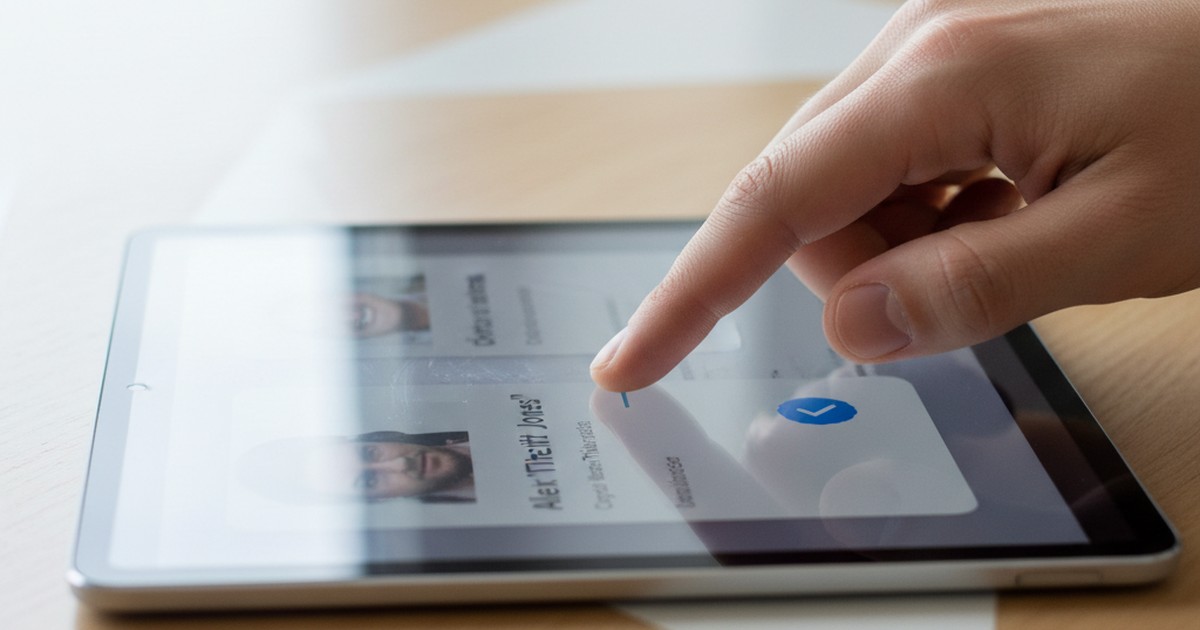
# How the Tinder Verification Scam Works (2026)
Two entirely separate threats share the label "Tinder verification scam," and they require completely different responses. The first is a phishing scheme where a fake match asks you to verify yourself on a third-party website that collects your credit card details and signs you up for recurring charges you never agreed to. The second is more technically sophisticated: scammers who successfully circumvent Tinder's own Face Check system to earn a legitimate blue checkmark on a fraudulent profile.
Most people searching this topic encounter only one explanation. That's dangerous, because the warning signs and the protective steps differ sharply between the two. Understanding both — and recognizing which you're dealing with — is the practical difference between getting scammed and not.
This article breaks down how each version of the scam operates, what Tinder's real verification actually confirms and what it doesn't, how scammers circumvent it, and what concrete steps protect you against both threats.
If a match has already asked you for external verification or you're questioning whether a verified profile is genuine, the answer starts here.
What Is the Tinder Verification Scam?
The tinder verification scam refers to two separate schemes: a fake "safe dating" website that steals credit card details, and scammers who bypass Tinder's real Face Check system using AI deepfakes or photo-swapping to obtain a legitimate blue checkmark on a fraudulent profile.
These two scams share no technical overlap. The fake website scheme involves no hacking and no technical skill — it's social engineering directed at the user. The verification bypass scheme involves technical manipulation directed at Tinder's system. They look nothing alike in execution, but they serve the same strategic goal: using the concept of verification as a trust-building mechanism.
The fake website scam exploits your desire to stay safe by making you feel you need to verify yourself. The bypass scam exploits the trust you extend to profiles that have been verified by Tinder. Both use "verification" as a lever to get past your defenses.
Recognizing which type of scam you're facing determines your response. If you're being asked to verify through an external link, the scam is happening to you right now, and the correct action is immediate. If you're interacting with a verified profile that's raising behavioral red flags, the evaluation is more nuanced.
CheatScanX scans all of these platforms — and more — in a single search. Enter a name, email, or phone number and get results in minutes.
Try a multi-platform search →How the Fake "Safe Dating" Verification Scam Works
This scam has operated in recognizable form for years, and it continues to work because it exploits a legitimate anxiety: the reasonable concern about meeting strangers from dating apps.
The setup begins a few messages into a conversation. The match — often suspiciously attractive, with a minimal profile and few mutual connections — will mention they've had a bad experience with dating apps. They'll say they were catfished, or they had a stalker, or they knew someone who did. They'll explain that for their own protection, they use a "safe dating verification service" before agreeing to meet anyone in person, and they'll suggest you do the same.
The request feels considerate rather than suspicious. Here's someone being transparent about their safety concerns and suggesting mutual verification — isn't that responsible?
What the External Site Does
The link goes to a site that looks credible. It uses official-sounding language about background checks and sex offender registries. It may reference Tinder by name. It has security badges, a clean design, and an explanatory FAQ page.
The first step asks for your name, date of birth, email address, and phone number. Reasonable-seeming for identity verification. The second step requests a credit card number — framed as an age verification fee, a processing charge, or a hold that will be refunded.
According to an FBI advisory cited by BitDefender, "once the victim submits the information, they are unwittingly redirected to a private, low-quality dating site charging costly monthly subscription fees." Those charges typically run $29–$40 per month and appear under unfamiliar brand names. Many victims don't identify the charges for weeks, by which point multiple billing cycles have passed.
The scammer profits from two sources: the credit card data itself, which is sold on underground markets, and the subscription revenue generated by the redirected site. Once you've completed the fake verification, the original match typically disappears or blocks you.
Why This Scam Keeps Catching People
The scam's effectiveness comes from its alignment with legitimate safety messaging. Dating apps, news coverage, and personal safety guides all encourage users to be cautious with strangers. A request framed as a safety measure matches that advice in tone — even though it's the opposite of safe.
The sites are built to appear credible. Many use HTTPS, display stock photos of professional teams, and include privacy policy language that mimics legitimate services. Without specific knowledge that this type of scam exists, there's nothing obviously wrong with the presentation.
The rule that collapses this scam immediately: Tinder does not use any third-party verification sites. Its verification process is entirely contained within the Tinder app. Any link a match sends you — regardless of how official the destination looks — is not affiliated with Tinder. Tinder's own documentation makes this explicit: the company will never direct you to an external site for account verification.
If you take nothing else from this article, take that rule. No exceptions exist.
How Scammers Bypass Tinder's Real Verification
The second category of threat is more technically involved and more recent. As Tinder's Face Check verification expanded, scammers began developing methods to earn legitimate blue checkmarks on profiles that are still fundamentally deceptive. These methods are documented in security research and journalist investigations, and they represent a real — if more sophisticated — threat.
Understanding these bypass methods is practical for one specific reason: each method creates distinct inconsistencies in a profile that a careful observer can identify.
The One-Photo Exploit
Consumer Affairs reported in April 2026 on a critical weakness in Tinder's Face Check system: the platform only requires one profile photo to match the video selfie. When you complete verification, you record a selfie video from multiple angles. Tinder's AI checks whether any photo on your profile matches your face from that video. One match is sufficient.
A scammer who knows this can create a profile with 8–9 photos of an attractive person — taken from a social media account, purchased as stock images, or generated by AI — and add a single genuine photo of themselves at the end of the stack. The video selfie matches the genuine photo. Verification passes. The blue checkmark appears.
The scammer then rearranges the profile: the genuine photo moves to the back or is deleted. The attractive stolen photos become the primary images. The badge remains.
What this leaves behind: Look at photo-set consistency. Does the apparent age, hairstyle, location, and image quality match across photos? Are there candid or group photos, or are all photos professional-quality and similarly composed? Photos assembled from different sources often show inconsistencies in lighting equipment used, background contexts that don't share a geographic theme, and clothing styles from different eras.
AI Face-Swapping on Gallery Photos
A more technically demanding method involves AI face-swapping tools. The scammer takes one genuine selfie — enough to pass the video verification — then uses widely available software to blend a different, more attractive face onto every gallery photo they show on the profile.
The AJAK Cyber Academy documented this approach in detail, noting that when "the body, angle, and photo format match, some automated detectors fail to flag the manipulation." The AI system checks whether the gallery photos match the video selfie, not whether the gallery photos are internally consistent. A face-swapped set that all share the same swapped face can pass the check.
What this leaves behind: Subtle blending artifacts at the neck and jaw line, ear inconsistencies between photos, and hair texture that varies in a way natural hair doesn't. These are visible under close examination, especially when comparing photos at screen brightness rather than thumbnails.
Verify Real, Then Swap All Photos
A third method is simpler. The scammer creates a profile with genuine photos of themselves, completes verification legitimately, receives the blue checkmark, and then replaces all profile photos with stolen images of someone else. The verification data confirms the face from the original photos — but those photos are gone.
This method works because Tinder doesn't continuously re-check that current profile photos still match the stored biometric data. Verification is a gate, not an ongoing monitor.
What this leaves behind: This is harder to detect through photos alone, because the stolen photos may be internally consistent. It typically surfaces through behavioral red flags — refusal to video call, mismatched physical details on live calls — rather than visual photo analysis.
Hacked and Sold Verified Accounts
Large data breaches expose login credentials for millions of accounts. Attackers who obtain credentials for a previously verified account inherit that account's blue checkmark. Some underground marketplaces specifically advertise verified dating app accounts precisely because the badge creates immediate trust with matches.
The Identity Theft Resource Center has documented scammers selling fake verification services and accounts as a distinct criminal service category.
What this leaves behind: Accounts that have been active for a period, then show a sudden shift in writing style, stated location, or apparent interests. An account's conversation history with existing matches would also show a discontinuity.
What Researchers Found
A 2026 security experiment by Humanity Protocol created four fully synthetic profiles using AI-generated images and AI-assisted verification methods. Those four profiles attracted 296 real matches across two months. Forty of those matches agreed to meet in person before any deception was identified.
This experiment, conducted at small scale with four profiles, illustrates the potential scope of the problem across thousands of active scam operations.
What Real Tinder Verification Actually Does
Tinder's Face Check is a biometric identity check built into the app. Understanding precisely what it verifies — and what it doesn't — is essential for applying the right level of trust to the badge.
When you complete Face Check, you record a short video selfie from several angles. Tinder's system checks three things: that the video shows a real, live person (not a static image or pre-recorded clip), that the face is clearly visible, and that the face matches at least one profile photo.
The system generates two biometric data points:
| Data point | What it is | How it's used |
|---|---|---|
| FaceMap | Geometric representation of your facial structure | Stored encrypted for account lifetime; used to detect duplicate accounts |
| FaceVector | Numerical value derived from the face | Compared against profile photos during verification |
The actual video is deleted after processing. The FaceMap and FaceVector remain stored for the account's lifetime and are used to detect if you attempt to create another account or if someone tries to impersonate your profile.
Optional ID Check: In some markets and account types, Tinder adds a second step: uploading a government-issued ID. The photo on the ID is matched against the face from the video selfie.
What the Blue Checkmark Means (Precisely)
A blue checkmark on a Tinder profile means: at the time verification was completed, the system detected a real human face in the video selfie, and that face matched at least one profile photo.
The badge does not mean:
- Every photo on the profile is authentic
- The photos haven't changed since verification
- The name or information in the profile belongs to the verified face
- The person will not attempt fraud
Tinder's own documentation describes Face Check as designed to "detect your face in your video selfie and profile photos" — a technical matching process, not a character assessment.
Current Rollout
As of 2026, Face Check is mandatory for all new users in California and international markets including Canada, Colombia, and India. Tinder's parent company Match Group planned to extend the requirement to additional US states throughout 2026. Users in states without the requirement may not have completed Face Check — meaning the absence of a badge doesn't indicate deception, either.
How to Tell If a Verification Request Is Fake
Any verification request that sends you to a third-party website is fake. Tinder's real verification happens entirely inside the Tinder app. If a match sends you a link to verify through an external site — regardless of how official it looks — that is a scam designed to steal your personal and payment information.
This rule has no exceptions and requires no judgment call. There is no version of a Tinder match legitimately sending you a link to verify yourself elsewhere.
Behavioral Red Flags in the Request Itself
Beyond the core rule, specific patterns appear consistently in how these scams are presented:
Verification arrives early. Legitimate matches want to build conversation before raising safety concerns. A match who raises verification within the first 5–10 messages is following a prepared script.
The framing is mutual. The scammer almost always presents the verification as something they do for you — to protect themselves, to show they're serious, to create a mutual safety baseline. This framing makes declining feel like you're the one refusing to be safe.
They mention past bad experiences. "I was catfished" or "I had someone stalking me from a dating app" establishes plausible motivation for the request. The backstory makes the safety framing feel personal rather than scripted.
The URL doesn't belong to Tinder. Any web address that isn't tinder.com or a direct subdomain of tinder.com is external. Scam sites use names like "tinderverify.net," "safedatingcheck.com," or domain variations that sound affiliated but aren't.
They follow up if you hesitate. A real person who suggested a safety measure would understand if you weren't interested. A scammer persists, adds urgency, and often escalates the emotional stakes of your refusal.
What Tinder Will and Won't Ask
Tinder communicates with users about verification through the app itself. Legitimate prompts appear within the Tinder interface and use your phone's camera. Tinder will never ask you to:
- Click a link sent by a match
- Verify through a website outside the app
- Enter credit card information for verification purposes
- Complete verification by texting a number or providing a one-time code to someone else
Understanding these boundaries means any request that violates them is, by definition, not from Tinder.
Warning Signs You're Talking to a Verified Scammer
A verified badge creates a specific psychological effect: users lower their guard after seeing one. This response is reasonable — the badge is supposed to mean something. The problem is that scammers know this, and they target it.
Here are the behavioral patterns that indicate a verified profile may still be running a scam:
Rapid Move Off-Platform
Romance scam operations work better outside the original platform, where Tinder's safety features and moderation can't monitor the conversation. A verified match who pushes to move to WhatsApp, Telegram, or SMS within the first few exchanges is following a high-risk pattern.
Nearly 60% of romance scam initial contacts start on social media or dating apps, with victims then moved to secondary platforms before financial requests begin, according to FTC data from 2025. The platform switch is structural, not incidental.
Refusal or Avoidance of Live Video Calls
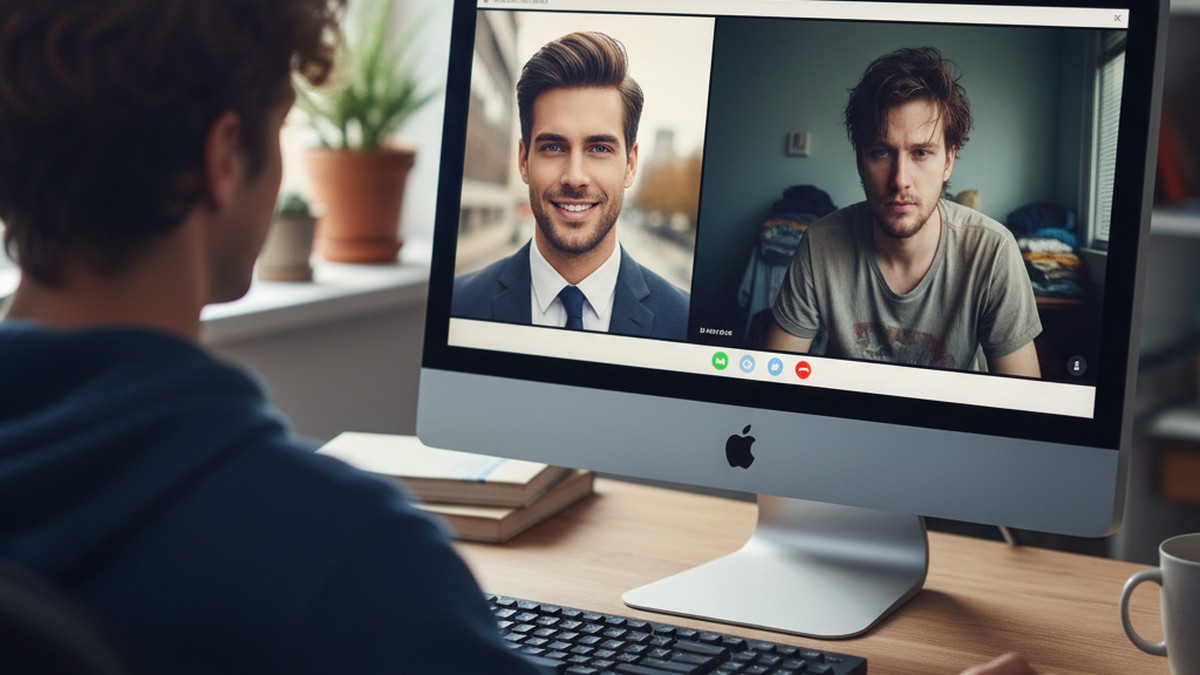
Request a live video call through Tinder's built-in video feature within the first week of meaningful conversation. A call must be live — not a pre-recorded clip. Watch whether the face on the call matches the profile photos.
A real person who's genuinely interested will agree to a video call. A verified scammer who achieved the badge through bypass methods can't show you the face in their profile photos. The excuses are predictable: "my camera is broken," "I'm shy on video," "I have bad lighting at home," "my internet connection won't support it." One excuse is plausible. Multiple excuses escalating over time is a clear signal.
This is the single most reliable test for bypass scams. Apply it early.
Emotional Escalation Without Meeting
Rapid emotional escalation is a defining characteristic of romance scam operations across platforms. Strong feelings emerge quickly, the scammer communicates constantly, and the relationship intensity feels significant — because it's designed to.
The FTC's data on romance scam losses consistently shows that larger financial losses correlate with longer manipulation periods. Scammers invest weeks or months in emotional connection because higher emotional investment produces larger transfers when the financial ask arrives. The verified badge isn't just initial access — it's the foundation for a longer con.
Cryptocurrency or Investment Requests
When a financial request arrives, it rarely sounds like "send me money." It sounds like a unique investment opportunity, typically cryptocurrency. The scammer may have developed an elaborate story about a family member's portfolio, a limited-time market position, or a trading platform they can teach you to use.
Cryptocurrency is specifically preferred: it's difficult to trace, impossible for banks to reverse, and culturally associated with legitimate financial activity in a way that a wire transfer to a stranger is not. A verified profile that introduces cryptocurrency investment in any form is a significant warning sign.
Hours and Communication Patterns That Suggest a Script
Scam operations run across time zones, with multiple operators working shifts. A match who's available around the clock but goes offline at predictable intervals — particularly intervals consistent with shift patterns in a different time zone — may be operated by multiple people or by a single person on a schedule.
Combined with other signs, communication patterns that suggest an operation rather than an individual are meaningful.
The Financial Damage: What Victims Lose
The scope of romance scam losses provides context for understanding why these operations are so persistent and so well-resourced.
The Federal Trade Commission reported that in the first nine months of 2025, US consumers lost $1.16 billion to romance scams — with 55,604 complaints filed, representing a 22% increase over the same period in 2024. For broader context on how these losses break down across platforms, our dating app cheating statistics analysis covers the data in depth. The median reported loss was $2,218 per victim in Q3 2025, though the distribution skews heavily: older adults were nearly twice as likely as younger adults to report six-figure losses.
The Norton 2026 Insights Report found that 34% of active daters reported being targeted by a scam, and of that group, 64% fell victim to some form of fraud. This means roughly 1 in 5 active dating app users have been successfully scammed at some point — not a rare or edge-case experience.
These losses span both types of verification scam. Fake website losses are typically smaller: credit card fraud, subscription charges, and identity theft attempts using submitted personal information. Romance scams built on verified profiles accumulate to larger amounts over longer periods, with losses that often run into tens of thousands of dollars for victims who were in contact with scammers for months.
In profiles flagged through CheatScanX's platform, a pattern that consistently appears in problematic accounts is photo-set inconsistency combined with rapid emotional escalation in early conversation. The verification badge accelerates trust — which is precisely why scammers value it enough to invest in bypass methods.
What to Do If You Received a Fake Verification Request
Your response depends on how far the interaction progressed when you recognized the scam.
If You Received the Link but Didn't Click
Report the profile immediately. Tap the flag icon on the match's profile and select the scam or spam category. Tinder reviews reports and removes confirmed scam accounts, protecting other users.
Block the profile. This prevents any further contact from that account.
Note the URL if it's visible. You can report the site to the Internet Crime Complaint Center at ic3.gov without clicking the link — just the domain name is useful for tracking scam networks.
If You Clicked the Link but Entered No Information
Visiting the site without submitting any data is unlikely to have caused harm. Modern fake verification sites rely on form submissions rather than drive-by exploits.
If you're concerned, run a malware scan on your device. Change your Tinder password as a precaution, particularly if you use the same password elsewhere.
If You Submitted Personal or Financial Information
Contact your bank or credit card issuer immediately. Report that you submitted your card number to a fraudulent site, request the card be cancelled and reissued, and dispute any charges that have already appeared.
Place a fraud alert on your credit file through any of the three major bureaus — Experian, Equifax, or TransUnion. A fraud alert is free, and it requires creditors to take extra steps before opening new accounts in your name. Consider a credit freeze if you're concerned about identity theft risk.
File reports with:
- FTC: reportfraud.ftc.gov (this contributes to enforcement actions)
- IC3: ic3.gov (FBI's Internet Crime Complaint Center)
Monitor your credit for the next 12 months for new accounts or inquiries you didn't initiate. The personal information submitted to these sites — name, email address, phone number, date of birth — is typically sold in batches and may be used in separate identity theft attempts months after the original scam.
Can You Trust a Tinder Blue Checkmark?
A Tinder blue checkmark confirms that a photo on the profile matched a live video selfie — and in some cases, a government ID — at the time of verification. It does not confirm that all photos are genuine, that photos haven't been swapped since verification, or that the verified person won't attempt fraud.
This distinction matters because the badge creates a predictable psychological effect. Users who see a verified badge relax their scrutiny in ways they wouldn't with an unverified profile. Scammers know this and treat it as a feature of verified-profile fraud, not a bug.
The Consumer Affairs investigation from April 2026 documented this explicitly: the verification badge was creating a "false sense of security" that made users "less likely to question mismatched photos or suspicious conversation patterns." The badge wasn't simply failing to protect users — it was being actively used to lower their defenses.
The Verification Paradox
This creates a structural problem that applies to any verification system. As Tinder's real verification expands and users appropriately learn to trust verified badges more, scammers invest more effort in obtaining verified badges through bypass methods. The more trusted the badge becomes, the more valuable it is to a scammer who obtains one fraudulently — and the more damage a verified scammer can cause compared to an unverified one.
The same evolution played out with Twitter's blue check when the platform began selling verification: the badge became a trust signal, which made it worth purchasing, which undermined its function as a trust signal.
The practical implication: Use the badge as one data point among many. A checkmark is evidence that a real human face appeared on camera once. It is not a conclusion about that person's intentions, honesty, or the authenticity of their current profile photos.
What Verification Does Do Well
This doesn't mean verification is worthless. Face Check substantially raises the barrier for casual catfishing and bot accounts. Creating a convincing bypass requires real technical skill and effort. Some bypass methods — like the one-photo exploit — require the scammer to use and expose their real face at least once, creating risk for the scammer that purely fake profiles don't face.
For the majority of interactions, a verified badge does correlate with a real human operating the account. The problem is not that the badge is meaningless — it's that "real human" and "safe to trust" are not the same thing, and the badge only confirms the former.
Detecting Bypass Profiles: What Each Method Leaves Behind
The practical value of understanding how bypass methods work is that each one creates specific, detectable profile inconsistencies. This table summarizes what to look for:
| Bypass method | What it creates | How to detect it |
|---|---|---|
| One-photo exploit | Attractive photos from different sources; one oddly placed genuine photo | Photo inconsistency in lighting, image era, location contexts; one photo that looks markedly different from the others |
| AI face-swapping | Gallery photos where face blends don't quite match at neck/jaw | Artifacts at face borders; ear inconsistency between photos; hair texture differences at edges |
| Post-verification photo swap | Internally consistent stolen photos, all recent | Behavioral: refuses live video; face on live call doesn't match profile |
| Hacked account | Account history exists, then abrupt change in communication style | Early conversation topics shift; stated city or interests contradict account's prior activity |
No single indicator is definitive. These patterns are most useful in combination, particularly when paired with the behavioral red flags described in the previous sections. Request a live video call when any of these visual inconsistencies appear.
How to Protect Yourself on Tinder in 2026
The two-scam model requires two separate protective strategies. One addresses the fake external verification request; the other addresses interacting with verified profiles that may still be operating deceptively.
Protection Against Fake Verification Requests
The rule is absolute: no external verification links. Any verification request that includes a link to a website outside the Tinder app is a scam. This requires no judgment — decline and report.
Never enter credit card information for verification. No legitimate dating app verification requires payment. If any site asks for payment as part of a verification process, it's a fraudulent site.
Report immediately. Don't engage, explain, or try to expose the scammer. Report the profile, block it, and move on. Reporting protects other users; engaging wastes your time and occasionally escalates into harassment.
Don't feel pressured by the safety framing. The scam is specifically designed to make refusing feel unsafe. Recognizing this framing for what it is — manipulation, not safety concern — makes declining straightforward.
For more context on the apps and platforms where these scam approaches commonly appear, our coverage of apps cheaters use to hide activity includes useful background on how these platforms are exploited.
Protection Against Verified Scammers
Request a live in-app video call within the first week. Make this a consistent practice for anyone you're seriously interested in. The call should be live, not a pre-recorded clip. Watch whether the face matches the profile photos. A real person who's genuinely interested will agree without hesitation.
Reverse image search all profile photos. Save the profile photos (screenshot or save image) and upload them to Google Images or TinEye. If the photos appear elsewhere — on social media accounts, stock image sites, or other dating profiles — the profile is not genuine. This works even for verified profiles, because verification doesn't extend to every gallery photo.
If you're unsure whether a profile you've encountered is genuine or part of a larger deception, learning how to spot a fake dating profile covers additional signals beyond photo analysis.
Apply photo consistency evaluation. Legitimate profiles accumulate photos over time: different locations, different occasions, different apparent ages as years pass. Profiles where all photos look professionally composed, all from a similar time period, all from similar settings, and none include group photos or candid moments deserve scrutiny.
Treat the badge as a floor, not a ceiling. Let the verified badge mean what it technically means: a real human face appeared on camera once. Then apply the same scrutiny you'd use for any profile: behavioral patterns, willingness for live calls, story consistency, and the appropriateness of emotional and financial escalation.
Never send money to someone you haven't met in person. This applies to every profile, verified or not, regardless of how long you've been talking or how much you feel you know them. No legitimate romantic interest develops into a financial request before an in-person meeting. Any such request, regardless of framing, is a warning sign to treat seriously.
For context on what an active partner profile looks like versus a newly created one, our guide on signs your partner is on dating apps covers patterns worth knowing.
What to Do If You've Been Scammed by a Verified Profile
If you've already sent money or shared sensitive personal information with a match who turned out to be a scammer, the practical steps differ from the fake-website scenario.
Stop all contact immediately. Block the profile and save any documentation of the conversation (screenshots) before doing so.
Contact your bank about any financial transfers. Wire transfers and cryptocurrency transactions are typically not recoverable. Bank transfers may be partially disputed, depending on timing and circumstances. Report the fraud to your bank explicitly as romance fraud — this categorization matters for dispute handling.
Report to IC3 and local police. File at ic3.gov. Get a police report number — this is useful for insurance claims and some bank dispute processes, even if the police cannot actively investigate individual cases.
File with the FTC at reportfraud.ftc.gov. These reports contribute to enforcement patterns and public warnings.
Reach out to support resources. The emotional harm from a scam that involved manufactured emotional connection is often more difficult to process than the financial loss. The Anti-Scam Alliance and Romance Scam Survivors groups provide peer support specifically for romance scam victims. These resources are useful regardless of the financial amount involved.
The median loss of $2,218 per victim (FTC, Q3 2025) represents real financial harm. Older victims — who are nearly twice as likely to report six-figure losses according to FTC data — face substantially higher stakes. The scam doesn't reflect on the victim's intelligence or judgment; it reflects on the sophistication of the operation.
Conclusion
Two distinct versions of the Tinder verification scam require two distinct responses. The fake external verification website collapses under a single rule: Tinder never uses third-party sites for verification. Any link a match sends you is a scam. Report, block, and move on.
The verified-profile scam is harder to detect because it uses Tinder's real system against its intended purpose. A blue checkmark confirms one specific thing — a face matched a selfie at one moment — and nothing beyond that. The behavioral signs of a verified scammer are reliable detection tools: refusal to do live video calls, rapid emotional escalation, movement off-platform, and eventual financial requests.
Your protection against both threats comes from the same source: understanding what verification actually proves, and not extending trust beyond that boundary. The badge is evidence. It is not a verdict.
Frequently Asked Questions
Not entirely. A blue checkmark confirms the profile passed Tinder's facial verification at the time it was created. It does not guarantee the person won't attempt fraud, manipulate emotions, or request money. Scammers have documented methods to obtain verified badges using AI photo-swapping and the one-photo exploit, so a badge reduces risk but doesn't eliminate it.
Tinder's Face Check records a short video selfie, generates a biometric FaceMap and FaceVector, and matches these against profile photos. Optional ID verification also compares a government-issued ID to the face from the video. Both steps confirm a real human appeared on camera once — not whether all profile photos are genuine or whether the person's intentions are honest.
The safe dating verification scam starts when a Tinder match asks you to verify yourself through a third-party website. That site collects your name, phone number, email, and credit card details, then redirects you to a subscription adult site with recurring charges. Tinder never asks users to verify through any external website.
Yes, through several documented methods. These include uploading one real photo to pass verification alongside eight stolen or AI-generated photos, using AI face-swapping on gallery images, verifying with a real face then replacing all profile photos after the badge is earned, and purchasing or hacking existing verified accounts. The badge confirms identity at one moment, not the authenticity of every photo.
Do not click the link. Report the profile using Tinder's flag icon and select 'scam' or 'spam.' Block the user. If you already submitted payment information, contact your bank immediately to dispute charges and cancel the card. File reports with the FTC at reportfraud.ftc.gov and with IC3 at ic3.gov. Monitor your credit for new accounts you didn't open.