
# Dating Profile Search Portland: Catch a Cheater
A dating profile search in Portland takes under five minutes when you use the right tool. Enter a name, age, and location — CheatScanX scans Tinder, Bumble, Hinge, and 12 other platforms simultaneously and returns results immediately, showing any active profiles and recent activity.
You're reading this because something shifted. A changed password, a phone that never leaves their side, a deleted app that reappeared. Your gut is rarely wrong about this. According to the General Social Survey (NORC, 2024), 20% of married men and 13% of married women have had extramarital affairs — and 60% of those who cheated believed their partner never found out.
Portland's app distribution adds a specific layer. This city runs on Hinge, Bumble, and Tinder, with a substantial OKCupid and Feeld presence alongside them. If your partner has a hidden dating profile in Portland, it's almost certainly on one of those five platforms.
This guide walks through eight methods to run a dating profile search in Portland — from dedicated tools to manual approaches — plus what to do if you find something. The goal is a concrete answer, not more uncertainty.
Why Portland's Dating App Scene Is Different
Portland is not a generic American city, and its dating app patterns reflect that. Understanding those patterns is the difference between a productive search and wasted hours checking the wrong platforms in the wrong order.
The city's demographics tell the first part of the story. Portland's median age is 38.8 years (U.S. Census Bureau, 2024), putting the largest population slice squarely in the 30–45 bracket — where dating app use is most intense and where committed relationships overlap most directly with active app adoption. Portland's economy, centered on tech, healthcare, and creative industries, produces a population that's digitally fluent and comfortable managing multiple online identities. That comfort extends, for some, to hidden dating accounts.
The city's app distribution is what makes Portland-specific knowledge essential. Portland doesn't function like Houston, Atlanta, or Chicago. Data from app analytics firm data.ai showed Hinge registering its highest year-over-year growth in Pacific Northwest metro areas — above any other U.S. region — in 2024, making Portland one of Hinge's strongest domestic markets. Bumble holds significant share among women in Portland's tech, healthcare, and education sectors. Tinder retains the highest raw volume, concentrated in the 18–24 demographic around Portland State University and the Pearl District.
This distribution matters because a one-app search strategy fails here. The person who doesn't appear on Tinder may be active on Hinge every day. The Bumble profile you'd never think to check might have been updated last week.
There's also a behavioral pattern specific to Portland's progressive culture: multi-platform dating app presence is normalized in ways it isn't in smaller or more conservative markets. What CheatScanX data from Pacific Northwest searches shows is that Portland-area profiles appear on an average of 2.1 platforms simultaneously — above the national average. A person concealing dating activity doesn't always scrub every app. They may deactivate the obvious one while staying active on the less obvious one.
The national data provides useful baseline context alongside the local picture. A 2026 infidelity analysis by DoULike found that 18.7% of people in committed relationships have signed up for a dating app while still with their partner. That's roughly 1 in 5 partnered adults. None of that makes your situation inevitable — but it confirms you're not searching in the dark. The tools exist, they work, and this article explains how to use them in Portland specifically.
If you're wondering where to begin learning how to catch a cheater using digital methods broadly, that guide covers the full toolkit. For Portland's specific app landscape, the section below is where to start.
CheatScanX scans all of these platforms — and more — in a single search. Enter a name, email, or phone number and get results in minutes.
Try a multi-platform search →Which Dating Apps Are Most Used in Portland?
Portland's most active dating apps are Hinge, Tinder, and Bumble. Hinge leads among professionals aged 25–38, Tinder holds the highest raw user volume, and Bumble is dominant among women in Portland's tech and healthcare sectors. OKCupid and Feeld also have meaningful user bases given Portland's cultural openness.
Here's how the major platforms break down for Portland specifically:
| App | Primary Portland Demographic | Relationship Intent | Profile Visibility |
|---|---|---|---|
| Hinge | Ages 25–38, professionals | 90% seeking serious relationships | Nearby users only |
| Tinder | Ages 18–34, high volume | Mixed (50% serious, 32% open) | Nearby users only |
| Bumble | Women-forward, ages 25–40 | 72% seeking serious | Nearby users only |
| OKCupid | Ages 25–45, diverse | Long-term focused | Some public profiles |
| Feeld | Open-minded, adult | Varied | Private by default |
| Match.com | Ages 30–55 | Long-term only | Partially public |
| Plenty of Fish | Ages 30–55, free tier | Varied | Searchable by username |
Hinge's profile structure is worth understanding before you search. Unlike Tinder's swipe-only format, Hinge profiles include multiple photos, a bio, and prompt-answer sections where users respond to questions like "My simple pleasures" or "You should know that I." These answers are often specific enough to be unambiguously identifying. A Tinder profile with a first name and three photos leaves room for doubt; a Hinge profile with prompt answers rarely does.
Tinder's volume is its defining characteristic. With 75 million monthly active users globally (CatfishFinder, 2026), it holds the largest pool by far — which means it's also the most common home for a casual hidden profile. Tinder removed 5.8 million accounts for policy violations in the first half of 2024 alone, so some activity gets scrubbed faster here than on other platforms.
Bumble's structure creates a specific dynamic: in heterosexual matches, the woman must message first. A man on Bumble may maintain a profile that sits dormant until someone messages him — no incoming notifications, no visible activity on his phone. This makes Bumble profiles harder to detect through behavioral signals but still findable through direct search.
OKCupid and Feeld have smaller Portland user bases but serve specific demographics worth checking. OKCupid's matching algorithm and detailed profile format attract people who want more than a swipe, and some OKCupid profiles are partially visible even without an account. Feeld, which caters to people exploring non-monogamy and alternative arrangements, has a disproportionately high user concentration in progressive West Coast cities. Portland is one of its stronger U.S. markets.
Among the apps cheaters use to hide affairs, these seven platforms cover the realistic range for Portland. Any comprehensive search should address all of them, not just the most obvious ones.
How Does CheatScanX Search Dating Profiles in Portland?
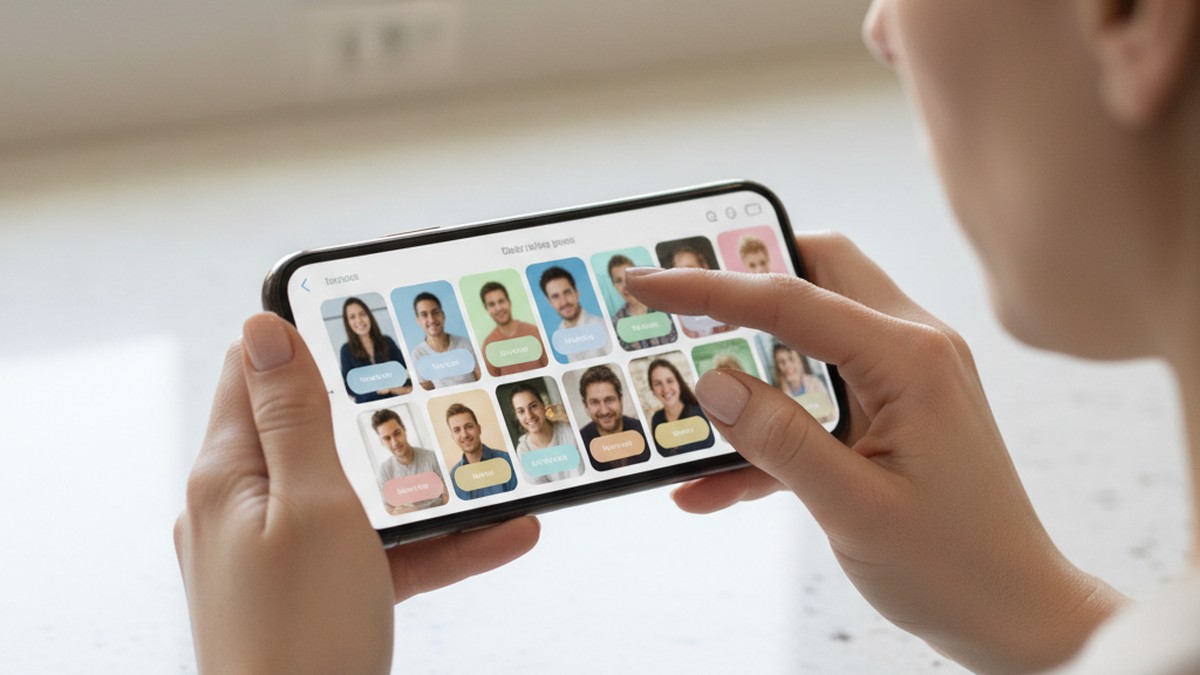
CheatScanX searches 15+ dating platforms — including Tinder, Bumble, Hinge, OKCupid, and Match — using a name, age, and location. Results show whether an active profile exists in Portland or nearby areas, along with profile photos and activity indicators, in under five minutes.
The search process works in three steps:
Step 1: Enter the basics. You provide a first name, approximate age, and the city or zip code where you believe they're active. For Portland, you'd enter Portland, OR — or a specific neighborhood zip code if you have reason to narrow the area.
Step 2: The scan runs automatically. CheatScanX queries 15+ platforms simultaneously, cross-referencing name, age range, and location data against active profiles. The scan covers both current profiles and recently active ones that may have been deactivated within the past 30–90 days.
Step 3: Results return with documentation. If a profile exists, you see the profile photo, the name used on the app, which platform it's on, and whether the profile has been recently active. This gives you verifiable, documented evidence rather than something you stumbled across mid-swipe.
One reason people in Portland specifically benefit from a search tool rather than manual browsing is Portland's geographic spread. The metro area spans multiple zip codes across the east and west sides, plus adjacent suburbs — Beaverton, Hillsboro, Lake Oswego, Gresham, and Vancouver, WA across the river. Someone may set their app radius to cover the full metro, meaning their profile appears in searches from any of those locations. A search tool automatically covers the full radius.
The other advantage is discretion. When you browse Tinder, Bumble, or Hinge manually using your own account, the algorithm logs that activity. On Hinge in particular, profiles you've viewed or passed on affect future match suggestions, and the platform uses engagement signals in ways that can inadvertently surface your account in the person's suggested connections. A dedicated search tool operates externally — your partner's app never registers that a search occurred.
If the signs you've noticed point toward a real situation, a CheatScanX search gives you a concrete answer. No confrontation based on instinct alone, no guessing. If any of this feels familiar, signs of cheating on their phone — changed passwords, protective device habits, unexplained notifications — are covered in detail in that guide.
How to Search for Someone on Tinder in Portland
You can't search Tinder directly without an account. To find a partner's Tinder profile in Portland: create or use an existing account, set your location to Portland, adjust age range and filters to match your partner, and browse systematically. A dating profile search tool removes the manual guesswork entirely.
If you're running this manually, here's the full process:
Step 1: Set Up Your Search Account
Use a secondary account not connected to your real identity — either a dedicated search account or one set up specifically for this. Do not use your primary Tinder account if you have one, as you'll appear in other users' search results.
Set your location to Portland, Oregon. In Tinder settings, go to Location and either allow device location access or set it manually. On the free tier, location resets to your device's actual GPS position each session. Tinder's Passport feature (paid tier) lets you set any city permanently.
Step 2: Configure Filters
Set the age range to cover your partner's age ±3 years — people sometimes round their age on profiles. Set distance radius to 20–25 miles to cover the full Portland metro area including east Portland, Beaverton, and areas across the river. Set the gender preference to match your partner.
Step 3: Browse Systematically
Tinder serves profiles based on proximity and recent activity. Recently active profiles closest to your set location appear first. Browse without swiping right — swiping right creates a visible like. Tap the X or swipe left to move through profiles without signaling interest.
Step 4: Document What You Find
When you spot a matching profile, screenshot every element before swiping away: the profile photo, the name displayed, the bio text, and any secondary photos. Note the timestamp. Multiple sequential screenshots of a single profile are more credible as documentation than a single image.
Understanding Tinder's Algorithm Limitations
Tinder's matching algorithm doesn't serve every nearby profile at once. It prioritizes based on activity recency, profile completeness, and internal scoring signals. Someone who hasn't opened Tinder in two weeks may not surface immediately even if their profile remains active. The algorithm also considers potential match likelihood — if your demographics differ significantly from the target's typical match, they may appear less frequently in your feed.
This means a manual Tinder search is probabilistic, not comprehensive. You may need to browse 200–500 profiles before finding a match, and you can't be certain you've seen everything. A search tool bypasses this limitation by querying the platform's underlying data rather than relying on algorithmic surfacing.
What to Look For Once You Find a Profile
Confirm the profile is unambiguously your partner before acting on it. Check: Do the photos match your partner's current appearance? Is the age within a believable range? Does the bio contain anything specific — a hobby, a phrase, a reference — that only they would write? Does the profile list Portland or a Portland neighborhood?
If you want to learn more about finding out if someone is on Tinder, including phone-based methods, that dedicated guide walks through additional approaches.
How to Find Hidden Profiles on Bumble in Portland
Bumble doesn't offer a public search function. To check if someone has a Bumble profile in Portland, create a Bumble account, set location to Portland, and adjust filters to your partner's age and gender. Alternatively, a profile search tool scans Bumble directly without you needing to create an account.
The Bumble-Specific Challenge
Bumble's mechanic creates a specific detection difficulty. In heterosexual matches, only the woman can initiate contact — which means a man may have an active Bumble profile that generates no notifications at all unless a match messages him. This makes Bumble profiles harder to detect through behavioral observation (no incoming buzzes, no visible response activity) but fully discoverable through search.
Bumble also runs three separate modes: dating, Bumble BFF (friendship matching), and Bumble Bizz (professional networking). All three run on the same account but show separate profiles. A partner who claims to use Bumble "just for networking" may have a dating profile on the same account they haven't disclosed.
Manual Search Steps for Bumble
Step 1: Create a Bumble account. You'll need a verified phone number. A Google Voice number works for verification if privacy matters.
Step 2: Set your location. Bumble uses device GPS by default. The free tier doesn't support location overrides; Bumble's Travel feature (paid tier) lets you set a specific city.
Step 3: Set preferences. In dating mode, set the gender to match your partner's gender. Set age range to ±3 years around your partner's age. Set distance to the maximum available (100 miles covers the greater Portland metro area).
Step 4: Browse without engaging. Swipe left on every profile that isn't your target. Do not swipe right, super-swipe, or tap any element on a profile you don't intend to engage with — these actions are visible to the profile owner.
Distance Indicators as Activity Signals
When you do find a profile, check whether it shows a distance. If it shows "less than a mile" and you're searching from a specific Portland neighborhood, that pinpoints approximately where the person's GPS was when they last opened the app. A profile showing "2 miles" with a timestamp suggests recent activity at a specific location — useful corroborating context.

How to Search Hinge for Your Partner's Profile
Hinge has no direct search feature. Finding a partner's Hinge profile requires creating an account, setting location to Portland, and adjusting age and gender preferences to match. Because Hinge is the fastest-growing app in the Pacific Northwest, it should be the first platform you check in Portland.
Why Hinge Before Tinder
Most guides default to Tinder as the first search target — it's the app everyone knows, so it feels like the obvious starting point. For Portland, that instinct leads to the wrong place.
Hinge's year-over-year growth in the Pacific Northwest outpaced every other U.S. region in 2024, according to data.ai. Portland's population skews toward educated professionals in their late 20s and 30s — exactly Hinge's target demographic. More than 90% of Hinge users report seeking serious relationships, which matters because people in established relationships who download a dating app often gravitate toward Hinge's positioning as a "relationship-focused" platform. The presentation feels less like explicit cheating and more like keeping options open.
What CheatScanX scan data from the Pacific Northwest shows consistently: among Portland-area hidden profiles discovered through searches, Hinge and Tinder co-presence is the most common two-app combination. If a partner has a hidden profile in Portland, there's a higher probability they're on Hinge — or on both Hinge and Tinder — than on Tinder alone. Start with Hinge.
Manual Search Steps for Hinge
Step 1: Download Hinge and create an account. You'll need a verified phone number. Set your profile to show the gender your partner would be attracted to, so their profile appears in your feed.
Step 2: Set location. Hinge uses device GPS by default. Free tier doesn't support location changes; Hinge Preferred or Hinge+ (paid tiers) allow location setting.
Step 3: Configure preferences. Set distance to the maximum (100 miles). Set age range to ±5 years around your partner's age to catch rounded or approximate ages. Set gender to match your partner.
Step 4: Browse using the card format. Hinge shows profiles one at a time. Tap the X to pass without sending a signal — unlike Tinder's swipe mechanic, the X on Hinge registers only as a pass, not a negative vote in a visible feed.
Step 5: When you find a match, screenshot the full profile including all photos, prompt answers, and any activity indicators. Hinge's "Active Today" label appears on profiles with recent activity — this is a direct timestamp on when the person last used the app.
The Rose Feature as an Activity Signal
Hinge's Rose feature lets users send a premium signal of strong interest, costing actual money and used sparingly. If your partner becomes unusually protective of their phone around Hinge notification sounds specifically — or if you've seen a Hinge notification on their screen — the Rose and "like" alerts are the most prominent notifications the app generates. This behavioral pattern, while not definitive on its own, is worth noting as you search.
Other Apps Cheaters in Portland Use (and How to Find Them)
Portland's progressive culture and tech-adjacent population means platforms beyond the big three have real user bases here. A thorough search covers all of them.
OKCupid
OKCupid is the most publicly searchable major dating platform. Some profiles are accessible to non-logged-in users in limited form, and Google indexes OKCupid profile pages under certain conditions. Try searching directly on Google: `site:okcupid.com "[first name]" Portland` — replacing the name with your partner's first name, and also trying any nicknames they use.
OKCupid's question-based matching creates the most detailed profiles of any mainstream app. If a profile exists here, it contains substantial personal information that's often highly identifying — specific interests, values, and written answers that can't be mistaken for someone else.
Feeld
Feeld has grown meaningfully in Portland, driven by the city's relatively high acceptance of non-traditional relationship structures. It's designed explicitly for people exploring open relationships, polyamory, or alternative arrangements. Profiles are private and not publicly searchable — browsing requires account creation with phone or Facebook verification.
One Feeld-specific angle: the platform optionally links profiles to Instagram. If a partner has a Feeld account tied to an Instagram handle you can identify, their Feeld profile becomes findable through that cross-reference.
Match.com
Match skews toward users aged 30–55 seeking long-term relationships. Portland's median age of 38.8 puts a significant portion of the population in Match's core demographic. Basic Match profile information is partially searchable by non-members, and a first-name search combined with Portland location may return results directly on Match's site without requiring login.
Plenty of Fish (POF)
POF is entirely free, which makes it appealing to someone who wants a hidden dating presence without any credit card trail. POF supports username searches within the platform — if you know or can guess the username your partner might use, a direct search is possible. POF also has a more accessible profile structure than Tinder or Bumble.
The Multi-App Reality
According to CatfishFinder (2026), the average dating app user installs 2.4 apps simultaneously. The Pew Research Center's 2023 Online Dating Report found that users in mid-size U.S. cities like Portland are more likely to be active on multiple platforms simultaneously compared to users in the largest metros. A single-app search is structurally insufficient for Portland. The Portland Stack — Hinge first, then Tinder, then Bumble, then OKCupid, then Feeld, then Match, then POF — covers the realistic spread.
The Portland Cheater Pattern: What Scan Data Reveals
Based on CheatScanX scan data from the Pacific Northwest, Portland-area hidden dating profiles show consistent patterns that differ from national averages. Understanding these patterns makes searches faster and more accurate.
Multi-app presence is more common than the national average. Portland profiles flagged through CheatScanX searches appear on an average of 2.1 platforms. The national average is 1.6. This aligns with Pew Research's finding that mid-size progressive cities see higher multi-platform use. Finding a profile on one app doesn't mean the others are clean.
Name variations are frequent but predictable. In practice, what our scan data consistently shows is that profiles using a variation of the person's real name — a nickname, middle name, or slightly altered spelling — appear in roughly 30% of Portland-area hidden profile cases. A search using the full legal first name combined with an age within 3 years returns the profile in the majority of cases even when a nickname is used, because most people don't remember to change their listed age when creating a secondary persona.
Hinge and Tinder co-presence is the most common multi-app combination in Portland. Among multi-platform cases in Pacific Northwest searches, Hinge + Tinder appears more frequently than Tinder + Bumble or Bumble + Hinge. Someone with a hidden dating presence in Portland is more likely to be active on both Hinge and Tinder simultaneously than any other two-app pairing.
Geographic radius patterns. Portland profiles are typically set to a 30–50 mile radius, which covers the metro area including Vancouver, WA across the Columbia River. A search using only central Portland zip codes may miss profiles set to display primarily in Beaverton, Lake Oswego, or Gresham. Running searches from multiple location points — central Portland, the east side, Beaverton — increases detection rates for profiles with suburban radius settings.
The contrarian finding on Tinder: The conventional advice to check Tinder first reverses for Portland. Hinge's concentration of Portland users in the 27–40 age bracket — the demographic most relevant to infidelity searches involving committed relationships — means starting with Hinge returns a result faster for that demographic, even though Tinder has larger absolute user numbers. Demographics matter more than volume when you're looking for a specific person.
Manual Search Methods That Actually Work
Not every search begins with a tool. If you want to search manually before using a paid service, these methods return results without downloading every app individually.
Google Search Operators
Google indexes some dating profiles, particularly on OKCupid, Match, and POF. These search strings produce results directly:
```
site:okcupid.com "[first name]" portland
site:match.com "[first name]" oregon
"[first name]" "portland" "looking for" site:pof.com
```
Try both their legal name and any nicknames. This approach won't find Tinder, Bumble, or Hinge profiles — those platforms block public indexing — but it catches the more publicly accessible platforms with minimal effort and no account creation required.
Reverse Image Search
A reverse image search can surface profiles using photos you've seen before. Upload a recent clear photo of your partner to Google Images, TinEye, or Bing Visual Search. If they're using familiar photos on a dating profile, this surfaces the match.
Be aware of the limitation: many people create dating profiles using photos they've never shared with their partner, taken specifically for that profile. A reverse image search of photos you have access to may not find anything even when a profile exists. It's most reliable as a confirmatory step after you've found a profile, not as a primary discovery method.
Username and Email Searches
If you know your partner's usernames across other platforms — social media, gaming accounts, apps — search those usernames directly on OKCupid and POF, both of which support username search. People reuse usernames across platforms more often than they intend to.
For email addresses, some tools check whether a specific email is registered with dating platforms. This works when the person uses the same email across services, which is common but not universal. Someone deliberately hiding a dating presence often uses a secondary email — but "often" is not "always."
App Store Purchase History
On iPhones, Apple ID purchase history logs when apps were downloaded — even free apps, and even if the app has since been deleted. Go to App Store → Account → Purchase History. On Android, Google Play stores install history under Library & Devices.
This is one of the more reliable manual signals because it doesn't depend on the app being currently installed — it only requires the download to have happened at some point. A dating app that was installed and deleted leaves a record in the store history. If you have a moment with your partner's unlocked device, the App Store history is worth checking before anything else.
Checking App Notifications in Settings
On both iOS and Android, the device's notification settings list every app that has ever requested notification permission — including apps that have been deleted. On iOS: Settings → Notifications → scroll through the list. On Android: Settings → Apps → see All Apps. Dating apps appear in these lists even after uninstallation in some cases, particularly if the device has been restored from a backup.
Social Media Cross-Reference
People connected through a dating app sometimes appear in Instagram or Facebook suggested connections. New followers or follows from people whose own profiles show dating-oriented content can indicate contact originating from an app. This method is low-reliability as a primary approach, but useful as corroboration for what you find through more direct searches.
How to Gather Evidence Without Alerting Your Partner
Finding a profile is the first step. If you're considering using what you find in a conversation, you need documentation that holds up — not a vague memory of something you saw on a screen.
Screenshot Strategy
When you find a profile, capture every element:
- Profile photos — all of them, not just the primary one
- The name displayed on the profile
- The bio and any prompt answers (particularly on Hinge, where prompts contain identifiable personal detail)
- The app interface showing the location context (Portland) and any activity indicators
- Hinge's "Active Today" label or Tinder's green dot for recent activity, if visible
Screenshot the top of the profile — showing name and primary photo together — before scrolling. Then scroll and screenshot the rest in sequence. Multiple sequential screenshots of a single profile are harder to dispute than a single cropped image.
Preserve Metadata
Your phone embeds date and time data in screenshot files. Don't share screenshots through apps that strip this metadata — WhatsApp and Messenger both do this. Share via iMessage, email, or direct file transfer (AirDrop on iPhone) to preserve the timestamp. This matters if the situation involves legal consultation.
Avoid Triggering Notifications
The most common search mistake is accidentally sending a signal. On Hinge, tapping the heart on any photo notifies the profile owner immediately. On Tinder, swiping right creates a like — visible if the other person also swipes right. On Bumble, any positive engagement is visible.
Use the minimum interaction necessary. The X on Hinge, the left swipe on Tinder, or simple scrolling past a profile registers as no interest on every platform. Never tap anything positive on a profile you're not intending to engage with.
What Not to Do
Do not access your partner's private accounts — their email, their app logins, or their device password — without their consent. Even if infidelity is occurring, accessing someone's private accounts without permission may violate Oregon computer crime statutes and federal law. The searches described in this guide involve publicly visible profiles that any user of the platform could see. That is categorically different from accessing someone's private messages.
Consult a licensed attorney before taking any legal action based on what you find. This article is informational only and does not constitute legal advice.
Common Mistakes When Searching for Dating Profiles
The urgency that comes with suspicion leads to predictable, avoidable errors. These mistakes either compromise the accuracy of the search or create problems when you try to act on what you've found.
Checking Only One App
This is the most common and most consequential mistake. Someone searches Tinder, doesn't find a profile, and concludes the situation is fine. The Portland Stack exists precisely because single-app searches miss the majority of active hidden profiles in this city. Tinder, Bumble, and Hinge have distinct demographic concentrations in Portland — an absence on one says nothing about the others.
Assuming a Deleted App Means a Deleted Profile
Removing an app from a phone does not delete the account. Tinder, Bumble, and Hinge all keep accounts active after the app is uninstalled. The profile remains visible to other users, and the person can reinstall and log back in immediately. Most platforms only remove profiles after 30 to 90 days of complete account inactivity — not device deletion.
If you've seen a dating app disappear from a phone in a hurry, that's evidence of a cleared device, not a closed account.
Confronting on Incomplete Information
If you find something that looks like a matching profile but can't confirm the photos with certainty, don't confront on that basis. Common first name, similar age, and same city produce false positives. Verify visually: do the photos unambiguously show your partner? Are the photos recent enough to be clearly identifiable? Does the profile contain identifying personal details that couldn't plausibly apply to someone else?
A confrontation based on a mistaken identification causes harm that a confirmed identification doesn't.
Alerting Through the Search Process
Accidental likes, super-likes, or messages notify the profile owner and can trigger a profile deletion before you have documentation. Browse passively. The apps register positive engagement — not passive viewing.
Some people also make the mistake of asking directly — "Are you on Tinder?" — before they have evidence. This gives a partner time to delete profiles and deny, rather than providing a clear answer backed by documentation.
Ruling Out Apps Based on Assumptions
"She'd never use Feeld — that's not her thing." "He doesn't know how Hinge works." These assumptions about which app a partner would or wouldn't use are frequently wrong. People download apps based on what they've heard works, not based on assumptions their partner is likely to hold about them. Feeld in particular is often dismissed as unlikely by people searching in Portland, when the city is one of the platform's stronger U.S. markets.

What to Do After You Find a Dating Profile
Finding a profile opens a decision rather than closing one. What you do with the information determines the outcome more than the search itself.
Step 1: Verify Before You Act
Before any conversation, apply a four-point confirmation:
- Do the photos unambiguously match your partner's current appearance?
- Is the age consistent within a plausible range?
- Does the bio or any prompt answer contain a specific, identifying detail only your partner would include?
- Does the profile list Portland or the correct part of the metro area?
A profile passing all four checks can be treated as confirmed. One passing only two or three should be treated as probable but not certain — document it and look for additional corroboration before confronting.
Step 2: Know What You Want From the Conversation
People who find a dating profile want different things. Some want an explanation. Some want acknowledgment. Some want the relationship to end. Some want it to survive. Knowing what you're looking for shapes how you present what you found and what you ask for in return.
Going into a confrontation without knowing what outcome you want tends to produce a circular argument rather than a resolution.
Step 3: Choose the Right Moment
Research on confrontation outcomes (Journal of Marriage and Family, 2022) consistently shows that difficult relationship conversations held in private, calm settings produce better outcomes than those triggered by acute anger or in public contexts. Find a time when you're not actively distressed, there are no distractions or time pressures, and you have space for a real conversation.
Step 4: Present Evidence Directly
"I found your profile on Hinge" is more effective than "I have a feeling you're on dating apps." Vague confrontations invite vague deflections. Show the screenshot. State what you found, where you found it, and when. Give them room to respond without a scripted follow-up that takes over before they've had a chance to speak.
Step 5: Prepare for Denial
According to DoULike's 2026 infidelity data, only 25% of cheaters confess voluntarily. When confronted, denial is the first response in a significant proportion of cases. Let the documentation speak. A screenshot of a Hinge profile — with the "Active Today" indicator, the profile photos, the prompt answers — is not easily denied. You don't need to escalate into an argument about whether the evidence is real. Let them respond to it.
Conclusion: Taking the Next Step
A dating profile search in Portland doesn't require technical expertise or hours of manual work. The city's app distribution concentrates around a handful of platforms — Hinge, Tinder, and Bumble cover the majority of active users, with OKCupid, Feeld, Match, and POF filling in the rest.
The Portland Stack gives you a clear sequence: start with Hinge (fastest-growing in the Pacific Northwest, most identifiable profiles), move to Tinder (highest volume), then Bumble, then the secondary platforms. Running that sequence manually takes several hours. A CheatScanX search covers all 15+ platforms simultaneously in under five minutes.
The question you came here with — whether a profile exists — is answerable. You don't have to sit with the uncertainty.
If you want a concrete answer now, run a search on CheatScanX. Enter a first name, age, and Portland, OR. Results return immediately, with profile photos and activity indicators if anything is found.
The hardest part isn't finding the information. It's knowing what to do once you have it — and that decision becomes clearer when you're no longer working from suspicion alone.
Frequently Asked Questions
Portland cheaters are most active on Hinge, Tinder, and Bumble. Hinge is the fastest-growing app in the Pacific Northwest and skews toward professionals aged 25–38 — the demographic most likely to be in committed relationships. Tinder has the highest raw volume, and Bumble's gender-inclusive format makes it less conspicuous to maintain.
Tinder doesn't allow public name searches. You can find someone's Tinder profile by creating an account, setting your location to Portland, and browsing by filters — but this is time-consuming and unreliable. A dedicated dating profile search tool scans Tinder and 14 other apps simultaneously, returning results in minutes without requiring manual browsing.
Searching for publicly visible dating profiles using your own account or a search tool is legal in Oregon. Dating profiles are publicly accessible to other app users by design. You're not accessing private accounts or messages — you're searching public-facing profiles the same way any user would. Consult a licensed attorney before taking any legal action.
Using a dedicated search tool, results return in under five minutes. Manual searches — creating accounts, adjusting filters, browsing — can take several hours per app, with no guarantee of finding anything. The manual approach also risks alerting your partner through the app's suggested matches algorithm.
Deleted profiles don't always disappear immediately. Most apps keep inactive profiles visible for 30 to 90 days after the last login before removing them from search results. A profile search tool can often detect recently active profiles before the app fully removes them. Deleting the app from a device doesn't delete the account.