
# Evidence Checklist Before Confronting a Cheater
Confronting a suspected cheater without organized evidence is one of the most common — and most damaging — mistakes people in this situation make. Without documented proof, a cheating partner has every advantage: they can deny, deflect, reframe your concerns as paranoia, and walk away from the conversation with the narrative intact. This checklist gives you the structured framework to gather what you actually need before saying a word.
The data frames the stakes clearly. Only 15% of cheating partners confess voluntarily, and just 8.3% admit to an affair when confronted — and only when presented with evidence they cannot explain away (Smith Investigation Agency, 2026). The other 76% deny outright, shift blame, or eventually confess only when cornered by additional evidence later. Going into a confrontation without a clear evidence trail hands the other party the story.
This article covers five categories of evidence, the legal thresholds that matter if divorce is on the table, and a step-by-step pre-confrontation checklist that tells you exactly when you're ready. You'll also learn what evidence you should never collect — and why gathering it illegally can cost you more than the affair itself.
One piece of evidence from this guide can change everything. But only if you know which kind to look for.
Why You Need an Evidence Checklist Before Confronting
Confronting a suspected cheater without documented evidence hands them every advantage. Only 8.3% of cheaters confess when confronted with evidence they can't explain — the rest deny, and without organized proof, their denials can make you question your own judgment. A clear evidence checklist prevents this and protects your psychological stability.
This isn't about building a courtroom case — though it can become one. It's about walking into one of the most emotionally loaded conversations of your life with something more reliable than your own distressed memory.
When you confront without organized evidence, two predictable things happen. First, denial. Even guilty partners typically deny, because denial is the rational self-protective move in that moment. Second — and this is the damage that takes longer to see — your certainty erodes. They say "you're overreacting," "that could mean anything," or "you've always been insecure." If you don't have documented, dated evidence to anchor yourself to, those responses can feel compelling even when they shouldn't.
Psychologists call this gaslighting, and it's directly relevant to the evidence question. A 2025 study published in the Journal of Family Violence found that gaslighting in intimate relationships is strongly predicted by Machiavellianism, primary psychopathy, and sadistic personality traits. The partners most likely to engage in infidelity overlap significantly with the partners most effective at gaslighting when confronted. This isn't coincidental — it's structural. People who deceive long-term are, by definition, skilled at managing the responses of others.
An evidence checklist doesn't change what happened. It changes who controls the conversation about what happened.
There's a second reason documentation matters. According to data compiled by Magnum Investigations (2024), 84% of partners who later confirmed infidelity reported noticing behavioral shifts — phone guarding, schedule changes, emotional withdrawal — before they ever sought evidence on a device. Most people walk into confrontations armed only with these behavioral signals. Behavioral observation alone is the weakest evidence category. It's real, and it matters for building context, but it won't hold up to direct challenge the way a dated screenshot or a bank statement will.
The goal of this checklist is to take you from behavioral suspicion to documented, multi-source evidence — giving you the grounding to have an honest conversation rather than one that gets derailed by strategic denial.
Want to skip straight to answers? CheatScanX scans Tinder, Bumble, Hinge, and 12+ other apps in minutes. Completely anonymous.
Start a confidential search →The 5-Category Evidence Pyramid
Understanding how different types of evidence compare in strength is the foundation of an effective evidence strategy. Most people gather whatever they can find rather than thinking systematically. The 5-Category Evidence Pyramid is a framework for evaluating what you have — and identifying what you still need.
The pyramid is organized from weakest to strongest. Weak evidence isn't useless — it builds context and establishes a pattern over time. But relying on it alone, especially for a confrontation, leaves you vulnerable.
| Category | Examples | Strength | Standalone Weight |
|---|---|---|---|
| 1. Behavioral | Phone guarding, schedule changes, emotional withdrawal | Weak | Low — easily dismissed |
| 2. Digital | Dating profiles, message screenshots, app usage data | Medium | Moderate — needs context |
| 3. Financial | Hotel charges, unexplained cash, gift receipts | Medium-strong | Good — third-party sourced |
| 4. Testimonial | Eyewitness accounts, admissions to third parties | Strong | High — credible if sourced |
| 5. Primary/Direct | Explicit messages, confirmed active dating profile, investigator report | Strongest | Very high — hardest to deny |
In practice, what we see across confrontations that produce truthful outcomes is a combination of categories — not a pile of category 1 behavioral observations, but at least one item from two or more distinct tiers. That combination closes the explanatory gap that any single data point leaves open.
The Most Common Error: Stopping at Category 1
The vast majority of people who suspect cheating accumulate behavioral evidence for weeks or months before doing anything else. They notice changes. They log them mentally. They feel more and more certain.
Then they confront with nothing but memory, and their partner's denial is confident and specific enough to shake them.
Behavioral evidence is the starting point of the pyramid, not the end. It's valuable for establishing a timeline and confirming that your suspicion isn't random. But a cheating partner who has been lying successfully for months is going to have prepared answers for behavioral challenges. They've already thought about it.
The moment you have a single piece of Category 3 or higher evidence, the entire dynamic of a potential confrontation shifts. A hotel charge they can't explain. A dating profile that was active three weeks ago. A payment to an unknown contact on a date they claimed to be working late. These items don't have good alternative explanations.

How Much Evidence Is "Enough" Before Confronting?
For a personal confrontation, enough means having at least one piece from two different evidence categories: one documented behavioral change, and one digital or financial item. You do not need a large quantity of proof. One irrefutable piece of evidence carries more weight than twenty soft behavioral observations.
This is the insight most guides on this topic entirely miss: quality of evidence matters far more than quantity.
Twenty behavioral observations — phone on silent, new passwords, unexplained late nights — can all be individually dismissed with reasonable explanations. A Tinder profile confirmed active while your partner claims to be entirely faithful to you is a single piece of evidence, and it eliminates the entire "you're being paranoid" script. There is no innocent version of an active dating profile in a monogamous relationship.
Research from private investigation agencies confirms this pattern. In the majority of confrontations that resulted in confirmed admissions, the decisive turning point was a single specific, irrefutable item — not a cumulative weight of soft signals but one piece of evidence the partner couldn't explain away (Magnum Investigations, 2024). This is counterintuitive but consistently observed in practice.
To make the threshold concrete, here's what "ready to confront" looks like versus "not ready yet" in practice:
| Evidence Status | Assessment |
|---|---|
| 3 weeks of behavioral log + active dating profile screenshot | Ready — two categories, one irrefutable |
| 3 weeks of behavioral log + hotel credit card charge + no dating profile | Ready — two categories, strong financial item |
| Behavioral log only, no digital or financial evidence | Not ready — add at least one Category 2 or 3 item |
| One screenshot with no date visible and no behavioral documentation | Not ready — document the behavioral timeline first |
| Dating profile confirmed + financial anomalies + behavioral log | Well-prepared — confrontation from a position of strength |
The table above reflects what private investigation professionals assess before advising clients on confrontation timing. Two categories is the minimum. Three gives you enough to respond to denial with follow-up evidence without exhausting everything in the opening exchange.
There's a secondary question worth asking before you proceed: are you confronting to save the relationship, or confronting because you're approaching the end of it? The answer affects your strategy.
If your goal is truth and possible reconciliation, you need enough evidence to get an honest conversation started — but you don't need to present everything at once. Many therapists who work with infidelity cases recommend withholding secondary evidence initially. Let your partner respond to the first item. If they deny, you have another item ready. This keeps you in control of the conversation's direction.
If you're approaching divorce and this conversation may feed into legal proceedings, your evidence needs to meet a higher standard — one addressed in the legal admissibility section below.
What Behavioral Evidence Should You Document — and How?
Behavioral evidence is where most suspicions begin, and it's worth capturing in a structured way even though it won't be your strongest category. Its purpose is to establish a pattern over time and provide a timeline that supports stronger evidence you collect later.
One behavioral change could mean anything. Six documented changes over three weeks, with specific dates, creates a different picture — one that establishes baseline behavior and deviation from it.
What to Log
Phone habits:
Note when a partner started setting new passwords or changing existing ones, whether calls are taken in other rooms, whether the phone is consistently placed face-down in your presence (new behavior rather than long-standing habit), and whether calls are ended abruptly when you enter a room.
Schedule and location anomalies:
Document new work events that don't match your partner's historical schedule patterns. Note gym memberships or claimed hobbies without corresponding physical evidence. Flag specific dates when your partner was unreachable for longer than normal, and occasions when stated plans don't align with what you know about their routine.
Relationship and emotional changes:
Log reduced physical intimacy — or, counterintuitively, a sudden increase (some cheating partners overcompensate with attentiveness). Note new defensiveness about privacy, or accusations of jealousy when you ask ordinary questions. Guilt-driven behavior can appear as unexpected generosity: gifts or unusual attentiveness following periods of tension.
Appearance changes:
New clothing purchases, changes in grooming habits, or use of new cologne or perfume that wasn't present before — particularly when these coincide with behavioral changes in other categories.
How to Document
A behavioral log has value only if it's consistent and factual. Use a notes app or a physical notebook kept somewhere your partner won't find it.
For each entry:
- Record the date and exact time
- Describe what you observed in factual, non-interpretive language
- Note the context: where you were, who else was present, what happened immediately before
Avoid phrases like "obviously lying" or "acting guilty." Write: On May 14, 2026, at 9:50 PM, [partner] received a call, walked to the backyard for approximately 18 minutes, and returned with the phone screen-down on the table. This has not been a recurring behavior in the prior two years. That's documentation. Your conclusions about what it means do not belong in the log — those live in your head, not on paper.
If this evidence is ever reviewed by a lawyer, a therapist, or in proceedings, factual observations are credible. Interpretations are not.
Observable Facts vs. Interpretations: What Belongs in Your Log
The single most common mistake in behavioral documentation is blurring the line between what happened and what you think it means. Here's the distinction applied to real scenarios:
| Observable fact (belongs in log) | Interpretation (does not belong in log) |
|---|---|
| "Received call at 11 PM, moved to porch, returned 22 minutes later" | "Was clearly talking to someone they're hiding" |
| "Phone was face-down on dinner table for entire meal — first time I've noticed this" | "Acting guilty about something on the phone" |
| "Showered immediately after arriving home at 9 PM, unusual for a Tuesday" | "Was with someone and trying to hide it" |
| "Bank statement shows $340 ATM withdrawal on April 18; no corresponding purchase I can identify" | "Spent the money on a hotel or gifts" |
| "Said working late but car was not in office parking lot at 7:30 PM when I drove by" | "Was with the affair partner" |
The observations on the left are the ones that hold up. A lawyer, mediator, or therapist can work with documented facts. Interpretations contaminate the record and can make you look emotionally reactive rather than methodical. Keep the log clean, and let the evidence category above it do the interpretive work.
One behavioral log entry per day is realistic. More than that and you risk letting the documentation process itself become a source of obsessive focus that interferes with clear thinking. Observe, note, and step back.

How Do You Find and Preserve Digital Evidence Legally?
Digital evidence is the most recoverable category in modern infidelity investigations and the most commonly decisive when a confrontation reaches a resolution. Dating app profiles, message exchanges, email correspondence, app usage history, and location data all exist in trails that are difficult to fully erase. The critical constraint is legality.
What You Can Legally Access
Devices you own or share: If both names are on the phone contract, or if you purchased the device, you generally have stronger standing to access it — but legal specifics vary significantly by state and country. When in doubt, consult a lawyer before accessing anything.
Shared accounts: If you are a co-holder on an email account, streaming service, or social media account, you can legally access it. You cannot access accounts you are not an authorized user of, even if you know the password and the device is sitting unlocked in front of you.
Publicly visible profiles: Any information visible without logging in — a public social media post, a visible dating profile, anything accessible without authentication — is freely available evidence. Searching for a partner's profile from a non-logged-in browser is legally unambiguous.
Dating app profile scan tools: Services that search for active dating profiles using publicly available profile data — like finding out if your partner is on dating apps — are legal because they access only what the platforms make available to non-authenticated users. An active profile found this way is solid Category 2 evidence that crosses toward Category 5 depending on how recent the activity is. CheatScanX checks 15+ platforms simultaneously, returning results in minutes without accessing any private data.
How to Screenshot and Preserve Evidence
When you find digital evidence, preserve it immediately. Partners who discover that you're investigating often delete accounts and conversations within hours.
For each screenshot:
- Capture the full screen, including the timestamp visible at the top
- Screenshot both the profile and any identifying details (name, photos, bio, login activity indicators)
- If preserving a conversation, capture enough surrounding context to show the thread — an isolated message can be misrepresented as out of context
- Save copies to a cloud account your partner cannot access: a personal email account they don't know exists, or a cloud storage service not linked to any shared device
App Activity and Screen Time Data
On iPhone, Screen Time shows per-app usage data by day. On Android, Digital Wellbeing provides the same. If your partner claims to have no dating apps while Screen Time shows two-hour sessions on an app you don't recognize, that discrepancy is worth investigating further.
The App Store and Google Play Store show purchase and download history even for apps that have been deleted. On iPhone: App Store → Profile → Purchased → Not on This iPhone. On Android: Google Play → Account → Purchase History. A deleted dating app still appears here, with the download date.
What Financial and Physical Evidence Can You Legally Collect?
Financial records are among the most underused and most legally durable categories of cheating evidence. They come from disinterested third parties — banks, credit card issuers, payment processors — who have no stake in your dispute and no motivation to fabricate or exaggerate. This makes them highly credible in both personal confrontations and legal proceedings.
Reviewing Financial Records
Review three to six months of bank statements and credit card statements if you have access to them. Look specifically for:
Unexplained charges:
- Hotel or motel charges at times when your partner's stated location doesn't match
- Restaurant bills at locations they haven't mentioned visiting
- Purchases at gift shops, jewelry stores, or florists that weren't for you
- Subscription charges from dating platforms (these often appear under innocuous names: "DAT INC," "MATCH GROUP," or generic app store billing descriptions)
- Gas station charges in locations inconsistent with their stated plans for that day
Cash withdrawals:
Escalating or unusual cash withdrawals are a significant signal. Cash leaves no record of where it was spent, which is precisely why it's used. A sudden pattern of large cash withdrawals from an account that rarely had them is a behavioral and financial anomaly worth documenting with dates.
Digital payment apps:
If you have legitimate access to shared payment accounts — Venmo, PayPal, Zelle, Cash App — review transaction histories for payments to unknown contacts, particularly in amounts consistent with meals, accommodations, or gifts. Unknown recipients combined with amounts in the $50–$200 range, occurring repeatedly, create a pattern.
How to Document Financial Evidence
For each item you find: screenshot or photograph the statement with the full transaction visible, note the date, amount, merchant name, and location, and cross-reference the date against your partner's stated schedule in your behavioral log.
A hotel charge in a city your partner said they were in for work is not, on its own, evidence of an affair. It's evidence they were at a hotel. Combined with a confirmed active dating profile and documented changes in phone behavior around the same period, it becomes part of a converging pattern that's difficult to dismiss as coincidence.
Physical Evidence in 2026
Physical evidence — a receipt, a hotel key card, an unfamiliar item of clothing, a note or card — remains relevant but plays a supporting role rather than a lead one in 2026 investigations.
The limitation of physical evidence is chain of custody. Without immediate, documented preservation, physical items can be disputed as old, misplaced, or taken out of context. A receipt you found and confronted your partner with two weeks later is much weaker than a receipt you photographed in place, in context, on the day you found it.
When you find physical evidence: photograph it exactly where it is, before moving it, with a visible date on your phone display. Write a dated journal entry describing when, where, and how you found it. Do not remove items from shared spaces to "keep as evidence" — doing so can complicate legal proceedings and gives your partner an argument about ownership or removal.
Physical evidence in modern investigations is most useful as corroboration: a hotel key card that aligns with a credit card charge and a documented gap in your behavioral log. As a standalone, it rarely produces a confession on its own.
Is Your Evidence Legally Admissible in Divorce Court?
Evidence is legally admissible in divorce proceedings if it was obtained without unauthorized access to private accounts, devices, or communications. Courts apply the inclination and opportunity standard — you need proof the affair was desired and possible, not necessarily a confession. Illegally obtained evidence can be excluded and may create criminal liability for you.
This matters even if divorce is not currently your plan. Confrontations change situations quickly, and the methods you used before the conversation affect what you can use afterward.
The "Inclination and Opportunity" Legal Standard
Courts in most US jurisdictions apply a two-part test for proving adultery circumstantially:
Inclination: Evidence that the cheating partner had a romantic or sexual interest in a third party — explicit messages, an active dating profile, photographs of physical affection with a specific person.
Opportunity: Evidence they had the practical ability to act on that interest — documented time alone with the third party, hotel stays, unaccounted-for periods consistent with the evidence of inclination.
You do not need a video recording or a written confession. Strong circumstantial evidence satisfying both elements is legally sufficient in most jurisdictions. The threshold is actually lower than most people assume — which means legally gathered evidence is often more than adequate without crossing any legal lines.
The "Fruit of the Poisonous Tree" Risk
Evidence gathered through illegal methods can be excluded under the "fruit of the poisonous tree" doctrine, but the legal problem doesn't stop there. Unauthorized access to accounts, installation of tracking software, or hidden recording in private spaces can expose you to criminal liability under the federal Computer Fraud and Abuse Act, the Electronic Communications Privacy Act, and various state privacy statutes.
This is not hypothetical. Documented cases exist where spouses faced civil or criminal consequences for surveillance conducted during infidelity investigations. The person who was cheated on becomes the legal problem in the proceeding — a reversal that significantly undermines any position in divorce negotiations.
Fault vs. No-Fault Divorce States
If you live in a no-fault divorce state — where neither party must prove wrongdoing to obtain a divorce — legally admissible evidence of infidelity matters less for the divorce itself. However, in many states, evidence of infidelity can still influence asset division, spousal support calculations, and, in some circumstances, custody determinations.
In fault-based divorce states, admissible evidence of an affair can be strategically significant. Before gathering evidence with legal proceedings in mind, the most valuable investment you can make is one hour with a family law attorney in your jurisdiction. That conversation can prevent costly mistakes that feel like good ideas in the moment.
For more on the legal dimensions of this situation, the guide on cheating and divorce covers what courts actually consider.
What Evidence Should You Never Collect?
Some methods of gathering evidence are not only inadmissible in court — they are crimes. Understanding this list is as important as knowing what to collect legally.
GPS Tracking Without Consent
Placing a GPS tracker on a vehicle you don't solely own, or tracking a vehicle without your partner's knowledge, is illegal in many states regardless of joint ownership. The legality depends on state law, the specific tracking method, and whether the vehicle is on private or public property. The assumption that joint ownership automatically grants the right to track is wrong in many jurisdictions. Consult a lawyer before using any tracking method.
Spyware, Keyloggers, and Screen Recording
Installing software that records keystrokes, captures passwords, reads private messages, or records screen activity is illegal under the federal Computer Fraud and Abuse Act and state equivalents. This applies even on a device you own, if your partner has a reasonable expectation of privacy on that device.
Evidence gathered this way is inadmissible and creates significant criminal exposure for you. Any service or app that offers covert device monitoring is offering something that crosses legal lines. The appealing promise of access doesn't change that.
Accessing Accounts You Are Not Authorized to Use
Reading messages on a phone you don't own, accessing an email account you're not the account holder for, or logging into your partner's social media profiles without their permission constitutes unauthorized computer access under federal law. This applies even if they left it logged in, even if you know the password, and even if you share a carrier plan.
The practical test: if you would need to take an action specifically to access the account — entering a password you obtained without permission, bypassing a lock screen, logging in as someone else — it's unauthorized access.
Hidden Cameras in Private Spaces
Recording someone in any space where they have a reasonable expectation of privacy — a bedroom, bathroom, changing area, or private office — is illegal virtually everywhere, including in your own home. This applies to any hidden recording device. Federal and state wiretapping statutes make this a potential criminal matter regardless of marital status.
The Practical Consequence
Partners who discover that illegal surveillance was used against them can argue this in legal proceedings — and in some documented cases, have used it to significantly shift outcomes in divorce negotiations and custody disputes. A cheating partner who can demonstrate you committed criminal surveillance may find themselves in a legally stronger position than you, irrespective of what they did.
The legal methods outlined in this checklist are sufficient to build a compelling evidence case. There is no situation where the illegal methods are necessary, because the legal ones are effective.
How to Organize Your Evidence Before the Confrontation
Gathering evidence in fragments — scattered across your phone's camera roll, a few texts sent to yourself, and a mental catalog of remembered behaviors — is not an evidence file. Organization matters both for your own clarity during a high-pressure conversation and for any subsequent use of that evidence.
Building a Secure Evidence File
Create a dedicated digital folder in an account your partner cannot access: a personal cloud account they're unaware of, a separate email address created for this purpose, or a storage app on a device they don't use. Organize it simply:
```
/Evidence File
/Behavioral Log
- behavioral-log.txt (dated journal entries)
/Digital
- screenshot-profile-2026-05-14.jpg
- screenshot-message-thread-2026-05-21.jpg
/Financial
- credit-card-statement-april-2026.pdf
- screenshot-hotel-charge-2026-04-22.jpg
/Physical
- photo-receipt-in-context-2026-04-22.jpg
/Supporting
- any additional corroborating context
```
The folder structure matters less than consistent dating of filenames. Every item needs a date, and that date should match the date visible in the evidence itself.
The Role of Timestamps
Timestamps transform individual evidence items into a coherent timeline. A credit card charge becomes significantly more meaningful when it can be placed in sequence with a behavioral log entry from the same date — a night your partner said they were at a work dinner, documented in your log alongside the restaurant charge from a city they weren't supposed to be in.
Most smartphone photos carry EXIF metadata that records the exact date, time, and often the GPS location of the photograph. Do not edit original evidence files in any way that strips this metadata. Save and work from copies if you need to crop or adjust an image, keeping the originals intact.
Creating Backups
Before the confrontation, create at least one backup of your evidence file in a location your partner cannot reach. Partners who discover an investigation sometimes move quickly to delete evidence remotely — from synchronized cloud accounts, from shared devices, or by directly accessing your phone.
Your backup should be genuinely inaccessible to them: an account they don't know you have, a USB drive stored outside the home, or a physical copy of key items held by a trusted person who can keep it confidential.
What Not to Do Beforehand
Two consistent mistakes stand out:
Don't disclose to friends or family yet. Even well-intentioned people in your social circle can inadvertently signal to your partner that you know something. Partners who sense an investigation coming delete evidence fast. Protect the integrity of your evidence-gathering phase by keeping it completely private until you're ready to confront.
Don't use partial evidence in arguments before you're fully prepared. Dropping one piece of evidence in a heated moment — "I saw the hotel charge" — before you have your full file organized teaches your partner exactly what you know and what you haven't yet found. They'll prepare accordingly. Save everything for a single prepared confrontation.
The Pre-Confrontation Readiness Checklist
This is the master checklist: use it to assess whether you are genuinely ready to confront, covering both evidence completeness and the emotional and logistical preparation that determines whether the conversation can actually go somewhere productive.
Evidence Readiness
- [ ] Behavioral log is complete. You have at least two weeks of dated, factual observations documenting changed patterns.
- [ ] You have at least one piece of Category 2 evidence (digital). This includes a confirmed active dating profile, screenshots of concerning messages, or documented app usage that doesn't align with your partner's stated behavior.
- [ ] You have at least one piece of Category 3 evidence (financial), if applicable. If your finances are combined or accessible, you have reviewed statements for unexplained charges from the relevant period.
- [ ] All evidence is organized in a secure, dated folder. File names include dates. Items are organized by category.
- [ ] Backup copies exist in at least one location your partner cannot reach.
- [ ] You understand which evidence was legally obtained. No spyware, no unauthorized account access, no illegal tracking.
- [ ] If divorce is a realistic possibility, you have consulted a family law attorney or at minimum understand whether your state is fault or no-fault.
Emotional and Logistical Readiness
- [ ] You know what you want from the confrontation. Truth? Reconciliation? Separation? This shapes how you present evidence and respond to what follows.
- [ ] You have chosen a private, neutral location. Somewhere neither of you will be interrupted. Somewhere both of you can leave if needed.
- [ ] You have allocated adequate time. A rushed confrontation before work or between obligations is not a confrontation — it's an ambush that leaves everything unresolved and creates decisions made under maximum pressure.
- [ ] You have a support person on standby — a friend, family member, or therapist you can contact immediately after.
- [ ] You have a plan for if they confess. Not a final decision, but a plan for the next 12 hours: where you'll sleep, who you'll call, what you won't do yet.
- [ ] You have a plan for if they deny. What secondary evidence do you have ready? What is your response if they turn the conversation around?
- [ ] You are not in acute emotional crisis or under the influence of anything. The confrontation should happen when you are as grounded as circumstances allow.
- [ ] Children and shared household logistics are considered. If children are in the house, there is a plan for them to be elsewhere, or at minimum a plan to keep them away from what may be a difficult conversation.
The Three-Question Readiness Test
Before you proceed, answer these three questions:
- If my partner completely denies everything and tells me I'm being paranoid, can I point to specific, dated evidence without relying on memory?
- If they ask "where did you get that?", can I explain the source without revealing anything obtained illegally?
- If this conversation goes badly, do I have a clear plan for the next 24 hours?
Yes to all three means you're ready. A no on any one of them identifies exactly what to address first.
When You're Not Ready Yet: What to Do
Failing the readiness test isn't a problem — it's useful information. It tells you exactly what's missing rather than leaving you with a formless sense that something isn't right.
If your evidence file is incomplete, return to the relevant category in this guide and spend another week gathering specifically what's missing. The goal isn't to delay indefinitely; it's to not waste a confrontation on preparation gaps that would have been easy to fill.
If your emotional state isn't stable enough, that's also not a character flaw — it's a practical constraint. A confrontation conducted in the middle of acute anxiety, sleep deprivation, or while managing another major stressor will produce worse outcomes than one conducted when you're as grounded as circumstances allow. This doesn't require weeks of therapy before you act. It requires waiting until you've slept, are not under the influence of any substance, and have at least spoken to one trusted person who isn't going to derail your thinking.
If your logistical preparation is incomplete — you haven't chosen a location, haven't planned for children, haven't arranged for a support person — those are gaps that take hours to fix, not days. Handle the logistics first.
The signs your partner is cheating may be overwhelming and consistent, but the confrontation itself is most effective when it happens from a position of prepared calm, not desperate urgency.
What Should You Expect When You Present Your Evidence?
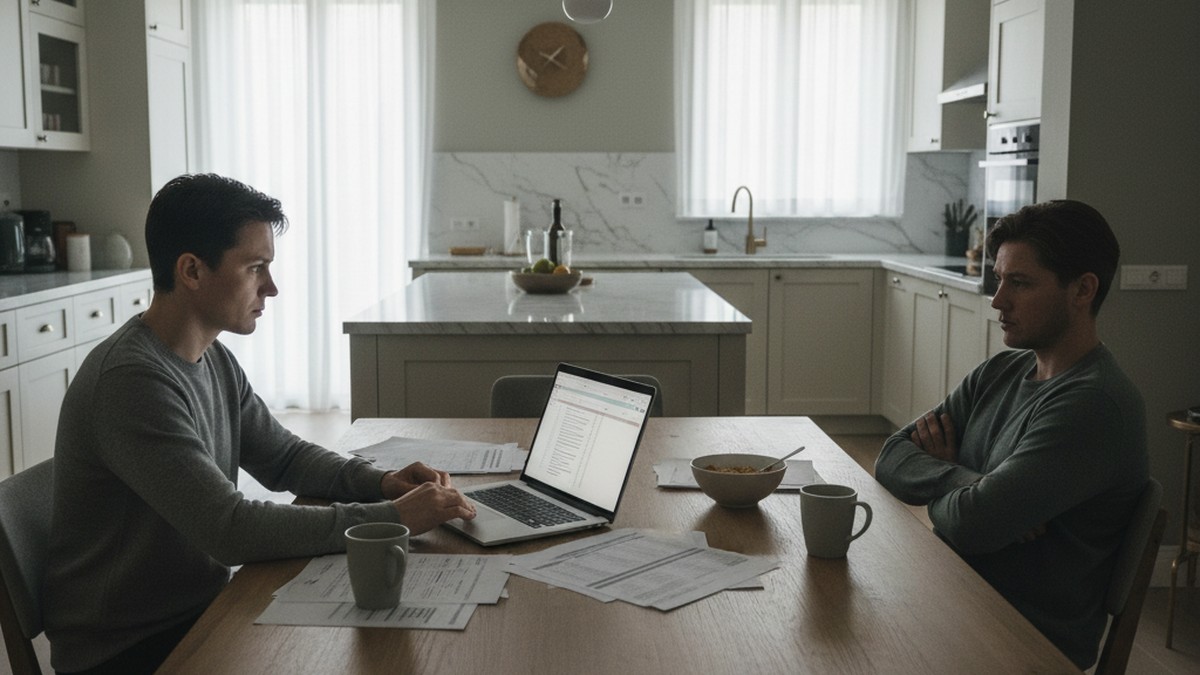
Most cheaters cycle through predictable denial patterns before admitting anything, even when confronted with clear evidence. Common responses include the innocent explanation, counter-accusation, minimization, and gaslighting. Having organized, dated documentation in front of you allows you to stay grounded without relying on memory when your partner challenges your account of events.
Knowing these patterns in advance doesn't make the conversation easy. It makes you less disoriented when they appear.
The Four Most Common Denial Responses
The innocent explanation: "That profile is old — I never deleted it." "I was at that hotel for a work thing." "Those messages are completely out of context." Each of these may occasionally be true, which is why your evidence needs to be specific enough to be context-independent. An active dating profile with login indicators from last week is not explained by "I forgot to delete it." A hotel charge on a night they claimed to be working late in the same city is not neutralized by "work thing."
The counter-accusation: "Why are you going through my things?" "You're surveilling me because you don't trust me — that's the real issue." "I can't believe you're doing this." This is a structural deflection — the subject of the conversation shifts from what they did to what you did. Briefly acknowledge that you gathered evidence. Then return. You gathered evidence because you had serious, specific concerns. Those concerns are the conversation.
Minimization: "It was just talking." "Nothing actually happened." "You're turning this into something it isn't." This response usually means something did happen. If the explanation for an explicit conversation is "it was just talking," you've confirmed the conversation occurred. Minimization is a partial admission dressed as a dismissal — and it often means a fuller truth follows if you don't drop the subject.
Gaslighting: "You've always been paranoid." "I've never given you a reason not to trust me." "You're being irrational." According to the Journal of Family Violence (2025), gaslighting in intimate relationships is strongly associated with Machiavellianism and psychopathy — traits that correlate with the capacity for sustained deception. If your partner is gaslighting you in response to solid evidence, recognize that for what it is: a predictable behavioral pattern, not a reflection of reality.
This is precisely why having your organized, documented evidence physically in front of you matters. When someone tells you your memory is wrong or your judgment is distorted, referring to a dated screenshot, a bank statement, or an entry in a factual journal removes memory from the equation. The facts are on paper. They do not depend on what you felt or how you interpreted something.
For a deeper look at this dynamic, the guide on gaslighting after cheating covers the specific psychological mechanisms involved.
When the Confrontation Moves Toward Truth
A confrontation moves in the right direction not when your partner immediately admits everything — that's statistically uncommon — but when it produces honest engagement. A partner who responds with visible emotional conflict, who stops confidently explaining things away, or who starts asking clarifying questions about your evidence is moving toward truth, even if the pace is slow.
Be prepared for the conversation to take longer than you expected. Truth in these situations typically comes in phases: denial, partial admission, fuller disclosure over subsequent days. The first conversation rarely produces the complete picture.
When the Confrontation Goes Badly
If your partner remains in complete denial, escalates aggressively, or abruptly ends the conversation, don't push for resolution in that moment. You've raised the issue. You've presented evidence. Those facts are now in play. Give the situation space.
Some partners need 24 to 48 hours before they can respond honestly. The shock of being confronted with organized evidence — even for someone who is guilty — can produce an immediate defensive response that isn't their considered answer.
If you are concerned about your safety at any point, leave. This takes priority over any resolution of the confrontation itself. If your partner has a history of emotional or physical aggression, consider having this conversation in the presence of a couples therapist rather than alone.
For detailed guidance on structuring and navigating the confrontation itself, see the guide on how to confront a cheater.
After the Confrontation — What Comes Next
The confrontation is one moment in a longer process. What you do in the 48 to 72 hours that follow matters as much as how carefully you prepared.
Protecting Your Evidence After the Conversation
Once the confrontation has happened, your partner knows you have evidence. Their first instinct — whether they confessed, denied, or deflected — may be to delete anything that could be construed as compromising.
Move quickly:
- Ensure your backup is in place and inaccessible to your partner before the conversation begins, not after
- If the confrontation became adversarial, change passwords on any personal accounts your partner knew about
- Do not delete any evidence you gathered, even if the conversation felt like it ended in resolution — outcomes often shift in the days that follow, and you may need what you have
If They Confessed
A confession is the start of a process, not the end of one. Three priorities in the immediate aftermath:
- Make no permanent decisions in the first 48 hours. Decide only what needs to be decided for immediate practicalities — where you're sleeping tonight, who is managing shared responsibilities, what you're telling people (answer: probably nothing yet).
- Clarify what you actually want. Separation, reconciliation, and divorce are all viable paths. None of them require a decision this week.
- Consult a professional separately. A therapist or counselor for yourself, distinct from any couples therapy that might follow, gives you a private space to process without simultaneously managing your partner's emotional state.
If They Denied
A denial does not mean you are wrong. It means you either need additional evidence, or you're prepared to make decisions based on what you already have. Some people find that a confident denial in the face of solid, irrefutable evidence is itself informative — a partner willing to look at clear proof and call it nothing may not be someone they can build a future with regardless of what technically occurred.
Take time before deciding what to do next. Further evidence gathering, professional mediation, or a decision to end the relationship without full confirmation are all options reasonable people choose in this situation. None of them require immediate action.
The 48-Hour Rule
Do not make major life decisions within 48 hours of the confrontation. This applies regardless of how the conversation went — confession, denial, or something in between. The emotional intensity of this period reliably produces decisions that look very different two weeks later, once the initial shock has cleared.
If you're considering legal steps, schedule a consultation — but don't sign anything or make commitments while in acute distress. Sleep on it. Talk to your support person. Process before you decide.
Frequently Asked Questions
You don't legally need proof to have the conversation, but confronting without evidence significantly increases the chance of denial and gaslighting. Research shows most cheaters will not confess unless presented with evidence they cannot explain away. Having documented proof protects your psychological stability and prevents you from being talked out of what you know to be true.
The strongest evidence is direct and dated: a confirmed active dating profile, screenshots of explicit messages clearly showing an affair, or a private investigator's documented report with timestamps. These are difficult to deny and, if obtained legally, may be admissible in court. Financial records showing unexplained hotel or gift spending also carry significant weight alongside digital evidence.
Text messages can be used as evidence in divorce court if you lawfully accessed them — meaning you were the account holder, the messages were on a shared device with mutual access, or they were voluntarily shared with you. Accessing a partner's phone without permission or installing monitoring software is generally illegal and such evidence may be excluded entirely.
Confronting without evidence typically produces denial and, in many cases, gaslighting — where your partner reframes your concerns as jealousy, paranoia, or insecurity. This damages your confidence, buys them time to delete evidence, and may allow them to become more careful. If suspicions turn out to be unfounded, it can also cause lasting damage to the relationship.
Most investigators recommend gathering evidence over two to four weeks before confronting, unless there is urgency such as safety concerns or pending major financial decisions. Rushing produces incomplete evidence. Once you have solid documentation in at least two different evidence categories, you typically have enough to proceed with a well-prepared confrontation.
If you have serious concerns and want a clear answer on dating app activity before beginning the full evidence process, CheatScanX checks 15+ platforms in a single search — giving you a confirmed result in minutes with no account access required.