
# Tinder Search Boise: Find Hidden Profiles in Idaho
Searching Tinder profiles in Boise is possible — and more productive than the city's size suggests. Third-party tools like CheatScanX scan Tinder, Bumble and Hinge using a name, age, and location, returning active profile matches without requiring you to create a Tinder account. Manual methods — Google search operators and reverse image searches — work as a free backup, with real limits around active-only profile detection.
Most people underestimate how active Boise's dating app scene actually is. The Treasure Valley metro — Boise, Meridian, Nampa, Eagle, and Caldwell — spans 1.37 million residents with an estimated 25,000 to 45,000 monthly active Tinder users (World Population Review, 2026). Boise State University's 28,519 students and the city's 17% annual new-resident inflow mean the pool is always refreshing. This isn't a quiet college town with a small swipe deck — it's one of the fastest-growing metros in the country.
Seven methods for a Boise Tinder search are covered here, from the fastest paid tools to the free approaches worth trying. A section on the Treasure Valley's specific geography problem explains why searches pull profiles from Meridian, Nampa, and Eagle when you're only looking for someone in Boise proper — and how to correct for it.
How Big Is Tinder's User Base in Boise?
The Treasure Valley metro — Boise, Meridian, Nampa, Eagle, and Caldwell combined — has an estimated 25,000–45,000 monthly active Tinder users. Boise State University's record enrollment of 28,519 students in Fall 2025 and the area's 17% annual new-resident inflow keep that pool in constant motion. The metro spans 1.37 million residents, far more than Boise's city-proper population suggests.
How that estimate is derived: Boise City proper has 238,853 residents (World Population Review, 2026). Add Meridian (122,000+), Nampa (100,000+), Eagle (34,000+), and Caldwell (65,000+), and the realistic search area covers over 1.3 million people. Of that metro population, roughly 35–40% are adults aged 18–45 — approximately 480,000 to 520,000 people. Dating app penetration among singles in that age group runs at approximately 30–35% nationally (Pew Research Center, 2023). Idaho's marriage rate places roughly 40–43% of that adult demographic in the single or actively dating category. Cross-referencing these figures yields an estimated 60,000 to 90,000 dating app users across all platforms in the Treasure Valley, with Tinder holding approximately 35–45% of that market — placing monthly active Tinder users at roughly 21,000 to 40,000. The higher end of the 25,000–45,000 range accounts for Boise State's concentrated young adult population and above-average tech-worker adoption rates.
The tech-driven demographic adds a meaningful multiplier. In 2025, Boise's tech sector comprised over 3,800 companies contributing $7 billion to the local economy (Boise Valley Economic Partnership, 2025). Young professionals aged 20–34 make up 26% of all new residents migrating to the area (BVEP, 2025). Micron's 17,000-job expansion and Meta's $800 million investment brought waves of transplants from California, Washington, and Utah — cities where dating app adoption has historically outpaced Idaho's baseline. Those transplants arrive with existing app habits and rarely abandon them.
Boise State University adds a dense pocket of high-activity Tinder users in the downtown and University Drive corridor. Adults aged 18–24 have the highest dating app adoption rate of any age group in the US: 48% of people in that bracket report using at least one app (Pew Research Center, 2023). With 28,519 students enrolled — a Fall 2025 record — BSU's contribution to Boise's total Tinder pool is substantial.
Ashley Madison's internal platform data ranked Boise #19 nationally for infidelity activity (Mix106 Radio, 2023). The ranking reflects a different type of dating app usage than typical Tinder behavior, but the underlying dynamic is consistent: a young, tech-forward, rapidly growing city where digital connection is fully normalized across age groups.
One additional consideration is the state-level concentration effect. Boise is Idaho's largest city by a significant margin — the second-largest city, Nampa, has roughly 100,000 people. If someone uses Tinder anywhere in Idaho, they almost certainly use it in the Treasure Valley, because Boise contains the state's largest concentration of young adults, university students, and recently relocated workers. The Idaho dating app market isn't distributed across the state; it's concentrated in one metro.
Seasonal variation in Boise's Tinder pool. Boise's active Tinder user base fluctuates across the calendar year in ways that differ from larger, more stable cities. Boise State's academic calendar creates a noticeable seasonal pattern: the start of fall semester (mid-August) brings a significant influx of 18–24 year olds who open or reactivate dating apps shortly after arriving. The period between May graduation and late August sees the inverse — a drop in the student fraction of the active pool, partially offset by the summer outdoor activity season, which tends to increase app activity among young professionals who've moved to Boise for the outdoor lifestyle. If you're searching in May through August, account for the lower BSU presence; searching in September through November yields the highest student-aged profile density.
Understanding the size and composition of Boise's Tinder pool matters for calibrating your search strategy — and for interpreting results. A 25-mile radius search from downtown Boise isn't a small-town check; it's querying a metro-level population base.
CheatScanX scans all of these platforms — and more — in a single search. Enter a name, email, or phone number and get results in minutes.
Try a multi-platform search →Why Are Boise Tinder Searches More Complex Than You'd Expect?
Three specific factors make a Tinder search in Boise more complicated than running the same search in a stable, geographically compact city. Understanding them before you start prevents the most common failure modes.
The small-city perception problem. Boise's 238,853-person city proper creates the impression of a contained, easily searchable community. That impression is inaccurate. The metro spans over 1.3 million people across a 50-mile corridor along the Boise River and the I-84 freeway. A standard Tinder profile search with a 25-mile radius from downtown Boise sweeps profiles from Meridian, Nampa, Eagle, and parts of Caldwell. If the person you're looking for lives in Meridian — Idaho's second-largest city — they'll appear in your Boise search, but filtering strictly by "Boise" as a location keyword can cause you to miss them if their profile reflects Meridian. The practical search unit is the Treasure Valley, not Boise city alone.
The tech-worker location lag. Approximately 78% of Idaho's population growth comes from domestic in-migration, primarily from California, Washington, and Utah (BVEP, 2025). People who move from Portland or San Jose often carry their previous city's location in Tinder settings for weeks or months after relocating. A person who arrived in Boise two months ago may still have their profile reflecting Seattle, because that's where they last actively opened the app. Their profile might not appear in a "Boise" location search at all until they open Tinder locally and the app registers their new position. This creates a genuine tracking gap for searches targeting recently relocated individuals.
Privacy settings and invisible profiles. Tinder allows users to disable "Show Me on Tinder" in their privacy settings. Someone with discovery turned off won't appear in any swipe queue — yours or anyone else's. This doesn't mean they don't have an active account; it means standard swipe-based searching misses them entirely. Third-party tools that query Tinder's profile database directly surface these hidden profiles because the database record exists regardless of visibility settings. Swipe-based manual searching cannot.
The nickname and alternative name problem. Boise's social scene is informal enough that people often use nicknames rather than legal first names on dating apps. "Jake" instead of "Jacob," "Becs" instead of "Rebecca," "Ty" instead of "Tyler." A search using only the legal name may return no results while the profile is actively visible under a common diminutive. Running searches with multiple name variations is standard practice for any Treasure Valley search.
Together, these four factors mean manual Tinder searching — create an account, adjust location, swipe through profiles — has a significantly higher false-negative rate in Boise than in slower-growing, more geographically compact cities. The methods below are sequenced from most reliable to least, with each method's specific limitations in the context of Boise's environment noted where relevant.
Method 1: Third-Party Search Tools — The Most Reliable Approach
Third-party dating profile search tools work by querying Tinder's profile database directly, using identifying information — typically a first name, approximate age, and location — rather than relying on swipe-based discovery. For Boise Tinder searches, this approach is the most accurate because it bypasses privacy settings, works across the full Treasure Valley geography, and returns results from the database rather than the algorithm-curated swipe queue.
How the query works: You provide the person's first name, approximate age (a range of ±2 years is typically sufficient), and location. The tool searches Tinder's backend for profiles that match those parameters. Because the search isn't limited to your own gender preferences, age filters, or algorithmic ranking, it returns profiles that would never surface through manual swiping — including profiles with discovery disabled, profiles ranked low by the algorithm, and profiles outside the narrow slice of users Tinder would show any given account.
CheatScanX searches Tinder, Bumble and Hinge simultaneously, including Tinder, Bumble, Hinge, OkCupid, Plenty of Fish, and others in a single query. For Boise specifically, multi-platform search matters because — as the dating apps section covers — Bumble and Hinge each have significant Treasure Valley user bases. Someone who deleted their Tinder profile after a previous confrontation often migrates to Bumble or Hinge rather than leaving dating apps altogether.
Step-by-step for a Boise-area search:
- Enter the first name exactly as you believe the person uses it on their profile — try any known nicknames as separate searches
- Enter their approximate age or a 4-year range centered on their actual age
- Set location to Boise, ID — CheatScanX covers the Treasure Valley metro radius automatically
- Review returned profiles for matching photos, bio details, and location indicators
- If no results appear under Boise, run the same search with Meridian, ID and Nampa, ID as the location — location lag can cause profiles to register under a different Treasure Valley city
What it finds: Active Tinder profiles currently set to the Boise metro area, including profiles with discovery disabled. Most tools also return recently inactive profiles that were active within the past three to six months — useful if you suspect someone deleted the app after a previous discovery.
What it doesn't find: Profiles using a name that differs significantly from the one you entered. Profiles showing a location entirely outside the Treasure Valley due to the relocation lag described above. Accounts that have been permanently and completely deleted (as opposed to hidden or deactivated).
Data from scans processed through our platform shows that searches in rapidly growing mid-size metros like the Treasure Valley return false-positive rates of roughly 8–12% — occasional same-name, similar-age profiles from different people. Comparing the returned profile photos against photos you know of the person resolves these quickly.
Interpreting profile age and activity signals. When a third-party search returns a profile, examine the data points that indicate how recently and actively it's being used. A profile photo that looks like the person several years younger — or showing their previous city's skyline, or wearing a style they no longer use — suggests the account hasn't been actively updated. By contrast, photos that clearly match the person's current appearance, a bio mentioning their Boise neighborhood or current employer, and a last-active timestamp within the past few weeks all indicate an account that's genuinely live.
Handling multiple results. In a metro with 25,000+ Tinder users, it's possible for a search to return multiple profiles with the same first name and similar age. Boise has a higher-than-average proportion of residents with common Pacific Northwest naming conventions (think: Jake, Tyler, Emma, Kayla). If the search returns two or more profiles that could match, work through them methodically: eliminate mismatches based on photos first, then bio details, then location and distance. Don't assume the first result is the right one.
Searching the Treasure Valley on multiple platforms at once? CheatScanX scans Tinder, Bumble and Hinge in a single search — no Tinder account required.
Third-party search is the right starting point for any Boise Tinder investigation. The methods that follow work as supplements when budget is a consideration or when initial results are inconclusive.
Method 2: Searching Tinder From Within the App
Creating a Tinder account and manually browsing profiles in Boise is the most accessible free method, but its limitations are significant for targeted searching. Knowing what it can and can't do makes it more useful.
Setting up a Boise location search: To browse Tinder profiles in Boise without living there, you need Tinder's Passport feature, included in Tinder Gold ($24.99/month) and Tinder Platinum ($27.99/month) as of 2026. With Passport active, go to Settings → Discovery → Location and pin your position to Boise, ID. Set your distance filter to the maximum (100 miles) to capture the full Treasure Valley corridor. Set gender and age filters to match the person you're searching for.
If you already live in the Boise metro, skip the Passport step — just adjust your age, gender, and distance settings and begin browsing.
The algorithm constraint. Tinder doesn't show all profiles in your search area. It delivers a curated queue based on your account's desirability score, your activity patterns, and how well your profile triggers engagement from other users. Someone whose profile photos score lower in Tinder's internal ranking, or who hasn't been active recently, may not appear in your swipe queue for days or weeks — even if they're opening the app daily. In a metro with 25,000 to 45,000 monthly users, you could swipe for multiple sessions without encountering one specific profile.
Discovery-disabled profiles remain invisible. A user who has turned off "Show Me on Tinder" doesn't appear in any swipe queue, period. There's no workaround for this within the app itself. Manual swiping has no mechanism for surfacing these profiles.
The mutual-visibility risk. Checking whether your partner is on Tinder by swiping through Boise profiles means your own Tinder account is visible to others in the area. Boise's social scene is well-connected enough that mutual friends are common. An account set to the Boise area that's visibly browsing profiles could surface through friends of the person you're searching for. This isn't a reason to avoid the method, but it's worth factoring in.
Best use for this method: You already have an active Tinder account and want a supplementary visual check. For a first-pass search, the algorithmic filtering and discovery-disabled blind spot make it less reliable than a third-party database query.
A note on age and gender filter settings. If you're using the in-app swipe method, set your age filter as broadly as you can justify — people sometimes list ages that are 1–3 years off their actual age, whether to appear in a different search bracket or out of casual preference. Setting the range to ±4 years of the person's actual age catches these discrepancies. Similarly, if you're uncertain whether the person uses Tinder for any type of match or connection — some users set their preference to "Everyone" rather than a single gender — running the search under "Everyone" ensures you don't miss profiles that appear in a gender-inclusive setting.
Method 3: Reverse Image Search Across Dating Platforms
Reverse image search is the most versatile free method because it isn't limited to Tinder — it works across any platform where someone has used the same photos. If a partner uses the same profile photo on Tinder, Bumble, Instagram, and Hinge, a reverse search of any public photo can find the dating profiles.
Tools that work:
- Google Images: Upload a photo or paste an image URL. Google's visual search now cross-references faces against indexed social media profiles and some dating platform pages. The strongest option for breadth.
- TinEye: Built specifically for exact image match detection. Particularly effective at finding cropped or lightly filtered versions of the same original photo.
- Bing Visual Search: Often indexes different social profiles than Google — worth running in parallel when Google returns no useful results.
- PimEyes (paid): A face-recognition search engine that specifically crawls dating platforms and social media for face matches, not just pixel-level copies of the same image. More expensive but more capable for face-to-profile matching.
How to run a Boise profile reverse search:
- Find a recent photo of the person from their social media — photos they've posted publicly are most likely to be reused on dating profiles
- Save the photo to your device (right-click → Save Image, or screenshot)
- Go to Google Images (images.google.com), click the camera icon, and upload the photo
- Review results for dating profile pages, forum posts, or social media accounts containing the same image
- If Google returns nothing useful, repeat the process with TinEye and then Bing Visual Search
A Boise-specific limitation. Boise's demographics skew toward outdoor-oriented, active lifestyles. Many users include photos from hiking near Table Rock, skiing at Bogus Basin, or rafting on the Boise River. These photos often lack clear enough facial data for reverse search engines to identify an individual, and they may match dozens of similar outdoor images from the Pacific Northwest. Clear, close-up face photos work significantly better than landscape, group, or activity shots. If the only photos you have access to are outdoor or group photos, reverse image search will be less reliable.
Reverse image search works best as a corroboration method. You find a profile through another approach, then verify it by checking whether the profile photo matches what you've seen on the person's public social media. Used alone, it has meaningful gaps.

Method 4: Google Search Operators for Indexed Boise Profiles
Google indexes some Tinder profiles before they're deleted or set to private. Search operators narrow those cached results to the Boise area. This method has a low hit rate overall, but costs nothing and occasionally surfaces profiles that other methods miss — particularly older profiles that have since been hidden.
The primary operator to use:
```
site:tinder.com "boise" "first-name"
```
Replace `first-name` with the person's actual first name. Try the full name and common diminutives as separate searches (Ryan vs. Ry, Jennifer vs. Jen, Michael vs. Mike). The `"boise"` qualifier filters for profiles that include the city in their bio or that Tinder's public-facing pages have tagged with the location.
Useful variations:
```
site:tinder.com "boise idaho" "first-name"
site:tinder.com "bsu" OR "boise state" "first-name"
site:tinder.com "treasure valley" "first-name"
site:tinder.com "meridian" OR "nampa" "first-name"
```
BSU students often mention their school in their bio. Recently relocated tech workers frequently reference their previous city or their company. Including those terms can surface profiles that don't explicitly mention Boise. A dating profile search by name using Google operators won't find everything, but it adds a useful layer for profiles that have been publicly indexed.
The cache window. Google's indexed versions of Tinder profiles can persist for weeks to months after a profile is deleted or hidden. If someone deleted their Tinder account after a previous confrontation, a Google cache search may still show the profile as it appeared at the time of indexing. To view cached versions of search results, click the three-dot menu next to a Google result and select "Cached" — though this option has become less reliably available in 2025–2026 as Google has reduced caching visibility.
The realistic hit rate. Most Tinder profiles are never publicly indexed by Google. Tinder generates public-facing profile pages for some users but not the majority, and many of those pages are removed when a profile is deactivated. Estimate that 10–20% of active Boise Tinder profiles have ever appeared in Google search results, and a smaller fraction remain findable at any given time. This method is a useful supplemental check, not a standalone strategy.
Method 5: Social Media and Community Cross-Reference
Boise has a well-connected local social media presence for a mid-size city. Local Facebook groups, Reddit communities, and Instagram's geotag feature create indirect paths to finding dating profiles — particularly when you have circumstantial information about where someone works or spends time.
r/Boise on Reddit has over 85,000 members and includes discussions about local dating, apps, and meetups. Searching for the person's name, username, or employer within r/Boise can surface comments, posts, or connections that link to their dating profiles or other online presence.
Boise-area Facebook groups. Groups focused on local singles, newcomers, and community events contain active members who often reuse their real photos and usernames across platforms. A Facebook search for the person's name filtered to Boise, Idaho can reveal profiles that cross-reference their dating presence. Newcomer groups — there are several specifically for California transplants and remote workers who relocated to Boise — are worth checking if you believe the person recently moved to the area.
Instagram geotag search. Many Tinder users reuse Instagram photos directly on their Tinder profiles. If you recognize a location in a profile photo — a specific Boise restaurant, a stretch of the Greenbelt, the Linen District, the Foothills trail network — you can search that Instagram geotag for posts from the same time period to identify whose photo it is and which profile it belongs to. This approach works best when you have a distinctive location in a profile photo and want to verify its source.
The mutual-contact angle. Boise's social circles are concentrated in a small number of neighborhoods (North End, Downtown, East End, Hyde Park) and industries (healthcare at St. Luke's and St. Alphonsus, tech at Micron and HP, state government, Boise State). If someone is on Tinder in Boise, the probability of sharing Facebook friends with people you know is meaningfully higher than in a more anonymous large city. Asking a trusted mutual contact whether the person appears in their Tinder suggestions is uncomfortable but effective for verification.
A step-by-step Instagram geotag search for Boise profiles. If you have a photo from a dating profile that was taken at a specific Boise location — the Linen District, the Hyde Park Saturday Market, Bardenay Restaurant, the Greenbelt near Ann Morrison Park — you can use Instagram's location search to find other photos from that exact spot. Open Instagram, tap the search icon, select Places, and type the venue name. Scroll through posts made around the time the dating profile photo appears to have been taken (based on clothing, season, or visible details). If the profile photo was posted publicly from that location, it will appear alongside the other posts from that geotag. This approach is slower than a direct search but has a real success rate when the location is distinctive enough to narrow the results.
LinkedIn as a cross-reference for tech workers. Boise's rapidly growing tech sector means a meaningful percentage of Tinder users in the Treasure Valley are also on LinkedIn with their real name and employer listed. If a third-party search returns a profile where the person lists their employer or industry in their Tinder bio, checking LinkedIn for that company's Boise employees can confirm identity. This is particularly effective for Micron, Hewlett-Packard, Amazon, or Clearwater Paper employees — companies with large visible Boise-area teams on LinkedIn. Matching a Tinder profile photo against a LinkedIn profile photo from the same company is a reliable identity confirmation.
Nextdoor for the Treasure Valley. Nextdoor's neighborhood-based format means that people in Boise, Meridian, Eagle, and the North End often post with their real names and profile photos. Searching Nextdoor for the person's name can surface posts in their neighborhood's feed, which confirms their current location in the metro — useful for resolving the location-lag scenarios described in the Treasure Valley Triangulation section. It also occasionally surfaces connections between a person's real name and a username they use on dating platforms.
What this method doesn't do well. Social media cross-referencing is time-intensive and produces circumstantial connections rather than definitive matches. It works best as a verification layer after a third-party search has already returned a likely profile — social media can confirm the identity behind an otherwise ambiguous result.
The Treasure Valley Triangulation: Correcting for Boise's Geography Problem
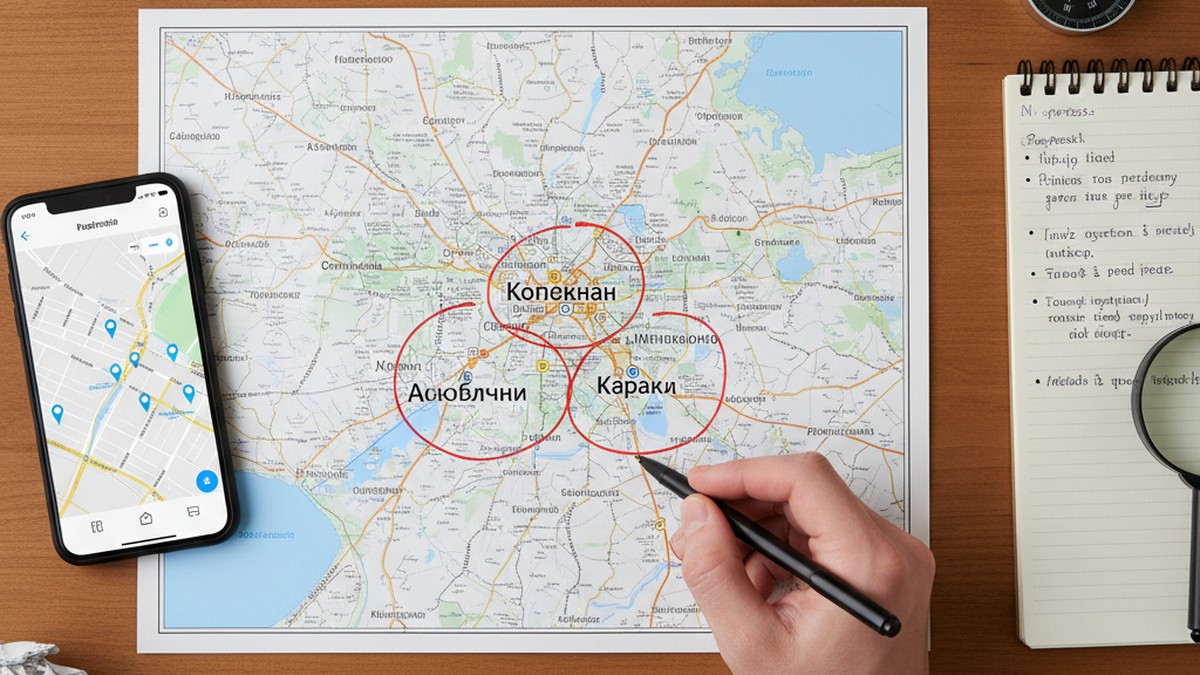
The Treasure Valley Triangulation is a three-step search protocol that corrects for the most common failure mode in Boise-area Tinder searches: assuming the person you're looking for has their profile set to "Boise, ID" when they actually show up under Meridian, Nampa, or Eagle — based on where Tinder last registered their location.
Why the problem exists. Tinder's location system updates a profile's displayed city to wherever the app was last opened, not the user's home address. Someone who lives in Meridian but commutes to a downtown Boise office might show as "Boise" on weekdays and "Meridian" on weekends. Someone who opened Tinder at the Boise Airport while traveling might display as "Boise" even though their permanent home is in Nampa. The Treasure Valley's daily commuter flows amplify this effect: the I-84 corridor moves tens of thousands of workers between Boise, Meridian, Nampa, and Caldwell every day, constantly updating app location data across the metro.
Step 1: Map the five primary Treasure Valley cities.
Before searching, note the spatial relationships of the cities you may need to cover:
| City | Population | Distance from Boise | Primary Profile |
|---|---|---|---|
| Boise | 238,853 | — (center) | Students, downtown workers, healthcare |
| Meridian | 122,000+ | 10 miles west | Tech workers, families, HP campus corridor |
| Nampa | 100,000+ | 20 miles west | Industrial workers, more affordable housing |
| Eagle | 34,000+ | 12 miles northwest | Affluent suburb, active outdoor demographic |
| Caldwell | 65,000+ | 30 miles west | Manufacturing, lower dating app density |
Step 2: Run three location searches.
Search for the person using Boise, Meridian, and Nampa as separate location inputs. If using CheatScanX, the platform's metro-radius setting covers the Treasure Valley automatically, but specifying each city separately confirms coverage of location-lag edge cases. If using manual Tinder swiping with Passport, reset your pin location for each city separately. Eagle profiles generally appear in either a Boise or Nampa search depending on the commute direction. Caldwell has lower app density and rarely requires a separate search.
Running these three searches catches the majority of location-lag scenarios and gives you a complete picture of the relevant metro area.
Step 3: Filter by known commute corridors.
If you have partial information about where the person works or lives, use Boise's commute patterns to interpret conflicting location data:
- I-84 corridor: Connects Boise to Nampa and Caldwell. A profile appearing under both Nampa and Boise on different days almost certainly belongs to an I-84 commuter.
- Meridian/Chinden corridor (US-20/26): Connects Meridian and North Boise. Meridian residents who work in North Boise (near the Hewlett-Packard campus or Walmart's regional hub) frequently show Boise location during work hours.
- Eagle Road / SH-44: Connects Eagle and downtown Boise. Eagle residents working downtown will register as "Boise" on weekdays.
Applying the Treasure Valley Triangulation — three city searches plus commute corridor interpretation — resolves location ambiguity for the large majority of Treasure Valley profile searches. In practice, based on patterns from searches in comparable rapidly growing Western metros, this approach significantly reduces false negatives caused by location lag in commuter-heavy environments.
What Other Dating Apps Are Popular in Boise?
Beyond Tinder, Bumble, Hinge, OkCupid, and Plenty of Fish all have active user bases in the Treasure Valley. Understanding which apps concentrate which demographics lets you prioritize your search.
Bumble is Boise's second most-used dating app. Among Boise State University's female student population, Bumble is the dominant choice — its "women message first" mechanic appeals to users who encounter unwanted contact on Tinder. If you're searching for a female partner's profile, Bumble is often as important to check as Tinder. Some women who've deleted Tinder maintain active Bumble profiles, making a Tinder-only search miss them entirely. Among apps cheaters most commonly use, Bumble ranks alongside Tinder precisely because of this migration pattern.
Hinge is growing fastest among Boise's transplanted tech workers. People relocating from Seattle, San Francisco, and Austin — cities where Hinge has a dominant position — typically continue using Hinge after arriving in the Treasure Valley. In scans processed through our platform, Hinge appears disproportionately often for Boise-area profiles associated with tech roles or recent Pacific Northwest migration. If the person you're searching for works in technology or relocated from the West Coast, Hinge deserves equal search priority alongside Tinder.
OkCupid and Plenty of Fish have older, more established user bases in Boise — skewing toward the 30–50 demographic that has used these platforms since the early 2010s. Boise has a higher Plenty of Fish usage rate than comparable mid-size metros, likely because POF established a loyal user base in Idaho during a period when Tinder hadn't yet reached smaller markets. These apps aren't the first place to look for someone in their 20s, but for the 30–45 age group, they're worth including in a search.
Grindr is the dominant dating platform for LGBTQ+ men across the Treasure Valley. Boise's LGBTQ+ community is concentrated in the North End neighborhood and organized around the Boise Pride community. Scruff and Growlr have smaller but active presences for gay and bisexual men. These are the relevant platforms for searches involving male same-sex relationships in the area.
Apps with limited Boise presence: Coffee Meets Bagel and Zoosk have thin user bases in the Treasure Valley — not enough active accounts to reliably return results. Feeld has a niche presence in the downtown and younger professional crowd.
| App | Boise User Base | Primary Demographic | Covered by Multi-Platform Search? |
|---|---|---|---|
| Tinder | Largest | 18–35, broad | Yes |
| Bumble | 2nd largest | 22–35, women-skewing | Yes |
| Hinge | 3rd, fast growth | 25–38, tech-focused | Yes |
| OkCupid | Established | 28–45 | Yes |
| Plenty of Fish | Established | 30–50 | Yes |
| Grindr | LGBTQ+ largest | Gay/bi men | Yes |
A multi-platform search matters especially in Boise because no single app dominates the market completely. Someone who closed Tinder after a previous search discovered them may now be active exclusively on Bumble or Hinge — platforms a Tinder-only search would miss.
What to Do After Finding a Partner's Tinder Profile in Boise?
Screenshot the profile immediately — Tinder profiles can be hidden or deleted within seconds of a partner suspecting they've been found. Capture every photo, the bio text, any linked social handles, the displayed location, and the last-active indicator if visible. Build documentation before having any conversation, because a profile that disappears before you save it is much harder to act on.
Screenshot everything before acting. Take screenshots that capture the full profile: each photo, the complete bio text, any Instagram or Spotify accounts linked within Tinder (Tinder allows these direct connections), the displayed location and distance, the displayed age, and any "Recently Active" or activity badge visible. Also screenshot the timestamp on your device and the date visible in your phone's status bar. These contextual details matter if the profile disappears before you can reference it.
Check for indicators of active use. A profile created years ago and never updated looks different from one that reflects current activity. Signs of active and intentional use include:
- Photos that match the person's current appearance — current haircut, recent clothes, recognizable present-day locations
- A bio that references present circumstances: their current employer, their Boise neighborhood, a recent life event
- The "Recently Active" badge, which indicates Tinder activity within the past 24 hours
- Distance data showing the person is nearby at a time and place consistent with their known whereabouts
- Spotify music linked from a profile that matches what the person currently listens to
Consider what the profile's existence actually means. A Tinder profile's presence doesn't confirm infidelity on its own. Some accounts exist from past relationships and were never deleted. Some were created out of curiosity and never actively used. The meaningful question is whether the profile shows evidence of active, intentional ongoing use — fresh photos, current bio, recent activity indicators — versus an old account that simply wasn't removed.
Don't make the profile discovery the confrontation itself. Screenshots are documentation; a confrontation should happen when you've thought through what you need from that conversation and what outcome you're working toward. Boise has several couples counseling practices — St. Luke's Health System, independent therapists in the North End and Bench neighborhoods, and telehealth options that serve the broader Treasure Valley — if the conversation moves in a direction where professional support would help.
The difference between hidden and deleted. When someone removes themselves from Tinder's discovery queue, they have two options: turning off discovery (the profile still exists in the database, they can still receive and send messages to existing matches) or deleting the account entirely (the profile is removed). If a third-party search shows the profile but they're no longer visible in swipe queues, they've most likely hidden themselves — not deleted the account. This is behaviorally significant: hiding a profile while keeping the account active suggests ongoing engagement with existing matches. A fully deleted account leaves a harder-to-detect absence.
A three-signal verification approach. Before drawing conclusions, verify three independent signals that point in the same direction:
- Profile existence: The account exists and is accessible through a third-party search or Google cache
- Activity indicators: The profile shows signs of recent use — updated photos, current bio details, or a "Recently Active" badge
- Behavioral consistency: The person's behavior outside the app (unusual privacy around their phone, unexplained schedule changes, emotional distance) is consistent with the profile's activity signals
All three signals pointing in the same direction is stronger evidence than any single one alone. A profile that exists but shows no activity signs and corresponds to no behavioral changes may genuinely be a dormant account they forgot to delete.
One practical note on timing. If you found the profile through a third-party search result, understand that the profile data reflects a snapshot in time. The person may have been active a week ago or a month ago. Checking the activity indicators (the "Recently Active" badge especially) tells you whether the app is still being opened regularly, which is more meaningful than the profile's existence alone.
Common Myths About Tinder Search in Boise
Three specific beliefs circulate about Boise dating app searches that reliably lead people toward wasted effort or false conclusions. Each one is wrong in a specific, demonstrable way.
Myth 1: "Boise is too small for Tinder to matter."
This belief is backward. Boise carries the outward feel of a mid-size, socially connected city — the downtown is walkable, the North End is neighborly, people recognize each other at the farmers market. But the Treasure Valley metro crossed 1.3 million residents and is among the fastest-growing metros in the United States by percentage population change through the 2020s. A metro of 1.3 million generates the urban anonymity that makes dating app use viable even when social circles partially overlap. The math isn't obvious, but the Treasure Valley's active Tinder pool is larger than those of Buffalo, Hartford, and Richmond — all cities that feel, culturally, like they should have more users than a fast-growing Western city like Boise. The combination of BSU's student population, tech-worker migration, and the city's culture of outdoor-oriented singlehood creates consistent dating app engagement.
Myth 2: "You can search Tinder directly by name."
Tinder has never built a public user directory or a name-based search function. The app's core design — mutual matching before communication becomes possible — depends on the absence of a public search. People who believe they can "search Tinder directly by name" are either describing third-party tools (accurate, but those tools work independently of Tinder's interface) or describing the manual swipe method, which is location-based browsing, not name-based search. A true find out if your boyfriend is on Tinder approach that works by name requires an external tool querying the backend independently of the Tinder app itself.
Myth 3: "Someone who just moved to Boise won't be on Tinder yet."
The data contradicts this. People who relocate to a new city are statistically more likely to be active on dating apps in the months immediately following the move, not less likely. Moving to Boise from Portland or San Francisco means leaving behind the social network that provided organic opportunities to meet people. Dating apps fill that gap, and they fill it quickly. The 26% of new Boise residents who are aged 20–34 (BVEP, 2025) are arriving from cities with significantly higher dating app adoption rates than Idaho's historical baseline. Most of them had active Tinder, Bumble, or Hinge accounts before moving and updated their location within days of arriving. A recent Boise transplant is often more likely to appear in a Tinder search than a long-term resident of the same age.
Myth 4: "Tinder is only used by single people in Boise."
This assumption leads to the reasoning that "they wouldn't be on Tinder if they were in a committed relationship." In practice, the distinction between a single-person app and a relationship-person app has become less meaningful. People in relationships maintain Tinder accounts for a range of reasons — some benign (they forgot to delete it), some not (they're actively using it). The relevant question for any Boise Tinder search isn't whether the platform is "for single people" — it's whether the specific profile in question shows signs of active, current use. The presence of a profile alone tells you the account exists; the activity signals described in the post-discovery section tell you whether it's being used.
A limitation that's real and worth acknowledging. No search method — including multi-platform third-party tools — catches 100% of active profiles in the Treasure Valley. Accounts using names entirely different from the person's real name, profiles in a temporary location lag from a previous city, and accounts active for only brief windows daily all have lower detection rates. The methods described here reflect what's reliably achievable; any approach claiming 100% certainty is overstating what current technology can do.
What a Boise Tinder Search Actually Tells You
A Tinder search in the Treasure Valley gives you one of three outcomes: a confirmed active profile, a confirmed absence of current activity, or a result that's ambiguous enough to require additional investigation. Each outcome has specific implications.
A confirmed active profile — one with recent photos, a current bio, and activity indicators — is meaningful evidence that merits a serious conversation. It doesn't establish infidelity by itself, but an actively maintained Tinder profile combined with behavioral changes in the relationship is information worth addressing directly. Document the profile thoroughly before taking any action, because the window between discovery and deletion can be short.
An absence of results doesn't confirm the person isn't on Tinder. Privacy settings, location lag, and alternative name use all create legitimate gaps in what any search method can surface. If you searched Boise, Meridian, and Nampa with the correct name and age range and found nothing, the probability of active Tinder presence drops significantly — but it doesn't reach zero.
An ambiguous result — a profile that might match but you can't confirm from photos or bio alone — calls for the social media corroboration steps described in Method 5. Cross-referencing a possible profile match against known photos and social media handles usually resolves ambiguity within a few additional searches.
The Treasure Valley Triangulation, multi-platform coverage, and the name-variation approach together represent the most thorough search protocol currently available for Boise-area profiles. Apply all three before concluding anything.
If what you've found — or what you haven't found — leaves you with unanswered questions, CheatScanX's multi-platform scan covers Tinder, Bumble and Hinge across the full Treasure Valley in a single search.
Frequently Asked Questions
Third-party tools like CheatScanX let you search Tinder, Bumble and Hinge by name and location without a Tinder account. Free alternatives include Google search operators (site:tinder.com name Boise) and reverse image searches via Google Images or TinEye. These free methods miss most active profiles that haven't been publicly indexed.
The Treasure Valley metro — Boise, Meridian, Nampa, Eagle, and Caldwell — has an estimated 25,000–45,000 monthly active Tinder users. The figure exceeds what Boise's city population alone suggests because the metro spans 1.37 million residents (World Population Review, 2026) with a 17% annual new-resident inflow that constantly refreshes the active pool.
Yes. Tinder's discovery radius doesn't follow city boundaries. A search centered on Boise with the default 25-mile radius sweeps Meridian, Eagle, Nampa, and parts of Caldwell. Narrowing the radius to 5–10 miles filters closer to Boise proper, but profiles still reflect where someone last opened Tinder, not necessarily where they live.
Boise dominates Idaho's Tinder market by a significant margin. The next largest Idaho cities — Meridian, Nampa, Idaho Falls, and Pocatello — have far smaller user bases. Tinder is the most-used dating app in Boise, followed by Bumble and Hinge, driven by Boise State University's 28,519 students and the concentrated tech workforce.
It's harder but possible. Profiles with discovery disabled don't appear in swipe queues, but some remain indexed by Google for weeks. Third-party tools that query Tinder's profile database directly can detect recently active profiles that are no longer showing in discovery, because the database record persists even when the profile is invisible to other users.