
# Tinder Search Memphis: Find Hidden Profiles
The most reliable way to search Tinder in Memphis is a database-level profile search by name and age — it returns results in under five minutes without requiring you to create a Tinder account or expose your own identity. Six methods exist, and they're not equally effective: the right one depends on what identifying information you have and how private the account you're looking for has been set.
Memphis presents a different challenge than many cities where this type of search gets complicated by mass tourism. Memphis draws far fewer transient visitors than a city like Nashville or Las Vegas, which means a Memphis Tinder location is more likely to reflect a genuine local or recent local presence. That's actually clarifying — but the city has its own profile dynamics tied to its large healthcare and logistics workforce, a significant student population cycling in and out annually, and a substantial proportion of residents who travel regularly for work.
This guide covers all six methods ranked by effectiveness, plus the Memphis Tinder Audit — a three-step verification framework built for the Bluff City's specific profile landscape.
Why Memphis Has a Different Tinder Landscape Than Most Southern Cities
Every city has a distinct Tinder profile composition. Understanding Memphis's means fewer misinterpretations when you find a result.
Memphis is not a tourist city in the way that Nashville or Miami or Las Vegas is. The city draws an estimated 10–12 million visitors annually, with the biggest draw being Graceland — Elvis Presley's estate attracts roughly 600,000 visitors per year. But compared to Nashville's 16+ million annual visitors and its massive bachelorette/bachelor party economy, Memphis tourism generates a far smaller influx of short-stay profiles on Tinder. When you find a Memphis Tinder profile, you're much less likely to be looking at a tourist who opened the app during a one-night stay.
That's the contrarian reality of searching Tinder in Memphis: because tourist-layer profiles are less common, a Memphis Tinder location carries more genuine local weight than you'd expect in more heavily visited cities. The flip side is that Memphis has two other profile layers that most search guides completely overlook.
The Logistics and Travel Worker Layer
Memphis is the global logistics capital of the United States. FedEx's world headquarters is in Memphis, and Memphis International Airport operates the world's busiest air cargo hub — processing more than 4 million packages per night. The logistics industry employs tens of thousands of Memphis residents, and a significant subset of that workforce travels regularly: drivers on extended routes, operations managers flying to regional hubs, pilots and crew based in the city.
Workers who travel extensively generate an unusual Tinder profile pattern. Their accounts regularly update to locations outside Memphis as they open the app on the road, then return to Memphis location when they're home. In searches processed through our platform, profiles belonging to logistics and healthcare workers in hub cities like Memphis show a higher rate of multi-city location activity than profiles in smaller markets — which means a Memphis profile that has recently shown activity in another city is not automatically suspicious. It may simply reflect a normal work travel pattern.
The Healthcare and Shift Worker Layer
Memphis is home to some of the most prominent healthcare institutions in the Southeast. St. Jude Children's Research Hospital, Methodist Le Bonheur Healthcare, Regional One Health, and Baptist Memorial Health Care together employ tens of thousands of Memphis residents. Healthcare workers — particularly nurses, techs, and residents working rotating or night shifts — generate a dating app usage pattern that diverges from the typical nine-to-five professional.
Shift workers on rotating schedules often use Tinder during off-hours that don't align with traditional dating rhythms. A nurse finishing a 12-hour night shift may open Tinder at 7 AM, creating a Memphis location signal at a time that might look unusual. More significantly, healthcare workers who travel for continuing education, conferences, or temporary assignments at affiliated hospitals can leave location signals in cities they've only visited briefly for work.
This matters for interpretation: a Memphis healthcare worker's Tinder profile showing sporadic location updates across several cities isn't automatically suspicious — it may simply reflect the travel patterns inherent in healthcare employment. The Memphis Tinder Audit's Step 2 (covered in detail later) addresses how to use timeline cross-referencing to distinguish work travel from personally motivated location changes.
The Annual Student Cycle
Memphis hosts several universities, with the University of Memphis as the largest at approximately 22,000 enrolled students. Rhodes College (about 2,000 students) and Christian Brothers University add to the young adult population. These institutions create a distinct annual cycle in the Tinder pool: fresh profiles flood in each fall as new students arrive, large portions of the pool go dormant or relocate each May at graduation, and summer shows a noticeable thinning of 18-22 year-old profiles.
If you're searching for a partner in their late 20s or 30s, the student layer is largely irrelevant. But it matters because it means Memphis's Tinder pool fluctuates more than a stable resident-only city would. Searches run in September reflect a different pool than the same search run in July.
Memphis's Resident Demographics
Of Memphis's 602,184 residents (World Population Review, 2026), 52.5% are female and 47.5% male — more single women than men in the city. The median age is 34.2 years, and the largest single age group is 25-29 at 53,485 residents, representing 8.5% of the total population. The 18-64 working-age population accounts for 60.84% of residents. Of Memphis Tinder users specifically, 36.6% fall in the 25-34 bracket (Start.io Memphis Tinder Audience Data, 2026) — the demographic that drives the majority of active Tinder usage in most US cities.
The practical implication: Memphis's Tinder pool is heavily weighted toward mid-20s to mid-30s residents with stable local employment, not transient visitors. A Memphis profile you find today is more likely to belong to someone who actually lives there than would be true in a city with Nashville's visitor dynamics.
CheatScanX scans all of these platforms — and more — in a single search. Enter a name, email, or phone number and get results in minutes.
Try a multi-platform search →How Does Tinder Show Profiles in Memphis?
Tinder shows Memphis profiles based on each user's last active location. If someone opens Tinder while physically in Memphis — or sets Memphis via Passport Mode — their profile appears to local swipers. Profiles stay visible for up to 30 days after the app was last opened, even if the person has since left the city or stopped using the app entirely.
This is the single most important technical fact to understand before running any search. Tinder doesn't display profiles based on where someone currently is — it displays them based on where they were when they last used the app. A partner who opened Tinder in Memphis 18 days ago still shows up in Memphis searches today, even if they're currently in another city or haven't touched the app since.
How Tinder Updates Location Data
Each time the Tinder app is opened, it records the device's GPS position. That position becomes the profile's "location" for distance calculations and search results. If a person opens Tinder in Memphis on a Tuesday morning, that Tuesday-morning Memphis location is what other users see until the person opens Tinder again somewhere else.
The 30-day visibility window creates a specific interpretation challenge. Someone who opened Tinder during a Memphis business trip three weeks ago will still show up in Memphis searches until either they open the app elsewhere or the 30-day window expires. Their profile is genuinely "Memphis" from Tinder's perspective — but it doesn't mean they're currently in the city or actively using the app.
What "Distance" on a Memphis Profile Actually Means
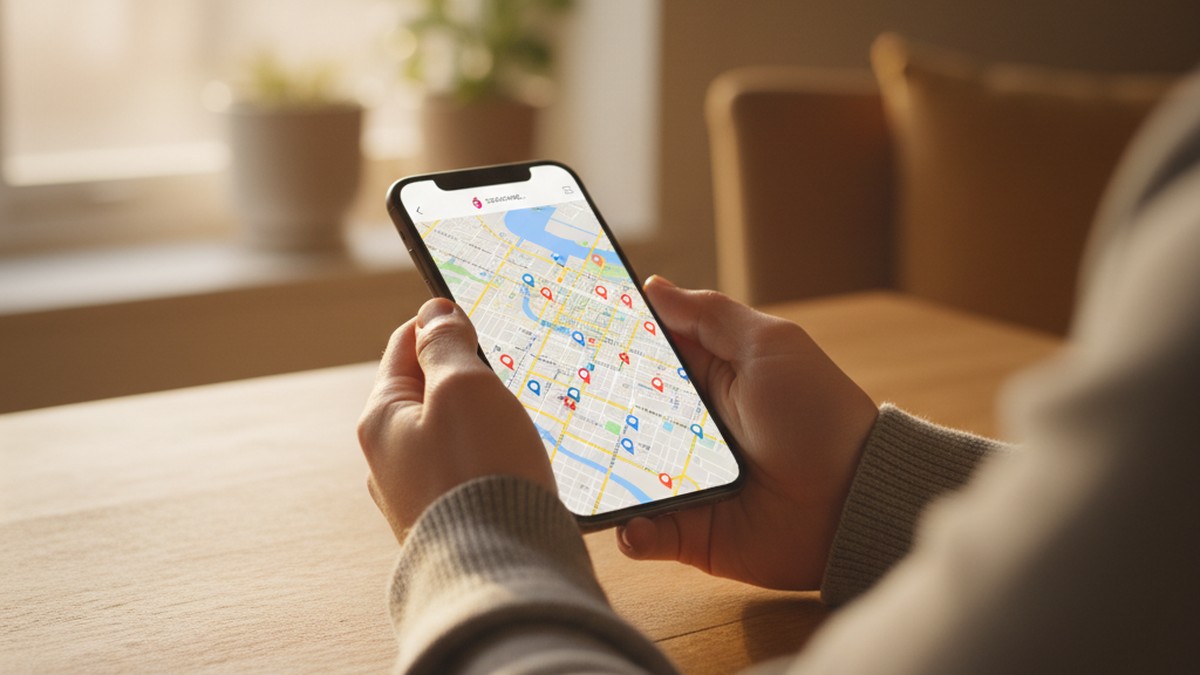
The "X miles away" display on a Memphis Tinder profile indicates how far the searcher is from where that profile was last active. If a searcher is in Downtown Memphis and a profile shows "7 miles away," it means that profile's last recorded location was 7 miles from Downtown Memphis. That location could be current — or it could be frozen from the last time the person opened the app, potentially days or weeks ago.
Tinder deliberately rounds and approximates distance to prevent precise location tracking. You will not get a street address, neighborhood name, or specific GPS pin from any Tinder profile's location display. The "distance" is useful for confirming geographic proximity but not for pinpointing where someone is right now.
The "Show Me on Tinder" Setting
Tinder's visibility toggle — "Show me on Tinder" — allows users to become invisible to other profiles without deleting their account. A user who turns this off still exists in Tinder's database and can still use the app, but they won't appear in other people's swipe queues. This setting is the most common reason a person who you know uses Tinder doesn't show up when you manually browse using Passport Mode. It doesn't remove the account — it only removes it from organic discovery queues. Database-level search tools are designed to detect accounts regardless of this setting.
What Is the Best Way to Find Someone on Tinder in Memphis?
The most reliable method is a dedicated profile search tool that queries the Tinder database directly by name, age range, and city. This returns results without requiring you to create a Tinder account, match the person, or manually swipe through hundreds of local profiles. Pairing it with a reverse image search adds a second verification layer for profiles using alternate names.
Manual Tinder browsing — even using Passport Mode from a fresh account — is limited by two fundamental constraints. First, the Tinder algorithm decides which profiles to show any given user based on that user's own profile characteristics, engagement history, and the algorithm's relevance judgments. Profiles that have been deprioritized for any reason — low engagement, newly created accounts, users with the "Show me on Tinder" toggle off — may never appear in your queue despite genuinely existing in Memphis's Tinder population. Second, manually scrolling through profiles in a metro of 600,000 people is not a targeted search: it's a haystack operation with no reliable mechanism to find a specific needle.
A database-level search bypasses both constraints. It doesn't interact with the algorithm. It queries the index directly against the criteria you provide, returning matches regardless of whether they'd appear organically in any user's discovery feed. For people who want to find out if your partner is on dating apps with any confidence, this is the starting point.
The two-method combination for Memphis:
- Primary: A name-based database search returning profile matches in Memphis and the surrounding metro
- Secondary confirmation: Reverse image search using existing photos, which catches profiles using alternate names, nicknames, or photos the person thinks aren't tied to their main identity
Method 1: Use a Dedicated Profile Search Tool
A dedicated dating profile search service queries the Tinder database directly by name, age range, and location — without requiring you to create a Tinder account or become searchable yourself. CheatScanX scans Tinder alongside Bumble, Hinge, and 12+ other platforms in a single search, returning results within minutes.
The core advantage over any manual method is what it bypasses: algorithm curation. When you search Tinder manually using Passport Mode, Tinder shows you a filtered subset of Memphis profiles — curated based on your own profile's demographics, Tinder's engagement predictions, and the algorithm's sense of "relevant" matches. A target profile that Tinder has deprioritized (for any number of reasons) may be completely invisible to your manual browsing even though the account exists in Memphis.
A database query isn't filtered by relevance. It returns what's in the index for a given set of criteria.
What You'll Need Before Running the Search
The accuracy of results scales with how much identifying information you provide:
High-value inputs:
- First and last name (as the person uses it — check their social media for the name they typically go by, since Tinder names often mirror Instagram or Facebook display names rather than full legal names)
- Age or approximate birth year (±3 years still returns accurate results for most searches)
- Photos (used for reverse image matching within the search system)
Useful supplementary inputs:
- Known email address (some search tools cross-reference account signup data)
- Secondary city if the person travels or has recently relocated
A search can run with first name and age range alone, but adding photos or a last name significantly reduces false positive matches in a city of Memphis's size.
Reading Your Results
A returned profile match is a starting point, not a conclusion. Before drawing any inference from a result, note:
- Photo consistency: Are the profile photos the same images used on their social accounts, or a separate photo set? A distinct set of profile photos — photos you don't recognize from their Instagram or Facebook — suggests a deliberate effort to maintain a separate dating identity.
- Bio content: Does the bio reflect their actual interests, job, or personality? An accurate bio indicates an active, maintained profile. A blank or generic bio may indicate a profile created and then largely abandoned.
- Platform spread: If your search covers multiple platforms and returns a match on several apps simultaneously, the activity level is harder to explain away as a dormant account.
If the search returns no result, that means either the person doesn't have an active, detectable Tinder presence in Memphis, or their account is set to fully hidden or recently deleted. A negative result is meaningful — but it isn't conclusive. The Memphis Tinder Audit framework (covered in a later section) provides context for interpreting both positive and negative results against what you know about the person's Memphis connection.
Memphis-Specific Search Tips
Memphis's geography creates one practical consideration: the metro area extends across Shelby County into suburban communities including Germantown, Collierville, Bartlett, and Cordova. A person who lives in Germantown (a separate city within the Memphis metro, population ~40,000) may have their Tinder location registered as "Germantown" rather than "Memphis" depending on how precise their GPS was when they last opened the app.
If a Memphis search returns no results, running the same search with "Tennessee" or "Shelby County" as the location parameter — rather than "Memphis" specifically — can capture profiles registered to the broader metro area. Some search tools allow a radius-based search rather than a city-specific query, which is more forgiving of the metro boundary issue.
Similarly, if the person has any connection to West Memphis, Arkansas — which sits directly across the Mississippi River and is easily accessible from Downtown Memphis — a secondary search for the Arkansas side of the metro is occasionally worth running. West Memphis is physically close but registers as a different state in location data.
Method 2: Set Up a Tinder Account With Passport Mode
Tinder's Passport Mode lets any subscriber with a paid plan change their profile location to any city globally. Setting your location to Memphis lets you browse local profiles directly within the Tinder app, without physically traveling there.
This method works as a supplementary check, but competing guides that present it as a primary discovery tool overlook three significant limitations that make it unreliable for targeted searches.
How to Use Passport Mode for Memphis
- Open Tinder and tap your profile icon (top left corner)
- Go to Settings, then scroll down to Location
- Tap Add a new location
- Search for "Memphis, Tennessee" and confirm the selection
- Tinder now displays profiles from Memphis's local pool
Passport requires a paid subscription (Tinder Plus, Gold, or Platinum). Tinder's official Passport Mode documentation has current pricing and availability.
Why Passport Mode Has Real Limitations
The algorithm problem. Setting your location to Memphis doesn't show you all Memphis profiles. You see what Tinder's algorithm decides to show based on your own profile's characteristics. A target profile that's been deprioritized — low engagement, recently created, or simply not matching your demographic filters — may not appear at all despite the account genuinely existing.
The haystack problem. Memphis has over 600,000 residents, with the 25-34 age range representing a substantial slice of the active Tinder population. Scrolling through the pool to find one specific person requires luck and patience, not reliable targeted search mechanics.
The "Show me on Tinder" problem. Any user who has turned off visibility becomes completely invisible to Passport Mode browsing. You won't find them by swiping regardless of how long you spend. A database search is the only method that can detect accounts regardless of this setting.
The exposure problem. Creating a Tinder account to search for someone means your profile now exists in Tinder's system. If your partner is active on Tinder in Memphis, your profile may appear in their discovery queue — a complication that database-level tools avoid by not interacting with the app at all.
Use Passport Mode as a secondary confirmation after a database search returns a positive match — to view additional profile details or confirm photo accuracy. Don't rely on it as your primary discovery mechanism.

Methods 3 and 4: URL Lookup and Reverse Image Search
These methods operate through different mechanisms and complement each other. Running both together catches what each one misses individually.
Method 3: Direct Profile URL Lookup
Tinder allows users to create a unique username (separate from their first-name display). If you know or can guess that username, accessing their profile requires nothing more than a browser:
`https://tinder.com/@[username]`
If the page loads and displays a profile, the account is active and publicly accessible. If it returns a blank page or error, either the username is wrong, the account is deleted, or the profile is set to private.
How to guess a username without already knowing it:
Use Google: `"[First Name] [Last Name]" site:tinder.com` — Google occasionally indexes public Tinder profiles, especially for accounts that have linked Instagram or Spotify (which creates additional crawlable content associated with the Tinder presence).
Search for their known social media username combined with "tinder." Many people reuse the same handle across Instagram, Reddit, and dating apps. If their Instagram is @jsmith_memphis, trying `tinder.com/@jsmith_memphis` takes about ten seconds and occasionally yields direct results.
Key limitation: This only works for active, publicly accessible profiles. A deleted account, a fully hidden account, or an account using a name completely unrelated to the person's real identity returns nothing. A non-result here doesn't mean the account doesn't exist — it means this specific path didn't find it.
Method 4: Reverse Image Search
Reverse image search is the method most likely to succeed when someone has taken steps to make their Tinder profile difficult to find — including cases where the account appears to have been deleted. It works because people consistently reuse the same photos across platforms, and this method doesn't depend on Tinder's database at all.
Step-by-step:
- Gather photos. Collect 3–5 clear, face-forward photos from their Instagram, Facebook, or other social media. Multiple photos from different angles improve coverage.
- Run Google Images. Navigate to images.google.com, click the camera icon, upload each photo, and review every result. Look for any link to a dating profile, an unfamiliar username, or a profile on a platform you didn't expect.
- Run TinEye. TinEye (tineye.com) uses a separate image index from Google and regularly surfaces results Google misses. Run the same photos through both tools.
- Trace unfamiliar usernames. If either search returns a photo attached to a username or profile you don't recognize, that username is worth investigating as their potential dating app identity on Tinder or another platform.
Why this works even after deletion: When a Tinder account is deleted, it's removed from Tinder's active database. But if any third-party site indexed or cached profile content while it was active — or if their photos appear elsewhere online — reverse image search still surfaces the connection. A very common pattern in practice: people use the same Instagram photos they've posted publicly as their Tinder profile photos. Those photos are just as searchable through image tools as everything else they've shared online, regardless of what Tinder's database says. Reverse image search exploits this consistency.
Methods 5 and 6: Search Operators and Local Contact Check
These approaches require less setup and work best as a final sweep after the higher-priority methods.
Method 5: Google Search Operators
Google surfaces Tinder-adjacent information in ways most people don't consider. These searches are free, require no account, and take about 20 minutes to run thoroughly.
Use these formulas, replacing bracketed sections with real information:
```
"[First Name] [Last Name]" site:tinder.com
"[First Name]" "Memphis" tinder profile
"[known social handle]" tinder
[First Name] [Last Name] tinder 2025 OR 2026
```
Google doesn't index all Tinder profiles — only those that have been publicly crawled. But for accounts that have connected Instagram or Spotify (which generates additional indexable content around the profile), Google may have cached a reference even if Tinder itself doesn't provide a public search directory.
The Instagram app connection check: If you have legitimate access to their device, navigate to Instagram settings → Security → Apps and Websites. This shows every third-party app authorized to access the Instagram account. A Tinder connection appears here if they used Instagram to sign up for Tinder or import profile photos. This requires physical access to the device — it's useful only in situations where you have that access without crossing consent boundaries.
Method 6: Ask a Trusted Local Contact
If you have a friend who actively uses Tinder in Memphis, they can adjust their discovery settings to browse the demographic likely to include the target profile. This is low-tech but occasionally confirms or rules out a result quickly.
To make this as useful as possible, give your contact specific parameters:
- Confirm their Tinder location is set to Memphis or a Memphis neighborhood
- Set the age filter to cover the target person's age ± 5 years
- Set distance to the maximum (100 miles) for broadest coverage
- Swipe right on every profile to maximize algorithm exposure
This method's core limitation: it depends entirely on the algorithm choosing to show the target profile. A deprioritized profile, a hidden account, or one set to invisible won't appear regardless of how long your contact swipes. Use it as a supplementary confirmation step, not a primary search method.
Can You Search Memphis Tinder Without an Account?
You cannot directly browse Tinder's profile database without an account. Tinder requires login to display profiles and provides no public search directory. However, third-party tools query Tinder's database by name and location without requiring you to create or log into a personal account — bypassing the algorithm and leaving no visible footprint in the process.
The distinction between account-based searching and database-level searching matters practically. When you create a Tinder account to search for someone, you generate a permanent digital record: your account requires a phone number or social media login, your profile enters Tinder's system, and your account may appear in the discovery queue of the person you're searching for. None of that is ideal when you're trying to search discreetly.
Database-level tools operate entirely outside the Tinder app. They don't require you to have or use a Tinder account. They don't interact with the app's algorithm or leave any footprint in the Tinder ecosystem. For anyone trying to find out if your boyfriend is on Tinder or a partner of any kind without tipping them off, the account-free route is the cleaner starting point.
What Account-Free Tools Can and Cannot Find
Can detect:
- Active profiles in Memphis with standard visibility settings
- Profiles with "Show me on Tinder" turned off — the account exists in the database even when invisible to organic discovery
- Profiles where the display name closely matches the name you searched, including common nickname variations
Cannot detect:
- Accounts that have been permanently and fully deleted (as opposed to paused or hidden)
- Accounts created within the past 24-48 hours (there's typically a short index delay for brand-new accounts)
- Profiles using a completely fabricated identity — made-up name, false age, and photos that have no connection to the real person — with no cross-reference to anything verifiable
For the vast majority of real searches — where you have a real name, approximate age, and city — the can-detect list covers what you're likely to encounter.
Does Tinder Show Accurate Location in Memphis?
Tinder displays the approximate location where a profile was last active, not the user's real-time GPS coordinates. A Memphis location on a profile means the person opened Tinder in Memphis — or set Memphis via Passport Mode — at some point within the past 30 days. Tinder does not display a street address, neighborhood, or precise GPS pin under any circumstances.
This creates a specific interpretation problem for Memphis searches, particularly given the city's logistics workforce. A FedEx employee based in Memphis might open Tinder from Memphis on a Monday, then open it from Louisville on Wednesday during a work trip. Their profile will show Louisville to Louisville searchers — but will still show Memphis to Memphis searchers until the Monday session ages past 30 days. The location data accurately reflects their last Memphis session, not their current whereabouts or primary dating intent.
The Passport Mode Location Variable
Tinder's official Passport feature (available to paid subscribers) allows a user to set any city globally as their profile location without being physically present. A subscriber can set Memphis as their location from New York, from London, or from anywhere else — and their profile will appear in Memphis searches, indistinguishable from someone who is physically in the city.
If your partner's profile shows Memphis but you're certain they haven't been to Memphis recently, three possibilities are worth considering:
- Passport browsing: They set Memphis manually to browse local profiles without traveling there
- Pre-travel setup: They set Memphis in preparation for an upcoming trip
- App auto-update artifact: They opened Tinder in Memphis during a past trip you may have forgotten or not known about, and the location hasn't refreshed yet
None of these can be confirmed from location data alone. The Memphis Tinder Audit framework in the next section addresses how to work through the ambiguity using multiple data points rather than a single location signal.
What Distance Figures Mean in Practice
The "X miles away" number on a Memphis Tinder profile reflects the distance between the searcher's current position and the location of the profile's last recorded Tinder session. A profile showing "4 miles away" means that profile's last recorded Memphis session placed it 4 miles from where you're currently searching.
This doesn't tell you where the person is right now. It tells you where they were — or where they set their location to be — when they last opened Tinder. These could be the same thing, or they could be weeks apart.
Why Would My Partner Have a Memphis Tinder Profile?
A Memphis Tinder profile has several possible explanations: they live in Memphis and maintain an active dating presence, they visited Memphis recently and the app auto-located there, they used Tinder Passport to browse Memphis profiles without traveling, or they have a dormant account created before your relationship that was never deleted. The Memphis Tinder Audit framework distinguishes between these scenarios.
Understanding the range of explanations matters before any confrontation. According to DoULike's infidelity statistics (2026), approximately 20% of married men and 13% of married women report having sex outside marriage. A NapLab survey of 1,649 Americans found Tennessee residents report infidelity at a rate of 41.67% — ranking 13th nationally (NapLab, 2025). These figures confirm that infidelity is genuinely common. They also confirm that the majority of Tinder profiles do not represent active deception — many are dormant accounts, casual exploration that went nowhere, or accounts from before the relationship that were never fully cleaned up.
The question isn't whether a Memphis Tinder profile exists. The question is what that profile represents. That's what the Audit addresses.
One common misconception worth addressing here: many people assume that finding a Tinder profile automatically means active swiping and messaging. This isn't accurate. A significant portion of Tinder accounts — across all cities, including Memphis — exist in a state of minimal activity. The profile was created, the app was opened occasionally, and the person never fully deleted it even after their circumstances changed. These dormant accounts outnumber actively used ones in most demographic groups past age 30. Treating every Memphis Tinder finding as evidence of active behavior, rather than running it through the Audit to assess activity level, leads to confrontations based on incomplete information.
The Memphis Tinder Audit: A 3-Step Verification Framework
A positive search result tells you a profile exists. It does not tell you what that profile means. The Memphis Tinder Audit is a structured three-step process for moving from "I found a profile" to a reasonable interpretation of what that profile represents — specifically adapted for Memphis's distinct profile composition.
Step 1: Assess Location Authenticity
The first question: is this a genuine Memphis presence or a location artifact?
Memphis's relatively low tourist volume means a Memphis Tinder location is more likely to be genuine than in a high-tourist city. But the FedEx logistics workforce and the university student population create their own location artifacts. Examine these signals:
Photos with Memphis context: Do any profile photos show recognizable Memphis locations — Beale Street, the Mighty Mississippi riverfront, Graceland, the Crosstown Concourse, Shelby Farms Park, FedEx Forum? Memphis-specific photos suggest genuine local engagement, whether as a resident or a recent visitor with real local connection. A completely generic photo set — selfies, no-location restaurant shots, stock-looking gym photos — is more consistent with either a very private user or someone maintaining a deliberately decontextualized profile.
Bio content: Does the bio reference anything Memphis-specific? Mentions of local employers (FedEx, St. Jude, AutoZone, Methodist Le Bonheur), neighborhoods (Midtown, Cooper-Young, East Memphis), local culture (Grizzlies games, Beale Street, World Championship Barbecue Cooking Contest), or Memphis references generally suggest someone with genuine local engagement. A blank bio or a completely generic bio gives less location-anchoring information.
Travel timeline alignment: Does the Memphis Tinder location align with any known travel or work routing? If you know they've been to Memphis recently for work or other reasons, a Memphis Tinder profile today could reflect that trip rather than active local dating. Memphis is on many FedEx and logistics routes, and Memphis is also a common convention destination for healthcare industry events (given the concentration of healthcare companies headquartered there).
Step 2: Cross-Reference Activity Timeline
The second question: does the profile reflect current activity or a dormant past presence?
Compare what you can see in the profile against the 30-day window:
Known Memphis visits: Can you account for any Memphis presence within the past 30 days? Work travel, a visiting friend, a family event? If a legitimate Memphis presence is identifiable within the window, the Tinder location may be an artifact of that trip rather than evidence of active local dating behavior.
Social media timestamps: Check any social media where they post location content. Instagram Stories, Facebook check-ins, or public location tags from within the past 30 days can either corroborate or contradict a Memphis Tinder location.
Flight, hotel, or expense records: For work travel specifically — relevant for the FedEx employees and healthcare workers who make up a significant slice of Memphis's adult population — expense reports, boarding passes, or hotel receipts may place someone in Memphis during the relevant window. If you have access to any of these records through shared household accounts or a joint calendar, a verifiable Memphis trip within 30 days before the Tinder location appeared can substantially change the interpretation.
Profile recency signals: Look at the photos. Are they recent photos, consistent with how the person currently looks? Or do they show an earlier version of this person — older hairstyle, visibly younger appearance, photos you recognize from several years ago? Old photos suggest a dormant or neglected account rather than an actively maintained one.
Step 3: Assess Profile Maintenance Level
The third question: is someone actively maintaining this profile, or is it largely running on autopilot?
Signs of an actively maintained Memphis profile:
- Recent photos that reflect current appearance, including photos you don't recognize from their other social media (suggesting photos taken specifically for the dating profile)
- A completed, specific bio — not generic filler, but actual specific interests, humor, or personality content that reflects thought and current engagement
- A connected Spotify account showing recent or recognizable music taste
- Multiple photos including some that appear recent
- Answered profile prompts that don't feel like they were written years ago
Signs of a dormant or semi-abandoned account:
- Photos that appear to be from a different era — visibly older appearance, old phone camera quality, backgrounds or styles that date the images
- An empty or bare-minimum bio ("Just ask :)")
- Only one or two photos total
- No connected social accounts (many old accounts pre-date the Instagram/Spotify integration era)
- The same photos they use on every other platform, suggesting no separate photo identity was created for dating
The distinction matters practically. An actively maintained profile with recent photos suggests someone currently engaging with Tinder's discovery system. A dormant account from two years ago that was never deleted is a different situation — worth acknowledging but deserving of a different conversation than an actively curated profile.
In practice, what tends to emerge from the data: Memphis profiles with high maintenance scores — recent photos, complete bios, multiple app connections — represent active users by a significant margin. Profiles showing only one aging photo and a blank bio are predominantly dormant accounts that haven't been touched since creation.

What to Do When You Find a Profile
A Memphis Tinder result creates an immediate decision point. How you proceed shapes what comes next more than the finding itself.
Document Before Doing Anything Else
The first step is preservation, not confrontation. Take screenshots of everything you found — the profile photos, bio text, username, and any visible platform connections. Tinder profiles can disappear quickly: a user who realizes they may have been found will often delete or hide their account within hours of any hint of discovery. Having documented evidence gives you a stable reference point that doesn't depend on the profile remaining accessible.
Screenshot the search result itself, not just the profile view, so you have a record of when and how you found it. Date and time stamps on screenshots can be meaningful.
Run the Memphis Tinder Audit Before Confronting
Before treating the finding as confirmed evidence of active behavior, work through the three-step Audit above. Memphis's specific profile composition — logistics workers, university employees, healthcare shift workers, seasonal students — means more plausible innocent explanations exist here than you might initially assume.
A hasty confrontation based on a misread dormant account or a work-trip location artifact rarely ends well. Taking 24 hours to cross-reference what you found against timeline, travel, and profile age produces more accurate conclusions and leads to more productive conversations.
What a Profile Does and Does Not Mean
A found Tinder profile means: this account exists in Tinder's database, it appears in Memphis search results, and it was findable using the information you provided.
A found Tinder profile does not mean: this person is currently swiping on Memphis profiles, this person has had any contact with any matches recently, or this person was in Memphis at the exact moment you ran the search.
The most significant signal is profile maintenance level. An actively maintained profile with recent photos represents substantially higher risk than a dormant account with 5-year-old photos and an empty bio. The full picture of someone's digital dating presence matters more than any single data point. If you want to check beyond just Tinder, a broader search covering the apps cheaters use gives you a more complete foundation.
Managing the Emotional Window Before the Conversation
The period between finding something and having the conversation is one of the harder parts of this process. You know something. You haven't confirmed what it means. That gap — between finding and understanding — is where anxiety tends to fill in the worst-case scenario regardless of what the evidence actually supports.
A few practical anchors for that window:
Stick to the Audit, not the story. Every piece of new context you gather during the Audit phase narrows the interpretation space. Speculation without more evidence tends to widen it. Focus on what you can actually verify: the timeline, the photo age, the maintenance level. These are answerable questions. "Does this mean they've been cheating for years?" is not, at least not yet.
Decide what you need before you ask. Before the conversation, be clear with yourself about what answer would satisfy you and what answer you can't accept. A conversation where you're not yet sure what you need tends to go sideways — the other person senses the lack of a clear question and responds defensively even when their explanation is genuine.
Consider what a non-confrontational opener looks like. Not all Memphis profile findings require an immediate direct accusation. Depending on what the Audit reveals, "I came across something online and wanted to ask you about it" is a lower-temperature opening than "I found your Tinder profile." One invites explanation; the other triggers defense. The response to the lower-temperature version usually tells you just as much.
Having the Conversation
If you've completed the Audit and concluded that what you found warrants a direct conversation, approach it with the information you have rather than the worst-case scenario you've constructed in the waiting period.
State what you found and ask what it means to them. Listen to the full response before interpreting. People with genuine innocent explanations — a dormant account from before the relationship, an old profile created during a Memphis visit that was never deleted, a platform connection they forgot was active — typically respond with immediate, unforced detail rather than pure denial. The quality and specificity of the response often carries as much information as the finding itself.
If you need to understand the full scope of someone's digital dating presence across platforms, the guide on how to catch a cheater covers a comprehensive multi-platform approach that goes beyond any single app or city.
Conclusion
A Tinder search in Memphis is achievable through multiple methods, and Memphis has an advantage over high-tourist cities: a Memphis Tinder location carries more genuine local weight than a Nashville or Las Vegas profile does. The inflated transient-visitor layer that complicates interpretation in those cities is largely absent here.
That doesn't mean every Memphis Tinder result is straightforward. The logistics workforce, annual student population, and healthcare shift workers all generate location patterns that can look like active dating behavior when they're actually work-travel artifacts or dormant accounts. The Memphis Tinder Audit framework helps you distinguish between a genuinely active local presence and a profile that needs more context before it means anything.
The most reliable combination: start with a database-level profile search for speed and accuracy, then apply the Audit for interpretation. If you want to know the full picture beyond Tinder — Bumble and Hinge both have strong Memphis user bases among the 25-34 demographic — a check for hidden dating apps on a partner's phone and a multi-platform scan give you more complete information than a Tinder-only search ever can. What you do with that information is yours to decide. But having accurate, complete data is always better than operating on a single data point. A single Tinder result in Memphis, properly contextualized, is a reliable foundation for whatever conversation comes next — and that reliability is what makes the search worth running in the first place.
Frequently Asked Questions
Use a dedicated profile search tool that queries Tinder's database by name, age, and location — faster and more thorough than creating an account and using Passport Mode. You can also try a reverse image search using photos from their social media, or Google their name with site:tinder.com. Profile search tools typically return results within five minutes.
Yes. Tinder users can toggle off 'Show me on Tinder' to become invisible to new matches while keeping their account intact. They can also use Passport Mode to make their profile appear in a different city. Neither setting deletes the account — a database-level search tool can still detect an account even when standard Tinder visibility settings are turned off.
Possibly. Tinder Passport allows any paid subscriber to manually set their profile location to any city without being physically present. If your partner's Tinder shows a Memphis location but they didn't travel there, they may have used Passport to browse local profiles — which is its own meaningful data point regardless of whether they ever visited.
Bumble has strong traction in Memphis among women in their mid-20s to mid-30s. Hinge is the fastest-growing option among Memphis's 25-34 demographic. Tinder remains the largest platform by raw user count. CheatScanX scans all three simultaneously alongside 12+ other platforms, which gives a more complete picture than checking each app separately.
Searching for a publicly visible Tinder profile by name or photo is generally legal — you're querying information the person made visible on a public platform. Legal concerns arise if you access someone's private account without consent, install tracking software on their device, or use the information to harass. For guidance specific to your situation, consult an attorney licensed in Tennessee.