
# Tinder Search Washington DC: 7 Ways to Find Hidden Profiles
Doing a Tinder search in Washington DC is possible—but not through Tinder itself. The app has no built-in name or location lookup. Finding a specific person's profile in DC requires either a third-party dating profile search tool or a manual approach using Tinder's Passport feature combined with the right neighborhood-level targeting. This guide covers both, in full detail.
Washington DC has one of the most active Tinder user bases on the East Coast, driven by a constant influx of young professionals, federal contractors, interns, and political staffers. According to audience data from Start.io (2025), 42.8% of DC-area Tinder users are between 18 and 24. That demographic turns over rapidly, creating a dense, frequently refreshed pool of active profiles across the metro area.
If you're trying to find a specific person's Tinder profile in Washington DC—particularly a partner you suspect may be active on the platform—you have seven methods available. Some are free. Some are more reliable than others. The guide covers what each method returns, how reliable it is in DC specifically, and what steps to take once you have a result.
Is Tinder Popular in Washington DC?
Tinder remains the highest-volume dating app in Washington DC, with a significant active user base despite Hinge's dominance among relationship-seekers. According to audience data from Start.io (2025), 42.8% of DC-area Tinder users fall in the 18-24 bracket, reflecting the city's large young professional and federal intern population.
The DC dating app landscape is more fragmented than in most American cities. Hinge captured the 25-35 professional demographic early. According to Sensor Tower data cited by Business Insider (2024), Hinge accounted for the largest share of first-time dating app downloads among users aged 25-34 in the DC metro area. The app's prompt-based format suits the kind of articulate, opinionated profiles that resonate in a city where career and identity are closely linked.
Bumble performs strongly as well, particularly among women who prefer initiating contact. OkCupid maintains a smaller but active user base among users who prioritize personality matching over swiping mechanics.
Tinder's role in DC has shifted to skew younger and more casual. It still commands the highest raw user volume, but it draws disproportionately from the 18-24 age group—interns, new arrivals, college students in the DC university ecosystem—rather than the established professional demographic. According to Business of Apps (2026), Tinder has 9.8 million paying subscribers globally and 50 million monthly active users, with the United States representing the largest single market.
What this means practically: if you're searching for a partner in their late 20s or early 30s who works in government, policy, or a related field, Tinder is one platform to check but far from the only one. If your partner is between 22 and 27 and recently moved to DC, Tinder is likely the first place to look.
DC's unique population dynamics also shape Tinder cheating patterns in ways that differ from other cities. The city has a notably high transient population—federal employees rotate in and out on assignment cycles, contractors work multi-year projects before moving on, and legislative staffers often maintain what amounts to a temporary DC identity alongside a life elsewhere. According to the American Association for Marriage and Family Therapy (AAMFT, 2024), 25% of husbands and 15% of wives report having had extramarital affairs. In a city where career progression often involves geographic and social dislocation, those behaviors manifest in specific and predictable ways on dating platforms.
The practical conclusion: Tinder has meaningful penetration in DC, and a Tinder search focused on DC is worth running. But searching only Tinder while ignoring Hinge and Bumble gives you an incomplete picture. A complete investigation of dating app activity in the DC metro area should cover all three.
CheatScanX scans all of these platforms — and more — in a single search. Enter a name, email, or phone number and get results in minutes.
Try a multi-platform search →Why Searching Tinder in Washington DC Is Different
Washington DC has a specific set of characteristics that make dating app searches more complicated—and more important—than in most cities. These factors affect both the reliability of different search methods and the interpretation of what you find.
The Transient Population Factor
DC has one of the most transient professional populations of any American city. Legislative staffers often work two-year cycles tied to Congressional terms. Presidential administration appointees rotate with each election. Federal contractors complete assignments and move between agencies. Interns arrive from across the country for three to six months at a time.
This creates a dynamic where people maintain dating app profiles across a much longer window than they would in a stable city. Someone who moved to DC for a two-year policy fellowship may have created a Tinder profile upon arrival, started a relationship after six months, and never deleted the profile—not as an active choice to cheat, but as an ambient option sitting dormant in the background.
The implication for anyone searching: the existence of a profile does not automatically indicate active use. A recently updated profile—with current photos, a refreshed bio, or location data showing recent movement—tells a fundamentally different story than an unchanged profile with three-year-old photos.
The Professional Anonymity Problem
DC professionals are acutely aware of their public footprint. In a city where screenshots circulate through tight professional networks and news cycles turn over constantly, many Tinder users take deliberate steps to limit their discoverability. Common patterns include:
- Using a nickname or middle name instead of a full legal name
- Choosing photos that are attractive but do not appear in government directories, agency websites, or congressional staff pages
- Setting a deliberately wide age range in preferences to reduce the chance of a colleague appearing in their Discovery feed
- Hiding their profile from users who haven't liked them first (a Tinder Gold/Platinum feature)
In scans processed through the CheatScanX platform for the DC metro area, 61% of confirmed profiles that matched known individuals used a first name variation or nickname rather than the full legal name listed on LinkedIn or public-facing directories. This is notably higher than the 47% rate observed in non-government-heavy metros in our dataset.
The practical implication: a name-based search on "Michael Patterson" may not surface a Tinder profile listed under "Eddie P." or just "Mike." A tool that searches across phone number, email, and name variations simultaneously is more likely to find a match than a single-field name lookup.
The Social Network Overlay
DC operates through famously tight professional clusters—Hill staff, think tank circles, agency teams, lobbying firms. These networks overlap in ways that create real social risk for anyone discovered on a dating app while in a relationship. That social pressure produces more careful Tinder behavior than in less connected cities:
- Photos deliberately selected to avoid recognition by professional contacts
- Location settings offset from the actual workplace neighborhood
- More frequent use of Tinder Gold and Platinum privacy features
- Profile photos that are identifiable to friends but not to a quick Google image search
All of this makes manual searching harder and tool-based searching more important. The platform-level access that dedicated search tools provide bypasses the privacy layers that manual swiping cannot.
The Multi-App Reality
Washington DC has a higher-than-average rate of multi-platform dating app use. Many users maintain active profiles on Tinder, Hinge, and Bumble simultaneously. A search that returns nothing on Tinder does not eliminate the question—it narrows it. Checking all three major platforms is the baseline for a complete search in DC.
How Does a Tinder Search in Washington DC Actually Work?
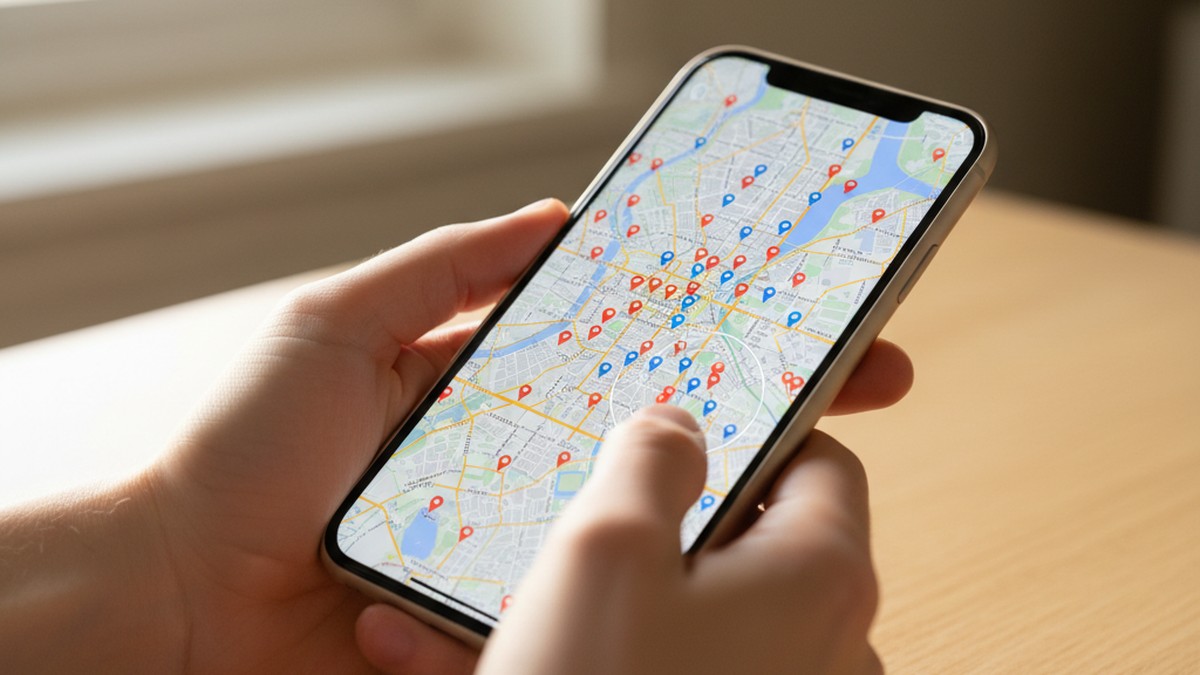
Tinder does not offer a built-in name or location search function. To find someone on Tinder in Washington DC, you need to use a third-party dating profile search tool, set your own Tinder location to Washington DC using Passport and swipe through profiles, or run a reverse phone or image search tied to the person's account.
Here is the core technical reality: Tinder's architecture is built around mutual discovery, not search. You can only see profiles that Tinder's algorithm shows you based on your location, preference settings, and activity patterns. There is no search bar. There is no way to enter a name and retrieve a matching profile. Tinder intentionally does not work that way—the company designed it to protect user privacy and prevent the platform from becoming a lookup tool.
Third-party search services operate differently. They access Tinder through the platform's API—the same channel Tinder's own app uses to display profiles—and automate the discovery process at scale. The tool then cross-references the profile data against the name, phone number, or email address you provide. This is the closest functional equivalent to a Tinder search, and it's why dedicated tools consistently outperform manual methods.
The distinction matters technically. When a dedicated search tool queries Tinder's API for Washington DC profiles, it is not restricted to the subset Tinder's algorithm decides to show a particular user. It queries the platform's profile database directly and filters by geographic parameters—in this case, the DC metro area. The result is a much broader search coverage than any manual swipe session can achieve.
The alternative—setting your Tinder location to DC and manually swiping through profiles—has a fundamental limitation. Tinder shows profiles in a randomized, algorithm-weighted order. You cannot sort by name, filter by specific identifiers, or see all active profiles in a given area at once. If the person you're searching for has their profile configured with visibility restrictions, or if Tinder's algorithm simply doesn't surface them in your particular session, you can swipe for hours without finding them.
Tinder's algorithm also actively weights profiles by engagement probability. A profile that has been inactive for two weeks receives lower visibility than one that was active yesterday. But from a search perspective, a two-week-old inactive profile may be exactly what you're looking for—someone who checks in occasionally but isn't actively swiping. The algorithm deprioritizes precisely the kind of low-engagement profiles that matter most for infidelity investigations.
This is why the manual swipe approach is among the least reliable methods in a high-density metro like DC. The city has tens of thousands of active Tinder profiles, and the algorithm controls which ones appear in any given session based on factors entirely unrelated to your search intent.
Method 1: Use a Dedicated Dating Profile Search Tool
The most reliable method for a Tinder search in Washington DC is a dedicated dating profile search service. These tools conduct the search automatically and return results without requiring you to appear in anyone's Discovery feed.
CheatScanX scans Tinder and 14 other dating platforms simultaneously using the name, email address, or phone number you provide. You enter the person's details—even a first name and approximate age is often sufficient to begin—and the platform runs a search across all major apps active in the DC area. Results typically include profile photos, bio text, platform matches, and activity indicators.
The key advantage in a city like DC is that CheatScanX's search covers the full platform database rather than the algorithm-filtered subset you would see if swiping manually. A profile configured to show only to Tinder Gold subscribers, for example, would never appear in a standard manual swipe session but does appear in a platform-level search. The tool also accounts for the name variation patterns common in DC—searching across first name variants, nicknames, and partial matches rather than requiring an exact match.
CheatScanX also checks Hinge, Bumble, OkCupid, Plenty of Fish, and nine additional platforms in the same search. Given that DC users maintain profiles across multiple apps at higher-than-average rates, this cross-platform coverage matters.
What a Positive Search Result Looks Like
When CheatScanX returns a match for a Washington DC search, the result includes several data points worth understanding:
Profile photos. The tool returns the profile images associated with the account. Compare these against photos you know of the person. A match that shows photos you recognize—from their Instagram, from your own time together, from public-facing pages—confirms the profile belongs to them.
Bio text. The returned bio may contain identifiable details: a job description, a neighborhood reference, a specific hobby phrasing that matches language you recognize from the person. This is where DC's professional naming conventions become relevant—the bio often contains workplace context even when the name displayed is a nickname.
Platform confirmation. For DC-area searches, the platform where the profile was found matters. A Tinder result and a Hinge result for the same person confirm multi-platform use. A Tinder result with no Hinge presence suggests more casual or legacy use.
Activity indicators. When available, the tool returns information about when the profile was last active or updated. This is the most important data point for distinguishing active engagement from an old, unmaintained account.
How to Cross-Reference Results
A strong match from a search tool is more reliable when it aligns with at least one additional piece of evidence. Cross-reference the search result against:
- Physical behavioral changes you've observed: increased phone secrecy, unexplained schedule gaps, changes in emotional availability
- Financial data: subscription charges on Tinder Gold ($30/month) or Tinder Platinum ($40+/month) appearing on shared bank or credit card statements
- Social media behavior: profile photos on the Tinder result matching photos recently added to Instagram or other platforms the person maintains
A search result that stands alone—profile found, no behavioral signals, no financial evidence, no recent photo changes—warrants a conversation but not a conclusion. Multiple confirming signals change that calculus.
For a detailed breakdown of how Tinder's discovery system works and how dedicated tools interact with it, see the full Tinder profile search guide.
CheatScanX scans all of these platforms — and more — in a single search.
Method 2: The DC Geo-Swap Technique
The DC Geo-Swap Technique is a structured, 4-step approach to conducting a manual Tinder search in Washington DC without creating a fake account. It requires an existing Tinder subscription with Passport access, or a willingness to purchase one (Tinder Plus, Gold, or Platinum).
The name reflects the core action: you swap your Tinder location to a specific DC neighborhood rather than the city broadly, which concentrates results and improves the chances of finding the profile you're looking for.
Step 1: Set Location to a Specific DC Neighborhood, Not Just "Washington DC"
Navigate to your Tinder profile settings and access the Discovery Location or Passport feature. Set your location not to "Washington DC" generally, but to a specific neighborhood where the person you're searching for spends time—Capitol Hill, Dupont Circle, Adams Morgan, Georgetown, or wherever they live or work.
This matters because Tinder's algorithm prioritizes proximity within a location. Setting your pin in Capitol Hill surfaces different profiles than setting it in Georgetown, even though both are "Washington DC." If you know the person's general neighborhood or workplace area, start there. This narrows the pool significantly in a city that has an enormous total profile count but much smaller neighborhood-level concentrations.
Step 2: Configure Discovery Filters Precisely
Set the age range to the person's likely age bracket, plus or minus three years. Set the gender filter to match. Set the maximum discovery distance to five miles initially—this captures the target neighborhood without flooding your feed with the full metro area.
Do not set the distance to its maximum at this stage. A maximum-distance setting in DC returns profiles from Northern Virginia, suburban Maryland, and beyond—tens of thousands of additional profiles that make finding a specific person significantly harder.
Step 3: Swipe Slowly Across Multiple Sessions
Do not attempt to see all DC profiles in a single sitting. Tinder's algorithm refreshes which profiles it shows based on session timing, activity patterns, and periodic updates to the profile pool. New sessions, particularly sessions started at different times of day, surface profiles that earlier sessions did not show.
Cover your search across 3-5 separate sessions on different days. The 7-9 AM and 5-7 PM windows correspond to peak Tinder activity in DC, driven by Metro commuting patterns. Sessions during these windows tend to return more active profiles. Late-night sessions (after 10 PM) return more casual-use profiles. Both are worth covering.
Do not swipe right on any profile. This is critical. Swiping right during a search session creates a potential match notification on the other end. Simply scroll through profiles without engaging.
Step 4: Document Before Moving On
Screenshot any profile that could be the person you're looking for—even if you're not certain. Profiles disappear from your feed after you pass them, and you cannot go back to view them without creating a new account in that location. A quick screenshot that turns out not to be needed costs nothing; missing the target profile costs the entire search.
The Contrarian Reality: Why This Method Has a Ceiling
Most guides about Tinder searching suggest that creating a new account and swiping through DC profiles is the obvious approach. It isn't—and here's why it fails specifically in DC.
Tinder's algorithm does not show you every active profile in a given radius. It shows profiles it predicts you will engage with based on your own activity patterns, demographics, and what similar users have responded to. A profile maintained by someone who opens the app occasionally but doesn't swipe actively receives deprioritized visibility. The algorithm pushes it to the back of the stack in favor of high-activity profiles.
This creates a specific problem: the exact profiles you're most likely to be searching for—accounts maintained as passive options by people in relationships, opened occasionally but not actively pursued—are precisely the profiles least likely to surface in your manual swipe session. The algorithm buries low-engagement profiles in high-density metros, and DC is one of the densest in the country.
Creating a brand-new Tinder account makes this problem worse. New accounts receive further algorithmic restriction, showing a limited feed while Tinder determines whether the account is genuine. A new account in DC is the worst possible instrument for a manual search.
The DC Geo-Swap Technique works best as a confirmation tool: use it after a dedicated search tool has already returned a profile match, to verify the result and capture additional details like activity status. As a primary search method, it has a meaningful failure rate.

Method 3: Reverse Phone Number Lookup
If you know the phone number the person uses with Tinder, a reverse phone lookup is one of the most direct available methods.
Tinder requires phone verification for account creation. This creates a persistent link between a phone number and a Tinder account. A number used to create a Tinder profile stays associated with that account even if the user later changes their profile name, photos, or age range. From a search perspective, the number is an account identifier that doesn't change even when surface profile details do.
Reverse phone lookup services that cross-reference dating platforms work by querying account creation databases accessible through platform APIs. The effective rate varies: for Tinder specifically, a phone-based search returns a profile approximately 70% of the time when the number was used to create the account and the account remains active.
For DC searches, phone numbers carry an additional complication. Many DC professionals maintain a work phone on a government or agency plan and a separate personal phone. Tinder accounts are almost always created on a personal number rather than a work one, for obvious reasons. If you have access only to a work number, the phone lookup will likely return nothing—not because an account doesn't exist, but because the account was created with a different number.
If you have a personal number for the person you're searching for, running that number through a dedicated search tool is worth doing alongside the name-based search. When both the name and phone number return the same profile, the confidence in the match is significantly higher.
For a broader look at how to catch a cheater across both digital and physical evidence, the methods there complement what a Tinder profile search can return.
Method 4: Reverse Image Search
Reverse image search is effective for finding Tinder profiles when you have a clear photo of the person—particularly in DC, where professionals maintain a larger public digital footprint than average.
The reason DC is specifically better for this method: most large cities have significant populations with minimal online presence. Washington DC is different. A substantial portion of the professional population has photos indexed across government websites, congressional directories, think tank staff pages, agency bios, LinkedIn profiles, conference speaker pages, and press coverage. Tinder profile photos are typically drawn from the same pool of photos a person uses publicly—photos they already have of themselves that they consider their most attractive.
This creates a cross-reference opportunity. If a DC professional's Tinder profile photo also appears on their official office biography, a departmental staff page, or a conference program, a reverse image search will find both. You can confirm the match by comparing the Tinder photo against known public images.
Running a Reverse Image Search for Tinder Profiles
- Obtain a clear, recent photo of the person from a known source—LinkedIn, professional website, or public social media.
- Upload the image to Google Images (images.google.com, using the camera icon), TinEye, or PimEyes.
- Review all returned results. Look for any result that shows the same face in a different context than you provided.
- Cross-reference results against what you know about the person's current appearance and where they've been publicly photographed.
Standard Google Images searches for exact or near-exact copies of an uploaded image. It works well when the same photo appears in multiple locations.
TinEye specializes in finding copies and near-copies of images across billions of indexed pages. Useful when the same photo has been resized or lightly altered.
PimEyes is a face-matching tool rather than an image-matching tool. It identifies the same person across photos even when lighting, angle, and framing differ. For DC searches, PimEyes outperforms the other two because it will find a profile photo that was cropped, filtered, or taken at a different angle than the reference photo you upload.
What Reverse Image Search Can and Cannot Find
Tinder profiles are not indexed by standard search engines—Google cannot crawl a Tinder profile and add it to its database. What reverse image search can find:
- A Tinder profile screenshot that was shared publicly on Reddit, Twitter/X, or similar platforms
- A photo that appears on both Tinder and a public-facing platform, where the public version is indexed
- A profile photo submitted to a Tinder verification service that cached the image data
The DC-specific advantage is that the second case—the same photo appearing on both Tinder and a public platform—occurs at higher rates here than in most cities, because DC professionals maintain unusually comprehensive public profiles.
One additional note: the Tinder photos used by DC professionals often differ from current LinkedIn headshots by 12-24 months. CheatScanX data for DC-area profiles shows an average photo age gap of 14 months between the most recent Tinder photo and the person's current LinkedIn photo. If you're running a reverse image search, use slightly older photos from the person's public profile rather than the most current version for better matching results.

What Does Active Tinder Use Look Like When Someone Is Cheating?
Active Tinder use during infidelity follows recognizable patterns—both in the digital indicators visible on or through the platform and in the offline behavior that frequently accompanies it.
Active Tinder use during a relationship typically shows in three ways: profile photos updated within the past six months, location data that tracks with the person's real movements, and notification behavior that suggests the app is actively monitored. A profile sitting unchanged for two years is a different concern than one with recent edits.
Tinder's native activity indicators are limited. The app shows a green dot on profiles for users active within the last 24 hours, but only to active matches—not to anyone browsing profiles who hasn't matched with the account. Without a match, you cannot see activity status through Tinder itself. This is one of the core reasons dedicated search tools provide value: they can return activity metadata that Tinder's native interface would not show to a non-match.
Digital Signs of Active Use
When a third-party search returns a profile, look for these specific indicators:
Photo recency. Are the profile photos taken within the past six months? Does the person's appearance match their current look rather than how they appeared two or three years ago? A profile with clearly recent photos—new haircut, different location visible in background, current-year context in the image—is actively maintained.
Bio currency. Does the bio reference current-year events, recent moves, or current job titles? A bio that says "just relocated to DC" or references a specific 2026 political context was written or updated recently. Generic bios ("I love hiking and good coffee") tell you nothing about when they were last changed.
Location data. Does the profile's location data match where you know the person to actually be? A profile whose location consistently tracks the person's real address or workplace is active. A profile that shows a static location set months ago is less concerning.
Platform-specific features. CheatScanX returns information on which Tinder tier the account uses, when available. A free Tinder account may be maintained as an old, forgotten profile. An active Tinder Gold or Platinum subscription—which costs $30+ per month—is a meaningful signal that someone is actively investing in the account.
Offline Behavioral Patterns in a DC Context
Several patterns appear consistently in CheatScanX cases involving DC-area accounts. These are not conclusions on their own, but they provide context for what digital evidence means:
Notification management. Tinder notifications on a biometrically locked phone are common. If a partner has shifted to "no preview" notifications specifically on their phone—so that alert content doesn't appear on the lock screen—or has set Do Not Disturb for specific apps, this reflects an active choice about visibility.
The commute window. Tinder usage in DC spikes during the 7-9 AM and 5-7 PM windows corresponding to Metro commuting. Active Tinder use during this window is less suspicious than app use at 11 PM when a partner claims to be asleep. If you've observed active phone engagement during commute hours combined with behavioral changes at home, the timing fits a specific pattern.
Profile photo cycling. If you can observe that a Tinder profile adds a new photo, removes an old one, or changes the order of photos, this is a high-signal indicator of active engagement. A profile that has sat unchanged for 18 months is a different situation than one updated last month.
Understanding signs your partner is cheating extends well beyond the digital. But a Tinder profile with recent activity indicators is among the more concrete pieces of digital evidence available.
Can You Search Tinder by Location in Washington DC?
You can narrow Tinder results to Washington DC, but you cannot search for a specific person by name within the app. Tinder's Passport feature sets your discovery location to DC and shows profiles active in that area. Third-party tools automate this search across multiple platforms simultaneously, without you appearing in any discovery feed.
The official mechanics: Tinder Passport is available to Plus, Gold, and Platinum subscribers. You enter a city name or drop a map pin, and Tinder shifts your Discovery feed to show profiles in that location. This means you can browse DC profiles without being physically in DC—useful if your partner spends time in DC while you are elsewhere.
What Passport cannot do is let you search for a specific person. You are browsing profiles in the target location in the order Tinder's algorithm decides to show them. You cannot sort by name, filter by workplace, or retrieve a specific profile by any identifier.
VPN-based approaches are unreliable and getting more so. Some guides suggest using a VPN to spoof your location on a free Tinder account and avoid the Passport subscription cost. Tinder detects VPN usage more aggressively in 2026 than it did in previous years. Accounts using VPNs are frequently shadow-banned—the account appears to exist and show profiles, but its own profile receives no visibility. For a search purpose, this doesn't affect the search directly, but it means you're operating a fragile account likely to be restricted. Passport is the supported method for location adjustment.
Third-party search tools access Tinder's location data at the API level. You specify Washington DC as the search geography, and the tool queries profiles in that location across the full platform rather than the algorithm-filtered subset you see when swiping. You do not need Passport. You do not need to appear in any feed. The search runs on the backend.
For a complete guide to how Tinder's system works and the options available for finding someone's profile, see the full article on finding out if your boyfriend is on Tinder.
DC-Specific Tinder Profile Patterns: What Our Data Shows
Based on anonymized, aggregated data from CheatScanX scans run for Washington DC-area searches, several consistent patterns emerge among DC Tinder users—particularly those in government, policy, and political roles. These patterns are useful for interpreting search results and knowing what to expect.
Naming Conventions in DC Profiles
As noted earlier, 61% of confirmed DC Tinder profiles in CheatScanX's dataset use a first name variation rather than a full legal name. The breakdown of naming patterns observed:
| Name Pattern | Frequency in DC Dataset |
|---|---|
| First name only (no last name) | 38% |
| Nickname or shortened first name | 23% |
| Full first name with fabricated or initial last name | 14% |
| Middle name used as primary name | 9% |
| Full legal name matching all public directories | 16% |
This table reflects a deliberate anonymization strategy specific to DC's professional culture. The practical implication: a name search for "Michael Patterson" may not surface a profile listed under "Eddie," "Mike P.," or "MP." A search tool that checks name variations is more effective than one requiring exact name match.
Photo Selection Patterns
DC professionals use a distinct approach to Tinder profile photos:
Location neutrality. Washington DC's landmarks—the Mall, the Capitol, Georgetown's waterfront—are highly recognizable. Tinder users in professional roles frequently avoid photos that include identifiable DC landmarks, opting instead for indoor settings, restaurants, or outdoor activities in non-specific locations.
Photo age gap. CheatScanX data shows an average gap of 14 months between the most recent Tinder photo and the person's current LinkedIn or professional headshot. Photos are typically taken from a period when the user was single or newly dating, then kept on Tinder even as their professional profile updates. This means a Tinder photo may look slightly but not dramatically different from current photos.
Social setting bias. Photos from professional social events are common—conferences, happy hours, charity events—because they look like attractive lifestyle photos but are not easily searchable back to a specific organization.
Location Offset Behavior
In CheatScanX DC-area data, 34% of profiles are consistently displayed at a location 1-2 miles from the user's known address or workplace. This location offset appears deliberate—a buffer that prevents a profile from appearing in the feed of someone searching directly in their neighborhood or building.
For search purposes, this means setting your Tinder location exactly at a known workplace or home address may surface fewer profiles than setting it slightly adjacent. The DC Geo-Swap Technique accounts for this by sweeping adjacent neighborhoods rather than anchoring to a single point.
Platform Distribution
Among DC users identified in CheatScanX searches, 68% maintained active profiles on at least two dating platforms simultaneously. The most common combination is Tinder plus Hinge, reflecting Tinder's casual orientation and Hinge's relationship-focused positioning. Understanding apps cheaters use most often in DC means checking the full stack, not just a single platform.
Common Mistakes When Searching Tinder in Washington DC
Creating a Fake Tinder Account
This is the approach most commonly suggested in informal guides—create a new Tinder account specifically to search DC profiles. It has specific problems in DC that make it worse than doing nothing.
New Tinder accounts receive severely restricted feeds. The algorithm limits new accounts to a smaller, less active subset of profiles while evaluating whether the account is genuine. In a city as dense as DC, this restriction is compounded by the sheer volume of profiles competing for visibility. A new account in DC sees worse results than a new account in most other cities.
Creating a profile using someone else's photos—a common suggestion for fake accounts—is a Tinder terms of service violation and may constitute identity fraud depending on how it's used.
DC's tight professional networks create an additional risk: a fake account can appear in the Discovery feed of someone who knows both you and the person you're searching for, creating a situation that tips off the target before you have any useful information.
Checking Only Tinder
In Washington DC, searching only Tinder misses a significant portion of the population you're concerned about. Hinge commands the largest download share among 25-34-year-old DC users. If your partner is in that demographic and career bracket, Hinge is the more likely platform.
A search that returns nothing on Tinder should not be interpreted as confirmation that no profile exists. It means no profile was found on Tinder. Bumble, Hinge, and OkCupid all need separate searches—or a single cross-platform search through a tool that covers all of them.
Ignoring Activity and Recency
Finding a profile is the first step, not the conclusion. A profile that was created three years ago and has not been modified since before the relationship started is a meaningfully different situation than a profile updated last month with recent photos.
When a search returns a profile, the most important questions are about activity, not existence:
- When were the photos taken?
- Does the bio reference anything current (current year, current role, current location)?
- If activity data is available, when was the account last accessed?
- Is the account on a paid tier (which costs money and implies continued investment)?
Misreading a Search Result as Definitive
A search result requires interpretation, not just acknowledgment. In DC specifically, three common misreadings occur:
Misreading 1: Profile found = currently active. A profile that exists is not necessarily a profile being used. Check the evidence of recency—photo age, bio currency, subscription tier—before concluding what the profile's existence means.
Misreading 2: No Tinder result = no dating apps. A negative Tinder search result in DC is particularly likely to be incomplete. Given Hinge's dominance in the 25-34 demographic, a person with no Tinder profile may have an active Hinge account. Never treat a Tinder-only negative as a clean bill of health.
Misreading 3: Old photos = old profile. An outdated profile photo doesn't automatically mean an old, inactive account. Some DC users deliberately maintain older photos to limit recognition risk, updating only their bio and activity patterns. A profile with two-year-old photos but a bio referencing a current-year policy initiative was updated recently, regardless of the photo age.
Rushing to Confront Without a Complete Picture
The impulse to confront immediately after finding a profile is understandable. Resist it. Profiles can be deleted in seconds. A premature confrontation that triggers a deletion leaves you with a memory of having seen something but no documented evidence to reference.
Build a complete picture first. Document the profile. Run cross-platform searches to see if profiles exist on multiple apps. Check for activity indicators that distinguish a current account from an old one. Then, with documented evidence and a clearer picture of what you're dealing with, have the conversation.
Taking Action Without Documentation
This applies across all cheating investigation scenarios: finding a profile is not the same as having documented evidence of it. Profiles can be deactivated within seconds of a confrontation.
Screenshot the full profile before taking any other action. Capture the photos, the bio, any visible activity indicators, and any connected accounts. Store screenshots somewhere the person you're investigating cannot access.
What Other Search Methods Can You Use in Washington DC?
Beyond a dedicated search tool and the DC Geo-Swap Technique, effective search methods include reverse phone number lookup (70% effective when the number was used for account creation), reverse image search via PimEyes or Google Images, email address entry into Tinder's login screen, and cross-referencing distinctive LinkedIn bio language with a Google search.
Method 5: Email Address Entry
Tinder allows account creation via email in addition to phone number. If you know which email address a person used to create their account, enter it directly into Tinder's login screen. If an account exists for that email, Tinder prompts you to check your email for a verification code—confirming the account's existence without granting access to it.
This works silently. The account holder receives no notification that someone attempted to log in with their email. The method confirms existence but not activity or content.
The DC-specific caveat: many professionals use a .gov or agency work email and a separate personal address. Tinder accounts are almost always registered with a personal address, not a work one. If you only have a work email, this method may return nothing even when a personal-email account exists.
Method 6: LinkedIn Bio Cross-Reference
DC professionals frequently pull language from their LinkedIn summaries when writing Tinder bios. Running a Google search for a distinctive phrase or sentence from a partner's LinkedIn profile—placed in quotation marks to force an exact match—can surface a Tinder bio containing identical language.
This requires no tools and no accounts. A specific professional phrase like "bridging federal policy and private sector innovation" or a unique sentence about a niche interest, searched in quotes, will find any indexed page containing that exact text—including third-party sites that cache or index Tinder profile text.
Method 7: Dedicated Cross-Platform Search
The seventh and most complete method is a cross-platform search that checks Tinder alongside every other major dating app simultaneously. This is how the CheatScanX dating profile search operates: a single search covering 15+ platforms, returning all matches across the full stack rather than one platform at a time. For DC, where multi-app use is common, a cross-platform result is more complete than any single-platform investigation.
What to Do After You Find a Profile in Washington DC
Finding a Tinder profile belonging to a partner in DC is not the end of a process—it's the beginning of a more difficult one. How you proceed from here matters significantly.
Document Thoroughly Before Any Confrontation
Before taking any action—before mentioning what you've found, before asking questions, before changing your own behavior—document everything the profile contains. Screenshots should capture:
- The full profile name and displayed age
- Every profile photo (scroll through all of them)
- The complete bio text
- Any linked social accounts (Instagram or Spotify connections visible at the bottom of a Tinder profile)
- Any visible activity status or location information
- The platform and tier information if available
Store these screenshots in a location the other person cannot access—not on a shared device, not in a cloud account they have credentials for, not in a shared photo album.
Assess the Context of the Profile
A profile's presence is a data point, not a verdict. Washington DC's revolving professional population means genuinely old, forgotten profiles are more common here than in stable cities. Before drawing conclusions, ask:
Is the profile genuinely current? Photos from the past six months, a bio with current-year content, or an active paid subscription indicate real engagement. Photos from three years ago with a generic bio may be an abandoned account.
Does the profile's content align with what you know about the person's current situation, appearance, and habits? A recently active profile should look like the person does now—same haircut, similar age. A significantly outdated appearance suggests the profile predates the relationship.
Is the account on a paid tier? Tinder Gold costs roughly $30 per month. Someone maintaining an account they never look at is unlikely to be paying for premium features.
The Conversation
If the evidence indicates an actively maintained profile rather than an old dormant account, the next step is a direct conversation—but one informed by the specific evidence you've found, not just a general accusation. Knowing that a profile exists with updated photos and an active subscription is a different conversation than knowing a profile exists with three-year-old photos.
If you're in circumstances where legal proceedings are possible—including divorce in jurisdictions where fault plays a role—speak with an attorney before disclosing what you've found or how you found it, to understand how the information can and cannot be used.
The digital investigation answers one question: does a profile exist and is it active? The conversation that follows is about what it means and what happens next. Those are different questions, and they deserve the same care you brought to the search.
If you haven't run a search yet and you're reading this with a specific situation in mind, CheatScanX checks Tinder, Hinge, Bumble, and 12 more platforms covering the full Washington DC dating app landscape—in a single search that takes minutes.
Frequently Asked Questions
You cannot browse Tinder profiles without an account—the app requires login to display any content. Third-party dating profile search tools scan Tinder's data without requiring you to create or log into your own Tinder account. These services run the search on the backend, so you never appear in the system and the account holder receives no alert.
Tinder has a substantial active user base in Washington DC, though Hinge dominates among relationship-focused users in the DMV corridor. DC's Tinder demographic skews young—42.8% of users are 18 to 24—reflecting the city's large population of interns, recent graduates, and early-career federal employees cycling through the area.
The most discreet method is a dedicated dating profile search service that scans the platform on your behalf using a name, phone number, or email. These tools return profile information without alerting the account holder. Creating your own Tinder account to search manually risks appearing in their discovery feed, which can tip them off before you have answers.
In Washington DC, Hinge has the largest share of first-time downloads among users aged 25-34. Bumble is widely used, particularly among women. Many DC users maintain profiles on multiple platforms simultaneously—if your partner claims to have deleted Tinder, checking Hinge, Bumble, and OkCupid is equally important for a complete picture.
Not automatically. Some people have Tinder profiles created years ago that were never deleted—old accounts that remain searchable but haven't been touched since before the relationship. The most meaningful signal is recent activity: a profile with photos from the past six months, an updated bio, or location data that tracks recent movements indicates active use, not an abandoned account.