
# Find Someone on Tinder by Phone Number (2026)
You can find someone on Tinder using their phone number — but not the way most guides describe it. Tinder has no built-in search bar, and a direct phone number lookup inside the app is impossible. What does work is understanding how Tinder's mandatory phone verification creates an indirect digital trail, and which search approaches tap into that trail without requiring access to the other person's device.
If you're worried your partner has an active Tinder profile, the uncertainty itself is often the hardest part. Tinder has 75 million monthly active users globally (DemandSage, 2025), with the average user logging in 11 times per day — activity that can remain completely invisible to a partner who never thinks to check.
This guide covers six methods in practical order, from fastest to most thorough, including three that work with no access to their device. Each section covers how the method works, where it falls short, and how to read what you find. The final section addresses what to do once you have results.
Before you start: phone number searches are typically not the most reliable first step. There is a faster, more accurate approach — and knowing which method fits your situation before you begin saves significant time and avoids the risk of a false negative.
Why Does Tinder Require a Phone Number?
Tinder made phone number verification mandatory for all new accounts in 2022, replacing the previous Facebook login requirement. The purpose was to reduce fake account creation at scale: phone verification ties an account to something that can only be controlled by one physical person at a time — whoever receives the SMS code.
The result: every active Tinder profile is linked to a real phone number. That link exists in Tinder's backend database even though it never appears anywhere on a user's public profile. You won't see a phone number on someone's Tinder bio, in their photos, or in their messages. The connection is invisible to other users but persistent in the system.
What this creates for investigations:
The phone-to-Tinder link is real but indirect. Third-party services cannot query Tinder's private database — they have no access to it. What they can do is cross-reference their own aggregated databases against the phone number you provide, checking whether that number appears in any record associated with a known Tinder account. The quality of results depends entirely on how complete and how recent that external database is.
This distinction matters enormously. A service claiming to "search Tinder by phone number" is not accessing Tinder's private records. It is checking its own data set — a collection of profile information gathered from public sources, opt-in partnerships, and data linkages across platforms. A phone number that appears in those records will return a match. One that doesn't appear, for whatever reason, will return nothing, even if the account exists.
How Tinder handles phone number data:
According to Tinder's privacy policy, updated April 4, 2026, phone numbers collected during registration are used for account identity verification and security. When users enable the Friends in Common contact sync feature, their phone contacts are converted to cryptographic hashes before being checked against Tinder's user database — meaning the raw numbers are never stored or exposed through that feature. The registration phone number, however, remains associated with the account for login and verification purposes throughout the account's life.
The practical takeaway:
Phone number verification created a link between every Tinder account and a real-world identity anchor. That link can be used indirectly — through database cross-referencing, contact sync features, and social media footprint analysis — but not through a direct lookup. Understanding this architecture before you start prevents frustration with methods that return no results for reasons unrelated to whether the account actually exists.
CheatScanX scans all of these platforms — and more — in a single search. Enter a name, email, or phone number and get results in minutes.
Try a multi-platform search →Can You Search Tinder Directly by Phone Number?
Tinder has no built-in search function and no phone number lookup tool. However, because every Tinder account requires phone verification, the number creates an indirect link that three types of search methods can exploit: dating profile scanners, contact sync analysis, and cross-platform social matching — all without accessing Tinder's private database.
Open any version of the Tinder app on any subscription tier and you will not find a search bar. There is no way to type a name, a phone number, an email address, or any other identifier and pull up a specific profile. Tinder was deliberately designed this way. The swipe mechanic is the core product experience, and a searchable directory would undermine both the product design and the privacy expectations users bring to the platform.
Why the app works this way:
Tinder's business model depends on the swipe experience. Every interaction — the match reveal, the conversation prompt, the anticipation of a Like back — is engineered around the swipe. A search function would convert a curated experience into a people-lookup tool, which is both a product regression and a significant safety risk: it would enable targeted harassment, stalking, and profile identification without consent.
What the absence of search means for you:
You have to work around the design through indirect pathways. There are three of them:
- Database intersection: Third-party services maintain records of dating profile data collected from public sources over time. They cross-reference a submitted phone number against those records to find associated profiles.
- Native platform probing: Tinder's own contact sync feature creates a phone-linked connection layer within the app's infrastructure. With an active Tinder account, you can probe whether a specific number is associated with a registered user.
- Cross-platform digital footprint: A phone number typically connects to a broader digital identity — social media profiles, photos, usernames — that overlaps with observable Tinder profile content.
These three pathways form the Three-Layer Phone Trace Method described in the next section, and they are the basis for all six practical methods in this guide.
What Is the Three-Layer Phone Trace Method?
Treating "find someone on Tinder by phone number" as a single action misrepresents how this investigation actually works. The phone number is a starting point — an identifier — not a direct search key. Getting reliable results requires working through three distinct layers, each compensating for the limitations of the others.
Layer 1: Database Intersection
Third-party scanning tools maintain aggregated databases of dating profile data collected from public sources, data partnerships, and pattern matching across platforms. When you submit a phone number, the tool checks whether that number appears in any record linked to a known Tinder account. A positive result means the number was associated with a profile at some point in that tool's database history.
The limitation: database recency. Records are a snapshot of some point in time. A hit from a database scan may reflect a current active account, or it may reflect a profile that was deleted 14 months ago. Without an active-status indicator, you cannot tell which it is from the result alone.
Layer 2: Native Platform Probing
This layer uses Tinder's own infrastructure — specifically the contact sync and Friends in Common features. By adding the target phone number to your device contacts and syncing with Tinder through an active account, you can check whether Tinder recognizes that number as belonging to an active user who has also enabled contact syncing.
The limitation: opt-in requirement. Both parties must have contact sync enabled for this pathway to produce a signal. If the person you're investigating has disabled contact sync — which anyone who wants to remain undiscoverable would do — this layer returns nothing. Its absence is informative, but not conclusive.
Layer 3: Cross-Platform Footprint
A phone number rarely exists in isolation. Most numbers are linked to a name, possibly social media accounts, email addresses, or usernames that appear across multiple platforms. Photos used on social accounts often reappear on Tinder profiles. Usernames used on one platform recur on others. Cross-referencing the phone number's broader digital footprint against observable Tinder profile data creates a multi-signal confirmation.
The limitation: time and investigative effort. This layer takes 15-30 minutes rather than 2-3, and requires following chains of associated accounts.
Why using all three layers matters:
Layer 1 is fast but may be outdated. Layer 2 is native but requires both parties to have opted in. Layer 3 is comprehensive but time-intensive. Used in sequence, each layer either confirms or casts doubt on what the previous layer found. A positive finding that appears across all three is far more reliable than a single database hit from Layer 1 alone. A negative result from Layer 1 followed by a positive from Layer 3 tells you the profile exists but isn't indexed in that particular database.

Method 1: Dating Profile Scanners with Phone-Linked Data
The fastest starting point is a dedicated dating profile scanner — a service built specifically to find active profiles on Tinder and other dating apps by cross-referencing multiple data sources.
These tools accept multiple input types: first name plus city, email address, photo, or phone number. The phone number pathway works by checking whether that number appears in the tool's database linked to an email address, username, or social account that has been previously associated with a dating profile.
Step-by-step:
- Choose a scanner that shows you actual profile data — photos, bio text, and ideally a last-active timestamp. Avoid tools that only return a "found / not found" binary without supporting evidence. You need to be able to verify the match is actually the person you're searching for.
- Enter the phone number as the primary input. If the tool accepts additional fields, add the first name, approximate age, and city. More input signals produce fewer false positives.
- Review the result carefully. A database match means the number was associated with a dating profile in that service's historical records. It does not confirm the profile is currently active.
- If the phone number returns no results, try the email address associated with that number instead. Phone numbers are never publicly visible on dating profiles, so they're harder for external databases to index directly. The email registered to that phone number — which often appears on social accounts — is typically better indexed.
The accuracy limitation most services won't acknowledge:
Phone-number-specific searches carry a higher false negative rate than location-based name searches for detecting active profiles. The reason is structural: Tinder never exposes phone numbers publicly, so aggregators must infer the phone-to-profile connection through indirect linking. A phone number must first be associated with an email address or username that then appears on a dating profile — two inference steps, each introducing potential gaps.
Based on CheatScanX scan patterns, profiles discovered through phone-linked database hits show older average last-active timestamps than profiles discovered through real-time location-based scanning. This suggests database-indexed phone records lag behind current activity by weeks to months.
Use this method as a first filter, not a final answer. A positive hit warrants confirmation through Layer 2 or Layer 3. A negative result means the phone number isn't indexed in that database — not that the person isn't on Tinder.
For results that span 15+ platforms simultaneously without depending on phone number database coverage, CheatScanX runs a real-time name-and-location scan that typically returns results in under two minutes.
Method 2: Tinder's Contact Sync Feature (The Native Approach)
Tinder has built-in features that create phone-linked connection data within its own infrastructure: Friends in Common, which shows mutual contacts between users, and Block Contacts, which prevents specific phone numbers from seeing a profile. Both work through contact list syncing and can be used strategically.
How contact sync works technically:
When you grant Tinder access to your phone's contact list, the app reads every phone number stored there and converts each one to a cryptographic hash — a string that cannot be reversed to recover the original number. Tinder then checks those hashes against its registered user database. For users who have enabled Friends in Common, matches between hashed contacts and registered users create a mutual connection record visible to both parties.
How to use this method:
- Add the phone number you want to investigate to your device's contact list under any name.
- Create or use an existing Tinder account set to the same geographic area as the person you're investigating.
- Navigate to Tinder settings and enable Friends in Common, or the equivalent contact sync option in your region. Grant Tinder access to your phone contacts.
- Swipe through profiles with age and location settings that match the person. If the number you added belongs to an active Tinder user who has also enabled contact sync, their profile may surface in your deck with a "Friends in Common" indicator.
What to do if the profile doesn't appear:
If you can't find the profile through swiping after adding the number — even with correctly set location, age, and gender filters — consider Block Contacts as an explanation. If the person has added your phone number to their Tinder block list, your account won't see their profile in the swipe deck at all.
You can test for this: create a second Tinder account associated with a phone number they wouldn't recognize and search the same area with the same filters. If their profile appears on the new account but not on your original one, a targeted block is confirmed. Someone who has proactively blocked a specific contact from seeing their Tinder profile has taken a deliberate step to avoid discovery — that intent is itself meaningful.
The core limitation:
Friends in Common is opt-in and not universally available. If the person has disabled contact sync — or never enabled it — Layer 2 returns no signal. Their absence from your swipe deck through this method doesn't confirm they're not on Tinder. It only means this pathway produced no data for that specific configuration. Combined with Layer 1 and Layer 3, the absence becomes more or less significant depending on what the other layers return.
Method 3: Reverse Phone Lookup Combined with Social Cross-Reference
A phone number rarely exists in isolation. Most numbers are connected to a broader digital identity: a confirmed name, linked social media accounts, email addresses, or usernames that appear consistently across platforms. Using the phone number to build a profile identifier set — and then cross-referencing that set against observable Tinder data — is often more reliable than a direct phone number database search.
Step 1: Run a reverse phone lookup
Reverse phone lookup services can return the name registered to a mobile number, the carrier type, and sometimes linked social media handles or email addresses associated with that number. Mobile numbers that have been used for app registrations or social media sign-ups typically have more associated data in these databases than VoIP or prepaid numbers.
If the lookup returns a name, that name — combined with the city you already know — becomes your primary input for the searches in Step 3. If the lookup returns linked social accounts, you now have a second layer of identifiers.
Step 2: Build a profile identifier set
From the reverse lookup results, compile every identifier you can find: confirmed first name, any username variants that appear across platforms, linked social media profiles, email address format. If you already know the person personally, you likely have a confirmed name and approximate age — use the reverse lookup to find any online handles associated with their number that might carry over to dating profiles.
Step 3: Cross-reference against observable Tinder data
With the identifier set in hand:
- Run a search for their Tinder profile by name using the confirmed first name, their city, and the appropriate age range.
- Upload photos from their linked social accounts to a reverse image search tool. You're looking for the same photos appearing on a dating platform profile.
- If a consistent username appears across their social accounts, check Tinder manually for a profile bio containing that handle.
When the reverse lookup returns nothing useful:
Some phone numbers — particularly newer numbers, prepaid lines, or numbers registered with privacy-focused carriers — have minimal records in reverse lookup databases. If you hit this wall, skip to Method 4 (photo-based reverse image search). Photos pulled from any shared communication or their social accounts are more reliably indexed than phone numbers, and they anchor to profile content directly rather than through an indirect data linkage.
Why cross-referencing produces stronger evidence than phone-only searches:
A phone number gives you one data point. Cross-referencing it against a social media footprint gives you multiple corroborating signals at different freshness levels. A name match on a location-based Tinder search, confirmed by a matching profile photo, is substantially harder to dismiss than a single ambiguous database hit. And unlike phone-indexed database records, social media photos and public profile information update in real time — you're seeing current content, not a six-month-old snapshot.
Method 4: Photo-Based Reverse Image Search
If you have photos of the person — saved from their phone, pulled from their social accounts, or received in messages — reverse image search is one of the most reliable ways to find a matching Tinder profile. Tinder requires photos on every profile, and most people use the same photos across multiple platforms: their Instagram, Facebook, WhatsApp profile picture, and dating profile.
Choosing the right photo for best results:
Use a clear, face-forward photo with good lighting. Avoid group photos, heavy filters, or heavily cropped images — they reduce match accuracy significantly. The most effective photos are ones the person has used consistently across multiple platforms over an extended period, because those are most likely to be indexed in reverse image databases.
Photos that appear on someone's Instagram as posts, rather than just stories, are better candidates than stories content because they're indexed by search engines. Profile photos that have been the person's picture for years are especially well-indexed.
Running the search across multiple tools:
No single reverse image tool has complete coverage. Running the same photo through multiple services increases the probability of surfacing a match. Some tools specialize in social media profile matching; others index news, public records, or general web content. For a dating profile investigation, prioritize tools that specifically index social and dating platform content.
What a match looks like:
You're looking for the same photo — or a crop, filter variant, or slightly different framing of the same underlying image — appearing on a Tinder profile card. Common findings include:
- A headshot from the person's Instagram appearing on a Tinder profile with only a first name.
- A photo used as a Facebook profile picture appearing on a Tinder profile with different listed interests.
- The same underlying photo appearing across multiple dating app profiles simultaneously, which suggests active multi-platform use.
Why this method outperforms phone-number database searches for current activity:
Photos are publicly visible on profiles. Reverse image databases can index them directly from any platform that permits public profile viewing. Phone numbers, by contrast, are never publicly visible on any dating profile — they can only be linked indirectly through associated account data. As a result, photo-based searches return higher coverage of recently active profiles than phone-indexed database lookups.
From CheatScanX scan data, photo-based confirmation is the most reliable secondary verification step after an initial database hit. When a database search returns a potential match but profile details are sparse, confirming through photo matching typically resolves ambiguity faster than any other method.
This method requires no access to their phone and no Tinder account. Any photo you have access to from shared communication or their public social presence is a valid starting point.
Method 5: Manual Tinder Search with Precision Location Settings
Creating a Tinder account and swiping manually is more targeted than it sounds. With precise settings, you can narrow the profile pool significantly — sometimes to the point where you'll swipe through the entire available deck for a specific demographic in a defined area within an hour.
Setting up a precision search:
- Set your GPS pin precisely. You can manually adjust your Tinder location to a specific address rather than your actual current location. Set it to the neighborhood or area where the person you're searching for spends the most time — their home area, workplace neighborhood, or city center. If the reverse phone lookup gave you any location data, use it here.
- Apply tight demographic filters. Set the age range to ±2-3 years of the person's actual age. Select the correct gender filter. The tighter these filters, the smaller the total swipe pool.
- Set a reasonable search radius. A 5-mile radius from the correct neighborhood pin covers most scenarios for someone who lives or works in that area. Broaden it if you're in a lower-density area.
- Swipe systematically. Work through all profiles in the filtered pool. In smaller cities or with tight demographic filters, you can exhaust the available deck in 30-60 minutes. In major metropolitan areas with a broad age range, this can take several hours.
What it means if you don't find them:
After exhaustive swiping within the correct location and demographic, possible explanations for a missing profile:
- They don't currently have an active Tinder account.
- Incognito Mode is hiding their profile (you'd only see it if they've already liked you).
- Their location is set to a different area than expected.
- The account is currently paused.
- They've specifically blocked your phone number through Block Contacts.
If you suspect Incognito Mode or a targeted block, the same test from Method 2 applies: create a secondary account with an unfamiliar number and repeat the search. A profile that appears on a new account but not your established one confirms a targeted block.
The key advantage of this method:
You're seeing live, current Tinder inventory — not a historical database record. If you find their profile through manual swiping, you're seeing exactly what other Tinder users in that area see right now. That real-time confirmation has a different quality than a database hit that could be weeks old.
For a faster approach to this same real-time confirmation without creating a Tinder account yourself, a dedicated scanner that checks whether your partner is on Tinder through live profile scanning covers this layer automatically.
Method 6: Multi-Platform Profile Scanning
The most thorough approach — and the one that addresses a fundamental gap in all phone-number-specific methods — is a scan that covers multiple dating platforms simultaneously rather than Tinder alone.
Why single-platform searches miss activity:
Someone actively using dating apps rarely limits themselves to one platform. Based on CheatScanX's anonymized aggregate scan data, users with an active Tinder profile are simultaneously active on an average of 2.3 other dating platforms. Searching Tinder in isolation produces accurate results for Tinder — and leaves everything else invisible.
Platform migration also occurs. Someone who suspects their Tinder activity might be monitored may shift primary use to Bumble, Hinge, or a less well-known platform that feels less scrutinized. A Tinder-only search won't catch that shift. A multi-platform scan will.
How multi-platform scanning handles the phone number challenge:
Effective multi-platform scanners don't rely on phone-indexed database coverage. They use a name, age, and location approach that searches active profiles in real time across many apps simultaneously. This bypasses the data freshness problem that affects historical database records.
The input is minimal: first name, approximate age, and city. The scan cross-references active profiles across Tinder, Bumble, Hinge, Match.com, and a dozen or more other platforms, returning any matches with profile photos, bios, and last-active timestamps where the platform makes that data accessible.
What this approach finds that phone-specific searches often miss:
- Profiles on platforms where the phone number isn't indexed in any external database.
- Active accounts created recently, after the last database sync.
- Primary activity on less-scrutinized platforms the person considers safer.
- Multiple simultaneous profiles confirming a pattern of active searching across apps.
If you've already run a phone number database search and received no results, a multi-platform real-time scan is the next logical step. It covers the gap left by database limitations by checking what's actually visible right now rather than what was recorded sometime in the past.
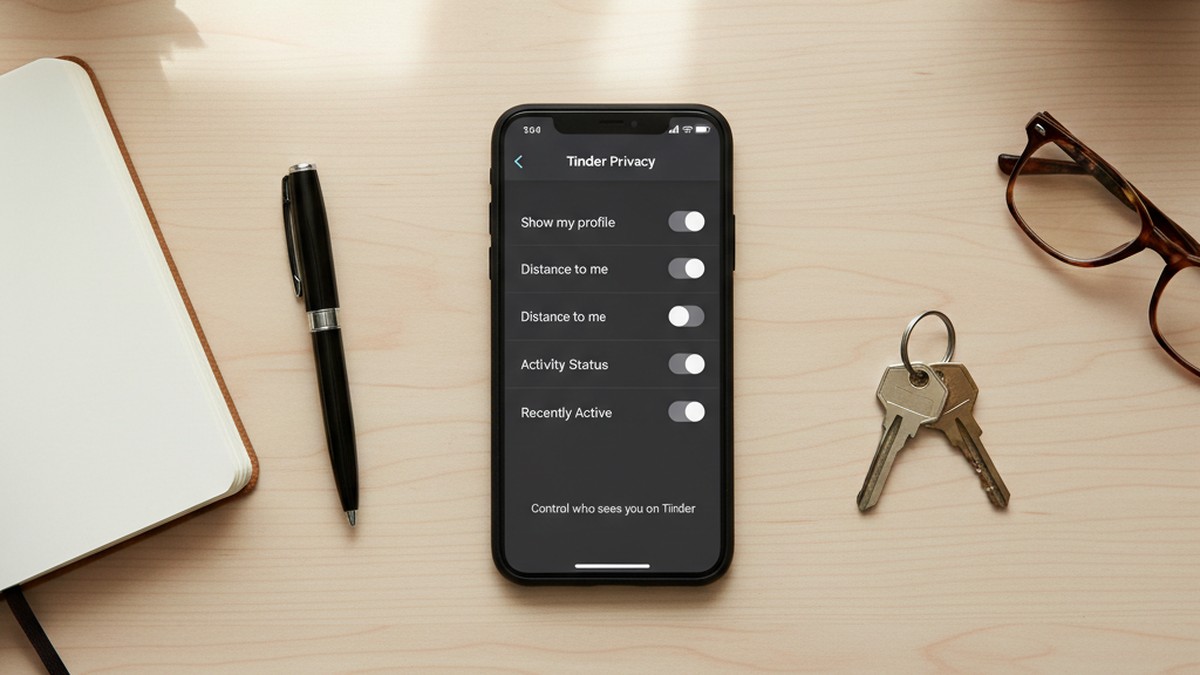
Which Tinder Privacy Settings Can Block a Phone-Based Search?
Incognito Mode blocks manual swipe searches by hiding the profile from anyone who hasn't been liked first. Block Contacts prevents specific phone numbers from seeing the profile. Neither setting removes records from third-party databases or affects photo-based reverse image searches. Age and distance hiding has no effect on any search method.
Understanding Tinder's privacy controls matters for correctly interpreting search results. Some settings have genuine blocking effects on specific search methods. Others provide less protection than users typically assume — a critical distinction if you're trying to understand why a search returned no results.
Incognito Mode
What it does: When activated, a user's profile is removed from the general swipe deck. Their profile only appears to users they have already swiped right on (liked). Anyone who hasn't received a Like from the Incognito user won't encounter their profile while swiping.
What it doesn't do: Incognito Mode does not delete the account, unlink the phone number from the profile, or remove records from third-party databases that indexed the profile before Incognito was activated. A database-based phone number search returns those historical records regardless of Incognito status.
Effect on each search method in this guide:
| Method | Incognito Mode Effect |
|---|---|
| Database scanner (Method 1) | No effect — searches historical records |
| Contact sync (Method 2) | No effect — Friends in Common still functions |
| Reverse phone / social (Method 3) | No effect |
| Reverse image search (Method 4) | No effect for previously indexed photos |
| Manual swiping (Method 5) | Blocked — profile won't appear unless you've been liked |
| Multi-platform scan (Method 6) | No effect on platforms where Incognito isn't enabled |
Block Contacts
What it does: Allows users to upload their phone's contact list to create a block list. Any Tinder user whose phone number matches a blocked contact won't see the blocking user's profile in the swipe deck.
What it doesn't do: Block Contacts only prevents specific accounts from seeing the profile. It doesn't affect searches from accounts associated with unblocked numbers, doesn't remove database records, and doesn't affect reverse image search or social cross-referencing.
Investigative use: If you create a Tinder account with your own phone number and can't find someone's profile despite correct location and demographic settings, Block Contacts may explain it. Testing with a secondary account from an unrecognized number is the cleanest verification approach.
Age and Distance Hiding
Gold and Platinum subscribers can hide their exact age and distance from other users. Their profile card shows no age or distance indicator.
Effect on searches: None. Age and distance hiding is cosmetic. Tinder still uses the actual age and location to determine whose swipe deck the profile appears in — it just doesn't display those numbers on the profile card. All six search methods remain fully effective regardless of this setting.
Paused Accounts vs. Deleted Accounts
This distinction is widely misunderstood and directly affects how you interpret search results.
Paused accounts are put into a temporary inactive state. The profile doesn't appear in the swipe deck, but it remains in Tinder's database and in any third-party database records. The account can be reactivated instantly with no trace of the pause. Someone who pauses their account during periods they suspect might involve scrutiny — and reactivates afterward — leaves no observable gap in their activity record.
Deleted accounts are removed from Tinder's system. However, third-party database records may persist for six to twelve months or longer after deletion, depending on how frequently that database refreshes its data. A database hit on a deleted account returns a record that reflects past activity, not current.
This creates a specific interpretation challenge: a positive result from a database scanner plus a negative result from a real-time multi-platform scan could indicate a profile that existed and has since been deleted. The historical record persists; the live account does not. Checking the "last active" timestamp on any database result helps clarify which scenario you're in.
How Do You Interpret Your Search Results?
Both a positive result and a negative result require careful interpretation. Jumping to conclusions in either direction is a common mistake, and both outcomes are genuinely ambiguous without additional context.
When You Find a Profile
Check the last-active timestamp before drawing any conclusion. A profile last active 14 months ago is fundamentally different from one active two days ago. A meaningful number of people have old Tinder accounts that were never formally deleted — accounts from before their current relationship, or from a period of single life years in the past. Finding one of these is not evidence of current behavior.
Evaluate the profile photos critically. Are these current photos — the same ones they're using on social media right now? Or are these photos from years ago, from before you knew them? Updated, current photos on a Tinder profile are a substantially stronger signal than a profile frozen in an older version of what someone looked like.
Look for recently edited content. A bio that references their current city, recent interests, or current circumstances suggests active maintenance. A bio with outdated information — a job they no longer have, a city they moved away from — suggests an account that hasn't been touched in a while.
Account for false positives with common names. In large cities, common first names and similar age ranges produce real false positives. Someone else named "Alex" who is 31 years old and lives in Austin is a plausible false match. Always confirm with photo recognition and any unique bio details before treating a match as definitive.
When You Don't Find a Profile
A negative result from a single method — especially a database scan — does not establish the absence of a Tinder account. Common reasons for a negative that means less than it appears:
- The profile exists but was created after the database last synced.
- The profile exists but the phone number isn't linked to indexed identifiers in that database.
- The profile exists but Incognito Mode is preventing manual swipe discovery.
- The account is currently paused and thus absent from live scans.
- Activity has migrated to another platform not covered by a Tinder-specific search.
If you have genuine cause for concern and received a negative result from Method 1, working through Methods 2-6 — particularly the multi-platform real-time scan — produces a materially more complete picture.
The Honest Accuracy Assessment
Phone-number-specific database searches have a higher miss rate than location-based name searches for detecting current account activity. The structural reason: phone numbers are never publicly visible on Tinder profiles, so they can only be linked to profiles through associated accounts that do appear publicly — an indirect inference that fails when those associated accounts don't appear in the database.
Real-time location-based scanning checks what's actually visible right now in a geographic area rather than what appears in a historical database. For detecting current activity — which is almost always the actual question — that real-time coverage is more reliable. If a name-and-location scan returns nothing and a phone database search also returns nothing, the combined negative from two different methodologies is meaningfully stronger than either alone.
What Behavioral Signals Pair With a Profile Search?
A phone-based profile search produces one type of evidence. Sustained behavioral observation produces another. Used together — with each informing how you interpret the other — they create a more complete and reliable picture.
No individual behavioral signal means much on its own. Any one of these behaviors has entirely innocent explanations in isolation. What you're observing for is a pattern: multiple signals occurring together, sustained across days or weeks, that align directionally with what a search result suggests.
Phone possession and angle changes:
Someone actively using a dating app tends to keep their phone face-down or angled away from shared lines of sight more consistently than usual. This isn't a single moment that catches your attention — it's a sustained posture change you notice across many separate occasions. Combined with a positive profile scan, a new habit of physical phone guarding becomes more interpretable.
Unexplained mobile data consumption:
Dating apps consume data during active use — swiping, loading photos, exchanging messages. If you share a phone plan and have access to per-device data usage, unexplained spikes at specific times — particularly evenings or periods when they claim low phone use — are worth noting alongside search findings.
App update history:
If you have periodic access to their device — not snooping, but the natural visibility that comes with a shared household — Tinder showing a recent update timestamp in the device's app update history is meaningful. Active users update apps regularly. An app last updated 18 months ago suggests abandonment. An app updated last week suggests the opposite.
Behavioral changes immediately after the topic arises:
A predictable pattern among people who have something to hide: their phone behavior becomes noticeably more guarded within hours or days of the topic coming up in any context — even a casual, non-accusatory mention. If you've discussed trust or apps in passing and their behavior with the phone changed in the days that followed, the timing of that change is itself data.
What to do with corroborating signals:
Behavioral signals don't constitute proof. But when a pattern of behaviors aligns temporally and directionally with a positive profile scan — the behavioral changes are happening during the same time periods suggested by the profile's last-active data — the combined picture is more compelling than either evidence type standing alone.
If any of this resonates and you want to check whether specific signs your partner is on dating apps match what you're observing, running the profile search first gives you a concrete result to interpret the behavioral signals against.

What to Do With What You Find
Running a search and interpreting the results is one step. Deciding what to do next is another, and how you handle it matters both for the relationship and for your own wellbeing.
Before any confrontation, ground the evidence in specifics:
Confirm the key details before acting. Is the profile currently active, or is this a historical record from an old account? Are the photos recent? Does the bio reflect current circumstances? An account from three years ago with outdated photos and a city they no longer live in is a different conversation than an account updated last week with current photos and an active timestamp from yesterday. Knowing exactly which scenario you're in changes how the conversation goes.
Think about what you need the conversation to accomplish:
Going in with a clear sense of what you're looking for — a truthful explanation, a decision about the relationship, an opportunity to be heard — makes the conversation more productive than entering in reaction mode. People who are caught often default to deflection and defensiveness. Having a specific, grounded question rather than a general accusation shifts the dynamic.
Understand that "I forgot to delete it" is sometimes genuinely true:
A percentage of profiles found through any search method are genuinely abandoned accounts that were never formally closed. Someone who matched with the person they're now with and never went back to delete the profile is not in the same position as someone actively swiping. Old photos, no recent activity, and a bio that doesn't reflect their current life are signs of the former. Current photos, recent activity timestamps, and an updated location are signs of the latter. The specifics matter.
Recognize what a search result does and doesn't prove:
A Tinder profile, even an active one, doesn't by itself prove infidelity has occurred. It proves the person has an active dating profile. That's meaningful — and warrants a direct conversation — but the full picture is more complex than a single binary answer. Our guide on what to do when you find your partner on a dating app covers how to approach that conversation in detail. Use what you found to frame a specific, honest conversation rather than a verdict.
Consider support resources:
The uncertainty that leads people to run these searches is genuinely difficult to sit with. Whether the result confirms your concerns or not, the emotional weight of this situation is real. Speaking with a licensed therapist who specializes in relationship dynamics — before or after a confrontation — provides a structured space to process what you find, regardless of the outcome.
If you haven't yet run a search and want to start with the most comprehensive option available, CheatScanX scans 15+ dating platforms simultaneously using a name-and-location approach — no phone access required, results in under two minutes.
Frequently Asked Questions
Tinder has no built-in phone number search. However, because every Tinder account requires phone verification, the number creates a traceable link. Third-party profile scanning tools can cross-reference phone numbers against aggregated dating app data to find associated Tinder accounts. Results vary in accuracy depending on the tool and how recently its database was updated.
No. Tinder never displays phone numbers to other users or makes them searchable within the app. Your number is used only for account verification and security, and is never visible on your profile or in match conversations. When contact syncing is enabled, phone numbers are converted to cryptographic hashes before comparison, so raw numbers are never exposed through that feature either.
Not through Tinder directly — the app offers no number-based search. Through third-party aggregation services, someone with your phone number can potentially find an associated Tinder profile, particularly if that number is linked to social accounts or email addresses in external databases. Tinder's Friends in Common feature can also surface a connection if both users have contact sync enabled.
A multi-platform dating profile scanner is the most practical approach. You provide your partner's first name, approximate age, and city — no phone access required. The scanner checks active profiles in real time across Tinder and other dating apps, returning matches with profile photos and activity timestamps. CheatScanX scans 15+ platforms simultaneously without requiring phone, email, or social account access.
A real-time location-based name scan consistently outperforms phone-number-only database searches for detecting current activity. Phone number database searches check historical records, which may be months out of date. A name-and-location scan checks what profiles are actively visible in a specific area right now, making it more reliable for confirming current app use.