
# Venmo Cheating Signs: 7 Red Flags in Transaction History
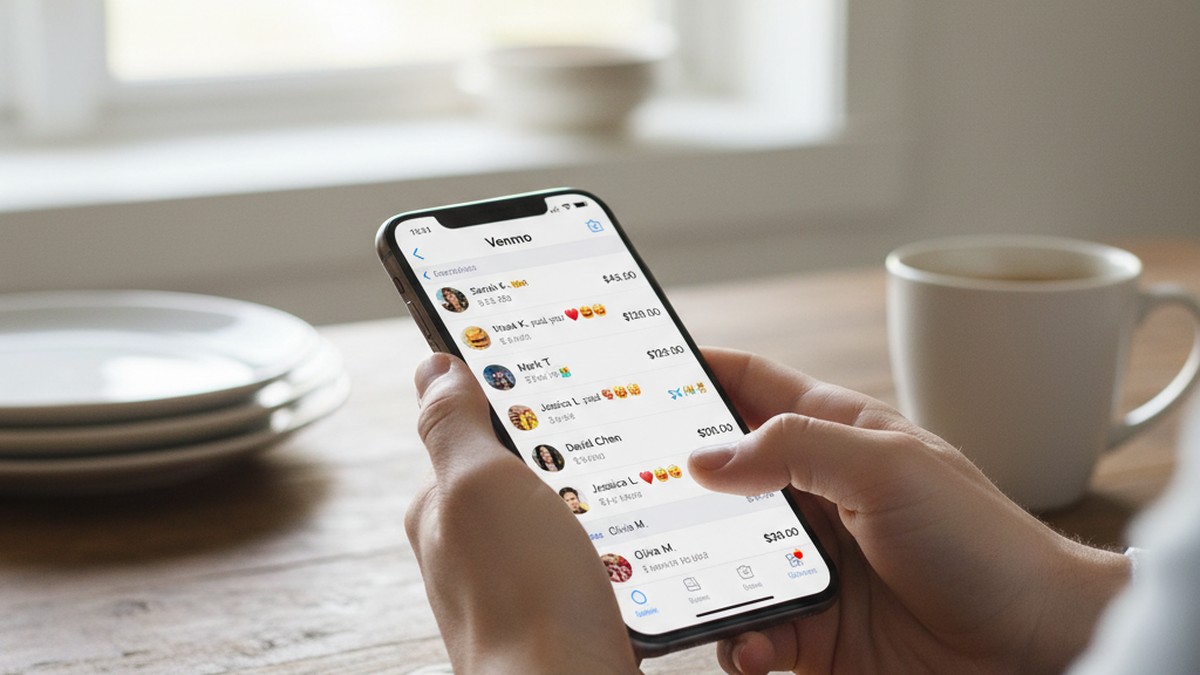
Venmo cheating signs are visible to anyone who knows where to look — because Venmo's entire transaction feed is public by default. If your partner hasn't manually changed their privacy settings, every payment they've sent or received, along with the note they attached, is sitting in an open feed accessible to anyone on the internet.
Most people don't think of a payment app when they're worried about infidelity. They check phones, social media, and dating profiles. But cheaters who guard every other digital channel often leave Venmo completely unguarded.
A 2025 Bankrate survey found that 45% of Americans in committed relationships don't fully know their partner's financial activity — and 43% believe keeping financial secrets is as bad as physical cheating (YouGov/Bankrate, 2025). When payment apps become part of how someone hides a relationship, those two forms of deception merge.
This article covers 7 specific Venmo red flags to look for, a systematic method for evaluating what you find, and an honest assessment of what Venmo evidence can and can't tell you. One of those answers will probably surprise you.
Why Venmo Is the Accidental Cheating Detector
Venmo was designed as a social payment tool. Unlike bank transfers, which are private by nature, Venmo was built to be seen — the feed showing who paid whom, and why, was originally a feature, not a bug.
That social design created an unintended consequence: people share far more than they realize.
Researchers at USC Viterbi School of Engineering analyzed 389 million public Venmo transactions spanning 2012–2020. They found that 41 million transaction notes — 10.5% of the total — contained genuinely sensitive information including health details, substance use, sexual orientation, and location data (USC Viterbi, 2022). Nearly 40% of all users had publicly shared sensitive information at least once, and the vast majority had done so without realizing it.
The same study found that 77% of Americans opposed public-by-default settings for financial apps. Yet Venmo maintained that design for years, and even today, accounts created without manual privacy adjustments remain open to the public.
Why Cheaters Don't Think to Hide It
Most people in affairs manage their text messages obsessively. They delete threads, use disappearing message apps, and create separate email accounts for their other relationship. What they frequently don't consider is that the Saturday dinner for two, the hotel room split between "friends," or the recurring payments to someone new all show up in their Venmo feed.
This is partly a visibility problem. Most platforms you use for communication — texting, Instagram, WhatsApp — have obvious privacy controls that feel important to manage. Venmo's social feed is easy to forget. It doesn't feel like a communication channel, so it doesn't trigger the same self-protective instinct.
Real cases bear this out. A woman identified publicly as Nicole Vavro discovered her boyfriend of six months was actively in a multi-year relationship with another woman. The discovery came not from checking his phone, but from finding his public Venmo account — where he'd been sending regular payments to his girlfriend with notes that included flirty emoji strings. Every payment was visible to anyone who searched his username.
In another documented case, a woman in Connecticut found her long-distance boyfriend had paid another woman repeatedly, with notes referencing "morning after pill," "date night," and shared plans. The transactions were public. He'd never thought to change the setting.
The FTC's Verdict on Venmo's Privacy
The Federal Trade Commission settled with Venmo's parent company, PayPal, in 2018 over misleading privacy practices. The FTC found that Venmo told users their transactions were private when they changed certain settings — but the company had actually implemented a second privacy layer that users didn't know about, meaning transactions could still be shared publicly by other parties even after a user changed their settings.
This settlement established a significant point: even when users think they've managed their Venmo privacy, the app may not work the way they expect. That's relevant here, because it means a cheater who thinks they've hidden their activity may have done so less thoroughly than they believe.
The FTC settlement required Venmo to be clearer about its privacy practices, and the app has improved its disclosures since 2018. But user behavior hasn't caught up with those changes. Most people who created Venmo accounts before 2020 — and who haven't deliberately revisited their settings — are still operating under default public settings they set at account creation, potentially years ago. The gap between what users think they've set and what the app is actually sharing has narrowed, but it hasn't closed.
If any of this sounds familiar, there's a way to know for sure. CheatScanX checks 15+ dating platforms for hidden profiles using a name, email, or phone number.
Check for hidden profiles →What Does Venmo Actually Show?
Venmo displays your username, profile photo, and — by default — your full transaction history including who you paid, who paid you, the amount, and the payment note. This feed is public to anyone on the internet unless you manually change each transaction to private in your account settings.
Specifically, a public Venmo profile shows:
- Recipient or sender name and username — who the transaction was between
- Transaction note — the text or emoji the payer added
- Timestamp — date and time of the payment
- Friend list — who the account holder has added or connected with
The one piece of information Venmo deliberately obscures is the exact dollar amount. Transaction amounts are visible only to the two parties involved in the payment. If you can see someone's feed, you can see they sent money to a specific person on a specific date with a specific note — but not the precise amount.
What You Can't See
A public feed doesn't show you message threads, comments made in private, or payments that have been individually set to private. It also doesn't show activity in linked bank accounts, credit cards, or Venmo's debit card features — those are private by design.
An important limitation worth noting: public feeds show only completed transactions. Pending or failed payments don't appear, and request-only transactions (where someone asks for money but it's not sent) aren't displayed in the standard feed.
The Friend List as a Secondary Signal
Beyond transactions, the friend list on a Venmo account shows social connections that may not exist anywhere else. If your partner's social media is locked down but their Venmo is public, you may find connections there that contradict their stated social circle.
People tend to add Venmo contacts when they're actively transacting with someone — splitting bills, paying for shared experiences, or settling debts. A name that appears in both the friend list and recurring transactions deserves more attention than a name that shows up once.
How to Find Your Partner's Venmo Profile
Finding a Venmo profile is straightforward if you have their phone number or email address.
Method 1: Direct search
Open the Venmo app and use the search bar. Type their full name, username, or phone number. If their account is visible, it will appear in results.
Method 2: Contact synchronization
If you save your partner's phone number in your contacts, the Venmo app's "Find Friends" feature will automatically surface any account linked to that number. This reveals the actual account tied to a phone number — not the display name they may have given you.
Method 3: Username search on the web
Venmo profiles are accessible via browser at the URL format `venmo.com/[username]`. If you know their username from seeing it on their phone or from a previous shared transaction, you can view the public feed directly without logging in.
Method 4: Check past transactions
If you've ever sent or received money from your partner on Venmo, your transaction history contains a link to their profile. Tap on their name in that transaction to view their public feed.
One practical note: Venmo doesn't notify users when their public profile is searched or viewed. You can look at a public feed without the account holder ever knowing.
What If You Can't Find an Account?
If a search by name, number, and email turns up nothing, there are a few explanations. The account may be under a different name or username. The account may have been deleted. Or your partner may not use Venmo.
Some people maintain multiple Venmo accounts under different names. This is against Venmo's terms of service, but it happens. If you know they've used Venmo before (you've seen transactions on their bank statement labeled "Venmo") but can't find an account, a different username is worth considering.
The 7 Venmo Red Flags Worth Taking Seriously
Not every unusual transaction is a sign of infidelity. The goal here is to identify patterns that, when combined with other observations, justify a closer look — not to jump to conclusions from a single data point.
1. Repeated Payments to Someone You Don't Recognize
A one-time payment to an unknown contact could be anything — splitting a group bill, paying back a coworker, contributing to a mutual friend's gift. What's different is recurring payments to the same unknown person over weeks or months.
Frequency is the signal. Three payments over two months, each with an ambiguous note, creates a pattern that doesn't fit casual bill-splitting. The regularity implies an ongoing relationship — and the unknown contact is someone your partner hasn't mentioned or introduced.
Cross-reference the name against your partner's stated social circle. If they've never mentioned this person in conversation, at social events, or as part of any context you're aware of, that gap is worth noting explicitly — not as a conclusion, but as a question that deserves an answer.
Pay particular attention to the dollar range of these payments. Splitting a dinner tab produces occasional payments in the $15–$60 range. Hotel room splits, gift contributions, or recurring activity expenses often fall in a different band — and the consistent size of repeated payments tells you something about the kind of shared activity they represent. While you can't see exact amounts as an outside viewer, you can sometimes infer the category from the note and timing combined.
2. Transaction Notes Written in Code or Emoji
Clear, descriptive notes — "dinner," "rent," "groceries" — indicate nothing suspicious. Emoji-only notes or single-character codes are different.
USC Viterbi's research found 25% of Venmo transaction notes contain only emojis, and another 25% are classified as "cryptic" — random numbers, single words, or meaningless fragments (USC Viterbi, 2022). Researchers noted that users who are aware of Venmo's public-by-default nature often shift to coded language to obscure what a transaction is for.
Coded notes between your partner and a specific unknown contact — particularly if the same contact appears in multiple transactions — suggest deliberate concealment. The combination of an unknown recipient and deliberately obscured notes is more significant than either element alone.
There's a documented behavioral pattern worth understanding here: USC researchers found that when people realize their transactions are public, they often shift to emoji or single-character notes rather than changing their privacy settings. This creates an ironic visibility problem — the note "🌙" repeated monthly to an unknown contact is in some ways more suspicious than a clear note would be, because it shows the person knew their activity could be seen and chose to obscure it rather than eliminate the transaction entirely. Deliberate obscuring of a note is itself meaningful information.
3. Payments at Times That Don't Add Up
Timestamps on Venmo transactions are precise. A payment at 11 PM on a Tuesday your partner said they were working late, or at 8 AM on a Saturday they claimed to be at the gym, creates a specific factual discrepancy.
This isn't about catching someone being dishonest about minor schedule details. It's about transactions that directly contradict a stated alibi. If your partner said they were at their sister's house last Thursday, a Venmo payment to an unknown contact on Thursday evening — especially one with a note like "tonight" or "later" — doesn't fit.
Time-stamped transactions also create patterns across weeks. If your partner regularly sends money to an unknown contact on Friday evenings — the same evening they're often home late or out with vague explanations — that recurrence is more significant than any individual payment. Recurring payment timing that consistently maps to gaps in your partner's explained schedule is one of the clearest signal types Venmo can provide, because it creates a data-backed timeline you can compare against what you know.
4. Spending at Locations That Contradict Their Account
While Venmo doesn't directly show location data, payment notes often do. Notes that reference places — "hotel," "flight," city names, specific restaurants — can reveal where someone actually was.
A documented example from investigative accounts: a man told his partner he was traveling for work in one city, but a Venmo note from that weekend referenced a restaurant in a different city entirely. The amount was invisible, but the location in the note was not.
Pay attention to location-specific language in payment notes sent during times when your partner's whereabouts were unclear.
People who use Venmo habitually often write payment notes on autopilot, without stopping to consider that those notes are publicly visible. A note like "Chicago trip — dinner" or "Uber back from downtown" tells a geographic story your partner may not have realized they were sharing. This information becomes relevant when it doesn't match where they said they were. Location-specific notes are among the most verifiable Venmo signals, because they can be compared directly against what your partner told you.
5. New Venmo Contacts Who Don't Match Their Social Circle
Venmo friend lists grow when people transact together. A sudden addition of an unfamiliar contact — particularly one who then appears in multiple transactions — indicates an active social relationship your partner hasn't mentioned.
In practice, most people's Venmo contacts are people they see regularly: coworkers, close friends, family members, housemates. A new contact who doesn't fit any of those categories, and who appears in repeated transactions with coded notes, is a reasonable question to ask about.
The diagnostic value here is the friend list's organic nature. People don't add Venmo contacts casually the way they might follow someone on Instagram. Venmo connections arise from real transactions — you add someone because you owe them money or they owe you. A contact added in the last several months who doesn't appear in your partner's known social world represents a real-world relationship, not an abstract online connection. Check whether this new contact also appears in the transaction feed. If they do, you're looking at someone your partner has shared real expenses with — and that combination of "new contact" and "active shared spending" is worth understanding.
6. The Account Suddenly Goes Private
This is the red flag most guides overlook. If you previously had access to your partner's Venmo feed — either because it was public, or because you'd looked at it before — and it has suddenly gone private, that behavioral change is itself a signal.
People rarely change Venmo privacy settings without a specific reason. The change requires deliberate action: navigating into settings, toggling transaction privacy, and optionally applying it retroactively. Most people never touch these settings.
If your partner has gone private on Venmo specifically at a point when relationship trust is already fragile, that timing is worth noting. It doesn't confirm anything on its own — but it's the digital equivalent of someone who never locked their phone suddenly implementing a complex password.
7. Payments That Contradict Their Stated Expenses
People often sync their stated spending with their visible financial behavior. If your partner says they spent $40 at the grocery store on Saturday but their Venmo shows a payment of some amount to an unknown person at the same time, those two accounts of the same Saturday afternoon don't agree.
You can't see exact transaction amounts on Venmo as an outside viewer — but you may be able to cross-reference the transaction timing and note against what you know about their stated spending. A Venmo transaction at 7 PM on a Saturday to a contact called "Alex" with the note "dinner" contradicts a partner who said they ate at home that night.
This kind of discrepancy also pairs well with examining broader financial signs of cheating across all your accounts. If you share a bank account or can see credit card statements, Venmo activity that doesn't match their account of shared finances creates a multi-source contradiction that's harder to explain away than any single data point. Someone who says they didn't go out on Friday but has a Venmo transaction and a credit card charge both dating to Friday evening has been caught in a specific, verifiable inconsistency — not a general pattern you're trying to interpret.
The 4-Layer Venmo Signal Audit
When something in a partner's Venmo feed raises concern, the natural instinct is to react immediately. That's rarely productive. A more useful approach is to assess what you've found systematically before drawing conclusions or taking action.
The 4-Layer Venmo Signal Audit is a structured method for evaluating whether suspicious Venmo activity is genuinely concerning or can be plausibly explained:
Layer 1: Identify the Pattern (Not the Incident)
A single unusual transaction proves nothing. What matters is whether you can identify a pattern across multiple data points.
Ask yourself:
- Does this contact appear more than once?
- Are the notes consistently vague or coded?
- Do the timestamps cluster around specific times (evenings, weekends, times your partner accounts for their whereabouts elsewhere)?
A pattern that persists over several weeks is qualitatively different from a one-time anomaly. Document what you're seeing before you assess it.
Layer 2: Test Alternative Explanations
For every suspicious transaction, generate at least two plausible innocent explanations before treating it as evidence.
A payment to "Jordan" every Friday might be a work colleague who carpools. An emoji-coded note might be an inside joke between old college friends. A transaction at 11 PM might be paying back someone from a work dinner that ran late.
The standard for concern shouldn't be "this could be suspicious" — nearly anything could be suspicious if you're already anxious. The standard should be: "There is no innocent explanation I can think of that fits all the evidence together."
Layer 3: Cross-Reference Against Other Signals
Venmo activity means more when it aligns with behavioral signs you've already noticed. If your partner has also been more secretive with their phone, less transparent about their schedule, or showing other signs your partner is cheating — and the Venmo activity fits that pattern — you're seeing multiple independent signals pointing the same direction.
Venmo evidence in isolation is weak. Venmo evidence combined with behavioral changes, unexplained schedule gaps, and other financial signs of cheating creates a different picture.
Layer 4: Assess What You Actually Know vs. What You're Inferring
Write down what the Venmo data literally shows. Then separately write down what you're inferring from it.
What I know: My partner sent a payment to a contact named "Sam K." three times in April with the note "later" each time. The payments happened on Thursday evenings between 9 PM and 11 PM.
What I'm inferring: Sam is someone my partner is romantically involved with.
That inference may be correct. It may also be wrong. Keeping a clean line between data and interpretation prevents you from treating speculation as fact when you're in a heightened emotional state.
A practical way to apply this layer: show the raw data to a trusted friend — someone without context about your relationship concerns — and ask them what they'd think if they saw these transactions on a stranger's feed. If their read matches yours without any prompting, you have some evidence that your interpretation isn't purely anxiety-driven. If they offer innocent explanations you hadn't considered, those are worth taking seriously before you act. External perspective matters more than most people allow for when they're in the middle of a difficult situation.
The 4-Layer Audit doesn't guarantee you'll reach the right conclusion. What it does is ensure that whatever conclusion you reach is based on the actual data and not on the story you've built around your fear. That distinction matters enormously when you're deciding whether and how to have a serious conversation about trust.

What Does It Mean When Your Partner Suddenly Goes Private?
When a Venmo account switches from public to private, it hides all future transactions from anyone outside the payment parties. If your partner's account was previously open and you could see their activity — and it's suddenly gone dark — that shift in behavior is worth noting, though not by itself conclusive.
The key question is timing.
Privacy settings changes happen for legitimate reasons: someone reads an article about digital security, a friend warns them about data exposure, or they become aware that Venmo's public feed is accessible to strangers. These are reasonable motivations with nothing to do with infidelity.
What's different is a privacy settings change that happens:
- Shortly after you asked about an unknown name in their feed
- During a period of heightened relationship tension
- Simultaneously with other privacy-locking behavior (new phone passwords, deleted browser history, locked social media)
A change that tracks directly with a moment of potential discovery is a different category than routine security hygiene. Context is everything.
What Going Private Doesn't Erase
An important technical point: setting a Venmo account to private hides future transactions but does not delete past ones from either party's transaction history. Both the account holder and anyone they transacted with can still see the full history of past payments.
If you saw something in their feed before it went private, that information still exists. Screenshot what you found while you still have access to it, because once an account goes private you lose visibility into new activity.
Is Venmo Evidence Enough to Confront Someone?
Venmo activity alone is rarely sufficient grounds to confront a partner. Transaction records can show who someone paid and when, but they can't prove the nature of that relationship. A pattern of payments to one unknown person, combined with other behavioral signs, may justify a direct conversation — but not an accusation.
This is the contrarian position that most articles on this topic avoid: Venmo is a signal source, not a verdict machine.
Why Treating Venmo as Proof Backfires
The problem with premature confrontation based on payment app data is that it immediately puts your partner on notice — giving them the opportunity to adjust their behavior and cover other tracks — without giving you actual answers.
If the person turns out to have an innocent explanation you didn't consider, you've damaged trust and positioned yourself as suspicious and controlling. If the concern is legitimate, confronting someone with incomplete evidence gives them room to deny and deflect.
In practice, we see a consistent pattern across relationship investigations: people who confront too early on circumstantial digital evidence frequently report that their partner became more secretive afterward — not less. The confrontation itself closed off the information source without providing resolution.
What Venmo Can and Can't Prove
| What Venmo shows | What Venmo can't prove |
|---|---|
| A payment was made to a specific account | What the payment was actually for |
| A note was attached to a transaction | Whether that note means what you think |
| Two people have transacted multiple times | Whether those people have a personal relationship |
| A transaction happened at a specific time | Where either party actually was |
| An account went private at a specific date | Why they changed their settings |
Venmo provides timestamps, contact names, and transaction notes. It provides no context for what any of those mean. That context comes from the combination of Venmo data, behavioral observation, and — ultimately — a direct conversation.
The Stronger Evidence Sources
If you're seriously concerned about infidelity, Venmo is one piece of a larger picture. Bank statement signs of cheating can reveal patterns Venmo can't — specific merchant names, ATM withdrawals, recurring charges. Credit card statement cheating signs show purchase categories that give context Venmo's simple payment notes lack.
Payment app activity matters most when it corroborates what you're already seeing elsewhere — not when it's your only data point.
How Do Cash App, Zelle, and PayPal Compare to Venmo?
Cash App, Zelle, and PayPal compare to Venmo primarily on one dimension: how much of a user's activity is publicly visible without their active choice. Venmo is uniquely exposed because its social feed was built for sharing — it displays transactions publicly by default in a way no other major payment app does.
Here's how each platform handles visibility:
| Platform | Public profile? | Transaction history visible? | Social feed? | Searchable by phone? |
|---|---|---|---|---|
| Venmo | Yes | Yes (public by default) | Yes — full feed | Yes |
| Cash App | Yes (name + photo only) | No | No | Yes |
| Zelle | No | No | No | Via bank only |
| PayPal | Business profiles only | No | No | Limited |
Cash App
Cash App has a public web profile at `cash.app/$cashtag` that displays the user's name and profile photo. It does not show transaction history. Unlike Venmo, Cash App doesn't have a social feed — it's designed purely as a payment tool, not a social platform.
Cash App is a more common tool among people who are specifically trying to reduce financial visibility. Because there's no public transaction feed, payments between a person and their affair partner leave no publicly visible record. If you find your partner using Cash App exclusively for certain payments when they normally use Venmo, that preference itself is a signal.
The presence of Cash App alongside Venmo on someone's phone isn't suspicious — many people use both. What's worth noting is when they use Cash App for certain payments and Venmo for others. If your partner pays their friends and family on Venmo (where you can see it) but uses Cash App for a specific recurring contact, that selective routing may reflect a deliberate choice about what activity should be visible.
Zelle
Zelle is fully private by design. Transactions are processed between bank accounts with no social component, no public profile, and no visible feed. Zelle activity only appears in bank statements, which is why bank statement signs of cheating remains an important check even for people who aren't heavy Venmo users.
A shift from Venmo to Zelle for certain payments — particularly to contacts who aren't visible in shared finances — can indicate a deliberate effort to reduce visibility.
PayPal
PayPal's personal transactions are not publicly visible. Business transactions and charitable giving may appear on public profiles, but peer-to-peer payments between individuals are private. PayPal is more commonly used for purchases than for social payments, so unusual PayPal activity tends to show up differently — as purchases at specific merchants rather than recurring payments to individuals.
The Venmo Visibility Gap
The key distinction is that Venmo's public-by-default design creates an information gap between what users think they're sharing and what they're actually exposing. The FTC settlement in 2018 documented this exact problem: Venmo users who believed they'd set their accounts to private were still inadvertently exposing transactions through a second, lesser-known public setting (FTC, 2018).
That gap is why Venmo specifically generates more relationship discoveries than other payment platforms — not because it contains more information, but because users share it more carelessly.
This also explains why switching to Cash App can itself be a behavioral signal. A person who has used Venmo openly for years and then begins using Cash App for a specific category of payments — payments that don't appear in your shared financial picture — has made a choice about visibility. They may not know exactly why Venmo feels more exposed to them, but the instinct to route certain transactions through a less visible platform reflects some level of awareness that their Venmo activity could be seen.
What's the Difference Between Financial Infidelity and Romantic Infidelity?
Financial infidelity is a pattern of deliberate deception about money within a committed relationship — hiding purchases, maintaining secret accounts, or concealing debt. Romantic infidelity is a sexual or emotional relationship outside the committed partnership. The two are distinct, but they frequently co-occur, and Venmo activity can reflect either or both.
Understanding the difference matters because the appropriate response to each is different.
Financial Infidelity Without Romantic Involvement
A partner who hides discretionary spending — gambling, excessive personal purchases, financial obligations from their past — is practicing financial infidelity without necessarily engaging in romantic infidelity. Suspicious Venmo activity in this category might look like payments to unknown contacts that reflect a hidden hobby, addiction, or financial problem.
A December 2025 Bankrate survey of 2,564 U.S. adults found that 32% of coupled adults have committed some form of financial infidelity — hiding purchases, maintaining undisclosed accounts, or concealing debt (Bankrate, 2025). That's a significant share of relationships where financial secrets exist independently of romantic ones.
The profile of purely financial infidelity on Venmo tends to look different from romantic infidelity. Payments driven by a hidden gambling habit or secret debt often show irregular amounts, multiple different payees, and notes that reference specific purchases or transactions rather than personal time spent with someone. The cadence is driven by the financial activity, not by a relationship pattern — so it tends to be less consistent and more reactive than the steady recurring payments that often characterize an affair. Knowing this difference helps you read what you're actually looking at.
When Both Overlap
What often happens in cases of romantic infidelity is that financial infidelity becomes a supporting behavior. The person maintaining a second relationship must also maintain a second financial reality — paying for dates, hotel rooms, gifts, and activities that can't appear in shared finances.
This is where payment app patterns become diagnostic. Romantic infidelity typically produces a specific kind of financial infidelity: regular, moderate-amount payments to one specific person, often accompanied by ambiguous notes, at times that cluster around the suspected contact hours.
Financial infidelity driven by personal spending problems tends to produce different patterns: irregular amounts, multiple different payees, and notes that reference categories like "poker," "gear," or specific merchants.
The Relevance of Emotional Investment
Relationship researchers have noted that financial secrecy is among the strongest predictors of relationship dissatisfaction, independent of romantic fidelity. A partner who hides financial activity — whatever the reason — is maintaining a kind of intimacy barrier that erodes trust the same way emotional infidelity does.
If you've found unexplained Venmo patterns and you're not sure whether the deception is financial or romantic, that distinction may matter less than the deception itself.
One practical note on timing: a Bankrate survey found that among people in committed relationships who acknowledge financial secrets, 15% say they don't want their partner knowing — a deliberate choice to maintain financial opacity rather than a matter of forgetting to disclose (Bankrate/YouGov, 2025). That 15% isn't hiding information because it's complicated to explain. They're hiding it because they've made a decision to keep something private. Whether that "something" is a gambling habit, a second relationship, or an undisclosed financial obligation, the decision to keep it hidden is itself an act that affects relationship trust — separate from whatever the secret actually is.
What Should You Do After Seeing Something Suspicious?
After spotting suspicious Venmo activity, document what you found with screenshots before settings change. Take time to assess whether you're seeing a pattern or a single anomaly. Consider speaking with a trusted friend or therapist before confronting your partner — reacting from shock rarely leads to productive conversations.
Here's a more detailed sequence:
Step 1: Document Before It Disappears
If you've found a public Venmo feed that raises concern, take screenshots immediately. Privacy settings can change, and accounts can be made private without warning. Once an account goes private, you lose access to the feed.
Be specific about what you capture: timestamps, contact names, transaction notes. Date each screenshot. This documentation serves two purposes: it gives you an accurate record to refer back to when emotions aren't running as high, and it preserves information that might otherwise vanish.
Step 2: Sit With It for 48 Hours
The impulse after a discovery is to act immediately. This is almost always a mistake. The 48-hour rule is a practical check: give yourself two days before saying anything.
In that time, you can think through alternative explanations, assess whether what you've found fits a broader pattern, and decide what kind of conversation you actually want to have. People who confront in the immediate aftermath of a discovery tend to have confrontations driven by shock rather than clarity — and those conversations rarely resolve anything.
Step 3: Apply the 4-Layer Audit
Use the 4-Layer Venmo Signal Audit described earlier in this article. Specifically: identify whether you're seeing a pattern, generate innocent explanations, cross-reference against other behavioral signals, and separate what you know from what you're inferring.
Step 4: Decide What Kind of Conversation You Want
There's a meaningful difference between asking an open question and launching an accusation. "I noticed some payments in your Venmo feed that I didn't recognize — can you tell me about them?" is different from "I know you're cheating on me because of your Venmo."
The open question invites an explanation and preserves the possibility of a legitimate answer. The accusation locks both people into a defensive position and often produces denial regardless of the truth. If you want real information, questions get you further than accusations.
Step 5: Decide Whether You Need More Evidence First
There's a difference between having enough to ask a question and having enough to make a decision. If the Venmo patterns you've found are ambiguous, deciding whether to seek additional clarity before a confrontation is a legitimate choice.
If you're considering verifying whether your partner has active dating profiles — which is a more direct indicator of active infidelity than payment app activity — that's a separate investigation. CheatScanX scans 15+ dating platforms and can give you a clearer answer on the profile question before you sit down for a conversation that can't be un-had.
Step 6: Consult a Professional If Needed
If you're in a long-term relationship or marriage and are seriously considering separation or confrontation, speaking with a therapist or couples counselor before the conversation — not after — can make a significant difference in how that conversation goes. A professional can help you clarify what you actually want to know, and what you're prepared to do with the answer.

Mistakes That Backfire When You're Checking Venmo
The most common mistakes people make when investigating a partner's Venmo aren't about finding the wrong thing — they're about what happens after they find something. Understanding what not to do matters as much as knowing what to look for.
Confronting With Insufficient Evidence
Presenting a partner with a single ambiguous Venmo transaction and treating it as conclusive evidence of infidelity typically produces one of two outcomes: an innocent explanation that leaves you feeling paranoid, or a denial that's impossible to evaluate. Neither gets you closer to the truth.
The threshold for confrontation should be a pattern, not an incident. Isolated transactions don't support a direct accusation.
Accessing Private Accounts Without Permission
There is an important ethical and legal distinction between viewing a public Venmo feed — which the account holder has chosen to make visible — and accessing a private account without consent.
If your partner's Venmo is private, and you access it by taking their phone without permission, using their saved password, or any other method that requires bypassing their privacy controls, you've crossed a line that can have legal consequences depending on jurisdiction. It also, practically speaking, poisons the well: any conversation you have based on privately obtained information starts from a place of broken trust on both sides.
If you want to know whether your partner's account is private or public, that's legitimate to check. Getting into a private account isn't.
Telling Other People What You Found
Sharing suspected evidence of infidelity with friends, family, or mutual social contacts before you've had a direct conversation with your partner creates social consequences that are very difficult to walk back.
If the concern turns out to have an innocent explanation, you've created relationship damage with both your partner and your shared social circle that didn't need to exist. If the concern is valid, involving others before you've decided how you want to handle it removes your own agency from the situation.
Treating Venmo as the Only Evidence You Need
Venmo transaction history is a starting point for investigation, not a finishing point. Before drawing conclusions, use it alongside the broader picture: behavioral changes, financial records, and if necessary, a more comprehensive tool built specifically for this kind of search.
CheatScanX scans 15+ dating platforms to check for hidden active profiles — which addresses the question of whether your partner is actively engaged with someone else in a way that Venmo transaction data simply can't answer.
Obsessively Checking Without Acting
Repeated checking of a Venmo feed without a plan for what you'll do with what you find tends to increase anxiety without producing clarity. If you've checked twice and found something concerning, and you're now checking three times a day, you've moved from investigation to rumination.
Set a clear standard: what would you need to see to either reassure yourself or decide to have a direct conversation? Stick to that standard and act on what you find rather than continuing to look indefinitely.
Relationship anxiety researchers describe this pattern as "reassurance-seeking that backfires" — each check is intended to calm the anxiety, but instead it resets and amplifies it. If you found nothing suspicious today, the relief lasts a few hours before the urge to check again returns. If you found something ambiguous, you go back hoping to find either more evidence or a new explanation. Neither outcome is likely to give you what you're actually looking for, which is certainty. The only path to that certainty is through a direct conversation, not through more Venmo surveillance. Checking one more time won't give you the answer. Deciding what you need to say — and saying it — will.
Moving Forward: From Suspicion to Clarity
Venmo cheating signs can tell you something is worth examining. They can't tell you what that something is.
The 7 patterns in this article — repeated payments to unknown contacts, coded notes, suspicious timestamps, contradictory locations, new unexplained connections, a sudden shift to private, and expenses that don't add up — are each meaningful signals. Seeing multiple of them together, in a pattern, is more significant than any one in isolation.
What payment app data can't give you is context. A transaction can show you who, when, and approximately what — but not why, and not what it means for your relationship.
The honest path from suspicion to clarity runs through a direct conversation, not through more evidence-gathering. At some point, no amount of additional Venmo data changes the fact that you and your partner need to have an honest conversation about what's happening in your relationship.
Go into that conversation prepared. Know what you observed. Be clear about what you're asking for. And be honest with yourself about what you're prepared to hear. That's the only move that actually moves things forward.
If you're looking for more direct answers about dating app activity before that conversation, tools designed specifically for this purpose — like CheatScanX, which scans 15+ dating platforms for active profiles — can give you clearer data than payment app interpretation alone.
Frequently Asked Questions
Yes — if your partner's Venmo account is set to public, you can search their username and view their transaction feed without them receiving any notification. Venmo doesn't alert users when their public profile is viewed. If their account is private, transaction details are only visible to the payment parties.
Emoji-only payment notes are common for routine transactions between close friends. However, USC research found 25% of transaction notes use only emojis, and some users deliberately choose emojis to obscure what a payment is for. Context matters: familiar emojis between friends are normal, but cryptic ones sent to unknown contacts at odd hours are worth noting.
No. Venmo does not send notifications when someone views a public profile or scrolls through a public transaction feed. Only direct interactions — sending money, requesting money, or commenting on a transaction — generate notifications. Viewing a public Venmo feed is entirely invisible to the account holder.
Venmo does not allow users to delete individual transactions — the app keeps a permanent record of all completed payments. You can set future transactions to private so they don't appear in the public feed, but past transactions remain in both parties' transaction histories. Neither the payer nor recipient can erase a completed payment.
Viewing a public Venmo profile is not an invasion of privacy — the account holder chose to make that information visible. Accessing someone's private account without their knowledge or consent, however, crosses a clear ethical and potentially legal boundary. There's an important difference between checking a public feed and accessing a private account.