# Hotel Booking History: Finding Evidence of Cheating
Hotel booking history can reveal cheating — but only if you know where to look. The most accessible sources are booking app account histories, hotel loyalty program records, credit card statements, and email confirmation receipts. Together, these create a timestamped paper trail showing exactly where someone slept, for how long, and sometimes how they paid.
Suspecting a partner is using hotel stays to hide an affair is more common than most people realize. A 2024 survey found that 41.3% of US travelers admitted to cheating on a partner while traveling, and a separate study found that 35% of frequent business travelers had engaged in sexual activity their partner would consider unfaithful (YourTango, 2025).
This guide covers seven specific methods for checking hotel booking history, what each method can and cannot prove, how financial records work as evidence, and what the legal process looks like when you need court-admissible documentation. One source that most guides completely overlook — and that often turns out to be the most revealing — is covered in detail in its own section.
What Does Hotel Booking History Actually Reveal?
Hotel booking history reveals dates, property names, locations, duration of stays, and payment methods. Booking apps like Expedia, Hotels.com, and Booking.com store full reservation histories in account profiles. Loyalty programs record every qualifying stay. Credit card statements capture hotel charges. Together, these sources create a timestamped record of where someone slept and when.
What hotel booking history does not automatically reveal is who else was in the room. Hotel records document the primary guest — the person who booked or checked in. A second guest typically doesn't appear on a standard booking confirmation unless specifically listed at check-in. That distinction matters when you're thinking about what any given piece of evidence actually proves and how to use it.
What Booking Apps Store
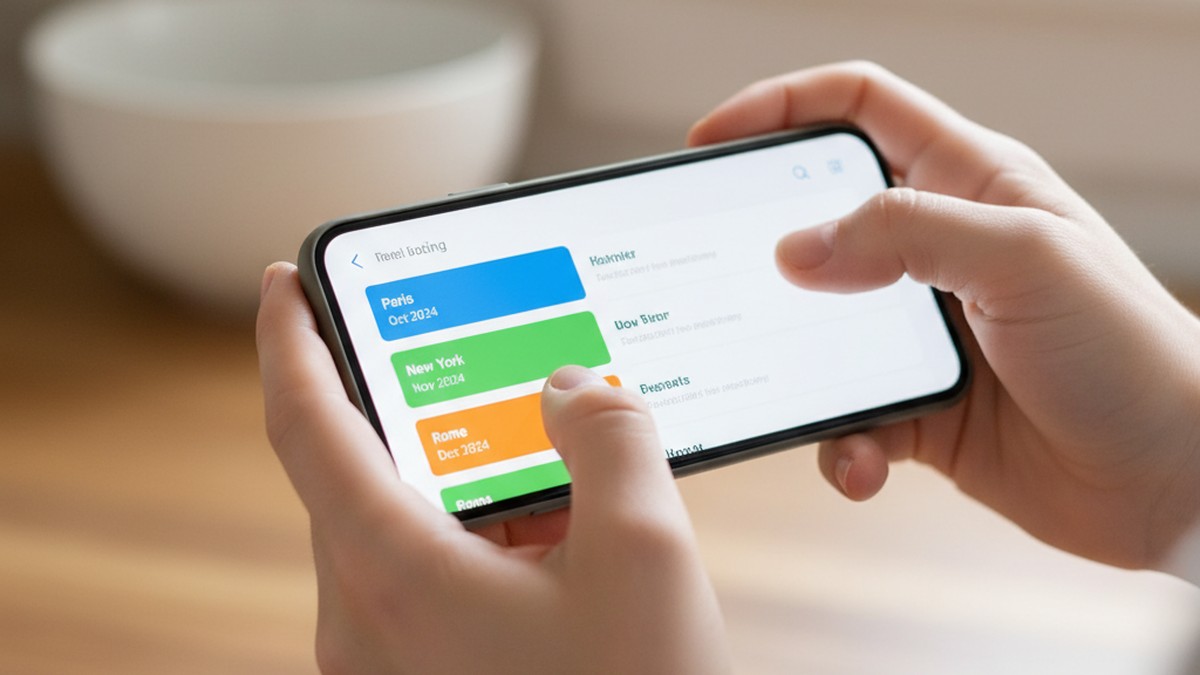
Every major hotel booking platform maintains a reservation history tied to the account. When you book through Expedia, Hotels.com, Booking.com, or a similar platform, the following is recorded and stored indefinitely unless manually deleted:
- Property name and address
- Check-in and check-out dates
- Room type booked
- Total amount paid and payment method used
- Booking confirmation number
- Cancellation status — importantly, cancelled bookings often remain visible in history even after cancellation
The retention of cancelled bookings is significant. If a partner books a hotel room and then cancels it after realizing the situation is too risky, the cancellation record remains. A pattern of booked-then-cancelled stays across a similar location or date pattern tells its own story.
What the Financial Record Shows
Credit card statements show hotel charges differently depending on the property. Large chains — Marriott, Hilton, Hyatt, IHG properties — typically appear under the chain name or the specific property name. Boutique hotels and vacation rentals may appear under an unfamiliar business name that requires searching to identify.
On financial statements, hotel charges typically include:
- Merchant name (the hotel brand or property name, or the booking platform like Expedia or Booking.com)
- Charge date (usually the checkout date, not the booking date)
- Amount charged
- Merchant category code, which banks use to classify the transaction
A hotel charge on a credit card statement dated on a night your partner claimed to be somewhere specific creates an immediate discrepancy. The charge doesn't prove who was there or why — but it proves where the money went.
The Difference Between Evidence for Confrontation and Evidence for Court
This distinction matters before you do anything else. Evidence that's sufficient to confront a partner is different from evidence that needs to hold up in court. For confrontation, you need enough to raise an unanswerable question — a hotel charge on a specific date, a loyalty program entry for a property in a city your partner never mentioned visiting.
For court, the standard is higher. Evidence must be legally obtained, documented with a clear chain of custody, and ideally corroborated by multiple independent sources. This guide covers both situations separately, so you can calibrate your approach to your actual goal.
If the data here has you concerned, CheatScanX can give you a direct answer. It searches 15+ dating apps for hidden profiles.
Search dating profiles now →Why Hotel Stays Are Common in Cheating Patterns
Hotel stays are a practical necessity for affairs that need discretion. They provide privacy, time away from a shared home environment, and separation from the daily routines that make an affair difficult to conduct locally. The data on travel and infidelity is consistent across multiple independent studies.
A survey by Travel Noire found that 41.3% of US travelers admitted to cheating on a partner while on vacation, a behavior researchers link to what psychologists call "tourist syndrome" — a documented reduction in inhibition and social accountability that occurs when people are away from their normal social environment (Travel Noire, 2024). The same survey found that 56.5% of travelers experience tourist syndrome in some form, suggesting the phenomenon is widespread even if infidelity isn't always the outcome.
Business travel amplifies this effect substantially. A 2025 study of business travelers found that 42% admitted to using dating apps while on work trips, even while in a committed relationship. More concretely, 35% reported engaging in sexual activity during a work trip that their partner would consider unfaithful (YourTango, 2025). Based on data from nearly 100,000 participants, researchers found that 36% of men and 13% of women reported cheating on their partners specifically during business trips (Fatherly).
These numbers matter not because they make cheating during travel more acceptable, but because they identify business trips and travel as the highest-risk contexts — which in turn makes hotel booking history during those periods the most informative place to look.
The Pattern of Escalation
What commonly emerges in accounts of discovered infidelity is a predictable escalation. Partners often start with in-town excuses — working late, gym sessions, social engagements that run long. As the affair develops, they shift to overnight claims: business trips to cities that don't require overnight stays, conferences that don't appear on any work calendar, weekend visits to friends or family that don't involve the friends or family.
The shift from in-town to out-of-town excuses marks the point where hotel booking history becomes directly relevant. The dates, the locations, and the frequency of hotel stays during this period often tell a story that's difficult to explain through legitimate business or personal reasons.
Cash vs. Card: The Deliberate Pattern
Some partners who are aware that financial records can be checked will start using cash for hotel stays. A sudden increase in cash withdrawals — particularly recurring withdrawals of specific amounts around the time of claimed travel — is itself a signal. This pattern connects directly to the financial signs of cheating that often accompany undisclosed hotel activity.
The switch to cash is also a useful indicator of awareness: someone who was previously paying hotel stays on a credit card and has suddenly switched to cash has made a deliberate decision to reduce their financial trail. That decision is worth noting.
How Do You Check Booking App History?
Log into the booking account and navigate to the trips or bookings section. Expedia and Hotels.com store history under "My Trips." Booking.com shows past stays under "Bookings." Each entry shows the property, dates, payment method, and amount charged. Cancelled reservations often remain visible, which can reveal bookings made and then cancelled to cover tracks.
This approach requires legitimate account access. If you share a joint account, you're entitled to its records. If it's a separate account on a shared device, the legal picture depends on your jurisdiction and the device's ownership. If you're uncertain whether accessing an account is legally permissible in your situation, consult a family law attorney before proceeding.
Expedia and Hotels.com
Both Expedia and Hotels.com maintain indefinite booking history within the account profile. To review it:
- Log into the account at expedia.com or hotels.com
- Navigate to "My Trips" in the account menu
- Use the filter to view "Past Trips" — upcoming bookings appear by default
- Each entry shows the property name, dates, total charged, and the card used
Expedia also sends confirmation emails for every booking. If you have access to the email account associated with the Expedia profile, search for "Expedia booking confirmation" to find records even if the app history has been cleared.
Hotels.com additionally runs a rewards program. Stamps earned (one stamp per night) appear in a separate activity history. Reviewing this secondary record provides a cross-check against the booking history: if a booking was deleted from the main history but the stamp was still earned and credited, the stamp record will show the discrepancy.
Booking.com
Booking.com stores all reservations under "Bookings" in the account profile. Past stays appear under "Previous Bookings" or a similar label depending on the current app version. Each entry includes:
- Property name and location
- Check-in and check-out dates
- Room type
- Amount paid
- Whether a review was subsequently left (which can be cross-referenced with public review timestamps)
Booking.com sends a post-stay email prompting guests to review their stay. If you have access to the email account, these emails confirm that a stay occurred even without app history access. The subject line typically reads "How was your stay at [Property Name]?" with a timestamp.
Airbnb
Airbnb is increasingly used for affair-related stays because it has a different character from a traditional hotel — no branded front desk, no loyalty program, no uniformed staff who might recognize a local guest. Airbnb's "Trips" section shows all past and upcoming bookings, including the property address, dates, and host name.
Airbnb charges appear on financial statements as "AIRBNB" followed by a transaction reference number. They are identifiable but don't reveal the specific property. To identify the property, you need access to the Airbnb account or the booking confirmation email.
Importantly, Airbnb bookings don't earn hotel loyalty points. The loyalty program cross-check method (covered in the next section) won't catch Airbnb stays — but the credit card statement will.
What to Do If History Has Been Cleared
If a partner has deleted their booking history, the email confirmation trail is the most reliable backup. Email accounts retain confirmations even when app history is cleared, because they're separate systems. Search the email account for:
- The booking platform names (Expedia, Booking.com, Hotels.com, Airbnb)
- "Confirmation" combined with any hotel brand name
- "Check-in" combined with a date range
- "Your upcoming trip" or "Get ready for your trip"
Even if emails have been deleted from the inbox, most email providers retain deleted messages in the Trash or Deleted Items folder for 30 days. Some Gmail accounts also store records in "All Mail" regardless of deletion status.
What Can Hotel Loyalty Programs Reveal?
Hotel loyalty programs record every qualifying stay with the property name, check-in date, and points earned. Marriott Bonvoy, Hilton Honors, and IHG One Rewards all maintain detailed activity logs visible in the account dashboard. These records are often more specific than credit card statements and can reveal stays that weren't paid on a shared card.
This is the most overlooked source in the entire hotel evidence landscape. Most guides spend time on credit cards and PIs. Almost none mention loyalty programs as a primary evidence source — yet they consistently produce among the most specific and date-accurate records available without legal process.
Here's why this matters: most people with hotel loyalty accounts use them habitually. Checking in without entering your loyalty number means forfeiting points — sometimes hundreds or thousands per stay, depending on the hotel tier and nightly rate. Even partners who are attempting to conceal affairs tend to continue using their loyalty numbers out of ingrained habit. The instinct to collect points overrides the awareness that the points create a record.
In practice, we see patterns where partners have switched from shared credit cards to cash specifically to avoid financial statements — yet continued adding loyalty points on every stay, creating an activity log that's more detailed than the financial record they were trying to eliminate.
How to Access Loyalty Program History
Marriott Bonvoy: Log in at marriott.com or through the Bonvoy app. Navigate to "My Account," then "Points History" or "Activity." Each entry shows the property name, city, check-in date, and points earned. Points are awarded per dollar spent, so the points total gives a rough indication of the room rate and number of nights.
Hilton Honors: Log in at hilton.com or through the Hilton Honors app. Navigate to "Activity" in the account section. Stay entries appear as "Bonus Point" or standard point credits with the property name and date.
IHG One Rewards (InterContinental, Holiday Inn, Crowne Plaza, Kimpton, Six Senses): Log in at ihg.com. Navigate to "Points Activity." Each stay entry shows the brand, property, and dates.
Wyndham Rewards: Log in at wyndhamrewards.com. Navigate to "My Account" then "Activity." Same structure — property name, date, points credited.
Reading What the Points Tell You
Points data does more than confirm a stay occurred. The points earned indicate the room rate tier, which in turn suggests whether the room was a standard single room or a suite. A partner claiming to be at a budget conference who earns points consistent with a $400-per-night suite rate has created an internal inconsistency worth noting.
Points are also typically awarded per night, so the total points credited to a single stay confirm the number of nights — independent of the booking confirmation itself.
The Cross-Check Value
The real power of loyalty programs is as a cross-check against other sources. If a credit card statement shows a hotel charge for one night, but the loyalty account shows a two-night stay at the same property, there's a discrepancy. If the loyalty account shows a stay in Denver but the partner claimed to be in Chicago that week, the discrepancy is geographic. Either finding creates a specific, documentable inconsistency.
How Do Credit Card and Bank Statements Expose Hotel Stays?
Credit card statements are the most legally recognized form of hotel evidence. They're produced by a disinterested third party, they're timestamped to the transaction, and they're difficult to dispute. In divorce proceedings, financial records are among the first documents divorce attorneys request, precisely because they're reliable and comprehensive.
A hotel charge appears on a credit card statement as a merchant transaction with the hotel's name or the booking platform's name. The charge date is typically the checkout date — so a Friday-through-Sunday stay will appear as a Sunday charge on the statement.
Identifying Hotel Charges on Statements
When reviewing statements for hotel-related evidence, look for:
Hotel brand names: Charges from Marriott, Hilton, Hyatt, IHG, Best Western, Wyndham, Choice Hotels, or any major chain brand are immediately identifiable as hotel stays.
Booking platform names: "EXPEDIA," "BOOKING.COM," "HOTELS.COM," "KAYAK," or "PRICELINE" indicate a booking made through a third-party platform. The platform charge is for the hotel room, but the property name may not appear on the statement — you'd need the booking account to identify the specific property.
Airbnb: Appears as "AIRBNB" with a transaction reference number. This indicates a vacation rental stay, not a traditional hotel, but serves the same evidential purpose.
Unfamiliar merchant names: Independent boutique hotels often register with payment processors under their legal business name, which may be different from their hotel's branded name. A charge from "Sunset Hospitality LLC" or "Pacific Shores Properties Inc." might be a hotel that requires a quick search to identify.
Room service and incidental charges: Look for secondary charges following a hotel stay — room service orders, minibar charges, parking, spa services. Multiple room service orders on a single stay suggest more than one person was likely present, since single travelers rarely order two entrées.
Amounts as Evidence
A single-night hotel stay in a US city typically ranges from $80 to $350 for a standard room, and significantly higher for suites or premium properties. Charges in that range from hotel merchants, on nights your partner claimed to be at home or somewhere specific, are worth examining.
Recurring hotel charges of similar amounts at similar intervals — every other Friday, for instance, or on the same dates as claimed business trips — establish a pattern that goes beyond a one-time coincidence.
Shared vs. Separate Accounts
If you have a shared credit card, reviewing statements is unambiguously within your rights as a co-account holder. Request 12-24 months of statements from your bank directly, either through the online portal or by calling the bank's customer service line. Most banks provide at least 12 months of statements online at no cost, and many provide longer histories on request.
If your partner has a credit card in their name only, you don't have the right to access those statements without their consent or a legal order. This is where the process described in the legal channels section becomes necessary.
Can You Get Hotel Records Directly From the Hotel?
Hotels rarely share guest records with non-registered individuals. Privacy policies and data protection regulations prevent staff from confirming whether someone stayed without a subpoena or explicit guest consent. In nearly all cases, direct requests to hotel staff are declined. The only reliable path to compel hotel records is through a court-issued subpoena in active divorce litigation.
This is one of the most persistent myths in online guides about investigating infidelity. Articles frequently suggest calling the hotel directly and asking whether your spouse was a guest. In practice, hotel front desk staff are trained to decline these inquiries. Guest privacy is a standard hospitality industry practice, not an arbitrary policy.
What Hotels Will and Won't Disclose
Hotels will tell you general information: room availability, pricing, the location of amenities, how to make a reservation. They won't tell you whether a named person stayed there, who else was in the room, what was charged to the room, or when a guest checked in or out.
In rare cases — typically smaller independent properties with less formal staff training — a front desk employee might inadvertently confirm that a reservation exists under a name when asked a specific question. This is not reliable or standard, and any confirmation obtained this way cannot be used as formal evidence because it lacks documentation and authentication.
A note on impersonation: Some online guides suggest calling hotels while impersonating hotel staff, an employer, law enforcement, or another official party to obtain stay information. This approach is illegal under federal statutes (18 U.S.C. § 1343 and related fraud laws) and equivalent state laws, and any information obtained this way would be inadmissible in court and expose you to criminal and civil liability. This approach should not be taken.
Surveillance Footage: The Evidence Most People Want and Can't Get
Hotel surveillance footage is the evidence that appears in almost every guide on this topic. The implication is that it's accessible if you ask correctly. It isn't.
Hotels maintain surveillance footage for between 30 and 90 days on average before overwriting it. Even within that window, they will not release footage to any private party — including spouses — without a court order. Courts rarely issue preservation orders for hotel footage unless there's an active legal case and a specific, timely request filed before the footage is overwritten.
By the time most people investigating a suspected affair reach the point of considering hotel surveillance footage as evidence, the footage no longer exists. This is the most common disappointment in hotel-based infidelity investigations, and it's entirely avoidable by shifting focus toward the evidence sources that are actually accessible.
How to Get Hotel Records Through Legal Channels
If you need hotel records that will hold up in court — authenticated, chain-of-custody documented, and formally produced — there is a defined legal process. It requires an active legal case and an attorney. It takes time. But it produces records with the highest possible evidentiary weight.
Step 1: File for Divorce First
You cannot subpoena hotel records without an active court case. Attorneys cannot obtain subpoenas on behalf of clients until a legal proceeding has been initiated. In the context of infidelity investigations, this means divorce proceedings must be filed before hotel records can be compelled.
Many people want hotel records before deciding whether to file. That's understandable, but the legal system doesn't offer an intermediate step. What you can do before filing is gather and preserve Tier 1 and Tier 2 evidence (discussed in the framework section below) while consulting with a family law attorney about the strength of your case and what additional records a subpoena might produce.
Step 2: Work With Your Family Law Attorney
Once proceedings are filed, your attorney can request subpoenas for hotel records as part of the discovery process. The subpoena specifies:
- The hotel name and location
- The date range in question
- The type of records requested: guest registration records, credit card transaction records, room assignment history, incidental charge history
Hotels are legally required to comply with valid, properly served subpoenas. Unlike a direct phone inquiry, a subpoena is enforceable and typically produces complete records.
The timeline from subpoena request to document production typically ranges from two to six weeks, depending on the hotel's size, the jurisdiction, and their legal department's responsiveness.
What Subpoenaed Records Typically Contain
A hotel subpoena in an infidelity case typically produces:
- Guest registration records showing the registered guest's name, check-in and check-out dates
- Payment records — card type, last four digits of the card, and total amount charged
- Room assignment: the room number and type
- Folio of all incidental charges: room service, minibar, parking, spa, restaurant — itemized with timestamps
What subpoenas typically do not produce:
- Surveillance footage (unless a separate preservation request was made within the footage's retention window)
- The identity of additional guests unless they were formally registered at check-in
The folio of incidental charges is often more illuminating than the registration record alone. A folio showing two dinner entrées ordered via room service, or a spa appointment for two, or a breakfast order for two guests, provides strong circumstantial support for the presence of a second person.
Hiring a Licensed Private Investigator
A licensed PI cannot accelerate access to hotel records — they're subject to the same legal restrictions as anyone else regarding hotel guest privacy. What a PI can do is conduct direct surveillance, documenting a partner entering and exiting a hotel with another individual. This documentation — timestamped photographs taken from public spaces — is often more compelling in court than financial records alone, because it directly establishes opportunity and presence rather than just a financial transaction.
Licensed PIs who testify in court carry significant weight in fault-based states. Their testimony is treated as expert witness testimony, which is harder to dismiss than a spouse's self-gathered screenshots.
Costs typically range from $1,000 to $3,500+ depending on the number of surveillance hours required and the PI's market. If you're in a fault-based divorce state where infidelity affects financial outcomes meaningfully, the cost is often worth the investment. For guidance on the broader toolkit available when investigating a partner's behavior, the guide on how to catch a cheating husband covers the full range of methods with legal context.
The Hotel Evidence Hierarchy: A Framework for What Actually Works
Most people investigating hotel-related cheating evidence approach it without a clear structure — checking one thing, finding nothing, checking another, feeling overwhelmed. This framework organizes hotel evidence methods into three tiers based on how easily you can access them and how much weight they carry as evidence.
| Tier | Evidence Type | Access Required | Court Weight | Typical Timeline |
|---|---|---|---|---|
| Tier 1 | Booking app history | Legitimate account access | Moderate | Minutes |
| Tier 1 | Hotel loyalty program history | Legitimate account access | Moderate | Minutes |
| Tier 1 | Email booking confirmations | Shared or accessible email | Moderate–High | Minutes |
| Tier 1 | Calendar app hotel entries | Shared or accessible device | Low–Moderate | Minutes |
| Tier 2 | Credit card statements | Shared account or legal request | High | Days–Weeks |
| Tier 2 | Bank statements | Shared account or legal request | High | Days–Weeks |
| Tier 2 | Digital payment app history | Shared or accessible account | Moderate | Minutes |
| Tier 3 | Subpoenaed hotel records | Active divorce litigation | Very High | Weeks–Months |
| Tier 3 | Licensed PI surveillance | Hiring a licensed investigator | Very High | Days–Weeks |
Tier 1: Start Here, Preserve Immediately
Tier 1 evidence is self-service and can be gathered in an afternoon. If you have legitimate access to booking apps, loyalty programs, email accounts, or shared devices, this is where you start. The limitation is that Tier 1 evidence shows a booking occurred — it doesn't prove what happened during that stay.
Critical rule: Screenshot every piece of Tier 1 evidence the moment you find it. Digital records can be deleted. A screenshot preserves the record at a point in time and creates your own documentary evidence, even if the original source is later cleared. Include the full screen, showing the account name or email address, the URL, and any date/time visible in the interface.
Tier 2: The Financial Layer
Tier 2 requires either shared account access or formal legal process. If you're on a shared credit card account, request 12-24 months of statements directly from your bank. Most banks provide these through their online portal. Some will mail statements on request.
The combination of Tier 1 and Tier 2 evidence is typically sufficient to support a direct confrontation with specific, concrete facts. If you find a loyalty program stay in Phoenix on March 14th and a matching credit card charge from the same hotel on the same date, you have two independent sources confirming the same event.
Tier 3: When You're Preparing for Court
Tier 3 is for situations where you're actively pursuing divorce proceedings in a fault-based state and need admissible documentation of infidelity to support claims about alimony, asset division, or custody. This is where an attorney and a licensed PI become the relevant actors.
Don't attempt to skip directly to Tier 3 without first exhausting Tier 1 and Tier 2. The records you gather at lower tiers directly inform what an attorney includes in a subpoena request and what a PI focuses surveillance on.
A Note on Decision Points
The framework also serves a strategic purpose. If you complete Tier 1 and find no booking history, cancelled or otherwise, and your credit card statements show no unexplained hotel charges, the absence of evidence is informative. It suggests either that hotel stays are not occurring, that they're being paid with cash specifically to leave no trail, or that activity is happening through means (Airbnb under a different email, hotel stays on a separate card) that require Tier 3 methods to access.
What Digital Trails Do Hotels Leave Behind?
Beyond the direct booking and financial sources, hotels and booking platforms leave secondary digital traces that most people don't think to check. These traces exist precisely because the booker wasn't trying to hide them — they're routine digital side effects of the booking process.
Calendar App Remnants
Several major hotel booking apps automatically create calendar events when reservations are made. Expedia, Hotels.com, and Booking.com all offer calendar integration, and some activate it by default. When a reservation is created, a corresponding event appears in the device's default calendar app with the property name, check-in time, and checkout date.
Even after a booking is completed — or cancelled — calendar events often persist unless manually deleted. A hotel reservation in the calendar app for a date your partner never mentioned visiting a specific city is a concrete data point.
To check this: on iPhone, open the Calendar app and review dates of interest. Look for events from hotel brands or booking platforms. On Android, check Google Calendar linked to their primary Google account.
Email Confirmation Receipts
Every hotel booking generates an email confirmation. This goes to the email associated with the booking account. If you have access to a shared email account or an email account on a shared device, search for:
- "Booking confirmation" combined with any hotel brand name
- "Your upcoming trip" or "Get ready for your trip"
- "How was your stay at" (post-stay review request emails)
- The booking platform name (Expedia, Booking.com, Airbnb)
- "Check-in" combined with a date or city name
Post-stay review request emails are particularly useful because they're sent after the stay has already occurred. Finding a "How was your stay at the Denver Marriott?" email on a date your partner claimed to be in Chicago is an external, third-party confirmation that the stay occurred.
Google Account and Maps History
Google maintains several location and activity logs that can reveal hotel stays:
Google Maps Timeline: If your partner uses Google Maps with location history enabled, the Timeline feature records daily routes and locations. Navigate to Maps > Timeline and review dates of interest. Hotel locations often appear explicitly, with the property name automatically identified by Google.
Google Account Activity: At myactivity.google.com, all searches, app usage, and location visits are logged if activity tracking is enabled. A search for "[City] hotel near [location]" or "[Hotel name] check-in" on a specific date leaves a record.
Significant Locations on iPhone: Navigate to Settings > Privacy > Location Services > System Services > Significant Locations. This feature, which Apple has retained across iOS versions, logs locations the device visits frequently or for extended periods. A hotel address appearing as a significant location provides independent corroboration.
For a broader picture of what smartphone data reveals in infidelity investigations, the guide on phone habits that signal infidelity covers the full scope of device-based evidence beyond just hotel stays.
What Is Hotel Evidence Worth in Court?
Hotel evidence carries significant weight in fault-based divorce states as part of a circumstantial case. Courts don't require direct proof of the act — they require evidence of opportunity and inclination. Credit card statements, loyalty records, and PI surveillance documentation are the most admissible forms. Subpoenaed hotel registration records are the strongest single source of formal proof.
The legal weight of hotel evidence depends on three factors: the jurisdiction you're in, how the evidence was obtained, and what it's combined with.
Fault-Based vs. No-Fault Divorce States
The United States uses two main divorce frameworks, and they treat infidelity evidence very differently.
No-fault divorce states (California, New York, Florida, and most others): Courts don't adjudicate who caused the marriage to fail. Evidence of infidelity is generally irrelevant to property division and alimony in pure no-fault states. However, a critical exception applies: if marital funds were spent on the affair — hotel rooms charged to a shared credit card, cash withdrawn from a joint account — that spending may be relevant to asset recovery. Courts in no-fault states can order reimbursement of marital assets spent to facilitate an affair, which means the hotel evidence matters financially even when it doesn't matter as proof of infidelity per se.
Fault-based divorce states (South Carolina, Virginia, Mississippi, Tennessee, New York when filed on fault grounds, and others): Proving adultery can directly affect alimony determinations, asset division, and in some cases custody evaluations. In these states, hotel evidence carries substantial legal weight and attorneys routinely subpoena hotel records and present credit card histories as part of the adultery case.
If you're uncertain which framework applies in your state, this is a question for a family law attorney, not a search engine. The answer determines your entire evidence strategy.
What Courts Actually Evaluate
Courts in fault-based jurisdictions evaluate infidelity claims through a circumstantial evidence standard. Two elements must be established:
1. Opportunity: Evidence that the person had the chance to commit adultery. A hotel stay in another city, alone (or without a disclosed companion), on dates not accounted for by legitimate business or personal reasons, establishes opportunity.
2. Inclination: Evidence suggesting the person was predisposed to pursue an affair. This includes communication evidence (messages to the other person), dating app activity, behavioral changes, witness testimony from people who observed the relationship with the third party, and the patterns in financial records showing repeated similar expenditures.
Hotel evidence typically addresses opportunity directly. Combined with inclination evidence, the circumstantial case becomes compelling.
Admissibility Requirements
For hotel evidence to be admissible, it must have been obtained legally. This means:
- Shared account records are admissible because you're an authorized user of those accounts
- Records obtained from accounts you're not authorized to access may be inadmissible and may expose you to legal liability
- Evidence gathered through unauthorized device access or computer fraud is inadmissible and potentially criminal
- Screenshots of publicly or legitimately accessible records are admissible as evidence of what existed at a specific time
The evidence checklist before confronting a cheater includes a section on evidence preservation and admissibility that's worth reviewing before you take any action based on what you find.
What Mistakes Do People Make When Looking for Hotel Evidence?
The process of investigating a suspected affair is emotionally charged. Mistakes made in this state often undermine the very evidence being gathered or create legal problems that outweigh whatever was found. These are the most common errors, and avoiding them is as important as knowing the correct approaches.
Assuming Surveillance Footage Is Obtainable
Hotel surveillance footage appears in nearly every guide on catching a cheating partner as though it's a practical option. It is almost never practically obtainable for a private citizen, and treating it as a target wastes time that could be spent on evidence that is actually accessible.
Hotels retain surveillance footage for 30 to 90 days before overwriting it. Even within that window, releasing it requires a court order. Courts rarely issue preservation orders for hotel footage without an active case and a formal, timely preservation request. By the time most people reach the point of wanting hotel footage, it no longer exists. Focus on Tier 1 and Tier 2 evidence first — that's where the real trail is.
Accessing Accounts Without Authorization
If you access a partner's booking app, email, or loyalty program account without their knowledge or permission — on a device that belongs to them and that hasn't been shared with you — you may be violating the Computer Fraud and Abuse Act (CFAA) or equivalent state statutes. Evidence obtained this way may be inadmissible, and you could face criminal or civil counterclaims in divorce proceedings.
The key distinctions:
- Shared accounts with joint login credentials: Accessing these is typically within your rights as an authorized user
- Shared household devices: Accessing apps on a shared device is generally permissible
- Separate personal devices: Accessing a partner's personal phone or laptop without their permission is typically not permissible
- Printed or emailed records that arrived in your inbox through normal channels: Using these is permissible
Failing to Preserve Evidence Immediately
This is the most costly operational mistake. Digital records can be deleted, accounts can be closed, and apps can be cleared. When you find booking history, loyalty program entries, or email receipts that suggest a hotel stay you weren't told about, screenshot everything immediately — before doing anything else.
Document the full screen, including any account identifier (email address, username), the URL, and any visible date or timestamp. If the finding is on a mobile app, screenshot the specific record plus the account settings page showing the account owner's name or email address.
Don't take a mental note and plan to return. If your partner realizes they're being investigated, the deletion often happens within hours.
Confronting Before Gathering Evidence
The impulse to confront immediately is natural. Acting on it before gathering evidence typically means losing access to that evidence. Partners who are confronted — even with partial information — frequently delete booking histories, change account passwords, cancel loyalty accounts, and remove devices from shared access within hours of the confrontation.
Gather evidence first, complete it, preserve it. Then confront with specific, documented facts. A confrontation backed by a printed credit card statement and a screenshot of a matching loyalty program entry is a very different conversation from one based on a feeling or a partial observation.

When Should You Stop Looking and What Should You Do Instead?
Most guides on hotel cheating evidence don't include this section. They treat the investigation as inherently worthwhile and the evidence as the end goal. Both assumptions are worth questioning.
Searching for hotel evidence — or any cheating evidence — can become a consuming, destabilizing process. Some people spend weeks cycling through credit card statements, booking apps, and loyalty accounts without finding definitive proof because nothing exists to find, or because the evidence is genuinely hidden beyond accessible channels. Others find clear evidence but can't bring themselves to act on it. Both patterns cause significant psychological harm independent of what the investigation reveals.
The Evidence Paradox
Here is a reality that most guides omit: the evidence threshold you think you need before confronting a partner is usually much higher than what you actually need. Partners confronted with even partial, specific evidence — a hotel charge on a date that contradicts their stated whereabouts, a loyalty program entry for a city they never mentioned — frequently reveal far more than the evidence itself showed.
The specificity of hotel evidence is its advantage in confrontation. "I saw a hotel charge in Denver for last Friday. You said you were in Houston for the conference" is a very different kind of question than a generalized accusation. Specific questions are harder to deflect.
Setting a Scope Before You Begin
Before starting any investigation, set a defined scope:
- A specific time period to review (the past six months, the dates of a particular claimed business trip)
- A specific question to answer (did they stay at a hotel in [City] on [Date]?)
- A defined stopping point (if I find nothing in this scope, I'll consider that meaningful)
Undefined investigations tend to expand indefinitely and become more about the process of looking than about a specific answer. That's neither productive nor healthy.
What to Do With What You Find
If hotel booking history, loyalty records, or financial statements reveal unexplained stays, you have several clear options:
Direct confrontation with specific evidence. Be concrete. Reference the specific date, the specific hotel, the specific amount. Hotel evidence is precise enough to support a precise question, and precision prevents deflection.
Consult a family law attorney before taking action. If you're considering divorce — particularly in a fault-based state — understanding your legal position before confrontation is important. An attorney can advise on evidence preservation, what's admissible, and what your options are in your specific jurisdiction.
Consider therapy before confrontation. If you're uncertain whether you want to end the relationship or work through it, speaking with a therapist first helps you decide how to use what you've found, rather than acting from a place of immediate reaction.
If your concerns extend beyond hotel stays to whether your partner is active on dating platforms, a dating app background check can surface active profiles across major apps and provide additional context about online behavior that may complement the hotel evidence.
Hotel Booking History Evidence: What It Can and Cannot Prove
Hotel booking evidence is genuinely useful — more accessible than most people realize, and more limited than the surveillance footage mythology suggests. Understanding both sides of that equation helps you use it effectively.
What hotel evidence can establish with reasonable certainty:
- That a person was at a specific hotel on a specific date
- That money from a shared account was spent on an undisclosed hotel stay
- That the timing of a stay contradicts stated whereabouts
- That a pattern of hotel stays correlates with claimed travel or absences
- That booking activity occurred under circumstances suggesting an intent to conceal
What hotel evidence cannot directly establish:
- That another specific person was present in the room (without the folio showing double orders or a guest registration listing them)
- That sexual infidelity occurred
- That any particular conversation or act took place during the stay
For confrontation purposes, the first list is typically sufficient. A hotel stay on a date your partner claimed to be somewhere specific is a discrepancy that requires explanation — and the explanation will either resolve the concern or deepen it.
For court purposes in fault-based states, hotel evidence works best as one strand in a multi-source case. The convergence of a loyalty program entry, a matching credit card charge, a Google Maps timeline placing the device at that hotel, and a post-stay review request email — four independent sources confirming the same event — creates a pattern that is very difficult to credibly dispute.
Start with what you have legitimate access to. Preserve everything you find immediately. Build from Tier 1 through Tier 2 before considering legal channels. And hold onto a clear sense of what you're ultimately trying to accomplish — not the investigation itself, but the answer that lets you decide what to do next.
If you've found hotel evidence and want to know whether your partner is also active on dating apps, CheatScanX checks Tinder, Bumble, Hinge, and 12+ other platforms in a single search — and gives you a clear yes or no without guesswork.
Frequently Asked Questions
Hotel records can be used as circumstantial evidence in divorce proceedings, particularly in fault-based states where adultery affects alimony and asset division. Credit card statements showing hotel charges, loyalty program stay histories, and licensed PI surveillance are the most court-admissible forms. Subpoenas compel hotels to produce records, but only in active litigation. Consult a family law attorney before gathering evidence for court use.
Check shared credit card and bank statements for hotel charges. Review booking app accounts — Expedia, Hotels.com, Booking.com — if you share login access or can access their device with permission. Look at hotel loyalty program accounts for points earned on dates your spouse claimed to be elsewhere. Email receipts in a shared inbox are another reliable and often overlooked source.
Hotels are not legally required to disclose guest information to third parties, including spouses. Most front desk staff will decline any inquiry about whether a named person stayed there, citing privacy policies. A subpoena is the only reliable way to compel hotel records. Attempting to obtain records by misrepresenting your identity to hotel staff is potentially illegal and would make evidence inadmissible.
Credit card statements are the most accessible — hotel charges appear with the hotel name, date, and amount. Bank statements show debit card hotel charges similarly. Digital payment apps like Venmo or Zelle may show payments linked to hotel stays. Booking platform email confirmations stored in an email account serve as documentary evidence with specific dates and property names.
Yes. Marriott Bonvoy, Hilton Honors, and IHG One Rewards record every qualifying stay — the property name, dates, and points earned are visible in the account activity log. If you have access to your partner's loyalty account, this history is typically found under 'Activity' or 'Points History.' These records can be screenshotted and preserved as evidence for confrontations or legal proceedings.