# Catch a Cheater in Charlotte NC
If your partner has an active dating profile in Charlotte, a scan can confirm it in minutes — without accessing their phone, without them knowing, and without a private investigator. Dating apps store profiles publicly by design. A scanner surfaces what's already there.
That matters because 38% of affairs now begin through social media and dating platforms rather than in-person encounters (DoULike Infidelity Statistics, 2026). The most common way those affairs come to light is through the same channel they started: digital traces. Nationally, 25% of cheating partners are identified through social media or dating app activity — more than any other discovery method.
This guide covers a four-layer method Charlotte residents can use to check for hidden dating app activity, from free searches that take fifteen minutes to a multi-platform scan covering fifteen-plus apps simultaneously. You'll also find the behavioral signs that precede discovery, how to handle deleted apps, what Charlotte's demographics reveal about local dating app use, and the single mistake that causes most investigations to fail before they produce results.
The fastest starting point is Layer 1 of the Charlotte Digital First Stack — the original framework this guide introduces. It takes under fifteen minutes and costs nothing.
How Does a Dating App Scanner Work in Charlotte?
A dating app scanner queries publicly visible profile data across platforms like Tinder, Bumble, and Hinge using a person's name, age, and location — no phone access needed. For Charlotte, NC residents, entering the Charlotte metro area surfaces any active profiles tied to that geographic region, with results typically returned in under 10 minutes.
The scanner doesn't log into any account. It doesn't read messages or view profile images that aren't publicly displayed. It accesses exactly what any app user would see while browsing: profile photos, usernames, ages, bios, and location ranges. The key distinction from manually searching an app is that an automated scanner queries multiple platforms simultaneously and uses cross-referencing logic to identify profiles belonging to a specific person, even when usernames differ.
For Charlotte specifically, the primary zip codes most relevant to a search are 28202 (Uptown Charlotte), 28203 (Dilworth and South End), 28204 (NoDa and Plaza Midwood), 28207, 28209 (Myers Park and SouthPark), 28210, and 28277 (Ballantyne). Dating apps display profiles based on GPS location, so any active profile in Charlotte will appear within a scan centered on those coordinates.
What the scanner does not access: private messages, photos not displayed on the public profile, app activity history, or location data beyond what the profile displays. These limitations are consistent across all legitimate scan services — and any tool claiming otherwise is accessing data it shouldn't be.
If your partner travels frequently — Charlotte Douglas International Airport connects to over 180 destinations and ranks among the top 10 busiest US airports for business travel — consider running a secondary scan centered on cities they've recently visited. Dating apps update profile location automatically to wherever the phone was last actively used, so a profile might show a different city on a week when your partner was traveling for work.
The next section covers which platforms see the most dating activity in Charlotte's specific demographic, because a Tinder-only check misses the majority of possible activity.
CheatScanX scans all of these platforms — and more — in a single search. Enter a name, email, or phone number and get results in minutes.
Try a multi-platform search →Which Dating Apps Do Charlotte Partners Use to Cheat?
Charlotte's workforce — median age 34.5, concentrated in financial services, healthcare, and technology — uses a broader spread of dating apps than most comparably sized cities. Checking only Tinder misses the majority of potential activity on other platforms.
The apps active in Charlotte's primary demographics include:
- Tinder — the highest-volume app in Charlotte, with the most total active profiles across the 25-40 age bracket
- Bumble — heavily used by Charlotte's professional class in Uptown, Dilworth, and South End neighborhoods; Bumble's reputation for requiring women to message first makes it preferred by people seeking less visible activity than Tinder's high-volume environment
- Hinge — marketed as "designed to be deleted" but widely maintained by people in existing relationships who haven't completed account deletion; particularly active in Charlotte's 27-38 demographic
- Match.com — used more heavily by adults 35-55, including married adults who want lower social visibility than Tinder or Bumble provides
- OkCupid — concentrated in Charlotte's arts and culture neighborhoods: NoDa, Plaza Midwood, and Wesley Heights; more commonly associated with people open about non-traditional relationship structures
- Coffee Meets Bagel — active in Charlotte's banking and tech sectors because of its quieter, more curated matching model that generates fewer notifications
- Feeld — a niche platform growing in Charlotte, focused on non-traditional relationship arrangements and used specifically by people who don't want their activity visible on mainstream apps
What we observe in CheatScanX scan data across major metro areas: profiles active on multiple platforms simultaneously are significantly more likely to show recent activity on at least one platform than profiles limited to a single app. The practical implication is clear — a person can be dormant on Tinder and active on Hinge in the same week. Checking a single platform produces a result that's accurate for that platform, not for the person's overall activity.
A thorough investigation checks all relevant platforms at once. For the complete breakdown of apps cheaters use to cheat, including apps specifically designed to avoid detection, that guide covers every platform currently active in infidelity investigations.
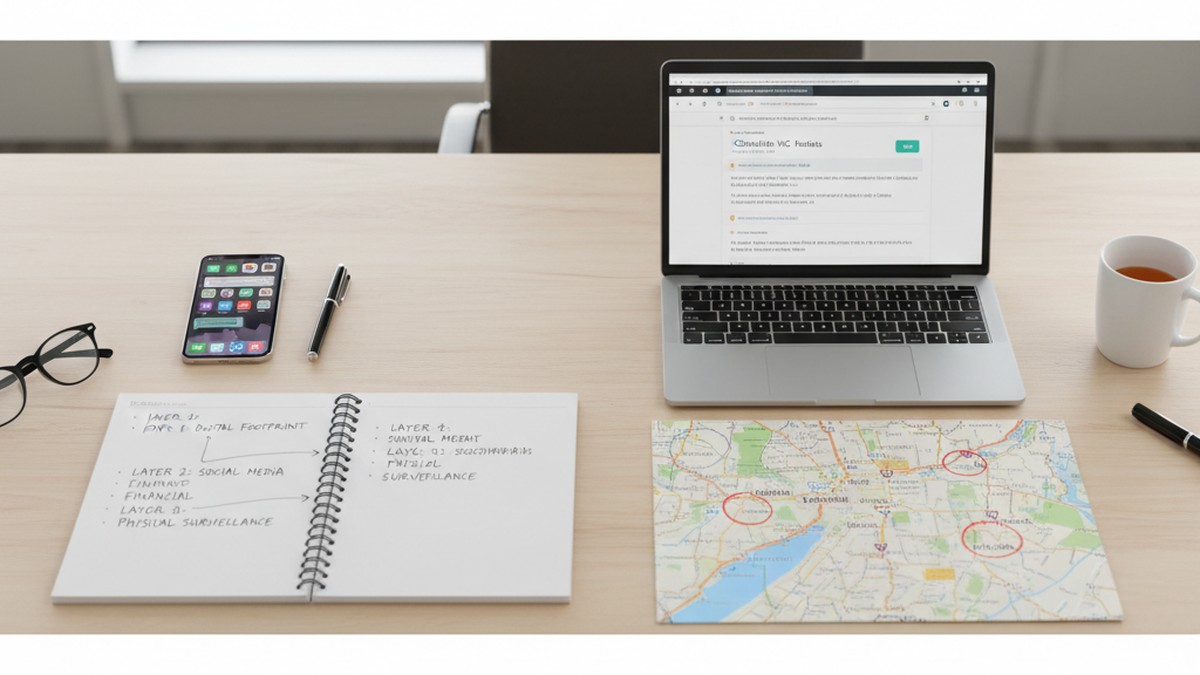
The Charlotte Digital First Stack: A 4-Layer Method
Most guides about catching a cheating partner open with the same recommendation: confront your partner, trust your intuition, or hire a private investigator. This guide recommends a different sequence — and for Charlotte residents specifically, a more practical one.
Before any confrontation, build a factual record. The Charlotte Digital First Stack is an original four-layer method that moves from fastest and least invasive to deeper evidence-gathering, run in order before any conversation takes place.
Layer 1: The Dating App Scan (15 minutes)
Run a multi-platform scan using an automated service. Enter your partner's first name, approximate age within a 2-3 year range, and the Charlotte, NC location. This is your first filter. A clean result eliminates the most common channel through which digital affairs develop. A positive result tells you exactly where to focus next — and gives you a documented record before anything disappears.
Layer 2: Reverse Image Search (20 minutes)
If you have access to photos of your partner — from shared folders, social media, or your camera roll — run them through Google Images or TinEye. This surfaces any public-facing profile across dating apps, social media accounts, classified listings, or forums where those photos appear under a different name, age, or bio. Name changes are easy. Changing photos across a dozen platforms is not.
Layer 3: Social Media Activity Audit (30 minutes)
Review Instagram, Snapchat, and Facebook — not what your partner posts, but when they're active, which new accounts they've followed recently, and which unfamiliar names have appeared in their follower or following list. Instagram's "accounts you interact with most" function, accessible through account settings under "Your activity," surfaces names you don't recognize. A Snapchat score that increases during hours you're not in contact is a separate signal worth noting.
Layer 4: Location Pattern Cross-Reference (passive, ongoing)
Without installing any tracking software, review existing location data that was already shared. Apple's "Find My," Google Maps Timeline if location sharing was previously enabled, and Lyft or Uber ride history — accessible through each app — can show movement patterns inconsistent with explained schedules. Charlotte's geography is relevant here: South End bars and restaurants, NoDa venues, SouthPark's hotel district, and the Lake Norman corridor are entertainment areas that will appear repeatedly in location data if someone is meeting people outside the relationship.
Run the layers in order. Most people who find evidence do so at Layer 1 or Layer 2. Layers 3 and 4 are for situations where the first two return nothing conclusive but behavioral patterns continue to raise questions.
Why digital documentation before confrontation matters: once a partner becomes aware of your suspicion, digital evidence can disappear within minutes — apps deleted, photos removed, accounts closed. If you find something in Layer 1 or 2, document it immediately and completely before any conversation takes place. If you're considering consulting a family attorney about your situation in North Carolina or elsewhere, arriving with documented evidence gives you more information about your options from the first meeting.
How to Run a Dating App Scan in Charlotte: Step by Step
Here is the exact process for running a Charlotte-area dating app scan using an automated multi-platform scanner.
Step 1: Gather identifying information
You need: first name or known aliases, approximate age within a 2-3 year range, and the Charlotte, NC location. A recent photo of your partner significantly improves accuracy if the scanner offers image-matching verification.
Step 2: Choose a multi-platform scanner
A scan that checks only Tinder misses approximately 80% of potential activity across other platforms. Choose a service that covers at least ten platforms simultaneously. CheatScanX scans 15+ dating platforms for the Charlotte metro area — including Tinder, Bumble, Hinge, Match, OkCupid, and others — in a single query, so you don't have to run separate searches for each one.
Step 3: Set the Charlotte geographic parameters
Dating apps use live GPS location. Set the search location to Charlotte, NC. If your partner has been in other cities recently, run a secondary scan for those locations — profiles update automatically to wherever the phone was last actively used, and a Charlotte-based profile may temporarily show another city after a business trip or weekend away.
Step 4: Review results carefully before acting on them
A match result includes profile photo, username, bio text, and last-active timestamp where the platform makes that data available. Compare profile photos first, not usernames — names change easily, photos less so. Some profiles use a single older photo taken years before. The image remains the more reliable identifier.
Step 5: Document the result immediately and completely
Before doing anything else, screenshot or download the full result page. If your partner detects that you know something and deletes their profile, your screenshot is the only record that it existed. Store it somewhere your partner can't access — a personal email account, a private cloud folder, or a device they don't use.
Step 6: Determine your next step based on the evidence, not the emotion
A positive scan result is data. It confirms a profile exists at the time of the search; it doesn't tell you whether your partner has acted on it or what their intentions were. Some people maintain profiles out of habit, indecision, or vanity without pursuing anything through them. Others are actively using them. What you found determines what the next appropriate step is — and that step is yours to decide.
CheatScanX runs this multi-platform scan for Charlotte automatically. Enter a name, age, and the Charlotte location, and the scan covers 15+ platforms simultaneously with results in minutes.
For a complete guide to how to catch a cheater using methods beyond dating app scans — including phone behavior patterns, email lookups, and social media investigation — that guide covers every available approach in sequence.
What Behavioral Signs Point to Dating App Use?
A dating app scan is the fastest way to confirm activity, but something typically prompts the search before the scan is run. Common behavioral signs that appear before a digital check include:
Changes in phone behavior:
- New passcode or changed biometrics with no explanation — particularly if they previously left the phone unlocked around you
- Phone always face-down or taken into another room when notifications arrive
- Notification previews turned off in iOS or Android settings — a change that specifically hides message content from the lock screen
- Phone charging in a different room overnight, when it previously charged on a nightstand or shared surface
- Noticeably shorter time to respond to your messages while response times to someone else appear immediate
Schedule and financial changes:
- "Working late" or gym patterns that don't correspond with their specific job's demands or their previous routines
- Unexplained subscription charges between $10–$30 per month on credit or debit statements — dating app subscriptions appear exactly as generic recurring charges, sometimes listed as the parent company name rather than the app name
- New personal grooming habits, clothing purchases, or fitness focus that aren't tied to a known life event
- Increased vagueness about evening or weekend plans, without any new social activity you're aware of or can account for
Digital behavior patterns:
- Browser history cleared far more frequently than before, or private browsing consistently enabled
- Unfamiliar app icons appearing in folders labeled generically — "utilities," "tools," "finance," or "games"
- New contacts appearing in their phone without a clear origin story you can place
- Stepping out of the room for phone calls that previously happened in front of you
No single sign is definitive on its own. A combination of phone behavior changes alongside financial signals — particularly unexplained subscription charges — is the pattern most commonly observed prior to a positive scan result. The scan takes less time than an extended period of monitoring behavioral signs and second-guessing their meaning.
For the specific apps that commonly disguise themselves as utilities on a partner's phone, the full guide to hidden dating apps on their phone covers vault apps, calculator-disguised apps, and other conceal tools used specifically to avoid detection.

Can You Find a Dating Profile After the App Has Been Deleted?
Deleting the dating app from a phone does not delete the profile. The profile remains visible to other users on the platform until it is manually deactivated or until the account exceeds a period of inactivity — typically 60 to 120 days for most major platforms before the profile is hidden from search results (though not permanently removed from the platform's servers).
This distinction matters practically. If your partner recently deleted Tinder or Bumble from their phone — possibly in response to sensing your suspicion — their profile may still be fully visible and searchable to anyone on that platform, including a scan service, within that inactivity window.
The deletion sequence most people don't follow: deleting the app removes the interface from the phone. Deleting the account — a separate action typically buried in the app's account settings under "Delete account," not just "Log out" — actually removes the profile from the platform. These are two entirely different actions, and many people perform the first without knowing the second exists.
Platform-specific behavior: Tinder hides inactive profiles from the "people nearby" swiping feed after a period of inactivity, but the profile remains accessible through searches and isn't removed. Bumble and Hinge follow similar patterns — the profile becomes less visible in active browsing but doesn't disappear. Match.com retains inactive profiles for significantly longer, sometimes years, before any automatic removal.
The honest limitation: if your partner took the additional step of fully deleting their account — not just the app — the profile typically disappears from scan results within 24-72 hours. No scan service can recover a completely deleted account. This limitation applies to every scanner on the market without exception.
The reverse image search in Layer 2 of the Charlotte Digital First Stack can sometimes surface cached profile images through third-party indexing services, even after account deletion, because external sites occasionally index profile images before they're removed. This is worth running as a secondary check if the dating app scan returns nothing but other behavioral evidence still points to recent app activity.
Why Charlotte Is a High-Risk City for Dating App Investigations
Charlotte is the second-largest banking and financial center in the United States. That context shapes the city's relationship to dating app use in ways that are more structural than cultural.
Financial services employment in Charlotte — anchored by Bank of America's global headquarters, Wells Fargo's east coast operations hub, and dozens of mid-size financial firms — creates a workforce profile that relationship researchers associate with elevated infidelity risk: irregular and extended work hours, high-frequency business travel, and a large population of transient workers who rotate through the city on project-based assignments without established local social networks.
Charlotte's population of 977,740 is growing at 1.78% annually — roughly 17,000 new residents per year (World Population Review, 2026). A significant share of those arrivals are professionals relocating without pre-existing social networks in the city, using dating apps to build connections rather than relying on an organic social circle. This creates a large pool of active dating app users who share no social overlap with your partner's existing connections — a structural condition that makes digital infidelity easier to maintain without social detection.
The city's median age of 34.5 places its largest population segment precisely at the center of peak dating app use. The General Social Survey finds that 20% of married men and 13% of married women report having had sex with someone other than their spouse — rates that don't decline among unmarried partnered adults. A 2026 study published in Frontiers in Psychology confirmed that dating app use is a statistically significant predictor of infidelity among people already in committed relationships, independent of other relationship satisfaction variables.
A 2022 study by MyDatingAdviser.com ranked Charlotte 33rd among the most unfaithful metro areas in the United States, above the national median. The ranking weighted divorce rates, relationship satisfaction scores, and geography-specific affair-related search activity.
None of this is a judgment on Charlotte as a city. It's the demographic and economic context that makes digital investigation tools more practically relevant here than in smaller, socially interconnected communities where information surfaces through mutual connections. In a metro of nearly one million people, the social network doesn't do the surveillance work automatically.
For context on how dating app cheating statistics break down nationally by platform, age group, and relationship duration, that data article covers the full picture.
Common Mistakes That Undermine a Charlotte Investigation
The process matters as much as the tools. These are the mistakes that most commonly produce false conclusions or compromise the investigation before it produces actionable results.
Confronting before documenting
This is the most frequent and most consequential mistake. Once your partner knows you suspect them, digital evidence can disappear within minutes — apps deleted, photos removed, email accounts closed, cloud backups wiped. If you find something in a scan, document it fully and securely before raising it in any conversation. This isn't about manipulation; it's about retaining access to the truth you've already found.
Searching only one platform
Tinder is the most recognized dating app and therefore the one people are most likely to avoid precisely because of that recognition. Activity shifts to Bumble, Hinge, Match, and OkCupid — apps with lower social stigma, better features for ongoing parallel relationships, and a lower chance that a mutual friend would notice. A single-platform search returns an accurate result only for that platform, and nothing else.
Accessing another person's account to check
Using someone else's login credentials to access their accounts — even to investigate infidelity — creates legal exposure depending on jurisdiction and how the evidence is later used. Always use tools that search publicly visible data, not tools that require you to log in as another person. This applies to email, social media accounts, and dating app accounts equally.
Running one scan on one day and treating it as final
Dating apps show profiles based on current location. If your partner is traveling when you run the scan, their profile location may reflect that city, not Charlotte. Platform updates also introduce occasional delays in profile data. A single clean result is not a definitive answer, particularly when behavioral signals remain unexplained. Run the scan on a day when your partner is confirmed to be in Charlotte.
Asking a mutual contact to investigate on your behalf
Word moves faster in a shared social network than any investigation does. A friend or acquaintance asked to discretely check a profile is now a participant in the investigation. If the situation becomes more serious — legally or interpersonally — an additional party complicates every subsequent step. Keep the process documented and conducted independently.
Once you have clear evidence from the investigation, the more important question becomes what to do with it — and the right answer depends entirely on your goals and your relationship.
What Should You Do Once You Have Evidence?
Finding a dating profile is a data point, not a final verdict. What you do with it depends on what you want the next chapter of your life to look like — and that's something only you can decide.
If you want to confirm the full picture before deciding anything:
Run the complete Charlotte Digital First Stack. Document each layer with timestamps. Keep screenshots organized in a folder your partner can't access. This isn't necessarily about preparing for a legal case — it's about having accurate, complete information before you enter any conversation, rather than discovering mid-confrontation that there's more to find.
If you want to have a conversation with your partner:
Choose a private setting, not immediately after finding the profile. Give yourself at least a day to process what you've found. Approach the conversation with the documented evidence rather than a series of accusations: "I found a dating profile on [platform] with this photo, created on [date]. I want to understand what's going on" is a more productive opening than a confrontation built on suspicion without specifics. Have the facts in front of you, not just the feelings.
If you want to understand your legal situation:
Contact a Charlotte family law attorney before any confrontation takes place. An attorney can advise you on how evidence of infidelity affects your specific circumstances in North Carolina. Make this call while the evidence is still intact and before any conversation tips off your partner.
If the relationship is one you want to work on:
A dating profile doesn't automatically establish that an affair occurred. Some people create profiles during low points in a relationship and never act on them — sometimes from curiosity, sometimes from a need for validation that never translated into contact. A couples therapist in Charlotte can help you work through what was found in a structured setting, where the evidence is addressed without the conversation becoming irreparable. Evidence changes the conversation; it doesn't always determine its outcome.
The documented evidence gives you accurate information about what happened. What you choose to do with that information is entirely yours.
For a full overview of how to find out if your partner is on dating apps — including what to do when results are unclear or when your partner denies the evidence — that guide covers the complete response process.

Moving Forward: Clarity Before Conversation
Charlotte's size, demographic profile, and digital connectivity make it one of the cities where evidence of dating app activity is most likely to exist and most important to look for. A metro of nearly 977,000 people doesn't surface information through mutual friends the way a smaller community might. The social fabric doesn't do the work automatically.
What the process described here gives you is clarity before a conversation you can't take back. If a scan of Charlotte's major dating platforms returns nothing, you've ruled out the most common channel through which digital affairs are maintained in 2026. That's a genuinely useful result — not just for what it eliminates, but for what it allows you to stop suspecting.
If the scan returns a profile, you have something concrete to work from: not a gut feeling, not a pattern of circumstantial signs, not a hunch that erodes into self-doubt. A profile with a date, a photo, and a platform name is a fact.
The Charlotte Digital First Stack — scan first, reverse image second, social media audit third, location cross-reference fourth — runs in order and takes under two hours in total. Most people who find evidence do so in the first fifteen minutes of Layer 1.
If you're ready to run a Charlotte area scan, CheatScanX checks 15+ dating platforms simultaneously. Enter a name, age, and the Charlotte location. You'll have results before you finish your coffee.
Frequently Asked Questions
Searching public-facing dating profiles using a scan service is legal because dating profiles are publicly visible to all app users by design. The legal issue arises only if you access another person's private account, messages, or device without consent — which scan tools don't require. If evidence of infidelity is relevant to legal proceedings, consult a Charlotte family attorney.
No scanner guarantees absolute certainty. A positive result reliably indicates an active profile exists at search time; a negative means no active profile was found. Accuracy depends on the number of platforms checked, profile data recency, and how closely search parameters match the actual profile. CheatScanX covers 15+ platforms for the Charlotte metro area.
Name variations are common — middle names, nicknames, or entirely different first names. Photo matching is the most reliable identifier. Scan tools that include image-based verification alongside name and location searching perform better than name-only approaches. The reverse image search layer in a layered investigation addresses fake-name profiles directly.
No. A profile scan accesses only publicly visible data — the same information any app user sees while browsing. There is no profile-viewed notification triggered by external scan tools on any major dating platform. The account holder receives no alert when a scan is run against their public profile.