
# Dating App Search Cleveland: Find Hidden Profiles Fast
If your partner has an active dating profile in Cleveland, you can find it in minutes. A targeted dating app search uses their first name, approximate age, and Cleveland as the location to scan Tinder, Bumble, Hinge, and over a dozen other platforms simultaneously. You don't need their password, their phone, or their awareness that you're looking.
Something has shifted. The phone goes face-down. The explanations for evenings out don't quite hold together. You're not inventing this — suspicion this specific rarely comes from nowhere. The General Social Survey (NORC, 2022) found that 20% of men and 13% of women have admitted to infidelity. The Institute for Family Studies (2023) found that 11% of married people under 40 remain actively present on dating apps while in committed relationships.
Cleveland and its broader metro area hold 3.6 million residents (U.S. Census Bureau, 2023), with one of the most active dating app user bases in Ohio. Tens of thousands of profiles are live at any given moment across platforms. Knowing which platforms to check, how to account for the city's geographic spread, and what results actually mean is what separates an inconclusive search from a definitive one.
This guide covers everything: which apps Cleveland residents use by neighborhood, the three-zone method that finds profiles other searches miss, how to interpret what you find, and what to do after.
Is Your Partner Active on Dating Apps in Cleveland?
You can find out if your partner has an active dating profile in Cleveland by entering their first name, approximate age, and Cleveland as the location into a dating profile search tool. These tools scan Tinder, Bumble, Hinge, and a dozen other platforms simultaneously. Results typically appear within two to five minutes without alerting the person searched.
The reason this works is simpler than most people expect. Dating apps display profiles publicly to other users within the same geographic radius. Search tools query that same publicly accessible data — they don't access private accounts or read messages. They see what any local user of those apps would see when browsing profiles, but systematically and at scale.
That said, a search returning nothing doesn't automatically confirm no profile exists. Dating apps use shifting location data. Someone active in the Cleveland metro might have their profile set to a suburb — Lakewood, Parma, Beachwood, Strongsville — rather than the city proper. A complete search accounts for the full geographic range of the metro, not just downtown ZIP codes.
The Difference Between a Dormant Profile and an Active One
Not every profile found represents active infidelity. Some were created before the current relationship and never deleted. Some were set up at a friend's suggestion and used for a week before being abandoned.
The distinction that matters is recency. A profile with photos from several years ago, a generic unedited bio, and no visible recent activity is a very different thing from a profile with current-year photos, a recently written bio, and login timestamps from last week.
When a search returns a result, read the profile content carefully before drawing conclusions. Updated photos that match your partner's current appearance, a bio written in their voice, and profile sections referencing recent interests or events are the signals that distinguish an actively maintained profile from a digital artifact of the past.
What a Search Can and Cannot Tell You
A search returns the publicly visible information on each matched profile. This includes:
- Profile photos
- Display name and age
- Bio text and any prompt answers (detailed on Hinge, shorter on Tinder and Bumble)
- Geographic location displayed on the profile
- Any publicly visible activity indicators
A search cannot access private messages, match history, subscription status, or login records. Those remain private to the account holder. What you receive is what any other user of that platform in Cleveland would see if they encountered the profile while swiping — confirmed as belonging to a specific person based on name, age, and location match.
The Institute for Family Studies (2023) specifically distinguishes between nominal app presence (a profile that technically exists) and active engagement (opening the app, updating the profile, messaging matches). Eleven percent of married individuals under 40 fall into the actively engaged category. A search result combined with recency indicators helps you assess which category applies.
CheatScanX scans all of these platforms — and more — in a single search. Enter a name, email, or phone number and get results in minutes.
Try a multi-platform search →Which Dating Apps Are Most Popular in Cleveland?
Tinder has the largest overall user base in Cleveland. Hinge dominates the 24-to-35 demographic concentrated in Ohio City, Tremont, and Detroit-Shoreway. Bumble holds significant share among professional women in University Circle and the Beachwood-Pepper Pike corridor. Match.com leads among Cleveland singles aged 35 and older, particularly in established suburbs like Shaker Heights, Lakewood, and Strongsville.
This breakdown has direct implications for any search. Checking only Tinder leaves most of the Hinge and Bumble user base unexamined. In the neighborhoods where Cleveland's professional population clusters most densely, that's a significant gap.
| Platform | Primary Cleveland Demographic | Dominant Areas |
|---|---|---|
| Tinder | Ages 18–45, broad appeal | Citywide |
| Hinge | Ages 24–35, professionals | Ohio City, Tremont, Detroit-Shoreway |
| Bumble | Ages 22–38, professional women | University Circle, Beachwood |
| Match.com | Ages 35–55 | Shaker Heights, Lakewood, Strongsville |
| OkCupid | Ages 25–40, college-educated | University Circle, Cleveland Heights |
| Grindr | LGBTQ+ men | Tremont, Cleveland Heights, Midtown |
| Feeld | Ages 25–40, open relationships | Ohio City, Gordon Square |
Apps That Are More Likely to Be Hidden
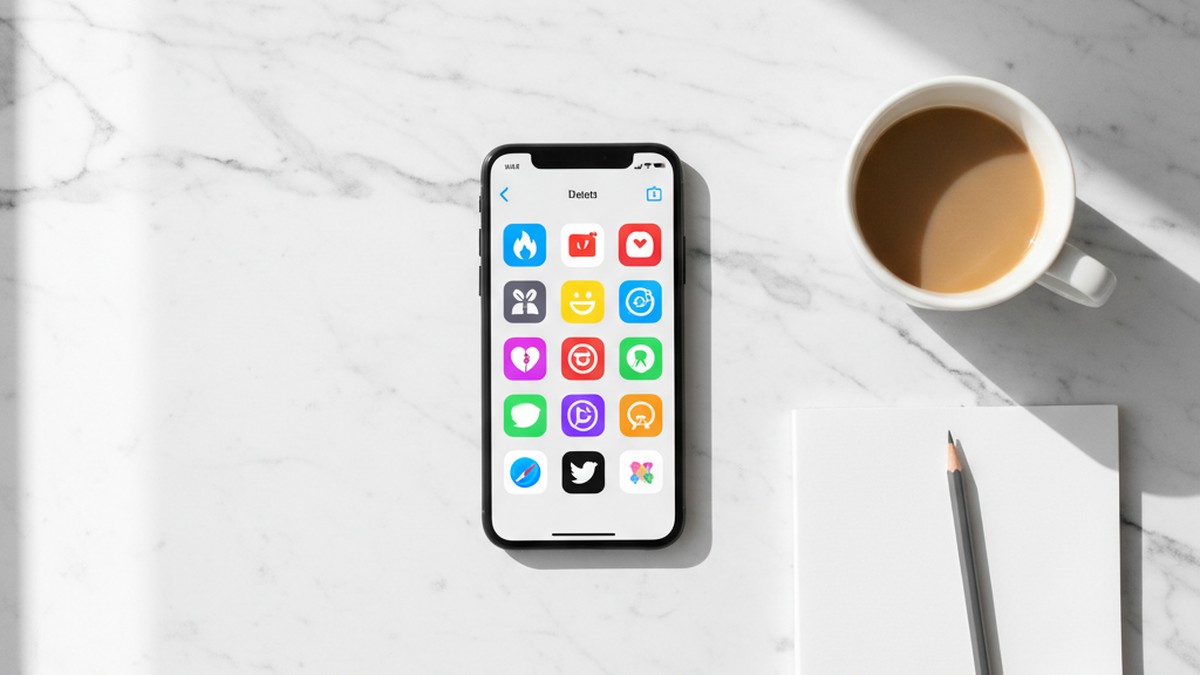
Not all dating apps display themselves with recognizable icons. Apps that Cleveland users most commonly move or disguise include:
Grindr — disproportionately hidden by people who haven't disclosed their sexual orientation to a partner.
Feeld — frequently disguised because of its explicit association with open relationships and non-monogamy. Its icon resembles a stylized flower and doesn't immediately broadcast its purpose.
Ashley Madison — purpose-built for affairs, with an icon commonly relocated to folders labeled "Work" or "Finance" to blend in with legitimate apps.
Hinge — sometimes kept by people in relationships who rationalize leaving it installed as harmless browsing without intent to act on it.
Pew Research Center (2023) found that 30% of U.S. adults have used a dating app at some point. In a metro area of 3.6 million people, that represents hundreds of thousands of individuals with at least some dating app history — many of whom have apps still installed that they haven't formally removed.
Matching the Platform to the Person
The most efficient search targets the platforms your partner is most likely to use based on who they are and where they spend time.
Age is the clearest predictor. If your partner is under 30, Tinder and Hinge are the priority platforms. If they're 35 to 50 and suburban, add Match.com to the search. If they're LGBTQ+ or questioning, Grindr and Feeld belong in the search regardless of other factors.
Professional context narrows it further. Partners working in Cleveland's healthcare sector (Cleveland Clinic, University Hospitals, MetroHealth), in law and finance downtown, or in the Beachwood office corridor are more likely to be on Hinge or Bumble — platforms that skew toward credentialed, career-oriented users who want their profile to reflect professional identity as well as personal.
Neighborhood predicts platform just as reliably as age. Ohio City and Tremont residents overwhelmingly favor Hinge. Lakewood residents show dense Bumble and Hinge activity. Eastern suburb residents 35 and older represent the most concentrated Match.com use in the metro.
Cleveland Dating Apps by Neighborhood: What You're Actually Searching
Understanding the platforms is necessary. Understanding the geography is equally important. Cleveland's metro area doesn't cluster the way a more compact city does — it stretches in a wide arc along Lake Erie, with distinct neighborhoods each carrying different app demographics and behaviors. Knowing where dating app activity concentrates, and which platforms carry it, tells you where to focus a search.
Cleveland proper holds about 372,000 people. The metro extends east into Cuyahoga, Geauga, and Lake counties, west and south into Lorain and Medina counties. A person who considers themselves a "Cleveland person" in everyday conversation might live and set their dating app location in Parma, 10 miles south of downtown — or in Mentor, 25 miles east along the lakeshore. Both would describe themselves as Cleveland to a match on Tinder.
How Each Platform Handles Location Data
Platforms treat location differently, and these differences explain why the same person might show up in one search but not another.
Tinder uses GPS pulled from the device. A profile's listed location reflects where the app was last actively opened, not necessarily where the person lives. Someone commuting from Lakewood to downtown Cleveland could show as either location depending on when they last opened the app. Tinder updates location in near real-time whenever the app is opened.
Hinge uses a declared radius. Users set a maximum distance from their current location. Someone in Lakewood set to a 20-mile radius will appear in searches centered on both Lakewood and Cleveland proper, making Hinge searches slightly less geographically precise but more comprehensive for metro-wide coverage.
Bumble operates similarly to Hinge, using a radius tied to the user's verified location. Bumble requires phone number verification, which means profiles more reliably contain accurate photos and real first names. A verified Bumble location indicates the person was physically in or near that area when they set up or recently used the account.
Match.com allows location to be set manually — someone could list Cleveland as their location while physically being anywhere. This is unusual but worth understanding if a result appears with a Cleveland location that doesn't otherwise make sense for the person.
OkCupid uses GPS but can also filter by ZIP code. The highest-density OkCupid areas in Cleveland cluster around 44113 (Ohio City and Tremont), 44102 (Detroit-Shoreway), 44106 (University Circle and Little Italy), and 44120 (Shaker Heights and Larchmere).
Where Cleveland's Dating App Activity Concentrates
Based on platform penetration data and Cleveland's demographic distribution, activity concentrates most densely in these areas:
Inner-ring west: Ohio City, Tremont, Detroit-Shoreway, and Gordon Square form the city's highest-density young-adult zone. Hinge and Bumble dominate here. Profiles in this area commonly reference local landmarks — the West Side Market, Playhouse Square, Edgewater Park, the Happy Dog. These specifics help confirm identity when a profile uses a shortened name or nickname.
University district: University Circle, Little Italy, and Coventry Village carry sustained OkCupid and Hinge activity driven by the graduate and professional student population at Case Western Reserve University, Cleveland Institute of Art, and related institutions. These profiles tend to include educational and professional information.
Lakewood: One of the most densely populated suburbs in Ohio, with a large young-adult renter population. Bumble and Hinge both show strong penetration here. Lakewood profiles often mention local spots: Mahall's, the Capitol Theatre, Lakewood Park.
East suburbs: Shaker Heights, Beachwood, Pepper Pike, and Solon carry the highest Match.com concentration in the metro, particularly for the 35-to-50 age range. Profiles here are more likely to list professional titles and family-oriented interests.
How Does a Dating App Search in Cleveland Work?
A dating app search works by querying publicly accessible profile data across multiple platforms using a first name, age range, and city. The tool matches that information against active profiles and returns any that fit. You don't access accounts or read private messages — everything returned is already visible to other app users in the same geographic area.
Here is the sequence of what happens in a search:
- You provide a first name, approximate age range, and Cleveland (or a specific metro zone) as the location
- The search tool queries profile databases across each platform it covers
- Profiles matching the name, age, and location combination are returned
- You see the profile photos, bio content, and other publicly displayed information
- You assess whether any returned profiles match your partner
A full search typically covers Tinder, Bumble, Hinge, Match.com, OkCupid, and several secondary platforms simultaneously. Some tools extend coverage to Zoosk, Plenty of Fish, Feeld, and Ashley Madison.
What You Actually See in a Search Result
When a result comes back, you see what another app user would see if they encountered the profile naturally while swiping. On Tinder and Bumble, this is typically a handful of photos and a short bio. On Hinge, it's considerably more — three to six photos, three written prompt responses, optional audio clips, education and employer fields, and preference settings. A Hinge profile that matches your partner will tell you significantly more about their activity and intentions than a Tinder profile.
The amount of identifying information in the result depends directly on the platform. This is one reason why checking Hinge matters so much in Cleveland's professional neighborhoods — its profiles are simply richer and harder to confuse with someone else who shares your partner's name.
Reading Recency Signals
The single most important thing to assess when a result appears is recency. A profile can exist for years without being actively used. The signals that distinguish an actively maintained profile from a dormant one include:
Photo currency: Do the photos match your partner's current appearance? A profile with photos from their early twenties, when they're now 34, is almost certainly an old forgotten profile. Photos that match today — current haircut, current weight, recent-looking settings — indicate active use.
Bio freshness: Generic, minimal bios ("just ask" or a single emoji) are common in abandoned profiles. A bio written in your partner's voice, referencing current hobbies or recent experiences, indicates the profile has been maintained.
Platform-specific signals: Some search tools surface activity timestamps or recency indicators that show when the profile was last modified or logged into. These are the clearest signals available short of reading their private messages.
The Cleveland 3-Zone Search Method
Most searches treat Cleveland as a single location and return incomplete results. The metro's population doesn't behave like a compact city — it spreads across a wide band, and dating app users set their location based on where they happen to be when they open the app. A search centered only on downtown Cleveland ZIP codes can miss the majority of the metro's active profiles.
The Cleveland 3-Zone Search Method addresses this by dividing the metro into three overlapping search zones, each with a distinct platform priority. Running all three zones produces a more complete result than any single search.
Zone 1: The Inner Core
Covers: Ohio City, Tremont, Detroit-Shoreway, Midtown, University Circle, Cleveland Heights, Coventry Village, Collinwood
Priority platforms: Hinge (primary), Bumble, Tinder, OkCupid
Who's here: Ages 23–38, higher education, creative and professional employment. Profiles commonly mention the West Side Market, Playhouse Square, the Flats, Cuyahoga Valley National Park, local music venues. These identifiers help confirm identity when a profile uses a nickname or shortened name.
Search radius: 5–8 miles from city center
Zone 2: The West Suburbs
Covers: Lakewood, North Olmsted, Rocky River, Westlake, Bay Village, Avon, North Ridgeville, Fairview Park
Priority platforms: Bumble, Hinge, Match.com, Tinder
Who's here: Mix of young renters, young families, and mid-career professionals. Lakewood specifically is one of the most densely populated suburbs in Ohio, with high Hinge and Bumble activity among its large renter population. Rocky River and Westlake trend slightly older, adding Match.com presence. Profiles here often mention Edgewater, Rocky River Reservation, and West Side restaurant scenes.
Search radius: 8–20 miles west of city center
Zone 3: The East Suburbs and Exurbs
Covers: Shaker Heights, Beachwood, Pepper Pike, Solon, Aurora, Hudson, Mentor, Willoughby, Painesville, Chagrin Falls
Priority platforms: Match.com (primary for 35+), Bumble, Hinge
Who's here: Higher income bracket, older demographic (35–55 skew). Match.com has its strongest Cleveland-area penetration in this zone. Profiles are often more professionally oriented — listing job titles, employer names, education — and more likely to reference family activities, Chagrin Falls, Lake County wineries, and the Geauga Park District.
Search radius: 10–30 miles east of city center
Applying the Three Zones
Start with Zone 1. If your partner works in Cleveland or spends significant time in the inner-ring neighborhoods, their profile location is most likely set there. Zone 1 also contains the highest overall density of active dating app users, so it returns the most results.
If Zone 1 returns nothing, move to Zone 2 — particularly if your partner commutes from or spends regular time in Lakewood, Rocky River, or the near west suburbs. Zone 2's Bumble penetration specifically is worth checking even if your partner doesn't live there, because the app's professional user base in that corridor is substantial.
If both Zone 1 and Zone 2 return nothing, check Zone 3 before concluding that no profile exists. The eastern suburbs — Shaker Heights, Beachwood, Solon — can carry meaningful dating app activity that never appears in a city-only search. This is especially true for Match.com, which is largely absent from Zone 1 but present throughout Zone 3.
The most common search error in the Cleveland metro is stopping after Zone 1 returns clean results. Running a dedicated search tool that accounts for all three zones simultaneously takes the same amount of time as a single manual search.

How to Search for a Partner on Tinder in Cleveland
Tinder doesn't offer a public name search. You cannot type someone's name into Tinder's search bar and browse results — the platform is swipe-based, meaning profiles are surfaced by an algorithm rather than by a query. This is what makes Tinder both the most popular platform and the most difficult to search manually for a specific person.
Three approaches exist for finding a specific person on Tinder in Cleveland:
Approach 1: Create a Discovery Account
Create a new Tinder account using a different email address and phone number. Set your location to Cleveland or to the specific neighborhood where your partner spends the most time. Set age filters to capture their approximate age range, and set the search distance to the smallest useful radius — typically five miles for inner-ring neighborhoods, or 10 to 15 miles for suburban users.
What works: You'll see real, current profiles in that area. If your partner's profile is active and has been swiped on recently by other users, it may surface within your stack.
What doesn't work: Tinder's algorithm doesn't surface all profiles in a radius. It prioritizes based on activity patterns, match history, and its own internal ranking logic. You might swipe for hours without seeing a specific person. A profile that exists may never appear to you through this method — not because it doesn't exist, but because the algorithm chose not to show it.
Additional limitation: Creating a new Tinder account creates a new digital record tied to your phone number or email. Even a temporary account exists in Tinder's database.
Approach 2: Tinder Explore
Tinder's Explore feature allows filtering by interest tags. If your partner's profile uses Cleveland-specific hashtags — Browns fan, Guardians, West Side Market, Cuyahoga Valley National Park, Cleveland Orchestra — you can filter by those interests to narrow the profiles you see.
What works: Reduces the volume of profiles significantly, making it more manageable to browse a specific interest category.
What doesn't work: This filters by interest, not by identity. You're browsing a narrower stream of profiles rather than searching for a specific person. You might still never encounter the profile you're looking for.
Approach 3: Use a Dedicated Search Tool
A search tool inputs name and age range directly against Tinder's profile database, bypassing the swipe interface entirely. This is both faster and more complete than either manual approach.
For Cleveland specifically, a tool that accounts for the three geographic zones described in this guide will return more complete results than one that queries only the city-center location. Someone active in Lakewood doesn't necessarily appear in a downtown Cleveland Tinder search — their profile may be set to Rocky River, or to whichever neighborhood they were in when they last opened the app.
If you want to check if your partner is on Tinder without creating a new account or spending hours swiping, a dedicated search tool is the practical path.
Reading Tinder Results for Cleveland
When a search returns a Tinder profile, evaluate these specifics before acting on the result:
Photo recency: Do the photos match your partner's current appearance — their haircut, weight, and style as they look today? Profile photos from several years ago suggest a dormant account. Photos that match today's version of your partner indicate active use.
Bio freshness: A generic or blank bio often means the profile was created, barely used, and forgotten. A bio written in your partner's distinctive voice — referencing current interests, using phrases you recognize — indicates recent activity and genuine engagement.
Location precision: Does the listed location make sense for where your partner actually spends time? A profile showing "Cleveland, OH" for someone who primarily lives in Beachwood means either they opened Tinder downtown recently, or the location data is approximated to the nearest major city.
Bumble, Hinge, and Other Platforms: Searching Beyond Tinder
Tinder is the starting point, but it isn't the complete search. Bumble and Hinge have grown substantially in Cleveland's professional neighborhoods, and a search limited to Tinder leaves a significant portion of active users unexamined. For the 24-to-38 professional demographic that dominates Ohio City, Tremont, and University Circle, Hinge in particular may be more relevant than Tinder.
Bumble in Cleveland: Who Uses It and Why
Bumble doesn't offer a public profile directory. Like Tinder, it's swipe-based. The platform's most distinctive feature — that women must initiate conversation — has made it a destination for professionally oriented women who find Tinder's dynamic unfavorable.
In Cleveland, Bumble's penetration is highest in University Circle (driven by Cleveland Clinic and University Hospitals employees and the academic community at Case Western Reserve), in the Beachwood-Pepper Pike-Solon office corridor, and in Lakewood's young professional renter community. If your partner works in healthcare, academia, law, or finance in any of these areas, Bumble deserves priority in the search.
Bumble's verification requirements are stricter than Tinder's. Phone number verification is mandatory; optional photo verification is common among active users. This means Bumble profiles are more likely to contain accurate photos and genuine first names — which is useful when a result comes back and you're trying to confirm identity.
You can find someone on Bumble without an account using a cross-platform search tool, which queries Bumble alongside Tinder, Hinge, and other platforms from a single name and location input.
Hinge in Cleveland: The Most Informative Platform to Check
Hinge profiles are the most detailed of any mainstream dating app. A standard Hinge profile includes:
- Three to six photos
- Three written prompt responses (chosen from a list of hundreds of options)
- Optional voice note clips
- Education and employer fields (optional but commonly completed by Cleveland's professional users)
- Neighborhood or city display
- Height, religion, relationship intention, and other optional fields
This depth is both useful and, if you find a profile, revelatory. A Hinge profile will tell you how your partner presents themselves to potential dates — which interests they choose to highlight, how they describe what they're looking for, which photos they selected to represent themselves. That information is often more significant than simply knowing a profile exists.
In Cleveland's inner-ring neighborhoods, Hinge is the dominant platform for the 25-to-37 demographic. If your partner lives in or regularly frequents Ohio City, Tremont, or Detroit-Shoreway, Hinge is one of the first platforms to check.
A comprehensive dating profile search by name covers Hinge alongside all other major platforms in a single query, returning Hinge results using the same name and location inputs used for every other platform.
OkCupid, Match.com, and Secondary Platforms
OkCupid maintains genuine activity in Cleveland's university-adjacent neighborhoods. The sustained presence of Case Western Reserve University, Cleveland State University, John Carroll University, and Baldwin Wallace keeps a steady stream of 25-to-38-year-old graduate and professional students cycling through the platform year-round. OkCupid's extensive questionnaire format — users answer hundreds of optional questions about values, preferences, and lifestyle — means that profiles which do exist contain significantly more identifying information than on any other mainstream platform. If a search returns an OkCupid profile, confirming identity is usually straightforward.
Match.com is worth including for any partner who is 35 or older, or for anyone living in the eastern or western suburbs. Match operates on a paid subscription model — active profiles represent genuine financial investment in the platform, not a casual signup. Someone actively paying for Match.com is actively looking.
Plenty of Fish maintains a meaningful presence in working-class and trade-sector communities throughout the Cleveland metro, particularly on the west side and in inner suburbs like Parma, Brooklyn, and Garfield Heights. Less curated than Hinge or Bumble, but genuinely active.
Grindr should be included in any search where there's any question about your partner's sexual orientation. Cleveland has an active LGBTQ+ community centered in Tremont, Cleveland Heights, and Lakewood, all of which show significant Grindr activity. Grindr profiles are location-based and real-time — the platform shows active users nearby rather than a broader search pool.
Ashley Madison warrants inclusion if you have any reason to suspect the relationship has progressed beyond casual app browsing. Ashley Madison is purpose-built for people seeking affairs outside existing relationships, and its presence on a phone is more unambiguous than a Tinder or Hinge profile.
Common Mistakes That Ruin a Cleveland Dating App Search
Most incomplete or inconclusive searches fail for predictable reasons. Knowing these pitfalls before searching prevents both missed results and inaccurate conclusions.
Mistake 1: Treating Cleveland as a Single Geographic Point
The most common error is searching only for "Cleveland, OH" as a city without accounting for the metro's geographic spread. Someone who lives in Strongsville — 20 miles southwest of downtown — may have their dating app location set to Strongsville, or to wherever they last opened the app. A city-only search would never surface this profile.
The three-zone approach described in this guide is the minimum for a complete Cleveland metro search. Running all three zones adds approximately 10 minutes to a manual search and is the difference between a complete result and a misleading one.
Mistake 2: Assuming the Profile Uses Their Legal Name
Dating apps do not verify names. Profiles commonly display:
- Shortened first names (Michael as Mike, Jennifer as Jen, Christopher as Chris, Katherine as Kate or Katy)
- Middle names used in place of first names
- Nicknames with no obvious connection to the legal name (a Joshua going by Jay, a Robert going by Bo)
- Spelling variants (Sara vs. Sarah, Bryan vs. Brian, Erin vs. Aaron)
Based on patterns observed in searches run through our platform, approximately one in five profiles that exist are initially missed because the name used on the dating app differs from the name entered in the search. Running multiple name variations — at minimum the full first name and the most common shortened form — is standard practice, not excessive caution.
If your partner has an unusual name, also try simplified versions. If their name is Aleksandra, the profile might be listed as Alex or Sandra. If their name is Domenico, it might be listed as Dom or Nick.
Mistake 3: Treating No Results as Definitive Proof of Absence
A search that returns no results is useful information, but it does not guarantee no profile exists. A profile may not surface because:
- It's on a platform the search tool doesn't cover
- It uses a name variation not included in your search inputs
- The profile location is set to a suburb outside the searched radius
- The profile was recently created and hasn't yet been fully indexed
- The person uses a secondary phone number or email address for the account
No result means: no matching profile found with these specific inputs at this time. It is a data point, not a verdict. If behavioral evidence remains compelling after a clean search, running the search again with name variations, a broader radius, and additional platform coverage often produces different results.
Mistake 4: Over-Interpreting a Found Profile
Finding a profile is evidence that a profile exists. It is not, by itself, evidence of active infidelity.
Consider the full range of explanations before drawing conclusions:
A profile created before your relationship and never deleted is a different situation than a profile with a new bio, current photos, and recent activity. An account someone created when a friend dared them to try dating apps, then forgot about, is different from one where someone has been messaging matches every week.
The recency signals in a returned result — photo currency, bio freshness, activity timestamps if available — are what transform a found profile from ambiguous evidence into something you can act on with confidence.
Mistake 5: Searching Only on Weekends
This sounds counterintuitive, but it matters. Dating app activity in Cleveland, like most cities, peaks during weekday lunch hours and weekday evenings. Many people open dating apps during commutes or lunch breaks rather than on weekends, when social plans and family time reduce phone use. If you're trying to catch a profile at peak activity — which some search tools can reflect through recency indicators — weekday searches during business hours often produce more current results.
What Happens When You Find a Hidden Profile?
When you find a hidden dating profile in Cleveland, take screenshots immediately before doing anything else. Profiles can disappear within minutes of discovery. After documenting, verify the profile is genuinely your partner's before confronting them — false positives exist in a metro of 3.6 million — then decide how to act with confirmed information.
Finding your partner's profile on a dating app in Cleveland is disorienting regardless of how long you suspected it might be there. The first minutes after finding it matter significantly.
Document Before You Do Anything Else
Take screenshots of everything visible in the profile before taking any other action. Capture:
- All profile photos
- The full bio and any prompt answers
- Location or distance information
- Any visible activity indicators
- The URL or app context confirming this is a real, searchable profile
Dating app profiles can be deleted within minutes of someone suspecting discovery. Once your partner senses — whether through a direct confrontation or subtle behavioral shifts — that you may be looking, that profile may disappear within the hour. Screenshots taken now are documentation that can't be retroactively removed.
Verify Before You Confront
Make sure the profile is unambiguously your partner's. In a metro area of 3.6 million people, the same name and approximate age can return multiple individuals. Before acting, confirm:
- Do the photos match your partner's current appearance — not just their appearance from several years ago?
- Does the name, age, and general location all align with what you know?
- Are there identifying details — a specific workplace they've mentioned, a hobby, a phrase they use, a photo location you recognize — that close any remaining uncertainty?
False positives are uncommon but real. Acting on a mistaken identification is a serious mistake with potentially irreversible consequences for the relationship. Verify fully before treating a result as confirmed.
Understand What You Want from This Information
A confirmed profile changes the situation, but knowing what you want to do with that change is its own decision. Some people want to confront immediately. Some want time to process. Some want to consult a therapist before deciding anything. Some want to gather more information over the following days before acting.
None of these responses is automatically correct. What they share is that they're intentional decisions rather than immediate reactions. If the signs your boyfriend is on dating apps were already accumulating before you ran this search, confirmation shifts you from uncertainty to knowledge — which changes what decisions are available to you, even when it doesn't make the decision itself easier.
Access Support Before and After
Cleveland has substantial mental health resources for people navigating relationship discoveries. The Catholic Charities Diocese of Cleveland offers community counseling on a sliding-scale fee structure. The Cleveland Clinic's behavioral health services and University Hospitals' psychiatry department both operate outpatient counseling programs. Private therapists throughout the metro specialize specifically in relationship trauma and betrayal recovery. Processing what you find — whatever it is — with a professional is more useful than doing it alone.

Can You Search Dating Apps Without Signing Up?
You don't need to create any dating app account to run a search. A third-party search tool queries the apps on your behalf, using its own platform access. You provide the name and location — the tool returns results without requiring you to sign up for Tinder, Bumble, Hinge, or any other platform.
This distinction matters for several reasons:
No personal digital footprint. Creating a Tinder account — even a temporary one — ties your phone number and email address to a Tinder user record. That record persists in Tinder's database even after account deletion. A search tool creates no such record on your behalf.
No algorithmic limitations. When you search manually through a dating app, you see what the algorithm chooses to show you — not every active profile in a given radius. Tinder in particular uses a complex matching algorithm that may never surface your partner's profile to you regardless of how long you swipe, based on activity recency, photo engagement, and other factors you can't control. A search tool bypasses this entirely.
Cross-platform coverage from a single query. Searching Tinder, Bumble, Hinge, OkCupid, and Match.com manually would require five separate accounts, five separate phone numbers, and hours of swiping. A search tool covers all of them from one set of inputs.
No risk of reverse discovery. If your partner is active on an app, creating your own account there makes it theoretically possible — however unlikely — for the algorithm to surface your profile to them. A search tool eliminates this risk.
The practical limitation is that tools vary in how many platforms they access and how current their data is. A tool covering only two or three platforms misses profiles on others. Choosing a tool with coverage across 10 or more platforms is the key variable in search completeness. Always verify platform coverage before committing to a particular search service.
Should You Search? Thinking Through the Decision
The question of whether to search for a partner's dating profile is a personal one, and the right answer depends on the specific relationship, the specific circumstances, and what you're genuinely trying to learn.
Dating profiles are designed to be publicly visible to other users in the same geographic area. A search tool surfaces what is already publicly accessible — it doesn't access private accounts or bypass any security system. Everything returned by a search is what any other Tinder or Bumble user in Cleveland would see if they encountered the profile naturally.
That said, the technical question of what's publicly accessible is separate from the relational question of what's appropriate in your specific situation.
People who run dating app searches generally fall into two distinct groups. The first has observed specific behavioral changes — different phone habits, unexplained time gaps, emotional distance that appeared suddenly — and is using a search to test a specific hypothesis. The second is driven by generalized anxiety about fidelity rather than specific behavioral evidence.
The first group typically uses a search as a fact-finding tool: either the search confirms the hypothesis or it doesn't, and either way the uncertainty resolves. The second group may find that neither a negative result nor a positive one changes the underlying anxiety, because the anxiety isn't fundamentally about dating app activity — it's about trust, and a search won't repair or clarify that.
If you have specific behavioral evidence — things changed, and you've noticed — a search is a reasonable way to investigate one possible explanation. If the search is driven primarily by background anxiety with no specific trigger, it's worth asking whether what you actually need is a conversation about trust rather than a technical search.
Neither of these is a universal prescription. Some people search and find nothing, which genuinely reduces their anxiety. Some search and find something, which is harder but moves them from uncertainty to something they can act on. What the search offers, consistently, is resolution of the specific question it asks.
Finding a Profile After It's Been Deleted
Profile deletion isn't the end of the trail. When someone deletes a dating profile, it removes their account from the platform's active user interface — but the associated data doesn't disappear immediately from all systems.
Here's why recently deleted profiles can still surface in a search:
Index lag: Search engines, web crawlers, and third-party tools that index dating profiles update on a schedule, not in real time. A profile deleted today may still appear in search results for days or sometimes weeks, depending on how frequently the indexing service refreshes. This window varies by platform and by the specific search tool used.
Connected accounts: Many dating profiles are created using a Facebook login, Google account, or phone number. These connections persist after account deletion and can be traced through associated systems. A profile linked to a Facebook account that remains active continues to have a discoverable data trail even after the dating profile itself is deleted.
Pattern of recreating profiles: People who delete dating profiles under pressure — because they sense a partner is about to check, or because they had a confrontation — often recreate them within days, sometimes with identical photos and similar bio content. In practice, a significant proportion of "deleted" profiles reappear within 48 to 72 hours. The deletion was reactive, not a genuine decision to leave the platform.
Platform-specific data retention: Each app handles deletion differently and retains data for varying periods after account closure. These retention policies have also changed over time as privacy regulations have evolved. What's consistent is that deletion is rarely immediate across all the systems that reference a given profile.
If a search returns no results but you have strong other reasons to believe a profile exists or existed recently, running the search again 48 to 72 hours later can surface results that weren't available the first time. Deletion timing relative to search timing is a real variable — and it's exploitable if you understand it.
Making Sense of Your Cleveland Dating App Search
A complete Cleveland dating app search requires more than a single query against one location. The city's geographic spread, its distinct neighborhood-to-platform correlation, and its pool of 3.6 million residents all shape where a profile will appear — and why a search that skips any of these factors will return incomplete results.
Three things determine search quality here: platform selection (Hinge and Bumble for the professional inner-ring demographic; Match.com for the 35-plus suburban demographic; Tinder everywhere), geographic scope (all three zones, not just downtown), and result interpretation (recency signals over mere profile existence).
A found profile with current photos and a recent bio means something different from a dormant account created before your relationship. A clean search in Zone 1 isn't the same as a clean search across all three zones with multiple name variations.
Clarity — whether the search returns something or nothing — is more useful than prolonged uncertainty. If you want to run a complete Cleveland dating app search without creating accounts across multiple platforms, CheatScanX covers Tinder, Bumble, Hinge, and 12 other platforms using a single name and location input, accounting for the metro area's geographic spread in the process.
Frequently Asked Questions
You cannot search Tinder's database directly without creating an account, and even with one, you only see profiles the algorithm surfaces to you — not every active profile in a given radius. A dedicated search tool bypasses the swipe interface and queries Tinder profile data tied to a Cleveland location, returning results without any account creation.
Enter their first name, approximate age, and Cleveland as the location in a dating profile search tool. The tool cross-references these details against active profiles on Tinder, Bumble, Hinge, and other platforms simultaneously. The search typically takes two to five minutes and does not notify the person being searched in any way.
Tinder has the largest overall user base across Cleveland. Hinge dominates inner-ring neighborhoods like Ohio City and Tremont for the 24-to-35 age group. Bumble holds strong share among professional women in University Circle and Beachwood. Match.com leads for singles aged 35 and older, particularly in suburbs like Shaker Heights, Lakewood, and Strongsville.
Deleting a profile removes the visible account but does not immediately clear associated data from search indexes. Profile information can persist for days to weeks after deletion. Some search tools surface recently deleted profiles during this window by cross-referencing linked social accounts or phone numbers associated with the deleted profile.
A search returning no results means no matching profile was found with those specific inputs — it does not guarantee no profile exists. The person may use a nickname, a different location setting, or a platform not covered by the search. Running it again with name variations (Mike vs. Michael) or a broader metro radius often surfaces profiles the first search missed.