
# Did They Delete the Apps? How to Tell for Sure
"I deleted the apps. You can trust me." If you've heard that and felt something was still off, you were probably right. Removing a dating app from a phone removes the icon — it does not delete the profile. The account stays live, the photos stay up, and every other user on the platform can still find and match with your partner as if nothing changed.
That single distinction — deleting the app versus deleting the account — is what makes this such a common source of false reassurance. According to a 2026 study published in Frontiers in Psychology, between 60% and 75% of partnered individuals who used dating apps reported more sexual encounters through those platforms than single users did, suggesting the population of people deceiving partners via dating apps is substantial. A separate analysis found that 19% of people in committed relationships maintain active dating profiles.
This article explains exactly what "deleting the apps" means on each platform, introduces the 3-Layer Delete Test for verifying whether a deletion was genuine, and covers eight methods you can use to check whether your partner's profile is still live — none of which require touching their phone.
What Does "Deleting the Apps" Actually Mean?
Deleting a dating app from a phone removes the icon — it does not delete the account. The profile stays visible to other users, the inbox remains accessible, and the account can be reactivated by reinstalling the app and logging in with existing credentials. True deletion requires closing the account from inside the app itself, before uninstalling it.
This distinction is widely misunderstood — including by some of the partners making the promise. Uninstalling an app on a phone works the same way uninstalling any software does: the icon disappears, but the data lives on the company's servers until the account itself is explicitly closed. Every match, every message, every profile photo remains on Tinder's or Bumble's servers regardless of what's on the phone.
The three states a dating profile can actually be in
Every major dating app has three possible profile states. Only one of them means the profile is actually gone.
Active: The app is installed, the account exists, and the profile appears in other users' discovery queues. This is the default and the state a profile returns to the moment the app is reinstalled.
Paused or snoozed: The profile is temporarily hidden from new discovery, but the account still exists. Existing matches can still message. On Bumble, this is called Snooze Mode. On Tinder, it's called Pause. The profile can be unpaused in seconds. To anyone who was already matched with your partner, nothing changes — conversations and connection history remain fully accessible.
Truly deleted: The account has been permanently closed from within the app's settings. The profile is removed from all discovery. Matches and messages are gone. This is irreversible.
When most people say "I deleted the apps," they mean the first-to-paused or first-to-nothing transition: the app icon is removed from the home screen. The account remains in either the active or paused state, which means every other user on the platform can still encounter the profile.
Why the confusion exists — and when it's deliberate
Plenty of people who aren't technically sophisticated genuinely believe removing the app is equivalent to closing the account, the same way a deleted text message feels gone. They make the promise in good faith and then don't understand why a profile scan still returns results.
But some partners do understand the distinction and rely on the other person not knowing it. "I deleted the apps" is a verifiable statement in the narrowest sense — the app icon is gone, which is likely what gets checked — while the profile continues operating in the background. Relationship researchers call this strategic ambiguity: technically true statements designed to create false impressions.
A 2026 study in Frontiers in Psychology found Machiavellian traits were the strongest personality predictor of dating app infidelity. Machiavellianism in relationship contexts is specifically characterized by using technically true statements to manage a partner's perception without changing behavior. Whether or not your partner understands the app/account distinction, you should — because the account being live or deleted is a fact, not a feeling.
Want to skip straight to answers? CheatScanX scans Tinder, Bumble and Hinge in minutes. Completely anonymous.
Start a confidential search →Does Deleting the App Delete Your Profile? (Platform by Platform)
No — but the behavior varies across platforms, and understanding those differences tells you what to look for when verifying a partner's claim.
The core rule applies universally: dating app profiles are stored on company servers, not on the device. Removing the app from the phone makes no change to what exists on the server. Tinder, Bumble, Hinge, OkCupid, Match, and every other mainstream platform work this way.
What actually happens on each platform
| Platform | Profile after app deleted | When profile hides from new users | How to actually delete the account |
|---|---|---|---|
| Tinder | Stays fully active | After 7 days without opening (but account persists) | Settings → Account → Delete Account inside the app |
| Bumble | Stays fully active | Only if manually snoozed or deleted | Profile icon → Settings → Delete Account |
| Hinge | Stays fully active | After ~30 days without opening (account still exists) | Profile icon → Settings → Delete Account |
| OkCupid | Stays fully active | Only if manually disabled or deleted | Account → Disable or Delete Account |
| Match.com | Stays fully active | After 6 months of inactivity (account can linger for a year) | Account Settings → Close Account |
| Feeld | Stays fully active | Never — profile is always visible unless account is deleted | Account → Delete Account |
The 7-day Tinder hiding rule — and why it doesn't mean what people think it means
The most frequently cited justification for "the profile isn't active anymore" is Tinder's 7-day discovery rule: after 7 days without the app being opened, Tinder stops showing a profile to new users. This gets interpreted as the profile being gone, but it isn't.
What the 7-day rule actually does: it throttles the profile's appearance in discovery. The account still exists. Existing matches can still see the profile and message. Anyone using a third-party scanning service that indexes profiles can still find it. The moment the app is reinstalled and opened — which takes 30 seconds — the profile returns to full active discovery immediately, with no setup required.
The 7-day rule is a visibility throttle, not account deletion. Treating it as confirmation that a profile is gone is a mistake that creates exactly the kind of false security a partner maintaining hidden activity would want you to have.
Hinge's 30-day behavior and the same caveat
Hinge operates similarly: profiles stop appearing in the discovery stack after approximately 30 days without the app being opened. Same caveat applies — the account exists, prior matches retain access, and reinstallation restores full activity instantly. The only difference between Tinder and Hinge here is the time window.
If your partner deleted the Hinge app three weeks ago and you're reading this, their profile may still be appearing in new users' stacks right now. And if they reinstalled last week, it's definitely back.
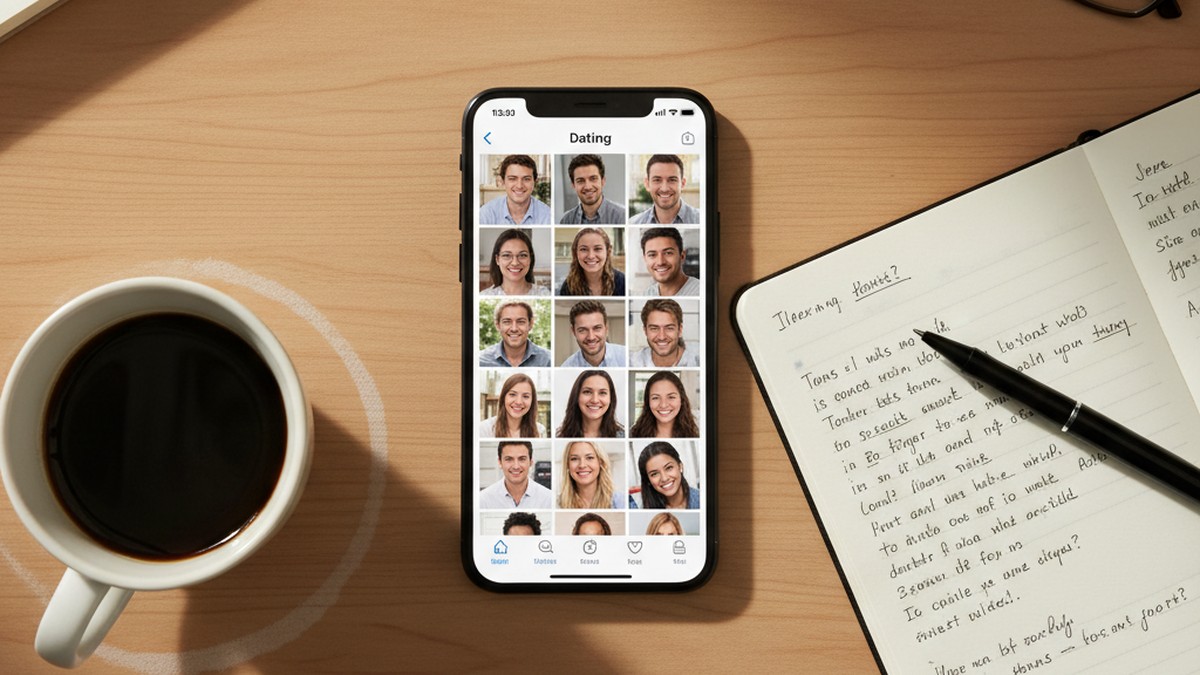
The 3-Layer Delete Test
The 3-Layer Delete Test determines whether a dating app deletion was genuine or cosmetic. An actual deletion clears all three layers. Anything short of that means the profile can be reactivated or is still visible to other users.
This framework is the most important concept in this article.
Layer 1: App deletion
The most visible layer. Has the app icon been removed from the phone's home screen and app library?
This is the layer most people check because it's the one they can see. It's also the easiest layer to fake: removing the app from the home screen takes four seconds, and reinstalling it from the App Store takes 30–90 seconds. The App Store and Google Play store every previously installed app under "Purchased" or "Installed," so there's no search required. All login credentials are preserved in the phone's password manager or browser autofill.
Layer 1 alone tells you: the icon is gone from the home screen. It tells you nothing about whether the account exists.
Layer 2: Account deletion
This is the layer that determines whether the profile actually exists on the platform's servers.
Account deletion requires navigating into the app's settings and selecting the "Delete Account" or "Close Account" option — which most apps deliberately bury in the settings menu. It's not the same as logging out. It's not the same as deactivating. It's a permanent, irreversible action that removes the profile from all discovery, erases matches and messages, and sends a confirmation.
What proof looks like: a confirmation screen appears inside the app ("Your account has been deleted" or similar), and most platforms simultaneously send a confirmation email to the registered address. If your partner completed Layer 2 correctly, there's a receipt — a screenshot of that confirmation screen or an email in their inbox.
If no receipt was saved, either they didn't know to document it, or the deletion didn't happen. Either way, the only way to confirm is to attempt to log in to the account using their email — an account that was truly deleted will return "account not found."
Layer 3: Subscription cancellation
The layer almost everyone forgets — including partners who genuinely intended to delete.
Dating app premium subscriptions (Tinder Gold, Bumble Premium, Hinge Preferred) are frequently managed through the App Store or Google Play, not through the app itself. Deleting the app or even the account does not automatically cancel the billing. The charges continue until the subscription is explicitly cancelled through the phone's operating system settings.
On iPhone: Settings → [Apple ID name] → Subscriptions. Any active dating app subscription appears here and must be cancelled separately.
On Android: Google Play → Account → Payments & Subscriptions → Subscriptions. Same process.
A 2026 report by the Groundwork Collaborative documented systematic post-deletion billing complaints across Tinder, Bumble, and Hinge — users describing charges for months after what they believed was a complete deletion, because the App Store subscription was never separately cancelled. The charges continue because the subscription exists independently of the account.
Why Layer 3 matters for verification: if an active subscription charge appears on a credit card or bank statement after the deletion date, either the account wasn't deleted, or the subscription wasn't cancelled. Both outcomes mean Layer 3 wasn't completed — and an uncancelled subscription means the account can be reactivated with full premium features the moment the app is reinstalled.
The standard: A genuine deletion clears all three layers — app removed, account deleted with a confirmation receipt, subscription billing cancelled through the device's OS settings. Any layer left intact is an incomplete deletion.
If you want to know whether your partner's profile is still up, a profile scan via CheatScanX can confirm the account status across Tinder, Bumble and Hinge in minutes.
Signs They're Still Using Dating Apps (Without Looking at Their Phone)
If you've had the deletion conversation and something still feels off, specific behavioral patterns tend to surface when someone continues using dating apps while claiming to have stopped. None of these are proof alone — each has innocent explanations. But when several appear together, the pattern becomes harder to attribute to coincidence.
Timing-specific phone behavior
Dating app activity peaks between 10 PM and 1 AM — the window when match rates are highest and when most users are actively swiping. If your partner shows a new pattern of increased phone engagement specifically during this window — turning the screen away, moving to another room, or becoming visibly tense when you walk in during this time — it's worth noting alongside other signals.
The thing to track is change, not behavior in isolation. Someone who genuinely deleted their accounts and has no reason to hide won't have new reasons to angle the screen away during the hours they weren't hiding it before. New secretiveness, appearing after the deletion conversation, is a specific data point.
Notification dismissals that don't match their claimed behavior
Dating app notifications appear on a phone's lock screen and as pop-up banners. Someone who deleted the app won't receive in-app push notifications — but if they reinstalled quietly, you might catch the pattern: a notification appears, they dismiss it faster than usual, change the subject, or turn the phone over. Tinder and Bumble notifications often include preview text — a match name or a message opener — visible to anyone nearby at a glance.
The distinction from general privacy is important: you're looking for new dismissal behavior that wasn't there before, not someone who has always been protective of their phone. The change in how specific notifications are handled — particularly in the late-evening window — is what matters.
Battery drain that doesn't match declared usage
Dating apps running actively consume measurable battery. If your partner's phone was consistently at 40% by 11 PM before the deletion conversation and is now at 15–20% by the same hour without any obvious explanation (a new game, streaming video, GPS-intensive navigation), something changed in how the phone is being used.
This isn't standalone evidence — any data-heavy app produces the same drain. But battery usage changes, when combined with timing-specific secretiveness and notification patterns, strengthen the overall picture.
Phone data usage and battery settings
This requires brief access to the phone itself — but not to any apps or accounts, just to the Settings panel. On iPhone, go to Settings → Cellular → scroll to Cellular Data Usage to see per-app data consumption since the last reset. Dating apps actively in use (downloading profile photos, syncing matches, processing location pings) typically consume 50–200MB of cellular data per month. If a dating app appears in this list — even one your partner claims was deleted — the app is installed and running. The listing disappears when the app is genuinely uninstalled.
On Android, the equivalent is Settings → Network & Internet → Mobile Network → App Data Usage (the exact path varies by manufacturer, but every Android device tracks per-app data usage in the settings). Any app appearing here with recent data consumption was running on the device during that period.
Battery usage provides a parallel check. iPhone: Settings → Battery. Android: Settings → Battery (or Device Care on Samsung). Both show per-app battery draw for the last 24 hours or the last 10 days. An app actively syncing notifications, location, and match data draws measurable battery even if the user isn't actively swiping. If an app appears in battery consumption stats that you can't find on the home screen, it may be stored in an App Library folder, hidden from the main interface, or installed under a different icon — all common concealment patterns for apps someone wants to use without detection.
If you notice both elevated data usage and battery draw from an app that isn't visible on the home screen, that's a specific, technical signal worth following up on.
Subscription charges on shared accounts
The most verifiable non-phone signal is also the most overlooked. On shared bank accounts or credit cards, look for:
- Tinder: Appears as "TINDER*" or "Match Group" on statements
- Bumble: Appears as "BUMBLE*" or "Badoo Trade"
- Hinge: Appears as "HINGE*" or "Match Group"
- OkCupid: Appears as "OKC*" or "Match Group"
These charges appear monthly, quarterly, or annually depending on the plan. Finding one of these charges on a statement dated after your partner claimed to have deleted everything answers at least part of the question without any phone access required.
How to Check Subscription Activity Without Touching Their Phone
You don't need their device to verify whether an active subscription exists. Several verification paths work with information you already have lawful access to.
Shared financial accounts
If you share a bank account, credit card, or are otherwise named on the same account, you have full legal access to those statements. Review the past 3–6 months for the merchant names listed above. Dating app subscriptions charge on predictable cycles — monthly for most plans, with annual options available. A subscription charge that appeared before the deletion conversation and continues appearing after it means the billing was never cancelled, which is a clear indication Layer 3 wasn't cleared.
One specific scenario worth noting: some partners who did genuinely delete the account but forgot to cancel the App Store subscription will have charges continuing post-deletion. An honest partner will acknowledge this and cancel it when it's pointed out. A partner who claims they deleted everything but has no explanation for the continuing charge is in a different category.
Apple Family Sharing subscription visibility
If you and your partner are in an Apple Family Sharing group — common for couples sharing Apple One, screen time features, or app purchases — the family organizer can view subscriptions purchased by family members. Go to Settings → [your Apple ID] → Family Sharing → Subscriptions. Active dating app subscriptions held by any family member appear here.
This is a standard Apple feature, not a workaround. If your partner has Tinder Gold or Bumble Premium running and you're the family organizer, it shows up. The same visibility exists on Android through Google Family Group settings with subscription sharing enabled.
The email login verification method
Every major dating platform allows you to check whether an account exists using an email address. Navigate to the login page of Tinder, Bumble, or Hinge — without logging in to anything — and enter your partner's known email address in the login field.
If the account was deleted: most platforms return an "account not found" or "sign up" prompt for that email.
If the account still exists: the platform will either prompt for a password, send a verification code to that email, or give a generic error that confirms the address is recognized — without explicitly saying the account exists. The distinction between "this email is registered" and "this email isn't registered" is usually apparent from the platform's response.
This method works with an email address your partner has shared with you in the context of your relationship. It doesn't require accessing their email account or any of their other accounts.
Billing confirmation emails
Every dating app premium subscription sends monthly billing receipts to the registered email. If your partner's primary email is linked to a shared computer, tablet, or email client you both use, billing confirmations arriving after the deletion date are verifiable documentation.
The absence of billing emails from a primary email address doesn't necessarily mean the subscription doesn't exist — it may mean a secondary email was used. We'll address that in a later section.

How a Dating Profile Search Confirms Whether the Profile Still Exists
Behavioral signs and billing checks tell you what to look for. A direct profile search tells you what's actually there.
Profile scanning services search dating platforms directly and return active profile results. CheatScanX checks across Tinder, Bumble and Hinge simultaneously using a first name, approximate age, and location. Results include the profile photo, bio, last active timestamp where available, and any premium subscription badges visible on the profile.
For the "they deleted it" scenario specifically, this kind of scan answers three distinct questions:
Does the profile still exist? If a scan returns your partner's photos and bio on any platform, the account was not deleted. The app may be gone from their phone, but the profile is live and visible to everyone on that platform.
When was it last active? Many platforms surface last-active data. A "last active: 2 days ago" result on a profile your partner claimed to delete three weeks ago is not ambiguous.
Is a premium subscription still running? Tinder Gold, Bumble Premium, and similar paid tiers display badges on profiles. An active premium badge on a profile your partner claimed to delete means either the account wasn't closed or the subscription kept the account alive — neither of which is consistent with genuine deletion.
In our analysis of scan patterns at CheatScanX, profiles where the app was deleted but the account wasn't closed continue appearing in platform-indexed results indefinitely, often with recent activity indicators attached. The profile sits in discovery, sometimes accumulating matches, until the account itself is explicitly closed. This is the technical reality that makes "I deleted the app" an insufficient standard by itself.
If you've run the 3-Layer Delete Test and results are inconclusive, or if you want definitive platform-by-platform confirmation, a scan is the most direct path to a clear answer. For more context on finding profiles that appear to have been removed, the article on how to find a deleted Tinder account covers that specific scenario in depth.
What If They're Using a Second Account or Device?
The verification methods above assume your partner used their primary email and a single account. There's a pattern worth knowing: some people create secondary accounts specifically for concealment — different email address, different photos, or different name — anticipating that their primary account might be checked.
Secondary accounts and how photo searches surface them
Most people, even those creating accounts intended to be private, reuse photos. If a photo your partner uses on social media appears on a dating profile — under a different name or email — reverse image search services can surface it. Upload an image, and the service checks for matches across indexed platforms. A photo match under a different identity is direct evidence of a secondary account.
Third-party profile scan services that use photo-matching alongside name and location searches have a substantially higher detection rate for secondary accounts than email-based searches alone.
Social media cross-referencing and username patterns
Dating app profiles often pull from the same mental inventory the person uses elsewhere online: a familiar nickname, a recurring phrase from their Instagram bio, or a distinctive photo caption they've used before. Crafting a genuinely separate identity for a hidden profile requires effort most people don't make, which means secondary accounts tend to contain recognizable elements even when the name and email are different.
If a profile scan identifies an account using an unfamiliar name but recognizable photos, check whether that name — or a variation of it — appears in their broader online presence. Old gaming handles, usernames from forums or Discord servers they use, email prefixes from past accounts, nicknames used by family members or longtime friends. People reach for familiar identifiers even in profiles they intend to keep private, because inventing a completely fictional persona from scratch is cognitively taxing.
The photo angle is particularly reliable. Even if a secondary profile uses an entirely different name and email, the images themselves are traceable. Services that use photo-matching search across platforms for visual matches regardless of the accompanying name or credentials. A recognizable face attached to an unfamiliar name on a dating platform is the clearest evidence of a deliberate secondary account rather than an undeleted primary one.
For platforms that include linked social media handles — Hinge specifically suggests connecting an Instagram account — secondary accounts created quickly sometimes pull in a connected Instagram by accident, or show mutual followers with the person you know. These are small signals, but they compound.
Signs suggesting a secondary account specifically
If you watched your partner delete the account and verified the confirmation screen, but behavioral patterns haven't changed, a secondary account is the likely explanation. Specific signals:
- They became more comfortable immediately after the deletion — too comfortable for someone who had just done something significant, suggesting they still had an avenue open
- Data usage on their phone hasn't changed despite the "deletion"
- You've verified their primary email shows no active accounts using the login method described earlier, but nothing about their behavior has actually shifted
The second phone pattern
Second phones are less common than secondary accounts on a single device but worth knowing about. A partner who understands their primary device might be checked, and who wanted to continue using dating apps without detection, might maintain a second device — kept in a bag, car, or at a workplace.
Behavioral indicators of a second device: phone-shaped impressions in bags that don't match their visible phone's dimensions; chargers in locations — car, desk drawer, gym bag — that aren't for their primary device model; moments where they appear to respond to something urgent while their primary phone is in plain view across the room.
None of these are definitive in isolation. A second device kept for legitimate work purposes is common. But the combination of a verified account deletion on the primary device and continued behavioral patterns that don't match someone who stopped using the apps is worth investigating before concluding the deletion solved the situation.
For partners who redownloaded Tinder after previously agreeing to delete — a related but distinct pattern — the emotional dynamics and what it means for the relationship are covered in depth in a separate article.
Why Partners Lie About Deleting (The Psychology of the Promise)
"I deleted the apps" is one of the most common reassurances offered in the discovery-and-confrontation cycle of infidelity. Understanding why people make the promise they don't keep — or keep only partially — helps calibrate what the incomplete deletion actually tells you.
The pressure-relief function
When a partner discovers or suspects dating app activity, it creates immediate relational pressure that needs resolving. The "I deleted the apps" statement achieves two things simultaneously: it gives the discovering partner something observable (the app icon being removed), and it ends the confrontation before deeper questions can be asked.
This isn't always a calculated strategy. Some partners genuinely believe they've done enough by removing the app and don't understand the account persists. Others know exactly what they're doing. The behavioral pattern after the promise is the differentiating factor: a partner who misunderstood will want to know if they got it wrong and will correct it. A partner who was managing your suspicion will resist revisiting it.
The Machiavellian connection — and what the research actually says
A 2026 study published in Frontiers in Psychology identified Machiavellian traits as the single strongest personality predictor of dating app infidelity. Machiavellianism in relationship contexts is specifically characterized by using technically true statements to manage a partner's perception — creating false impressions through carefully calibrated partial truths.
"I deleted the apps" when only the icon was removed is structurally that kind of statement: technically true, specifically chosen to stop investigation, and dependent on the other person not knowing the distinction between app and account.
This doesn't mean every person who leaves their account live after removing the app has Machiavellian traits. The study found a correlation with infidelity broadly — it's not a diagnosis for anyone who makes an incomplete deletion. What it does establish is that this specific pattern of technically true but misleading reassurance is a known feature of how some people manage relationship deception.
The trickle truth pattern
If you've encountered a sequence — first they said they weren't on the apps, then they admitted the account but said they weren't active, then they said they deleted everything but you found the profile still up — you're seeing what therapists call trickle truth: incremental disclosure calibrated to stop each successive confrontation with the minimum information required.
Each piece of information emerges under pressure, not voluntarily. And each piece suggests there's more that hasn't emerged yet. Discovering that a deletion was incomplete — that Layer 2 or Layer 3 wasn't cleared — is rarely a standalone mistake in a relationship where trickle truth has already appeared.
For partners still navigating the situation where a partner refuses to delete their dating apps at all — without any deletion conversation yet — the dynamics are different, and that article addresses the specific conversation framework.
Contrarian reality: The reassurance often leaves you worse off
Here's the part most articles about this topic get wrong: the "I deleted the apps" conversation, when it results in only cosmetic app deletion, frequently leaves the discovering partner in a worse position than before.
Before the conversation, you were uncertain and looking. After the conversation, you received a specific assurance. If you believed it and stopped looking, the profile remained live and discoverable — and your vigilance reduced precisely because you'd received what felt like an answer. The behavior continued, but your surveillance didn't.
This is the specific danger of partial deletion: it converts active investigation into false security. A partner who understood the app/account distinction and wanted to continue undetected would recognize that convincing you the deletion happened — without it actually happening — achieves exactly this. You stop checking. The profile stays up. Nothing actually changed except your level of suspicion.
The lesson is not to distrust every reassurance. It's to apply the 3-Layer Delete Test to any deletion claim before accepting it as verified, regardless of how the claim was delivered.
What Genuine Deletion Actually Looks Like
If you're going to have the deletion conversation — or revisit one that's already happened — here's what genuine, verifiable deletion looks like compared to what cosmetic deletion looks like.
Cosmetic deletion vs. genuine deletion
| Action | What it means | What it doesn't mean |
|---|---|---|
| App removed from home screen | The icon is gone | Account exists; profile still live |
| "I deleted it" without showing you | You have a verbal claim | You have no verification |
| Account shown as deleted on one app | That one account is gone | Other platforms may still have active accounts |
| App not showing on phone search | Not installed currently | Can be reinstalled in 90 seconds |
| Account deleted with confirmation receipt | Profile is gone from that platform | Subscription billing may still be active |
| All 3 layers cleared for every platform | Genuine deletion | — |
The deletion together process
The only verification that leaves no ambiguity is watching the deletion happen in real time, app by app, with confirmation at each layer.
Ask them to open each dating app on their phone. Navigate to Settings or Account within each app and select Delete Account. Watch the confirmation screen appear — every platform shows one that includes wording like "your account has been permanently deleted" and cannot be reversed.
After deleting from inside the app: check the platform's login page using their registered email. An account that was deleted returns an "account not found" response. An account that wasn't deleted returns a login prompt.
Then: go to their phone's subscription settings and verify no active dating app billing remains. iPhone: Settings → Apple ID → Subscriptions. Android: Google Play → Payments & Subscriptions. If a subscription appears, watch them cancel it from that screen.
Finally, watch them uninstall the app.
This process clears all three layers and produces verifiable evidence at each step. A partner who completes it fully has done what "I deleted the apps" is supposed to mean.
What to request as a structure going forward
Deletion is a one-time action. Rebuilt trust is an ongoing condition. For couples working through infidelity or trust violations, some counselors recommend accountability structures rather than relying on a single deletion event:
- Apple Family Sharing with subscription visibility turned on
- A shared password manager where app credentials are stored together, making reinstallation a visible event
- Regular joint review of bank statements for subscription charges
These aren't surveillance tools — they're transparency structures that a partner who wants to rebuild trust might offer voluntarily. The offering matters as much as the mechanism. A partner who insists you simply trust them while resisting any verifiable structure is communicating something with that resistance.

After You Find the Profile Is Still Active: What to Do
You've run the checks. The profile is still live, or the account still exists, or the subscription is still billing. What happens next matters as much as the discovery.
Document before confronting
The instinct when discovering the evidence is to confront immediately. Resist it. Emotional confrontations without documentation tend to end in denial, gaslighting, or a rapid cleanup of evidence before you can verify anything else.
Before you say anything, document:
- Screenshot the active profile in a scan result, including any visible last-active timestamp
- Screenshot the subscription charge on the financial statement, with the date visible
- If the original "I deleted it" assurance came in a text message, screenshot that conversation
This documentation serves two purposes. First, it gives you something that can't be immediately explained away when you do confront. Second, it preserves evidence in case the situation has legal implications — divorce proceedings, custody arrangements, or financial agreements that could be affected by evidence of infidelity. If that's a possibility, speak with a family law attorney before proceeding.
Clarify what you want from the confrontation
The confrontation isn't only about catching a lie. It's about what you want to know and what you're going to do with what you learn.
Before the conversation, get clear on your questions. Are you looking for an honest explanation that might change what the evidence appears to show? Are you confirming something you've already partially decided? Are you looking for an opening to renegotiate the relationship terms under clearer conditions?
Going in with a defined goal produces a more useful conversation than going in with raw anger — however valid that anger is. People who are confronted with verifiable evidence and a calm, specific question tend to give more honest answers than people confronted with accusation and emotion.
What if they try to explain the evidence away?
Partners confronted with an active profile after claiming deletion typically offer one of a few explanations. Knowing what to expect helps you evaluate each without automatically accepting or rejecting it.
"I deleted the app, I didn't know that wasn't enough." The most common and most genuine explanation. Many people truly don't understand the app/account distinction. The test is what they do next: do they immediately want to close the account properly and show you the confirmation screen? Or do they shift to a different objection? Genuine willingness to correct the mistake in real time, right now, is the differentiating factor.
"That must be an old cached version of my profile." Platforms don't cache deleted profiles. There is no state in which a deleted account continues appearing as active in scan results — cached or otherwise. If the profile is searchable and returns results, the account is active. This explanation is technically incorrect, not just implausible.
"Someone must have made a fake profile with my photos." This explanation works only if the profile name, location, age, and bio don't match your partner's real details. Catfish accounts use someone's photos with fabricated identities. A profile showing your partner's correct name, correct city, correct age range, and accurate bio isn't a fake made by a stranger — it's theirs.
"The scan service must be wrong." Profile scan services pull data from platform indexes. False positives exist when multiple people share a name and similar appearance, but if the profile photo is recognizably your partner, the explanation requires more than asserting the tool made an error.
Having these responses in mind before the conversation means you're less likely to accept an explanation that dissolves under basic scrutiny.
When professional support helps
A relationship counselor, infidelity specialist, or individual therapist isn't only for couples trying to stay together. Processing the discovery of a specific, documented lie — especially one that occurred after an explicit promise — is different from processing general relationship unhappiness.
Individual therapy can help clarify what you want, how to have the conversations that follow this discovery, and whether the relationship as it now stands is what you want to stay in. Therapists who specialize in infidelity work with both the person who was deceived and the person who deceived. If you want to understand before deciding, professional support makes that process more productive.
What Experts Say About the "Delete the Apps" Promise
Relationship therapists and infidelity researchers consistently draw the same distinction: behavioral compliance and behavioral change are not the same thing. Deleting the apps is a behavior. Understanding why the apps were there, addressing whatever need they were meeting, and building transparent accountability structures — that's change.
According to therapists who work with digital infidelity, the deletion conversation is almost never the resolution point. It's the beginning of a much longer conversation about what happened, what both people want, and what would need to be different for trust to actually rebuild. Partners who treat app deletion as the endpoint — without addressing the why underneath — often return to the same behavior within six to eighteen months.
The research supports this timeframe. The Frontiers in Psychology 2026 study identified that personality traits associated with dating app infidelity — Machiavellianism and sexual compulsivity specifically — are stable characteristics rather than situational responses. These aren't traits that disappear because an app was removed. Partners who cheat via dating apps because of these underlying characteristics tend to use whatever opportunity presents itself, rather than being deterred by the absence of one specific channel.
This isn't an argument that recovery is impossible. It's a statement about where the meaningful work is located. Deleting the apps is necessary but not sufficient. It's a surface action, and the question of whether the relationship can actually rebuild depends on what happens underneath the surface.
A partner who wants to rebuild genuinely won't fight the 3-Layer Delete Test. They'll understand that "trust me" is something earned gradually over time through transparent behavior, not something they can demand immediately after a specific betrayal. They'll recognize that your need to verify the deletion isn't an accusation — it's a reasonable request from someone who received an assurance that turned out to be incomplete.
The forward-looking question for any relationship navigating this isn't "did they delete the apps." It's what they're doing, day to day and without being prompted, to demonstrate that the pattern behind the apps isn't simply moving to a different channel.
Frequently Asked Questions
No. Deleting the Tinder app from a phone does not remove the profile. The account stays active and visible to other users. Tinder only hides a profile from discovery after 7 days without the app being opened — the account persists indefinitely. To permanently delete a Tinder profile, the account must be closed from inside the app under Settings > Delete Account before uninstalling.
The most reliable method is a third-party profile scan. Services like CheatScanX check whether a profile exists across Tinder, Bumble and Hinge without accessing your partner's device. You can also check for active subscription charges — Tinder Gold, Bumble Premium, Hinge Preferred — on shared credit card or bank statements. Active charges confirm the account was not fully removed.
An active profile after app deletion looks identical to any other profile — photo, bio, and last active timestamp are all visible to other users. If a premium subscription was active, the badge still displays. The only difference is the person isn't swiping unless they reinstall the app, which takes under 90 seconds and restores everything exactly as it was.
Yes, if they only deleted the app but kept the account. Reinstalling takes 30–90 seconds. All matches, messages, and preferences are preserved. Only complete account deletion — not app removal — creates real friction. If the account was fully closed, reactivation requires creating a new account from scratch, which is significantly harder to do casually.
Document the evidence first — screenshot the active profile scan result or subscription charge line before confronting. Then decide what you want from the conversation: confirmation, an honest explanation, or clarity before making a larger decision. A relationship counselor or infidelity therapist can help structure the conversation if the situation is complex.