
# How Tinder Algorithm Works (And How Cheaters Exploit It)
Tinder's algorithm is a machine-learning system that determines which profiles each user sees and in what order, ranking accounts by activity recency, engagement quality, and behavioral signals updated in real time. Cheaters exploit at least five specific features within that system — Incognito Mode, Tinder Passport, profile suppression, account cycling, and off-peak activity timing — to reduce the chance a partner stumbles across their profile organically.
That last word is key: organically. The algorithm controls what surfaces in a normal user's feed. It does not control what third-party search tools or alert partners find through direct searches.
About 30% of Tinder users are already married, according to analysis of the platform's user base (Marriage Science, 2026). The app processes 1.6 billion swipes per day (Business of Apps, 2026). The people doing those swipes include a large number of people who would rather their partners not know they're doing them.
This article breaks down how the Tinder algorithm actually works, which of its features cheaters use to stay hidden, and — more practically — what signals still expose an active profile even when every privacy setting is turned on. The most reliable giveaway isn't the app itself. It's the behavioral pattern the algorithm forces all active users to create, whether they want to or not.
What Is the Tinder Algorithm?
The Tinder algorithm is a machine-learning ranking system that determines which profiles each user sees and in what order. It evaluates activity recency, engagement quality, swipe selectivity, and profile completeness to assign each account a dynamic desirability score that updates continuously based on behavior.
It's worth being precise here, because there's a lot of noise about what the algorithm is and isn't. Tinder is not a random shuffle. It's also not a static beauty contest. It's a recommender system — closer in design philosophy to Spotify's Discover Weekly or YouTube's recommendation engine than to a simple photo gallery sorted by attractiveness.
The system's job is to show each user profiles they're likely to swipe right on, and to show each profile to people likely to swipe right on it. Those two goals create a constant feedback loop. Your behavior teaches the algorithm what to show you. Other people's behavior teaches it who to show you to.
That feedback loop has direct implications for cheating detection. An account that is actively swiping, messaging, and engaging teaches the algorithm a great deal about itself — and some of that learning is visible outside the app.
A Brief History: From ELO to Dynamic Scoring
Tinder originally used a version of the ELO rating system, borrowed from competitive chess. ELO scores in chess reflect skill based on match outcomes against opponents of varying ratings. Tinder adapted this: when a high-scoring user swiped right on you, your score went up. When they swiped left, it went down. The score determined who you were shown to.
Tinder confirmed the ELO system's existence in a 2016 Fast Company interview with then-CEO Sean Rad. By 2019, the company announced it had retired ELO in favor of a more sophisticated multi-factor model.
The current system tracks dozens of behavioral signals rather than a single number, but the outcome is similar: higher-quality accounts see higher-quality accounts. The criteria for "quality" have become more nuanced — activity frequency, engagement depth, conversation quality, and mutual interest patterns all factor in.
Researchers who have analyzed Tinder's engineering documentation describe the current architecture as a vector-based system that maps user profiles in a multi-dimensional space, similar to how word-embedding models in NLP represent language. Two profiles that score similarly along multiple dimensions get surfaced to each other. The old ELO single-number hierarchy has been replaced by a multi-dimensional match probability calculation.
The practical effect of this evolution: there's no longer a single number to game. A cheating partner can't just get right-swiped by the "right" accounts to boost their score. The system watches everything — every swipe decision, every response delay, every profile view duration — and updates its estimates accordingly. Effective Tinder use requires genuine, consistent behavioral engagement with the app.
CheatScanX scans all of these platforms — and more — in a single search. Enter a name, email, or phone number and get results in minutes.
Try a multi-platform search →How Does Tinder Rank Profiles?
Tinder ranks profiles using a combination of factors that fall into three broad categories: activity, engagement, and profile quality. Each category sends signals the algorithm uses to estimate how likely a match — and a conversation — will occur.
Activity is the most straightforward factor. Tinder's algorithm prioritizes profiles that have been opened recently. Open the app daily and your profile gets placed ahead of accounts that have been inactive for a week. This is documented behavior — Tinder's own support documentation acknowledges that "using the app" is the most impactful step for improving match potential.
Specifically, the algorithm distinguishes between users who are active now (or recently) and users who last logged in days or weeks ago. An inactive profile gradually sinks in the feed over 24-72 hours before dropping out of normal circulation. This creates a significant pressure: cheaters who want matches must stay active, and staying active leaves a trail.
Engagement quality covers how you interact with the people you do see. The algorithm tracks:
- Right-swipe rate: What percentage of profiles you see do you swipe right on? Swiping right on everyone signals low standards or bot-like behavior, which the algorithm penalizes. Analysis of 294 million swipes across 7,000+ profiles found that selective swipers achieve significantly higher match rates (SwipeStats, 2026). Men who swipe right on fewer than 4% of profiles achieve an 11.85% match rate, versus 2.19% for those who swipe indiscriminately.
- Message responsiveness: Do you respond to matches? How quickly? Accounts that consistently leave matches unread score lower on engagement quality over time.
- Conversation depth: Does your messaging lead to real exchanges, or do conversations die after one message? The algorithm can detect whether conversations progress, and this signal feeds back into how often the profile gets surfaced.
- Session timing: When you use the app matters. Tinder's peak usage periods are Sunday evenings and weekday evenings between 7 and 10 PM. Users who consistently swipe during peak hours get slightly better placement because more potential matches are also active simultaneously. A cheating partner who follows optimal session timing is creating a predictable, observable activity pattern — same time windows, several days a week.
Across all three engagement quality dimensions, the pattern is consistent: the behaviors that improve results are the behaviors that generate records. There's no configuration of Tinder use that maximizes results while minimizing traces.
Profile quality is the simplest category: a complete profile (bio, job, education, interests, linked Instagram or Spotify) consistently outranks an incomplete one. Photos matter, particularly the primary photo — Tinder's machine-learning layer uses computer vision to assess photo quality, lighting, and framing. A profile with a single low-resolution photo will be deprioritized against one with five high-quality images.
Together, these factors mean the algorithm is watching a great deal of user behavior. Every swipe, every delayed response, every updated photo — all of it feeds back into the ranking model. There is no passive state. An account either generates activity signals that keep it visible, or it slowly becomes invisible as the algorithm interprets inactivity as low-quality or disengaged.
How Cheaters Exploit the Activity Signal
The activity signal is Tinder's most transparent data point, and it's also the one cheaters most reliably expose themselves through.
Here's the dynamic: Tinder ranks active users higher than inactive ones. A cheating partner who wants real matches — not just a dormant profile sitting in the database — must open the app regularly. Regular app usage triggers Tinder's activity indicators, which are visible to existing matches and, in some cases, to anyone who can see the profile.
Tinder's activity system works like this:
- Green dot (active within 2 hours): Appears on the profile card and in the match list for anyone who has already matched with the account. If a profile shows a green dot, that person opened Tinder in the last two hours.
- "Recently Active" label (within 24 hours): Appears on the profile for anyone who encounters it in the app, indicating the account was opened at some point in the previous 24 hours.
- No indicator: If neither of these labels appears, the account either has activity status hidden or hasn't been opened recently.
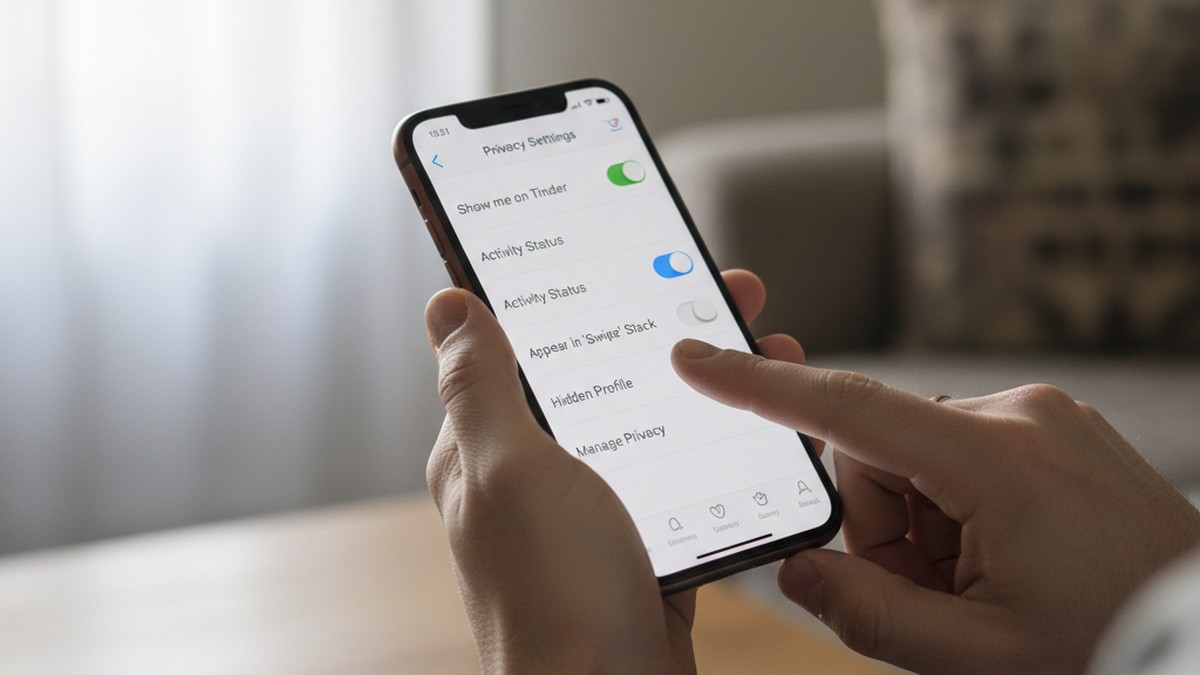
These indicators cannot be fully hidden through any standard Tinder setting. They're generated by the account's interaction with the app, not by the profile's visibility settings. A user can turn off "Show Activity Status" in settings to control some visibility — but this setting has limits, and its scope doesn't extend to all scenarios.
For a cheater, this creates a specific pressure. If they're using Tinder to arrange actual meetings — which requires swiping, matching, and messaging — they must engage consistently with the app. That engagement generates activity signals. Those signals are visible.
Based on patterns observed across CheatScanX scans, accounts with active Tinder profiles typically show activity indicators during consistent time windows — often evenings between 7 and 10 PM or during midday lunch hours — because that's when the algorithm sees peak activity and when people tend to open the app habitually. That consistency of timing, when observed repeatedly across multiple days, is one of the more reliable behavioral indicators of active, intentional use rather than an accidental app open.
The irony of this dynamic is substantial: the more effectively a cheating partner uses Tinder, the more activity they generate, and the more visible their activity becomes to anyone paying attention.
The 5 Tinder Features Cheaters Use to Stay Hidden
Tinder's feature set includes several tools that are genuinely useful for legitimate privacy purposes. Predictably, those same tools appear frequently in the toolkit of people using the platform while in committed relationships. Here are the five most commonly exploited features, and — critically — what each one actually prevents versus what it doesn't.
1. Incognito Mode
Incognito Mode is a paid feature available to Tinder Plus, Gold, and Platinum subscribers. When activated, your profile only appears to users you have already liked. Random users browsing the app will not see the profile in their normal card stack.
The appeal for a cheating partner is obvious: the likelihood that their partner randomly stumbles across the profile during their own Tinder browsing drops to near zero.
The limitations are significant, though. Incognito Mode does not:
- Remove the account from Tinder's database
- Prevent third-party profile search tools from finding the account
- Hide the account from existing matches
- Suppress the activity indicators (green dot, Recently Active) for people who have already matched with the account
- Prevent the account from appearing in searches conducted before Incognito was activated
In other words, Incognito Mode makes organic discovery harder. It does not make the account invisible to tools designed specifically to find it.
2. "Show Me on Tinder" Toggle
This is the free version of profile hiding. Under Tinder's Discovery Settings, any user can toggle "Show me on Tinder" to off. When disabled, no new users will see the profile in their feed.
The catch: you cannot swipe on anyone while this setting is off. The profile exists, but the person can't use the app to browse profiles. This creates a binary choice — visible and active, or hidden and inactive.
Some cheating partners use this setting strategically — they turn it off when they believe their partner might be checking Tinder, and turn it back on to actively use the app at other times. The toggling itself can be a behavioral signal: someone who treats their Tinder presence as something that needs to be switched off at certain moments is not someone who "barely uses the app." The profile's existence — regardless of visibility state — tells you the account is maintained.
3. Tinder Passport
Tinder Passport is a Gold and Platinum feature that allows users to set their apparent location to any city in the world. Their profile then appears in matches in that city rather than their actual location.
For understanding how Tinder Passport enables geographic deception, the key detail is the residual location window: after a user changes their Passport location, their profile remains visible in the previous location for up to 24 hours. A partner traveling for work can pre-set their location to the destination city before leaving, meaning Tinder shows them as being in Chicago before they've even landed there.
Cheaters use Passport in two primary ways. First, to arrange meetings in cities they're visiting before they arrive. Second, to obscure their actual location — a profile set to "Los Angeles" doesn't reveal that the person is actually in the same city as their partner.
Location discrepancy is one of the most concrete signals for detection. A partner whose Tinder profile shows a different city than where they actually are has deliberately changed their location. That's not accidental.
4. Profile Modification: Different Name, Age, and Photos
The algorithm doesn't verify identity. A cheating partner can create or maintain a Tinder profile with a different first name, a slightly adjusted age (typically off by 1-3 years), and photos that don't appear in their partner's social media feeds.
This tactic aims to prevent recognition by mutual friends who might encounter the profile or by a partner who searches Tinder directly. It requires deliberate planning: selecting photos specifically for Tinder that aren't shared anywhere public, choosing a name variation, and deciding how much age adjustment is enough to avoid appearing in name-specific searches while not making the profile seem implausible.
The selection of private photos is itself informative. If a partner's Tinder profile shows photos that were specifically not shared publicly — images that exist only on their device — that selection was intentional. It takes effort to build a profile that can't be reverse-image searched back to a public social media account.
5. Account Deletion and Recreation
Some cheating partners delete their Tinder account after each round of activity, then recreate it when they want to use the app again. The intent is to leave no persistent profile that a partner might find between uses.
The algorithm actually works against this approach. New accounts start with less reach — the system has no behavioral data to calibrate, so it surfaces the new account less frequently and to fewer people. This means a freshly recreated account is less effective at getting matches, which creates pressure to either maintain a persistent account or accept reduced results.
There's also a fingerprinting issue. Tinder uses image recognition to link photos to previous accounts. If a user creates a new account with the same photos as a deleted account, the system can associate them. Using entirely different photos — ones not used anywhere else — is necessary for a clean account reset, and that level of operational care is something most people don't sustain long-term.
Account cycling also creates a specific pattern that experienced investigators recognize: multiple accounts tied to the same device or phone number, created over a period of months. Each creation represents a deliberate act — Tinder doesn't auto-create accounts. The effort required to build a new profile, upload photos, write a bio, and set location preferences is substantial. Someone who does it repeatedly is doing it for a reason.
A related tactic is using a secondary email address — one unknown to the partner — for the Tinder account, combined with a separate Apple ID or Google account. This isolates the app and its billing from the partner's view. But the billing itself still has to live somewhere: the App Store or Google Play account that purchased Tinder Gold or Platinum will show the charge, and those accounts are tied to payment methods that often appear on shared finances. The credit card statement remains the most consistent paper trail regardless of how carefully the digital trail is managed.
Does Incognito Mode Actually Hide a Cheater?
Incognito Mode limits who can see a profile to users who have already been liked. It does not delete account data, remove the profile from third-party searches, or prevent the activity indicators — green dot and Recently Active badge — from appearing to people the account has already interacted with.
This is the feature most frequently cited as a reason a cheating partner "can't be found," and it's worth addressing the misconception directly.
Incognito Mode solves one specific problem: it prevents a partner who happens to be using Tinder in the same city from stumbling across the profile organically. That's a real form of protection against accidental discovery.
It solves nothing else. If a partner actively searches for the account — using a third-party tool, searching by name and location, or if the account has already matched with someone who can see its activity status — Incognito Mode offers no protection at all.
The feature is also conditional on continued payment. Incognito Mode requires a Tinder Plus, Gold, or Platinum subscription. If the subscription lapses — through a missed payment, a card expiration, or a deliberate cancellation — the account reverts to normal visibility. A profile that was hidden for months becomes discoverable again overnight.
There's another practical limitation that rarely gets mentioned: Incognito Mode works at the point of profile surfacing, not at the point of profile data storage. Tinder's servers still hold the full account: photos, bio, preferences, match history. Incognito changes who the algorithm serves the profile to organically. It does not change what exists in the database.
In practice, based on observations from CheatScanX scan patterns, a significant proportion of profiles detected through third-party searches show evidence of having been set to restricted visibility at some point — the profile's history shows selective exposure, but the account itself is still indexed and locatable. The common assumption that Incognito Mode equals invisibility is one of the most exploited misunderstandings in this space.

How Tinder Passport Enables Geographic Deception
Tinder Passport is available to Gold ($29.99/month) and Platinum ($39.99/month) subscribers. It lets users pin their apparent location anywhere in the world, causing their profile to surface in matches in that city rather than their physical location.
The immediate use case from a cheating standpoint is pre-travel arrangement. A partner traveling to another city can set their Passport location to the destination 24-48 hours before leaving, start matching with people there, and have conversations already underway before they arrive. Their actual current location — still at home — is concealed throughout this process.
There are two other uses that are less obvious:
Obscuring current location: A profile set to "New York City" when the person is actually in Dallas tells a searching partner nothing accurate about where the account is physically located. The location shown on the profile is whatever the Passport pin is set to, not GPS reality.
Creating geographic plausible deniability: A profile showing "London" while the person is in the same city as their partner creates a scenario that's difficult to challenge without understanding how Passport actually works. Most people don't.
The geographic deception has one known limitation: if a user turns off Passport and returns to their actual location, the profile updates. The transition is visible to people who matched with the account during the Passport period — their match will show the new real location. Location shifts in an existing match list are one of the more specific signals of Passport use, because organic location changes happen gradually, not in a single city-to-city jump.
For a deeper look at detecting these patterns, the full breakdown is in the Tinder Passport location guide, which covers the specific detection steps in more detail.
What Activity Signals Reveal an Active Tinder Profile?
The main signs are: a green dot (active in the last two hours), the Recently Active label (opened within 24 hours), a changing distance indicator if their location updates, new or edited photos appearing on the profile, and a bio that has been recently modified. These signals persist even with paid privacy features active.
Each of these signals deserves more detail, because knowing what they mean is different from knowing how to observe them.
The Green Dot
The green dot appears on the profile card and in the match messaging screen. It indicates the user was active within the last two hours. Crucially, it's visible to current matches — not just to people browsing the card stack.
If a partner has been using Tinder long enough to have existing matches (even if both parties never moved the conversation forward), those matches will see the green dot when it's active. An existing match who notices the green dot on a profile they matched with months ago — when the account holder supposedly "deleted" Tinder — is observing direct evidence of recent app use.
What the green dot cannot tell you: why the app was opened. Opened to check a notification, to use it, to start deleting the account — these all generate the same signal. The green dot tells you the app was running. It doesn't tell you the purpose.
"Recently Active" Label
The Recently Active label is slightly broader than the green dot: it indicates activity within the last 24 hours. It appears to anyone who can see the profile, depending on their discovery settings.
Understanding what Tinder's activity status actually means matters here: both the green dot and Recently Active can be turned off in Settings under "Show Activity Status." However, this setting affects what the card stack shows to people who haven't yet matched. For existing matches in your match list, activity indicators may still appear regardless of this setting.
Distance Changes
Tinder shows approximate distance to other users when profiles are visible. A profile that was 3 miles away yesterday and is 47 miles away today has either moved or changed their Passport pin. Either reading is informative.
Distance changes are one of the less discussed but more reliable activity signals, because they don't require any special access — they're visible to anyone who can see the profile. Someone who matches with a profile and then watches the distance indicator over several days will see movement that corresponds to the person's actual location (or their chosen Passport location).
Profile Updates
Any change to a Tinder profile — new photo, edited bio, updated job or education — triggers a fresh activity signal within the algorithm's ranking. Updated profiles get a temporary visibility boost.
For detection purposes, a profile with a recently updated photo — especially one using an image not publicly associated with the person — indicates recent deliberate engagement with the account. People who have "stopped using" Tinder don't update their profile photos. They also don't rewrite their bios or add new interests.
The Algorithm Double-Bind: Why Hiding Actually Exposes Cheaters
This is the core insight that most articles on this topic miss entirely. It contradicts the common assumption that premium Tinder features are a cheater's best friend.
The features cheaters use to hide — staying active to maintain match rates, using Incognito to avoid discovery, updating profiles to attract better matches — are precisely the same behaviors that generate the signals that expose them. Call this the Algorithm Double-Bind: the Tinder mechanics that make cheating more convenient also make it more detectable, because effectiveness and concealment require contradictory behaviors.
Here's how the double-bind works in practice:
To get matches, you must be active. The algorithm deprioritizes inactive accounts. A cheating partner who wants real results from Tinder can't set up a profile and go dormant — they'll get no matches. They have to open the app regularly, swipe, and message. Regular app use generates the green dot and Recently Active signals.
To stay hidden, you must limit activity. Privacy features like Incognito Mode and the "Show me" toggle help reduce organic discovery risk, but they cap the account's reach. A cheater using every privacy feature aggressively gets fewer matches. Fewer matches reduce the incentive to maintain the account. Most cheating partners make a subconscious trade: enough activity to get results, not so much that they feel reckless.
To improve results, you update the profile. Better photos, an edited bio, new interests — these all improve match rates. But they also trigger profile update signals and create a paper trail of recent deliberate engagement. A profile that was created six months ago but has new photos added this week was actively maintained this week.
To use the app discreetly, you pay for premium. Incognito Mode and Passport both require paid subscriptions. But maintaining a paid subscription creates a recurring charge that appears on shared bank statements or credit cards as "TINDER*" or "MATCH GROUP." A Tinder Gold or Platinum charge from a partner who claims not to use the app is direct financial evidence of active paid use.
The table below maps the double-bind explicitly — showing how each concealment behavior generates a specific detectable signal:
| What the Cheater Does | Why They Do It | Signal It Creates |
|---|---|---|
| Opens the app regularly | Required to stay ranked and get matches | Green dot, Recently Active badge |
| Swipes and messages | Required to generate conversations | Engagement signals in algorithm |
| Updates profile photos | Improves match rate | Profile update timestamp, new image data |
| Buys Tinder Gold or Platinum | Needed for Incognito Mode and Passport | Recurring subscription charge on billing statement |
| Sets Tinder Passport location | Hides real city from profile | Location mismatch visible to existing matches |
| Deletes and recreates account | Removes persistent profile | New account pattern, fingerprinting match to old account |
None of these behaviors is invisible. Every one of them exists as data somewhere — in Tinder's system, in a billing statement, or in the activity indicators visible to existing matches. The double-bind is structural, not accidental. It's built into how the platform works.
The algorithm, in short, is not a cheater's ally. It's a system that requires continuous behavioral input to function — and continuous behavioral input leaves continuous behavioral traces. The more effective the Tinder use, the more detectable the activity.
What the Data Says About Cheating on Tinder
The statistics around Tinder and infidelity are striking, and they explain why Tinder specifically attracts attention in cheating detection rather than other apps.
Approximately 30% of Tinder users are already married, with roughly two-thirds of users in some form of committed relationship (Marriage Science, 2026). The platform has 47 million monthly active users as reported in Match Group's Q3 2025 SEC filing. Those two figures together suggest approximately 14 million married people use Tinder actively each month.
The gender breakdown of Tinder's user base is relevant for understanding cheating patterns: men represent approximately 72% of users, women 28% (Business of Apps, 2026). This skew creates a high-competition environment for men, which affects how cheating partners behave on the platform.
Because of the gender imbalance, men on Tinder face challenging math. The average male match rate is just 2.04% based on analysis of 294 million swipes (SwipeStats, 2026). Women have a match rate roughly 17 times higher. Men also swipe right on approximately 46% of profiles they see, while women swipe right on only 14% — meaning women are far more selective, which in turn means men must send more right swipes and maintain higher activity levels to generate the same number of matches.
For a male partner using Tinder to cheat, the implication is direct:
- They need to be highly active to generate matches
- They need to maintain an optimized, high-quality profile
- They may need to use Boosts or premium features to increase visibility
All three of these requirements increase detectability. A male partner who is cheating on Tinder isn't casually swiping once a week — the math of the platform demands consistent, deliberate engagement to get results. That engagement leaves marks.
Women on the platform face a different dynamic. A female partner using Tinder has a much higher natural match rate, which means they don't need to be as active or as optimized to get results. They can open the app occasionally, match quickly, and close the app. This makes their Tinder activity somewhat harder to detect through activity signals alone — fewer sessions, less pattern consistency.
This gender-based difference in required activity levels means that the detection approaches that work well for identifying a male partner's active Tinder presence (activity signals, subscription evidence, high swipe frequency) may be less reliable for identifying a female partner, who can generate far fewer behavioral traces and still get meaningful results from the platform.
The platform's usage statistics also shed light on when Tinder activity peaks, which matters for anyone trying to identify a pattern. Tinder processes the highest volume of swipes on Sunday evenings. The average user opens the app 11 times daily and spends approximately 90 minutes total on the platform each day (Business of Apps, 2026). An account that matches that average is not "occasionally checking" the app — it's actively using it as a primary communication channel.
| Tinder Usage Metric | Figure | Source |
|---|---|---|
| Monthly active users (MAU) | 47 million | Match Group Q3 2025 SEC Filing |
| Daily swipes processed | 1.6 billion | Business of Apps, 2026 |
| Users in committed relationships | ~66% | Marriage Science, 2026 |
| Married users | ~30% | Marriage Science, 2026 |
| Average daily app opens | 11 times | Business of Apps, 2026 |
| Average daily time in app | ~90 minutes | Business of Apps, 2026 |
| Average male match rate | 2.04% | SwipeStats, 294M swipe analysis |
| Average female match rate | ~30% | SwipeStats, 294M swipe analysis |
These figures establish that Tinder is a platform used heavily — daily, repeatedly, by a large proportion of people who are not single. An active presence on the platform is not a passive one.
Can You Find Someone on Tinder If They Use Incognito Mode?
Third-party profile search tools can locate Tinder accounts that use Incognito Mode because they access profile data indexed before Incognito was activated or through name/age/location matching. Incognito only controls who Tinder surfaces the profile to organically — it does not wipe the account from search tools' databases.
This is the practical answer to the question that matters most: if you suspect a partner has a Tinder profile and they're using every available privacy feature, does that protection actually work against a determined search?
No. Here's why in detail.
Third-party tools that search for Tinder profiles don't browse the Tinder card stack the way a normal user does. They access profile data through other means — historical indexing, cross-referencing with linked social media, and matching on name/age/location combinations. Incognito Mode only affects organic feed surfacing. It has no effect on searches that bypass the card stack entirely.
The relevant question is whether the profile was indexed before Incognito was turned on. If the account existed without Incognito for any period of time, it may already appear in third-party databases. Activating Incognito doesn't retroactively remove it from external indexes.
Additionally, Incognito Mode doesn't prevent a profile from being found by someone who was already shown the profile organically — before Incognito was activated — and who then accesses the match list or a direct link. Once a profile has been seen by another user, that interaction is recorded in Tinder's system regardless of subsequent privacy setting changes.
For a direct search based on name, approximate age, and city, how to find out if someone is on Tinder provides the step-by-step process including how third-party tools handle accounts with restricted visibility.
If you want to check whether a specific person has an active Tinder profile, CheatScanX scans 15+ dating platforms including Tinder, surfacing accounts even when organic discovery has been limited by privacy settings.
Common Misconceptions About Tinder and Cheating
There's a significant gap between what people believe Tinder's features allow and what they actually do. These misconceptions work in opposite directions — some make people think they've been caught when they haven't, and some make cheating partners think they're protected when they're not.
Misconception 1: "They deleted the app, so the profile is gone."
This is wrong in two ways. First, deleting the app is not the same as deleting the account. The profile remains in Tinder's database. The account persists, remains visible to anyone who can see it (based on current settings), and continues to show activity indicators from any device that accesses the account.
Second, even if the account is fully deleted through Settings, Tinder retains profile data for approximately 30 days before full removal. During that window, activity indicators may still appear for existing matches. The digital footprint outlasts the user's intent to erase it.
Misconception 2: "Premium features protect cheaters."
This gets the relationship backwards. Premium features make Tinder more effective, and effectiveness requires activity. More activity means more behavioral traces. The one genuinely protective premium feature is Incognito Mode, and its limitations are extensive. Tinder Gold and Platinum primarily exist to increase match rates and profile visibility — both of which require and generate more behavioral data.
Misconception 3: "Only single people use Tinder."
An estimated two-thirds of Tinder users are in some form of committed relationship (Marriage Science, 2026). The platform has never been a single-user-only space, and treating it as one creates a costly blind spot.
Misconception 4: "The algorithm makes it impossible to find a specific profile."
The algorithm controls organic feed surfacing. It doesn't control direct searches. It decides who appears in your card stack based on location and behavioral matching — but it doesn't make profiles unfindable by tools that operate outside the card stack.
Misconception 5: "Activity status can be turned off completely."
The "Show Activity Status" toggle applies to who can see your online status in the card stack. It has partial effect on what matches can see. But it doesn't remove all activity traces from the system, and it doesn't affect the signals visible to third-party services that index profile data independently.
For a broader look at the digital signs your husband is cheating on his phone, phone activity patterns often tell a more complete story than any single app's signals alone.
How to Tell If a Partner's Tinder Profile Is Currently Active
If you're reading because you want to know whether a partner has an active Tinder profile, this section covers what you can concretely check and what each check actually tells you.
Step 1: Check for Existing Matches
If you have or previously had a Tinder account, check whether your partner's profile appears in any of your match lists. An existing match will show you their current activity status directly. If you see a green dot or Recently Active label on a profile you matched with previously, that account has been opened recently.
Step 2: Look for Behavioral Signals on the App
If you can access Tinder yourself, set your location to the same city and browse normally. If the account is not using Incognito Mode, it may appear in your feed. This is the lowest-tech method and the one Incognito Mode is specifically designed to defeat.
Step 3: Check for Subscription Evidence
Tinder Gold is $29.99/month, Platinum is $39.99/month. These charges appear as "TINDER*" or "MATCH GROUP" on bank and credit card statements. A recurring Tinder subscription charge from someone who claims not to use the app is direct evidence of active paid use. This is often the most concrete piece of evidence available, because it bypasses the app's entire privacy system.
Step 4: Use a Third-Party Profile Search
Services designed specifically to locate Tinder profiles search by name, age, and location without being subject to Tinder's organic feed controls. These tools work regardless of Incognito Mode status, and they can surface profiles that have never appeared in a normal Tinder feed.
CheatScanX checks 15+ dating platforms and provides results based on cross-referencing rather than organic browsing — meaning Incognito Mode and similar features don't affect what the scan returns.
Step 5: Note Indirect Activity Patterns
A change in a partner's phone behavior — turning the phone away, closing apps quickly, adding or changing a passcode — combined with unexplained charges or consistent late-evening phone use is a pattern worth noting. The combination of behavioral signals is often more informative than any single data point.
Tinder's activity status system is worth understanding in detail before drawing conclusions. Activity signals are specific and verifiable — which is exactly why they matter more than vague suspicions.
What to do with what you find:
Finding a green dot on a profile isn't a conclusion — it's a data point. A profile that's Recently Active means the app was opened. A Tinder subscription charge means someone is paying for the service. These facts are real and specific. They're also potentially explainable. An old Tinder account that someone opened to delete, a subscription that wasn't properly cancelled, a profile maintained from years before a relationship — these aren't common, but they exist.
The value of going through these steps isn't to build a legal case. It's to move from a vague fear to a specific, factual question you can ask. "I found a Tinder subscription charge on the credit card from last month — can you explain that?" is a grounded conversation starter. The response, whatever it is, gives you more information than the original suspicion ever could.
The Tinder ELO score and cheating detection article covers how the algorithm's profile-ranking history can also reveal patterns of sustained use, for those who want to go deeper into the technical side.
What You Can and Can't Conclude From Tinder Activity
A note on accuracy that belongs here explicitly: activity signals on Tinder indicate app usage. They don't, on their own, prove infidelity.
A green dot means someone opened Tinder in the last two hours. It doesn't tell you why. An old account can show activity if a person opened the app to delete it, to check a notification, or because a friend borrowed their phone.
A profile with a Passport location doesn't prove deception — some people set Passport to browse profiles in cities they plan to visit for legitimate reasons, or they set it out of curiosity and forget to reset it.
The signals discussed in this article are indicators, not conclusions. They're the kind of evidence that warrants a direct conversation, not the kind that stands alone as proof of anything.
What they are: concrete, specific, and testable. "I saw your profile on Tinder last night with a green dot" is a verifiable, specific observation. It's harder to dismiss than "I just have a feeling." Whether you use that conversation to seek clarity or confirmation is your call — but having specific, grounded information before that conversation tends to produce a more productive outcome than either accusations built on nothing or silence built on fear of being wrong.
The Tinder algorithm is sophisticated, but it was designed for matchmaking, not concealment. Every efficiency feature it offers — Incognito Mode, Passport, Boost — requires behavioral input. That input creates records. Those records, in aggregate, form a pattern that's more transparent than most people using the platform realize.
A cheating partner using Tinder well enough to actually get results is a cheating partner generating multiple detectable signals: activity indicators, subscription charges, location data, profile updates, and a presence in third-party databases. The platform's mechanics are fundamentally incompatible with sustained invisibility. The longer someone uses Tinder actively, the more of a record they build — and records can be read.
The Tinder algorithm wasn't designed to protect anyone from being discovered. It was designed to create matches. Everything it does in service of that goal — rewarding activity, surfacing optimized profiles, tracking engagement — works against the interests of someone trying to use the platform in secret. Understanding how the system works is, ultimately, understanding why it's such a poor choice for anyone who needs to stay hidden.
Frequently Asked Questions
No. Tinder does not notify users when their profile has been viewed. You only know someone saw your profile if they swipe right and you match. The exception is Tinder Gold and Platinum subscribers, who can see a list of people who liked them — but not who viewed without swiping.
Yes. Tinder controls who sees which profiles based on location, activity, and algorithm matching. Even in the same city, your partner's profile may never appear in your feed. They could also use Incognito Mode to ensure only people they've already liked can see their profile, making organic discovery nearly impossible.
Deleting the app does not delete the account. The profile remains visible in Tinder's system for up to 30 days after a user goes inactive, and activity indicators may continue to show. To fully remove a profile, a user must go into Settings and choose Delete Account — two separate actions many people don't take.
The green dot on a Tinder profile means the person was active on the app within the last two hours. It appears on the profile card and in the messages screen. It's one of Tinder's activity indicators and appears to anyone who can already see the profile, including current matches.
Yes. Tinder Passport, available to Gold and Platinum subscribers, allows users to set their location to any city in the world. Their profile then appears to people in that city, not their actual location. The stated location on their profile updates to the chosen city, which can be used to conceal where they're actually swiping from.